
Search

Deborah (162 KP) rated The Jane Austen Guide to Happily Ever After in Books
Dec 21, 2018


Oh dear.
I decided to take this book for review as Austen is by far my favourite novelist and I thought this sounded like an interesting concept - what makes the protagonists' matches so good. And there is always the sticky Charlotte Lucas question to ponder over. This isn't really what I got; I felt that this book couldn't decide if it wanted to be a work of literary criticism/analysis or a self help manual. I'm also not entirely sure who the target audience for this book are supposed to be. I got a very strong impression that it wasn't supposed to be me! References to 'we Americans' can be somewhat alienating to the rest of the world. Although the whole book seems to push Austen as a main selling point, it also seems to be aimed at people who don't really know the novels that well - too much of obvious plot details have to be explained and there is an over use of quotation, beyond what was needed to make the point.
The text of the book is only about 250 pages, but there must be at least another 100 pages of endnotes. This is an area of complete overkill, in my opinion. When a single endnote can go on for a couple of pages, by the time you get back to the main text, you've pretty much lost whatever plot there was. Endnotes; just too many and too long and in many cases just too unnecessary.
I was only reading from a proof copy, but there were textual errors - Maria Crawford, anyone?! Hopefully someone familiar with Austen can pick this up.
At the time of writing I see that only one other amazon.co.uk reviewer has come forth to note that they didn't like it much either, while the amazon.com reviews seem to be positive. Maybe this has something to do with targeting, as the writing style was very informal and slangy and with a number of American cultural references that meant very little to me. Such a narrow focus seems a bad error of judgement as far as the rest of the world is concerned. If you want my recommendation, I wouldn't bother with this one.
I decided to take this book for review as Austen is by far my favourite novelist and I thought this sounded like an interesting concept - what makes the protagonists' matches so good. And there is always the sticky Charlotte Lucas question to ponder over. This isn't really what I got; I felt that this book couldn't decide if it wanted to be a work of literary criticism/analysis or a self help manual. I'm also not entirely sure who the target audience for this book are supposed to be. I got a very strong impression that it wasn't supposed to be me! References to 'we Americans' can be somewhat alienating to the rest of the world. Although the whole book seems to push Austen as a main selling point, it also seems to be aimed at people who don't really know the novels that well - too much of obvious plot details have to be explained and there is an over use of quotation, beyond what was needed to make the point.
The text of the book is only about 250 pages, but there must be at least another 100 pages of endnotes. This is an area of complete overkill, in my opinion. When a single endnote can go on for a couple of pages, by the time you get back to the main text, you've pretty much lost whatever plot there was. Endnotes; just too many and too long and in many cases just too unnecessary.
I was only reading from a proof copy, but there were textual errors - Maria Crawford, anyone?! Hopefully someone familiar with Austen can pick this up.
At the time of writing I see that only one other amazon.co.uk reviewer has come forth to note that they didn't like it much either, while the amazon.com reviews seem to be positive. Maybe this has something to do with targeting, as the writing style was very informal and slangy and with a number of American cultural references that meant very little to me. Such a narrow focus seems a bad error of judgement as far as the rest of the world is concerned. If you want my recommendation, I wouldn't bother with this one.

Emma @ The Movies (1786 KP) rated Inside Man: Most Wanted (2019) in Movies
Mar 20, 2021
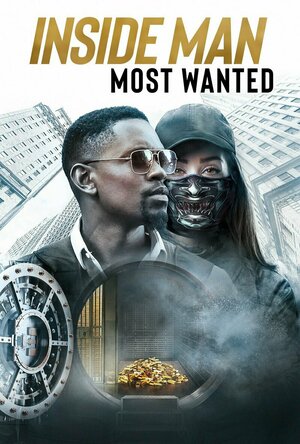

I was drawn to this one after an ultimatum from Now TV that it was only going to be available for one more day. This after having it in my watchlist for a rather long time. I had some slight dread for this lengthy weight for a sequel.
NYPD and the FBI handle a hostage negotiation at the US Federal Reserve. With civilians and one of their own inside they must draw on all their knowledge to try and resolve the situation without letting their egos and knowledge of the past cloud their judgement.
There's nothing like having to follow a popular film, and I'm not sure there would be many sequels that I would praise over its predecessor. Thankfully that isn't a point I need to ponder on for too long here.
At some point while watching I just stopped taking notes, for me that's either a very good sign or a very bad one... I think from the score you can probably tell which.
Inside Man: Most Wanted seems fully aware that it isn't Inside Man, and that there wasn't really a genuinely original storyline insight. There are a lot of callbacks to the first film that seem rather hammy and shoehorned in, but I'll elaborate on that later.
There weren't any actors that I recognised, though the top three have been in several things I'm aware of. I'm not going to dwell on the acting because I really found it just to be fine. I didn't see anything that made me want to call it out as good, and similarly there was nothing terrible. It was all... fine.
And in fact, that's my feeling for the whole film... and I apologise, because I've just realised that I do not have anything at all that I want to speak about around this film. Already knowing Inside Man, this felt like a rather hollow attempt at a crime thriller. Had they taken out the connection to the first film and made it it's own film then I think it may have got a higher rating, not higher than three, but there was potential there for an average thriller.
Originally posted on: https://emmaatthemovies.blogspot.com/2021/03/inside-man-most-wanted-movie-review.html
NYPD and the FBI handle a hostage negotiation at the US Federal Reserve. With civilians and one of their own inside they must draw on all their knowledge to try and resolve the situation without letting their egos and knowledge of the past cloud their judgement.
There's nothing like having to follow a popular film, and I'm not sure there would be many sequels that I would praise over its predecessor. Thankfully that isn't a point I need to ponder on for too long here.
At some point while watching I just stopped taking notes, for me that's either a very good sign or a very bad one... I think from the score you can probably tell which.
Inside Man: Most Wanted seems fully aware that it isn't Inside Man, and that there wasn't really a genuinely original storyline insight. There are a lot of callbacks to the first film that seem rather hammy and shoehorned in, but I'll elaborate on that later.
There weren't any actors that I recognised, though the top three have been in several things I'm aware of. I'm not going to dwell on the acting because I really found it just to be fine. I didn't see anything that made me want to call it out as good, and similarly there was nothing terrible. It was all... fine.
And in fact, that's my feeling for the whole film... and I apologise, because I've just realised that I do not have anything at all that I want to speak about around this film. Already knowing Inside Man, this felt like a rather hollow attempt at a crime thriller. Had they taken out the connection to the first film and made it it's own film then I think it may have got a higher rating, not higher than three, but there was potential there for an average thriller.
Originally posted on: https://emmaatthemovies.blogspot.com/2021/03/inside-man-most-wanted-movie-review.html

Siren - app for seeking cougar
Social Networking and Lifestyle
App
Date mature women Do you prefer women who are a bit older? In the Siren app you can meet real...

Hazel (1853 KP) rated Mr. Deathmask in Books
Oct 1, 2017

Slightly sadistic
This book was sent to me by the author in exchange for an honest review.
A satanic cult, an angel, a ghost, and lots of murder, Mr. Deathmask is a novel like none other. Horror-novelist Lee McGeorge has created a character that blurs the lines between good and evil. Members of a satanic cult in the heart of London are slowly being killed off one-by-one by a mysterious figure going by the name of Mr Deathmask. The murders shock the community, not only in their brutality but because the worshippers of the “one true Lord” should not be able to be harmed by another living being.
Mr Deathmask, so named for collecting the death masks of his victims, is a man with superhuman strength who is believed to be a “son of light”, i.e. an angel. Accompanied by a ghost of a girl, Magdalena, he plans to seek out and destroy the satanic cult before they can raise the son of the devil.
To begin with, it is not easy to differentiate between the good and the bad. On one side is the anonymous murderer, and the other, the perverted and barbaric sect with unearthly powers. But once innocent lives get tangled up in the violent fiasco, it is clear whom the readers are expected to root for.
Hiding behind the façade of doctors and other professionals in the public sector, the cult easily preys on vulnerable people, resorting to sickening methods to satisfy their abominable desires. Difficult as it is to read about these vile deeds, Mr. Deathmask becomes gripping, the race is on to prevent unnecessary death and get revenge for something that happened centuries ago.
Mr. Deathmask is not for the delicate-minded individual due to its violent and sexual nature. Plenty of expletives and foul terminology make up the narrative, which, although is to be expected in this nature of novel, is not the easiest story to stomach.
Unlike previous books with heavy themes or social connotations, Lee McGeorge has penned Mr. Deathmask as a form of entertainment rather than to challenge morals and judgement of his readers. However, it still has its fair share of shock tactics to keep the story going. It will certainly entertain fans of the author and the genre.
A satanic cult, an angel, a ghost, and lots of murder, Mr. Deathmask is a novel like none other. Horror-novelist Lee McGeorge has created a character that blurs the lines between good and evil. Members of a satanic cult in the heart of London are slowly being killed off one-by-one by a mysterious figure going by the name of Mr Deathmask. The murders shock the community, not only in their brutality but because the worshippers of the “one true Lord” should not be able to be harmed by another living being.
Mr Deathmask, so named for collecting the death masks of his victims, is a man with superhuman strength who is believed to be a “son of light”, i.e. an angel. Accompanied by a ghost of a girl, Magdalena, he plans to seek out and destroy the satanic cult before they can raise the son of the devil.
To begin with, it is not easy to differentiate between the good and the bad. On one side is the anonymous murderer, and the other, the perverted and barbaric sect with unearthly powers. But once innocent lives get tangled up in the violent fiasco, it is clear whom the readers are expected to root for.
Hiding behind the façade of doctors and other professionals in the public sector, the cult easily preys on vulnerable people, resorting to sickening methods to satisfy their abominable desires. Difficult as it is to read about these vile deeds, Mr. Deathmask becomes gripping, the race is on to prevent unnecessary death and get revenge for something that happened centuries ago.
Mr. Deathmask is not for the delicate-minded individual due to its violent and sexual nature. Plenty of expletives and foul terminology make up the narrative, which, although is to be expected in this nature of novel, is not the easiest story to stomach.
Unlike previous books with heavy themes or social connotations, Lee McGeorge has penned Mr. Deathmask as a form of entertainment rather than to challenge morals and judgement of his readers. However, it still has its fair share of shock tactics to keep the story going. It will certainly entertain fans of the author and the genre.
Hazel (1853 KP) rated Mr. Deathmask in Books
Dec 7, 2018
<I>This book was sent to me by the author in exchange for an honest review.</I>
A satanic cult, an angel, a ghost, and lots of murder,<I> Mr. Deathmask</I> is a novel like none other. Horror-novelist Lee McGeorge has created a character that blurs the lines between good and evil. Members of a satanic cult in the heart of London are slowly being killed off one-by-one by a mysterious figure going by the name of Mr Deathmask. The murders shock the community, not only in their brutality but because the worshippers of the “one true Lord” should not be able to be harmed by another living being.
Mr Deathmask, so named for collecting the death masks of his victims, is a man with superhuman strength who is believed to be a “son of light”, i.e. an angel. Accompanied by a ghost of a girl, Magdalena, he plans to seek out and destroy the satanic cult before they can raise the son of the devil.
To begin with, it is not easy to differentiate between the good and the bad. On one side is the anonymous murderer, and the other, the perverted and barbaric sect with unearthly powers. But once innocent lives get tangled up in the violent fiasco, it is clear whom the readers are expected to root for.
Hiding behind the façade of doctors and other professionals in the public sector, the cult easily preys on vulnerable people, resorting to sickening methods to satisfy their abominable desires. Difficult as it is to read about these vile deeds, <i>Mr. Deathmask</i> becomes gripping, the race is on to prevent unnecessary death and get revenge for something that happened centuries ago.
<i>Mr. Deathmask</i> is not for the delicate-minded individual due to its violent and sexual nature. Plenty of expletives and foul terminology make up the narrative, which, although is to be expected in this nature of novel, is not the easiest story to stomach.
Unlike previous books with heavy themes or social connotations, Lee McGeorge has penned <i>Mr. Deathmask</i> as a form of entertainment rather than to challenge morals and judgement of his readers. However, it still has its fair share of shock tactics to keep the story going. It will certainly entertain fans of the author and the genre.
A satanic cult, an angel, a ghost, and lots of murder,<I> Mr. Deathmask</I> is a novel like none other. Horror-novelist Lee McGeorge has created a character that blurs the lines between good and evil. Members of a satanic cult in the heart of London are slowly being killed off one-by-one by a mysterious figure going by the name of Mr Deathmask. The murders shock the community, not only in their brutality but because the worshippers of the “one true Lord” should not be able to be harmed by another living being.
Mr Deathmask, so named for collecting the death masks of his victims, is a man with superhuman strength who is believed to be a “son of light”, i.e. an angel. Accompanied by a ghost of a girl, Magdalena, he plans to seek out and destroy the satanic cult before they can raise the son of the devil.
To begin with, it is not easy to differentiate between the good and the bad. On one side is the anonymous murderer, and the other, the perverted and barbaric sect with unearthly powers. But once innocent lives get tangled up in the violent fiasco, it is clear whom the readers are expected to root for.
Hiding behind the façade of doctors and other professionals in the public sector, the cult easily preys on vulnerable people, resorting to sickening methods to satisfy their abominable desires. Difficult as it is to read about these vile deeds, <i>Mr. Deathmask</i> becomes gripping, the race is on to prevent unnecessary death and get revenge for something that happened centuries ago.
<i>Mr. Deathmask</i> is not for the delicate-minded individual due to its violent and sexual nature. Plenty of expletives and foul terminology make up the narrative, which, although is to be expected in this nature of novel, is not the easiest story to stomach.
Unlike previous books with heavy themes or social connotations, Lee McGeorge has penned <i>Mr. Deathmask</i> as a form of entertainment rather than to challenge morals and judgement of his readers. However, it still has its fair share of shock tactics to keep the story going. It will certainly entertain fans of the author and the genre.

Phil Leader (619 KP) rated Bells On Her Toes in Books
Nov 8, 2019


When a body is discovered in a burnt-out barn, DCI Peter Hatherall and DI Fiona Williams are assigned to investigate. The barn is owned by a racehorse trainer and the two detectives struggle to penetrate the closed and secretive world of horse racing to uncover who the body is and why they were murdered. As the body count rises Hatharall's personal life starts to impact on his professional judgement putting not only the investigation but lives at risk.
The police procedural has a long and distinguished history and Febry does an excellent job in following the formula and adding enough twists and turns to keep the reader guessing. Everything is told from a personal point of view (mostly Williams') and the author does a great job in conveying personality through how events are described. One of the key suspects also provides some of their thoughts between chapters and this very effectively cranks the tension up.
The cast of characters is very convincing. The detective with personal problems has very much become a cliche but Hatherall is drawn in a very realistic and human light and is clearly struggling. Williams has her own relationship issues and their interaction has a ring of authenticity. The cast of suspects is wide and a number of them could easily be guily. What is certain is that it will take time for all the secrets to be uncovered.
The plot has many twists and plenty of red herrings for both the reader and the detectives to fall foul of. The stakes are constantly raised until the final confrontation.
When reading this book I was reminded of one of my favourite detective thriller novelists, Reginald Hill. The characterisation, the plot twists and some of the way Febry plays with the reader's expectations reminded so much of a Dalziel and Pascoe novel. I think that's a very fair comparison and although Peter Hathersall is not at all like Andy Dalziel he is still a detective who works with both facts and instinct
This books is part of a series (and indeed one of the other books in the series is mentioned in passing) and if this novel is anything to go by the series is one to read as soon as possible. Anyone who likes a good detective novel with interesting characters and plenty of twists will like this. A lot.
The police procedural has a long and distinguished history and Febry does an excellent job in following the formula and adding enough twists and turns to keep the reader guessing. Everything is told from a personal point of view (mostly Williams') and the author does a great job in conveying personality through how events are described. One of the key suspects also provides some of their thoughts between chapters and this very effectively cranks the tension up.
The cast of characters is very convincing. The detective with personal problems has very much become a cliche but Hatherall is drawn in a very realistic and human light and is clearly struggling. Williams has her own relationship issues and their interaction has a ring of authenticity. The cast of suspects is wide and a number of them could easily be guily. What is certain is that it will take time for all the secrets to be uncovered.
The plot has many twists and plenty of red herrings for both the reader and the detectives to fall foul of. The stakes are constantly raised until the final confrontation.
When reading this book I was reminded of one of my favourite detective thriller novelists, Reginald Hill. The characterisation, the plot twists and some of the way Febry plays with the reader's expectations reminded so much of a Dalziel and Pascoe novel. I think that's a very fair comparison and although Peter Hathersall is not at all like Andy Dalziel he is still a detective who works with both facts and instinct
This books is part of a series (and indeed one of the other books in the series is mentioned in passing) and if this novel is anything to go by the series is one to read as soon as possible. Anyone who likes a good detective novel with interesting characters and plenty of twists will like this. A lot.

Matthew Krueger (10051 KP) rated Star Wars: Episode V – The Empire Strikes Back (1980) in Movies
May 6, 2020 (Updated May 6, 2020)

May The Force Be With You: The Middle
Empire Strikes Back- i heard that this movie is peoples, all time greatest/best sequel and the best movie out of the oringal trilogy. To me, no. Episode 4 and 6 are better. Their are excellent sences like.. the battle at Hoth, when Han gets Frozen and the battle between Dark Vader and Luke. The rest of the movie is slow and boring.
The plot: The adventure continues in this "Star Wars" sequel. Luke Skywalker (Mark Hamill), Han Solo (Harrison Ford), Princess Leia (Carrie Fisher) and Chewbacca (Peter Mayhew) face attack by the Imperial forces and its AT-AT walkers on the ice planet Hoth. While Han and Leia escape in the Millennium Falcon, Luke travels to Dagobah in search of Yoda. Only with the Jedi master's help will Luke survive when the dark side of the Force beckons him into the ultimate duel with Darth Vader (David Prowse).
To me their are better movie sequels than this one like.. "Back To The Future Part II", "Lord of The Rings: The Two Towers", "The Dark Knight", "Captain America: The Winter Soilder", "Toy Story 2", "Terminator 2: Judgement Day" and "Aliens". All of these sequels are 10x better than Empire Strikes Back.
AFI's 100 Years...100 Movies – Nominated
AFI's 100 Years...100 Thrills – Nominated
AFI's 100 Years...100 Heroes and Villains:
Darth Vader – No. 3 Villain
AFI's 100 Years...100 Movie Quotes:
"I am your father." – Nominated
"Do, or do not. There is no try." – Nominated
AFI's 100 Years...100 Movies (10th
Anniversary Edition) – Nominated.
Darth Vader was ranked as the third-greatest film villain of all time in the American Film Institute's 2003 list of the 100 greatest heroes and villains, and Wizard magazine selected the ending of The Empire Strikes Back as the greatest cliffhanger of all time.
The line "No, I am your father" is often misquoted as "Luke, I am your father." The line was selected as one of the 400 nominees for the American Film Institute's 100 Years... 100 Movie Quotes, a list of the greatest American film quotes.
I think Empire Strikes Back, even though its good. Its overrated and hyped up, to the point were its not just not as good as people say it is.
Like i said its good, but not excellent.
The plot: The adventure continues in this "Star Wars" sequel. Luke Skywalker (Mark Hamill), Han Solo (Harrison Ford), Princess Leia (Carrie Fisher) and Chewbacca (Peter Mayhew) face attack by the Imperial forces and its AT-AT walkers on the ice planet Hoth. While Han and Leia escape in the Millennium Falcon, Luke travels to Dagobah in search of Yoda. Only with the Jedi master's help will Luke survive when the dark side of the Force beckons him into the ultimate duel with Darth Vader (David Prowse).
To me their are better movie sequels than this one like.. "Back To The Future Part II", "Lord of The Rings: The Two Towers", "The Dark Knight", "Captain America: The Winter Soilder", "Toy Story 2", "Terminator 2: Judgement Day" and "Aliens". All of these sequels are 10x better than Empire Strikes Back.
AFI's 100 Years...100 Movies – Nominated
AFI's 100 Years...100 Thrills – Nominated
AFI's 100 Years...100 Heroes and Villains:
Darth Vader – No. 3 Villain
AFI's 100 Years...100 Movie Quotes:
"I am your father." – Nominated
"Do, or do not. There is no try." – Nominated
AFI's 100 Years...100 Movies (10th
Anniversary Edition) – Nominated.
Darth Vader was ranked as the third-greatest film villain of all time in the American Film Institute's 2003 list of the 100 greatest heroes and villains, and Wizard magazine selected the ending of The Empire Strikes Back as the greatest cliffhanger of all time.
The line "No, I am your father" is often misquoted as "Luke, I am your father." The line was selected as one of the 400 nominees for the American Film Institute's 100 Years... 100 Movie Quotes, a list of the greatest American film quotes.
I think Empire Strikes Back, even though its good. Its overrated and hyped up, to the point were its not just not as good as people say it is.
Like i said its good, but not excellent.

Les Fleurs du Mal by Rabit
6.0 Rate It
Album Watch
Les Fleurs Dul Mal is the absorbingly grotesque sophomore album by pioneering artist, DJ and label...
electronic experimental
Sailing toward Osiris
Tabletop Game
Pharaoh is dead and his funerary barge sails slowly down the Nile toward his tomb where his spirit...
BoardGames 2018Games EgyptianGames

Ross (3284 KP) rated Resistance in Books
Sep 20, 2018
Contains spoilers, click to show
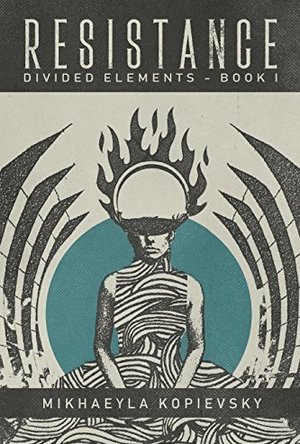
A dystopian sci-fi tale in which people ("elementals") are split into 4 classes (air - artistic types, water - scientific types, fire - law-enforcing types, and earth - working class grunts) with a strict set of rules and beliefs to be followed. Any attempt to betray these rules would result in swift punishment by the peacekeepers.
Anaiya, one such peacekeeper, is tasked with finding and infiltrating a group of rebels who have started painting the word "resistance" on walls. In order to infiltrate them, she has to undergo a new untested treatment that tries to change her class from fire to air. Thereafter the tale is a pretty standard one of intrigue, plotting and red herrings.
For me the ideas behind the world were interesting, but not very well explained or explored early on. I realise with a book like this any attempt to do so would jar with the atmosphere it is trying to get at, but there are ways to deliver the information needed.
The storyline was pretty much paper-thin and sacrificed in order to have some lengthy, overly descriptive poetic narrative (for example at least 6 pages of the book is devoted to blow by blow accounts of pool matches). The supposed revelation at the end was such an obvious anti-climax as to be ridiculous. I took it to be a symbol of how Anaiya's treatment warped her judgement of who the main suspect is, but it was delivered as a big revelation.
The use of technology in sci-fi always annoys me - new tech that is not described and overly used, with a ridiculous name (a wristplate that can immediately tell you what substances are in your blood as well as heart rate etc, and also be used to download music, play music, communicate, pay for things etc etc).
Similarly, the plot to reveal the head of the resistance hinged on the use of some new technology invented by a member of the resistance itself. This was so flimsy as to be laughable. Also, the fact that a heavy-handed police force like the peacekeepers would look for such tenuous proof of the leadership of the resistance before acting is just plain wrong. The first few chapters, and some of the conversations Anaiya has after her change, serve to show how heavy-handed they are, and any hint of someone's involvement in such treasonous activity would result in swift action.
Overall, the book is atmospheric and interesting but quite badly executed.
And the word "trajectory" is massively overused and at times wrongly used.
Anaiya, one such peacekeeper, is tasked with finding and infiltrating a group of rebels who have started painting the word "resistance" on walls. In order to infiltrate them, she has to undergo a new untested treatment that tries to change her class from fire to air. Thereafter the tale is a pretty standard one of intrigue, plotting and red herrings.
For me the ideas behind the world were interesting, but not very well explained or explored early on. I realise with a book like this any attempt to do so would jar with the atmosphere it is trying to get at, but there are ways to deliver the information needed.
The storyline was pretty much paper-thin and sacrificed in order to have some lengthy, overly descriptive poetic narrative (for example at least 6 pages of the book is devoted to blow by blow accounts of pool matches). The supposed revelation at the end was such an obvious anti-climax as to be ridiculous. I took it to be a symbol of how Anaiya's treatment warped her judgement of who the main suspect is, but it was delivered as a big revelation.
The use of technology in sci-fi always annoys me - new tech that is not described and overly used, with a ridiculous name (a wristplate that can immediately tell you what substances are in your blood as well as heart rate etc, and also be used to download music, play music, communicate, pay for things etc etc).
Similarly, the plot to reveal the head of the resistance hinged on the use of some new technology invented by a member of the resistance itself. This was so flimsy as to be laughable. Also, the fact that a heavy-handed police force like the peacekeepers would look for such tenuous proof of the leadership of the resistance before acting is just plain wrong. The first few chapters, and some of the conversations Anaiya has after her change, serve to show how heavy-handed they are, and any hint of someone's involvement in such treasonous activity would result in swift action.
Overall, the book is atmospheric and interesting but quite badly executed.
And the word "trajectory" is massively overused and at times wrongly used.