
Search

Kirk Bage (1775 KP) rated Knives Out (2019) in Movies
Jan 22, 2021


Murder mystery films tend to be more fun in theory and anticipation than they are to watch. It’s a genre that I very much enjoy and have indulged in over the years. Yet, if I look back in detail at it, I find that it is the books, especially those of Agatha Christie, that I like much more than anything lasting a couple of hours on the screen. There’s something about the mystery being rushed and squeezed into the cinema artform that is usually anti-climactic or even a full on let down.
Perhaps my favourite of the entire genre is a film that refuses to take itself seriously and is at once a pastiche of the multiple cliches that have accumulated over the years. And that film is, of course, the wonderfully camp, funny and charming 1985 romp Clue, starring Tim Curry and a slough of 80s B stars having the time of their lives. It isn’t a “good” film, it is a cult film, it’s joy being in its absolute lack of pretension or moral judgement. Like the board game that inspired it, it isn’t overly complicated or long, but has just enough cleverness, mirth and ambiance about it to always be a winner.
Rian Johnson’s take on the genre, Knives Out, is aware of these elements at all times, being above all things colourful, playful, arch and glib, but never convoluted or cerebral in an alienating way. He is something of a master at subverting a genre and wringing new life into it; take the invention of the teen noir in Brick, or the blend of assassin time travel sci-fi in Looper. He even gave an entire franchise a new breath of life by re-examining the use of humour and self referencing in Star Wars: The Last Jedi.
All of those previous films have as many detractors as mega fans, proving his style is devisive, for its audacity and its irreverence towards any idea of purism within an established model. And Knives Out is no exception to that. However, it may be the film of his that most people can agree on that they enjoyed, for one reason or another. I think it’s as interesting to ask why that is as it is to talk about the film itself… so, I will. At least, I’ll try to do both without losing my train of thought.
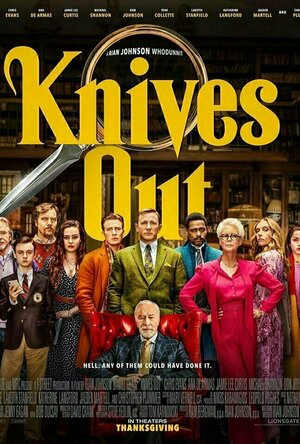
Firstly, it looks stunning; the palate of rich colours used in the poster and all marketing just make it look like something you want to immerse yourself in – every jacket, tie, dress, or piece of furniture is designed to precision, and it works like a dream of the genre you may have once had, as if it had been plucked directly from your subconscious. As in all good murder mysteries, the location, props and costumes should hold as much character as the actors, and the stately home of the Thrombey family certainly provides plenty of atmosphere in every texture and material on display.
Of course, the cast of characters is wonderfully put together with some inspired casting of familiar faces and actors you trust, such as Toni Collette and Michael Shannon, together with a few we don’t see enough of these days, such as Jamie Lee Curtis and Don Johnson, who both manage to create something as memorable as anything they did in their golden days. Add to the mix two bone fide action film superstars in Daniel Craig and Chris Evans, who leave the baggage of their most famous characters far behind and manage to convince you they are real actors again, the former with the aide of a jarring but hilarious Southern drawl, that grates at first but is a perfect choice on reflection.
Then there are the two lynchpins of this film’s ultimate success and joy: the exceptional legendary gravitas of 90 year old Christopher Plummer as the patriarch and victim at the centre of the intrigue, and the quite glorious revelation of Ana de Armas, whose charisma, beauty and skill in this delicately balanced role was the most impressive thing for me about the whole production. It may be Craig who is the ever present focus, as the detective tasked with solving the “crime”, but it is de Armas that you will remember most long after the credits roll.
As for the plot, well… I obviously can’t talk about it without ruining the whole thing. But, I can say that it isn’t far into the intricate web of motives, alibis and secrets before you start to sense this is going somewhere different, even unique. The examination of the relationships and personalities, and the extent to which they each demonstrate greed and selfishness is fascinating, superceding the crime that exists on the surface with a swamp of far seedier and unpleasant goings-on. Craig’s suave Benoit Blanc isn’t so much a detective here as a family therapist, or perhaps a supernatural presence in the style of the old classic, An Inspector Calls. Perhaps, it is suggested, no one completely escapes guilt and shame here… or do they? Are we looking for a murderer, or the only morally good person amidst a pack of dogs?
Another key element is how modern and unstuffy it feels, despite the country house and riches this is no play of manners, quite the opposite – no one here is on their best behaviour for the sake of decorum, and being upper class is an idea played with rather than enforced. The tea and cakes of the classic Christie, such as Murder on the Orient Express is replaced by smartphones and similar trappings, that identify it as definitely 2019 and no period piece. The concerns and themes are very much rooted in our present problems, and for that it engages and resonates in ways a costume drama just can’t do.
Upon finishing it for the first time, you may be thinking “sure, OK, I enjoyed that… but I’m not blown away here”. Then, as it sinks in over coming weeks, you find yourself recommending it to people, and thinking about how good it is in ways you didn’t initially think about. And that is surely why it was so embraced by the critics and paying public alike; it is a likeable, fun film, that can also stand some artistic scrutiny. It isn’t the smartest, or prettiest, or most meaningful film ever made, but it is enough of all three to make it an instant mini-classic, in my opinion.
I feel like there is maybe more to say about it, which is always a good sign, but that will do for now. I’d be happy to discuss it with anyone that feels the need. Or hear from anyone that didn’t like it! It would be interesting to hear that side of it, because I haven’t heard many negative comments on it at all. I don’t think I would defend it as a masterpiece to the end of the Earth, ‘cos it ain’t that good. I’m just hard pressed to find a serious fault. And it’s great when one of those sneaks up on you!
Perhaps my favourite of the entire genre is a film that refuses to take itself seriously and is at once a pastiche of the multiple cliches that have accumulated over the years. And that film is, of course, the wonderfully camp, funny and charming 1985 romp Clue, starring Tim Curry and a slough of 80s B stars having the time of their lives. It isn’t a “good” film, it is a cult film, it’s joy being in its absolute lack of pretension or moral judgement. Like the board game that inspired it, it isn’t overly complicated or long, but has just enough cleverness, mirth and ambiance about it to always be a winner.
Rian Johnson’s take on the genre, Knives Out, is aware of these elements at all times, being above all things colourful, playful, arch and glib, but never convoluted or cerebral in an alienating way. He is something of a master at subverting a genre and wringing new life into it; take the invention of the teen noir in Brick, or the blend of assassin time travel sci-fi in Looper. He even gave an entire franchise a new breath of life by re-examining the use of humour and self referencing in Star Wars: The Last Jedi.
All of those previous films have as many detractors as mega fans, proving his style is devisive, for its audacity and its irreverence towards any idea of purism within an established model. And Knives Out is no exception to that. However, it may be the film of his that most people can agree on that they enjoyed, for one reason or another. I think it’s as interesting to ask why that is as it is to talk about the film itself… so, I will. At least, I’ll try to do both without losing my train of thought.
Firstly, it looks stunning; the palate of rich colours used in the poster and all marketing just make it look like something you want to immerse yourself in – every jacket, tie, dress, or piece of furniture is designed to precision, and it works like a dream of the genre you may have once had, as if it had been plucked directly from your subconscious. As in all good murder mysteries, the location, props and costumes should hold as much character as the actors, and the stately home of the Thrombey family certainly provides plenty of atmosphere in every texture and material on display.
Of course, the cast of characters is wonderfully put together with some inspired casting of familiar faces and actors you trust, such as Toni Collette and Michael Shannon, together with a few we don’t see enough of these days, such as Jamie Lee Curtis and Don Johnson, who both manage to create something as memorable as anything they did in their golden days. Add to the mix two bone fide action film superstars in Daniel Craig and Chris Evans, who leave the baggage of their most famous characters far behind and manage to convince you they are real actors again, the former with the aide of a jarring but hilarious Southern drawl, that grates at first but is a perfect choice on reflection.
Then there are the two lynchpins of this film’s ultimate success and joy: the exceptional legendary gravitas of 90 year old Christopher Plummer as the patriarch and victim at the centre of the intrigue, and the quite glorious revelation of Ana de Armas, whose charisma, beauty and skill in this delicately balanced role was the most impressive thing for me about the whole production. It may be Craig who is the ever present focus, as the detective tasked with solving the “crime”, but it is de Armas that you will remember most long after the credits roll.
As for the plot, well… I obviously can’t talk about it without ruining the whole thing. But, I can say that it isn’t far into the intricate web of motives, alibis and secrets before you start to sense this is going somewhere different, even unique. The examination of the relationships and personalities, and the extent to which they each demonstrate greed and selfishness is fascinating, superceding the crime that exists on the surface with a swamp of far seedier and unpleasant goings-on. Craig’s suave Benoit Blanc isn’t so much a detective here as a family therapist, or perhaps a supernatural presence in the style of the old classic, An Inspector Calls. Perhaps, it is suggested, no one completely escapes guilt and shame here… or do they? Are we looking for a murderer, or the only morally good person amidst a pack of dogs?
Another key element is how modern and unstuffy it feels, despite the country house and riches this is no play of manners, quite the opposite – no one here is on their best behaviour for the sake of decorum, and being upper class is an idea played with rather than enforced. The tea and cakes of the classic Christie, such as Murder on the Orient Express is replaced by smartphones and similar trappings, that identify it as definitely 2019 and no period piece. The concerns and themes are very much rooted in our present problems, and for that it engages and resonates in ways a costume drama just can’t do.
Upon finishing it for the first time, you may be thinking “sure, OK, I enjoyed that… but I’m not blown away here”. Then, as it sinks in over coming weeks, you find yourself recommending it to people, and thinking about how good it is in ways you didn’t initially think about. And that is surely why it was so embraced by the critics and paying public alike; it is a likeable, fun film, that can also stand some artistic scrutiny. It isn’t the smartest, or prettiest, or most meaningful film ever made, but it is enough of all three to make it an instant mini-classic, in my opinion.
I feel like there is maybe more to say about it, which is always a good sign, but that will do for now. I’d be happy to discuss it with anyone that feels the need. Or hear from anyone that didn’t like it! It would be interesting to hear that side of it, because I haven’t heard many negative comments on it at all. I don’t think I would defend it as a masterpiece to the end of the Earth, ‘cos it ain’t that good. I’m just hard pressed to find a serious fault. And it’s great when one of those sneaks up on you!

Bob Mann (459 KP) rated If Beale Street Could Talk (2018) in Movies
Sep 28, 2021
Love and Rage against the machine.
The baby asked,
‘Is there not one righteous among them?”
― James Baldwin, If Beale Street Could Talk
Beale Street refers to the jumpin’ heart of Memphis where Louis Armstrong was born. As explained in text from Baldwin’s source book (requiring a speed read!) it’s used as a metaphor for the birthplace of every black person in America. (“Every black person in America was born on Beale Street“). But the story is set in Harlem, New York, and with this intellectual stretch, before I even get past the title, I am immediately reaching for the “P-word”, of which more later.
The Plot
Tish (KiKi Layne) is 19 and in love with her lifelong friend ‘Fonny’ (Stephan James). So much in love in fact (and so careless) that Tish is now pregnant with his child. Tish must break this news to both families herself, since Fonny is inside awaiting trial for a vicious rape that he claims he didn’t commit. Tish and their joint families are trying to help, but can Fonny be released in time to see the birth of his child? Or are the institutions so set against him that release is impossible and death row might await?
Interwoven with Love and Anger
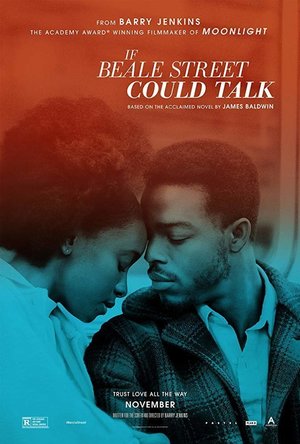
At its heart, this film portrays a truly beautiful love story. Tish and Fonny (both adorably played by the young leads) are friends becoming more than friends. We see their emerging love through flashback scenes. Some of these, particularly one on a metro train, are exquisitely done; long gazes into eyes, starting as one thing and ending as another.
In another scene, Fonny takes Tish’s virginity, and it’s done with style, taste and finesse. For younger teens this should be compulsory viewing as an antidote to all the horrible porn they are seeing on the internet: THIS is what sex, based on a foundation of true love, is all about. (The film is UK15 rated for “infrequent very strong language, strong sex” – I actually agree with the rating for the language (and actually I think an act of marital violence should also have also been referenced)…. but not for the sex, which should be 12A).
It’s a love story then? Well, yes, but offset against that, it’s a very angry film, seething with rage about how the police force and the justice system is set ‘against the black man’. Director Barry Jenkins (of – eventual – Oscar winner “Moonlight” fame) has a message to impart and he is intent on imparting it.
A great ensemble performance
The film didn’t get a SAG nomination for the ensemble cast, but it almost feels that they missed out here. As well as the two young leads being spectacular, the whole of the rest of the cast really gel well together, particularly the respective parents: Colman Domingo (“Selma“) as Tish’s father Joseph; Regina King as Tish’s mother Sharon; Michael Beach (“Patriots Day“) as Fonny’s father Frank and Aunjanue Ellis as his bible-bashing mother. A dramatic scene where they all collectively hear the news about the pregnancy is both comical and shocking in equal measure.
Poor sound mixing
If this film gets an Oscar nomination for sound, I’ll frankly be cross! There is significant use of sonorous, bass-heavy music and effects (including a lovely cello theme by Nicholas Britell) – all very effective; there is a lot of earnest and quietly spoken dialogue between the characters – also moody and effective. Unfortunately the two are mixed together in some scenes and frankly I couldn’t make out what was being said. Most frustrating.
In addition, there is voiceover narration from Tish (if you follow my blog regularly you KNOW what I think about that!). Actually, this isn’t as overly intrusive as in films like “The Hate U Give“, but it sounds like it was recorded in a dustbin! It’s a bit like that effect you get with headphones where the plug isn’t quite in the socket, and everything sounds way off and tinny. When combined with Layne’s accent the effect, again, made the dialogue difficult to comprehend.
The c-word and the n-word
There’s a degree of bad language in the film, albeit mild in comparison to “The Favourite“! Tish’s sister (Teyonah Parris) uses the c-word in one very funny dissing of Fonny’s ‘up-themselves’ sisters (Ebony Obsidian and Dominique Thorne). But the n-word is used repeatedly during the film, and that I can never get used to. I ‘get it’ (in the sense that I understand the perception) that this is a word that ‘only black people can use between themselves’. But this just feels elitist and wrong to me. At a time when Viggo Mortensen gets crucified for using it once (while being descriptive and in-context) during a press junket for “Green Book“, I just feel that if a word is taboo it should be taboo, period.
The p-word
My p-word here is “pretentious”. Barry Jenkins clearly feels he has something to prove after the success of “Moonlight“, and there are certainly moments of directorial brilliance in the film. As previously mentioned, the sex scene is one of the best I’ve seen in a long while. Also beautifully done are a birthing scene and two confrontational scenes in Puerto Rico. But there are also moments that seem to be staged, artificial and too ‘arty’ for their own good. Any hidden meaning behind them completely passed me by. (Examples are Sharon’s wig scene and a pan around Fonny’s wood sculpture). It all seems to be “trying too hard”.
Hate for the police is also writ large on the film, with every discriminatory police officer in the whole of the US embodied in the wicked sneering face of the police office Bell (Ed Skrein).
A platform that should be used for more than ranting
This is a film written and directed by an American black man (Jenkins) and largely fully cast with American black people. And I’m a white Englishman commenting on it. I’m clearly unqualified to pass judgement on how black America really feels about things! But comment I will from this fug of ignorance.
It feels to me that the “Black Lives Movement” has given, at long last, black film-makers like Jenkins a platform in cinema to present from. This is a great thing. But I’m sensing that at the moment the tone of the output from that platform (such as this film) seems to me heavily tinged with anger: a scream of frustration about the system and racial injustice over the years. It’s the film-makers right to make films about subjects dear to them. And I’m sure this summer we’ll sadly again see atrocities as previously seen in the likes of Ferguson and Dallas, fuelling the fire of hate. But I would personally really like to see someone like Jenkins use his undoubted talents to make a more uplifting film: a film reflecting the more positive strives that are happening in society, allowing for people of all races and all sexual orientations to make their way in business (not drug-running or crime!) and/or life in general. Those good news stories – the positive side of race relations – are out there and my view is that someone like Barry Jenkins should be telling them.
Final thoughts
I wasn’t as much of a fan of “Moonlight” as the Academy, and this film also left me conflicted. The film is well-made and the cast is very engaging. It also has a love story at its heart that is moody but well-done. Overall though the movie felt over-engineered and a little pretentious, and that knocked it down a few pegs for me.
‘Is there not one righteous among them?”
― James Baldwin, If Beale Street Could Talk
Beale Street refers to the jumpin’ heart of Memphis where Louis Armstrong was born. As explained in text from Baldwin’s source book (requiring a speed read!) it’s used as a metaphor for the birthplace of every black person in America. (“Every black person in America was born on Beale Street“). But the story is set in Harlem, New York, and with this intellectual stretch, before I even get past the title, I am immediately reaching for the “P-word”, of which more later.
The Plot
Tish (KiKi Layne) is 19 and in love with her lifelong friend ‘Fonny’ (Stephan James). So much in love in fact (and so careless) that Tish is now pregnant with his child. Tish must break this news to both families herself, since Fonny is inside awaiting trial for a vicious rape that he claims he didn’t commit. Tish and their joint families are trying to help, but can Fonny be released in time to see the birth of his child? Or are the institutions so set against him that release is impossible and death row might await?
Interwoven with Love and Anger
At its heart, this film portrays a truly beautiful love story. Tish and Fonny (both adorably played by the young leads) are friends becoming more than friends. We see their emerging love through flashback scenes. Some of these, particularly one on a metro train, are exquisitely done; long gazes into eyes, starting as one thing and ending as another.
In another scene, Fonny takes Tish’s virginity, and it’s done with style, taste and finesse. For younger teens this should be compulsory viewing as an antidote to all the horrible porn they are seeing on the internet: THIS is what sex, based on a foundation of true love, is all about. (The film is UK15 rated for “infrequent very strong language, strong sex” – I actually agree with the rating for the language (and actually I think an act of marital violence should also have also been referenced)…. but not for the sex, which should be 12A).
It’s a love story then? Well, yes, but offset against that, it’s a very angry film, seething with rage about how the police force and the justice system is set ‘against the black man’. Director Barry Jenkins (of – eventual – Oscar winner “Moonlight” fame) has a message to impart and he is intent on imparting it.
A great ensemble performance
The film didn’t get a SAG nomination for the ensemble cast, but it almost feels that they missed out here. As well as the two young leads being spectacular, the whole of the rest of the cast really gel well together, particularly the respective parents: Colman Domingo (“Selma“) as Tish’s father Joseph; Regina King as Tish’s mother Sharon; Michael Beach (“Patriots Day“) as Fonny’s father Frank and Aunjanue Ellis as his bible-bashing mother. A dramatic scene where they all collectively hear the news about the pregnancy is both comical and shocking in equal measure.
Poor sound mixing
If this film gets an Oscar nomination for sound, I’ll frankly be cross! There is significant use of sonorous, bass-heavy music and effects (including a lovely cello theme by Nicholas Britell) – all very effective; there is a lot of earnest and quietly spoken dialogue between the characters – also moody and effective. Unfortunately the two are mixed together in some scenes and frankly I couldn’t make out what was being said. Most frustrating.
In addition, there is voiceover narration from Tish (if you follow my blog regularly you KNOW what I think about that!). Actually, this isn’t as overly intrusive as in films like “The Hate U Give“, but it sounds like it was recorded in a dustbin! It’s a bit like that effect you get with headphones where the plug isn’t quite in the socket, and everything sounds way off and tinny. When combined with Layne’s accent the effect, again, made the dialogue difficult to comprehend.
The c-word and the n-word
There’s a degree of bad language in the film, albeit mild in comparison to “The Favourite“! Tish’s sister (Teyonah Parris) uses the c-word in one very funny dissing of Fonny’s ‘up-themselves’ sisters (Ebony Obsidian and Dominique Thorne). But the n-word is used repeatedly during the film, and that I can never get used to. I ‘get it’ (in the sense that I understand the perception) that this is a word that ‘only black people can use between themselves’. But this just feels elitist and wrong to me. At a time when Viggo Mortensen gets crucified for using it once (while being descriptive and in-context) during a press junket for “Green Book“, I just feel that if a word is taboo it should be taboo, period.
The p-word
My p-word here is “pretentious”. Barry Jenkins clearly feels he has something to prove after the success of “Moonlight“, and there are certainly moments of directorial brilliance in the film. As previously mentioned, the sex scene is one of the best I’ve seen in a long while. Also beautifully done are a birthing scene and two confrontational scenes in Puerto Rico. But there are also moments that seem to be staged, artificial and too ‘arty’ for their own good. Any hidden meaning behind them completely passed me by. (Examples are Sharon’s wig scene and a pan around Fonny’s wood sculpture). It all seems to be “trying too hard”.
Hate for the police is also writ large on the film, with every discriminatory police officer in the whole of the US embodied in the wicked sneering face of the police office Bell (Ed Skrein).
A platform that should be used for more than ranting
This is a film written and directed by an American black man (Jenkins) and largely fully cast with American black people. And I’m a white Englishman commenting on it. I’m clearly unqualified to pass judgement on how black America really feels about things! But comment I will from this fug of ignorance.
It feels to me that the “Black Lives Movement” has given, at long last, black film-makers like Jenkins a platform in cinema to present from. This is a great thing. But I’m sensing that at the moment the tone of the output from that platform (such as this film) seems to me heavily tinged with anger: a scream of frustration about the system and racial injustice over the years. It’s the film-makers right to make films about subjects dear to them. And I’m sure this summer we’ll sadly again see atrocities as previously seen in the likes of Ferguson and Dallas, fuelling the fire of hate. But I would personally really like to see someone like Jenkins use his undoubted talents to make a more uplifting film: a film reflecting the more positive strives that are happening in society, allowing for people of all races and all sexual orientations to make their way in business (not drug-running or crime!) and/or life in general. Those good news stories – the positive side of race relations – are out there and my view is that someone like Barry Jenkins should be telling them.
Final thoughts
I wasn’t as much of a fan of “Moonlight” as the Academy, and this film also left me conflicted. The film is well-made and the cast is very engaging. It also has a love story at its heart that is moody but well-done. Overall though the movie felt over-engineered and a little pretentious, and that knocked it down a few pegs for me.
Kirk Bage (1775 KP) rated Tales from the Loop in TV
Jan 22, 2021
Such is the competition for our attention on the major streaming services, and such is the daunting depth of choice, that sometimes something of real quality can slip through the net for a while. I like to think that eventually, everything gets the audience it deserves, because eventually enough people that appreciated it will find it and pass it on. But it is apparent that good things can go under the radar very easily for one reason or another.
Everything about the production and presentation of Amazon’s Tales From the Loop suggests they thought it might be a bigger hit, or at least they had enough faith in it to let it be different from the mass appeal conventions that apply to sci-fi shows. They have proved this many times in recent years, with shows like The Man In the High Castle and The Expanse favouring patient and mature story-telling over interminable flashbangs and whizzpops usually found in the more action based sci-fi on Netflix and others (The Handmaid’s Tale being another notable exception).
Having raised myself auto-didactically on the oldest traditions of science fiction writing in novel and short story form since my teenage years, I can say with some amateur authority that the point of using sci-fi ideas was always about the people and the parallels to social reality and politics that could be highlighted by putting them in a “what-if” situation. The lazer guns and spaceships and evil aliens were much more a product of Hollywood, and still are. Great science fiction writing can and usually does revolve around a very simple change to the world we know, an inversion or a convention or a technology that turns how we live on its head. At its best it is philosophical and moral poetry.
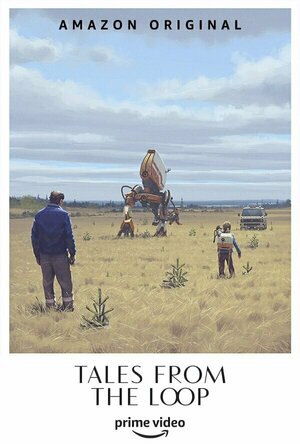
Tales From the Loop, inspired by the beguiling paintings of Swedish Artist Simon Stålenhag aspires to return to these principles, eschewing breakneck pace and unnecessary exposition at every turn – it is entirely content to confuse and sometimes even bore you with its patient, melancholy approach, testing almost if you are worthy to reach the prize of deeper meaning buried away in the final few episodes.
The idea of Stålenhag’s work is to juxtapose a familiar and mundane landscape with a detail of technology that does not exist in our reality. Often it is something broken, run-down or neglected, leaving a strange sadness and beauty behind that has you wondering who once made this and what was it for, and why is it no longer loved? The untold stories objects and hidden lives, secrets and desires that have been lost, is what this sensitive and delicate show is about. It is about the interconnection of lives caught in time, and the sci-fi / tech conceit is only the hanger that coat is put on. Which… I love.
The surface idea is that we are looking at the inhabitants of a small American town that once relied on farming and community, but now has been changed by the presence of an underground facility that deals with experimental physics and finding ways to make impossible things possible. They call it The Loop. It is never fully explained where it came from, or why, or what it is truly capable of – the mystery is always allowed to remain mostly a mystery – which, again, I love!
Many people in the town work at The Loop and rely on it for their livelihoods and collective economy, including Jonathon Pryce and Rebecca Hall, who are ostensibly the show’s main characters. But most folk have no idea what is really going on. Each episode focuses on one or two members of the community that interweave with one another; several important people begin as background dressing and become more prevalent as the full story of their lives and connections unfolds. But no one character is in every episode… which, you know, I love.
Their lives, that seem simple at first glance, are revealed to be complex tapestries of emotion and personal history, revolving around how The Loop has affected them and the things they love. The progression and unfolding of the detail is so deliberate and usually under-explained that very often you don’t realise the effect the full image will have. And when it does catch up with you it becomes a very moving and meaningful experience. Characters that you don’t understand or even like at first come into sharper focus as we reach the climax of the season and grow to learn why they are the way they are. The story arcs of Pryce and Hall in particular are very satisfying, tragic yet utterly beautiful to comprehend.
A lot of the criticism you will see about the show will concentrate on how slow it all is. I am totally convinced this is a deliberate artistic choice to weed out the thrill junkies. They are very welcome to go elsewhere, and it sounds as if many of them did, basing their reviews on one or two half watched episodes they couldn’t be bothered to engage with or wonder at. Which is why I think in time the respect for this as a work of art will come back around.
There is nothing to fault in the production at all. From the opening credits to the end of each episode, what you get is a very highly polished and considered look and feel, designed to evoke certain feelings over others – a wistfulness, an ennui, a bittersweet smile of knowing, perhaps. It invites you to watch patiently and relate, not to watch eagerly and expect… which, you know, I love.
The photography is crisp and well framed always; the music is subtle but effective; the dialogue is often sparing and well chosen (no detail is merely thrown away); and the direction is of a remarkably uniform vision, considering each episode is a different guest professional, including such prestigious names as Jodie Foster, Mark Romanek and Andrew Stanton.
I absolutely urge anyone that isn’t put off by a little sentiment to give this one a try. Sadness and regret in life is not something to shun and be afraid of, they are parts of human experience, and I love art that explores them as concepts. Put that art in a science fiction context and I am bound to love it even more. Like the final moments of Blade Runner, we know that one day all these moments will be lost in time, like tears in rain. We have to take time to see the beauty while we can, even if that beauty is painful.
It may not be for you – I don’t think it is better or worse than other things, just more… me. There is every chance that if it isn’t you… you will hate it. If you do begin, however, please see it to the finish before casting judgement – the final episode directed by Jodie Foster is truly wonderful: a pay-off of such emotion after your investment of seven previous stories, tying it all together perfectly. Rarely have I felt so stupid for not understanding the point of something sooner, or been more pleased that I hadn’t. The final moment of the season is literally unforgettable, and gets richer in my imagination by the day.
Will there be a second season? There certainly could be. Was it enough of a success to justify the investment? Hmm, not sure. Either way, it either sits as a perfect self contained collection of fine, old-fashioned sci-fi stories, or I’d be happy to see it expand, as long as the temptation isn’t to listen to the negative reviews and pander to the fast-food mentality that has already rejected it without fully understanding it. Because nothing needs to change here. A thing of beauty, recommended to those who like beautiful and delicate things.
Everything about the production and presentation of Amazon’s Tales From the Loop suggests they thought it might be a bigger hit, or at least they had enough faith in it to let it be different from the mass appeal conventions that apply to sci-fi shows. They have proved this many times in recent years, with shows like The Man In the High Castle and The Expanse favouring patient and mature story-telling over interminable flashbangs and whizzpops usually found in the more action based sci-fi on Netflix and others (The Handmaid’s Tale being another notable exception).
Having raised myself auto-didactically on the oldest traditions of science fiction writing in novel and short story form since my teenage years, I can say with some amateur authority that the point of using sci-fi ideas was always about the people and the parallels to social reality and politics that could be highlighted by putting them in a “what-if” situation. The lazer guns and spaceships and evil aliens were much more a product of Hollywood, and still are. Great science fiction writing can and usually does revolve around a very simple change to the world we know, an inversion or a convention or a technology that turns how we live on its head. At its best it is philosophical and moral poetry.
Tales From the Loop, inspired by the beguiling paintings of Swedish Artist Simon Stålenhag aspires to return to these principles, eschewing breakneck pace and unnecessary exposition at every turn – it is entirely content to confuse and sometimes even bore you with its patient, melancholy approach, testing almost if you are worthy to reach the prize of deeper meaning buried away in the final few episodes.
The idea of Stålenhag’s work is to juxtapose a familiar and mundane landscape with a detail of technology that does not exist in our reality. Often it is something broken, run-down or neglected, leaving a strange sadness and beauty behind that has you wondering who once made this and what was it for, and why is it no longer loved? The untold stories objects and hidden lives, secrets and desires that have been lost, is what this sensitive and delicate show is about. It is about the interconnection of lives caught in time, and the sci-fi / tech conceit is only the hanger that coat is put on. Which… I love.
The surface idea is that we are looking at the inhabitants of a small American town that once relied on farming and community, but now has been changed by the presence of an underground facility that deals with experimental physics and finding ways to make impossible things possible. They call it The Loop. It is never fully explained where it came from, or why, or what it is truly capable of – the mystery is always allowed to remain mostly a mystery – which, again, I love!
Many people in the town work at The Loop and rely on it for their livelihoods and collective economy, including Jonathon Pryce and Rebecca Hall, who are ostensibly the show’s main characters. But most folk have no idea what is really going on. Each episode focuses on one or two members of the community that interweave with one another; several important people begin as background dressing and become more prevalent as the full story of their lives and connections unfolds. But no one character is in every episode… which, you know, I love.
Their lives, that seem simple at first glance, are revealed to be complex tapestries of emotion and personal history, revolving around how The Loop has affected them and the things they love. The progression and unfolding of the detail is so deliberate and usually under-explained that very often you don’t realise the effect the full image will have. And when it does catch up with you it becomes a very moving and meaningful experience. Characters that you don’t understand or even like at first come into sharper focus as we reach the climax of the season and grow to learn why they are the way they are. The story arcs of Pryce and Hall in particular are very satisfying, tragic yet utterly beautiful to comprehend.
A lot of the criticism you will see about the show will concentrate on how slow it all is. I am totally convinced this is a deliberate artistic choice to weed out the thrill junkies. They are very welcome to go elsewhere, and it sounds as if many of them did, basing their reviews on one or two half watched episodes they couldn’t be bothered to engage with or wonder at. Which is why I think in time the respect for this as a work of art will come back around.
There is nothing to fault in the production at all. From the opening credits to the end of each episode, what you get is a very highly polished and considered look and feel, designed to evoke certain feelings over others – a wistfulness, an ennui, a bittersweet smile of knowing, perhaps. It invites you to watch patiently and relate, not to watch eagerly and expect… which, you know, I love.
The photography is crisp and well framed always; the music is subtle but effective; the dialogue is often sparing and well chosen (no detail is merely thrown away); and the direction is of a remarkably uniform vision, considering each episode is a different guest professional, including such prestigious names as Jodie Foster, Mark Romanek and Andrew Stanton.
I absolutely urge anyone that isn’t put off by a little sentiment to give this one a try. Sadness and regret in life is not something to shun and be afraid of, they are parts of human experience, and I love art that explores them as concepts. Put that art in a science fiction context and I am bound to love it even more. Like the final moments of Blade Runner, we know that one day all these moments will be lost in time, like tears in rain. We have to take time to see the beauty while we can, even if that beauty is painful.
It may not be for you – I don’t think it is better or worse than other things, just more… me. There is every chance that if it isn’t you… you will hate it. If you do begin, however, please see it to the finish before casting judgement – the final episode directed by Jodie Foster is truly wonderful: a pay-off of such emotion after your investment of seven previous stories, tying it all together perfectly. Rarely have I felt so stupid for not understanding the point of something sooner, or been more pleased that I hadn’t. The final moment of the season is literally unforgettable, and gets richer in my imagination by the day.
Will there be a second season? There certainly could be. Was it enough of a success to justify the investment? Hmm, not sure. Either way, it either sits as a perfect self contained collection of fine, old-fashioned sci-fi stories, or I’d be happy to see it expand, as long as the temptation isn’t to listen to the negative reviews and pander to the fast-food mentality that has already rejected it without fully understanding it. Because nothing needs to change here. A thing of beauty, recommended to those who like beautiful and delicate things.