Search
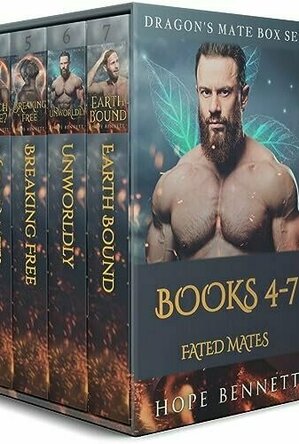
Dragon's Mate Volume Two: Books 4-7
Book
Enjoy the Dragon’s Mate series in this convenient bundle. Witch Mate? Anthony is in trouble....
MM Paranormal Romance Shifters Dragons
Mandy and G.D. Burkhead (26 KP) rated Banewreaker in Books
May 20, 2018
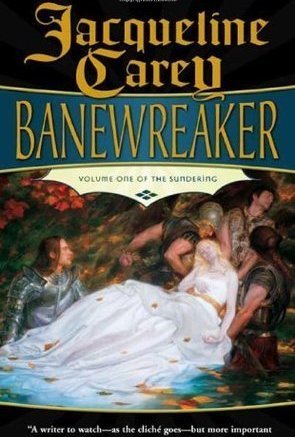
Shelf Life – Banewreaker Will Make You Feel Bad for Sauron
Contains spoilers, click to show
Very few fantasy fans can get away with admitting that they aren’t all that big into sweeping, high epic fantasy à la Lord of the Rings or the Pern stories or everything that Terry Brooks writes. Many non-fantasy fans, however, can point to these tales as examples of why they aren’t into fantasy. Like it or not, it’s hard not to see the latter group’s point, as a lot of high fantasy is riddled with confusing terminology, rehashed stories, and genre clichés. This is not to say that these stories are bad, per sé, just that they can easily turn off readers who aren’t in the right kind of crowd.
Banewreaker, the first book in Jacqueline Carey’s two-part volume The Sundering, will probably not change any opinions in this respect, then, as it’s sweeping high fantasy to the core. This, as it turns out, is both its greatest strength and its greatest weakness.
There are some reviews out there that laud Banewreaker as a masterful examination of subjective viewpoints in an epic fantasy turned into a human tragedy by a simple change of perspective. And they are absolutely correct.
There are other reviews, however, that call the book out as a heap of all of the stalest fantasy clichés piled one atop the other in a confusing and pretentious jumble with a shellacking of purple prose for good measure. And they are also absolutely correct.
Let me explain.
For starters, it would be inaccurate to say that this story is full of clichés. This story is clichés. This story is every familiar and used-up trope you would expect from a high fantasy, all of those details that have been done to death in thousands of other versions until almost nothing that happens seems original anymore.
This is what’s going to turn off a lot of people. But the thing is, Banewreaker has to be this way. It wants the reader to look at all of the things that they’ve come to expect from a fantasy epic and then, by shifting the narrative focus, realize that all of these beloved tropes are actually, when you think about it, tragic as hell.
In other words, it’s Lord of the Rings from Sauron’s point of view.
It’s not a riff, though. It’s not goofy like most of the stuff I go in for. It takes its subject just as seriously as the stories that it’s mirroring, and this is what makes the whole story ultimately so gripping and so moving.
The story starts out like many stories of this magnitude, with exposition stretching back to the Dawn of This Particular Creation. In this case, we have a protogenos world god named Uru-Alat who died and gave rise to seven smaller godlike beings called Shapers. First comes Haomane, who becomes the Lord of Thought and sets himself up as head honcho for this ensuing pantheon. Second is Arahila, the Basically a Love Goddess; and third is Satoris, whose purview was “the quickening of the flesh,” which is high fantasy speak for sexy times. Four more Shapers come after this who, for the sake of brevity, we’ll be glossing over.
To summarize the important godly exposition, the Seven Shapers set about shaping the world to the surprise of no one. Haomane creates elves (here called Ellyl, but if you’ve ever even looked at a fantasy, you know that they’re the elves here), Arahila creates humans, and Satoris doesn’t create anything because he’s busy hanging out with dragons and learning their wisdom. Satoris grants his fleshy quickening to the humans but not the elves, because Haomane didn’t want his elves to do that. Then Haomane decides he doesn’t want the humans to do that either, but Satoris refuses to take the gift away again. Conflict escalates, god wars ensue, and the world splits into two continents, with Satoris ostracized from his brethren on one and the remaining Shapers on the other. By the time the dust has settled, Satoris is scarred and burned pitch black, living in a mostly dead land thanks to Haomane’s wrath, but with a dagger in his possession that is the only weapon capable of killing any of the Shapers.
The story itself picks up thousands of years later, with Satoris as the Satan/Sauron stand-in living in a forbidding land surrounded by classically evil things like trolls, giant spiders, and insane people. Since Haomane is the head god, the rest of the world believes Satoris to be a terrible figure of evil and betrayal, while Satoris’s few allies know him as a pitiable and misunderstood figure who only ever wanted to honor his word and do right by his own sense of morality rather than the dictates of his elder brother god king.
From here the plot becomes the typical Army of Good vs. Army of Evil adventure, but with the protagonistic focus on Satoris and his allies. His trolls we see not as a mindless horde but as a simple, honorable people who happily serve their lord because he happily serves them right back. The mad individuals inhabiting his fortress are castaways from normal society with nowhere else to go. And the giant spiders just happen to live there and be bigger than normal, with no sinister intentions beyond that.
And just like that, by actually showing us the home life of the ultimate in evil fantasy tropes, we see how easily one side’s view of evil is another’s view of good. In doing so, Banewreaker becomes perhaps the first sweeping fantasy epic with no real bad guy, just two sides of an unfortunate conflict. Both sides have their likeable characters, both sides seem from their view to be in the right, and pretty soon you, as the reader, will stop cheering for either one, because whenever one person that you like succeeds it means that another person whom you also like is failing.
In fact, the closest thing that this story has to a clearly-labeled “evil” character is the sorceress Lilias, and even then, she’s not evil so much as a woman who has done some bad things for completely understandable reasons. Lilias, in fact, is one of the most pitiful characters in this whole saga of pitiable characters, with her fears and attachments closely mirroring those of most readers, only amplified by her immortality and magical powers. She is afraid of dying. She wants to be more in the grand scheme of things than just another man’s wife or another country’s momentary ruler, both of which would just be tiny moments in a long history. She likes her youth. She likes having pretty things and pretty people around her. And from her interactions with her dragon mentor and apparently only friend, Calandor, we see that she is also capable of intense affection and even love just as she is capable of indulging in self-centered self-interest that, if not particularly a good trait, is also one that she is not alone in possessing.
Banewreaker, then, is a story with a large cast of characters but very few actual heroes or innocents as well as very few outright villains, which is exactly what it sets out to be. Those who love it and those who hate it both seem to blame this quality in particular for their feelings. The biggest complaint leveled against it (that I have read, anyway) is that the people we should be rooting for do not deserve our sympathy, while the people we should be rooting against are more misguided and unwilling to see things in another light than deserving of our scorn.
This is true. But if it’s a flaw, it’s an intentional one. And if it makes you feel like you shouldn’t be cheering for either side at all in this conflict, that’s the point. This is a story of clichés, yes, but it has something that it needs to say about these clichés and, in doing so, about the subjective and impossibly nebulous quality of morality in general.
In short, here again is another fantasy story about the Forces of Good wiping out an entire nation dedicated to their “evil” enemy. And as the story points out, even if you believe in that cause, you’re still wiping out an entire nation of people. No way is there not a downside to that. Seeing things in a black-and-white morality just means crushing a whole lot of important shades of gray underfoot.
Whether or not you like Banewreaker, then, depends in large part upon how much you realize that Carey as an author is being self-aware. As someone who read and still hasn’t stopped being awed over her Kushiel series, I can’t claim complete objectivity in this area, because I came to Banewreaker already in love with her. I can say, however, that unless you have an intense and searing aversion to ornate and sweeping style, this book is worth any fantasy-lover’s time – especially if you’ve ever felt a pang of empathy for all of the poor villainous mooks that fantasy heroes tend to mow down without a thought because they were the wrong kind of ugly.

Banewreaker, the first book in Jacqueline Carey’s two-part volume The Sundering, will probably not change any opinions in this respect, then, as it’s sweeping high fantasy to the core. This, as it turns out, is both its greatest strength and its greatest weakness.
There are some reviews out there that laud Banewreaker as a masterful examination of subjective viewpoints in an epic fantasy turned into a human tragedy by a simple change of perspective. And they are absolutely correct.
There are other reviews, however, that call the book out as a heap of all of the stalest fantasy clichés piled one atop the other in a confusing and pretentious jumble with a shellacking of purple prose for good measure. And they are also absolutely correct.
Let me explain.
For starters, it would be inaccurate to say that this story is full of clichés. This story is clichés. This story is every familiar and used-up trope you would expect from a high fantasy, all of those details that have been done to death in thousands of other versions until almost nothing that happens seems original anymore.
This is what’s going to turn off a lot of people. But the thing is, Banewreaker has to be this way. It wants the reader to look at all of the things that they’ve come to expect from a fantasy epic and then, by shifting the narrative focus, realize that all of these beloved tropes are actually, when you think about it, tragic as hell.
In other words, it’s Lord of the Rings from Sauron’s point of view.
It’s not a riff, though. It’s not goofy like most of the stuff I go in for. It takes its subject just as seriously as the stories that it’s mirroring, and this is what makes the whole story ultimately so gripping and so moving.
The story starts out like many stories of this magnitude, with exposition stretching back to the Dawn of This Particular Creation. In this case, we have a protogenos world god named Uru-Alat who died and gave rise to seven smaller godlike beings called Shapers. First comes Haomane, who becomes the Lord of Thought and sets himself up as head honcho for this ensuing pantheon. Second is Arahila, the Basically a Love Goddess; and third is Satoris, whose purview was “the quickening of the flesh,” which is high fantasy speak for sexy times. Four more Shapers come after this who, for the sake of brevity, we’ll be glossing over.
To summarize the important godly exposition, the Seven Shapers set about shaping the world to the surprise of no one. Haomane creates elves (here called Ellyl, but if you’ve ever even looked at a fantasy, you know that they’re the elves here), Arahila creates humans, and Satoris doesn’t create anything because he’s busy hanging out with dragons and learning their wisdom. Satoris grants his fleshy quickening to the humans but not the elves, because Haomane didn’t want his elves to do that. Then Haomane decides he doesn’t want the humans to do that either, but Satoris refuses to take the gift away again. Conflict escalates, god wars ensue, and the world splits into two continents, with Satoris ostracized from his brethren on one and the remaining Shapers on the other. By the time the dust has settled, Satoris is scarred and burned pitch black, living in a mostly dead land thanks to Haomane’s wrath, but with a dagger in his possession that is the only weapon capable of killing any of the Shapers.
The story itself picks up thousands of years later, with Satoris as the Satan/Sauron stand-in living in a forbidding land surrounded by classically evil things like trolls, giant spiders, and insane people. Since Haomane is the head god, the rest of the world believes Satoris to be a terrible figure of evil and betrayal, while Satoris’s few allies know him as a pitiable and misunderstood figure who only ever wanted to honor his word and do right by his own sense of morality rather than the dictates of his elder brother god king.
From here the plot becomes the typical Army of Good vs. Army of Evil adventure, but with the protagonistic focus on Satoris and his allies. His trolls we see not as a mindless horde but as a simple, honorable people who happily serve their lord because he happily serves them right back. The mad individuals inhabiting his fortress are castaways from normal society with nowhere else to go. And the giant spiders just happen to live there and be bigger than normal, with no sinister intentions beyond that.
And just like that, by actually showing us the home life of the ultimate in evil fantasy tropes, we see how easily one side’s view of evil is another’s view of good. In doing so, Banewreaker becomes perhaps the first sweeping fantasy epic with no real bad guy, just two sides of an unfortunate conflict. Both sides have their likeable characters, both sides seem from their view to be in the right, and pretty soon you, as the reader, will stop cheering for either one, because whenever one person that you like succeeds it means that another person whom you also like is failing.
In fact, the closest thing that this story has to a clearly-labeled “evil” character is the sorceress Lilias, and even then, she’s not evil so much as a woman who has done some bad things for completely understandable reasons. Lilias, in fact, is one of the most pitiful characters in this whole saga of pitiable characters, with her fears and attachments closely mirroring those of most readers, only amplified by her immortality and magical powers. She is afraid of dying. She wants to be more in the grand scheme of things than just another man’s wife or another country’s momentary ruler, both of which would just be tiny moments in a long history. She likes her youth. She likes having pretty things and pretty people around her. And from her interactions with her dragon mentor and apparently only friend, Calandor, we see that she is also capable of intense affection and even love just as she is capable of indulging in self-centered self-interest that, if not particularly a good trait, is also one that she is not alone in possessing.
Banewreaker, then, is a story with a large cast of characters but very few actual heroes or innocents as well as very few outright villains, which is exactly what it sets out to be. Those who love it and those who hate it both seem to blame this quality in particular for their feelings. The biggest complaint leveled against it (that I have read, anyway) is that the people we should be rooting for do not deserve our sympathy, while the people we should be rooting against are more misguided and unwilling to see things in another light than deserving of our scorn.
This is true. But if it’s a flaw, it’s an intentional one. And if it makes you feel like you shouldn’t be cheering for either side at all in this conflict, that’s the point. This is a story of clichés, yes, but it has something that it needs to say about these clichés and, in doing so, about the subjective and impossibly nebulous quality of morality in general.
In short, here again is another fantasy story about the Forces of Good wiping out an entire nation dedicated to their “evil” enemy. And as the story points out, even if you believe in that cause, you’re still wiping out an entire nation of people. No way is there not a downside to that. Seeing things in a black-and-white morality just means crushing a whole lot of important shades of gray underfoot.
Whether or not you like Banewreaker, then, depends in large part upon how much you realize that Carey as an author is being self-aware. As someone who read and still hasn’t stopped being awed over her Kushiel series, I can’t claim complete objectivity in this area, because I came to Banewreaker already in love with her. I can say, however, that unless you have an intense and searing aversion to ornate and sweeping style, this book is worth any fantasy-lover’s time – especially if you’ve ever felt a pang of empathy for all of the poor villainous mooks that fantasy heroes tend to mow down without a thought because they were the wrong kind of ugly.
Purple Phoenix Games (2266 KP) rated Dinos Not Assembled in Tabletop Games
Mar 15, 2021
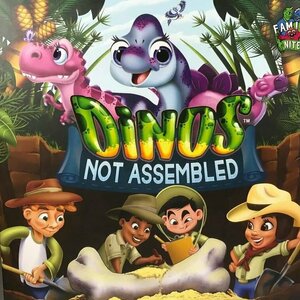
I think it’s no secret that I would be super hyped to go on a dinosaur dig. My brother, Bryan, is certainly more of a dino dude than I am, but I still remember loving them as a child and wishing I could see a skeleton being unearthed. Now I am the one with children who wish the same thing, and now I can play games with just that theme and they enjoy themselves. This is just such a game.
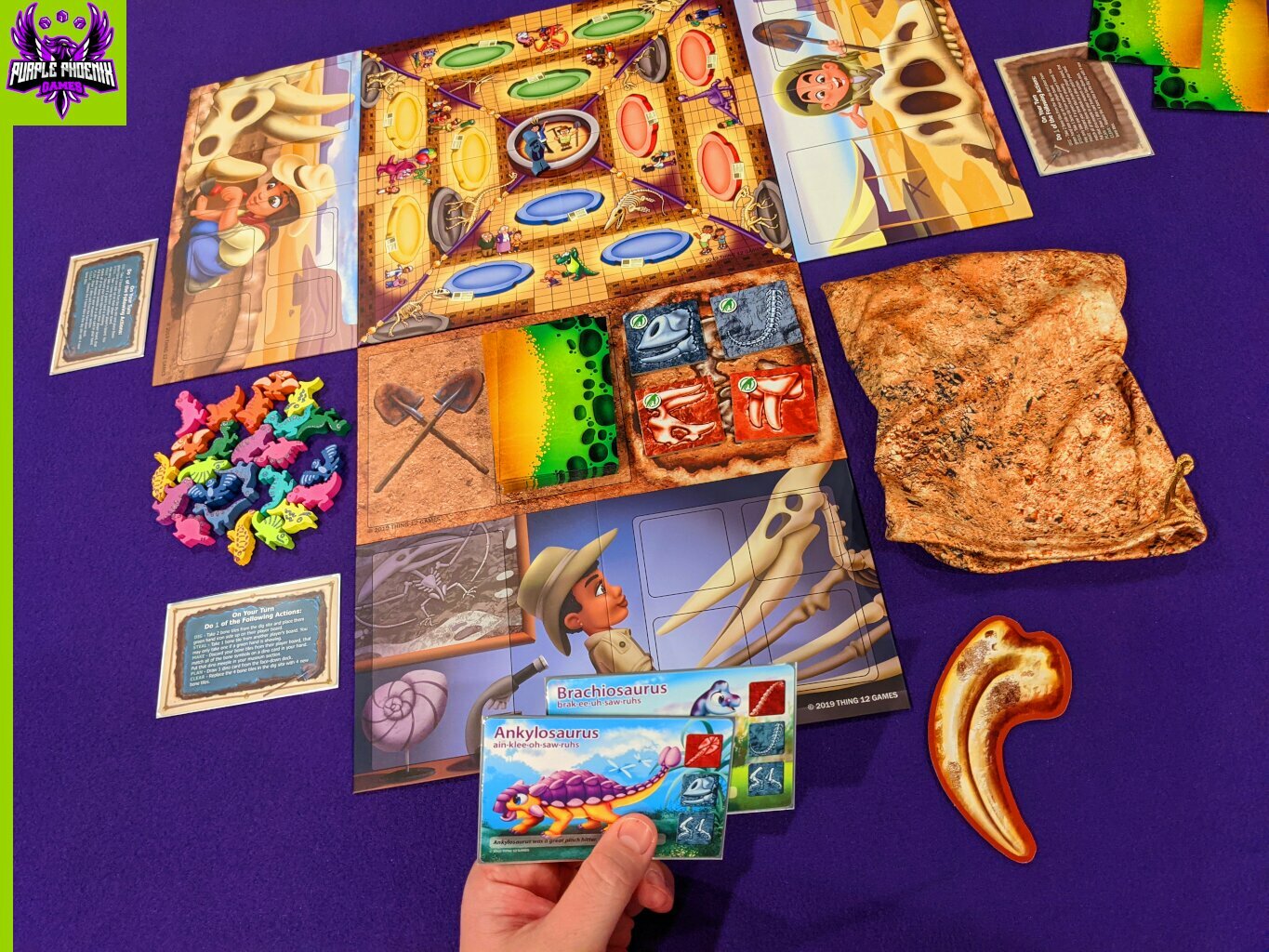
Dinos Not Assembled is a competitive set collection board game with hints of take-that for two to four players that can be enjoyed by players as young as four years old (I know this because my son is four and he loves it). In it players are acting as assistant paleontologists vying for the prestigious opportunity to join a world-famous paleo on their next dig. The player who is first to display three complete dinosaur skeletons in their portion of the museum will win the chance to go on the dig and win the game.
DISCLAIMER: We were provided a copy of this game for the purposes of this review. This is a retail copy of the game, so what you see in these photos is exactly what would be received in your box. I do not intend to cover every single rule included in the rulebook, but will describe the overall game flow and major rule set so that our readers may get a sense of how the game plays. For more in depth rules, you may purchase a copy online or from your FLGS. -T
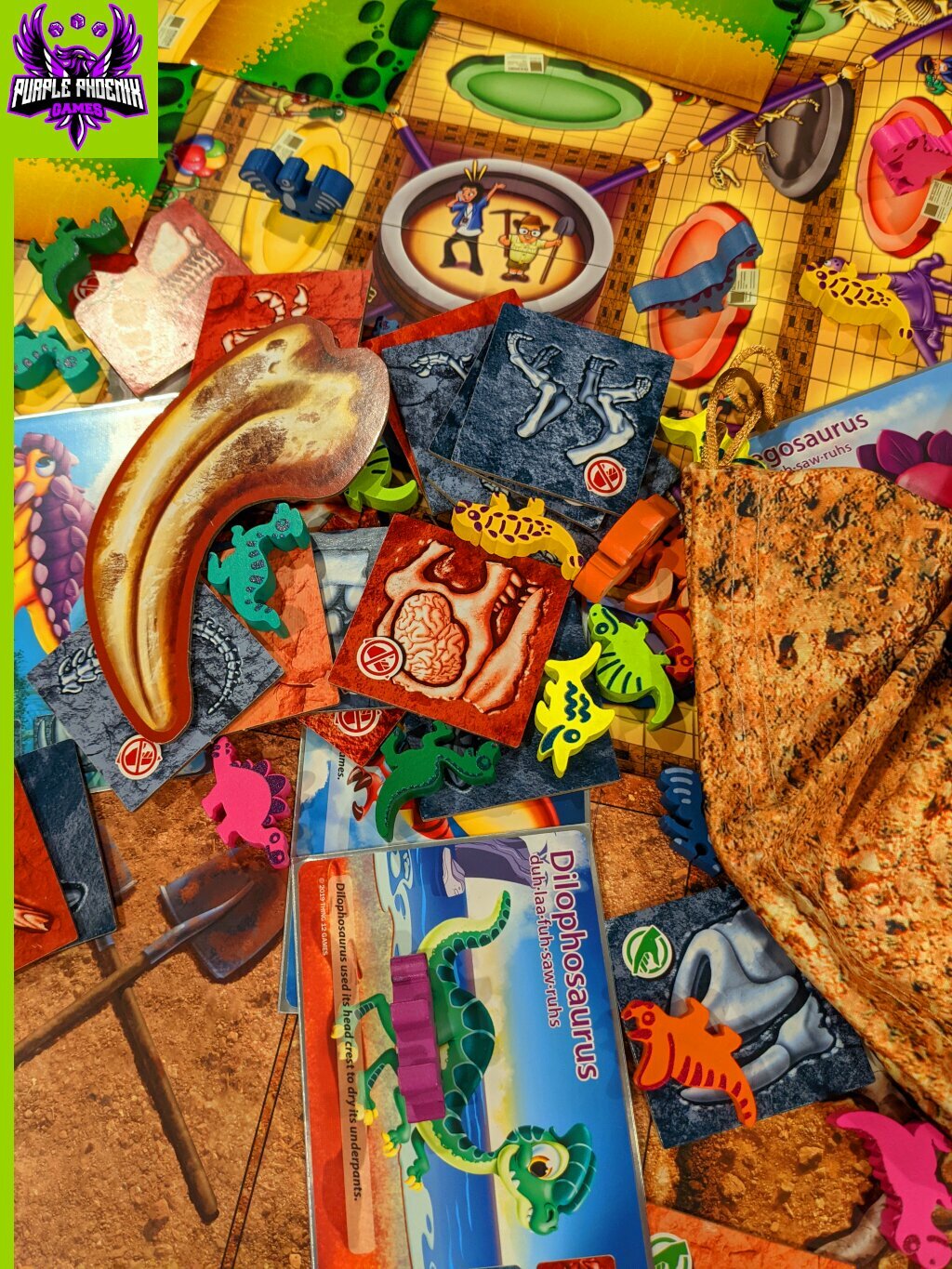
To setup place the main Museum Board and Dig Site Board in the middle of the table. The Dino Cards are shuffled and each player receives two cards. In addition each player will choose their Character Boards and section of the museum. All Bone Tiles are shuffled into the Dirt Sack, four of these tiles are drawn and displayed on the Dig Site Board, and the Dino Meeples are placed on the table nearby. The first player receives the velociraptor talon (in my copy) and the game may begin!
On a turn a player may perform one action from a choice of five actions: Dig, Steal, Clear, Make, Plan. Since the players are attempting to build their dinosaur skeletons based on the necessary tile types from their Dino Cards, players may Dig by selecting two Bone Tiles from the Dig Site Board to add to their Character Board. Players may never have more than four tiles at any one time. Perhaps the Dig Site Board offers nothing of interest to the active player. The active player may choose to instead Steal one Bone Tile from another player onto their own Character Board. When this happens the player that was just stolen from alerts the Security Meeple and they take the meeple to their Character Board to signify they may not be stolen from again until another player has suffered a Steal action. The active player may choose to instead Clear the board by removing the tiles on offer and drawing four new tiles to the board.
Once a player has collected the necessary Bone Tiles to build a dino skeleton they may Make the skeleton. This requires the player to discard their Bone Tiles back to the Dirt Sack (which I mistakenly kept calling the Dirt Bag), place their completed Dino Card on their Character Board, and place the appropriate Dino Meeple on one of their museum spaces. This player is now one dino closer to winning the game.
If none of these options suit the active player they may always Plan a new dig by drawing a Dino Card from the pile on the Dig Site Board and adding it to their hand. Players may not hold more than three Dino Cards at any one time.
Play continues in this manner of players choosing one action to perform on their turn until one player has made their third dino skeleton. That player wins the game and then gloats to their father. I mean, that didn’t happen…
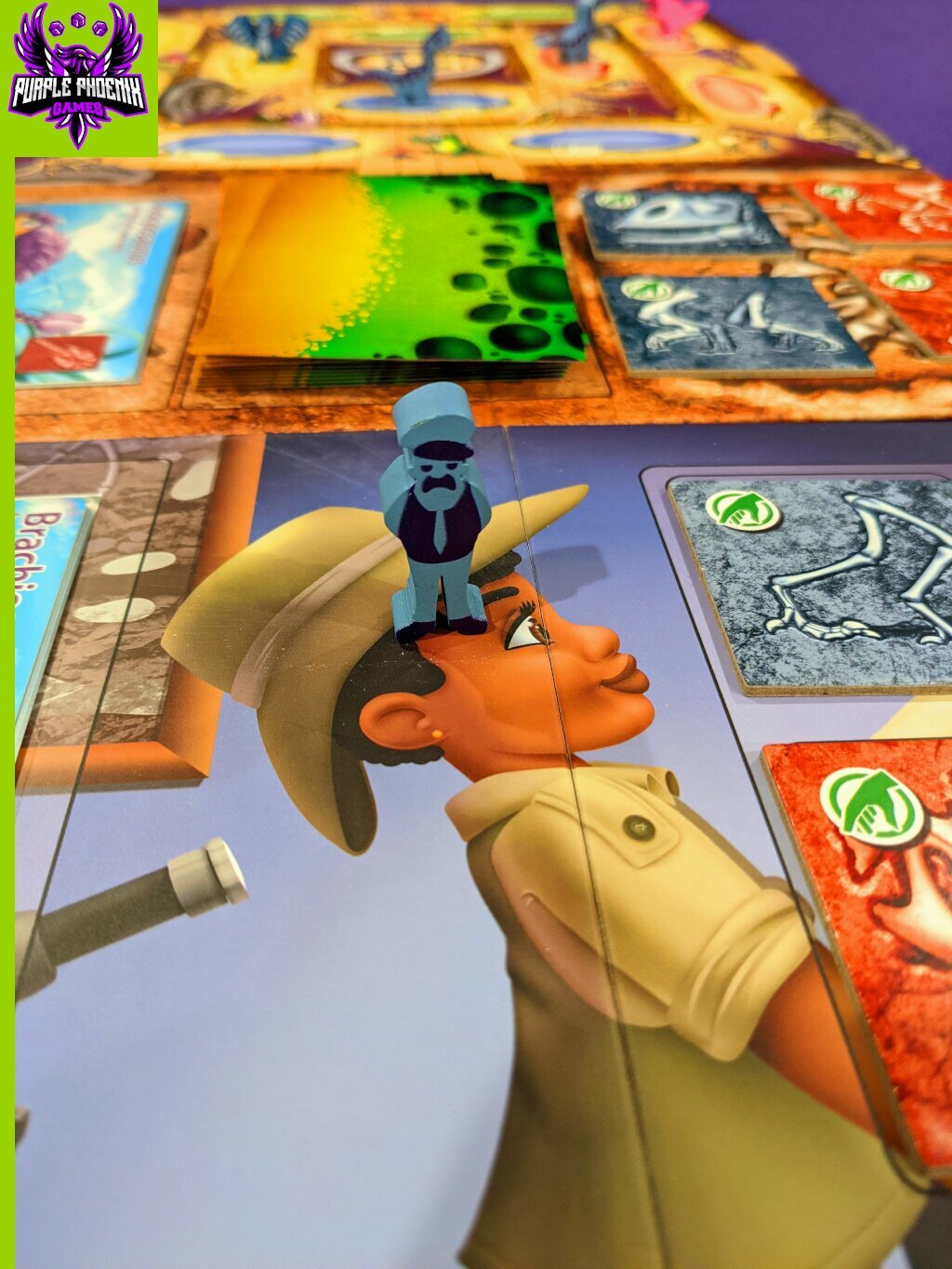
Components. This game is fabulously produced. The artwork is just perfect for this game. It is colorful, cartoony without being too wacky, and lovable all around. The components themselves are also very good quality. My favorite pieces are all the Dino Meeples and the fancy Security Meeple. Securiteeple?
For a game that states it is intended for players aged eight and above this is a great family game. Yes, my four year old plays it and loves it, and absolutely zero reading skills are necessary to play. The Dino Cards have some fun facts on them, but are not required to enjoy the game. Once players truly understand the five actions that can be taken (and it may take several turns to click) the game is a breeze and flows really well. I would caution gamers playing with younger kids that the Steal action may cause some tears, but it can be used as an essential teaching moment.
Even with strictly adults this game is excellent. Very light and gateway, but still very enjoyable. There is just something about collecting dinosaur bones and building your beasts, but having to also struggle with deciding which bones to keep and which to pass on, as your board can only hold four tiles at a time, but each dinosaur requires three bones to complete. It can be a tasty balancing act of resource collection that I truly love.
This all said Purple Phoenix Games gives this one a very enthusiastic 11 / 12, with a guest score from my son. If your collection lacks a great family game for younger gamers or you are completely invested in the dinosaur theme then this one is a no-brainer. If you enjoy family games with a little bit of take-that, then this is a little gem for you to consider. I am so glad to have this in my collection and my son is already asking to be its caretaker. He has only ever requested two games to ever become “his,” and this is one of them. High praise from the son of a game reviewer.
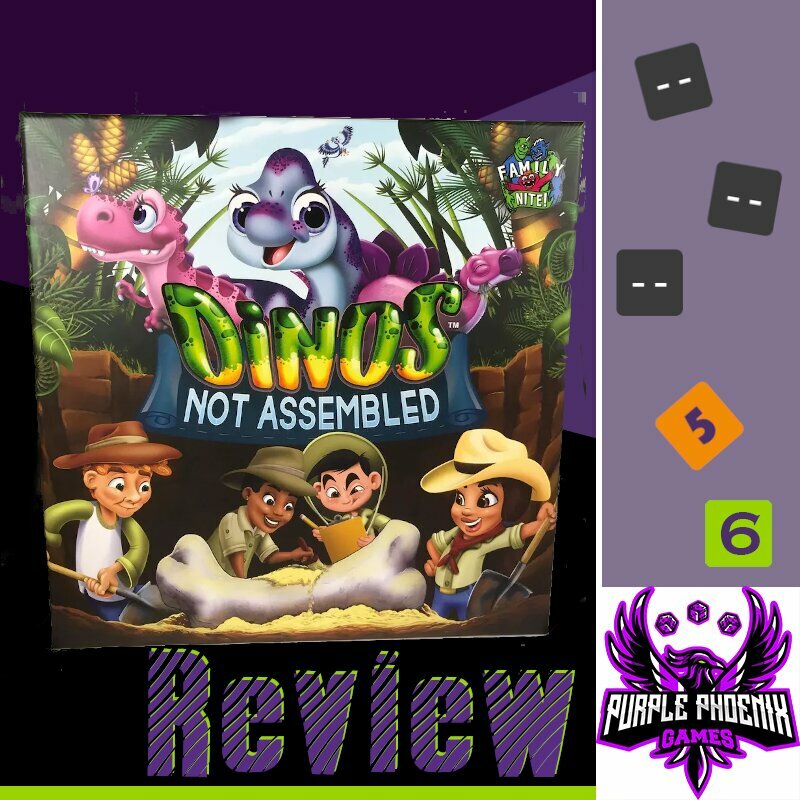
Dinos Not Assembled is a competitive set collection board game with hints of take-that for two to four players that can be enjoyed by players as young as four years old (I know this because my son is four and he loves it). In it players are acting as assistant paleontologists vying for the prestigious opportunity to join a world-famous paleo on their next dig. The player who is first to display three complete dinosaur skeletons in their portion of the museum will win the chance to go on the dig and win the game.
DISCLAIMER: We were provided a copy of this game for the purposes of this review. This is a retail copy of the game, so what you see in these photos is exactly what would be received in your box. I do not intend to cover every single rule included in the rulebook, but will describe the overall game flow and major rule set so that our readers may get a sense of how the game plays. For more in depth rules, you may purchase a copy online or from your FLGS. -T
To setup place the main Museum Board and Dig Site Board in the middle of the table. The Dino Cards are shuffled and each player receives two cards. In addition each player will choose their Character Boards and section of the museum. All Bone Tiles are shuffled into the Dirt Sack, four of these tiles are drawn and displayed on the Dig Site Board, and the Dino Meeples are placed on the table nearby. The first player receives the velociraptor talon (in my copy) and the game may begin!
On a turn a player may perform one action from a choice of five actions: Dig, Steal, Clear, Make, Plan. Since the players are attempting to build their dinosaur skeletons based on the necessary tile types from their Dino Cards, players may Dig by selecting two Bone Tiles from the Dig Site Board to add to their Character Board. Players may never have more than four tiles at any one time. Perhaps the Dig Site Board offers nothing of interest to the active player. The active player may choose to instead Steal one Bone Tile from another player onto their own Character Board. When this happens the player that was just stolen from alerts the Security Meeple and they take the meeple to their Character Board to signify they may not be stolen from again until another player has suffered a Steal action. The active player may choose to instead Clear the board by removing the tiles on offer and drawing four new tiles to the board.
Once a player has collected the necessary Bone Tiles to build a dino skeleton they may Make the skeleton. This requires the player to discard their Bone Tiles back to the Dirt Sack (which I mistakenly kept calling the Dirt Bag), place their completed Dino Card on their Character Board, and place the appropriate Dino Meeple on one of their museum spaces. This player is now one dino closer to winning the game.
If none of these options suit the active player they may always Plan a new dig by drawing a Dino Card from the pile on the Dig Site Board and adding it to their hand. Players may not hold more than three Dino Cards at any one time.
Play continues in this manner of players choosing one action to perform on their turn until one player has made their third dino skeleton. That player wins the game and then gloats to their father. I mean, that didn’t happen…
Components. This game is fabulously produced. The artwork is just perfect for this game. It is colorful, cartoony without being too wacky, and lovable all around. The components themselves are also very good quality. My favorite pieces are all the Dino Meeples and the fancy Security Meeple. Securiteeple?
For a game that states it is intended for players aged eight and above this is a great family game. Yes, my four year old plays it and loves it, and absolutely zero reading skills are necessary to play. The Dino Cards have some fun facts on them, but are not required to enjoy the game. Once players truly understand the five actions that can be taken (and it may take several turns to click) the game is a breeze and flows really well. I would caution gamers playing with younger kids that the Steal action may cause some tears, but it can be used as an essential teaching moment.
Even with strictly adults this game is excellent. Very light and gateway, but still very enjoyable. There is just something about collecting dinosaur bones and building your beasts, but having to also struggle with deciding which bones to keep and which to pass on, as your board can only hold four tiles at a time, but each dinosaur requires three bones to complete. It can be a tasty balancing act of resource collection that I truly love.
This all said Purple Phoenix Games gives this one a very enthusiastic 11 / 12, with a guest score from my son. If your collection lacks a great family game for younger gamers or you are completely invested in the dinosaur theme then this one is a no-brainer. If you enjoy family games with a little bit of take-that, then this is a little gem for you to consider. I am so glad to have this in my collection and my son is already asking to be its caretaker. He has only ever requested two games to ever become “his,” and this is one of them. High praise from the son of a game reviewer.
Ivana A. | Diary of Difference (1171 KP) rated The Cruel Prince in Books
Oct 25, 2018
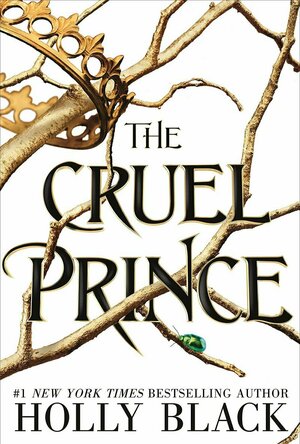
The Cruel Prince - Holly Black [BOOK REVIEW]
I asked you guys on a Goodreads poll to decide what should be my next read. And a huge number of you have decided that The Cruel Prince should be the one! And here I am, one week later, saying THANK YOU, for giving me a reason to read this book now!
Now, before I say anything else, I want you to know that I don’t have much experience living and reading about the Faerie world. I know fairies exist, and I know about that world, but I wasn’t too involved when I grabbed this book.
And I am glad for that, because…
The Cruel Prince is a great book to start your experience in this magical world. It starts with a great statement that there won’t be any fish sticks, or ketchup or TV Shows (believe me, that is Chapter 1), and it gives you a wonderful introduction to what turns out to be a beautiful place.
We follow the story through Jude’s eyes. Jude and her two sisters witness the murder of their parents. And not just that, but they also get dragged into the Faerie world because the person that kills their parents is the father of Jude’s oldest sister.
And living in the Faerie world as a human is not easy at all. At school, Jude and her sister Taryn are constantly being bullied, and the biggest bully of them all is Cardan. He is the prince, the last son of the king, and he is so evil and self-assured. *gasps* And I love him!
‘’The odd thing about ambition is this: You can acquire it like a fever, but it is not so easy to shed.’’
While Taryn is calm and tries to avoid trouble, Jude is restless and keeps talking back to Cardan. She won’t let him win, and she won’t let him humiliate her. And that brings her a hell of a trouble.
And one day, she had enough. She decides to be even more fierceless and brutal, because that is the only way of survival…
‘’If I cannot be better than them, I will become so much worse.’’
I love Jude, with all my heart. I loved her bravery and the way she never gives up, and keeps going for what she wants, even if people think she is being silly. I strongly agree with Jude - we should all strive towards our goals, no matter how difficult or ridiculous they may seem.
I also love Cardan. He is not a mean person,even though he is really cruel, but the background story is so harsh, and the reasons behind it are so strong. I could understand where he came from, but I am not in any way encouraging his bullying. I think that’s not acceptable under any circumstances. He was amazingly described, and there is the fight between good and evil going inside him.
‘’Love is a noble cause. How can anything done in the service of a noble cause be wrong?’’
The love and hate between Jude and Cardan is something you need to read about. Only Holly Black is able to describe the way they are towards each other. But this is the best love-hate game I have read in a while.
When we enter this world, we also see it from the eyes of her sisters Taryn and Vivi, and what I loved was that we get told the pro’s and con’s of the world, and why Taryn would decide to marry a faerie and get her place in the Court, or why Vivi would leave and go back to the human world. And sometimes, when you are a human in a world so beautiful, but so cruel, you realise that you can’t live with it (all that have read the book will know exactly to which scene I am referring to…).
If you haven’t picked up this book yet, please do so. I could not recommend it enough! It is filled with a lovely scenery of an amazing world, great adventure, great characters and stories around them. I read it in almost one go, as I couldn’t put it down!
A masterpiece, where faeries would give up their immortality to have this on their bookshelves, I am sure!
‘’And no matter how eager you are for it, you cannot make the moon set nor rise any faster.’’
Now, before I say anything else, I want you to know that I don’t have much experience living and reading about the Faerie world. I know fairies exist, and I know about that world, but I wasn’t too involved when I grabbed this book.
And I am glad for that, because…
The Cruel Prince is a great book to start your experience in this magical world. It starts with a great statement that there won’t be any fish sticks, or ketchup or TV Shows (believe me, that is Chapter 1), and it gives you a wonderful introduction to what turns out to be a beautiful place.
We follow the story through Jude’s eyes. Jude and her two sisters witness the murder of their parents. And not just that, but they also get dragged into the Faerie world because the person that kills their parents is the father of Jude’s oldest sister.
And living in the Faerie world as a human is not easy at all. At school, Jude and her sister Taryn are constantly being bullied, and the biggest bully of them all is Cardan. He is the prince, the last son of the king, and he is so evil and self-assured. *gasps* And I love him!
‘’The odd thing about ambition is this: You can acquire it like a fever, but it is not so easy to shed.’’
While Taryn is calm and tries to avoid trouble, Jude is restless and keeps talking back to Cardan. She won’t let him win, and she won’t let him humiliate her. And that brings her a hell of a trouble.
And one day, she had enough. She decides to be even more fierceless and brutal, because that is the only way of survival…
‘’If I cannot be better than them, I will become so much worse.’’
I love Jude, with all my heart. I loved her bravery and the way she never gives up, and keeps going for what she wants, even if people think she is being silly. I strongly agree with Jude - we should all strive towards our goals, no matter how difficult or ridiculous they may seem.
I also love Cardan. He is not a mean person,even though he is really cruel, but the background story is so harsh, and the reasons behind it are so strong. I could understand where he came from, but I am not in any way encouraging his bullying. I think that’s not acceptable under any circumstances. He was amazingly described, and there is the fight between good and evil going inside him.
‘’Love is a noble cause. How can anything done in the service of a noble cause be wrong?’’
The love and hate between Jude and Cardan is something you need to read about. Only Holly Black is able to describe the way they are towards each other. But this is the best love-hate game I have read in a while.
When we enter this world, we also see it from the eyes of her sisters Taryn and Vivi, and what I loved was that we get told the pro’s and con’s of the world, and why Taryn would decide to marry a faerie and get her place in the Court, or why Vivi would leave and go back to the human world. And sometimes, when you are a human in a world so beautiful, but so cruel, you realise that you can’t live with it (all that have read the book will know exactly to which scene I am referring to…).
If you haven’t picked up this book yet, please do so. I could not recommend it enough! It is filled with a lovely scenery of an amazing world, great adventure, great characters and stories around them. I read it in almost one go, as I couldn’t put it down!
A masterpiece, where faeries would give up their immortality to have this on their bookshelves, I am sure!
‘’And no matter how eager you are for it, you cannot make the moon set nor rise any faster.’’
Darren (1599 KP) rated Akira (1988) in Movies
Jun 20, 2019
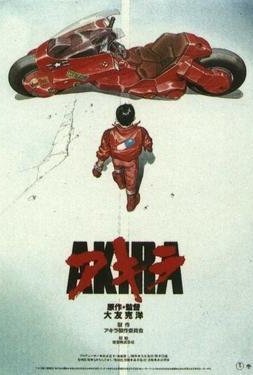
Story: In the aftermath of World War III in 1988 Tokyo has had to build again and 31 years later in the 2019 New-Tokyo is on the edge of the next war. We follow Kaneda and school student the leader of a biker gang including Tetsuo and Kei. When Tetsuo ends up involved in an accident after getting distracted by Takashi a young boy with certain abilities he gets taken by the government.
When Colonel Shikishima is running an operation to find Akira the cause of the previous World War the three children Takashi, Kiyoko and Masaru must prevent this happening while Tetsuo ends up becoming power and a threat to the whole city. Kaneda teams up with the resistance against the government through Kei and we follow as every side comes to a battle that will need to stop a future war.
Akira reaches levels most action films could never imagine with the number of character in the overall battle each having their own motives behind being involved. The look at what a future could have been all looks great and coming from a graphic novel everything works for what the film is trying to achieve. The violence is unlike anything you would have seen in an animated film which helps shows the world we will be entering.
Character Review
Kaneda: Kaneda is the leader of the school aged biker gang who drives the iconic red bike, when one of his gang is kidnapped by the government he joins the resistance against the government movement. Once we see what happens with his friend Tetsuo he must fight his old friend to stop the next World War happen. Kaneda is a great leading character that even after nearly 30 years is still one of the most iconic in all of animated film history.kaneda
Tetsuo: Tetsuo is a member of Kaneda’s biker gang but after he has an accident the government takes his away to use in their latest experiments. What happens to Tetsuo leads him to become a threat to the city as he searches for Akira a threat not just to Neo-Tokyo but the world. Tetsuo starts of as just a member of the gang wanting to become more and once he has the powers he learns he isn’t ready to have the leadership when he ends up turning on the people he once considered friends, a great villainous character without being a true villain.tetsuo
Kei: Kei is a member of the resistance that Kaneda rescues from the police before joining forces Kaneda to stop the government and rescue Tetsuo from bring Akira back from the dead. Kei is the potential romantic angle for Kaneda who is also as tough as they come, she also has a connection to the children with the abilities.kei
Support Characters: Akira has a large amount of supporting characters which include Kaneda’s gang who all stick with him when he needs to fight. We also have the resistance who help Kei and Kaneda achieve the battle. We have the three kids who have to abilities in their own right that together making the deadly but also fighting for the right thing. We also have one last group and that is the government who want to bring the Akira power back as a weapon.
Director Review: Katsuhiro Otomo – Katsuhiro brings us his own graphic novel to the bring screen which offers one of the most entertain and well developed characters in recent film.
Action: Akira has action from start to finish, we have a motorbike chase to open the film, constant chases to either reach someone or escape from them and the final fight oh my god what a brilliant conclusion.
Animation: Akira has simply brilliant looking animation that help bring the action to life and once more I refer to the final scene which is just breathtaking visual moment.
Sci-Fi: Akira brings us into a future world where the world has been through another World War and had to rebuild in a new future with the Neo-Tokyo.
Settings: Akira creates a futuristic looking world that helps us identify just how far into the future we have gone with the story.
Suggestion: Akira is one for all the animated fans to see because it really is a visual treat with a stunning story that will stick with you. (Animated Fans Watch)
Best Part: The final battle which will leave your jaw dropped with how amazing it looks.
Worst Part: I would say this is going to be too violent for certain animated fans.
Action Scene Of The Film: The final battle is easily the best scene in the whole film and could easily be the best one in action animated films.
Believability: No
Chances of Tears: No
Chances of Sequel: No
Post Credits Scene: No
Oscar Chances: No
Runtime: 2 Hours 4 Minutes
Tagline: Signal Traced to Tokyo!
Trivia: The movie takes place in 2019 and depicts Neo-Tokyo creating a new Olympic stadium. Coincidentally, Tokyo is scheduled to host the 2020 Summer Olympics.
Overall: Akira really is one of the best animated film that ever got made that will still be talked about for years to come.
https://moviesreview101.com/2015/09/30/akira-1988/

When Colonel Shikishima is running an operation to find Akira the cause of the previous World War the three children Takashi, Kiyoko and Masaru must prevent this happening while Tetsuo ends up becoming power and a threat to the whole city. Kaneda teams up with the resistance against the government through Kei and we follow as every side comes to a battle that will need to stop a future war.
Akira reaches levels most action films could never imagine with the number of character in the overall battle each having their own motives behind being involved. The look at what a future could have been all looks great and coming from a graphic novel everything works for what the film is trying to achieve. The violence is unlike anything you would have seen in an animated film which helps shows the world we will be entering.
Character Review
Kaneda: Kaneda is the leader of the school aged biker gang who drives the iconic red bike, when one of his gang is kidnapped by the government he joins the resistance against the government movement. Once we see what happens with his friend Tetsuo he must fight his old friend to stop the next World War happen. Kaneda is a great leading character that even after nearly 30 years is still one of the most iconic in all of animated film history.kaneda
Tetsuo: Tetsuo is a member of Kaneda’s biker gang but after he has an accident the government takes his away to use in their latest experiments. What happens to Tetsuo leads him to become a threat to the city as he searches for Akira a threat not just to Neo-Tokyo but the world. Tetsuo starts of as just a member of the gang wanting to become more and once he has the powers he learns he isn’t ready to have the leadership when he ends up turning on the people he once considered friends, a great villainous character without being a true villain.tetsuo
Kei: Kei is a member of the resistance that Kaneda rescues from the police before joining forces Kaneda to stop the government and rescue Tetsuo from bring Akira back from the dead. Kei is the potential romantic angle for Kaneda who is also as tough as they come, she also has a connection to the children with the abilities.kei
Support Characters: Akira has a large amount of supporting characters which include Kaneda’s gang who all stick with him when he needs to fight. We also have the resistance who help Kei and Kaneda achieve the battle. We have the three kids who have to abilities in their own right that together making the deadly but also fighting for the right thing. We also have one last group and that is the government who want to bring the Akira power back as a weapon.
Director Review: Katsuhiro Otomo – Katsuhiro brings us his own graphic novel to the bring screen which offers one of the most entertain and well developed characters in recent film.
Action: Akira has action from start to finish, we have a motorbike chase to open the film, constant chases to either reach someone or escape from them and the final fight oh my god what a brilliant conclusion.
Animation: Akira has simply brilliant looking animation that help bring the action to life and once more I refer to the final scene which is just breathtaking visual moment.
Sci-Fi: Akira brings us into a future world where the world has been through another World War and had to rebuild in a new future with the Neo-Tokyo.
Settings: Akira creates a futuristic looking world that helps us identify just how far into the future we have gone with the story.
Suggestion: Akira is one for all the animated fans to see because it really is a visual treat with a stunning story that will stick with you. (Animated Fans Watch)
Best Part: The final battle which will leave your jaw dropped with how amazing it looks.
Worst Part: I would say this is going to be too violent for certain animated fans.
Action Scene Of The Film: The final battle is easily the best scene in the whole film and could easily be the best one in action animated films.
Believability: No
Chances of Tears: No
Chances of Sequel: No
Post Credits Scene: No
Oscar Chances: No
Runtime: 2 Hours 4 Minutes
Tagline: Signal Traced to Tokyo!
Trivia: The movie takes place in 2019 and depicts Neo-Tokyo creating a new Olympic stadium. Coincidentally, Tokyo is scheduled to host the 2020 Summer Olympics.
Overall: Akira really is one of the best animated film that ever got made that will still be talked about for years to come.
https://moviesreview101.com/2015/09/30/akira-1988/
RəX Regent (349 KP) rated The Butterfly Effect (2004) in Movies
Mar 7, 2019

Deeper than it first appears...
Contains spoilers, click to show
Having always being a fan of Time Travel and Science Fiction, I was always keen on seeing this film upon its initial release, seven years ago, now. But for one reason or another, this just didn't happen, leaving me to watch this on TV a couple of years later.
I was left disappointed. This was mainly because the film was very gritty, at times dower and not what I or many would have expected from a film in this genre. But with repeat viewings and finally watching this version, the Director's Cut, with a more downbeat and tragic conclusion, I realised that I was wrong.
Yes, this film does not tick the correct boxes for a film of this time, but that is because it is not playing it safe. It is doing what any great groundbreaking films should do and that is to find the truth of the story and tell it, show it and help the audience engage and feel it, in an uncompromising way.
*** SPOILERS *** The film deals with troubled childhoods of four kids, two of whom grow up to become Ashton Kutcher and Amy Smart. (Not literally, of course!) Kutcher's lead, has the ability to travel back to his own past for brief moments by reading his childhood journals or in some cases, watching home movies or looking at photos.
His intention upon discovering this gift, is to repair some of the damage that these events have cause to the group, who have sustained several traumas and left them in various states of dis-functionality as adults. But, as the metaphor relating to Chaos Theory states, "Does the flap of a butterfly's wings in Brazil set off a tornado in Texas?" Philip Merilees: We witness several distinct changes in then present as a result of his tampering and this often results in more pain, in one way or another.
This is a gripping film, with a true sense of itself, philosophy and needs of the narrative to justify its own dower conclusions, and ultimately, Kutcher's final decisions.
The sound design, cinematography general direction are outstanding here, with power use of all the key elements to give us a naturalistic feel, not dis-similar from something that Steven Spielberg might produce.
The Theatrical Cut was good, but this version is superior, with a new and more appropriate ending more in keeping the with the general tone of the film, this should be a true Sci-Fi classic, in the same league as the likes of "Planet Of The Apes", "The Day The Earth Caught Fire" and in to a lesser extent, this being a more widely accepted addition, "Donnie Darko".
Highly recommended.

I was left disappointed. This was mainly because the film was very gritty, at times dower and not what I or many would have expected from a film in this genre. But with repeat viewings and finally watching this version, the Director's Cut, with a more downbeat and tragic conclusion, I realised that I was wrong.
Yes, this film does not tick the correct boxes for a film of this time, but that is because it is not playing it safe. It is doing what any great groundbreaking films should do and that is to find the truth of the story and tell it, show it and help the audience engage and feel it, in an uncompromising way.
*** SPOILERS *** The film deals with troubled childhoods of four kids, two of whom grow up to become Ashton Kutcher and Amy Smart. (Not literally, of course!) Kutcher's lead, has the ability to travel back to his own past for brief moments by reading his childhood journals or in some cases, watching home movies or looking at photos.
His intention upon discovering this gift, is to repair some of the damage that these events have cause to the group, who have sustained several traumas and left them in various states of dis-functionality as adults. But, as the metaphor relating to Chaos Theory states, "Does the flap of a butterfly's wings in Brazil set off a tornado in Texas?" Philip Merilees: We witness several distinct changes in then present as a result of his tampering and this often results in more pain, in one way or another.
This is a gripping film, with a true sense of itself, philosophy and needs of the narrative to justify its own dower conclusions, and ultimately, Kutcher's final decisions.
The sound design, cinematography general direction are outstanding here, with power use of all the key elements to give us a naturalistic feel, not dis-similar from something that Steven Spielberg might produce.
The Theatrical Cut was good, but this version is superior, with a new and more appropriate ending more in keeping the with the general tone of the film, this should be a true Sci-Fi classic, in the same league as the likes of "Planet Of The Apes", "The Day The Earth Caught Fire" and in to a lesser extent, this being a more widely accepted addition, "Donnie Darko".
Highly recommended.
Kaysee Hood (83 KP) rated The Mortal Instruments 1: City of Bones in Books
Jan 27, 2018
Characters (2 more)
Diversity
Plot Twists
Some of those Plot Twists (1 more)
Overdone & Prolonged
Another I Wanted to Like
Contains spoilers, click to show
This is more of a overall review for the series, well, up to book 4 as I gave up on trying to get through it all at that point because by then I was tired of the senseless drama.
I wanted to like this series because my friend at the time liked it on top of it sounded interesting. By then the movie was out for it and rumors of the TV show was circling around in the Tumblr community. So, between her and the rest of Booklr I thought why not give it a shot? It couldn't be that bad. Oh how I was wrong.
I shocked a series like this has gained such popularity when really it's good at most. It's not amazing. It's not stunning. It's not special. It's an okay book, with an okay plot, and your basic set of characters.
A girl is average at best, her best friend loves her, and she's being thrown into a world where she's "the one". Oh, did I mention there is a perfect, hot guy with his pals who appear to both be jealous of her? AND THERE'S MORE! The totally hot guy is falling for her...... but they're brother and sister. Oh and they are okay with hooking up despite that. Sort of. It's major conflict. Until you learn they are related and her father was simply messing with them to cause problems in the hopes it would help him have both of them on his side.
As much as Clare offers different types of paranormal things it's all overdone and overplayed. Many times the moments that are suppose to change the whole game in the series are dragged out to the point you're bored to death. Sure, there are gay characters, but they feel more like a "come look at me I'm for your rights even though I'm using your suffering as a way to promote my books as me accepting you" rather than the characters written as simply real. Most of the time that's how secondary characters feel in the series as they are there to be there but not actually meant to be there. Yes, let that idea settle for a second.
I felt like many if Clare had a better team of people proof reading her drafts, pointed out some of these things were not okay (Incest for one), and had people guide her to make the characters more real this could have been a better set of books to me. Maybe it is me still wanting to like it. I'm not sure honestly. I just wish for such a popular series it was worthy of it for everyone.
I wanted to like this series because my friend at the time liked it on top of it sounded interesting. By then the movie was out for it and rumors of the TV show was circling around in the Tumblr community. So, between her and the rest of Booklr I thought why not give it a shot? It couldn't be that bad. Oh how I was wrong.
I shocked a series like this has gained such popularity when really it's good at most. It's not amazing. It's not stunning. It's not special. It's an okay book, with an okay plot, and your basic set of characters.
A girl is average at best, her best friend loves her, and she's being thrown into a world where she's "the one". Oh, did I mention there is a perfect, hot guy with his pals who appear to both be jealous of her? AND THERE'S MORE! The totally hot guy is falling for her...... but they're brother and sister. Oh and they are okay with hooking up despite that. Sort of. It's major conflict. Until you learn they are related and her father was simply messing with them to cause problems in the hopes it would help him have both of them on his side.
As much as Clare offers different types of paranormal things it's all overdone and overplayed. Many times the moments that are suppose to change the whole game in the series are dragged out to the point you're bored to death. Sure, there are gay characters, but they feel more like a "come look at me I'm for your rights even though I'm using your suffering as a way to promote my books as me accepting you" rather than the characters written as simply real. Most of the time that's how secondary characters feel in the series as they are there to be there but not actually meant to be there. Yes, let that idea settle for a second.
I felt like many if Clare had a better team of people proof reading her drafts, pointed out some of these things were not okay (Incest for one), and had people guide her to make the characters more real this could have been a better set of books to me. Maybe it is me still wanting to like it. I'm not sure honestly. I just wish for such a popular series it was worthy of it for everyone.
Night Reader Reviews (683 KP) rated A Little Assassination in Books
Feb 29, 2020
Honest Review for Free Copy of Book
A Little Assassination by Lawrence Troyna follows the story of what happens when two assassins are hired to get rid of each other. Too bad it is largely the result of a misunderstanding.
Nero is an assassin who is employed by the British government through a program that is nonexistent. Frequently his job is to remove people who could cause embarrassment to the British government. A sort of lasting damage control so to speak. Unfortunately, no matter how carefully Nero plans his jobs sometimes they go wrong . Usually, that just means a few unintended people get caught in the crossfire, but not this time.
Leon is an assassin as well, but unlike Nero, he works for a crime family. His jobs are usually fairly similar to Nero’s except he doesn't secretly work for the government. This time when Leon is called in his order is to eliminate anyone responsible for the bomb that went off inside one of the family’s drug manufacturing plants. When it is discovered that the plant was accidental collateral damage from a British government hit Leon is supposed to be called off. When this does not happen Leon and Nero’s groups end up fighting head to head for a short while until Leon gives up by his group completely. Now it's an all-out manhunt, but the prey is also a hunter.
Honestly, I am not sure what to say. There really wasn’t much that stood out to me about this book. The most surprising (and in this case the best) part of the book was finding out who the leak on Nero’s side was. There were multiple things about this book that I didn’t like. There was a Mr. Tillotson and a Mr. Trenchard on opposite sides, which was mildly confusing. I was also surprised to find that the plot moves steadily yet to me it still seamed dragging.
The language can be a little rough and (as one would expect from a book about assassins) there is a lot of violence. With that being said the book is best suited for young adults and adults alike. I rate this book 1 out of 4. I had much higher hopes for this book than what it delivered. It was fairly dry and predictable. There really wasn’t much about this book that impressed me aside from who the leak was.
https://www.facebook.com/nightreaderreviews/
https://smashbomb.com/nightreader
https://nightreaderreviews.blogspot.com/
Nero is an assassin who is employed by the British government through a program that is nonexistent. Frequently his job is to remove people who could cause embarrassment to the British government. A sort of lasting damage control so to speak. Unfortunately, no matter how carefully Nero plans his jobs sometimes they go wrong . Usually, that just means a few unintended people get caught in the crossfire, but not this time.
Leon is an assassin as well, but unlike Nero, he works for a crime family. His jobs are usually fairly similar to Nero’s except he doesn't secretly work for the government. This time when Leon is called in his order is to eliminate anyone responsible for the bomb that went off inside one of the family’s drug manufacturing plants. When it is discovered that the plant was accidental collateral damage from a British government hit Leon is supposed to be called off. When this does not happen Leon and Nero’s groups end up fighting head to head for a short while until Leon gives up by his group completely. Now it's an all-out manhunt, but the prey is also a hunter.
Honestly, I am not sure what to say. There really wasn’t much that stood out to me about this book. The most surprising (and in this case the best) part of the book was finding out who the leak on Nero’s side was. There were multiple things about this book that I didn’t like. There was a Mr. Tillotson and a Mr. Trenchard on opposite sides, which was mildly confusing. I was also surprised to find that the plot moves steadily yet to me it still seamed dragging.
The language can be a little rough and (as one would expect from a book about assassins) there is a lot of violence. With that being said the book is best suited for young adults and adults alike. I rate this book 1 out of 4. I had much higher hopes for this book than what it delivered. It was fairly dry and predictable. There really wasn’t much about this book that impressed me aside from who the leak was.
https://www.facebook.com/nightreaderreviews/
https://smashbomb.com/nightreader
https://nightreaderreviews.blogspot.com/
JT (287 KP) rated Godzilla (2014) in Movies
Mar 23, 2020
Does what it says on the tin
Big action blockbusters probably don’t get much bigger than this, certainly, the budgets don’t. Just ask Gareth Edwards, who is making his second feature (again about monsters) brings to life one of the films most iconic.
Edwards as a director landed on peoples radar with his 2010 micro-budgeted Monsters which drew on strong character development and their ongoing relationships in the aftermath of an alien invasion. In this reboot, which if there was ever a need for a remake this might well have been it, Edwards plumps for well crafted central characters while teasing us with glimpses of prehistoric beings saving the money shots for the big action set pieces.
In an opening credits history lesson which gives us a background into the creation of the gargantuan predator, and the reason for all that nuclear testing, we are fast-forwarded to 1999 was the discovery of giant remains sparks fears that something else has been awoken and ready to cause some havoc.
I wasn’t particularly blown away by this one, the first half is exceptional as Cranston’s Joe Brody is encapsulated in a collapsing nuclear power plant disaster and then goes a bit crackpot as he looks to unearth his theory that the government are trying to cover something up.
Once the dust settles on that and the force of nature have revealed themselves in the shape of Godzilla and his foe the M.U.TO.s (Massive Unidentified Terrestrial Objects) there is little to do but sit back and watch the carnage unfurl.
With so much going on the character performances are practically dwarfed by the 350 ft beasts going toe to toe, and you really pay little attention to what is going on in the background. Some of the cast add little if anything which is a shame, Ken Watanabe does a lot of starring into space with his jaw-dropping onto the floor. His partner in science Sally Hawkins merely attempts to add snippets of useless information and poor Elizabeth Olsen is reduced to a bit part love interest.
Taylor-Johnson looks suitably beefed up and manages to hold his own, taking centre stage to save the world from possible annihilation, as if that hasn’t already been achieved by the Dawrinesque nuclear creation. There are parts within the film that are ludicrous, and parts that you can stare in amazement at none more so than the final fight which if anything is certainly worth the admission price.
Visually as you would expect it’s a stunning film but is somewhat disjointed throughout. There were enough subtle references to suggest a sequel (which there was) and that Gareth Edwards will in someway get another crack and wreaking havoc somewhere else (which he didn’t).
Edwards as a director landed on peoples radar with his 2010 micro-budgeted Monsters which drew on strong character development and their ongoing relationships in the aftermath of an alien invasion. In this reboot, which if there was ever a need for a remake this might well have been it, Edwards plumps for well crafted central characters while teasing us with glimpses of prehistoric beings saving the money shots for the big action set pieces.
In an opening credits history lesson which gives us a background into the creation of the gargantuan predator, and the reason for all that nuclear testing, we are fast-forwarded to 1999 was the discovery of giant remains sparks fears that something else has been awoken and ready to cause some havoc.
I wasn’t particularly blown away by this one, the first half is exceptional as Cranston’s Joe Brody is encapsulated in a collapsing nuclear power plant disaster and then goes a bit crackpot as he looks to unearth his theory that the government are trying to cover something up.
Once the dust settles on that and the force of nature have revealed themselves in the shape of Godzilla and his foe the M.U.TO.s (Massive Unidentified Terrestrial Objects) there is little to do but sit back and watch the carnage unfurl.
With so much going on the character performances are practically dwarfed by the 350 ft beasts going toe to toe, and you really pay little attention to what is going on in the background. Some of the cast add little if anything which is a shame, Ken Watanabe does a lot of starring into space with his jaw-dropping onto the floor. His partner in science Sally Hawkins merely attempts to add snippets of useless information and poor Elizabeth Olsen is reduced to a bit part love interest.
Taylor-Johnson looks suitably beefed up and manages to hold his own, taking centre stage to save the world from possible annihilation, as if that hasn’t already been achieved by the Dawrinesque nuclear creation. There are parts within the film that are ludicrous, and parts that you can stare in amazement at none more so than the final fight which if anything is certainly worth the admission price.
Visually as you would expect it’s a stunning film but is somewhat disjointed throughout. There were enough subtle references to suggest a sequel (which there was) and that Gareth Edwards will in someway get another crack and wreaking havoc somewhere else (which he didn’t).
Gareth von Kallenbach (980 KP) rated Wind River (2017) in Movies
Jul 11, 2019
Between Sicario and Hell or High Water (both of which landed on my year-end best lists for 2015 and 2016 respectively), Taylor Sheridan has already proven to be an incredible talent at crafting slow-burning thrillers that also serve as in-depth character studies. His new film, third as a screenwriter and second as a director, may move at quite a faster pace than his previous two screenplays, but it is no less accomplished, either in plot or in character development. Though some may leave the theater feeling that they haven’t seen anything new, and they’d be right to as there isn’t anything particularly flashy or unique in the direction or cinematography, Wind River however finds its strength in its simplicity. It’s a simple story concerning the death of a young girl on a Wyoming reservation, of the tracker (Jeremy Renner) for whom the circumstance strikes too close to home, and of the presumably untested FBI agent (Elizabeth Olsen) forced to face the darker side of her chosen profession.
For Jeremy Renner, Wind River marks a career best. He displays restraint in a role that others would have played far too arrogantly and when he lets us in to share in his character’s painful past, the melodrama inherent in the dialogue is delivered with dignity and humility. Complimenting his performance beautifully is Gil Birmingham as Martin, the father of the murdered girl. Much like his work opposite Jeff Bridges in Hell or High Water, his scenes with Renner are the highlight of the film. Every line he delivers reverberates with truth and with the weight of losing of two children, one whose life is thrown away to drug use and one to an untimely, mysterious death. Veteran actor and longtime favorite of mine, Graham Greene is also on hand to give a competent turn as the local sheriff who in equal measures doles out tension-relieving humor as well as reminding us of the gravity of a bleak situation.
In amongst a predominately-male cast, Elizabeth Olsen shines. This film was an undoubtedly a tough task, as her character is given no soft options, and her performance gave me cause to reflect on a young Jodie Foster in The Silence of the Lambs. I don’t just draw this comparison because of the fact they both play young agents thrust into a situation beyond their level of experience, but because of the scenes in these films where they are called upon to confidently take command of a room full of men and to show great physicality in moments of unexpected violence. It’s another top mark in her filmography comparable to her breakout in Martha Marcy May Marlene and hopefully, in-between bouts of this bloated Marvel Cinematic Universe nonsense, we’ll continue to see her in roles of some substance.
For Jeremy Renner, Wind River marks a career best. He displays restraint in a role that others would have played far too arrogantly and when he lets us in to share in his character’s painful past, the melodrama inherent in the dialogue is delivered with dignity and humility. Complimenting his performance beautifully is Gil Birmingham as Martin, the father of the murdered girl. Much like his work opposite Jeff Bridges in Hell or High Water, his scenes with Renner are the highlight of the film. Every line he delivers reverberates with truth and with the weight of losing of two children, one whose life is thrown away to drug use and one to an untimely, mysterious death. Veteran actor and longtime favorite of mine, Graham Greene is also on hand to give a competent turn as the local sheriff who in equal measures doles out tension-relieving humor as well as reminding us of the gravity of a bleak situation.
In amongst a predominately-male cast, Elizabeth Olsen shines. This film was an undoubtedly a tough task, as her character is given no soft options, and her performance gave me cause to reflect on a young Jodie Foster in The Silence of the Lambs. I don’t just draw this comparison because of the fact they both play young agents thrust into a situation beyond their level of experience, but because of the scenes in these films where they are called upon to confidently take command of a room full of men and to show great physicality in moments of unexpected violence. It’s another top mark in her filmography comparable to her breakout in Martha Marcy May Marlene and hopefully, in-between bouts of this bloated Marvel Cinematic Universe nonsense, we’ll continue to see her in roles of some substance.