Search
Search results
Rick Astley recommended Under the Pink by Tori Amos in Music (curated)

Debbiereadsbook (1818 KP) rated Tyler's Alphas in Books
Nov 1, 2024
I loved that the main event was faded to black!
Independent reviewer for Archaeolibrarian, I was gifted the AUDIO version of this book.
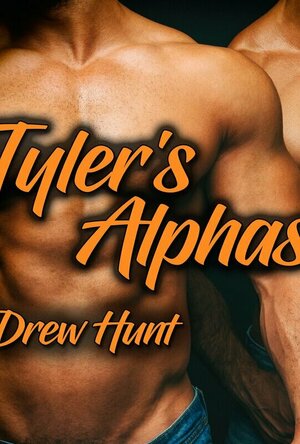
I have to say, for such a short book, 2hours and 5 minutes(73 pages), it packs quite a punch!
Tyler knows about werewolves, his fav soap is based around them, but he also knows that there is more to them than the soap portrays. When not one, but TWO alphas start to pay him some attention, he gets all flustered but one touch and his busy mind stills. That Tyler is a human is not what the alphas think, either!
I really only have one niggle, and it really is my being greedy, but I know short books come with some restrictions. Only Tyler has a say, in the third person. I would have loved to hear from Blaze and Rocky, I really would.
But the best bit?? The best bit for me was, that although this has steamy and smexy times between all three of them, the main event is absolutely faded to black! Yes, I know I like my books on the smexy side, but I loved that we don't get down and dirty with the guys, just the assuming aftermath!
Chad White narrates. I've not listened to him before, and I really enjoyed the voices he does for all three men. Blaze is super Alpha male, and Rocky, is kinda simple sounding but really isn't and Tyler fits right between the two. I loved all the voices, really and White's reading voice is deep and even and I had no trouble keeping up.
I'd like to listen to more read by White, but also, I'd like to read more of Hunt. My first of his, and I'd like to read something a bit longer, with a more indepth story.
4 stars for the book
4 stars for the narration
4 stars overall.
*same worded review will appear elsewhere
I have to say, for such a short book, 2hours and 5 minutes(73 pages), it packs quite a punch!
Tyler knows about werewolves, his fav soap is based around them, but he also knows that there is more to them than the soap portrays. When not one, but TWO alphas start to pay him some attention, he gets all flustered but one touch and his busy mind stills. That Tyler is a human is not what the alphas think, either!
I really only have one niggle, and it really is my being greedy, but I know short books come with some restrictions. Only Tyler has a say, in the third person. I would have loved to hear from Blaze and Rocky, I really would.
But the best bit?? The best bit for me was, that although this has steamy and smexy times between all three of them, the main event is absolutely faded to black! Yes, I know I like my books on the smexy side, but I loved that we don't get down and dirty with the guys, just the assuming aftermath!
Chad White narrates. I've not listened to him before, and I really enjoyed the voices he does for all three men. Blaze is super Alpha male, and Rocky, is kinda simple sounding but really isn't and Tyler fits right between the two. I loved all the voices, really and White's reading voice is deep and even and I had no trouble keeping up.
I'd like to listen to more read by White, but also, I'd like to read more of Hunt. My first of his, and I'd like to read something a bit longer, with a more indepth story.
4 stars for the book
4 stars for the narration
4 stars overall.
*same worded review will appear elsewhere
Hazel (2934 KP) rated My Lovely Wife in Books
Apr 6, 2019
A gem of a read
This book is like nothing I have read before ... in a good way of course but I am slightly worried that I may be moving onto the dark side of normal! Why? you may ask - just read this book and you'll understand!
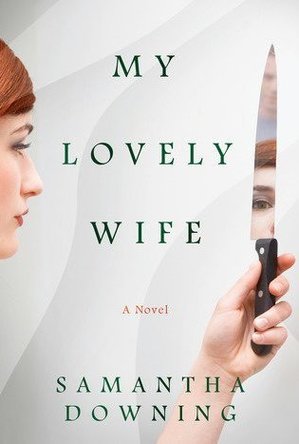
What we have here is an absolute gem of a read that had me hooked from the start. I won't go into the plot as I don't want to give anything away but will describe it as being edgy, dark, twisted, engrossing, disturbingly entertaining and totally unique. The characters are just excellent but more than that, they are frighteningly believable and rarely do I find myself feeling so wrong about liking and rooting for someone so disturbed but scarily normal!
The writing is crisp and effective and easy to read with excellent pacing; great suspense and twists leave you reading way too late into the night in anticipation of what the heck is going to happen next.
I can't believe this is a debut and I am waiting on tenterhooks for Samantha Downing's next book and I only hope it's as disturbingly good as this one. On her website, she says that she wants to "tell stories that make people walk into walls"; I think she did with this one.
Thank you to the publisher, Penguin UK - Michael Joseph, and NetGalley for my copy in exchange for an honest review.
What we have here is an absolute gem of a read that had me hooked from the start. I won't go into the plot as I don't want to give anything away but will describe it as being edgy, dark, twisted, engrossing, disturbingly entertaining and totally unique. The characters are just excellent but more than that, they are frighteningly believable and rarely do I find myself feeling so wrong about liking and rooting for someone so disturbed but scarily normal!
The writing is crisp and effective and easy to read with excellent pacing; great suspense and twists leave you reading way too late into the night in anticipation of what the heck is going to happen next.
I can't believe this is a debut and I am waiting on tenterhooks for Samantha Downing's next book and I only hope it's as disturbingly good as this one. On her website, she says that she wants to "tell stories that make people walk into walls"; I think she did with this one.
Thank you to the publisher, Penguin UK - Michael Joseph, and NetGalley for my copy in exchange for an honest review.
LeftSideCut (3776 KP) rated Willy's Wonderland (2021) in Movies
Feb 21, 2021
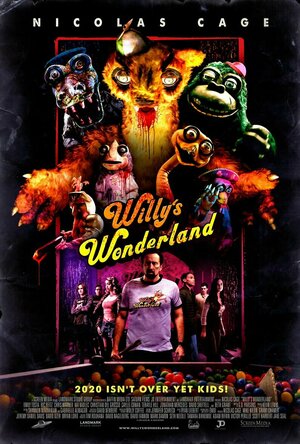


I can safely say that I got exactly what I expected from Willy's Wonderland, a schlocky as hell B-Movie horror that manifests Nicolas Cage going toe-to-toe with a host of murderous animatronic mascots, set to a music score of synth heavy electronica/children's party jingles. Is it silly and dumb? Yes. Does it have annoying and unlikable teenage human characters who are there just to die horribly? Also yes. Is it entertaining as fuck? Most definitely.
Cage's silent protagonist feels like the role that his career has been leading up to all these years. He has his very own corner of the zeitgeist at this point, and is just running with it, happily poking fun at himself whilst managing to be undeniably badass, whether it be the Mad Max-esque opening, tearing the robots to shreds with his bare hands, or him furiously dancing whilst playing pinball. Whenever he's on screen, he steals all the focus, without uttering a word. It's so ridiculous and enjoyable, that it renders the half-baked plot a moot point.
The animatronics themselves look pretty decent for the most part, and there's some solid gore here and there. It's the kind of gore that will make you burst out laughing, but in a good way.
Willy's Wonderland is far from a perfect experience, but it is what it is, and never tries to be anything more, and therefore succeeds in what it's trying to achieve.
Cage's silent protagonist feels like the role that his career has been leading up to all these years. He has his very own corner of the zeitgeist at this point, and is just running with it, happily poking fun at himself whilst managing to be undeniably badass, whether it be the Mad Max-esque opening, tearing the robots to shreds with his bare hands, or him furiously dancing whilst playing pinball. Whenever he's on screen, he steals all the focus, without uttering a word. It's so ridiculous and enjoyable, that it renders the half-baked plot a moot point.
The animatronics themselves look pretty decent for the most part, and there's some solid gore here and there. It's the kind of gore that will make you burst out laughing, but in a good way.
Willy's Wonderland is far from a perfect experience, but it is what it is, and never tries to be anything more, and therefore succeeds in what it's trying to achieve.

Alice (117 KP) rated Daisy Jones & the Six in Books
Mar 3, 2021
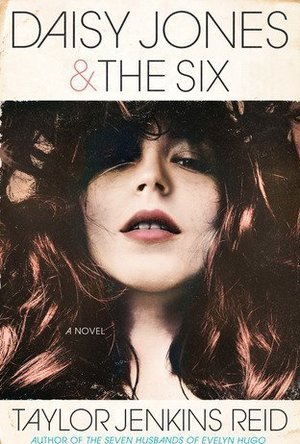


THIS BOOK DESTROYED ME!!!! I'll do a proper review soon but right now I don't have the words
<blockquote><b>"Fire is great man, but we're made of water. Water is how we keep living. Water is what we need to survive."</b>- Billy Dunne</blockquote>
I have so many emotions. When I picked this book up having read the description I didn't think that it was going to be my sort of thing. OH, HOW WRONG I WAS! I ended up falling in love with the writing, the characters and the story. There were so many quotes in this book that I loved that I ended up having a whole note in my notes app filled with quotes from this book alone. This book broke me, I don't know how I'm moving on from this point, there were times I had to pause so I could adequately cry. I can't actually put into words just how special this book is and I'm so happy that I decided to pick it up and give it a go. This little book has somehow managed to leapfrog its way from a book I didn't even think I'd like, to the very top of my list of favourite books of all time. I listened to the audiobook version through my local library but I've literally just bought myself a physical copy so that I can love and cherish it forever.
<blockquote><b>"Fire is great man, but we're made of water. Water is how we keep living. Water is what we need to survive."</b>- Billy Dunne</blockquote>
I have so many emotions. When I picked this book up having read the description I didn't think that it was going to be my sort of thing. OH, HOW WRONG I WAS! I ended up falling in love with the writing, the characters and the story. There were so many quotes in this book that I loved that I ended up having a whole note in my notes app filled with quotes from this book alone. This book broke me, I don't know how I'm moving on from this point, there were times I had to pause so I could adequately cry. I can't actually put into words just how special this book is and I'm so happy that I decided to pick it up and give it a go. This little book has somehow managed to leapfrog its way from a book I didn't even think I'd like, to the very top of my list of favourite books of all time. I listened to the audiobook version through my local library but I've literally just bought myself a physical copy so that I can love and cherish it forever.
LeftSideCut (3776 KP) rated Saw (2004) in Movies
Sep 26, 2020
The first Saw film has become tarnished over the years, due to the relentless shit filled wave of increasingly torturous (both for the audience and the characters) sequels, when really, Saw is a relatively low budget but super tight thriller.
The premise of a serial killer who kidnaps people who don't appreciate life itself, puts them in a dire situation, but gives them a chance to escape if they fight hard enough for it, is one that is intriguing, and captured the imagination of thousands - Jigsaw has since become an iconic horror antagonist.
The unlucky victims first time around are played by Cary Elwes and writer Leigh Whannell.
The two of them are situated in a very minimalist setting. It's grimy and nasty. Director James Wan works wonders with what little he has in that respect.
The cast also includes Danny Glover, which is always a win in my book.
The gore on show in Saw is pretty minimal compared to what's to come, but what we do see is effective and was just right - coupled with a plot that keeps the audience guessing until the final minute, it was enough to get everyone talking back in 2004.
And that ending absolutely shattered me on first watch. An iconic 'Gotcha!' moment for the ages.
Saw is a genuinely decent horror thriller and a rewarding experience for those that like a good twist. Just a shame about those sequels!
The premise of a serial killer who kidnaps people who don't appreciate life itself, puts them in a dire situation, but gives them a chance to escape if they fight hard enough for it, is one that is intriguing, and captured the imagination of thousands - Jigsaw has since become an iconic horror antagonist.
The unlucky victims first time around are played by Cary Elwes and writer Leigh Whannell.
The two of them are situated in a very minimalist setting. It's grimy and nasty. Director James Wan works wonders with what little he has in that respect.
The cast also includes Danny Glover, which is always a win in my book.
The gore on show in Saw is pretty minimal compared to what's to come, but what we do see is effective and was just right - coupled with a plot that keeps the audience guessing until the final minute, it was enough to get everyone talking back in 2004.
And that ending absolutely shattered me on first watch. An iconic 'Gotcha!' moment for the ages.
Saw is a genuinely decent horror thriller and a rewarding experience for those that like a good twist. Just a shame about those sequels!
Daniel Boyd (1066 KP) rated The Upside (2019) in Movies
May 8, 2019 (Updated May 8, 2019)
On The Up and Up
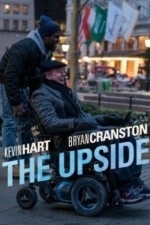
This movie had a bit of a strange release, at least in my area. It was one of those movies that only had two showings a day on it's opening weekend and they were both at really obscure times like 10:30am and 2:40pm, - times that would suggest that this movie was being put out to die. This was disappointing as, after seeing the trailers, I was looking forward to seeing it and never got the chance while it was in cinemas. Anyway, I finally got around to seeing it upon it's home release and I really enjoyed it.
Although I did like the look of this project from the trailer and I am a big fan of Bryan Cranston, I was wary of Kevin Hart starring opposite him in this role. It looked like a role that would require a more serious actor than Kevin Hart and I was concerned that Hart had been miscast and only chosen because of the recognition of his name rather than whether or not he was the right actor for the part.
Surprisingly and thankfully, I was proven entirely wrong. Hart shows here that he is in fact very capable in a more serious role such as this and doesn't just have to resort to screaming in every film he is in. I hope that he takes on more serious stuff following this as I much prefer it to any of his 'comedic,' roles. The rest of the cast are also great, Cranston gives a sublime performance as he always does and Nicole Kidman works well as Cranston's character's secretary/ potential love interest.
This film is a remake of a French film called The Intouchables and there are other elements of it that bear similarities to other movies that we have seen before, but it is a well told story that has various worthwhile messages littered throughout it. The script is witty and snappy enough that the film never feels slow or boring.
Overall, I really enjoyed my time with this one. It isn't the most original thing I have ever seen, but it was entertaining and it had heart. The script was well written and the direction was solid. The performances from the entire cast also help elevate the already funny script even further.
Although I did like the look of this project from the trailer and I am a big fan of Bryan Cranston, I was wary of Kevin Hart starring opposite him in this role. It looked like a role that would require a more serious actor than Kevin Hart and I was concerned that Hart had been miscast and only chosen because of the recognition of his name rather than whether or not he was the right actor for the part.
Surprisingly and thankfully, I was proven entirely wrong. Hart shows here that he is in fact very capable in a more serious role such as this and doesn't just have to resort to screaming in every film he is in. I hope that he takes on more serious stuff following this as I much prefer it to any of his 'comedic,' roles. The rest of the cast are also great, Cranston gives a sublime performance as he always does and Nicole Kidman works well as Cranston's character's secretary/ potential love interest.
This film is a remake of a French film called The Intouchables and there are other elements of it that bear similarities to other movies that we have seen before, but it is a well told story that has various worthwhile messages littered throughout it. The script is witty and snappy enough that the film never feels slow or boring.
Overall, I really enjoyed my time with this one. It isn't the most original thing I have ever seen, but it was entertaining and it had heart. The script was well written and the direction was solid. The performances from the entire cast also help elevate the already funny script even further.
Micah Ulibarri (79 KP) rated Tomb Raider (2018) in Movies
Mar 26, 2018
So, this reboot of the franchise happened. I dare say, I doubt anyone was asking for it. It's a hard film to critique due to the fact that I have to compare it to the Angelina Jolie films where the biggest plus was that Jolie looked like the video game character... And that was the biggest plus.
That being said, I would call this a good movie and an acceptable action flick.
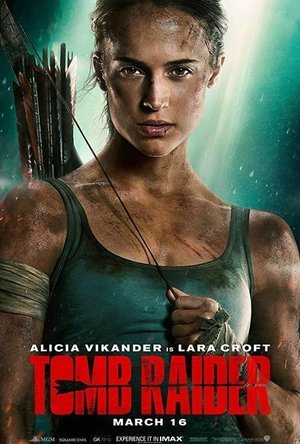
The characters were pretty much all outshine by Alicia Vikander who was the only character with any real nuance. Her father had a lot of potential but was extremely unrelatable. The villain seemed bored to even be there. Her Asian buddy could have been lifted out of the film... And you would never have noticed.
That being said, Vikander's performance was strong and made the character grounded. She took hits. She didn't seem like she just knew how to do everything perfectly well. I actually enjoyed that for most of it she seems out of her element and made to do all the action sequences out of survival.
The plot was better than I expected. I enjoyed the lore and mythology that surrounded the island, but I admit, I breathed a sigh of relief when the reveal showed it being something much more realistic and less supernatural.
The action sequences we're actually very good. There were quite a few times I found myself on the edge of my seat. I particularly enjoyed the bike race at the beginning and her escape from the "chain gang".
Considering that this is clearly an original story attempting to start a franchise, I'm not convinced I need another chapter. But I am glad I got the one they gave me.
That being said, I would call this a good movie and an acceptable action flick.
The characters were pretty much all outshine by Alicia Vikander who was the only character with any real nuance. Her father had a lot of potential but was extremely unrelatable. The villain seemed bored to even be there. Her Asian buddy could have been lifted out of the film... And you would never have noticed.
That being said, Vikander's performance was strong and made the character grounded. She took hits. She didn't seem like she just knew how to do everything perfectly well. I actually enjoyed that for most of it she seems out of her element and made to do all the action sequences out of survival.
The plot was better than I expected. I enjoyed the lore and mythology that surrounded the island, but I admit, I breathed a sigh of relief when the reveal showed it being something much more realistic and less supernatural.
The action sequences we're actually very good. There were quite a few times I found myself on the edge of my seat. I particularly enjoyed the bike race at the beginning and her escape from the "chain gang".
Considering that this is clearly an original story attempting to start a franchise, I'm not convinced I need another chapter. But I am glad I got the one they gave me.
Kirk Bage (1775 KP) rated Disobedience (2018) in Movies
Mar 3, 2020
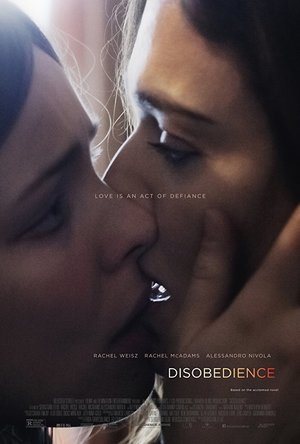
English language films with big name actors are not usually this European. Which is why I have chosen the beautiful French poster to highlight this unexpected gem.
I hadn’t expected to like it, but was curious to see the two lead actresses work together on something so intimate, that became in the media something controversial, regrettably, for all the wrong reasons. They chose to focus on the sexual aspect of two high profile women about to commit to film a level of titillation hitherto unseen by either… but, of course, it is so much more than that.
The world of orthodox Judaisim and commitment to a patriarchal ideal of tradition and intrinsic value is at the heart of this small, yet devastating film. At first, that world is so alien and upsetting that it seems like a fantasy. Until you allow yourself to realise that this community does exist, and thrives.
Both Rachel Weisz as a woman with a secret who managed to escape the constraints and prejudices of the male dominant world, and Rachel McAdams, as the friend left behind to swallow her pride and be the expected wife, deliver extraordinary performances. The passion, repression and guilt are apparent in every scene.
But it is Alessandro Nivola, as the key antagonist, that really wins the plaudits. Watch a character so unlikable become a hero in the most humble and unlikely sense, in a scene of such breath-taking clarity, towards the film’s climax. I can only wish all “bad guys” get this kind of human pay-off.
A film of resonance and social interest that fails as an entirely coherent piece, but works in so many good ways it is worth seeing just for the feels! There is no point where you do not believe how much these women are in love. And for that reason alone, I recommend it.
I hadn’t expected to like it, but was curious to see the two lead actresses work together on something so intimate, that became in the media something controversial, regrettably, for all the wrong reasons. They chose to focus on the sexual aspect of two high profile women about to commit to film a level of titillation hitherto unseen by either… but, of course, it is so much more than that.
The world of orthodox Judaisim and commitment to a patriarchal ideal of tradition and intrinsic value is at the heart of this small, yet devastating film. At first, that world is so alien and upsetting that it seems like a fantasy. Until you allow yourself to realise that this community does exist, and thrives.
Both Rachel Weisz as a woman with a secret who managed to escape the constraints and prejudices of the male dominant world, and Rachel McAdams, as the friend left behind to swallow her pride and be the expected wife, deliver extraordinary performances. The passion, repression and guilt are apparent in every scene.
But it is Alessandro Nivola, as the key antagonist, that really wins the plaudits. Watch a character so unlikable become a hero in the most humble and unlikely sense, in a scene of such breath-taking clarity, towards the film’s climax. I can only wish all “bad guys” get this kind of human pay-off.
A film of resonance and social interest that fails as an entirely coherent piece, but works in so many good ways it is worth seeing just for the feels! There is no point where you do not believe how much these women are in love. And for that reason alone, I recommend it.