

The Blacklist - Season 1
8.0 Rate It
TV Season
former government agent turned criminal Raymond Reddington who, after turning himself into the FBI,...

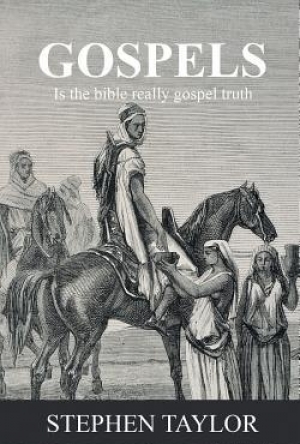

Is the Bible really gospel truth? This is the question the honourable, academic Robert Babcock aims to find out on his quest to find the earliest copies of the gospels in order to prove the reliability of the story of Jesus as recounted in the King James Bible. However, this is not the key focus of Stephen Taylor’s fictional novel, Gospels. The main character is the perfidious John Campbell-John, a rogue, imposter and swindler who flees 19th-century England in an attempt to escape from his debts.
John meets the magnanimous Robert in Venice and, despite being polar opposites, become firm friends. After being honest for the first time in his life, admitting to owing thousands of pounds in gambling debts, Robert offers John the opportunity to accompany him on his quest through the deserts of Egypt. John accepts and the pair finds themselves on an adventure of discovery and personal redemption.
John and Robert make an unlikely but excellent team. Robert’s knowledge of the Bible and ancient history is vital, however, John’s propensity for falsehoods and cunningness gets them out of a few scrapes and tricky situations. Nonetheless, it is difficult for John to give up his old ways and his insular behaviour threatens to get them in more trouble.
Fortunately, Robert’s humility begins to influence the young scoundrel, as does his penchant for historical artefacts. As the story progresses, John begins to leave his past behind and becomes interested in Robert’s work, learning new things about Egyptian culture and the origins of the Bible. However, when a new gospel comes to light that threatens the whole of Christianity, Robert does not know what to do; and only John can give him counsel.
John Campbell-John is a character that the author introduced in a previous book. However, the timelines are not sequential, therefore Gospels is a stand-alone novel. The time frame for this book needed to be set in 1835 to correspond with historical truths. Although Robert’s discovery of a Gospel of Thaddeus Jude is an invention of the author, the quest itself is based on the journeys of three 19th-century Bible hunters. Stephen Taylor has conducted an enormous amount of research, including the biographies of Robert Curzon, Constantin von Tischendorf and Émile Amélineau who, on separate occasions, sought the same knowledge as the fictional Robert Babcock.
Despite being titled Gospels, the novel, for the most part, focuses on John Campbell-John and his wicked ways. Through a first-person narrative, John explains his past, his betrayal of a friend, and his addiction to gambling. Initially, he has no qualms about his behaviour and acts only for himself and his selfish greed. Whilst Robert goes in search of knowledge, John goes on a journey of redemption, coming to terms with his previous wrongdoings. However, acknowledging these faults is not enough, he needs to turn away from these roguish ways.
It is disappointing that the narrative does not focus more on the gospels, both real and imagined. There was enormous scope for an in-depth look at the life of Jesus and the inconsistencies in the Bible. The fictitious Gospel of Thaddeus Jude evokes a similar reaction in Robert as the Non-Canonical Gospel of Thomas found in the 19th-century had on many devout Christians. There was so much potential with this direction of thought, however, the author passes over it in preference to the life of John Campbell-John.
Slow to begin but increasingly interesting as it progresses, Gospels is a book of many themes. History, both 19th-century and ancient; religion, although not a Christian story; and achievement and absolution combine together to produce a unique tale that takes the reader from the back alleys of London to the River Nile and the deserts of Sinai. A subtle clue in the prologue keeps readers alert as they await the conclusion of the adventure – an ending that ambiguously reveals whether John moves on from the follies of his past.
Is the Bible really gospel truth?</i> This is the question the honourable, academic Robert Babcock aims to find out on his quest to find the earliest copies of the gospels in order to prove the reliability of the story of Jesus as recounted in the King James Bible. However, this is not the key focus of Stephen Taylor’s fictional novel, <i>Gospels</i>. The main character is the perfidious John Campbell-John, a rogue, imposter and swindler who flees 19th-century England in an attempt to escape from his debts.
John meets the magnanimous Robert in Venice and, despite being polar opposites, become firm friends. After being honest for the first time in his life, admitting to owing thousands of pounds in gambling debts, Robert offers John the opportunity to accompany him on his quest through the deserts of Egypt. John accepts and the pair finds themselves on an adventure of discovery and personal redemption.
John and Robert make an unlikely but excellent team. Robert’s knowledge of the Bible and ancient history is vital, however, John’s propensity for falsehoods and cunningness gets them out of a few scrapes and tricky situations. Nonetheless, it is difficult for John to give up his old ways and his insular behaviour threatens to get them in more trouble.
Fortunately, Robert’s humility begins to influence the young scoundrel, as does his penchant for historical artefacts. As the story progresses, John begins to leave his past behind and becomes interested in Robert’s work, learning new things about Egyptian culture and the origins of the Bible. However, when a new gospel comes to light that threatens the whole of Christianity, Robert does not know what to do; and only John can give him counsel.
John Campbell-John is a character that the author introduced in a previous book. However, the timelines are not sequential, therefore <i>Gospels</i> is a stand-alone novel. The time frame for this book needed to be set in 1835 to correspond with historical truths. Although Robert’s discovery of a Gospel of Thaddeus Jude is an invention of the author, the quest itself is based on the journeys of three 19th-century Bible hunters. Stephen Taylor has conducted an enormous amount of research, including the biographies of Robert Curzon, Constantin von Tischendorf and Émile Amélineau who, on separate occasions, sought the same knowledge as the fictional Robert Babcock.
Despite being titled <i>Gospels</i>, the novel, for the most part, focuses on John Campbell-John and his wicked ways. Through a first-person narrative, John explains his past, his betrayal of a friend, and his addiction to gambling. Initially, he has no qualms about his behaviour and acts only for himself and his selfish greed. Whilst Robert goes in search of knowledge, John goes on a journey of redemption, coming to terms with his previous wrongdoings. However, acknowledging these faults is not enough, he needs to turn away from these roguish ways.
It is disappointing that the narrative does not focus more on the gospels, both real and imagined. There was enormous scope for an in-depth look at the life of Jesus and the inconsistencies in the Bible. The fictitious Gospel of Thaddeus Jude evokes a similar reaction in Robert as the Non-Canonical Gospel of Thomas found in the 19th-century had on many devout Christians. There was so much potential with this direction of thought, however, the author passes over it in preference to the life of John Campbell-John.
Slow to begin but increasingly interesting as it progresses, <i>Gospels</i> is a book of many themes. History, both 19th-century and ancient; religion, although not a Christian story; and achievement and absolution combine together to produce a unique tale that takes the reader from the back alleys of London to the River Nile and the deserts of Sinai. A subtle clue in the prologue keeps readers alert as they await the conclusion of the adventure – an ending that ambiguously reveals whether John moves on from the follies of his past.

The Pilgrim Kings: A Story of the Magi
Book
Linked to Biblical sources, the story of the legendary Magi comes to us in a surprising conjunction...

Awix (3310 KP) rated Kong: Skull Island (2017) in Movies
Feb 9, 2018 (Updated Feb 9, 2018)

Leading players Tom Hiddleston and Brie Larson seem a bit all at sea but there is some good work from the supporting cast, who know just how much of the scenery to chew - Samuel L Jackson, John Goodman, and John C Reilly all raise a smile. The monster mashes are good fun, too. You could probably argue that doing a King Kong movie where Kong never gets off the island kind of misses the point entirely, but this is still arguably the most faithful take on the general tone of the original movie since the 1930s.
Altogether much lighter on its feet and less portentous than the most recent American Godzilla, with which it is in continuity - they don't make a big deal out of this, thankfully, but all-in-all you do rather hope the forthcoming Godzilla: King of the Monsters and Godzilla Vs Kong are closer in style to this than the 2014 movie. Toho fans should stick around for the post-credits bit.
Magna Carta: The Foundation of Freedom 1215-2015
Nicholas Vincent, Anthony Musson, Justin Champion and Joyce Lee Malcolm
Book
Eight hundred years ago King John of England was forced to seal a document of historic importance....

King Kong (1976)
6.8 Rate It
Movie Watch
When a research ship is sent to explore an island thought to be rich in oil, paleontologist Jack...

The Flash - Season 3
7.5 Rate It
TV Season Watch
After being struck by lightning, Barry Allen wakes up from his coma to discover he's been given the...

Rip Kirby: Volume 6
Fred Dickenson and John Prentice
Book
* In this sixth volume, Rip Kirby enters the Swinging Sixties and artist John Prentice has made the...

White House Down (2013)
6.9
Rate It
Movie
Capitol police officer John Cale (Channing Tatum) has just been denied his dream job of protecting...