
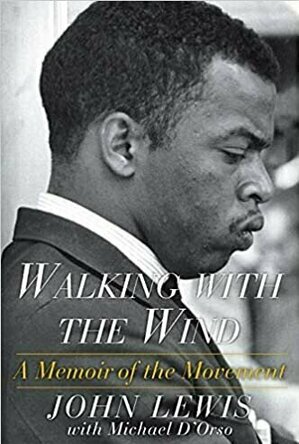
Walking With The Wind
Book
In 1957, a teenaged boy named John Lewis left a cotton farm in Alabama for Nashville, the epicenter...
The Beginning of Everything
6.0 Rate It
Book
Varsity tennis captain Ezra Faulkner was supposed to be homecoming king, but that was...
HolyBible K.J.V
Book and Education
App
Holy Bible K.J.V. Easily navigate through the Word of God by Book,Chapter and Verse! Order of the...

Sarah (7800 KP) rated Everything's Eventual: 14 Dark Tales in Books
Apr 2, 2020
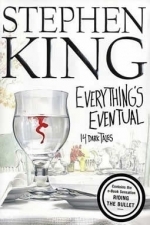
Everything’s Eventual is a collection of short stories that I read well over a decade ago, and as short stories require a lot less brain power than a full on novel, I decided to give this a go as I couldn’t recall many of the stories. And overall this is a very good collection of short stories. They’re all well written with developed characters (as you’d expect with King I’m sure), and the stories themselves have all got very good plots and storylines. The stories are all well balanced and there are none in here that are either overly long or too short, they’re very well paced. There are some great stories in here, most notably for me the John Dillinger story ‘The Death of Jack Hamilton’ and the Dark Tower prequel ‘The Little Sisters of Eluria’, but all of the stories are entertaining and very enjoyable. I wouldn’t say there are any amazing standout ‘wow’ stories in this, which is possibly why I’ve marked it down a little from some of King’s other collections of short stories.
In the Name of the Crown
Book
In the Name of the Crown takes us on a journey through the 17th century. It begins with the trial...
Going in Style (2017)
6.7
Rate It
Movie Watch
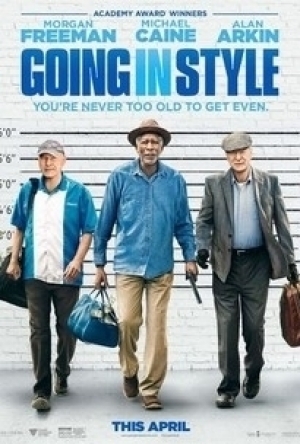
Oscar winners Morgan Freeman (Million Dollar Baby), Michael Caine (The Cider House Rules, Hannah and...
Monty Python and the Holy Grail (1975)
8.9 Rate It
Movie Watch
Second big-screen outing for the Monty Python team. As King Arthur (Graham Chapman) rounds up the...

Awix (3310 KP) rated Pet Sematary (2019) in Movies
Apr 9, 2019 (Updated Apr 9, 2019)
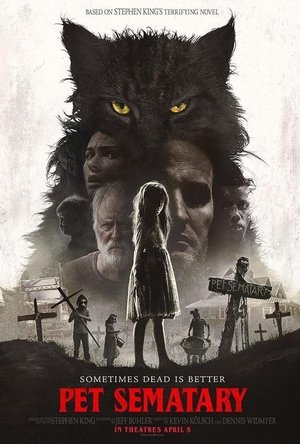

Benefits greatly from a strong performance from Jason Clarke as one of King's Everyman protagonists, driven into very bad choices; John Lithgow is also good value as the neighbourhood's Creepy Exposition Yokel. The pacing is a bit skewed, but the film digs profitably into ideas of grief and madness, although some may find it tough to watch in a not-very-fun way due to some of the subject matter. A competent and enjoyable piece of high-class schlock.

David McK (3921 KP) rated Outlaw (The Outlaw Chronicles, #1) in Books
Jan 30, 2019


Robin Hood, Robin Hood, and his bunch of blood-thirsty murderous outlaws ..."
Doesn't have quite the same ring, does it?
"Outlaw" is the story of Robin Hood, told from the perspective of Alan Dale. Like Bernard Cornwell's series of books about King Arthur (indeed, my copy of the book even had a "As good as Bernard Cornwell or your money back" sticker on it), Outlaw is a more earthy, more 'real', telling of the famous tale. All the famous characters are here: Robin Hood, Maid Marie-Anne (Marion), Little John, Friar Tuck, Guy of Gisbourne, and (obviously) Alan Dale himself.
Forget the recent BBC adaptation, or even the '91 film starring a not-very-English Kevin Costner; this is more what Robin Hood would have been like (if he ever existed) than the over-romanticised legendary figure.
Worth a read? If you like Cornwell (or Simon Scarrow's) style of historical fiction, then my answer is a definite yes.

Deborah (162 KP) rated The Third Plantagenet: George, Duke of Clarence, Richard III's Brother in Books
Dec 21, 2018

Much less well known than his more famous brothers, Edward IV and Richard III, nonetheless, Clarence and his life and death were am important part of the story of this period. His supposed death by drowning in a butt of Malmsey wine is one of those well known 'facts' that might be a mythology all of its own, but Ashdown-Hill provides evidence to suggest that drowning was used as a method of execution in this period and considered kinder than hanging or beheading!
It's not a long book and a good proportion is given over to a study of the Clarence vault at Tewksbury abbey and the remains therein. If you are interested in the period, this is certainly worth a read. I look forward to the forthcoming companion volume, The Dublin King.