
Search
Search results

Purple Phoenix Games (2266 KP) rated Port Royal in Tabletop Games
Jun 12, 2019
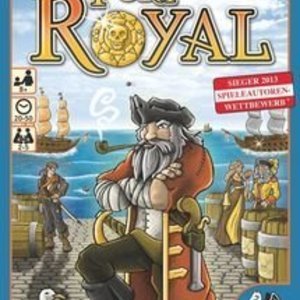

Port Royal looks and sounds like a pirate-y game, but be warned – it’s not. It’s more about what gets done behind the scenes, in the port as you prepare to cast off on an adventure! You’ve got to hire a crew and trade with others to gather necesssry supplies. Put your bookkeeping to the test, and SEA if you’ve got what it takes. (See what I did there?)
Port Royal is the central hub for trading and commerce in the kingdom. Ships from distant countries come in to trade, and crew-members-for-hire wander the docks looking for work. Do you have what it takes to make a name for yourself in this bustling port? Put your bargaining skills to the test to find out!
DISCLAIMER: There are several expansions to this game, but we are not reviewing them at this time. Should we review them in the future we will either update this review or post a link to the new material here. -T
Port Royal is a card drafting game of press-your-luck in which players are trying to amass 12 or more Influence Points. Each turn is played in two phases: the Discovery Phase and the Trade and Hire Phase. During the Discovery Phase, the active player draws cards one at a time to create the Harbor for that turn. The cards revealed will either be Characters, Ships, Missions, or Tax cards. The active player can draw as many or as few cards as they would like, with one catch – if you reveal a ship with a flag matching one already in the Harbor, the turn is a bust and all cards are discarded! Think wisely before trying to push your luck when creating the Harbor! If you’re too risky, you could bust, but if you play it too safe, you won’t have many card choices for the next phase. During the Trade and Hire Phase, players interact with cards in the harbor. The number of cards players can take depends on the number of different ships in the Harbor. Players can hire characters by paying their hiring cost in gold, can discard ship cards and collect gold for performing a “trade,” or can complete Mission cards if they have the required symbols on their hired cards. The Discovery Phase is performed by the active player alone, but the Trade and Hire Phase can be performed by each player, in order, after the active player. If you decide to act on another player’s turn, you must pay them one gold coin. The game ends at the end of a round in which one player has amassed 12 or more Influence Points, collected from Character and Mission cards. The player with the most points wins!
One thing that I really like about Port Royal is that it’s a competitive game, but not a confrontational game. Besides paying to act on another player’s turn, there’s not a lot of player interaction, and as someone who can get pretty competitive, I really appreciate that. Yes, we are competing against each other, but with so little interaction, I’m more focused on my own strategy and cards than I am in trying to sabotage my fellow players. Another thing I like about Port Royal is the push-your-luck aspect of the Discovery Phase. I like it more than other push-your-luck games because all decisions are made by the active player – you’re not having to bluff or directly compete with another player when drawing your Harbor cards. It’s still a game of chicken, but against yourself. There’s still the element of push-your-luck, but it feels a little more safe than nerve-wracking.
All that being said, what I don’t like about Port Royal is the actual gameplay. Since there’s so little player interaction and the entire Discovery Phase is performed by one player alone, it feels like there’s a bit of downtime. Unless you’re the active player, you only get to act during half of every turn, so time is spent just sitting and watching other players. It ultimately all comes down to how quickly everyone performs their turns, but there’s just not a ton of engagement in my opinion. Don’t get me wrong – it’s a neat game. It just feels a little boring to play sometimes. It also takes some time to build up momentum to successfully execute a strategy. Everyone starts with 3 gold coins, but most cards cost more, and depending on when you get to act in the Trade and Hire Phase, any cards you could have afforded may already have been taken. So it might take several rounds before you’re able to really begin implementing a solid strategy, with the first few rounds just being a card-grab.
For the most part, I enjoy playing Port Royal. It’s mildly strategic, but the lack of interaction can make it feel a little stale sometimes. It’s not a game I pull out every single game night, but it’s one that I would most likely play if someone suggested it. Purple Phoenix Games gives Port Royal a buccaneer’s 7 / 12.
https://purplephoenixgames.wordpress.com/2019/04/16/port-royal-review/
Port Royal is the central hub for trading and commerce in the kingdom. Ships from distant countries come in to trade, and crew-members-for-hire wander the docks looking for work. Do you have what it takes to make a name for yourself in this bustling port? Put your bargaining skills to the test to find out!
DISCLAIMER: There are several expansions to this game, but we are not reviewing them at this time. Should we review them in the future we will either update this review or post a link to the new material here. -T
Port Royal is a card drafting game of press-your-luck in which players are trying to amass 12 or more Influence Points. Each turn is played in two phases: the Discovery Phase and the Trade and Hire Phase. During the Discovery Phase, the active player draws cards one at a time to create the Harbor for that turn. The cards revealed will either be Characters, Ships, Missions, or Tax cards. The active player can draw as many or as few cards as they would like, with one catch – if you reveal a ship with a flag matching one already in the Harbor, the turn is a bust and all cards are discarded! Think wisely before trying to push your luck when creating the Harbor! If you’re too risky, you could bust, but if you play it too safe, you won’t have many card choices for the next phase. During the Trade and Hire Phase, players interact with cards in the harbor. The number of cards players can take depends on the number of different ships in the Harbor. Players can hire characters by paying their hiring cost in gold, can discard ship cards and collect gold for performing a “trade,” or can complete Mission cards if they have the required symbols on their hired cards. The Discovery Phase is performed by the active player alone, but the Trade and Hire Phase can be performed by each player, in order, after the active player. If you decide to act on another player’s turn, you must pay them one gold coin. The game ends at the end of a round in which one player has amassed 12 or more Influence Points, collected from Character and Mission cards. The player with the most points wins!
One thing that I really like about Port Royal is that it’s a competitive game, but not a confrontational game. Besides paying to act on another player’s turn, there’s not a lot of player interaction, and as someone who can get pretty competitive, I really appreciate that. Yes, we are competing against each other, but with so little interaction, I’m more focused on my own strategy and cards than I am in trying to sabotage my fellow players. Another thing I like about Port Royal is the push-your-luck aspect of the Discovery Phase. I like it more than other push-your-luck games because all decisions are made by the active player – you’re not having to bluff or directly compete with another player when drawing your Harbor cards. It’s still a game of chicken, but against yourself. There’s still the element of push-your-luck, but it feels a little more safe than nerve-wracking.
All that being said, what I don’t like about Port Royal is the actual gameplay. Since there’s so little player interaction and the entire Discovery Phase is performed by one player alone, it feels like there’s a bit of downtime. Unless you’re the active player, you only get to act during half of every turn, so time is spent just sitting and watching other players. It ultimately all comes down to how quickly everyone performs their turns, but there’s just not a ton of engagement in my opinion. Don’t get me wrong – it’s a neat game. It just feels a little boring to play sometimes. It also takes some time to build up momentum to successfully execute a strategy. Everyone starts with 3 gold coins, but most cards cost more, and depending on when you get to act in the Trade and Hire Phase, any cards you could have afforded may already have been taken. So it might take several rounds before you’re able to really begin implementing a solid strategy, with the first few rounds just being a card-grab.
For the most part, I enjoy playing Port Royal. It’s mildly strategic, but the lack of interaction can make it feel a little stale sometimes. It’s not a game I pull out every single game night, but it’s one that I would most likely play if someone suggested it. Purple Phoenix Games gives Port Royal a buccaneer’s 7 / 12.
https://purplephoenixgames.wordpress.com/2019/04/16/port-royal-review/

Chris Sawin (602 KP) rated Jurassic World: Dominion (2022) in Movies
Jun 16, 2022
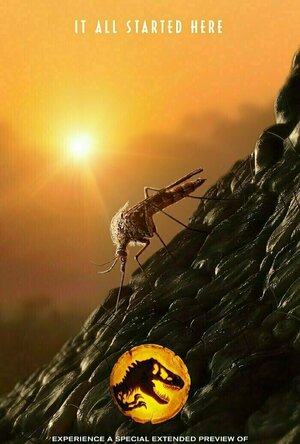


The Therizinosaurus and Pyroraptor sequences. (2 more)
The final dinosaur battle.
Jeff Goldblum
No chemistry between the cast. (2 more)
Not enough dinosaurs.
Human drama overshadows anything remotely dinosaur related.
You Can't Squeeze Gold From a Dried Up Fossil
Four years after the events of Jurassic World: Fallen Kingdom, dinosaurs now roam free and are a part of everyday life. Claire Dearing (Bryce Dallas Howard) and Owen Grady (Chris Pratt) have been taking care of Maisie Lockwood (Isabella Sermon) while living in a cabin deep within the Sierra Nevada mountains. Biosyn Genetics now utilizes the dinosaurs as a means to try to cure the world’s most devastating diseases.
Maisie’s unique clone DNA is suddenly the world’s only hope for surviving against a swarm of de-extinct giant locusts that is growing in number, spreading from continent to continent, and attacking the source of the world’s food supply. Biosyn kidnaps Maisie along with Beta; the offspring of Blue, the velociraptor Owen trained, who reproduced Beta asexually. Meanwhile, with the help of Dr. Ian Malcolm (Jeff Goldblum), Dr. Ellie Sattler (Laura Dern) recruits Dr. Alan Grant (Sam Neill) to break into Biosyn in an attempt to prove that they are the ones responsible for the giant locusts.
The big drawing point of Jurassic World Dominion is that not only is it the first time Jeff Goldblum, Laura Dern, and Sam Neill have been together in a Jurassic Park film since the original, but you get to see them interact with the main characters of the Jurassic World films. The problem is that it wasn’t worth the wait. The highlight of the Jurassic Park films are the dinosaurs and it seems like Dominion purposely keeps its audience away from what they came to see for the majority of the film. To make matters worse, all of the human interactions fall flat. What little comedic humor the film tries to provide is met with blank stares and there seems to be more time spent talking about relationships between characters, teenager woes, and villainous characters who have suddenly turned a new leaf over actual dinosaur goodness.
Why anyone decided that Owen’s trademark pose of his arm being extended with his palm being the only defense between them and a wild dinosaur mauling them to death is beyond anyone’s comprehension. It’s done so often here and what’s even more frustrating is that it works every time. The film throws in these sappy and melodramatic excursions that simply aren’t worth the hassle. Claire and Owen attempting to be parents is excruciating and the way this film has decided to force Ellie Sattler and Alan Grant into an awkward, romantic fling is more uncomfortable than it is satisfying.
The film does offer a few highlights, but not nearly enough amongst its close to 150-minute runtime. The motorcycle chase in Malta is the film’s most entertaining action sequence and the pyroraptor scene on top of the ice is also incredibly thrilling. The three-way dinosaur battle during the finale of the film is cool, but it feels like it’s been done previously. As the Jurassic Park and Jurassic World films progressed, they seemed to always try to be topping the T. Rex and yet were never really able to.
Dominion includes the Giganotosaurus; an apex predator that is bigger and meaner than the T. Rex. The finale sees the T.Rex battling the Giganotosaurus with the help of a Therizinosaurus. Earlier in the film, the Therizinosaurus and its long, sharp, finger-like appendages provide the only nod to horror and classic monster movies Dominion provides as it stalks Claire in the jungle near the main Biosyn facility.
The film spends a lot of time focusing on human drama that you don’t care about. Claire and Owen bounce around the world as they try to find Maisie. They’re taken to an underground dinosaur fighting ring by Barry Sembène (Omar Sy), who now works for the CIA. They go on a wild goose chase as they trail behind Rainn Delacourt (Scott Haze), the man who kidnapped Maisie, and then Soyona Santos (Dichen Lachman), a dinosaur smuggler that has a direct line to Biosyn.
What’s disappointing is more of the film could have been devoted to Santos and the dinosaur black market since they are two of the most interesting aspects of the film. Dominion tries to make up for it by making pilot Kayla Watts (DeWanda Wise) the most intriguing new character, but her inclusion feels like it’s too little too late.
With Jurassic World Dominion, a Jurassic World film where dinosaurs are now free and interacting with the modern world shouldn’t feel this longwinded or this tiresome. There are a few action sequences that are worthwhile and Jeff Goldblum has a few great one-liners (“You made a promise to a dinosaur?”), but the film is a monumental disappointment overall.
The film has already made over $415 million at the worldwide box office, so the interest in the franchise is still there. But the chemistry between the cast is almost non-existent and it feels like the film is running on fumes as it tries to offer something new from what is otherwise dried up fossil fuel. If the Jurassic Park/Jurassic World franchise is to continue, it desperately needs to go in a refreshing and unseen direction. Now that all of the nostalgia is out of the way, fans deserve a refreshing and unique adventure over what is otherwise a glorified rehash.
Maisie’s unique clone DNA is suddenly the world’s only hope for surviving against a swarm of de-extinct giant locusts that is growing in number, spreading from continent to continent, and attacking the source of the world’s food supply. Biosyn kidnaps Maisie along with Beta; the offspring of Blue, the velociraptor Owen trained, who reproduced Beta asexually. Meanwhile, with the help of Dr. Ian Malcolm (Jeff Goldblum), Dr. Ellie Sattler (Laura Dern) recruits Dr. Alan Grant (Sam Neill) to break into Biosyn in an attempt to prove that they are the ones responsible for the giant locusts.
The big drawing point of Jurassic World Dominion is that not only is it the first time Jeff Goldblum, Laura Dern, and Sam Neill have been together in a Jurassic Park film since the original, but you get to see them interact with the main characters of the Jurassic World films. The problem is that it wasn’t worth the wait. The highlight of the Jurassic Park films are the dinosaurs and it seems like Dominion purposely keeps its audience away from what they came to see for the majority of the film. To make matters worse, all of the human interactions fall flat. What little comedic humor the film tries to provide is met with blank stares and there seems to be more time spent talking about relationships between characters, teenager woes, and villainous characters who have suddenly turned a new leaf over actual dinosaur goodness.
Why anyone decided that Owen’s trademark pose of his arm being extended with his palm being the only defense between them and a wild dinosaur mauling them to death is beyond anyone’s comprehension. It’s done so often here and what’s even more frustrating is that it works every time. The film throws in these sappy and melodramatic excursions that simply aren’t worth the hassle. Claire and Owen attempting to be parents is excruciating and the way this film has decided to force Ellie Sattler and Alan Grant into an awkward, romantic fling is more uncomfortable than it is satisfying.
The film does offer a few highlights, but not nearly enough amongst its close to 150-minute runtime. The motorcycle chase in Malta is the film’s most entertaining action sequence and the pyroraptor scene on top of the ice is also incredibly thrilling. The three-way dinosaur battle during the finale of the film is cool, but it feels like it’s been done previously. As the Jurassic Park and Jurassic World films progressed, they seemed to always try to be topping the T. Rex and yet were never really able to.
Dominion includes the Giganotosaurus; an apex predator that is bigger and meaner than the T. Rex. The finale sees the T.Rex battling the Giganotosaurus with the help of a Therizinosaurus. Earlier in the film, the Therizinosaurus and its long, sharp, finger-like appendages provide the only nod to horror and classic monster movies Dominion provides as it stalks Claire in the jungle near the main Biosyn facility.
The film spends a lot of time focusing on human drama that you don’t care about. Claire and Owen bounce around the world as they try to find Maisie. They’re taken to an underground dinosaur fighting ring by Barry Sembène (Omar Sy), who now works for the CIA. They go on a wild goose chase as they trail behind Rainn Delacourt (Scott Haze), the man who kidnapped Maisie, and then Soyona Santos (Dichen Lachman), a dinosaur smuggler that has a direct line to Biosyn.
What’s disappointing is more of the film could have been devoted to Santos and the dinosaur black market since they are two of the most interesting aspects of the film. Dominion tries to make up for it by making pilot Kayla Watts (DeWanda Wise) the most intriguing new character, but her inclusion feels like it’s too little too late.
With Jurassic World Dominion, a Jurassic World film where dinosaurs are now free and interacting with the modern world shouldn’t feel this longwinded or this tiresome. There are a few action sequences that are worthwhile and Jeff Goldblum has a few great one-liners (“You made a promise to a dinosaur?”), but the film is a monumental disappointment overall.
The film has already made over $415 million at the worldwide box office, so the interest in the franchise is still there. But the chemistry between the cast is almost non-existent and it feels like the film is running on fumes as it tries to offer something new from what is otherwise dried up fossil fuel. If the Jurassic Park/Jurassic World franchise is to continue, it desperately needs to go in a refreshing and unseen direction. Now that all of the nostalgia is out of the way, fans deserve a refreshing and unique adventure over what is otherwise a glorified rehash.

Daniel Boyd (1066 KP) created a post
May 18, 2018 (Updated Jun 12, 2018)

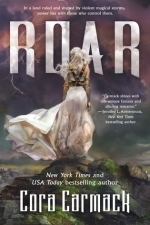

Roar started off slowly, but before long I was completely enamoured by the story. I personally love stories where elemental powers are part of the lore. Roar had a similar, yet unique take on those special abilities.
There are people in the world, called Stormlings, who are able to use their affinities to battle storms. In this land, those abilities relate to the storms that plague the kingdoms and towns. A Stormling may have an affinity for sky fire and be able to battle lightning - or they may have an affinity for tornados. Many battle storms not only to protect their lands but in the attempt to gain more affinities. If strong enough, a Stormling could take the heart of the storm (which manifests as a rock or gem) and use it to channel their abilities.
Aurora is the future Queen of Pavan, but she has yet to show any hint of the power needed to protect her people. As a result, her mother sets up an arranged marriage with the second born son of a neighboring kingdom. Not all is as it appears and Rora sets out to discover the truth. She soon learns that Stormlings are not the only people with the ability to fight storms and realizes that she must learn from these storm hunters so that she can avoid the path her life is currently on.
Aurora begins the book as a strong female character despite the fact that she is forced into a more meek, agreeable role in order to secure the marriage, so it may not seem that way. Although she has not been able to access the magic her blood should give her, she has not rested on her laurels. Rora occasionally trains with the guards in swordsmanship, reads whatever books she can get her hands on, is quite skilled in a number of languages and can chart her course by the stars. While she is not the typical heroine we might expect to save the day, she does grow over the course of the novel and will continue to do so in the second book.
As the majority of the book does not take place in the palace, we do not see much from the Locke family but I am incredibly intrigued by their familial relationships and the Prince himself. He is a dark, strong and imposing figure who is out to claim the throne - but may be less ruthless than he seems. While we do not such much of him, I expect there will be a lot more character development in the second book and I'm looking forward to that.
Locke, the storm hunter, was probably my favourite main character - although I loved the storm hunter crew as a whole. They had such unique personalities, tales and roles in the group and who wouldn't join a group of storm hunters? That would be amazing. Anyway, Locke started to remind me after a while of that over-protective Fae male personality that we see so often in Sarah J Maas' books (which can become tiresome) but his storm hunting prowess won me over. The author wrote each storm, its feeling and the hunters fighting it so brilliantly that those were definitely my favourite scenes in the novel.
This book seemed to set up the world, the magic system and the main characters well but leave plenty of room for development. We don't even see the character who is likely to be the villain until about 75% of the book is over. I'm intrigued by the villain's story and abilities, and can't wait to see where it goes in the second book.
The world is what drew me in and kept me wanting more, despite the cliches, tropes, and mid-level character development. The romance itself was probably the most off-putting because it was so unbelievable to me. It's not necessarily the chemistry and interactions between the two, but rather the way the author writes the male's point of view. To me, it just didn't sound like a guy was thinking those thoughts. Both of her main male characters became almost immediately obsessed with Aurora, wanted to protect her at any cost, thought about her all of the time, etc. As I mentioned before, that overprotective Fae male mentality. While it may seem sweet that they want to be protective, it borders on being too much (and sometimes crosses the line), which is not a healthy relationship dynamic to romanticize. I don't want to give more specific examples and spoil anything. This is not to say that men cannot be emotional and effusive because they can, but for me, just the way that it was done didn't read authentically. Those were the times I felt most drawn out of the narrative.
This book ends with the type of cliffhanger that most books should end on. You are not utterly destroyed and heartbroken that the author has ended this book with such big questions and yet the next is not due out for another year - you are completely in love with the story and the final scenes just make you excited to continue reading.
For me, the book was a little slow to start but once Rora goes on the journey with the storm hunters I think the book picks up a lot. I've seen a few people put the book down because they couldn't get into it and I would just recommend trying to push through a little longer and see if that changes for you. This is an upper-YA novel that I would recommend to ya/teen readers who enjoy fantasy and character growth in their novels.
There are people in the world, called Stormlings, who are able to use their affinities to battle storms. In this land, those abilities relate to the storms that plague the kingdoms and towns. A Stormling may have an affinity for sky fire and be able to battle lightning - or they may have an affinity for tornados. Many battle storms not only to protect their lands but in the attempt to gain more affinities. If strong enough, a Stormling could take the heart of the storm (which manifests as a rock or gem) and use it to channel their abilities.
Aurora is the future Queen of Pavan, but she has yet to show any hint of the power needed to protect her people. As a result, her mother sets up an arranged marriage with the second born son of a neighboring kingdom. Not all is as it appears and Rora sets out to discover the truth. She soon learns that Stormlings are not the only people with the ability to fight storms and realizes that she must learn from these storm hunters so that she can avoid the path her life is currently on.
Aurora begins the book as a strong female character despite the fact that she is forced into a more meek, agreeable role in order to secure the marriage, so it may not seem that way. Although she has not been able to access the magic her blood should give her, she has not rested on her laurels. Rora occasionally trains with the guards in swordsmanship, reads whatever books she can get her hands on, is quite skilled in a number of languages and can chart her course by the stars. While she is not the typical heroine we might expect to save the day, she does grow over the course of the novel and will continue to do so in the second book.
As the majority of the book does not take place in the palace, we do not see much from the Locke family but I am incredibly intrigued by their familial relationships and the Prince himself. He is a dark, strong and imposing figure who is out to claim the throne - but may be less ruthless than he seems. While we do not such much of him, I expect there will be a lot more character development in the second book and I'm looking forward to that.
Locke, the storm hunter, was probably my favourite main character - although I loved the storm hunter crew as a whole. They had such unique personalities, tales and roles in the group and who wouldn't join a group of storm hunters? That would be amazing. Anyway, Locke started to remind me after a while of that over-protective Fae male personality that we see so often in Sarah J Maas' books (which can become tiresome) but his storm hunting prowess won me over. The author wrote each storm, its feeling and the hunters fighting it so brilliantly that those were definitely my favourite scenes in the novel.
This book seemed to set up the world, the magic system and the main characters well but leave plenty of room for development. We don't even see the character who is likely to be the villain until about 75% of the book is over. I'm intrigued by the villain's story and abilities, and can't wait to see where it goes in the second book.
The world is what drew me in and kept me wanting more, despite the cliches, tropes, and mid-level character development. The romance itself was probably the most off-putting because it was so unbelievable to me. It's not necessarily the chemistry and interactions between the two, but rather the way the author writes the male's point of view. To me, it just didn't sound like a guy was thinking those thoughts. Both of her main male characters became almost immediately obsessed with Aurora, wanted to protect her at any cost, thought about her all of the time, etc. As I mentioned before, that overprotective Fae male mentality. While it may seem sweet that they want to be protective, it borders on being too much (and sometimes crosses the line), which is not a healthy relationship dynamic to romanticize. I don't want to give more specific examples and spoil anything. This is not to say that men cannot be emotional and effusive because they can, but for me, just the way that it was done didn't read authentically. Those were the times I felt most drawn out of the narrative.
This book ends with the type of cliffhanger that most books should end on. You are not utterly destroyed and heartbroken that the author has ended this book with such big questions and yet the next is not due out for another year - you are completely in love with the story and the final scenes just make you excited to continue reading.
For me, the book was a little slow to start but once Rora goes on the journey with the storm hunters I think the book picks up a lot. I've seen a few people put the book down because they couldn't get into it and I would just recommend trying to push through a little longer and see if that changes for you. This is an upper-YA novel that I would recommend to ya/teen readers who enjoy fantasy and character growth in their novels.

Gareth von Kallenbach (980 KP) rated Indiana Jones and the Kingdom of the Crystal Skull (2008) in Movies
Aug 14, 2019
After 17 years away from the big screen, Indiana Jones has dusted off his trusty fedora and bullwhip in one of the most eagerly awaited returns to the screen in cinema history. Harrison Ford once again plays the rough and rugged archeologist who is as equally adept in the classroom as he is in the depths of an ancient trap laden chamber.
In “Indiana Jones and the Kingdom of the Crystal Skull”, audience are re-introduced to Jones, who is by now an older, and wiser man who spent the years of WWII as a special operative which earned him not only the rank of Colonel, but numerous medals and citations.
The film opens with a group of bad guys forcing Indiana to locate an object from a gigantic storage area in the infamous Area 51. Since Jones was part of a team that examined said object nearly a decade earlier, his services are greatly desired, and he is forced to play along with his captors.
Of course Indiana Jones is still a man of action, and soon turns the tables on his captors in a daring and humor filled action sequence that quickly answers those that doubted Ford could pull off his charismatic character in his 60’s.
The events of the situation do not go unnoticed by the U.S. government who suspect Jones of collaborating with the enemy, and in the Red Scare America of the 1950’s Jones soon finds himself suspended from his teaching position and looking to head overseas.
As Indy’s train heads out of town, he is approached by a motorcycle riding messenger who says his name is Mutt (Shia LaBeouf), and he has been sent to find Indy by a former college of Indy’s Professor Oxle (John Hurt). Intrigued, Jones listens to the tale Mutt tells him that people have kidnapped Oxley and his mother, and he shows him a letter that Oxley instructed him to pass along to Indy should anything happen to him.
Before Indy can dig further into the mystery, he and Mutt are accosted by thugs and after a daring race through traffic on Mutt’s motorcycle, find themselves on a plane to South America in search of Oxley and Mutt’s mother as well as the fabled Crystal Skull that legend says will grant amazing powers to anyone who returns it to the fabled Golden City.
Thinking that his old friend Oxley may have succeeded where Indy was unable to many years earlier, Jones takes up the cause of locating the fabled artifact and the city as he believes that they are also the keys to locating his missing friend. The film really slows down here and devotes a good amount of time to advancing the story and characters and thanks to the amazingly detailed sets and enjoyable characters; you may find yourself not minding the change of pace.
Of course there are plenty of bad guys to add to the mix, including the evil Irinia Spalko (Cate Blanchett), who is leading a team of Russian soldiers who also have designs on the skull, as it would give them the power to read and control the minds of the leaders the world over, amongst other powers that would be used for their aggressive agendas.
What follows is an effects-laden adventure leading to a grand finale that is not as spectacular as past films in the series, but enjoyable nonetheless. When the action comes it is solid, and while some of it seems to be a retread of some of the classic moments of the series, it does deliver enough thrills to keep fans happy. There are some very welcome moments in the film such as a nice tribute to Sean Connery and the Late Denholm Elliot as well as a cleverly placed cameo early in the film during the warehouse fight.
Shia LaBeouf is an interesting addition to the series and his scenes with Ford are very enjoyable. They have a natural chemistry and do not seem forced like the Short Round character from “Indiana Jones and the Temple of Doom”. I was also very happy to see Karen Allen return to the series as Marion Ravenwood. She has truly proven to be the only love interest in the series that truly measures up to Indy, and her fiery temper with a girl next door charm is the perfect foil for Jones.
The effects in the film are not groundbreaking, but solid, however some may find that the films plot is a bit to complex and takes too long to setup. There were funny moments in the film to go along with the action and viewers who pay close attention will catch some very subtle nods to other moments in the series.
I was pleased with the sets in the film as Director Steven Speilberg and Producer George Lucas clearly paid attention to details in the look of the film. The tombs and exotic chambers depicted in the film had a very immersive nature to them much the same way that classic Disneyland rides like Pirates of the Caribbean and The Haunted Mansion place guests right in the middle of the spooky and exotic locales. From cobwebs, skeletons, and insects and well as treasures galore, it was like being in on the adventure with Indy.
The series does have some life in it and while the film does not measure up with the first film in the series, I would say it is on par with “Temple of Doom” and was for me, more enjoyable than “The Last Crusade.” The film leaves the door open for yet another adventure, and if comments from Speilberg and Lucas are to be taken seriously, we may see the beloved archeologist back on the big screen in the not too distant future.
In “Indiana Jones and the Kingdom of the Crystal Skull”, audience are re-introduced to Jones, who is by now an older, and wiser man who spent the years of WWII as a special operative which earned him not only the rank of Colonel, but numerous medals and citations.
The film opens with a group of bad guys forcing Indiana to locate an object from a gigantic storage area in the infamous Area 51. Since Jones was part of a team that examined said object nearly a decade earlier, his services are greatly desired, and he is forced to play along with his captors.
Of course Indiana Jones is still a man of action, and soon turns the tables on his captors in a daring and humor filled action sequence that quickly answers those that doubted Ford could pull off his charismatic character in his 60’s.
The events of the situation do not go unnoticed by the U.S. government who suspect Jones of collaborating with the enemy, and in the Red Scare America of the 1950’s Jones soon finds himself suspended from his teaching position and looking to head overseas.
As Indy’s train heads out of town, he is approached by a motorcycle riding messenger who says his name is Mutt (Shia LaBeouf), and he has been sent to find Indy by a former college of Indy’s Professor Oxle (John Hurt). Intrigued, Jones listens to the tale Mutt tells him that people have kidnapped Oxley and his mother, and he shows him a letter that Oxley instructed him to pass along to Indy should anything happen to him.
Before Indy can dig further into the mystery, he and Mutt are accosted by thugs and after a daring race through traffic on Mutt’s motorcycle, find themselves on a plane to South America in search of Oxley and Mutt’s mother as well as the fabled Crystal Skull that legend says will grant amazing powers to anyone who returns it to the fabled Golden City.
Thinking that his old friend Oxley may have succeeded where Indy was unable to many years earlier, Jones takes up the cause of locating the fabled artifact and the city as he believes that they are also the keys to locating his missing friend. The film really slows down here and devotes a good amount of time to advancing the story and characters and thanks to the amazingly detailed sets and enjoyable characters; you may find yourself not minding the change of pace.
Of course there are plenty of bad guys to add to the mix, including the evil Irinia Spalko (Cate Blanchett), who is leading a team of Russian soldiers who also have designs on the skull, as it would give them the power to read and control the minds of the leaders the world over, amongst other powers that would be used for their aggressive agendas.
What follows is an effects-laden adventure leading to a grand finale that is not as spectacular as past films in the series, but enjoyable nonetheless. When the action comes it is solid, and while some of it seems to be a retread of some of the classic moments of the series, it does deliver enough thrills to keep fans happy. There are some very welcome moments in the film such as a nice tribute to Sean Connery and the Late Denholm Elliot as well as a cleverly placed cameo early in the film during the warehouse fight.
Shia LaBeouf is an interesting addition to the series and his scenes with Ford are very enjoyable. They have a natural chemistry and do not seem forced like the Short Round character from “Indiana Jones and the Temple of Doom”. I was also very happy to see Karen Allen return to the series as Marion Ravenwood. She has truly proven to be the only love interest in the series that truly measures up to Indy, and her fiery temper with a girl next door charm is the perfect foil for Jones.
The effects in the film are not groundbreaking, but solid, however some may find that the films plot is a bit to complex and takes too long to setup. There were funny moments in the film to go along with the action and viewers who pay close attention will catch some very subtle nods to other moments in the series.
I was pleased with the sets in the film as Director Steven Speilberg and Producer George Lucas clearly paid attention to details in the look of the film. The tombs and exotic chambers depicted in the film had a very immersive nature to them much the same way that classic Disneyland rides like Pirates of the Caribbean and The Haunted Mansion place guests right in the middle of the spooky and exotic locales. From cobwebs, skeletons, and insects and well as treasures galore, it was like being in on the adventure with Indy.
The series does have some life in it and while the film does not measure up with the first film in the series, I would say it is on par with “Temple of Doom” and was for me, more enjoyable than “The Last Crusade.” The film leaves the door open for yet another adventure, and if comments from Speilberg and Lucas are to be taken seriously, we may see the beloved archeologist back on the big screen in the not too distant future.
Gareth von Kallenbach (980 KP) rated The Hobbit: An Unexpected Journey (2012) in Movies
Aug 7, 2019

Following the Lord of the Rings Trilogy was going to be no easy feat. The series not only made incredible amounts of cash at the box office worldwide, but also garnered an Academy award for best picture for the final film in the series. In the years since the trilogy, writer-director-producer Peter Jackson has not overwhelmed at the box office. His big-budget remake of “King Kong” performed below expectations and the high-profile collapse of the “Halo” movie to which he was attached, as well as the underwhelming box office of “The Lovely Bones” made many people question if Jackson had peaked and was better suited for the lower budgeted independent films that first gave him his start.
When it was announced that a film version of “The Hobbit” was in the works and that director Guillermo del Toro would direct the film as well as help write the screenplay and that Jackson would produce, the fans’ interest level was definitely piqued. But after a long state of pre-production, del Torro decided not to direct the film as he was unwilling to commit the next six years to living and working in New Zealand. Jackson then took over the film and soon after it was announced that it would be stretched into three movies to form a new trilogy.
For those unfamiliar with the story it was actually the first book written by J.R.R. Tolkien, which sets the stage for what was to follow in the Lord of the Rings even though it was originally conceived as a standalone story. The film opens with an older Bilbo Baggins (Martin Freeman), writing a memoir while preparations for a party are underway. Bilbo discusses how there was one story that he had not disclosed and sets pen to paper in order to chronicle his legendary journey 60 years prior.
Gandolf Wizard (Sir Ian McKellen) visits the younger Bilbo and suggests he go on an adventure. Bilbo immediately declines, as being a Hobbit, he has no desire to leave the creature comforts and serenity of The Shire, much less face the dangers that exist in the world beyond. A group of dwarves arrive’ that evening and despite their gluttonous appetites and loud behavior, Bilbo has a change of heart the following morning and accompanies them on their quest.
The group’s goal is to travel to the dwarves’ kingdom of Erebor to reclaim their stronghold which was lost many years earlier to a vicious Dragon named Smaug. In the decades since, the dwarves existed as people without a home, forced to live as nomads taking work wherever they can find it. Along the way the group deals with all manner of threats and dangers ranging from trolls, goblins, orcs, and other supernatural elements. Of course there were some internal tensions and conflicts within the group as it marched towards a finale that sets the stage for the next film.
The movie has a runtime of nearly 3 hours and there were times that I caught a couple members in press row dozing briefly. While I enjoyed the film more than I did any of the Lord of the Rings movies, it was clearly obvious that things were being stretched out in order to justify a third film in the series. There were countless scenes of the band walking over hills and across the countryside so much so that at times I felt that I was watching the longest commercial for New Zealand tourism ever created. We get it. It’s a long journey. They travel near and far. I got it. I don’t need to see it every 10 minutes.
There were also several scenes that were done almost as if in aside that truthfully did not add much to the story but seem to exist as nothing more than time fillers. In the subsequent films it is learned that characters and scenes that did not appear in the book will be inserted into the film. Once again I have to question this as I do believe they could have easily cut an hour out of this movie and not lose much of the necessary narrative.
There’s been a lot of talk about the higher frame rate 3-D that was used to create the film. There have been claims that it was distracting, jerky, and detracted from the movie. I on the other hand found it absolutely captivating because it did not have that movie look to it, and it felt like I was watching an HD television. Even during the CGI heavy sequences, it did appear as if the performers were literally right there in front of me and I got the impression more of watching a play than of watching a movie.
The visual effects in the film were quite stunning. The live-action and computer-generated elements were absolutely amazing, especially during the latter part of the film when we meet Gollum (Andy Serkis), and during the battle and the goblin stronghold. Although the book is considered a children’s novel, I would really have to think twice about bringing young children to see this film as there is a lot of action and violence in the film as well as potential scares in the form of the monsters that abound.
The film could have definitely used some star power to it. While the cast does a solid job, they are fairly generic and almost interchangeable during certain segments of the film. That being said, the film works because despite its issues, it’s a visually spectacular masterpiece that, if you can endure the long periods of inaction, pays off especially well during the film’s battle sequences.
When it was announced that a film version of “The Hobbit” was in the works and that director Guillermo del Toro would direct the film as well as help write the screenplay and that Jackson would produce, the fans’ interest level was definitely piqued. But after a long state of pre-production, del Torro decided not to direct the film as he was unwilling to commit the next six years to living and working in New Zealand. Jackson then took over the film and soon after it was announced that it would be stretched into three movies to form a new trilogy.
For those unfamiliar with the story it was actually the first book written by J.R.R. Tolkien, which sets the stage for what was to follow in the Lord of the Rings even though it was originally conceived as a standalone story. The film opens with an older Bilbo Baggins (Martin Freeman), writing a memoir while preparations for a party are underway. Bilbo discusses how there was one story that he had not disclosed and sets pen to paper in order to chronicle his legendary journey 60 years prior.
Gandolf Wizard (Sir Ian McKellen) visits the younger Bilbo and suggests he go on an adventure. Bilbo immediately declines, as being a Hobbit, he has no desire to leave the creature comforts and serenity of The Shire, much less face the dangers that exist in the world beyond. A group of dwarves arrive’ that evening and despite their gluttonous appetites and loud behavior, Bilbo has a change of heart the following morning and accompanies them on their quest.
The group’s goal is to travel to the dwarves’ kingdom of Erebor to reclaim their stronghold which was lost many years earlier to a vicious Dragon named Smaug. In the decades since, the dwarves existed as people without a home, forced to live as nomads taking work wherever they can find it. Along the way the group deals with all manner of threats and dangers ranging from trolls, goblins, orcs, and other supernatural elements. Of course there were some internal tensions and conflicts within the group as it marched towards a finale that sets the stage for the next film.
The movie has a runtime of nearly 3 hours and there were times that I caught a couple members in press row dozing briefly. While I enjoyed the film more than I did any of the Lord of the Rings movies, it was clearly obvious that things were being stretched out in order to justify a third film in the series. There were countless scenes of the band walking over hills and across the countryside so much so that at times I felt that I was watching the longest commercial for New Zealand tourism ever created. We get it. It’s a long journey. They travel near and far. I got it. I don’t need to see it every 10 minutes.
There were also several scenes that were done almost as if in aside that truthfully did not add much to the story but seem to exist as nothing more than time fillers. In the subsequent films it is learned that characters and scenes that did not appear in the book will be inserted into the film. Once again I have to question this as I do believe they could have easily cut an hour out of this movie and not lose much of the necessary narrative.
There’s been a lot of talk about the higher frame rate 3-D that was used to create the film. There have been claims that it was distracting, jerky, and detracted from the movie. I on the other hand found it absolutely captivating because it did not have that movie look to it, and it felt like I was watching an HD television. Even during the CGI heavy sequences, it did appear as if the performers were literally right there in front of me and I got the impression more of watching a play than of watching a movie.
The visual effects in the film were quite stunning. The live-action and computer-generated elements were absolutely amazing, especially during the latter part of the film when we meet Gollum (Andy Serkis), and during the battle and the goblin stronghold. Although the book is considered a children’s novel, I would really have to think twice about bringing young children to see this film as there is a lot of action and violence in the film as well as potential scares in the form of the monsters that abound.
The film could have definitely used some star power to it. While the cast does a solid job, they are fairly generic and almost interchangeable during certain segments of the film. That being said, the film works because despite its issues, it’s a visually spectacular masterpiece that, if you can endure the long periods of inaction, pays off especially well during the film’s battle sequences.
Purple Phoenix Games (2266 KP) rated Abyss in Tabletop Games
Aug 5, 2021
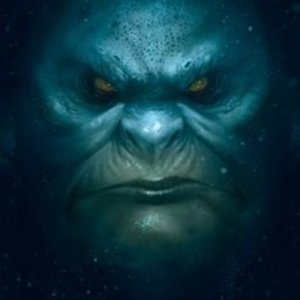
I am not a great swimmer. For several years of my life I would avoid water at all costs. I have since grown to love it, but would still freak out a bit if a crab came towards me. I’m kind of a baby like that. I do so love underwater scenes and the wildlife, so I was bound to enjoy Abyss. Throw in some of the most amazing artwork in all of gaming and you have a hit, right?
Abyss is a push your luck, set collection, hand management, fantasy card drafting game for two to four players. In it players are attempting to gain the most Influence Points to rule the underwater kingdom by recruiting allies and Lords, and controlling locations. The game ends once a player recruits their seventh Lord or if the Lords cards run out before the Court can be refilled.
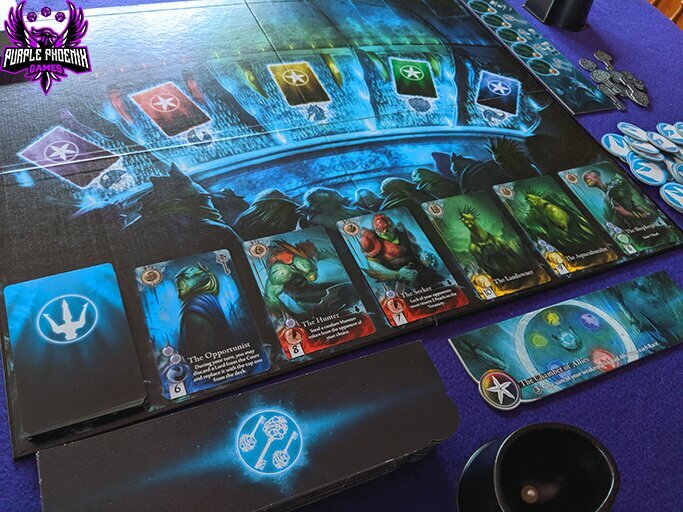
To setup, lay out the board, shuffle the Exploration cards (starfish backs) and place in the upper left corner. Shuffle the Lord cards (trident backs) and place the deck in the lower left corner. Reveal Lords to each of the spaces drawn to the right of the deck. This is the Court. Shuffle the Monster tokens and place in a messy pile near the board. Next to these place all the Key tokens. Display the Threat Tracker board with the Threat token on the first space. Shuffle the Location tiles into a stack and reveal the first one. Give each player a pearl in a shell cup and the game is ready to begin!
On a player’s turn they will follow the basic structure of Plotting at Court (by spending pearls to reveal more Lords), Taking One Action (by Exploring the Depths, Requesting Support from the Council, or Recruiting a Lord), and Controlling a Location.
Plotting at Court is simply paying pearls to reveal more Lords at Court.
The action choices begin with Exploring the Depths. This is the push your luck portion of the game where players will reveal cards from the top of the Exploration deck one by one, offer the card to their opponents for purchase (payable to the active player in pearls), and then deciding to continue or take into hand. These cards include members of five allied races of underwater species numbered in strength from one to five and monsters. Fighting monsters is an auto-win and the spoils are what is reflected on the Threat Tracker. If players decide to pass, they will move the Threat token down by one level and improve the treasure won when destroying a monster. Any allies that are undrafted will be sorted by family and placed on the appropriate space on the board.
To Request Support from the Council players will take the entire stack from one family on the board. Again, these are made up of the cards that were undrafted from previous Exploring the Depths actions.
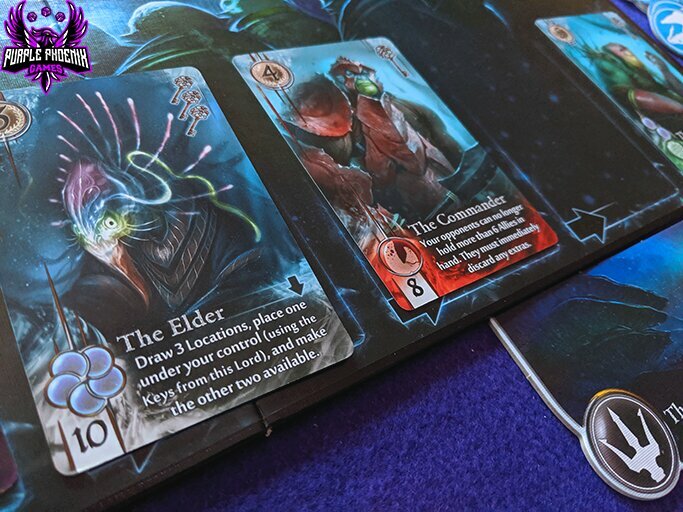
Finally, Recruiting a Lord players will be spending their Exploration cards to combine strength values and family types to appease the Lords they wish to recruit. Players will analyze the strength needed on the bottom left of the Lord card along with the number and color of bubbles above the strength number to determine from which families cards will need to be paid. Lords will have special powers that can be used throughout the game until you use them to Control Locations.
Lords and monster tokens afford players keys, and once players accumulate three keys they MUST Control a Location. To Control a Location players will draft a face-up Location tile or draw one to four tiles and draft one of them. Also, players will sacrifice their Lords (and their special powers) to, well, lord over Locations as super powerful property managers. This is done by covering up the special Lord powers with the Location tiles.
Play continues in this fashion of quick turns until a player recruits their seventh Lord or if the Lords cards run out before the Court can be refilled during a Plot at Court action.
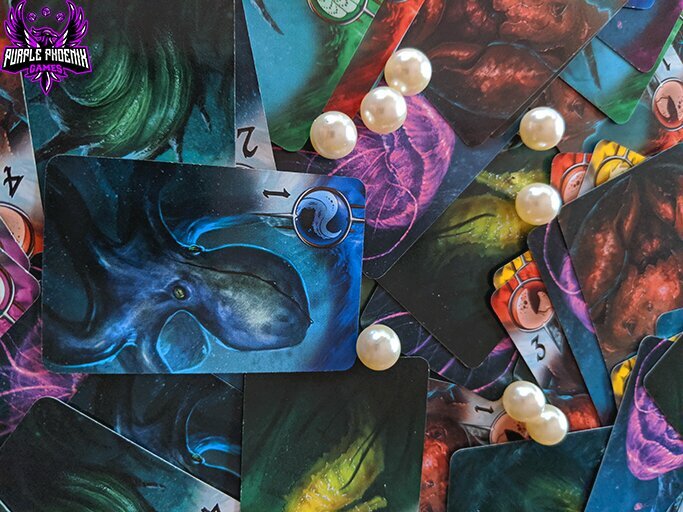
Components. As I mentioned in my open, Abyss boasts some of the most magnificent art ever to grace a board game. The aesthetic coupled with the theme makes for a gorgeous game on the table. The cardboard is all good quality and thick, the cards are good quality as well. The black plastic shells and pearls they hold are so nice to play with and I find myself rolling those pearls as fast as I can within the shells and inevitably spilling them everywhere.
The game play is also quite solid. I like drafting games quite a bit and this delivers a lot of drafting in different locations. You draft Exploration cards and Location tiles to beef up your mini empire. Using the Lords as special power cards but having to cover them up to help control a Location is a clever mechanic and helps with any sort of runaway leader issue. I did not touch on a couple rules because they can be a little confusing to new players (ie the affiliation of allies), but even new gamers can appreciate what Abyss does and how beautifully it accomplishes its task.
I cannot overstate how gorgeous this game is and how much I enjoy being able to pull it off the shelf and set it up to people who have never seen it. I mean, even just the box cover, which is a giant face and no text, is very impressive and helps set the tone for the dark but interesting experiences held within. Purple Phoenix Games gives Abyss a boding 14 / 18. Pick it up, post a picture of which box cover you received, and tag us in the post so we can compare.
Abyss is a push your luck, set collection, hand management, fantasy card drafting game for two to four players. In it players are attempting to gain the most Influence Points to rule the underwater kingdom by recruiting allies and Lords, and controlling locations. The game ends once a player recruits their seventh Lord or if the Lords cards run out before the Court can be refilled.
To setup, lay out the board, shuffle the Exploration cards (starfish backs) and place in the upper left corner. Shuffle the Lord cards (trident backs) and place the deck in the lower left corner. Reveal Lords to each of the spaces drawn to the right of the deck. This is the Court. Shuffle the Monster tokens and place in a messy pile near the board. Next to these place all the Key tokens. Display the Threat Tracker board with the Threat token on the first space. Shuffle the Location tiles into a stack and reveal the first one. Give each player a pearl in a shell cup and the game is ready to begin!
On a player’s turn they will follow the basic structure of Plotting at Court (by spending pearls to reveal more Lords), Taking One Action (by Exploring the Depths, Requesting Support from the Council, or Recruiting a Lord), and Controlling a Location.
Plotting at Court is simply paying pearls to reveal more Lords at Court.
The action choices begin with Exploring the Depths. This is the push your luck portion of the game where players will reveal cards from the top of the Exploration deck one by one, offer the card to their opponents for purchase (payable to the active player in pearls), and then deciding to continue or take into hand. These cards include members of five allied races of underwater species numbered in strength from one to five and monsters. Fighting monsters is an auto-win and the spoils are what is reflected on the Threat Tracker. If players decide to pass, they will move the Threat token down by one level and improve the treasure won when destroying a monster. Any allies that are undrafted will be sorted by family and placed on the appropriate space on the board.
To Request Support from the Council players will take the entire stack from one family on the board. Again, these are made up of the cards that were undrafted from previous Exploring the Depths actions.
Finally, Recruiting a Lord players will be spending their Exploration cards to combine strength values and family types to appease the Lords they wish to recruit. Players will analyze the strength needed on the bottom left of the Lord card along with the number and color of bubbles above the strength number to determine from which families cards will need to be paid. Lords will have special powers that can be used throughout the game until you use them to Control Locations.
Lords and monster tokens afford players keys, and once players accumulate three keys they MUST Control a Location. To Control a Location players will draft a face-up Location tile or draw one to four tiles and draft one of them. Also, players will sacrifice their Lords (and their special powers) to, well, lord over Locations as super powerful property managers. This is done by covering up the special Lord powers with the Location tiles.
Play continues in this fashion of quick turns until a player recruits their seventh Lord or if the Lords cards run out before the Court can be refilled during a Plot at Court action.
Components. As I mentioned in my open, Abyss boasts some of the most magnificent art ever to grace a board game. The aesthetic coupled with the theme makes for a gorgeous game on the table. The cardboard is all good quality and thick, the cards are good quality as well. The black plastic shells and pearls they hold are so nice to play with and I find myself rolling those pearls as fast as I can within the shells and inevitably spilling them everywhere.
The game play is also quite solid. I like drafting games quite a bit and this delivers a lot of drafting in different locations. You draft Exploration cards and Location tiles to beef up your mini empire. Using the Lords as special power cards but having to cover them up to help control a Location is a clever mechanic and helps with any sort of runaway leader issue. I did not touch on a couple rules because they can be a little confusing to new players (ie the affiliation of allies), but even new gamers can appreciate what Abyss does and how beautifully it accomplishes its task.
I cannot overstate how gorgeous this game is and how much I enjoy being able to pull it off the shelf and set it up to people who have never seen it. I mean, even just the box cover, which is a giant face and no text, is very impressive and helps set the tone for the dark but interesting experiences held within. Purple Phoenix Games gives Abyss a boding 14 / 18. Pick it up, post a picture of which box cover you received, and tag us in the post so we can compare.

Tyler Fletcher (8 KP) rated Artemis Fowl (2020) in Movies
Jun 14, 2020

Character development (1 more)
Forgettable story
Another Live-Action Disney Adaption Bomb
Contains spoilers, click to show
What is it about fantasy novels that makes them so difficult to translate effectively to the silver screen? It’s not impossible – J.K. Rowling’s Harry Potter series and Peter Jackson’s The Lord of the Rings adaptations are proof that it can be done. More often than not, however, the result is as limp and truncated as Kenneth Branagh’s Artemis Fowl – a few standout moments set adrift in a sea of underdeveloped characters, incomplete backstory elements, and abbreviated world building. Although the problem lies primarily in the difficulties associated with condensing an epic tale into a short-ish movie, the lack of elegance with which that is accomplished makes Artemis Fowl a failure for anyone hoping for the next great fantasy film.
The treatment accorded to Artemis Fowl (the movie condenses elements from the first two volumes of an eight-novel cycle into a single film) recalls a Disney misfire from more than three decades ago. Although The Black Cauldron was animated, it suffered from many of the same problems evident in Artemis Fowl: an oversimplification of the backstory, a rushed narrative with poorly realized characters, and a overall lack of faithfulness to the source material. The Black Cauldron worked better because it at least had a clean ending. Artemis Fowl suffers by trying to both provide a credible stopping point (in case there are no additional films) and offering a lead-in to additional adventures (in case there are additional films).
In the books, 12-year old Artemis (played by Ferdia Shaw, the grandson of Robert Shaw) is presented as an anti-hero (although, over the course of the saga, his villainous attributes fade to be replaced by heroic ones). Here, he’s more of a misunderstood boy-genius whose role as the protagonist is never in question. All of his edges have been smoothed out. The story focuses on Artemis’ efforts to locate and rescue his father, Artemis Fowl Sr. (Colin Farrell), an infamous art thief who has been kidnapped by the twisted evil fairy Opal Koboi. Her ransom for releasing him is that Artemis must locate and obtain a powerful McGuffin. He is joined in his efforts by Lower Elements Police (LEP) fairy police officer Holly Short (Lara McDonnell), giant dwarf Mulch Diggums (Josh Gad), and strongman Domovoi Butler (Nonso Anozie).
Artemis Fowl diverges considerably from the two books that form its basis, Artemis Fowl and Artemis Fowl and the Arctic Incident. Although author Eoin Colfer reportedly “approved” the changes, they push the film into an alternate universe from the one occupied by the novels. Even with the pruning of subplots and condensation of the narrative, 100 minutes is too short to tell the story effectively. None of the characters are well-developed, including Artemis. The boy’s relationship with Holly Short evolves with whiplash-inducing rapidity – one moment, they’re enemies (actually, she’s his prisoner), the next they’re friends. The film’s frenetic pace might work for ADD viewers and preteens but there’s no time for world-building or anything more than the most basic exposition. As a result, Artemis Fowl feels rushed to the point of being exhausting and strangely confusing despite the relatively straightforward storyline.
Kenneth Branagh was undoubtedly selected to direct the film based on his success with two earlier Disney properties: the live-action Cinderella and Marvel’s Thor. Perhaps because Branagh had no input into the screenplay (which was completed before he came on board), the movie lacks the complex psychological qualities he normally brings to his films. Visually, Artemis Fowl is impressive. However, although the fairy world of Haven is beautifully rendered, it appears all-too-briefly. The film’s most impressive sequence, a throwdown with a seemingly invincible troll, is a standout by any definition, but it represents only about five minutes of screen time and there’s nothing else that comes close – not even the muted climax.
As is often the case, Branagh’s presence at the top results in some impressive names in the cast. The young leads are newcomers – this is Ferdia Shaw’s first movie (and it shows – his performance is occasionally wooden) and Lara McDonnell’s third (she’s better, evidencing an indomitable pluckiness) – but the rest of the cast is populated with veterans. Josh Gad, another Disney regular, has the most openly comedic role of the film as Mulch Diggums. Colin Farrell is called on for limited duty as Artemis’ mostly-absent father. Nonso Anozie, who has a history with Branagh, plays Artemis’ protector and advisor. Finally, Judi Dench adds a dose of class as Holly’s no-nonsense boss.
It has taken Artemis Fowl nearly 20 years to traverse the route from page to screen and one senses that neither fans nor newcomers will be especially pleased with the end result. Recognizing that the film faced rough seas, Disney postponed the movie’s originally planned August 2019 release to May 2020 then, when the coronavirus made that impossible, the studio elected to shift the film to its Disney+ platform. Although partially a face-saving gesture (Artemis Fowl would likely have had a similar box office reception to Disney’s underwhelming 2018 release, The Nutcracker and the Four Realms), it at least allows the film to find a large audience in a low-pressure situation.
The bottom line seems to be that, while Disney has shown an aptitude for making many different kinds of movies, fantasy epics aren’t among them. This is one genre the Magic Kingdom should perhaps avoid, leaving such properties to studios that have shown better success (such as Warner Brothers). Artemis Fowl could have been the beginning of a movie franchise but, based on the first installment, it’s more likely a one-and-done outing. Disney can't quite get away from the John Carters can they?
THIS FILM IS AN EXCEPTIONAL BOMB
The treatment accorded to Artemis Fowl (the movie condenses elements from the first two volumes of an eight-novel cycle into a single film) recalls a Disney misfire from more than three decades ago. Although The Black Cauldron was animated, it suffered from many of the same problems evident in Artemis Fowl: an oversimplification of the backstory, a rushed narrative with poorly realized characters, and a overall lack of faithfulness to the source material. The Black Cauldron worked better because it at least had a clean ending. Artemis Fowl suffers by trying to both provide a credible stopping point (in case there are no additional films) and offering a lead-in to additional adventures (in case there are additional films).
In the books, 12-year old Artemis (played by Ferdia Shaw, the grandson of Robert Shaw) is presented as an anti-hero (although, over the course of the saga, his villainous attributes fade to be replaced by heroic ones). Here, he’s more of a misunderstood boy-genius whose role as the protagonist is never in question. All of his edges have been smoothed out. The story focuses on Artemis’ efforts to locate and rescue his father, Artemis Fowl Sr. (Colin Farrell), an infamous art thief who has been kidnapped by the twisted evil fairy Opal Koboi. Her ransom for releasing him is that Artemis must locate and obtain a powerful McGuffin. He is joined in his efforts by Lower Elements Police (LEP) fairy police officer Holly Short (Lara McDonnell), giant dwarf Mulch Diggums (Josh Gad), and strongman Domovoi Butler (Nonso Anozie).
Artemis Fowl diverges considerably from the two books that form its basis, Artemis Fowl and Artemis Fowl and the Arctic Incident. Although author Eoin Colfer reportedly “approved” the changes, they push the film into an alternate universe from the one occupied by the novels. Even with the pruning of subplots and condensation of the narrative, 100 minutes is too short to tell the story effectively. None of the characters are well-developed, including Artemis. The boy’s relationship with Holly Short evolves with whiplash-inducing rapidity – one moment, they’re enemies (actually, she’s his prisoner), the next they’re friends. The film’s frenetic pace might work for ADD viewers and preteens but there’s no time for world-building or anything more than the most basic exposition. As a result, Artemis Fowl feels rushed to the point of being exhausting and strangely confusing despite the relatively straightforward storyline.
Kenneth Branagh was undoubtedly selected to direct the film based on his success with two earlier Disney properties: the live-action Cinderella and Marvel’s Thor. Perhaps because Branagh had no input into the screenplay (which was completed before he came on board), the movie lacks the complex psychological qualities he normally brings to his films. Visually, Artemis Fowl is impressive. However, although the fairy world of Haven is beautifully rendered, it appears all-too-briefly. The film’s most impressive sequence, a throwdown with a seemingly invincible troll, is a standout by any definition, but it represents only about five minutes of screen time and there’s nothing else that comes close – not even the muted climax.
As is often the case, Branagh’s presence at the top results in some impressive names in the cast. The young leads are newcomers – this is Ferdia Shaw’s first movie (and it shows – his performance is occasionally wooden) and Lara McDonnell’s third (she’s better, evidencing an indomitable pluckiness) – but the rest of the cast is populated with veterans. Josh Gad, another Disney regular, has the most openly comedic role of the film as Mulch Diggums. Colin Farrell is called on for limited duty as Artemis’ mostly-absent father. Nonso Anozie, who has a history with Branagh, plays Artemis’ protector and advisor. Finally, Judi Dench adds a dose of class as Holly’s no-nonsense boss.
It has taken Artemis Fowl nearly 20 years to traverse the route from page to screen and one senses that neither fans nor newcomers will be especially pleased with the end result. Recognizing that the film faced rough seas, Disney postponed the movie’s originally planned August 2019 release to May 2020 then, when the coronavirus made that impossible, the studio elected to shift the film to its Disney+ platform. Although partially a face-saving gesture (Artemis Fowl would likely have had a similar box office reception to Disney’s underwhelming 2018 release, The Nutcracker and the Four Realms), it at least allows the film to find a large audience in a low-pressure situation.
The bottom line seems to be that, while Disney has shown an aptitude for making many different kinds of movies, fantasy epics aren’t among them. This is one genre the Magic Kingdom should perhaps avoid, leaving such properties to studios that have shown better success (such as Warner Brothers). Artemis Fowl could have been the beginning of a movie franchise but, based on the first installment, it’s more likely a one-and-done outing. Disney can't quite get away from the John Carters can they?
THIS FILM IS AN EXCEPTIONAL BOMB
Purple Phoenix Games (2266 KP) rated Quests of Valeria in Tabletop Games
Jun 12, 2019
One of the best parts of the board gaming experience is finding a fun group of people with whom to play! Sometimes, though, coordinating a game night is easier said than done. We all must occasionally forego the group experience and face the world as the Lonely Only. But fear not! The world of solo-play is a vast and exciting realm! What follows is a chronicle of my journey into the solo-playing world – notes on gameplay, mechanics, rules, difficulty, and overall experience with solo variations of commonly multiplayer games! I hope this will provide some insight as you continue to grow your collection, or explore your already owned games!
A royal King may rule the city of Valeria, but we all know who really is responsible for the prosperity of this kingdom – it’s YOU, the Guild Masters! Your hard work behind the scenes (providing work for Citizens, and overseeing the completion of various Quests) has helped turn Valeria into the thriving epicenter of life and commerce that it is today! Make sure you keep up the good work, because if you don’t, another Guild Master will jump at the opportunity to outperform you and win the favor of the King!
Quests of Valeria, a game of card drafting and hand management, pits players against each other as they try to hire Citizens to complete Quests and earn Victory Points. Each Quest requires certain Citizen roles and Resources to be completed, so strategy is key! Work efficiently, or another Guild Master could swipe a Citizen or Quest right out from under you! On your turn, you will take 2 actions from these listed: Draw, Hire, Reserve, or Quest. Citizen and Quest cards sometimes have special powers that, when played, allow you to take bonus actions on your turn. The game continues until a player has completed their 5th quest, and then all players count up their Victory Points. The player with the highest score is the winner! In solo play, the game ends when either the Citizen or Quest card deck is completely depleted – the solo player then counts up their Victory Points and tries to beat their personal best score!
As a solo game, Quests of Valeria is played almost exactly the same way, with one main gameplay difference. That difference has to do with the setup and handling of the available Citizen and Quest cards. In group play, Citizens and Quest cards remain in the game until their are either hired, completed, or actively discarded. In solo play, at the end of each turn, the Citizen and Quest cards at the furthest left side of the Tavern Line (play area, see photo below for reference) are discarded permanently from the game. All other cards shift one or more spaces as far left as possible in the Tavern Line and any remaining empty slots are refilled from their respective draw decks. This puts a time limit on how long cards remain in the game without being hired/completed. It really forces you to strategize which Citizens to hire and when since they only appear for a finite amount of time. The same goes for Quests – each turn pushes Quests closer to elimination from the game, so you must act quickly and efficiently to complete as many as you can before they are discarded.
I really like the idea of the shifting Tavern Line in solo play. The game would be so easy without it – there would be no rush to do anything and no real strategy involved since I could just bide my time until I have the appropriate Citizens to complete each Quest. With the shifting line, I do have to come up with an ever-changing strategy. I can’t just focus on one Quest – I have to be looking ahead to see what I need for the next quest and how long I have to complete that one too.
My only dislike of this game is that sometimes it can be slow-going getting your Guild up and running. Sometimes the Citizens and Resources I need just aren’t showing up in the Tavern Line (thanks to my awful card shuffling, I’m sure) and I just get to watch those Quests make their way through the line towards the discard pile. And then usually with my luck, I discard precious cards from my hand to Hire a Citizen that I was waiting for only to have all of those Quests slowly replaced by Quests for the Citizens that I was passing on! Since I can only have a maximum of 8 Citizens in my Guild at any given time, I can’t just recruit everybody until I get a Quest that needs those people. It’s a balancing act for sure, and it’s one that I haven’t quite mastered. I’m sure that once I figure out a better strategy for handling this type of situation, I’ll enjoy the game more. But for now, these stand-stills have me stumped.
Overall, I enjoy Quests of Valeria as a solo game. It requires a decent amount of strategy, and the more I play it, the more I like it. There’s no single strategy for success, and I like to try out different ones with each game – do I try to finish as many easy Quests as possible (fewer VPs each, but more Quests overall), or do I save up my Citizens and go only for the big Quests (lots of VPs, but also lots of required Citizens/Resources)? There’s not a right answer, and I enjoy being able to adapt my strategy to the cards currently in play. For such a simple game (Hire Citizens, complete Quests), Quest of Valeria keeps me engaged the entire time. It’s easy to learn, fast to play, and strategic enough that it keeps you hooked. Give it a try as a solo game – it might surprise you!
https://purplephoenixgames.wordpress.com/2019/03/28/solo-chronicles-quests-of-valeria/
A royal King may rule the city of Valeria, but we all know who really is responsible for the prosperity of this kingdom – it’s YOU, the Guild Masters! Your hard work behind the scenes (providing work for Citizens, and overseeing the completion of various Quests) has helped turn Valeria into the thriving epicenter of life and commerce that it is today! Make sure you keep up the good work, because if you don’t, another Guild Master will jump at the opportunity to outperform you and win the favor of the King!
Quests of Valeria, a game of card drafting and hand management, pits players against each other as they try to hire Citizens to complete Quests and earn Victory Points. Each Quest requires certain Citizen roles and Resources to be completed, so strategy is key! Work efficiently, or another Guild Master could swipe a Citizen or Quest right out from under you! On your turn, you will take 2 actions from these listed: Draw, Hire, Reserve, or Quest. Citizen and Quest cards sometimes have special powers that, when played, allow you to take bonus actions on your turn. The game continues until a player has completed their 5th quest, and then all players count up their Victory Points. The player with the highest score is the winner! In solo play, the game ends when either the Citizen or Quest card deck is completely depleted – the solo player then counts up their Victory Points and tries to beat their personal best score!
As a solo game, Quests of Valeria is played almost exactly the same way, with one main gameplay difference. That difference has to do with the setup and handling of the available Citizen and Quest cards. In group play, Citizens and Quest cards remain in the game until their are either hired, completed, or actively discarded. In solo play, at the end of each turn, the Citizen and Quest cards at the furthest left side of the Tavern Line (play area, see photo below for reference) are discarded permanently from the game. All other cards shift one or more spaces as far left as possible in the Tavern Line and any remaining empty slots are refilled from their respective draw decks. This puts a time limit on how long cards remain in the game without being hired/completed. It really forces you to strategize which Citizens to hire and when since they only appear for a finite amount of time. The same goes for Quests – each turn pushes Quests closer to elimination from the game, so you must act quickly and efficiently to complete as many as you can before they are discarded.
I really like the idea of the shifting Tavern Line in solo play. The game would be so easy without it – there would be no rush to do anything and no real strategy involved since I could just bide my time until I have the appropriate Citizens to complete each Quest. With the shifting line, I do have to come up with an ever-changing strategy. I can’t just focus on one Quest – I have to be looking ahead to see what I need for the next quest and how long I have to complete that one too.
My only dislike of this game is that sometimes it can be slow-going getting your Guild up and running. Sometimes the Citizens and Resources I need just aren’t showing up in the Tavern Line (thanks to my awful card shuffling, I’m sure) and I just get to watch those Quests make their way through the line towards the discard pile. And then usually with my luck, I discard precious cards from my hand to Hire a Citizen that I was waiting for only to have all of those Quests slowly replaced by Quests for the Citizens that I was passing on! Since I can only have a maximum of 8 Citizens in my Guild at any given time, I can’t just recruit everybody until I get a Quest that needs those people. It’s a balancing act for sure, and it’s one that I haven’t quite mastered. I’m sure that once I figure out a better strategy for handling this type of situation, I’ll enjoy the game more. But for now, these stand-stills have me stumped.
Overall, I enjoy Quests of Valeria as a solo game. It requires a decent amount of strategy, and the more I play it, the more I like it. There’s no single strategy for success, and I like to try out different ones with each game – do I try to finish as many easy Quests as possible (fewer VPs each, but more Quests overall), or do I save up my Citizens and go only for the big Quests (lots of VPs, but also lots of required Citizens/Resources)? There’s not a right answer, and I enjoy being able to adapt my strategy to the cards currently in play. For such a simple game (Hire Citizens, complete Quests), Quest of Valeria keeps me engaged the entire time. It’s easy to learn, fast to play, and strategic enough that it keeps you hooked. Give it a try as a solo game – it might surprise you!
https://purplephoenixgames.wordpress.com/2019/03/28/solo-chronicles-quests-of-valeria/
Daniel Boyd (1066 KP) rated Ready Player One (2018) in Movies
Sep 20, 2018 (Updated Sep 20, 2018)
Not Quite Ready
I saw this movie in the cinema back when it came out in March earlier this year and I honestly didn't feel ready to review it after a single viewing because of all of the references etc that there was to take in. After watching the movie a couple more times and watching a bunch of Easter Egg videos on Youtube, I feel more equipped to discuss the film.
Up top, I never read the book that this film is based on. It has been recommended to me quite a few times, but I have never gotten around to reading it, so I was going into this with no pre-conceived ideas of what it was going to be other than what I had seen in the various trailers for the movie.
Let's start with the good stuff. Although I have some issues with the overabundance of CGI onscreen, as a 3d animator myself I was extremely impressed at the sheer quality of the animation in the movie. I know that this thing had a pretty high budget behind it, but still the level of quality in the animation is really high throughout the film. The references are also pretty cool, at least for the first third of the movie but the novelty of seeing some of your favourite pop culture characters does wear off after a while and ends up feeling like a cheap gimmick before too long. Finally, if all you are looking for is a big dumb fun blockbuster, then this movie provides that in spades.
Ok, onto the stuff that bothered me. As I said above, although the quality of the CGI is pretty incredible, the vast amount of it gets tiresome after a while. I also don't like the character designs at all, Parzival looks like a rejected piece of Final Fantasy artwork, Art3mis looks like a stereotypical version of a what a middle aged man thinks a cool hacker looks like with a weird resemblance to a feline, Aech just looked chunky and awkward, like something from a last-gen Gears Of War game, I-R0k's weird, edgy, fantasy-based design didn't fit his voice or the tone of the scenes he appeared in and Sorrento's avatar just looked distractingly like a dastardly Clark Kent for some reason. Also, these original character designs seemed oddly out of place being surrounded by other characters from franchises that we already know like DC and Mortal Kombat, none of it meshed well.
From this point on I am going to delve into some mid-movie spoilers, so here's your warning.
It really annoyed me how they kept touching on the idea that someone in the Oasis might not necessarily look the same as they do in real life and if you ever met them in real life you would be sorely disappointed, only for the reason for all of this to be a birthmark on Olivia Cooke's character's face. The way that they make her out to some sort of beast-like monster because of a slight skin-irregularity is ridiculous and also kinda offensive. Also, we are told during the movie's opening sequence that the Oasis is a worldwide thing, where people from anywhere on the planet can meet up online and fight together or kill each other for coins, then halfway through the movie, all of the characters meet up in a small ice cream truck in the real world and it turns out that they all live within a few miles of each other. It just made the whole thing feel really small scale. Another issue is that the movie is only 6 months old at this point and it already feels slightly dated. I don't see this movie ageing very well at all and this is both due to the CGI and the references that they choose to include.
Lastly, as I said earlier, if what you want out of this movie is mindless fun, then you'll walk away satisfied, the problem with that is that the movie seems to want to be more than that. The way that the movie treats itself and the way it was marketed along with the fact that it's got Spielberg in the director's chair, signifies that the filmmakers were intending for this to be this generation's Back To The Future or Star Wars and on that front it totally fails. In these other movies that this film is aspiring to be, you care about what happens to the characters and want to see where they go, whereas here the audience cares way more about seeing the next popular franchise references than anything that happens to the main characters at the heart of this story and once you've seen the film, you are going to leave talking about the characters that appeared from outside franchises rather than the ones created for this story. The characters are also instantly forgettable, for example I have seen this film three times now and still couldn't tell you the real world names of any of the characters other than Wade Watts and Sorrento and that's only because he has the same name in the real world as he does in the Oasis. I also don't care if I ever see any of these characters again if I'm being honest. I'm sure there is probably a sequel to this already being planned seeing as it made a bunch of money at the box office and there is apparently a sequel book in the works, but frankly I wouldn't care if I never saw any of these characters again and I don't care where the story is going either.
In conclusion, Ready Player One doesn't achieve the goal that it sets for itself of being a modern sci-fi classic, but there is a lot of fun to be had here along with some impressive animation to boot. The movie has a fairly shallow, hollow feel to it throughout, as if we are scratching the surface of something potentially engaging and worth investing in, but the filmmakers constantly keep distracting us with flashy visuals and obscure pop culture references. If the movie committed to telling a more original story rather than being obsessed with the 80's classics it is exploiting, then it may be more worthwhile. Also, it's definitely not Spielberg's best, this may be a bit harsh but it's probably closer to Kingdom Of The Crystal Skull than Raiders Of The Lost Ark. I wish that Smashbomb had a half star rating system, because although I feel that the movie was better than a 6, I don't like it enough to give it a 7, so a 6.5 would sum up how I felt about the film more accurately.
Up top, I never read the book that this film is based on. It has been recommended to me quite a few times, but I have never gotten around to reading it, so I was going into this with no pre-conceived ideas of what it was going to be other than what I had seen in the various trailers for the movie.
Let's start with the good stuff. Although I have some issues with the overabundance of CGI onscreen, as a 3d animator myself I was extremely impressed at the sheer quality of the animation in the movie. I know that this thing had a pretty high budget behind it, but still the level of quality in the animation is really high throughout the film. The references are also pretty cool, at least for the first third of the movie but the novelty of seeing some of your favourite pop culture characters does wear off after a while and ends up feeling like a cheap gimmick before too long. Finally, if all you are looking for is a big dumb fun blockbuster, then this movie provides that in spades.
Ok, onto the stuff that bothered me. As I said above, although the quality of the CGI is pretty incredible, the vast amount of it gets tiresome after a while. I also don't like the character designs at all, Parzival looks like a rejected piece of Final Fantasy artwork, Art3mis looks like a stereotypical version of a what a middle aged man thinks a cool hacker looks like with a weird resemblance to a feline, Aech just looked chunky and awkward, like something from a last-gen Gears Of War game, I-R0k's weird, edgy, fantasy-based design didn't fit his voice or the tone of the scenes he appeared in and Sorrento's avatar just looked distractingly like a dastardly Clark Kent for some reason. Also, these original character designs seemed oddly out of place being surrounded by other characters from franchises that we already know like DC and Mortal Kombat, none of it meshed well.
From this point on I am going to delve into some mid-movie spoilers, so here's your warning.
It really annoyed me how they kept touching on the idea that someone in the Oasis might not necessarily look the same as they do in real life and if you ever met them in real life you would be sorely disappointed, only for the reason for all of this to be a birthmark on Olivia Cooke's character's face. The way that they make her out to some sort of beast-like monster because of a slight skin-irregularity is ridiculous and also kinda offensive. Also, we are told during the movie's opening sequence that the Oasis is a worldwide thing, where people from anywhere on the planet can meet up online and fight together or kill each other for coins, then halfway through the movie, all of the characters meet up in a small ice cream truck in the real world and it turns out that they all live within a few miles of each other. It just made the whole thing feel really small scale. Another issue is that the movie is only 6 months old at this point and it already feels slightly dated. I don't see this movie ageing very well at all and this is both due to the CGI and the references that they choose to include.
Lastly, as I said earlier, if what you want out of this movie is mindless fun, then you'll walk away satisfied, the problem with that is that the movie seems to want to be more than that. The way that the movie treats itself and the way it was marketed along with the fact that it's got Spielberg in the director's chair, signifies that the filmmakers were intending for this to be this generation's Back To The Future or Star Wars and on that front it totally fails. In these other movies that this film is aspiring to be, you care about what happens to the characters and want to see where they go, whereas here the audience cares way more about seeing the next popular franchise references than anything that happens to the main characters at the heart of this story and once you've seen the film, you are going to leave talking about the characters that appeared from outside franchises rather than the ones created for this story. The characters are also instantly forgettable, for example I have seen this film three times now and still couldn't tell you the real world names of any of the characters other than Wade Watts and Sorrento and that's only because he has the same name in the real world as he does in the Oasis. I also don't care if I ever see any of these characters again if I'm being honest. I'm sure there is probably a sequel to this already being planned seeing as it made a bunch of money at the box office and there is apparently a sequel book in the works, but frankly I wouldn't care if I never saw any of these characters again and I don't care where the story is going either.
In conclusion, Ready Player One doesn't achieve the goal that it sets for itself of being a modern sci-fi classic, but there is a lot of fun to be had here along with some impressive animation to boot. The movie has a fairly shallow, hollow feel to it throughout, as if we are scratching the surface of something potentially engaging and worth investing in, but the filmmakers constantly keep distracting us with flashy visuals and obscure pop culture references. If the movie committed to telling a more original story rather than being obsessed with the 80's classics it is exploiting, then it may be more worthwhile. Also, it's definitely not Spielberg's best, this may be a bit harsh but it's probably closer to Kingdom Of The Crystal Skull than Raiders Of The Lost Ark. I wish that Smashbomb had a half star rating system, because although I feel that the movie was better than a 6, I don't like it enough to give it a 7, so a 6.5 would sum up how I felt about the film more accurately.