
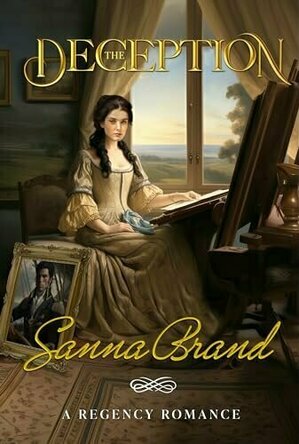
The Deception (The Secret Tales #2)
9.0 Rate It
Book
A love forged through adversity…. Daughter of an illustrious artist, Lady Charlotte Pheland...
Historical Regency Romance
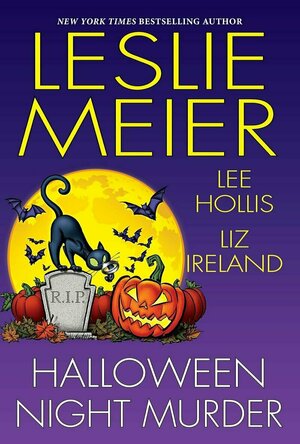
Halloween Night Murder
Leslie Meier, Lee Hollis and Liz Ireland
8.0 Rate It
Book
There’s usually a chill in the air when Halloween arrives—but in these three novellas by beloved...

Mark @ Carstairs Considers (2656 KP) rated Throne of Threats in Books
Jun 13, 2025
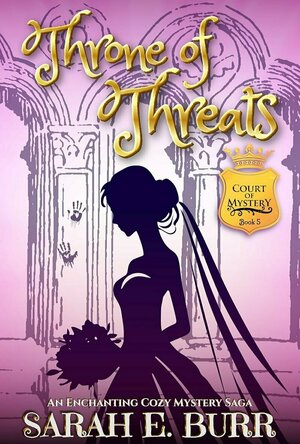
Any fan of the series has been looking forward to the events of this book. The beginning takes a bit of time getting to the story. Part of that is set up, but some is just general updates on the characters and the realm. Once the kidnapping happens, the pace doesn’t let up. I loved how things came together. I also loved getting to spend time with these characters again. They truly are fun. Reactions to the events of the story felt realistic, and part of that is because of elements from the past books that are mentioned in passing. It feels like we’ve turned a page in the series, and I’m looking forward to seeing what comes next.

Lyndsey Gollogly (2893 KP) rated Sophie and the Odd Ones ( Sophie Feegle book 1) in Books
Dec 15, 2022

Kindle
Sophie and the Odd Ones ( Sophie Feegle book 1)
By Gwen DeMarco
⭐️⭐️⭐️⭐️⭐️
Sophie Feegle needs a break. Rent is due on her crappy apartment and she's halfway through her last loaf of bread.
Sophie doesn't have big ambitions. She only wants a job that will keep her landlord off her back, enough extra cash for whiskey at the neighborhood bar and a bit of free time to hang out with the naughty old lady next door.
When a chance encounter with a quiet stranger leads to a job offer at the San Francisco City Morgue, Sophie jumps at the opportunity. She never expected to find her calling on the graveyard shift surrounded by dead bodies and the strange characters that make up the morgue's staff. Finding out that your friends and co-workers are shifters, ogres and other non-human creatures is a shock, but Sophie quickly realizes that these are her people, and she has finally found her perfect gig.
And then things get odd. Well… odder.
Unusual murders keep ending up on Sophie’s autopsy table, hinting at strange powers working within the city. Something nefarious is building in San Francisco, and it is up to Sophie and her friends to thwart the evil powers on the rise.
I absolutely loved this! It was funny and a refreshing enjoyable read. It was really good to see an author using the non apex predator shifters as the crime fighting team. If you’re looking for a supernatural fun read this is definitely recommended.
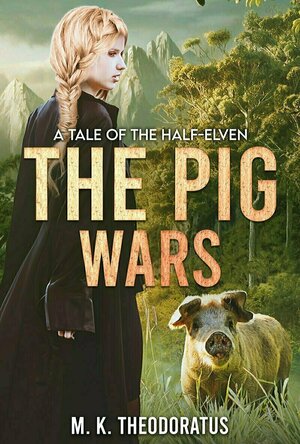
The Pig Wars
6.0 Rate It
Book
After inadvertently causing her father's death with her magic in battle, Lady Rena avoids the...
Medieval Fantasy
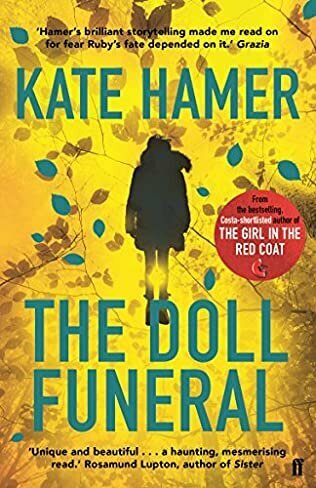
Lyndsey Gollogly (2893 KP) rated The Doll Funeral in Books
May 25, 2022
Book
The Doll Funeral
By Kate Hamer
⭐️⭐️⭐️⭐️⭐️
My name is Ruby. I live with Barbara and Mick. They're not my real parents, but they tell me what to do, and what to say. I'm supposed to say that the bruises on my arms and the black eye came from falling down the stairs.
But there are things I won't say. I won't tell them I'm going to hunt for my real parents. I don't say a word about Shadow, who sits on the stairs, or the Wasp Lady I saw on the way to bed.
I did tell Mick that I saw the woman in the buttercup dress, hanging upside down from her seat belt deep in the forest at the back of our house. I told him I saw death crawl out of her. He said he'd give me a medal for lying.
I wasn't lying. I'm a hunter for lost souls and I'm going to be with my real family. And I'm not going to let Mick stop me.
I just couldn’t put this down! It was so heartbreaking from start to finish. This poor child not only has to deal with being beaten by her “father” but the neglect and not forgetting that she sees spirits is just so much to have to deal with. We follow her journey to find someone to love her and that in itself is just so sad. This was beautifully written I loved it.
Lyndsey Gollogly (2893 KP) rated Shrooms ( Garden Variety Zombies 1) in Books
Nov 2, 2023
Kindle
Booksirens ARC
Shrooms (Garden Variety Zombies 1)
By Zola Joyce
⭐️⭐️⭐️
Hazel always had doubts about the protective abilities of the government. Particularly Child Protective Services and the cranky old lady who’d been doing her best to separate Hazel from her one and only parental unit. Why couldn’t Mrs. Stenopoulos see the value of independent living, and Hazel’s knack for it from the youngest of ages?
She was second in command of her mother’s slightly illegal but very profitable enterprise.
She’d taught herself to drive a full four years before she was eligible to get a license.
She’d rescued her beloved hound from the ‘Clinical Trial’ her mother’s boyfriend of the month had recently concocted.
And just a few weeks after her 15th birthday, she’d secured a full ride scholarship to the local university. Early entrance.
Hazel was a caretaker, a dog lover, and a crack shot. Ask anyone in town.
I received an advance review copy for free, and I am leaving this review voluntarily.
If you enjoy Zombie YA then it’s definitely the book for you! I think it could have done with a bit more humor and it did have some just didn’t quite hit the mark for me. I’ve gone with a 3⭐️ because it’s well written and the idea is really interesting. The ending has thrown me a little and I really want to read the next to make sure I wasn’t high on mushrooms reading that last page 😆.

ClareR (6256 KP) rated The Housekeepers in Books
Aug 4, 2023
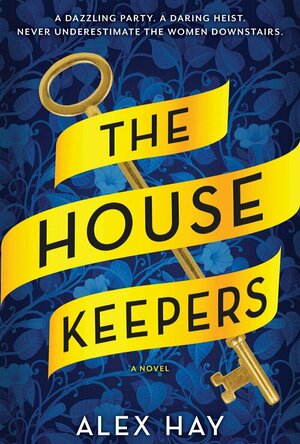

Mrs King, the housekeeper of a Mayfair house, is sacked when she is discovered trying to access the male servants corridor at night. She recruits a group of women to exact her revenge: a woman who runs a black market business; an actress; a seamstress; and Mrs King’s predecessor. They all have more in common than you’d think, and they all have scores to settle.
I loved everything about The Housekeepers: I felt that the historical details were spot on, and I really wanted the women to come out on top. This is a really audacious plan, and I’m sure that anyone else reading it would want them to succeed as well.
And the secrets within the walls of that house!! The women want to expose this family just as much as they want to completely clear out the house.
The night of the party is a wondrous thing: even the Princess comes along (and with a warning!). There are acrobats, gentry, amazing costumes, and the most startling way of removing artwork from a house that I’ve ever heard of!
But of course there’s much more to this than meets the eye, and Mrs King has a bone to pick with the lady of the house.
Honestly, this is a wonderfully imaginative book - you should read it!!
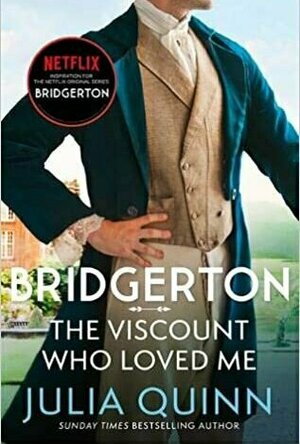
Lyndsey Gollogly (2893 KP) rated The Viscount Who Loved Me (Bridgertons, #2) in Books
Dec 8, 2023

Book
The Viscount who loved me ( Bridgertons 2)
By Julia Quinn
⭐️⭐️⭐️
1814 promises to be another eventful season, but not, This Author believes, for Anthony Bridgerton, London's most elusive bachelor, who has shown no indication that he plans to marry. And in all truth, why should he? When it comes to playing the consummate rake, nobody does it better...
-Lady Whistledown's Society Papers, April 1814
But this time the gossip columnists have it wrong. Anthony Bridgerton hasn't just decided to marry-he's even chosen a wife! The only obstacle is his intended's older sister, Kate Sheffield-the most meddlesome woman ever to grace a London ballroom. The spirited schemer is driving Anthony mad with her determination to stop the betrothal, but when he closes his eyes at night, Kate's the woman haunting his increasingly erotic dreams...
Contrary to popular belief, Kate is quite sure that reformed rakes to not make the best husbands-and Anthony Bridgerton is the most wicked rogue of them all. Kate's determined to protect her sister-but she fears her own heart is vulnerable. And when Anthony's lips touch hers, she's suddenly afraid she might not be able to resist the reprehensible rake herself...
I love Julia Quinn and this series has become so popular. I’ve managed to avoid the tv series as I always prefer to read the book first. And this was really good I enjoyed Anthony’s story, not as much as the first book but it was exactly what I expected.
Merissa (14182 KP) rated Her Scottish Rogue (The Rebels, Rakes, and Rogues Series) in Books
May 17, 2023
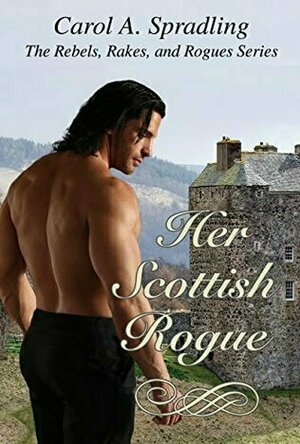
This is an easy-going story that flows well and will carry you along with absolutely no problems. I actually was more intrigued by Baron, a secondary character in this book, than I was by Beck and Wren. Not because of any fault or failing in their characters, but I just liked how he kept me on my toes. I thought that we would find out who Macey Lacey was in this book, but I now realise that there is at least one other book in this series, so I will have to wait.
Definitely recommended for all fans of a historical romance, with females not afraid to stand up for what they believe in!
* A copy of this book was provided to me with no requirements for a review. I voluntarily read this book, and the comments here are my honest opinion. *
Merissa
Archaeolibrarian - I Dig Good Books!
Jan 7, 2016