Search
Search results

Purple Phoenix Games (2266 KP) rated Block Ness in Tabletop Games
May 10, 2021
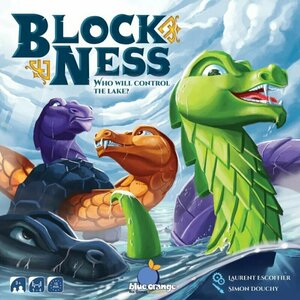

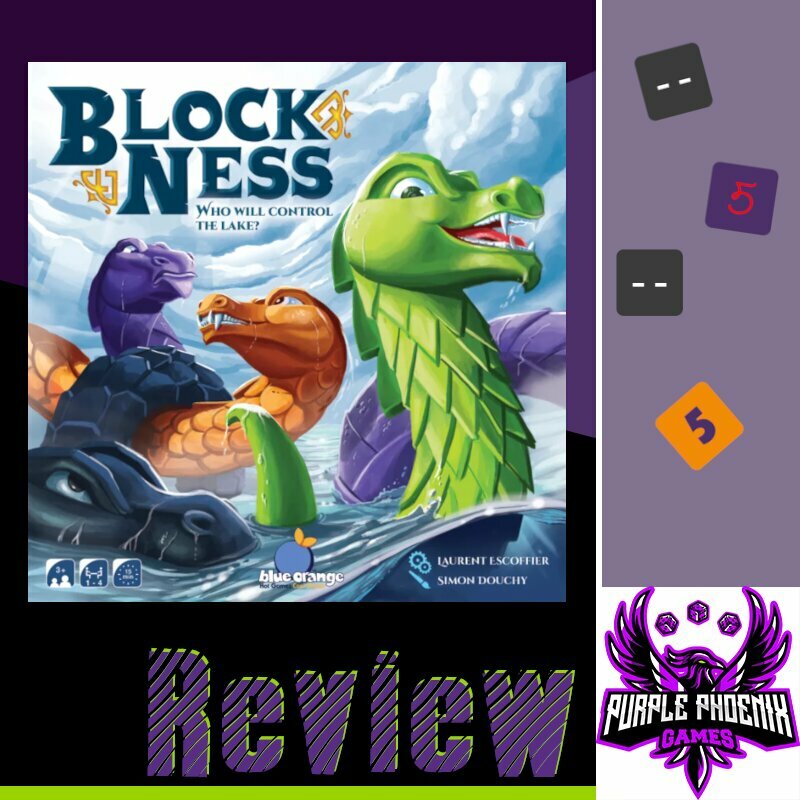
The Loch Ness monster has been a thorn in the side of believers for so long now. We recently published a preview for a Sasquatch game, and a game featuring a werewolf. Today it’s Nessie’s turn. But this game isn’t necessarily about Nessie, but of giant water serpents vying for control over the too-small lake in which they find themselves. How did they get there? What do they eat? Will they truly come to get me if I don’t brush my teeth? I don’t know the answer to some of those questions, but here’s another: is a game about these creatures good?
Block Ness is a connections game with big chunky bits where players are taking on the mantles of ever-expanding water serpents attempting to stretch themselves out as long as possible. The winning serpent is they who either is able to stretch out furthest (by using all of their body pieces), or who is able to reach for the sun the furthest (by having the tallest head piece at game end).
DISCLAIMER: We were provided a copy of this game for the purposes of this review. This is a retail copy of the game, so what you see in these photos is exactly what would be received in your box. I do not intend to cover every single rule included in the rulebook, but will describe the overall game flow and major rule set so that our readers may get a sense of how the game plays. For more in depth rules, you may purchase a copy online or from your FLGS. -T
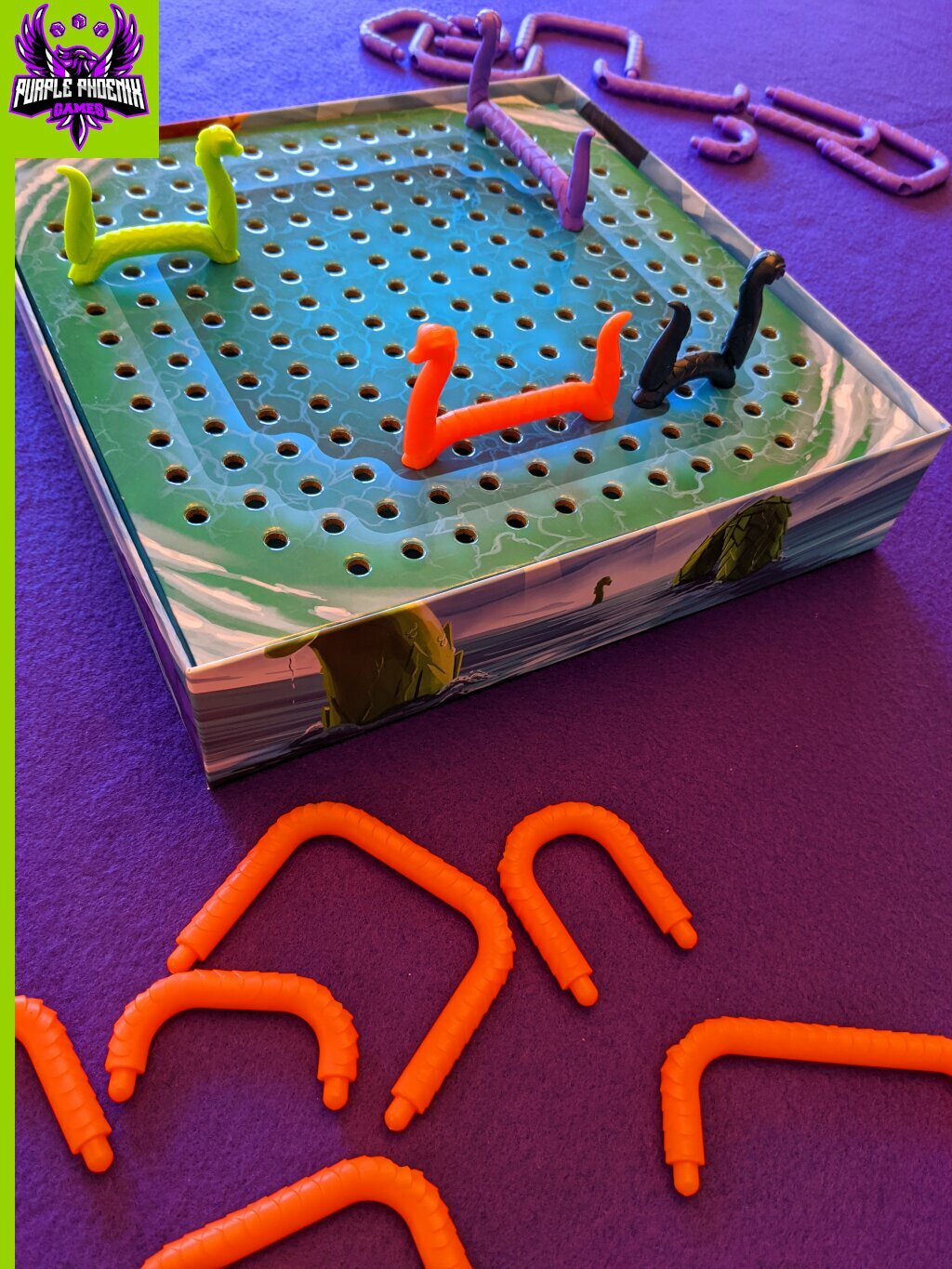
To setup, place the peg board on top of the insert in the box. This signifies the lake and where the game will take place. Each player chooses a color of serpent and takes all the corresponding pieces in front of them. Each serpent has a starting body piece that is shorter than all the other pieces, and must be placed first. The youngest player places their first piece on the board, within the darkest inner colors of the lake (UNlike the setup pictured below. Sometimes you just HAVE to let little ones place wherever they like to avoid ACTUAL monster spawns). The other players follow in turn order and attach the head and tail pieces to either end of the starting segments. The game is now setup and ready to begin!
On a turn, the active player will choose a body piece to add to their serpent at either the head or tail location. Players are limited to the three spaces adjacently surrounding the head and tail segments (akin to the compass markings of North, East, South, West). The new body segment then receives either the head or tail piece on its end to signify the new growth of the serpent. No body segments may be placed in a diagonal fashion, and there will come a time when serpents will need to get creative in order to place.
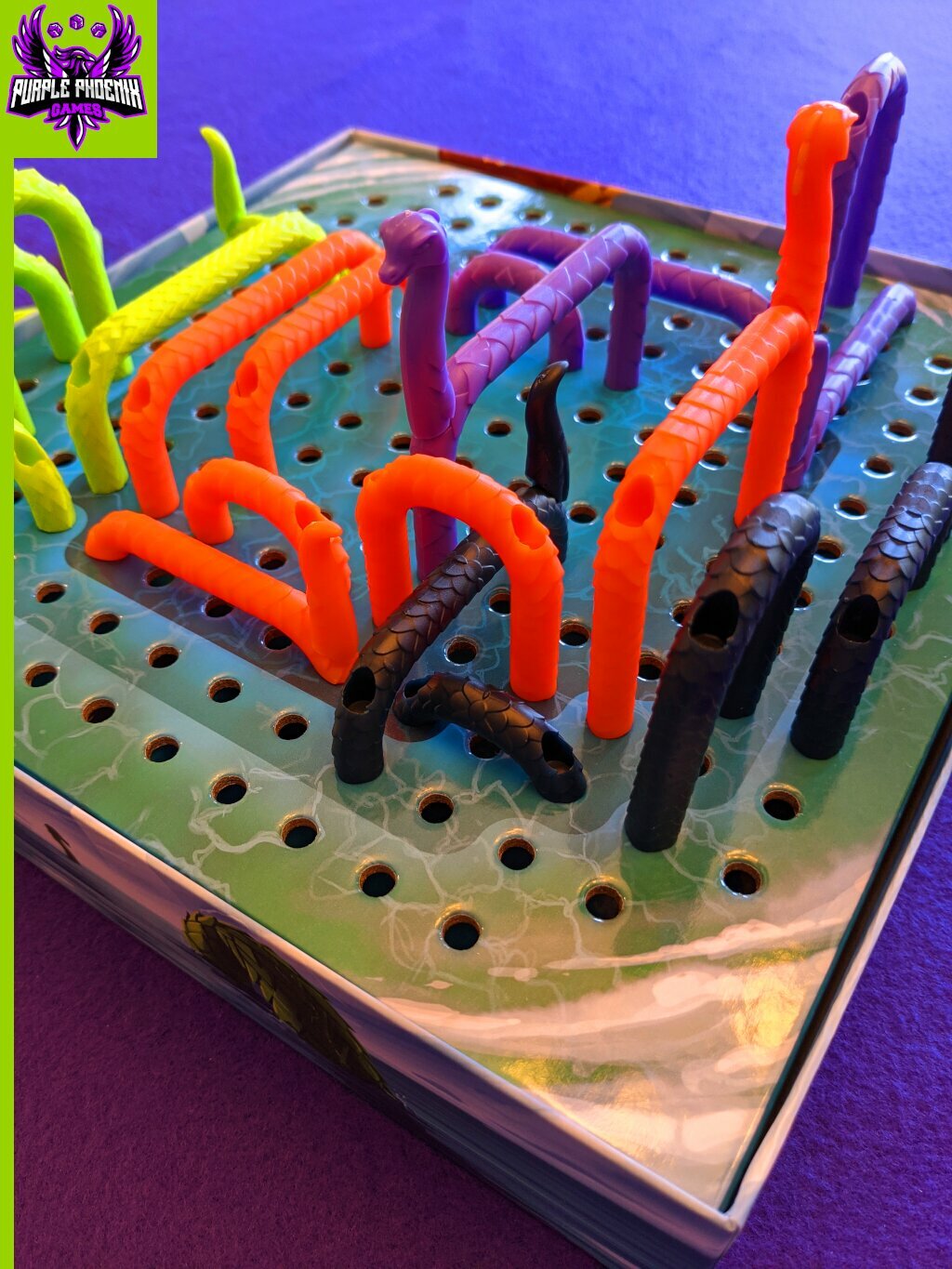
Should a serpent wish to expand through an existing player’s body segment, they may only do so if they are able to place said piece ABOVE the existing segment. For example, the photo below shows the orange serpent slithering above a portion of the black serpent (whose placement now looks somewhat illegal anyway). No matter where the segment is placed the head or tail piece will need to be moved to the newly-placed segment to allow for further expansion on future turns.
Play continues in this fashion until one player has the least leftover body segments without a legal placement, or controls the serpent with the tallest head among the tied players. The winner then must gloat and challenge the others to another game.
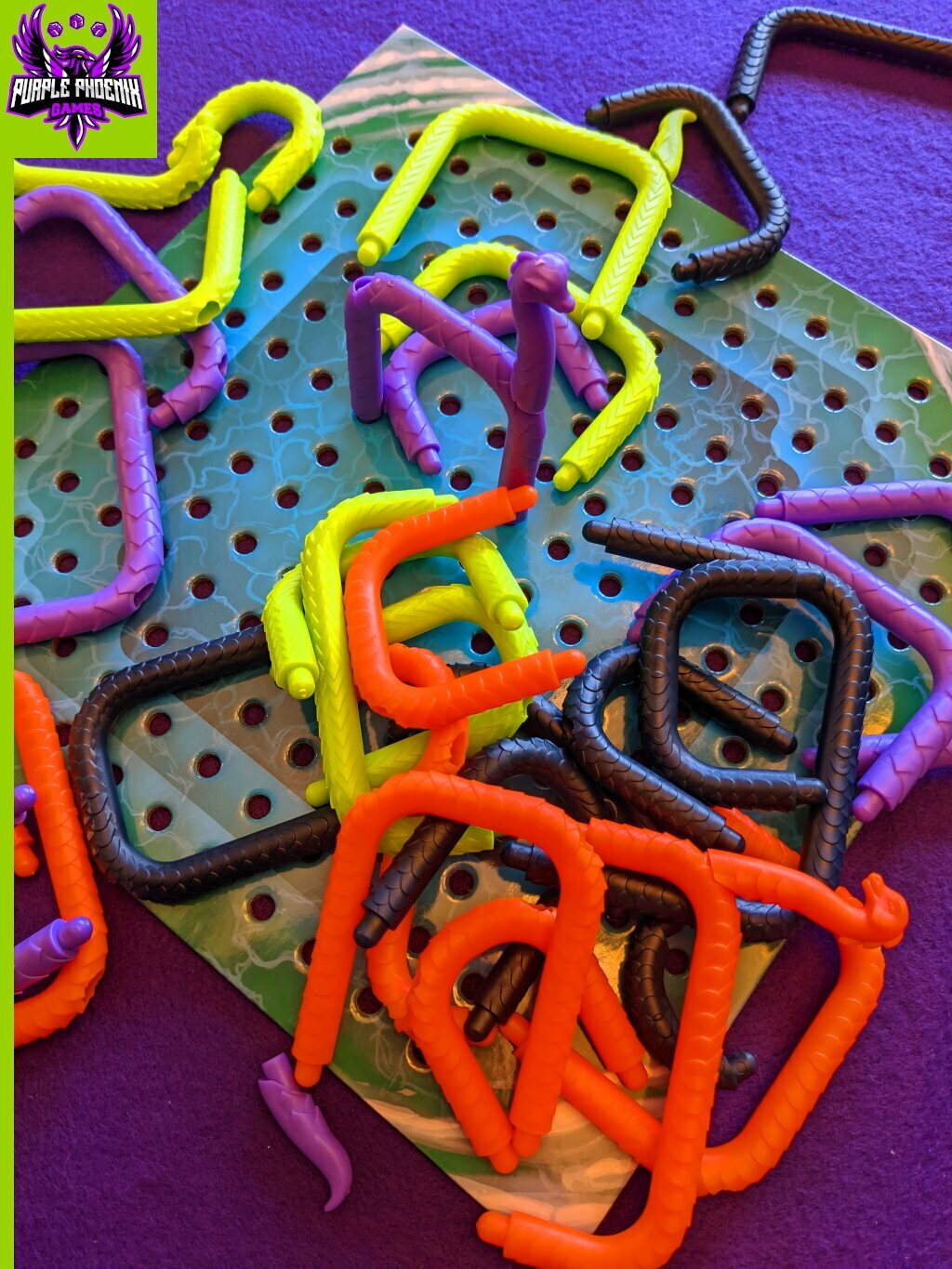
Components. This game has great 3D serpent pieces and a nice little peg board to play on. I truly love when games include the box as part of gameplay, and this uses it well. The art and colors used throughout are simply perfect (thank you for not using boring blue, red, yellow, green). The only tiny gripe I have is more of a hope than anything. I hope that upon many many plays the peg board stays nice and doesn’t deteriorate. I realize it’s a game and it’s made out of cardboard. I know many people love seeing their games age because it shows a well-loved item, but I’m not like that. I like my games to always look new. Perhaps if the peg board ever does warp or get damaged in any way I may look into having a plexi replacement made. But that aside, this is a beautiful game with excellent components, and exactly what I would expect from Blue Orange Games.
So do I like this one? Oh yes, quite a bit! Though it is not exactly the same, I believe this may kill off an old family favorite of mine – Blokus. Again, this is not a re-theme of Blokus at all, but it certainly gives me the same vibes, but in three dimensions and with much greater flair. In both games players are actively trying to block each others’ expansion progress, but Block Ness offers a smaller board and way less pieces with which to play. This creates a more tense game in a shorter time frame, and you play with serpent monsters!!
The serpents are all so much fun to handle, and while I initially though moving the head and tail pieces would get annoying after a while, I quite enjoy seeing my new serpent monster after their endpoints are reattached. Like I mentioned earlier, I very much appreciate being able to play orange, purple, black, and a yellowy-green very similar in color to our highlight color we use for our brand. Super happy about those color choices.
All in all, to say this slays Blokus is a huge thing for me. My wife and I absolutely adore Blokus, but I think I would much rather play Block Ness. I also can play this with my kids much easier and not have to worry about one of them losing the 1×1 pieces. I am certainly not alone in recommending this one. Purple Phoenix Games gives this a legendary 10 / 12. I would be surprised if this doesn’t intrigue most gamers of almost any skill and preference. There is much strategy to be employed, and an equal amount of frustration as the serpents block in other opponents. While I have no desire to try to see the actual Loch Ness monster, I will ALWAYS be up for a game of Block Ness.
Block Ness is a connections game with big chunky bits where players are taking on the mantles of ever-expanding water serpents attempting to stretch themselves out as long as possible. The winning serpent is they who either is able to stretch out furthest (by using all of their body pieces), or who is able to reach for the sun the furthest (by having the tallest head piece at game end).
DISCLAIMER: We were provided a copy of this game for the purposes of this review. This is a retail copy of the game, so what you see in these photos is exactly what would be received in your box. I do not intend to cover every single rule included in the rulebook, but will describe the overall game flow and major rule set so that our readers may get a sense of how the game plays. For more in depth rules, you may purchase a copy online or from your FLGS. -T
To setup, place the peg board on top of the insert in the box. This signifies the lake and where the game will take place. Each player chooses a color of serpent and takes all the corresponding pieces in front of them. Each serpent has a starting body piece that is shorter than all the other pieces, and must be placed first. The youngest player places their first piece on the board, within the darkest inner colors of the lake (UNlike the setup pictured below. Sometimes you just HAVE to let little ones place wherever they like to avoid ACTUAL monster spawns). The other players follow in turn order and attach the head and tail pieces to either end of the starting segments. The game is now setup and ready to begin!
On a turn, the active player will choose a body piece to add to their serpent at either the head or tail location. Players are limited to the three spaces adjacently surrounding the head and tail segments (akin to the compass markings of North, East, South, West). The new body segment then receives either the head or tail piece on its end to signify the new growth of the serpent. No body segments may be placed in a diagonal fashion, and there will come a time when serpents will need to get creative in order to place.
Should a serpent wish to expand through an existing player’s body segment, they may only do so if they are able to place said piece ABOVE the existing segment. For example, the photo below shows the orange serpent slithering above a portion of the black serpent (whose placement now looks somewhat illegal anyway). No matter where the segment is placed the head or tail piece will need to be moved to the newly-placed segment to allow for further expansion on future turns.
Play continues in this fashion until one player has the least leftover body segments without a legal placement, or controls the serpent with the tallest head among the tied players. The winner then must gloat and challenge the others to another game.
Components. This game has great 3D serpent pieces and a nice little peg board to play on. I truly love when games include the box as part of gameplay, and this uses it well. The art and colors used throughout are simply perfect (thank you for not using boring blue, red, yellow, green). The only tiny gripe I have is more of a hope than anything. I hope that upon many many plays the peg board stays nice and doesn’t deteriorate. I realize it’s a game and it’s made out of cardboard. I know many people love seeing their games age because it shows a well-loved item, but I’m not like that. I like my games to always look new. Perhaps if the peg board ever does warp or get damaged in any way I may look into having a plexi replacement made. But that aside, this is a beautiful game with excellent components, and exactly what I would expect from Blue Orange Games.
So do I like this one? Oh yes, quite a bit! Though it is not exactly the same, I believe this may kill off an old family favorite of mine – Blokus. Again, this is not a re-theme of Blokus at all, but it certainly gives me the same vibes, but in three dimensions and with much greater flair. In both games players are actively trying to block each others’ expansion progress, but Block Ness offers a smaller board and way less pieces with which to play. This creates a more tense game in a shorter time frame, and you play with serpent monsters!!
The serpents are all so much fun to handle, and while I initially though moving the head and tail pieces would get annoying after a while, I quite enjoy seeing my new serpent monster after their endpoints are reattached. Like I mentioned earlier, I very much appreciate being able to play orange, purple, black, and a yellowy-green very similar in color to our highlight color we use for our brand. Super happy about those color choices.
All in all, to say this slays Blokus is a huge thing for me. My wife and I absolutely adore Blokus, but I think I would much rather play Block Ness. I also can play this with my kids much easier and not have to worry about one of them losing the 1×1 pieces. I am certainly not alone in recommending this one. Purple Phoenix Games gives this a legendary 10 / 12. I would be surprised if this doesn’t intrigue most gamers of almost any skill and preference. There is much strategy to be employed, and an equal amount of frustration as the serpents block in other opponents. While I have no desire to try to see the actual Loch Ness monster, I will ALWAYS be up for a game of Block Ness.
Purple Phoenix Games (2266 KP) rated Cartographers: A Roll Player Tale in Tabletop Games
Sep 13, 2021
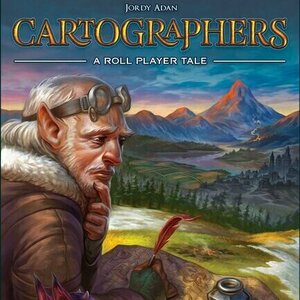

I have often wondered how cartography actually works. How was it that people with primitive tools were able to grasp the lay of the land and sea? And are we complete in our mapping of Earth or are there more secrets we have yet to discover? Thankfully, in Cartographers we aren’t really answering those questions, but other practical questions may arise.
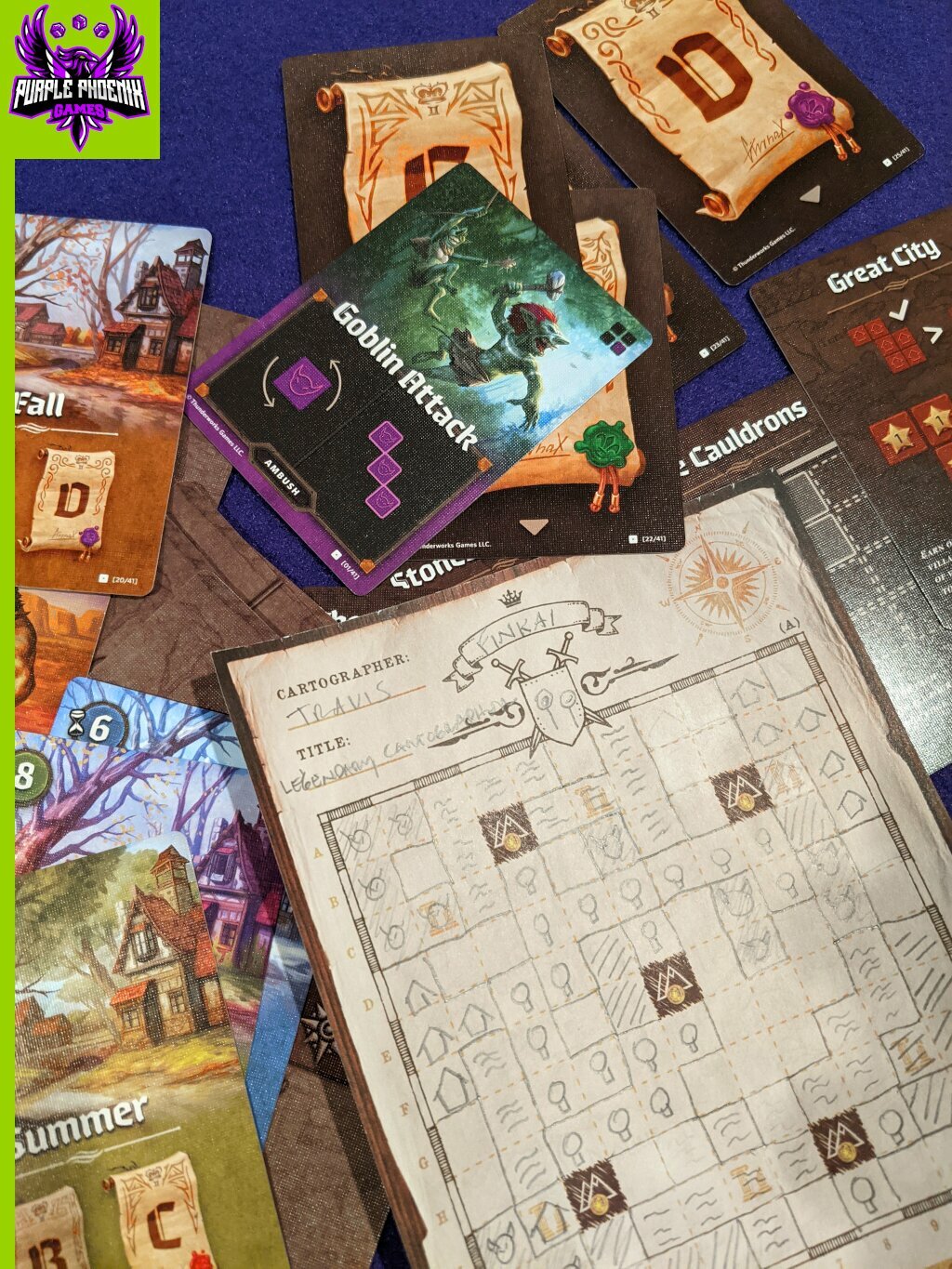
Cartographers is a flip-and-write style game where players are competing to gain the queen’s favor and become the royal cartographer. While the main game focuses on finishing with a greater score than your opponent(s) the solo game is more relaxed. The solo player will be competing against their previous scores and comparing against the queen’s title matrix. Each game will be played over four seasons (rounds) and once the year is over the winner or title is claimed. Can you score 30 or more points to become a “Legendary Cartographer?”
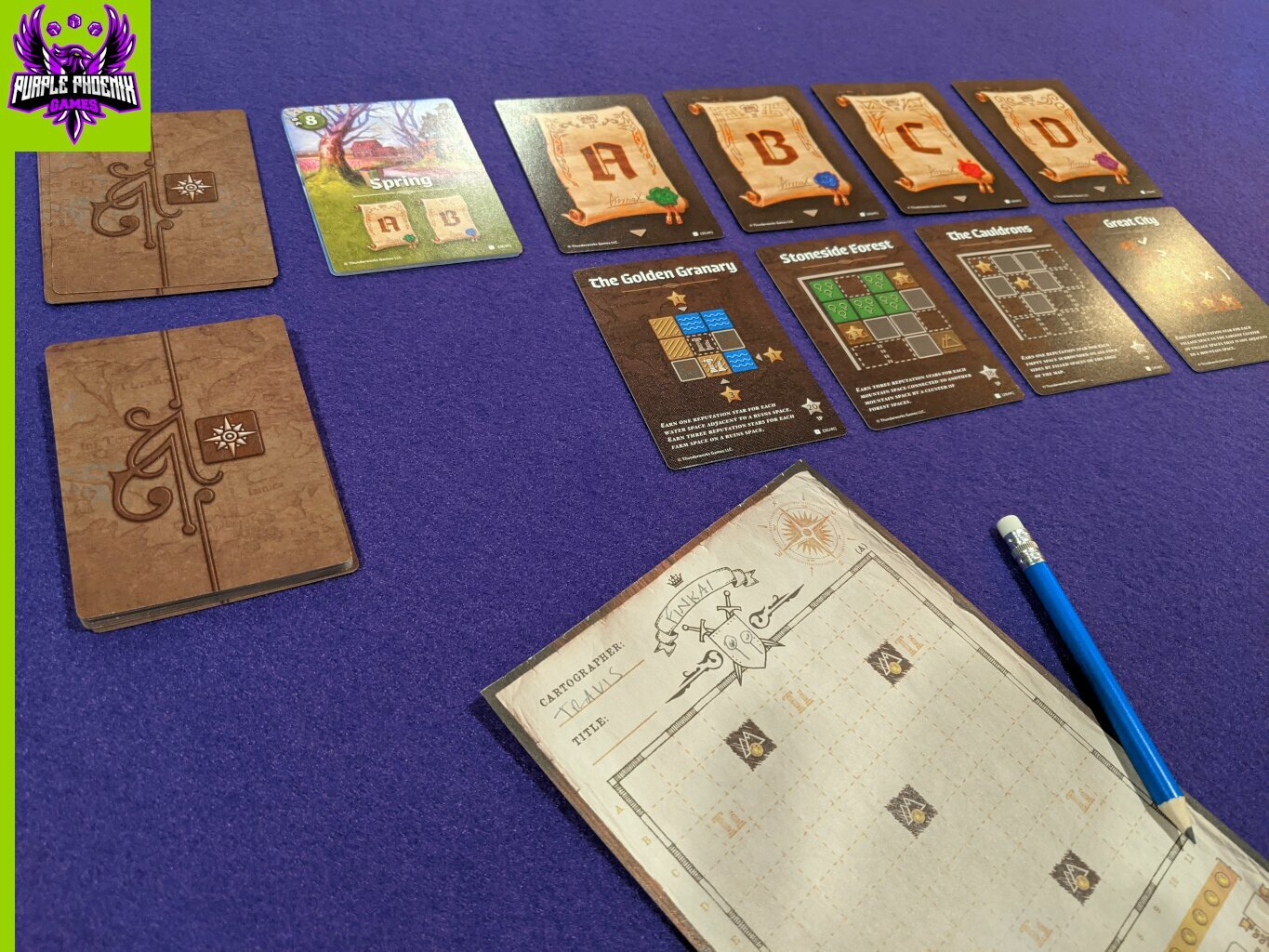
To setup, lay out the Queen’s Edict cards that show A, B, C, and D. Shuffle each small deck of like-backed Scoring Cards and randomly place one from each deck underneath the Edict cards. Remove all the enemy Ambush Cards and shuffle one into the main deck of Explore Cards. Set the Season Cards in order: Spring, Summer, Fall, and Winter. Each player will receive one Map Sheet and a pencil. The game may now begin!
Each Season Card will feature a time threshold number that when met or exceeded will end the season. This corresponds to the time markings on each Explore Card drawn from the deck. For example, Spring allows 8 measures of time before it will switch to Summer. Explore Cards will usually show from 0-2 time measures on it, so seasons could change after four or more cards. At the start of each season, the player will flip an Explore Card to reveal which type of map element is requested and of which shape. The map elements are Forest, Farm, Water, Village, Mountain, and Monster. The shapes shown on the cards are reminiscent of Tetris-style shapes and also some others as well.
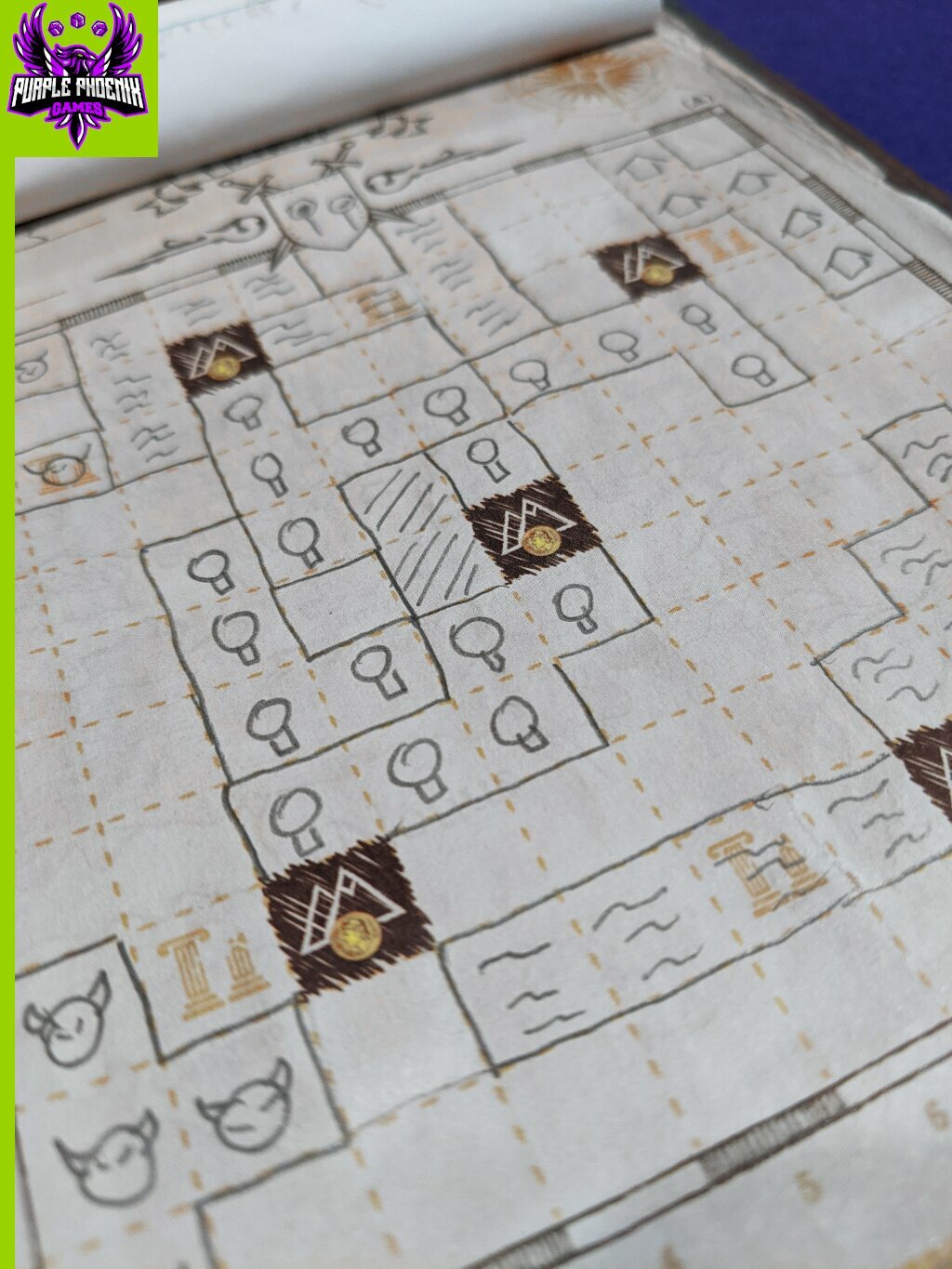
Once a card has been revealed, the player now will draw on their sheet the shape (or one of the shapes if more than one are shown) and fill it in with the matching symbol for map element type. If during this phase of the round the player surrounds the four sides of a pre-printed Mountain square they will score one coin and mark it at the bottom of their Map Sheet.
Should a Ruins card be revealed the player will flip another card to reveal the next card in line. Whatever shape and element is shown on the card AFTER the Ruins card will be used, with a twist. The shape shown on this card will now be required to encompass one of the pre-printed Ruins squares on the Map Sheet. If there are no legal spaces to place these shapes (or any shape on future cards) the player will be allowed to place a single 1×1 square on their Map Sheet anywhere they wish.
Should an enemy Ambush card be revealed the player will check which corner of the map the ambush takes place and will draw the provided monster shape in the closest area to the corner as possible. These are awarded negative points at the end of the seasons and can make large impacts on final scores.
After the elements have been drawn on the Map Sheet the player will check if the season ends. The season will end if the total number of revealed cards’ time measures equal or exceed the time printed on the Season Card (again, for example, Spring lasts 8 time). If not, then the player resumes another card reveal. If the time threshold has been met or exceeded then the player will score for the season by referencing the Scoring Cards that were placed under the Edicts at setup. For Spring the player scores Edict Cards A and B. Mark the score in the space provided at the bottom of the Scoring Sheet and flip the Season Card to the next season to begin a new round.
Play continues in this fashion until all four seasons have been played. At the end of the fourth season the game ends and the player will tally up their score to compare against the queen’s title matrix at the back of the rulebook. Not to brag, but my first game scored over 30 points, so I began this journey as a Legendary Cartographer.
Components. This game is 100 double-sided Map Sheets, four golf pencils, and a bunch of cards. The sheets and pencils are just fine, and the cards are good quality. What I really enjoy about the components is that this is “A Roll Player Tale,” meaning that many of the components and art hearken back to the original Roll Player game. As I love Roll Player’s art style, I also love that of Cartographers. There isn’t a ton of art in the game, more of graphic design, the art that IS provided is stellar Roll Player fare. I have no complaints about the components here except my wife thinks the pencil erasers could be better.
I skipped backing this one on Kickstarter and have only recently come to acquire it. I am definitely kicking myself in the rear for that decision because this is an excellent game. Obviously, anything that is enjoyable solo AND multiplayer is a huge boon (my wife scored it a 5!), and being able to play it multiple times in a row is a benefit as well.
We both love the decision-making in Cartographers, and when we first played together I had to shield my map sheet from my wife because she was copying! SHE was copying ME! She ended up handing me my booty in that game (of course) but we both had a great time plotting out our map elements. Determining where and which direction a shape should be placed can certainly be frustrating, but seeing your well-laid plans come to life is very rewarding. I am definitely seeing myself needing to download and print off more map sheets in the future because I have a feeling I am going to be playing the mess out of this one.
If you are looking for something special for your collection, check out Cartographers. If you already enjoy Roll Player, this will feel homey to you while offering a completely different style of game. My wife and I love it, and I am not sure I know anyone who would turn their nose up at it. Once we get into the Post-COVID era I plan to play this all the time at game nights.
Cartographers is a flip-and-write style game where players are competing to gain the queen’s favor and become the royal cartographer. While the main game focuses on finishing with a greater score than your opponent(s) the solo game is more relaxed. The solo player will be competing against their previous scores and comparing against the queen’s title matrix. Each game will be played over four seasons (rounds) and once the year is over the winner or title is claimed. Can you score 30 or more points to become a “Legendary Cartographer?”
To setup, lay out the Queen’s Edict cards that show A, B, C, and D. Shuffle each small deck of like-backed Scoring Cards and randomly place one from each deck underneath the Edict cards. Remove all the enemy Ambush Cards and shuffle one into the main deck of Explore Cards. Set the Season Cards in order: Spring, Summer, Fall, and Winter. Each player will receive one Map Sheet and a pencil. The game may now begin!
Each Season Card will feature a time threshold number that when met or exceeded will end the season. This corresponds to the time markings on each Explore Card drawn from the deck. For example, Spring allows 8 measures of time before it will switch to Summer. Explore Cards will usually show from 0-2 time measures on it, so seasons could change after four or more cards. At the start of each season, the player will flip an Explore Card to reveal which type of map element is requested and of which shape. The map elements are Forest, Farm, Water, Village, Mountain, and Monster. The shapes shown on the cards are reminiscent of Tetris-style shapes and also some others as well.
Once a card has been revealed, the player now will draw on their sheet the shape (or one of the shapes if more than one are shown) and fill it in with the matching symbol for map element type. If during this phase of the round the player surrounds the four sides of a pre-printed Mountain square they will score one coin and mark it at the bottom of their Map Sheet.
Should a Ruins card be revealed the player will flip another card to reveal the next card in line. Whatever shape and element is shown on the card AFTER the Ruins card will be used, with a twist. The shape shown on this card will now be required to encompass one of the pre-printed Ruins squares on the Map Sheet. If there are no legal spaces to place these shapes (or any shape on future cards) the player will be allowed to place a single 1×1 square on their Map Sheet anywhere they wish.
Should an enemy Ambush card be revealed the player will check which corner of the map the ambush takes place and will draw the provided monster shape in the closest area to the corner as possible. These are awarded negative points at the end of the seasons and can make large impacts on final scores.
After the elements have been drawn on the Map Sheet the player will check if the season ends. The season will end if the total number of revealed cards’ time measures equal or exceed the time printed on the Season Card (again, for example, Spring lasts 8 time). If not, then the player resumes another card reveal. If the time threshold has been met or exceeded then the player will score for the season by referencing the Scoring Cards that were placed under the Edicts at setup. For Spring the player scores Edict Cards A and B. Mark the score in the space provided at the bottom of the Scoring Sheet and flip the Season Card to the next season to begin a new round.
Play continues in this fashion until all four seasons have been played. At the end of the fourth season the game ends and the player will tally up their score to compare against the queen’s title matrix at the back of the rulebook. Not to brag, but my first game scored over 30 points, so I began this journey as a Legendary Cartographer.
Components. This game is 100 double-sided Map Sheets, four golf pencils, and a bunch of cards. The sheets and pencils are just fine, and the cards are good quality. What I really enjoy about the components is that this is “A Roll Player Tale,” meaning that many of the components and art hearken back to the original Roll Player game. As I love Roll Player’s art style, I also love that of Cartographers. There isn’t a ton of art in the game, more of graphic design, the art that IS provided is stellar Roll Player fare. I have no complaints about the components here except my wife thinks the pencil erasers could be better.
I skipped backing this one on Kickstarter and have only recently come to acquire it. I am definitely kicking myself in the rear for that decision because this is an excellent game. Obviously, anything that is enjoyable solo AND multiplayer is a huge boon (my wife scored it a 5!), and being able to play it multiple times in a row is a benefit as well.
We both love the decision-making in Cartographers, and when we first played together I had to shield my map sheet from my wife because she was copying! SHE was copying ME! She ended up handing me my booty in that game (of course) but we both had a great time plotting out our map elements. Determining where and which direction a shape should be placed can certainly be frustrating, but seeing your well-laid plans come to life is very rewarding. I am definitely seeing myself needing to download and print off more map sheets in the future because I have a feeling I am going to be playing the mess out of this one.
If you are looking for something special for your collection, check out Cartographers. If you already enjoy Roll Player, this will feel homey to you while offering a completely different style of game. My wife and I love it, and I am not sure I know anyone who would turn their nose up at it. Once we get into the Post-COVID era I plan to play this all the time at game nights.
Purple Phoenix Games (2266 KP) rated Viceroy in Tabletop Games
Jun 12, 2019

One of the best parts of the board gaming experience is finding a fun group of people with whom to play! Sometimes, though, coordinating a game night is easier said than done. We all must occasionally forego the group experience and face the world as the Lonely Only. But fear not! The world of solo-play is a vast and exciting realm! What follows is a chronicle of my journey into the solo-playing world – notes on gameplay, mechanics, rules, difficulty, and overall experience with solo variations of commonly multiplayer games! I hope this will provide some insight as you continue to grow your collection, or explore your already owned games!
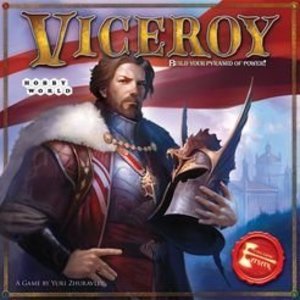
Power. That’s what everyone wants, isn’t it? Well, at least it is in Viceroy! As an inhabitant of the world of Laar, you are fighting to become the ultimate ruler. Recruit allies who provide strategic advantages and enact laws that solidify your claim for power. Do you have what it takes to build and maintain a powerful kingdom, or will your attempts fall short?
DISCLAIMER: There is an expansion to this game, but we are not reviewing it at this time. Should we review it in the future we will either update this review or post a link to the new material here. -T
Viceroy, a game of card drafting and tile placement, is played over 12 turns in which players build a pyramid with their cards – paying to place each card and collecting rewards based upon which level of the pyramid a card is placed. Each turn is divided into two phases: Auction and Development. During the Auction Phase, players bid gemstones to buy a card from the auction line. Once every player has either collected 1 card from auction or passed, play moves to the Development Phase. During the Development Phase, players can either play a card into their pyramid, pass, or discard a card and take 2 gemstones from the reserve. To play a Law card into your pyramid, you place it for free. To play a Character card into your pyramid, you have to pay for it with gems. The cost is dependent upon which level of the pyramid the card is to be placed. You must pay for the level the card will sit on, as well as pay the cost for every level beneath it. For example, to add a card to the third level of the pyramid, you must pay the cost for the 3rd level, AND 2nd level, AND 1st level. The rewards gained from adding a card to the pyramid, however, are taken only for the level on which the card sits. In the earlier example, you would only get the reward for the third level alone, since that is the level on which the card sits. The Development Phase is played over 3 rounds, so a player could play up to 3 cards into their pyramid during 1 Development Phase. After the 3 rounds are up, the next turn begins again in the Auction Phase. When all cards are gone from the Auction Deck, the game ends. Players count up all of their Power Points, and the player with the highest Power value wins!
The only change in Viceroy between a group and solo game is during the Auction Phase. Obviously, if you are playing solo, there is nobody to bid against for cards. How that is alleviated is that you still bid your gemstone as normal, and you randomly draw an unused gemstone from the box as an AI bid. If the colors match, you lose your gem and go on to the next auction. If the colors do not match, you collect your choice card, and the card the AI would have collected gets discarded. If the AI color does not match an available card, you just discard one of the remaining cards. This mimics group play in the sense that you might not always get the card you want from auction! The Development Phase is played as normal. At the end of the game, count points as normal and try to beat your own high score.
Viceroy is a neat game. Every card has so many options that there is no one single strategy that is a sure-win every time. Maybe one game I’ll go for Magic tokens. And maybe the next I’ll try to go for raw Power Point tokens. The possibilities really are endless, and that keeps this game fresh for me. I don’t feel like I’m just going through the motions because every card will act differently depending on where it is played. Strategy really is everything here. On the flip-side of that, however, is that sometimes the options can be a little overwhelming. With so many possibilities for each card, it can get hard for me to decide on what strategy I really want to use. It should also be noted that a card can only be played onto a level if it can sit on exactly 2 cards on the level beneath it. So sometimes I buy a card to play on a certain level only to get to the Development Phase and realize I don’t have a legal place to which I can play it. So do I sacrifice other cards/gemstones to build a slot for this one card, or do I play it to a different level and change my strategy a bit? There’s a little bit of a learning curve, but the more I play, the better I get (or at least, the better I think I get).
Another grievance with Viceroy is that I find myself running out of cards in my hand a lot. The only opportunity to draw cards is if you play a card into your pyramid that allows you to do so. And since I’m usually focused on other strategic routes, I don’t use those cards for those purposes. So then I play all of the cards in my hand (leaving me empty-handed), get 1 card at the next auction, play it, and am again left with no cards in my hand. To fix this issue, I wish one of the actions you could take during the Development Phase was to draw 1 card. I’m not sure if other people have this issue, or if it’s just me, but it’s a problem I run into almost every game.
Overall, I think Viceroy is a good game. It’s unique in the sense that there are so many possibilities that you’ll probably never play the same game twice, even if you decide to play by the same strategy. The mechanics and gameplay are cool too – it’s fun to watch your pyramid literally grow in front of you as the game progresses. This game takes a little more focus and thought than you might think, so it’s not one I’d necessarily just pull out for some light fun. I think Viceroy is as exciting as a solo game as it is as a group game since there really aren’t any differences between the two settings. If you like Viceroy, give it a try solo! If you’ve never played Viceroy, try it either solo or in a group – it’s the same game after all!
https://purplephoenixgames.wordpress.com/2019/04/18/solo-chronicles-viceroy/
Power. That’s what everyone wants, isn’t it? Well, at least it is in Viceroy! As an inhabitant of the world of Laar, you are fighting to become the ultimate ruler. Recruit allies who provide strategic advantages and enact laws that solidify your claim for power. Do you have what it takes to build and maintain a powerful kingdom, or will your attempts fall short?
DISCLAIMER: There is an expansion to this game, but we are not reviewing it at this time. Should we review it in the future we will either update this review or post a link to the new material here. -T
Viceroy, a game of card drafting and tile placement, is played over 12 turns in which players build a pyramid with their cards – paying to place each card and collecting rewards based upon which level of the pyramid a card is placed. Each turn is divided into two phases: Auction and Development. During the Auction Phase, players bid gemstones to buy a card from the auction line. Once every player has either collected 1 card from auction or passed, play moves to the Development Phase. During the Development Phase, players can either play a card into their pyramid, pass, or discard a card and take 2 gemstones from the reserve. To play a Law card into your pyramid, you place it for free. To play a Character card into your pyramid, you have to pay for it with gems. The cost is dependent upon which level of the pyramid the card is to be placed. You must pay for the level the card will sit on, as well as pay the cost for every level beneath it. For example, to add a card to the third level of the pyramid, you must pay the cost for the 3rd level, AND 2nd level, AND 1st level. The rewards gained from adding a card to the pyramid, however, are taken only for the level on which the card sits. In the earlier example, you would only get the reward for the third level alone, since that is the level on which the card sits. The Development Phase is played over 3 rounds, so a player could play up to 3 cards into their pyramid during 1 Development Phase. After the 3 rounds are up, the next turn begins again in the Auction Phase. When all cards are gone from the Auction Deck, the game ends. Players count up all of their Power Points, and the player with the highest Power value wins!
The only change in Viceroy between a group and solo game is during the Auction Phase. Obviously, if you are playing solo, there is nobody to bid against for cards. How that is alleviated is that you still bid your gemstone as normal, and you randomly draw an unused gemstone from the box as an AI bid. If the colors match, you lose your gem and go on to the next auction. If the colors do not match, you collect your choice card, and the card the AI would have collected gets discarded. If the AI color does not match an available card, you just discard one of the remaining cards. This mimics group play in the sense that you might not always get the card you want from auction! The Development Phase is played as normal. At the end of the game, count points as normal and try to beat your own high score.
Viceroy is a neat game. Every card has so many options that there is no one single strategy that is a sure-win every time. Maybe one game I’ll go for Magic tokens. And maybe the next I’ll try to go for raw Power Point tokens. The possibilities really are endless, and that keeps this game fresh for me. I don’t feel like I’m just going through the motions because every card will act differently depending on where it is played. Strategy really is everything here. On the flip-side of that, however, is that sometimes the options can be a little overwhelming. With so many possibilities for each card, it can get hard for me to decide on what strategy I really want to use. It should also be noted that a card can only be played onto a level if it can sit on exactly 2 cards on the level beneath it. So sometimes I buy a card to play on a certain level only to get to the Development Phase and realize I don’t have a legal place to which I can play it. So do I sacrifice other cards/gemstones to build a slot for this one card, or do I play it to a different level and change my strategy a bit? There’s a little bit of a learning curve, but the more I play, the better I get (or at least, the better I think I get).
Another grievance with Viceroy is that I find myself running out of cards in my hand a lot. The only opportunity to draw cards is if you play a card into your pyramid that allows you to do so. And since I’m usually focused on other strategic routes, I don’t use those cards for those purposes. So then I play all of the cards in my hand (leaving me empty-handed), get 1 card at the next auction, play it, and am again left with no cards in my hand. To fix this issue, I wish one of the actions you could take during the Development Phase was to draw 1 card. I’m not sure if other people have this issue, or if it’s just me, but it’s a problem I run into almost every game.
Overall, I think Viceroy is a good game. It’s unique in the sense that there are so many possibilities that you’ll probably never play the same game twice, even if you decide to play by the same strategy. The mechanics and gameplay are cool too – it’s fun to watch your pyramid literally grow in front of you as the game progresses. This game takes a little more focus and thought than you might think, so it’s not one I’d necessarily just pull out for some light fun. I think Viceroy is as exciting as a solo game as it is as a group game since there really aren’t any differences between the two settings. If you like Viceroy, give it a try solo! If you’ve never played Viceroy, try it either solo or in a group – it’s the same game after all!
https://purplephoenixgames.wordpress.com/2019/04/18/solo-chronicles-viceroy/

Matthew Krueger (10051 KP) rated 13 Dead End Drive in Tabletop Games
Jul 17, 2020 (Updated Jul 18, 2020)
The Traps (3 more)
Its like Clue
Excellent Bluff Game
High replayablity
Dont know who has who (2 more)
Its easy to hit and knock off the traps.
The set up is long
Excellent Murder Mystery Bluff Deduction Game
13 Dead End Drive- is a excellent bluff deduction murder mystery board game. I learned about it through the Funhaus channel. Its like clue but so much different. Let me explain.
13 Dead End Drive is a murder-themed board game originally from Milton Bradley. Released in 1993, it was followed in 2002 by a sequel, 1313 Dead End Drive. Currently, Winning Moves Games USA Winning Moves publishes the game in the USA.
The story behind the game involves the death of a wealthy old woman triggering a feud over her will. The players utilize traps located on the game board, which represents a mansion, to kill characters controlled by other players in order to claim the estate for themselves.
The Gameplay:
At the start of gameplay, players are dealt "Character cards" which correspond to matching pawns on the board. Since there are 12 characters, it is often the case that players control more than one character. However, which player controls which character is not revealed. Along with the character cards, there are also Portrait Cards, which determine who the current favorite for the inheritance is, and Trap Cards, which are used to spring traps and knock off other players.
During each turn, a player rolls two dice and moves two pawns, one pawn for each die. It is legal for players to move a pawn that is not theirs in order to bring it closer to or onto a Trap Space. All pawns must be moved off the red chair spaces before any pawns can be moved a second time or onto a trap space. If a pawn is moved onto a trap space by exact roll only, the player must have the corresponding trap card in his or her possession in order to spring the trap. Springing traps is not mandatory, however. After that, play proceeds on to the next player. A pawn can not pass through or land on the same space as another pawn during the same turn.
During the game, a Portrait Card is displayed in the picture frame above the fireplace. That character is now the current favorite to inherit the fortune. At that moment, for all intents and purposes, that character is now marked for death and must try to escape the mansion before he or she is either knocked off or the portrait changes (see "Special Spaces and Rules" below).
Also, during the game, a Detective is waiting outside, slowly advancing toward the front door. His arrival signifies the reading of the will and the announcement of the winner. The Detective can only move one space at a time, and only when a Detective Card (hidden inside the Trap Card pile) is drawn. There are 13 steps to the front door. If the Detective makes it to the front door before all other characters have been eliminated, the game is over.
Ways to win:
There are three ways to win 13 Dead End Drive:
Be the last character alive.
Escape the Mansion while your character's picture is displayed in the Picture Frame.
Have your character's picture displayed in the Picture Frame when the Detective reaches the front door.
Traps:
13 Dead End Drive has five different booby traps that are used to dispose of other characters. In the story of the game, the traps are designed to make deaths appear accidental. The traps are the Chandelier, the Bookcase, the Stairs, a Statue in a suit of armor, and the Fireplace: if a pawn has the misfortune to land on the trap space in front of or under one of these traps, the Trap card is played and the trap is sprung in the following ways:
To activate the Chandelier, flip a switch in the music room that drops the chandelier onto the pawn, eliminating it from play.
To activate the Bookcase, move that pawn up onto the top of the ladder and rest that pawn on top of the bookcase in the library, and flip a switch that will send the pawn flying back onto the board and eliminating it from play.
In order to activate the Stairs, a player can move it up onto the top of the stairs in the hall and flip a switch that will violently toss the pawn back down the stairs and onto the board, resulting in its elimination.
To activate the Statue, in the gallery, a player can flip a switch that will send a statue in a full suit of armor crashing down onto the pawn.
The Fireplace is activated in the dining room when a player flips a switch that will send the pawn flying backwards and into the figurative fire, though the box describes it as a Trap Door.
When a player moves a pawn onto a Trap Space, they must draw a card from the Trap Card pile (if they do not already have the matching trap card in their possession). If the player draws the matching Trap Card, they can either play it immediately or hold the card for future use. If the player does not have the matching Trap Card, the trap cannot be sprung, but the card can be saved for future use. There are also "Wild" Trap Cards which permit all traps to be used anytime a pawn is in that space. If, however, the player draws a Detective card, the Detective is moved one space forward, but the player is permitted to draw another Trap Card before ending the turn.
Once a trap is sprung, that pawn and the matching Character Card are laid down on the "Discard" pile on the board (the couch). If during the course of play, a Portrait Card comes up for a character that has been knocked off, that card is immediately taken down and placed on the "Discard" pile, revealing a new Portrait. The Portrait cards are shuffled at the beginning of gameplay and concealed by an "Aunt Agatha" portrait card to hide the known deck order.
Special spaces and rules:
Rolling Doubles: If a player rolls doubles that player chooses whether or not to move the current Portrait card to the back of the pack to reveal new Portrait. The player then has the choice of:
Moving one pawn the total number of spaces shown on the dice, or
Moving two pawns, one pawn for each die.
Secret Passages: On the board are special spaces that represent "Secret Passages."
Any character can enter any secret passage at any time, regardless of whether or not it is by exact roll. Moving from one secret passage to another counts as one space move for a character. Secret passages are often used to bring opponent's pawns closer to traps or to bring a player's own pawn closer to the door.
Bluffing: Bluffing is permitted in "13 Dead End Drive." In terms of strategy, a player may move their own pieces towards or even onto trap spaces in an attempt to fool opponents. Even if that player has the matching trap card for the space their own character is on, they do not have to play it. Instead, they can pretend that they do not have the correct card and draw another one. If they happen to draw the right trap card, they can pretend that the card is the wrong one, and play continues as normal.
Its a excellent game, if you like clue than you will love this game. Its a excellent bluff deduction murder mystery game.
13 Dead End Drive is a murder-themed board game originally from Milton Bradley. Released in 1993, it was followed in 2002 by a sequel, 1313 Dead End Drive. Currently, Winning Moves Games USA Winning Moves publishes the game in the USA.
The story behind the game involves the death of a wealthy old woman triggering a feud over her will. The players utilize traps located on the game board, which represents a mansion, to kill characters controlled by other players in order to claim the estate for themselves.
The Gameplay:
At the start of gameplay, players are dealt "Character cards" which correspond to matching pawns on the board. Since there are 12 characters, it is often the case that players control more than one character. However, which player controls which character is not revealed. Along with the character cards, there are also Portrait Cards, which determine who the current favorite for the inheritance is, and Trap Cards, which are used to spring traps and knock off other players.
During each turn, a player rolls two dice and moves two pawns, one pawn for each die. It is legal for players to move a pawn that is not theirs in order to bring it closer to or onto a Trap Space. All pawns must be moved off the red chair spaces before any pawns can be moved a second time or onto a trap space. If a pawn is moved onto a trap space by exact roll only, the player must have the corresponding trap card in his or her possession in order to spring the trap. Springing traps is not mandatory, however. After that, play proceeds on to the next player. A pawn can not pass through or land on the same space as another pawn during the same turn.
During the game, a Portrait Card is displayed in the picture frame above the fireplace. That character is now the current favorite to inherit the fortune. At that moment, for all intents and purposes, that character is now marked for death and must try to escape the mansion before he or she is either knocked off or the portrait changes (see "Special Spaces and Rules" below).
Also, during the game, a Detective is waiting outside, slowly advancing toward the front door. His arrival signifies the reading of the will and the announcement of the winner. The Detective can only move one space at a time, and only when a Detective Card (hidden inside the Trap Card pile) is drawn. There are 13 steps to the front door. If the Detective makes it to the front door before all other characters have been eliminated, the game is over.
Ways to win:
There are three ways to win 13 Dead End Drive:
Be the last character alive.
Escape the Mansion while your character's picture is displayed in the Picture Frame.
Have your character's picture displayed in the Picture Frame when the Detective reaches the front door.
Traps:
13 Dead End Drive has five different booby traps that are used to dispose of other characters. In the story of the game, the traps are designed to make deaths appear accidental. The traps are the Chandelier, the Bookcase, the Stairs, a Statue in a suit of armor, and the Fireplace: if a pawn has the misfortune to land on the trap space in front of or under one of these traps, the Trap card is played and the trap is sprung in the following ways:
To activate the Chandelier, flip a switch in the music room that drops the chandelier onto the pawn, eliminating it from play.
To activate the Bookcase, move that pawn up onto the top of the ladder and rest that pawn on top of the bookcase in the library, and flip a switch that will send the pawn flying back onto the board and eliminating it from play.
In order to activate the Stairs, a player can move it up onto the top of the stairs in the hall and flip a switch that will violently toss the pawn back down the stairs and onto the board, resulting in its elimination.
To activate the Statue, in the gallery, a player can flip a switch that will send a statue in a full suit of armor crashing down onto the pawn.
The Fireplace is activated in the dining room when a player flips a switch that will send the pawn flying backwards and into the figurative fire, though the box describes it as a Trap Door.
When a player moves a pawn onto a Trap Space, they must draw a card from the Trap Card pile (if they do not already have the matching trap card in their possession). If the player draws the matching Trap Card, they can either play it immediately or hold the card for future use. If the player does not have the matching Trap Card, the trap cannot be sprung, but the card can be saved for future use. There are also "Wild" Trap Cards which permit all traps to be used anytime a pawn is in that space. If, however, the player draws a Detective card, the Detective is moved one space forward, but the player is permitted to draw another Trap Card before ending the turn.
Once a trap is sprung, that pawn and the matching Character Card are laid down on the "Discard" pile on the board (the couch). If during the course of play, a Portrait Card comes up for a character that has been knocked off, that card is immediately taken down and placed on the "Discard" pile, revealing a new Portrait. The Portrait cards are shuffled at the beginning of gameplay and concealed by an "Aunt Agatha" portrait card to hide the known deck order.
Special spaces and rules:
Rolling Doubles: If a player rolls doubles that player chooses whether or not to move the current Portrait card to the back of the pack to reveal new Portrait. The player then has the choice of:
Moving one pawn the total number of spaces shown on the dice, or
Moving two pawns, one pawn for each die.
Secret Passages: On the board are special spaces that represent "Secret Passages."
Any character can enter any secret passage at any time, regardless of whether or not it is by exact roll. Moving from one secret passage to another counts as one space move for a character. Secret passages are often used to bring opponent's pawns closer to traps or to bring a player's own pawn closer to the door.
Bluffing: Bluffing is permitted in "13 Dead End Drive." In terms of strategy, a player may move their own pieces towards or even onto trap spaces in an attempt to fool opponents. Even if that player has the matching trap card for the space their own character is on, they do not have to play it. Instead, they can pretend that they do not have the correct card and draw another one. If they happen to draw the right trap card, they can pretend that the card is the wrong one, and play continues as normal.
Its a excellent game, if you like clue than you will love this game. Its a excellent bluff deduction murder mystery game.

ELLDBRY (0 KP) rated The Godfather (1972) in Movies
Apr 16, 2020


10/10
Contains spoilers, click to show
"I believe in America…."
What is it about someone you care about that sets them apart? Are they family, a friend, or someone you feel just needs help? What causes you to go the extra mile to put someone else ahead of yourself? You may find the answers in your religion, your upbringing, or in movies. For example, say your daughter goes out on a date with a guy and she is violently beaten by him and one of his friends. You go see her in the hospital and she cannot even weep because of the pain. So trying to keep your cool you press charges and try by the legal means to bring the young men to justice. It doesn't happen, their sentences are suspended. That may make you lose faith in the system that is supposed to protect you. So now you go to someone else who could help. This person is a bigshot, a pezzonovante in his own way but outside the system. You explain what happened and what you did, and all he says is 'why didn't you come to me first?' How many times in your life have some of us gone to others that don't care and asked for help instead of going to the ones that actually care. And the problem is solved. Imagine for another example that your father is in the hospital and men are coming to kill him. And you are the only one there that can help him. Imagine that you had your own dreams and your own goals that were different to what your father wanted. But in this moment you put all that aside to help your father survive. You assure him that everything will be ok and you are with him now. You bluff out the men trying to kill him and your father is saved. Most of us may never have to defend our dads from someone trying to kill him. But seeing someone laying helpless in a hospital bed in need of help we can all relate to. Every son, every daughter, every parent, every sibling, every friend. You see everybody wants to talk about the gangster mafia element of The Godfather, and say that is what it is all about. But family plays an even bigger role in the story by being the driving force behind the main characters. Family, love, loyalty, sacrifice all these elements are used in the movie to bring a standard boring mafia shootout movie to the level of greatest movie of all time. Francis Ford Coppola used as much he could to bring this point home. The wedding scene was not made up by any means but instead taken from other weddings witnessed by every Italian who has ever been to a wedding. Bringing envelopes filled with money to the bride, nieces dancing on the feet of uncle's, people waiting in line to see the father of the bride, sandwiches in white paper being tossed around. 'two gabagool, one proshootoh!' Then go to the kitchen to make spaghetti. Need a recipe? Try 'a little of oil then fry some garlic, throw in some tomatoes and tomato paste, fry it, make sure it does not stick, get it to boil, put in all your sausage and meatballs, add some wine and a little bit of sugar and that's the trick.' That recipe has been in Italian kitchens long before the cameras rolled. Need an idea for some quality time with the kids, well go to work do what you have to do and pick up some cannolis before you get home. Just remember to leave the gun and take the cannolis. Coppola always said he had to be good or no cannolis when his dad got home to share with the family. Coppola also put in his own family to work, his dad scored the movie, his sister Talia was Connie, and his daughter played the baby in the baptism scene. The family was on both sides of the family. But for me the movie revolves around Don Vito Corleone and Marlon Brando. Mario Puzo based the character of Don Corleone on his mother, everytime the Don opened his mouth all that came out was the passion of his mother, her wisdom, her ruthlessness, and her unconquerable love for her family and for life itself. Therefore only the greatest actor of the day will do to play the part. Coppola agreed and suggested either Brando or Laurence Olivier. Olivier was considered and it would have been interesting but he eventually passed on the role. Only two men wanted Brando, Coppola and Puzo. Brando had a history of being difficult and the studio executives nearly vetoed his casting. Coppola was able to make a deal with in order to cast Brando. Brando had to agree to do the movie for nothing, he had to put up a bond in order to cover cost overruns, and he had to do a screen test. They only got to the screen test because Brando transformed himself from a forty year old man into a sixty year old mafia don before their eyes in a matter of minutes. When the executives saw the footage they said ‘no no no, WOW THAT'S INCREDIBLE!’ Brando would be The Godfather. But Brando still needed a little extra help. If you watch the movie, everytime Don Corleone is speaking and stops and looks off in the distance he is reading from a card with his lines on it. He still won an oscar though. Two scenes are my favorite in the movie. One is the scene in the restaurant, I feel like I don’t need to explain it, because it is the most famous scene. Just know that without that scene the movie would not have existed. When you shoot a movie, the scenes are viewed day by day by the studio decision makers. They were hating what they were seeing, everything shot before the restaurant scene was met with cruel criticism by everyone on the outside not working on the movie. All Coppola could do was show them this scene and the movie was not only saved but validated. There are moments in the movie that other scenes build to, the restaurant was one of those scenes. You know of it’s importance because of everything that preceded it. The other scene is the meeting. Don Corleone stands before the other mafia dons and surrenders to them and their wishes. He reasons with them in order to come to a peaceful solution. But there is a catch: if you mess with my other son or if ‘he’s struck by a bolt of lightning. Then I’m going to blame some of the people in this room and that I do not forgive. So with that aside let me say that I swear, on the souls of my grandchildren, that I will not be the one that breaks the peace that we’ve made here today.’ There is a time for peace and a time for reckoning. This scene is my favorite because you believe him, you go along with his plea for peace. But the other dons do not realize it is not a surrender but a tactical retreat.
So the movie went on to make a lot of money, win a bunch of awards, and won it’s way on a bunch of lists that say it’s great. I was lucky enough to not know that when I first saw the movie. I saw it for what it was: a father and three sons. One son was intense and savage, another was sweet and innocent, another was conviving and calculating, the father was all those combined. But the father was the steadying force in all their lives. That is why when they all find out he was shot they react in ways we all would react. When you see the father lying in the street his second son is there to help but can’t, all he can do is cry and yell ‘papa.’ The first son nearly strong arms one of his father’s closest associates because he wants someone to beat up. The third son panics and tries to do whatever he can to help. That is for the audience, and that that’s how everyone relates. Finally, I’ll quote Martin Sheen: ‘The Godfather is the best filmmaking ever in the history of American cinema. There is nothing that speaks more to who we are, where we came from, what we stand for, and where we’re gonna go. That’s the work of a true genius.’ I agree. It is my favorite, of what I’ve seen of course.
".... Don Corleone."
What is it about someone you care about that sets them apart? Are they family, a friend, or someone you feel just needs help? What causes you to go the extra mile to put someone else ahead of yourself? You may find the answers in your religion, your upbringing, or in movies. For example, say your daughter goes out on a date with a guy and she is violently beaten by him and one of his friends. You go see her in the hospital and she cannot even weep because of the pain. So trying to keep your cool you press charges and try by the legal means to bring the young men to justice. It doesn't happen, their sentences are suspended. That may make you lose faith in the system that is supposed to protect you. So now you go to someone else who could help. This person is a bigshot, a pezzonovante in his own way but outside the system. You explain what happened and what you did, and all he says is 'why didn't you come to me first?' How many times in your life have some of us gone to others that don't care and asked for help instead of going to the ones that actually care. And the problem is solved. Imagine for another example that your father is in the hospital and men are coming to kill him. And you are the only one there that can help him. Imagine that you had your own dreams and your own goals that were different to what your father wanted. But in this moment you put all that aside to help your father survive. You assure him that everything will be ok and you are with him now. You bluff out the men trying to kill him and your father is saved. Most of us may never have to defend our dads from someone trying to kill him. But seeing someone laying helpless in a hospital bed in need of help we can all relate to. Every son, every daughter, every parent, every sibling, every friend. You see everybody wants to talk about the gangster mafia element of The Godfather, and say that is what it is all about. But family plays an even bigger role in the story by being the driving force behind the main characters. Family, love, loyalty, sacrifice all these elements are used in the movie to bring a standard boring mafia shootout movie to the level of greatest movie of all time. Francis Ford Coppola used as much he could to bring this point home. The wedding scene was not made up by any means but instead taken from other weddings witnessed by every Italian who has ever been to a wedding. Bringing envelopes filled with money to the bride, nieces dancing on the feet of uncle's, people waiting in line to see the father of the bride, sandwiches in white paper being tossed around. 'two gabagool, one proshootoh!' Then go to the kitchen to make spaghetti. Need a recipe? Try 'a little of oil then fry some garlic, throw in some tomatoes and tomato paste, fry it, make sure it does not stick, get it to boil, put in all your sausage and meatballs, add some wine and a little bit of sugar and that's the trick.' That recipe has been in Italian kitchens long before the cameras rolled. Need an idea for some quality time with the kids, well go to work do what you have to do and pick up some cannolis before you get home. Just remember to leave the gun and take the cannolis. Coppola always said he had to be good or no cannolis when his dad got home to share with the family. Coppola also put in his own family to work, his dad scored the movie, his sister Talia was Connie, and his daughter played the baby in the baptism scene. The family was on both sides of the family. But for me the movie revolves around Don Vito Corleone and Marlon Brando. Mario Puzo based the character of Don Corleone on his mother, everytime the Don opened his mouth all that came out was the passion of his mother, her wisdom, her ruthlessness, and her unconquerable love for her family and for life itself. Therefore only the greatest actor of the day will do to play the part. Coppola agreed and suggested either Brando or Laurence Olivier. Olivier was considered and it would have been interesting but he eventually passed on the role. Only two men wanted Brando, Coppola and Puzo. Brando had a history of being difficult and the studio executives nearly vetoed his casting. Coppola was able to make a deal with in order to cast Brando. Brando had to agree to do the movie for nothing, he had to put up a bond in order to cover cost overruns, and he had to do a screen test. They only got to the screen test because Brando transformed himself from a forty year old man into a sixty year old mafia don before their eyes in a matter of minutes. When the executives saw the footage they said ‘no no no, WOW THAT'S INCREDIBLE!’ Brando would be The Godfather. But Brando still needed a little extra help. If you watch the movie, everytime Don Corleone is speaking and stops and looks off in the distance he is reading from a card with his lines on it. He still won an oscar though. Two scenes are my favorite in the movie. One is the scene in the restaurant, I feel like I don’t need to explain it, because it is the most famous scene. Just know that without that scene the movie would not have existed. When you shoot a movie, the scenes are viewed day by day by the studio decision makers. They were hating what they were seeing, everything shot before the restaurant scene was met with cruel criticism by everyone on the outside not working on the movie. All Coppola could do was show them this scene and the movie was not only saved but validated. There are moments in the movie that other scenes build to, the restaurant was one of those scenes. You know of it’s importance because of everything that preceded it. The other scene is the meeting. Don Corleone stands before the other mafia dons and surrenders to them and their wishes. He reasons with them in order to come to a peaceful solution. But there is a catch: if you mess with my other son or if ‘he’s struck by a bolt of lightning. Then I’m going to blame some of the people in this room and that I do not forgive. So with that aside let me say that I swear, on the souls of my grandchildren, that I will not be the one that breaks the peace that we’ve made here today.’ There is a time for peace and a time for reckoning. This scene is my favorite because you believe him, you go along with his plea for peace. But the other dons do not realize it is not a surrender but a tactical retreat.
So the movie went on to make a lot of money, win a bunch of awards, and won it’s way on a bunch of lists that say it’s great. I was lucky enough to not know that when I first saw the movie. I saw it for what it was: a father and three sons. One son was intense and savage, another was sweet and innocent, another was conviving and calculating, the father was all those combined. But the father was the steadying force in all their lives. That is why when they all find out he was shot they react in ways we all would react. When you see the father lying in the street his second son is there to help but can’t, all he can do is cry and yell ‘papa.’ The first son nearly strong arms one of his father’s closest associates because he wants someone to beat up. The third son panics and tries to do whatever he can to help. That is for the audience, and that that’s how everyone relates. Finally, I’ll quote Martin Sheen: ‘The Godfather is the best filmmaking ever in the history of American cinema. There is nothing that speaks more to who we are, where we came from, what we stand for, and where we’re gonna go. That’s the work of a true genius.’ I agree. It is my favorite, of what I’ve seen of course.
".... Don Corleone."
Purple Phoenix Games (2266 KP) rated Small Islands in Tabletop Games
Oct 13, 2021
I have often wished to have been born in a different era of time. For me, I would have loved to have seen the birth of jazz in the US early 20th century. Or to witness the Renaissance first-hand. Another wish of mine was always to somehow discover something amazing. Like an island, or an unknown mountain range, or a new species of animal. That is so exciting to me, and I would have really loved to have just been around during these times. So along comes Small Islands, and my dreams have been woven into a board game about discovering new islands. That means the game is good, right?
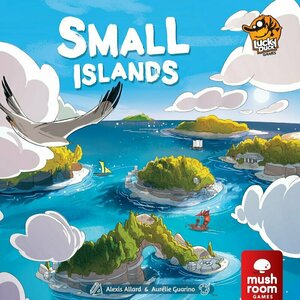
Small Islands is a tile placement exploration game for one to four players. In it, players are explorers tasked with discovering resource-rich new islands upon which their clans may either exploit or inhabit. However, it’s each clan for themselves, and the players all need those precious resources. In the solo game, the player’s AI opponent is Alexis Allard, designer of the game. He has goal cards to be used and finishing point totals that the solo player will be attempting to beat during the course of the game.
DISCLAIMER: We were provided a copy of this game for the purposes of this review. This is a retail copy of the game, so what you see in these photos is exactly what would be received in your box. I do not intend to cover every single rule included in the rulebook, but will describe the overall game flow and major rule set so that our readers may get a sense of how the game plays. For more in depth rules, you may purchase a copy online or from your FLGS. -T
To setup, the player claims their player color and assigns Alexis with his color. They take all the components for each player and places them on the table. The starting tiles (that feature flying seagulls) are placed on the table in any orientation that is legal for play: islands need to connect, and seas need to flow from one tile to the next, as seen below. The Landscape tiles are to be shuffled and placed within reach. The four ship tiles are displayed, with all ships on their gray side, save for the solo player’s chosen color. The Navigation tile is placed below the ship tiles, and the beginning three Landscape tiles are placed in a row beside it. The small stack of Objective cards are shuffled and placed nearby, with the player drawing one to begin. They also draw two Landscape to start. For solo play, one Alexis difficulty card is chosen, and his deck of Explore and Land cards is built accordingly. The Prestige (VP) tokens are (apparently when I play) just thrown on the table and gathered in a loose pile. The game may now begin!
Small Islands is played over four rounds, with several turns being played per round. The solo player begins each round with their turn. A turn is divided into three phases: Preparation, Exploration, Reward. The Preparation phase has the player populating the Navigation Tile with six Landscape tiles face-down as a draw stack. The player then draws two Objective cards to add to their one they are currently holding. From these three cards the player will choose one to become their current objective for the round, one to be saved for a future round, and one to be discarded back to the stack. These Objective cards provide a strategy to guide the player through the current round, and also setup future rounds for scoring purposes. Upon them are icons that will award the player with points for scoring islands containing specific combinations of resources.
During the Exploration phase in the solo game, the player takes their turn first, and then Alexis will take his. A typical Exploration phase has a player deciding if they will Explore a tile or Land a ship. To Explore a tile, the player chooses one of the face-up Landscape tiles from the market/offer row and, along with their two held tiles, choose one to add to the play area. These tiles may be rotated in any fashion, as long as they can be legally placed: island edges are to be extended, sea spaces connected, et al. It is also at this time the player may place one of their Bonus Tokens upon any tile on the play area. These Bonus Tokens are resource icons that cover up existing icons on a tile, or directly over another Bonus Token. A player would do this in order to affect the balance of icons on a given island for scoring purposes.
Should the Navigation tile be empty of Landscape tiles and the player wish, they may instead Land a ship, thus ending the Exploration phase. The player chooses any of the ship tiles, and places it legally on the play area (in a sea space, as shown below). Once the player ends the phase, the game progresses to the Reward phase.
After the player takes their turn during the Exploration phase, Alexis takes his turn. This is done by drawing an Expedition card from his stack and following its instructions. The Expedition card will show whether Alexis would like to Explore or Land, which Landscape tile he would like to draw, and where he would like to place it – in relation to where the last player tile was placed.
During the Reward phase, the player will place any of their clan houseeples they wish on any island upon which they have not placed a houseeple previously. Then, consulting their Objective card, score points for successfully satisfying the card’s requirements. For Alexis, the player will draw a new Expedition card from Alexis’s stack, note the icons present on the Mission area of the card, and place Alexis houseeples upon islands that satisfy its requirements.
The game continues in this fashion until the fourth round is complete. The player totals their Prestige points (VP) and if they score more than Alexis, they win! The player must then take a picture of their archipelago they built and send it to the designer directly and gloat to them about their massive victory. Or simply rest in the satisfaction of having played the game well. Whichever.
Components. This game has a lot of components, and they are mostly cardboard and houseeples. The cardstock and board are good quality, as I have come to expect from Lucky Duck Games, and the houseeples are all different shapes for each clan color. I find that a nice and unnecessary, but very cool, touch. The art in this one is simply amazing. I mean, look at these photos! Everything from the color scheme to the art style all mesh well and give a well-considered polish to a great theme.
Okay, I won’t even hide it – I LOOOOOOVE this game. I never really liked Carcassonne very much, but Small Islands gives a similar feel, but executes everything so much better. Even with the solo rules. There are so many options available at any one time, and having a random Alexis game each time you play is just so satisfying. I feel like I could keep this game forever and not play the same game twice. Ever. And I think that I would WANT to play this one forever. Yes, I think this is a solid fit for my collection indeed, and I can see it working for so many different gamer types.
Having Alexis constantly applying the pressure to maximize and strategize every turn is delicious, and having almost zero conflict with him as we both explore is welcome. You know when you start the game how many points Alexis will score at the end of the game, so having that knowledge really makes you consider all the options available. It just works on so many levels.
If you are looking for a light-hearted, but with some great decisions to be made, then I strongly urge you to check out Small Islands. I knew immediately that this was a game for me. It’s on the lighter side without being too simple, I get to build a thing and admire it at the end of the game, and I have an opponent who just wants to see me win because he designed the game! I’m in and out in less than an hour and feel content that I was able to have a great experience with a well-designed game. I cannot wait to introduce this to all my friends and family gamers so they can fall in love with it as well.
Small Islands is a tile placement exploration game for one to four players. In it, players are explorers tasked with discovering resource-rich new islands upon which their clans may either exploit or inhabit. However, it’s each clan for themselves, and the players all need those precious resources. In the solo game, the player’s AI opponent is Alexis Allard, designer of the game. He has goal cards to be used and finishing point totals that the solo player will be attempting to beat during the course of the game.
DISCLAIMER: We were provided a copy of this game for the purposes of this review. This is a retail copy of the game, so what you see in these photos is exactly what would be received in your box. I do not intend to cover every single rule included in the rulebook, but will describe the overall game flow and major rule set so that our readers may get a sense of how the game plays. For more in depth rules, you may purchase a copy online or from your FLGS. -T
To setup, the player claims their player color and assigns Alexis with his color. They take all the components for each player and places them on the table. The starting tiles (that feature flying seagulls) are placed on the table in any orientation that is legal for play: islands need to connect, and seas need to flow from one tile to the next, as seen below. The Landscape tiles are to be shuffled and placed within reach. The four ship tiles are displayed, with all ships on their gray side, save for the solo player’s chosen color. The Navigation tile is placed below the ship tiles, and the beginning three Landscape tiles are placed in a row beside it. The small stack of Objective cards are shuffled and placed nearby, with the player drawing one to begin. They also draw two Landscape to start. For solo play, one Alexis difficulty card is chosen, and his deck of Explore and Land cards is built accordingly. The Prestige (VP) tokens are (apparently when I play) just thrown on the table and gathered in a loose pile. The game may now begin!
Small Islands is played over four rounds, with several turns being played per round. The solo player begins each round with their turn. A turn is divided into three phases: Preparation, Exploration, Reward. The Preparation phase has the player populating the Navigation Tile with six Landscape tiles face-down as a draw stack. The player then draws two Objective cards to add to their one they are currently holding. From these three cards the player will choose one to become their current objective for the round, one to be saved for a future round, and one to be discarded back to the stack. These Objective cards provide a strategy to guide the player through the current round, and also setup future rounds for scoring purposes. Upon them are icons that will award the player with points for scoring islands containing specific combinations of resources.
During the Exploration phase in the solo game, the player takes their turn first, and then Alexis will take his. A typical Exploration phase has a player deciding if they will Explore a tile or Land a ship. To Explore a tile, the player chooses one of the face-up Landscape tiles from the market/offer row and, along with their two held tiles, choose one to add to the play area. These tiles may be rotated in any fashion, as long as they can be legally placed: island edges are to be extended, sea spaces connected, et al. It is also at this time the player may place one of their Bonus Tokens upon any tile on the play area. These Bonus Tokens are resource icons that cover up existing icons on a tile, or directly over another Bonus Token. A player would do this in order to affect the balance of icons on a given island for scoring purposes.
Should the Navigation tile be empty of Landscape tiles and the player wish, they may instead Land a ship, thus ending the Exploration phase. The player chooses any of the ship tiles, and places it legally on the play area (in a sea space, as shown below). Once the player ends the phase, the game progresses to the Reward phase.
After the player takes their turn during the Exploration phase, Alexis takes his turn. This is done by drawing an Expedition card from his stack and following its instructions. The Expedition card will show whether Alexis would like to Explore or Land, which Landscape tile he would like to draw, and where he would like to place it – in relation to where the last player tile was placed.
During the Reward phase, the player will place any of their clan houseeples they wish on any island upon which they have not placed a houseeple previously. Then, consulting their Objective card, score points for successfully satisfying the card’s requirements. For Alexis, the player will draw a new Expedition card from Alexis’s stack, note the icons present on the Mission area of the card, and place Alexis houseeples upon islands that satisfy its requirements.
The game continues in this fashion until the fourth round is complete. The player totals their Prestige points (VP) and if they score more than Alexis, they win! The player must then take a picture of their archipelago they built and send it to the designer directly and gloat to them about their massive victory. Or simply rest in the satisfaction of having played the game well. Whichever.
Components. This game has a lot of components, and they are mostly cardboard and houseeples. The cardstock and board are good quality, as I have come to expect from Lucky Duck Games, and the houseeples are all different shapes for each clan color. I find that a nice and unnecessary, but very cool, touch. The art in this one is simply amazing. I mean, look at these photos! Everything from the color scheme to the art style all mesh well and give a well-considered polish to a great theme.
Okay, I won’t even hide it – I LOOOOOOVE this game. I never really liked Carcassonne very much, but Small Islands gives a similar feel, but executes everything so much better. Even with the solo rules. There are so many options available at any one time, and having a random Alexis game each time you play is just so satisfying. I feel like I could keep this game forever and not play the same game twice. Ever. And I think that I would WANT to play this one forever. Yes, I think this is a solid fit for my collection indeed, and I can see it working for so many different gamer types.
Having Alexis constantly applying the pressure to maximize and strategize every turn is delicious, and having almost zero conflict with him as we both explore is welcome. You know when you start the game how many points Alexis will score at the end of the game, so having that knowledge really makes you consider all the options available. It just works on so many levels.
If you are looking for a light-hearted, but with some great decisions to be made, then I strongly urge you to check out Small Islands. I knew immediately that this was a game for me. It’s on the lighter side without being too simple, I get to build a thing and admire it at the end of the game, and I have an opponent who just wants to see me win because he designed the game! I’m in and out in less than an hour and feel content that I was able to have a great experience with a well-designed game. I cannot wait to introduce this to all my friends and family gamers so they can fall in love with it as well.
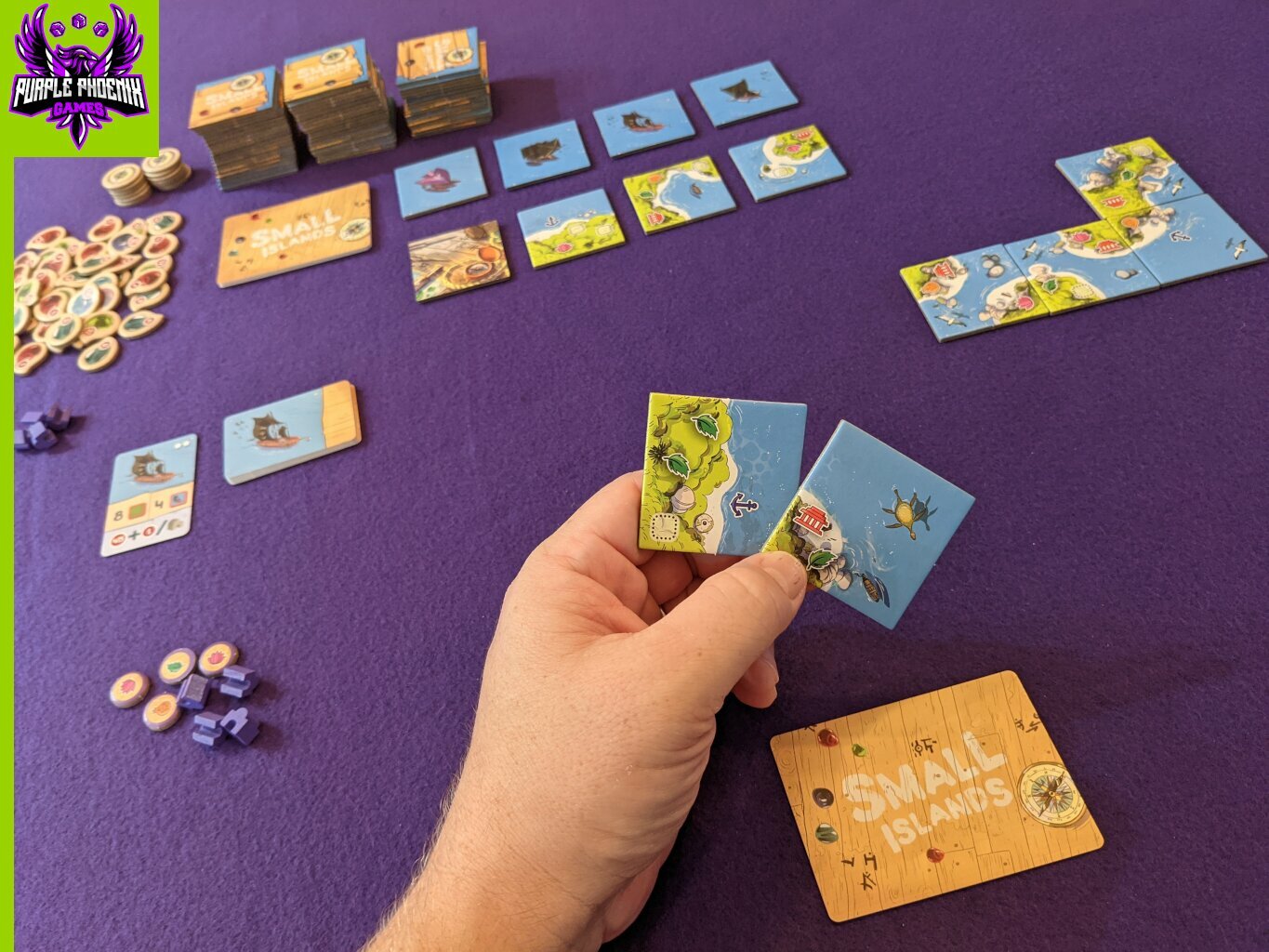
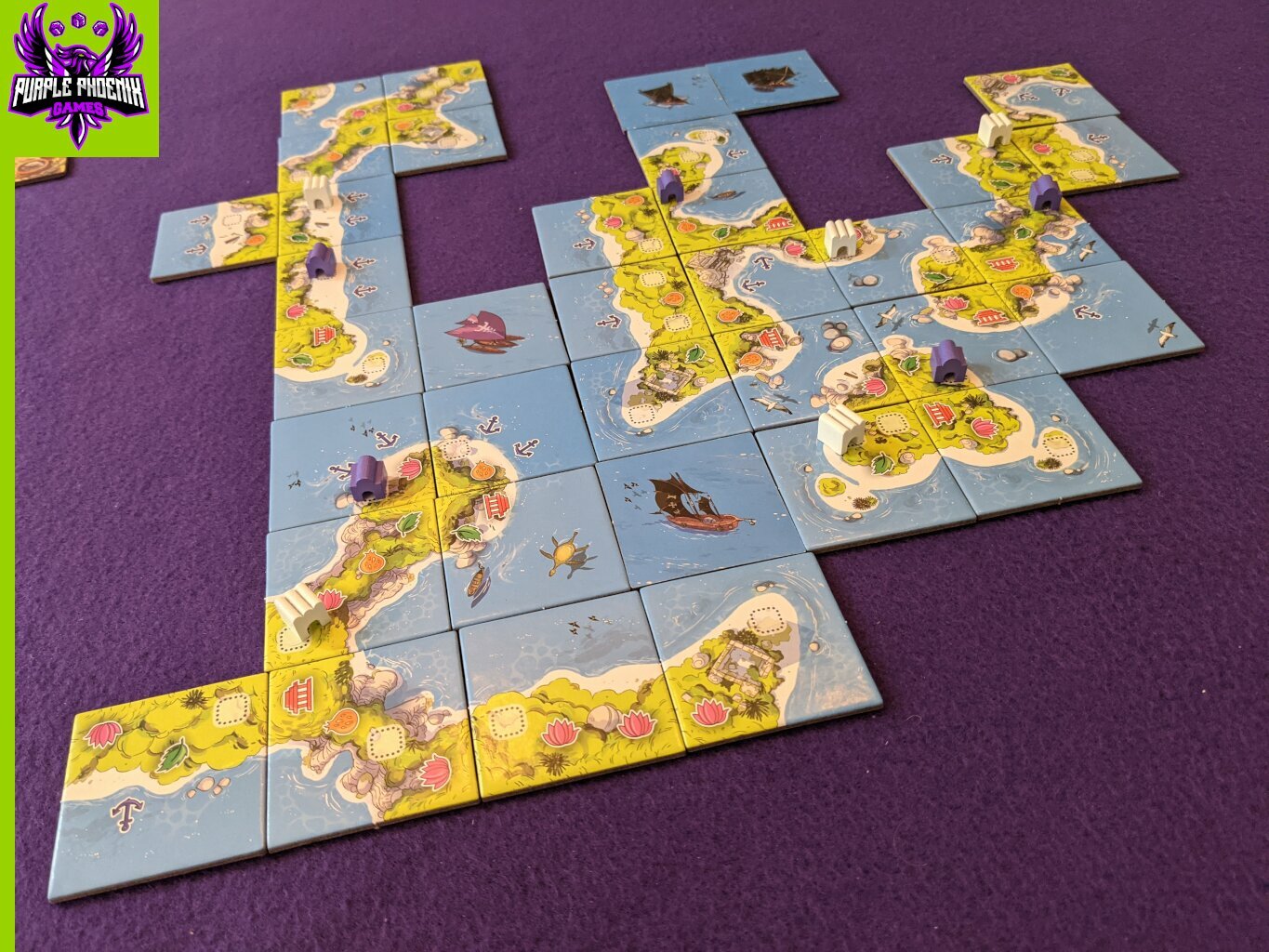
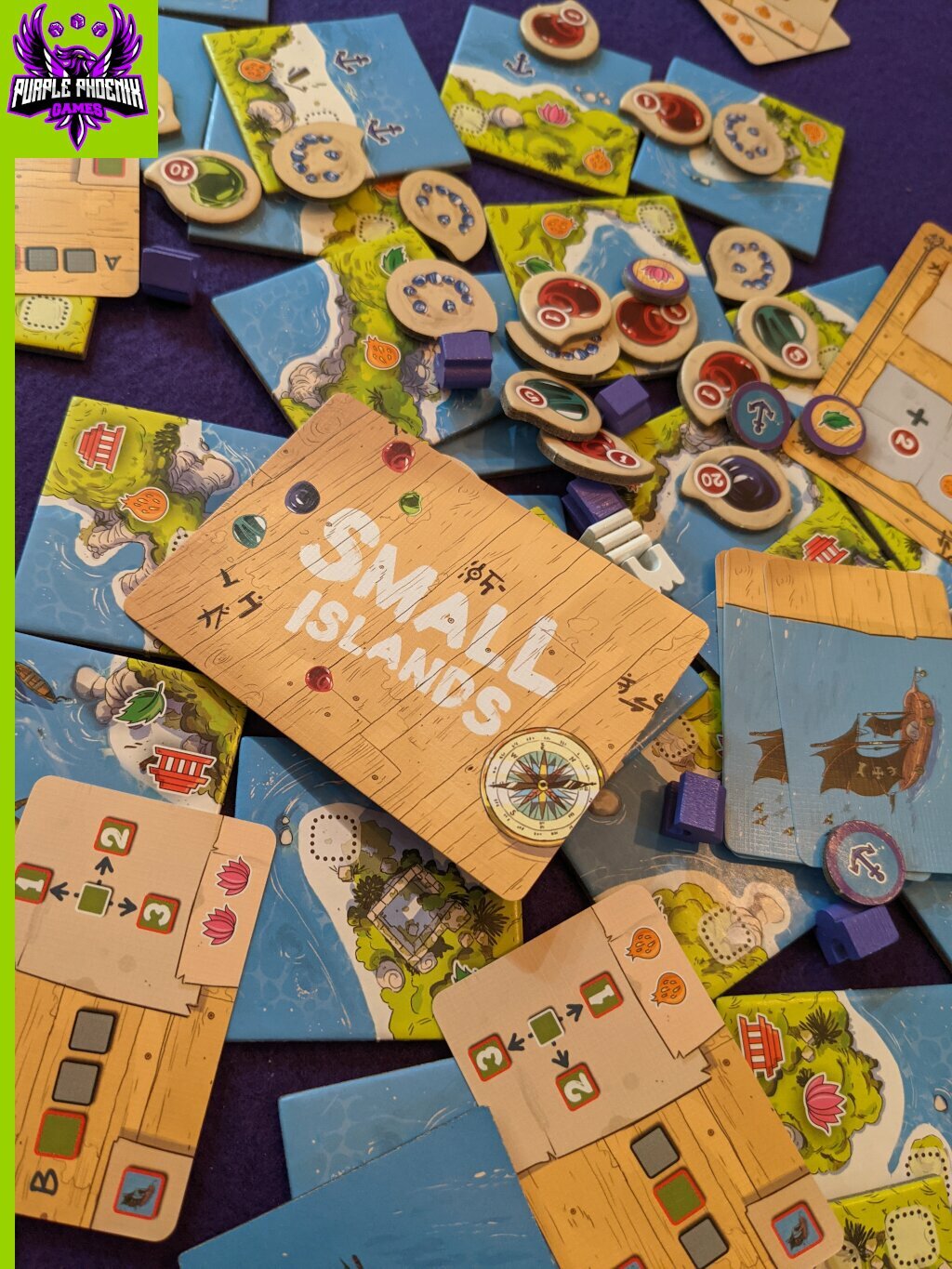
Purple Phoenix Games (2266 KP) rated Abstract Academy in Tabletop Games
Feb 25, 2022
There’s just something about a well-thought out and appealing box cover to really get you into it, am I right? Look at that graphic. The negative space used for the A and Y in AcademY is just sublime! Wait, I recognize those names on the box. Didn’t they also design some other games I enjoy? (1 minute later after consulting BGG) IT’S THE TEAM BEHIND TRUFFLE SHUFFLE, POINT SALAD, AND DOLLARS TO DONUTS?? I love those games! Oh, this is going to be good! AND it’s from Crafty Games? Boom. Gotta be a hit, I just know it. But where is all the food?
Abstract Academy is a card laying, hand management, pattern building game for two to four players. In it, players become art school students trying to impress their teachers. The only problem is that they must share a canvas, as the costs of school allow them very few luxuries. The player who can most effectively build masterpieces and satisfy all tested requirements over three rounds will ace the class and claim victory over the other starving artists.
DISCLAIMER 1: We were provided a copy of this game for the purposes of this review. This is a retail copy of the game, so what you see in these photos is exactly what would be received in your box. I do not intend to cover every single rule included in the rulebook, but will describe the overall game flow and major rule set so that our readers may get a sense of how the game plays. For more in depth rules, you may purchase a copy online or from your FLGS. -T
DISCLAIMER 2: My current temporary housing did not want me to have great lighting for photos in this review. Please try to ignore the yellow tint; I do not enjoy over-editing game photos.
To setup, shuffle each deck type and place the decks on the table. The rulebook does not specify where, so just throw them wherever. This is a game about art, so be creative. Each player draws a hand of three Canvas cards (with the whitish back and colors on the faces). The starting Teacher’s Pet player will then reveal cards according to the round from the respective decks, per the rules and provided reference cards. Each round will reveal different sets of Assignment and Professor cards. Players also draw one Inspiration card and the game is ready to begin! Paintbrushes at the ready!
Turns could not be simpler: Play a Canvas card, and then Draw a Canvas card. Both of these actions are self-explanatory, but let me expound on this a bit. Once the first Canvas card has been played by the current Teacher’s Pet, each subsequent card must be played orthogonally adjacent to another card on the table. To define the size of the entire project’s canvas, players will be confined to a 4 x 4 grid of cards. Once a column (the cards that would lead a path to the opponent) has been completed with four cards, the rows gain special rules. Firstly, the row closest to each player becomes the “Home Row.” Players may only play cards into their own Home Row, unless the only legal place to play a card is in the opponent’s Home Row. Secondly, the Home Row and the row above it is now consider the Scoring Zone, and will dictate which cards are able to be used to satisfy Inspiration, Professor, and Assignment requirements for VP. Therefore, until the 4 x 4 grid has been solidified, players are unaware which cards may end up in their Home Rows or Scoring Zones!
Victory Points are earned by scoring the special requirements of Inspiration, Professor, and Assignment cards once the entire 4 x 4 grid of Canvas cards is complete. Oftentimes players will need to compare scores to determine which player earns the points. For example, the Moret Professor card states that five VP are earned when the player controls the “most color areas with four or more quadrants.” Each Canvas card is divided into four quadrants, and quadrants are colored with one of the primary colors. A “color area” is simply a connected network of the same color within the player’s Scoring Zone. So, to satisfy Professor Moret, the player who controls the most amount of color areas that are four quadrants or larger.
Assignment cards come in Red, Blue, and Yellow, and pertain to those colors. For example, the red “Get to the Point!” Assignment requires the “most red areas with only one quadrant.” So the assignment is asking players to dapple their canvas with unconnected red quadrants.
In stark contrast, the Inspiration card requirements resemble shapes of quadrants, as opposed to colors or numbers of quadrants. Most of the shapes on these cards are reminiscent of Tetris-style shapes, where players will score their Inspiration cards by building the correct shape of connected quadrants of the same color within their Scoring Zone.
Once these cards are all scored for the round, the Teacher’s Pet sets up for the next round per the rulebook/reference cards. The subsequent rounds will require alternate decks to reveal cards, or choice of decks. When the third and final round has been scored, the points are tallied and the victor is crowned! With a construction paper and macaroni crown, most likely. They ARE starving artists, after all.
Components. This game is a double-card-deck box with 90+ cards and a rulebook. The cards are great quality, but the true hero here is, and appropriately so, the artwork. Every card is very stylish, the Professors are all nods to real artists (well, except maybe not the promo), and it has just a really great look overall. While being played, it just has an amazing table presence. I like that a lot.
I struggled with assigning a score to this one for a few reasons. First, I like so much about this game, and I dislike a few things. I very much enjoy having so many ways to score points each round, as it keeps my mind busy with trying to put the puzzle together. The monkey wrench, though, is that when you start a round, you play cards that may not even end up in your Scoring Zone. As your hand is always three cards, it is difficult to really plan too far in advance to create a perfect Scoring Zone. Is that a bad thing? Maybe, but I think it is also quite necessary to add a little chaos to this specific game. I will explain what I mean in a bit. Perhaps a few points docked for that.
Playing Canvas cards effectively is absolutely the crux of this game, because if a pattern or shape is being built to your benefit, your opponent can easily (and definitely accidentally) ruin your best laid plans with an ill-placed card to wonkify the grid. I think that is both delicious and very very frustrating. You know what? I will decide to give a few points back for this.
The ability for the Teacher’s Pet, a title that can be passed to the other player throughout the game, to choose which two of the three Assignment decks to reveal during Round 3 just adds to the replayability factor of Abstract Academy. True, there are only five cards in each Assignments deck, and there are mathematical or statistical formulae that can calculate the exact number of possible different unique games, the ever-changing grid of cards is what makes this nearly infinitely replayable. Okay, more points earned here.
I guess I judged too harshly, and my true rating is a little lower than perhaps this little game deserves. I absolutely know that I will be playing this a whole lot more – with gamers of all ages and weight preferences. It is easy to teach, keeps the brain engaged throughout, and forces players to step back and truly appreciate that which they have equally built together. I can completely foresee my score for Abstract Academy increasing with more and more plays, so please do not regard a 4 / 6 from Purple Phoenix Games as an absolute and inflexible score.
If you are a gamer who enjoys just a little chaos added to their careful planning, light and quick card games that pack more punch than expected, and some truly awesome table presence, then you most certainly need to grab a copy of Abstract Academy. I am soon to be culling my collection and curating it to only include games I thoroughly enjoy. I have a feeling Abstract Academy is going to make the cut. It checks off so many boxes for me and how I game, and I cannot wait to introduce my kiddos to it when they can grasp the concepts.
Abstract Academy is a card laying, hand management, pattern building game for two to four players. In it, players become art school students trying to impress their teachers. The only problem is that they must share a canvas, as the costs of school allow them very few luxuries. The player who can most effectively build masterpieces and satisfy all tested requirements over three rounds will ace the class and claim victory over the other starving artists.
DISCLAIMER 1: We were provided a copy of this game for the purposes of this review. This is a retail copy of the game, so what you see in these photos is exactly what would be received in your box. I do not intend to cover every single rule included in the rulebook, but will describe the overall game flow and major rule set so that our readers may get a sense of how the game plays. For more in depth rules, you may purchase a copy online or from your FLGS. -T
DISCLAIMER 2: My current temporary housing did not want me to have great lighting for photos in this review. Please try to ignore the yellow tint; I do not enjoy over-editing game photos.
To setup, shuffle each deck type and place the decks on the table. The rulebook does not specify where, so just throw them wherever. This is a game about art, so be creative. Each player draws a hand of three Canvas cards (with the whitish back and colors on the faces). The starting Teacher’s Pet player will then reveal cards according to the round from the respective decks, per the rules and provided reference cards. Each round will reveal different sets of Assignment and Professor cards. Players also draw one Inspiration card and the game is ready to begin! Paintbrushes at the ready!
Turns could not be simpler: Play a Canvas card, and then Draw a Canvas card. Both of these actions are self-explanatory, but let me expound on this a bit. Once the first Canvas card has been played by the current Teacher’s Pet, each subsequent card must be played orthogonally adjacent to another card on the table. To define the size of the entire project’s canvas, players will be confined to a 4 x 4 grid of cards. Once a column (the cards that would lead a path to the opponent) has been completed with four cards, the rows gain special rules. Firstly, the row closest to each player becomes the “Home Row.” Players may only play cards into their own Home Row, unless the only legal place to play a card is in the opponent’s Home Row. Secondly, the Home Row and the row above it is now consider the Scoring Zone, and will dictate which cards are able to be used to satisfy Inspiration, Professor, and Assignment requirements for VP. Therefore, until the 4 x 4 grid has been solidified, players are unaware which cards may end up in their Home Rows or Scoring Zones!
Victory Points are earned by scoring the special requirements of Inspiration, Professor, and Assignment cards once the entire 4 x 4 grid of Canvas cards is complete. Oftentimes players will need to compare scores to determine which player earns the points. For example, the Moret Professor card states that five VP are earned when the player controls the “most color areas with four or more quadrants.” Each Canvas card is divided into four quadrants, and quadrants are colored with one of the primary colors. A “color area” is simply a connected network of the same color within the player’s Scoring Zone. So, to satisfy Professor Moret, the player who controls the most amount of color areas that are four quadrants or larger.
Assignment cards come in Red, Blue, and Yellow, and pertain to those colors. For example, the red “Get to the Point!” Assignment requires the “most red areas with only one quadrant.” So the assignment is asking players to dapple their canvas with unconnected red quadrants.
In stark contrast, the Inspiration card requirements resemble shapes of quadrants, as opposed to colors or numbers of quadrants. Most of the shapes on these cards are reminiscent of Tetris-style shapes, where players will score their Inspiration cards by building the correct shape of connected quadrants of the same color within their Scoring Zone.
Once these cards are all scored for the round, the Teacher’s Pet sets up for the next round per the rulebook/reference cards. The subsequent rounds will require alternate decks to reveal cards, or choice of decks. When the third and final round has been scored, the points are tallied and the victor is crowned! With a construction paper and macaroni crown, most likely. They ARE starving artists, after all.
Components. This game is a double-card-deck box with 90+ cards and a rulebook. The cards are great quality, but the true hero here is, and appropriately so, the artwork. Every card is very stylish, the Professors are all nods to real artists (well, except maybe not the promo), and it has just a really great look overall. While being played, it just has an amazing table presence. I like that a lot.
I struggled with assigning a score to this one for a few reasons. First, I like so much about this game, and I dislike a few things. I very much enjoy having so many ways to score points each round, as it keeps my mind busy with trying to put the puzzle together. The monkey wrench, though, is that when you start a round, you play cards that may not even end up in your Scoring Zone. As your hand is always three cards, it is difficult to really plan too far in advance to create a perfect Scoring Zone. Is that a bad thing? Maybe, but I think it is also quite necessary to add a little chaos to this specific game. I will explain what I mean in a bit. Perhaps a few points docked for that.
Playing Canvas cards effectively is absolutely the crux of this game, because if a pattern or shape is being built to your benefit, your opponent can easily (and definitely accidentally) ruin your best laid plans with an ill-placed card to wonkify the grid. I think that is both delicious and very very frustrating. You know what? I will decide to give a few points back for this.
The ability for the Teacher’s Pet, a title that can be passed to the other player throughout the game, to choose which two of the three Assignment decks to reveal during Round 3 just adds to the replayability factor of Abstract Academy. True, there are only five cards in each Assignments deck, and there are mathematical or statistical formulae that can calculate the exact number of possible different unique games, the ever-changing grid of cards is what makes this nearly infinitely replayable. Okay, more points earned here.
I guess I judged too harshly, and my true rating is a little lower than perhaps this little game deserves. I absolutely know that I will be playing this a whole lot more – with gamers of all ages and weight preferences. It is easy to teach, keeps the brain engaged throughout, and forces players to step back and truly appreciate that which they have equally built together. I can completely foresee my score for Abstract Academy increasing with more and more plays, so please do not regard a 4 / 6 from Purple Phoenix Games as an absolute and inflexible score.
If you are a gamer who enjoys just a little chaos added to their careful planning, light and quick card games that pack more punch than expected, and some truly awesome table presence, then you most certainly need to grab a copy of Abstract Academy. I am soon to be culling my collection and curating it to only include games I thoroughly enjoy. I have a feeling Abstract Academy is going to make the cut. It checks off so many boxes for me and how I game, and I cannot wait to introduce my kiddos to it when they can grasp the concepts.

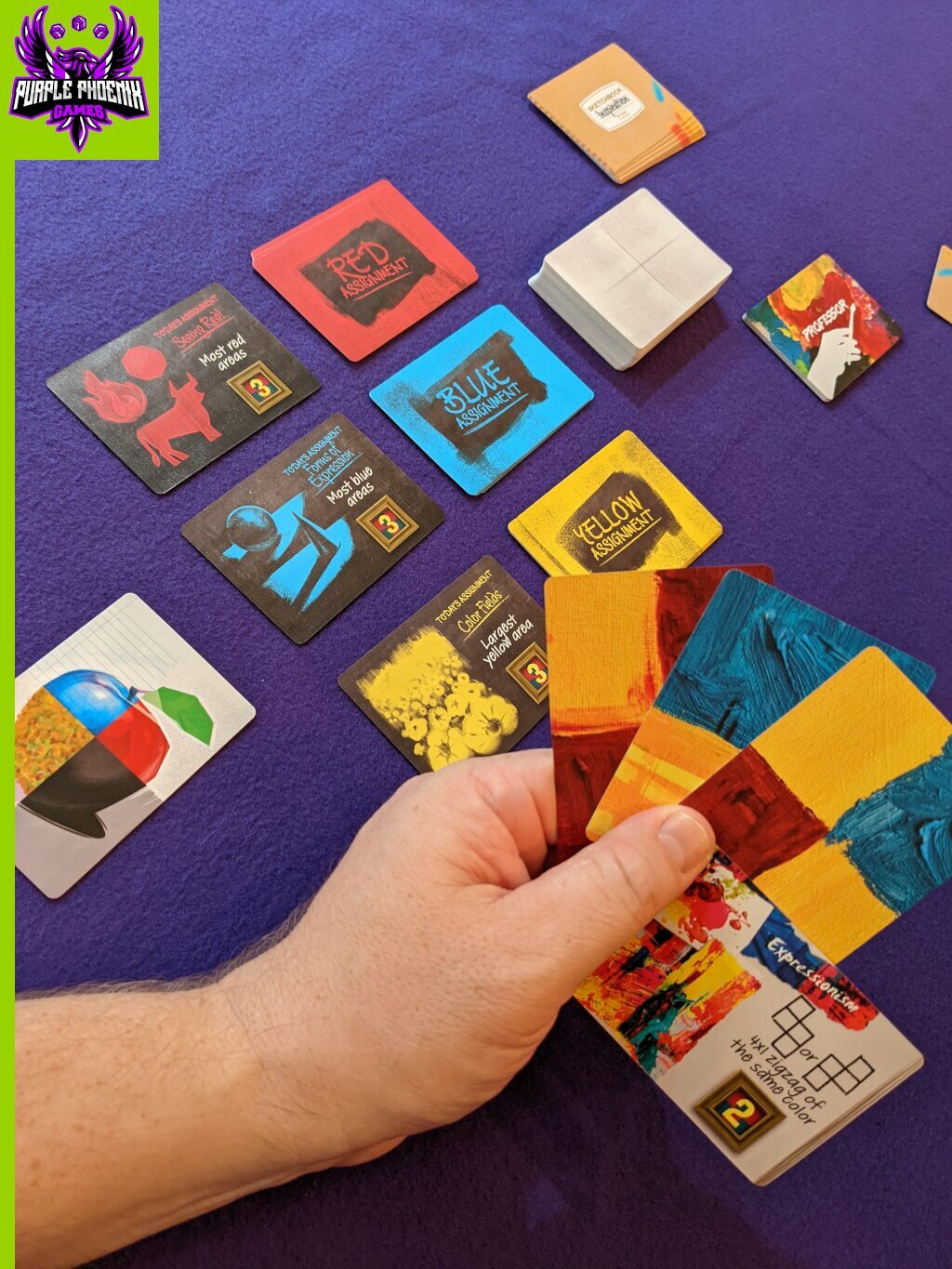
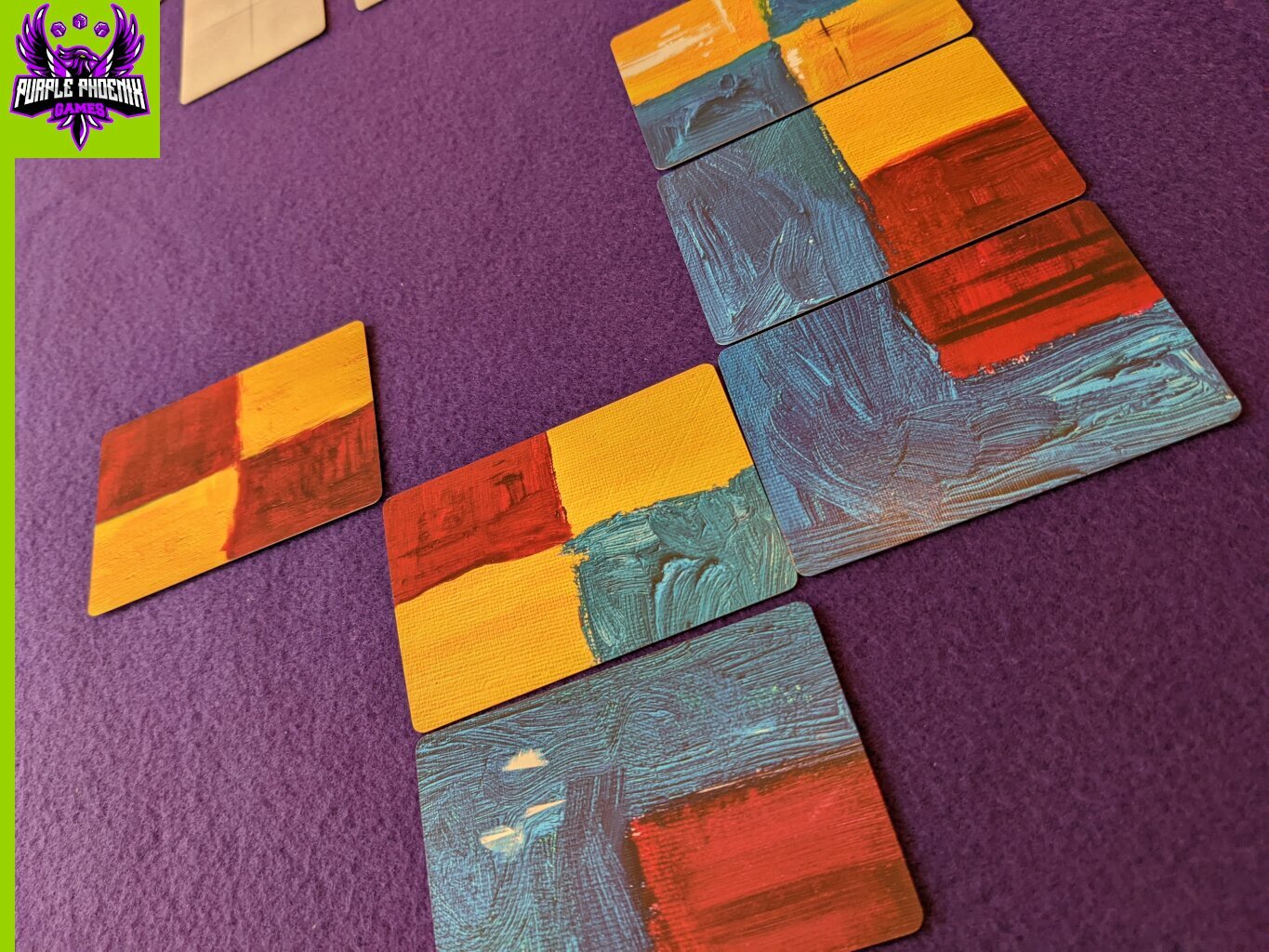
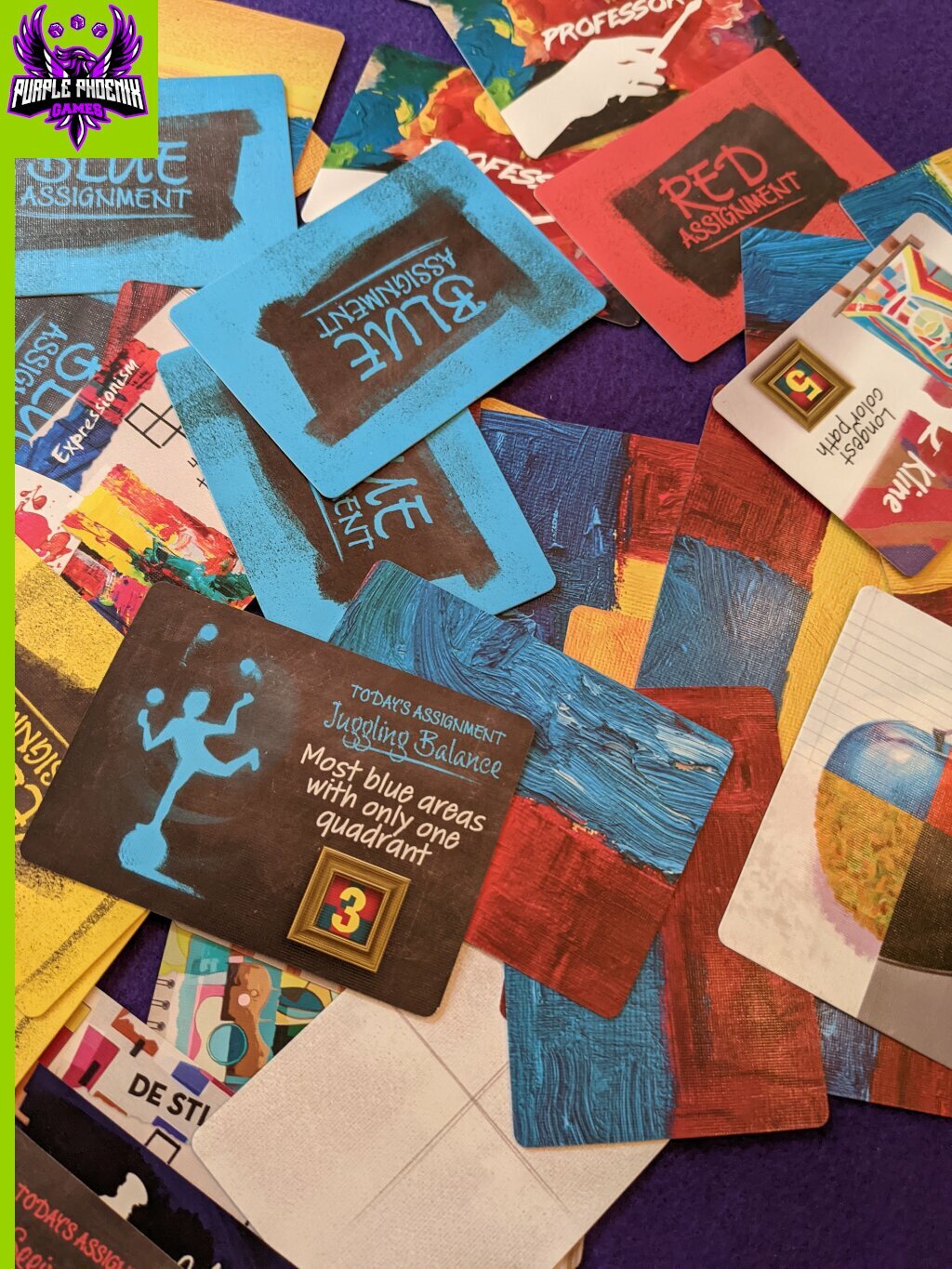
Purple Phoenix Games (2266 KP) rated Tiny Epic Pirates in Tabletop Games
Dec 28, 2021

Gamelyn Games and Scott Almes have done it again. They’ve managed to create yet another Tiny Epic game with a combo of theme and mechanics that we just couldn’t pass up. When this Kickstarter went live, we were definitely auto-backing it. Now that it’s been fulfilled and we’ve had the opportunity to play it, does it meet all of our high hopes and expectations? Is Tiny Epic Pirates a hidden treasure, or is it fool’s gold?
Disclaimer: I do not intend to rehash the entire rulebook in this review, but rather provide a general overview of the rules and gameplay. -L
Tiny Epic Pirates is a competitive game in which players take on the roles of pirate captains sailing the seas, engaging in combat, trading at various ports, and trying to bury some treasure. Played over a series of rounds, the game ends once a player has buried their 3rd treasure chest. To setup, follow the instructions as detailed in the rulebook – there are simply too many to outline here concisely. Two unique aspects of setup are that the Map cards are shuffled and randomly placed in a 4×4 grid, ensuring a variable setup for each game. The other is that each player will also randomly assign Order tokens on their Wheel (rondel), which means that no two players will have the same setup for a game. Once the Sea has been created, players have prepared their appropriate mats, a market for Booty and Crew have been setup, and tokens/Ships are placed on the map, the game is ready to begin!
Each turn is broken down into 5 steps: Captain’s Order/Deckhands, Sail, Execute Captain’s Order, Trigger Bonus Actions, and Crossing the Ship Line. The first part of every turn is to move your Captain meeple clockwise on your Wheel to select your Captain’s Order for this turn. Moving to the next adjacent space is free, but to skip spaces you must place Deckhand meeples onto the skipped spaces. In future turns, you may have Deckhands coming off the wheel, and you will assign those to other tasks during this step. The next step is to Sail your ship. Every player begins the game with a base speed of 1 Map card, and this can be enhanced throughout gameplay. During this step, you may Sail your ship across Map tiles up to your total allowed distance. After having Sailed, it is time to Execute Captain’s Order. To do this, refer back to your Wheel to see which action your Captain is on, and perform it. Possible actions are to Plunder (steal Booty from settlements), Trade (trade Booty for $ at markets), Crew Up (add up to 4 Crew members to your Ship), Search (gain a one-time benefit from un-searched Map cards), Attack (attack opposing Pirates or Merchant ships at sea), or Hide Out (rest at a Cove and reassign all Deckhands). You may only perform the action that was selected in the Captain’s Order step, regardless of if your placement on a Map card has other actions available.
Once your selected action has been performed, the next step is to Trigger Bonus Actions. Looking at your Captain and Crew cards, if their leftmost icon matches your current Captain’s Order, you may trigger the listed bonus actions. Some bonus actions allow you to perform duplicate Captain’s Orders, but others will earn you money, let you reassign Deckhands, exchange Booty at a different rate, and bury treasure. You don’t need to perform every Bonus Action listed if you so choose, but they may only be performed when their card icon matches your Captain’s Order. The very last step of your turn is to see if you have Crossed the Ship Line. Check your Wheel and see if you have moved from space 5 across the Ship Line to start another circle around the Wheel. If you did not cross the line, then your turn ends and play moves to the next Pirate. If you did cross the Ship Line, then the Merchant and Navy ships will sail a set amount of distance. Merchant ships are simply trying to deliver goods to port, and will be traversing the sea throughout the game. The Navy ship is hunting down Pirates, and will move to attack the current player any time the Ship Line is crossed. When a player has buried their third and final treasure, the round finishes as normal and the game ends. The player who buried all 3 treasures is the winner! In the case of a tie, check the rulebook. 😉
As with most of the Tiny Epic games, I will first start by saying that the size of the box may be small, but the gameplay inside is enormous. There is so much strategy in this one, I think it’s the ‘heaviest’ one in the series so far. You have so many different choices when it comes to strategy, and the gameplay will feel different every time. You could choose to take the offensive and be the aggressor, attacking any and all Ships that you can. Winning combat against Merchant Ships earns you Booty and other resources, while winning combat against opposing Pirates earns you Legend Levels. Your current Legend Level dictates how many spaces you are allowed to Sail, as well as how many dice you can roll during combat. So increasing that level results in better benefits. Maybe you just want to be an honest Pirate and do all of your trading at legal markets, avoiding contact with others and trying to skirt around combat. Maybe you want to try a little of both? The point is, you have choices, and must be able to adapt them based on your opponents’ decisions as well.
A neat element I touched on earlier about this game is the variable setup for each individual player and their Wheel. This really factors into your strategy because you have to know when to use which actions. Do you use a Deckhand to skip a space, or do you burn a turn moving for free to keep that Deckhand right where you want him? And remember, Bonus Actions are only triggered when the matching Captain’s Order is selected, so maybe you have to sacrifice acting in a turn (not being able to perform the selected Captain’s Order) in order to trigger your desired Bonus Action. It’s all about strategy, and that keeps the gameplay engaging at all times.
Just a word of warning though, there is a bit of a learning curve, as there are so many steps and items to consider each turn. Thus the gameplay felt pretty daunting and slow-going my first few plays. But as I became more comfortable with the turn structure and the iconography, it became easier to know what comes next. Another thing to consider is player count. Playing Tiny Epic Pirates at 2 players didn’t really feel that immersive or engaging. With only 2 players on a 4×4 grid, it can be easy to completely avoid each other and skirt around, essentially playing by yourself in a way. With 3 and 4 players, there are more Ships on the map and more opportunities for player interactions and engagement. So it all comes down to what kind of gameplay you want, when selecting your player count.
Components. Again, so far all the Tiny Epic games have had awesome production quality and Tiny Epic Pirates is no exception. The artwork is bright and colorful, the cards and cardboard tokens are sturdy, the meeples are cute, and the actual ships are fun to play with. My only qualms are that two of the player colors – black and blue – are visually similar so in setup it can be tricky to tell them apart. Another qualm is that two of the Booty types (teehee) are a tan and gray color, and the iconography for both on the Map cards are similarly colored. The first few plays I found myself trading the wrong Booty at market because I didn’t check the icon closely enough. These are not game-breakers by any means, but just a heads up so you’re paying attention! As this was a Kickstarter, I did opt for the add-on Pirate Skull dice, and have to honestly say that I prefer the regular game dice better. The ‘knots’ on the corners of the skull dice stop them from continuing to roll, so I felt like I wasn’t really getting a real roll on them. Maybe that’s just my personal opinion, but the regular ol’ game dice are perfectly fine.
How does Tiny Epic Pirates fare in the lineup of the Tiny Epic games? Fairly well, I would say. It’s not one that I would pull out to play with just anybody, as it is a bit of a heavier game, but it is one that I know I would enjoy with my game group. There are a lot of neat elements and mechanics at play here that really work well together and make for an engaging and kind of brain-burning (in a way) game. Although Tiny Epic Pirates might not get as much playtime for me as others in the series, it’s a good one to have and it really embodies the tiny (small box, check) and epic (sweet and strategic gameplay) parts of the title. Purple Phoenix Games gives this one a seaworthy 4 / 6.
Disclaimer: I do not intend to rehash the entire rulebook in this review, but rather provide a general overview of the rules and gameplay. -L
Tiny Epic Pirates is a competitive game in which players take on the roles of pirate captains sailing the seas, engaging in combat, trading at various ports, and trying to bury some treasure. Played over a series of rounds, the game ends once a player has buried their 3rd treasure chest. To setup, follow the instructions as detailed in the rulebook – there are simply too many to outline here concisely. Two unique aspects of setup are that the Map cards are shuffled and randomly placed in a 4×4 grid, ensuring a variable setup for each game. The other is that each player will also randomly assign Order tokens on their Wheel (rondel), which means that no two players will have the same setup for a game. Once the Sea has been created, players have prepared their appropriate mats, a market for Booty and Crew have been setup, and tokens/Ships are placed on the map, the game is ready to begin!
Each turn is broken down into 5 steps: Captain’s Order/Deckhands, Sail, Execute Captain’s Order, Trigger Bonus Actions, and Crossing the Ship Line. The first part of every turn is to move your Captain meeple clockwise on your Wheel to select your Captain’s Order for this turn. Moving to the next adjacent space is free, but to skip spaces you must place Deckhand meeples onto the skipped spaces. In future turns, you may have Deckhands coming off the wheel, and you will assign those to other tasks during this step. The next step is to Sail your ship. Every player begins the game with a base speed of 1 Map card, and this can be enhanced throughout gameplay. During this step, you may Sail your ship across Map tiles up to your total allowed distance. After having Sailed, it is time to Execute Captain’s Order. To do this, refer back to your Wheel to see which action your Captain is on, and perform it. Possible actions are to Plunder (steal Booty from settlements), Trade (trade Booty for $ at markets), Crew Up (add up to 4 Crew members to your Ship), Search (gain a one-time benefit from un-searched Map cards), Attack (attack opposing Pirates or Merchant ships at sea), or Hide Out (rest at a Cove and reassign all Deckhands). You may only perform the action that was selected in the Captain’s Order step, regardless of if your placement on a Map card has other actions available.
Once your selected action has been performed, the next step is to Trigger Bonus Actions. Looking at your Captain and Crew cards, if their leftmost icon matches your current Captain’s Order, you may trigger the listed bonus actions. Some bonus actions allow you to perform duplicate Captain’s Orders, but others will earn you money, let you reassign Deckhands, exchange Booty at a different rate, and bury treasure. You don’t need to perform every Bonus Action listed if you so choose, but they may only be performed when their card icon matches your Captain’s Order. The very last step of your turn is to see if you have Crossed the Ship Line. Check your Wheel and see if you have moved from space 5 across the Ship Line to start another circle around the Wheel. If you did not cross the line, then your turn ends and play moves to the next Pirate. If you did cross the Ship Line, then the Merchant and Navy ships will sail a set amount of distance. Merchant ships are simply trying to deliver goods to port, and will be traversing the sea throughout the game. The Navy ship is hunting down Pirates, and will move to attack the current player any time the Ship Line is crossed. When a player has buried their third and final treasure, the round finishes as normal and the game ends. The player who buried all 3 treasures is the winner! In the case of a tie, check the rulebook. 😉
As with most of the Tiny Epic games, I will first start by saying that the size of the box may be small, but the gameplay inside is enormous. There is so much strategy in this one, I think it’s the ‘heaviest’ one in the series so far. You have so many different choices when it comes to strategy, and the gameplay will feel different every time. You could choose to take the offensive and be the aggressor, attacking any and all Ships that you can. Winning combat against Merchant Ships earns you Booty and other resources, while winning combat against opposing Pirates earns you Legend Levels. Your current Legend Level dictates how many spaces you are allowed to Sail, as well as how many dice you can roll during combat. So increasing that level results in better benefits. Maybe you just want to be an honest Pirate and do all of your trading at legal markets, avoiding contact with others and trying to skirt around combat. Maybe you want to try a little of both? The point is, you have choices, and must be able to adapt them based on your opponents’ decisions as well.
A neat element I touched on earlier about this game is the variable setup for each individual player and their Wheel. This really factors into your strategy because you have to know when to use which actions. Do you use a Deckhand to skip a space, or do you burn a turn moving for free to keep that Deckhand right where you want him? And remember, Bonus Actions are only triggered when the matching Captain’s Order is selected, so maybe you have to sacrifice acting in a turn (not being able to perform the selected Captain’s Order) in order to trigger your desired Bonus Action. It’s all about strategy, and that keeps the gameplay engaging at all times.
Just a word of warning though, there is a bit of a learning curve, as there are so many steps and items to consider each turn. Thus the gameplay felt pretty daunting and slow-going my first few plays. But as I became more comfortable with the turn structure and the iconography, it became easier to know what comes next. Another thing to consider is player count. Playing Tiny Epic Pirates at 2 players didn’t really feel that immersive or engaging. With only 2 players on a 4×4 grid, it can be easy to completely avoid each other and skirt around, essentially playing by yourself in a way. With 3 and 4 players, there are more Ships on the map and more opportunities for player interactions and engagement. So it all comes down to what kind of gameplay you want, when selecting your player count.
Components. Again, so far all the Tiny Epic games have had awesome production quality and Tiny Epic Pirates is no exception. The artwork is bright and colorful, the cards and cardboard tokens are sturdy, the meeples are cute, and the actual ships are fun to play with. My only qualms are that two of the player colors – black and blue – are visually similar so in setup it can be tricky to tell them apart. Another qualm is that two of the Booty types (teehee) are a tan and gray color, and the iconography for both on the Map cards are similarly colored. The first few plays I found myself trading the wrong Booty at market because I didn’t check the icon closely enough. These are not game-breakers by any means, but just a heads up so you’re paying attention! As this was a Kickstarter, I did opt for the add-on Pirate Skull dice, and have to honestly say that I prefer the regular game dice better. The ‘knots’ on the corners of the skull dice stop them from continuing to roll, so I felt like I wasn’t really getting a real roll on them. Maybe that’s just my personal opinion, but the regular ol’ game dice are perfectly fine.
How does Tiny Epic Pirates fare in the lineup of the Tiny Epic games? Fairly well, I would say. It’s not one that I would pull out to play with just anybody, as it is a bit of a heavier game, but it is one that I know I would enjoy with my game group. There are a lot of neat elements and mechanics at play here that really work well together and make for an engaging and kind of brain-burning (in a way) game. Although Tiny Epic Pirates might not get as much playtime for me as others in the series, it’s a good one to have and it really embodies the tiny (small box, check) and epic (sweet and strategic gameplay) parts of the title. Purple Phoenix Games gives this one a seaworthy 4 / 6.