
Search
Search results

Heather Cranmer (2721 KP) rated The Book of Cold Cases in Books
May 5, 2022
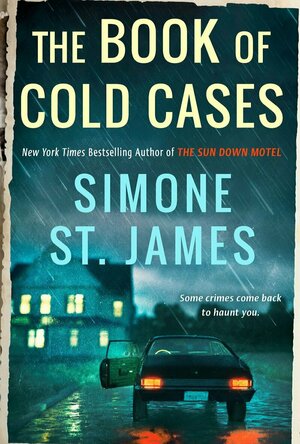

I love a thriller that involves a chilling ghost story, so when I heard about The Book of Cold Cases by Simone St. James, I knew I had to read it. (Plus, I loved her other book The Broken Girls.) I was heavily immersed in this novel from the beginning!
I was sucked into the plot of The Book of Cold Cases right away. St. James gets right down to the nitty-gritty in the very first chapter. This book instantly grabs you and doesn't let go until the very last page. I was instantly transported to this small town in Oregon where I was right with the characters. As with her previous books, Simone St. James tells the story from more than one characters' point of view. We are told the story from Beth's, Shea's, and Lily's viewpoint. There was plenty of action and mystery to keep me intrigued throughout my reading journey. My favorite scenes in the book were the ones that involved the supernatural. I loved reading about how Greer mansion was haunted and about what supernatural activities were happening there. I also enjoyed the semi-big plot twist towards the middle of the book. However, I kept expecting an even bigger plot twist towards the end that never came which left me feeling a bit disappointed. However, this didn't really take away from the overall story that much. Something I could have done without was the romance in the book. It wasn't a major thing, but I just felt like there wasn't really a need for it. Other than that, I truly enjoyed this novel. Everything fit together really well (minus the romance), and the story was all tied together by the very end.
I felt that all the characters in The Book of Cold Cases were fleshed out enough to feel realistic whilst reading. I really liked Shea's interest in true crime since I can relate to that. I admired Shea's thirst for knowledge and how far she'd go to find out the truth of things she wanted to know. (I guess we both need closure!) I did feel like she got over her phobia a little too conveniently and quickly though. Beth was a wildcard for me throughout the book. I couldn't tell if she was guilty like many people believed or if she actually was a guilty party. I did like Beth though, and I loved her attitude she had when accused of murder. Lily was fabulously written, and I enjoyed reading about her too. I won't go into much more detail about her due to spoilers, but her part in The Book of Cold Cases was written well. The only character that kind of bothered me was Michael. I just felt like he was thrown in there as an easy way out. We're introduced to him from the beginning, and I kept waiting for some plot twist to happen involving him, but I was sadly disappointed. I just felt as if the book could have done without him.
Trigger warnings for The Book of Cold Cases include violence, murder, profanity, sexual abuse of a minor (not graphic), and kidnapping.
Overall, The Book of Cold Cases is a thrilling read with a fantastically chilling plot. With a spooky ghost story and an intriguing mystery, St. James has a real winner on her hands. I would definitely recommend The Book of Cold Cases by Simone St. James to those aged 17+ who love being scared and intrigued at the same time. You won't be disappointed.
I was sucked into the plot of The Book of Cold Cases right away. St. James gets right down to the nitty-gritty in the very first chapter. This book instantly grabs you and doesn't let go until the very last page. I was instantly transported to this small town in Oregon where I was right with the characters. As with her previous books, Simone St. James tells the story from more than one characters' point of view. We are told the story from Beth's, Shea's, and Lily's viewpoint. There was plenty of action and mystery to keep me intrigued throughout my reading journey. My favorite scenes in the book were the ones that involved the supernatural. I loved reading about how Greer mansion was haunted and about what supernatural activities were happening there. I also enjoyed the semi-big plot twist towards the middle of the book. However, I kept expecting an even bigger plot twist towards the end that never came which left me feeling a bit disappointed. However, this didn't really take away from the overall story that much. Something I could have done without was the romance in the book. It wasn't a major thing, but I just felt like there wasn't really a need for it. Other than that, I truly enjoyed this novel. Everything fit together really well (minus the romance), and the story was all tied together by the very end.
I felt that all the characters in The Book of Cold Cases were fleshed out enough to feel realistic whilst reading. I really liked Shea's interest in true crime since I can relate to that. I admired Shea's thirst for knowledge and how far she'd go to find out the truth of things she wanted to know. (I guess we both need closure!) I did feel like she got over her phobia a little too conveniently and quickly though. Beth was a wildcard for me throughout the book. I couldn't tell if she was guilty like many people believed or if she actually was a guilty party. I did like Beth though, and I loved her attitude she had when accused of murder. Lily was fabulously written, and I enjoyed reading about her too. I won't go into much more detail about her due to spoilers, but her part in The Book of Cold Cases was written well. The only character that kind of bothered me was Michael. I just felt like he was thrown in there as an easy way out. We're introduced to him from the beginning, and I kept waiting for some plot twist to happen involving him, but I was sadly disappointed. I just felt as if the book could have done without him.
Trigger warnings for The Book of Cold Cases include violence, murder, profanity, sexual abuse of a minor (not graphic), and kidnapping.
Overall, The Book of Cold Cases is a thrilling read with a fantastically chilling plot. With a spooky ghost story and an intriguing mystery, St. James has a real winner on her hands. I would definitely recommend The Book of Cold Cases by Simone St. James to those aged 17+ who love being scared and intrigued at the same time. You won't be disappointed.

Olivia (102 KP) rated Girls of Paper and Fire in Books
Aug 13, 2018 (Updated Aug 13, 2018)
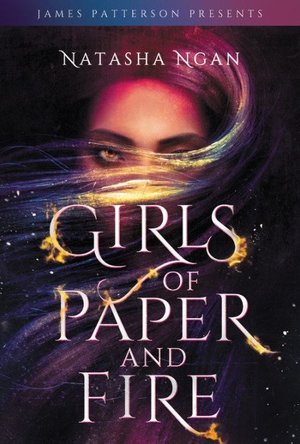

I'm still trying to process all my feelings about his book, but right now I'm going to give it an 8.5
Girls of Paper and Fire is an incredibly addicting read. Within picking it up, I finished reading it in under 24 hours. Every minute that I wasn't reading it, I was thinking about it. It was like an impossible earworm chanting "Read me. Read me!".
Ngan's writing style and character development left me in awe at times. She somehow managed to write this imaginative tale whilst keeping it grounded, a combination that I haven't seen successfully executed very often. The romance in this book is perhaps one of my new all-time favorites. The love is believable. It wasn't a case of "Oh, I like this person a lot and so now I'm gonna make out with them for 80 pages straight and forget about everything else." there was actual chemistry between the two and it made the story all the more intense.
In the seemingly effortless way Ngan could create palpable romantic chemistry, she could also create absolute revulsion.
My problem with so many villains is that the writer will have them have done something terrible, and that's it. They don't truly explore how vile this villain is; they rely on one or two things that all of decent humanity can agree is unforgivable and let that be the reason why they're evil. Sure, anyone would be repulsed by a man who rapes and murders people; it's not like you have to convince people to hate that guy. But Ngan doesn't just throw those two things onto the character and call it a day. She made the king an absolute vile creature with words that made me physically gag, actions that made me have to put the book down and walk away.
Ngan's descriptions are extremely rich; whether that is a good or bad thing will vary from reader to reader. Personally, I found myself sometimes skimming over all the imagery; not because it wasn't good, but because I just really wanted to get back to the main plot and character interactions.
I'm not usually a huge fan of series, but this is one that I heavily look forward to continuing.
Girls of Paper and Fire is an incredibly addicting read. Within picking it up, I finished reading it in under 24 hours. Every minute that I wasn't reading it, I was thinking about it. It was like an impossible earworm chanting "Read me. Read me!".
Ngan's writing style and character development left me in awe at times. She somehow managed to write this imaginative tale whilst keeping it grounded, a combination that I haven't seen successfully executed very often. The romance in this book is perhaps one of my new all-time favorites. The love is believable. It wasn't a case of "Oh, I like this person a lot and so now I'm gonna make out with them for 80 pages straight and forget about everything else." there was actual chemistry between the two and it made the story all the more intense.
In the seemingly effortless way Ngan could create palpable romantic chemistry, she could also create absolute revulsion.
My problem with so many villains is that the writer will have them have done something terrible, and that's it. They don't truly explore how vile this villain is; they rely on one or two things that all of decent humanity can agree is unforgivable and let that be the reason why they're evil. Sure, anyone would be repulsed by a man who rapes and murders people; it's not like you have to convince people to hate that guy. But Ngan doesn't just throw those two things onto the character and call it a day. She made the king an absolute vile creature with words that made me physically gag, actions that made me have to put the book down and walk away.
Ngan's descriptions are extremely rich; whether that is a good or bad thing will vary from reader to reader. Personally, I found myself sometimes skimming over all the imagery; not because it wasn't good, but because I just really wanted to get back to the main plot and character interactions.
I'm not usually a huge fan of series, but this is one that I heavily look forward to continuing.

KAYAK Flights, Hotels & Cars
Travel and Business
App
KAYAK searches hundreds of other travel sites so you don’t have to. Book the perfect flight, hotel...

Darren (1599 KP) rated The Charnel House (2016) in Movies
Oct 14, 2019


Characters – Alex Reaves is the man behind the refurbishment of the building, he sees this as a fresh start for his family which will give them financial support for life, he starts having visions which will bring the connection back to the previous owner. Charlotte is the artist and designer (I think she did this too) who has help turn the building into the apartments and soon becomes the one that needs to fight to keep her family together. Mia is the daughter of the couple who starts seeing the little boy haunting the building, treated like the imaginary friend for the most part, she has behavioural problems and follows in her mother’s artistic nature. Devin Pyles is the man that has a connection to the previous use of the building, he is here to investigate just what happened here and knows about the darker side of the building.
Performances – Callum Blue in the leading role is fine without ever standing out in the leading role, which is going to be a theme when looking at the performances, nobody does anything to make themselves feel stand out in the film.
Story – The story here follows the re-opening of an old slaughterhouse as luxury apartments, but the ghosts of the old building are still there haunting the people that move in. this does give us the limited characters as the building isn’t officially opened, but will let people move into the property they have purchased early, this helps the story because an over crowded building would have only dragged the film down. The story is trying to be clever with certain connections only to fall mostly short with this side of the story telling. Once you do work out where the story wants to go you will work out the ending pretty easily which again disappoints and as for the supporting characters they seem to have no connection to the actual hauntings and are here just to give us a body count.
Horror – The horror in the film comes from the ghost visits and the technology not following the rules it should be, again simple scares which don’t give us anything to be frightened off.
Settings – The film is set in one house, we have an apartment building with history which gives us the haunting side of the film. it works well for the most part too.
Special Effects – The effects are not over used, they are simple when needed but nothing that becomes clear to what is happening in the film.
Scene of the Movie – Butch the Yorkie.
That Moment That Annoyed Me – The pointless disposable supporting residents.
Final Thoughts – This is a very simple horror, it does the basics right without ever being put in the position of being anything special or standout, nothing is terrible, it is just average throughout.
Overall: Average horror.
Performances – Callum Blue in the leading role is fine without ever standing out in the leading role, which is going to be a theme when looking at the performances, nobody does anything to make themselves feel stand out in the film.
Story – The story here follows the re-opening of an old slaughterhouse as luxury apartments, but the ghosts of the old building are still there haunting the people that move in. this does give us the limited characters as the building isn’t officially opened, but will let people move into the property they have purchased early, this helps the story because an over crowded building would have only dragged the film down. The story is trying to be clever with certain connections only to fall mostly short with this side of the story telling. Once you do work out where the story wants to go you will work out the ending pretty easily which again disappoints and as for the supporting characters they seem to have no connection to the actual hauntings and are here just to give us a body count.
Horror – The horror in the film comes from the ghost visits and the technology not following the rules it should be, again simple scares which don’t give us anything to be frightened off.
Settings – The film is set in one house, we have an apartment building with history which gives us the haunting side of the film. it works well for the most part too.
Special Effects – The effects are not over used, they are simple when needed but nothing that becomes clear to what is happening in the film.
Scene of the Movie – Butch the Yorkie.
That Moment That Annoyed Me – The pointless disposable supporting residents.
Final Thoughts – This is a very simple horror, it does the basics right without ever being put in the position of being anything special or standout, nothing is terrible, it is just average throughout.
Overall: Average horror.

Dream Foot
Music and Education
App
Dream Foot lets you play chords with a tap, a MIDI keyboard, or a MIDI foot controller. Choose one...

Splunk Developer's Guide
Book
Learn the A to Z of building excellent Splunk applications with the latest techniques using this...

Purple Phoenix Games (2266 KP) rated Seasons in Tabletop Games
Jul 6, 2019 (Updated Nov 4, 2021)

I have mentioned before that I have a bad habit. Well several, but this one pertains to board games. You see, I once had a collection of games that I loved, but was pulled into the BGG Auctions and would engage in auctioning off many of games that I deemed of good return value. But then I would start to miss them. And then I would start to reacquire them. Then my wife stepped in and made me see how foolish I was to rid myself of them in the first place. Well, next up in this line is a game I recently reacquired and never should have let go in the first place – Seasons!
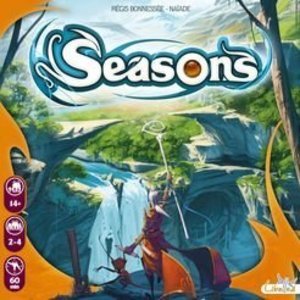
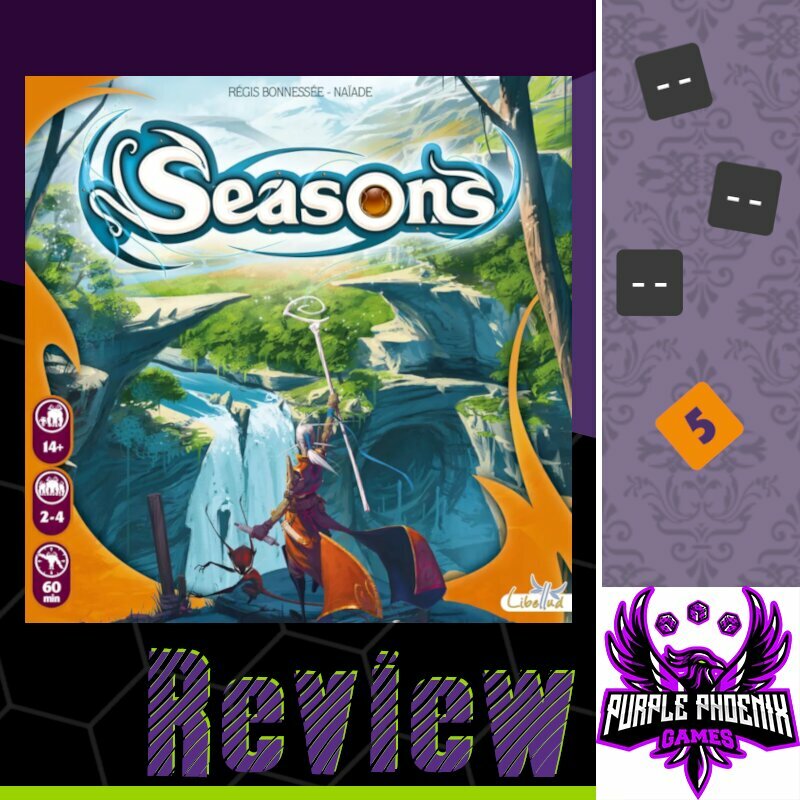
Seasons is a fantastical dice rolling, card drafting, hand management game for two to four players. In it, players are sorcerers competing in a legendary magical tournament that spans three years in an attempt to be crowned the next Archmage of the kingdom. As the seasons change, sorcerers may draw power from changing mana sources, and utilizing these sources most efficiently and effectively will earn victory over all. So tighten up your belt and get to casting, young mage!
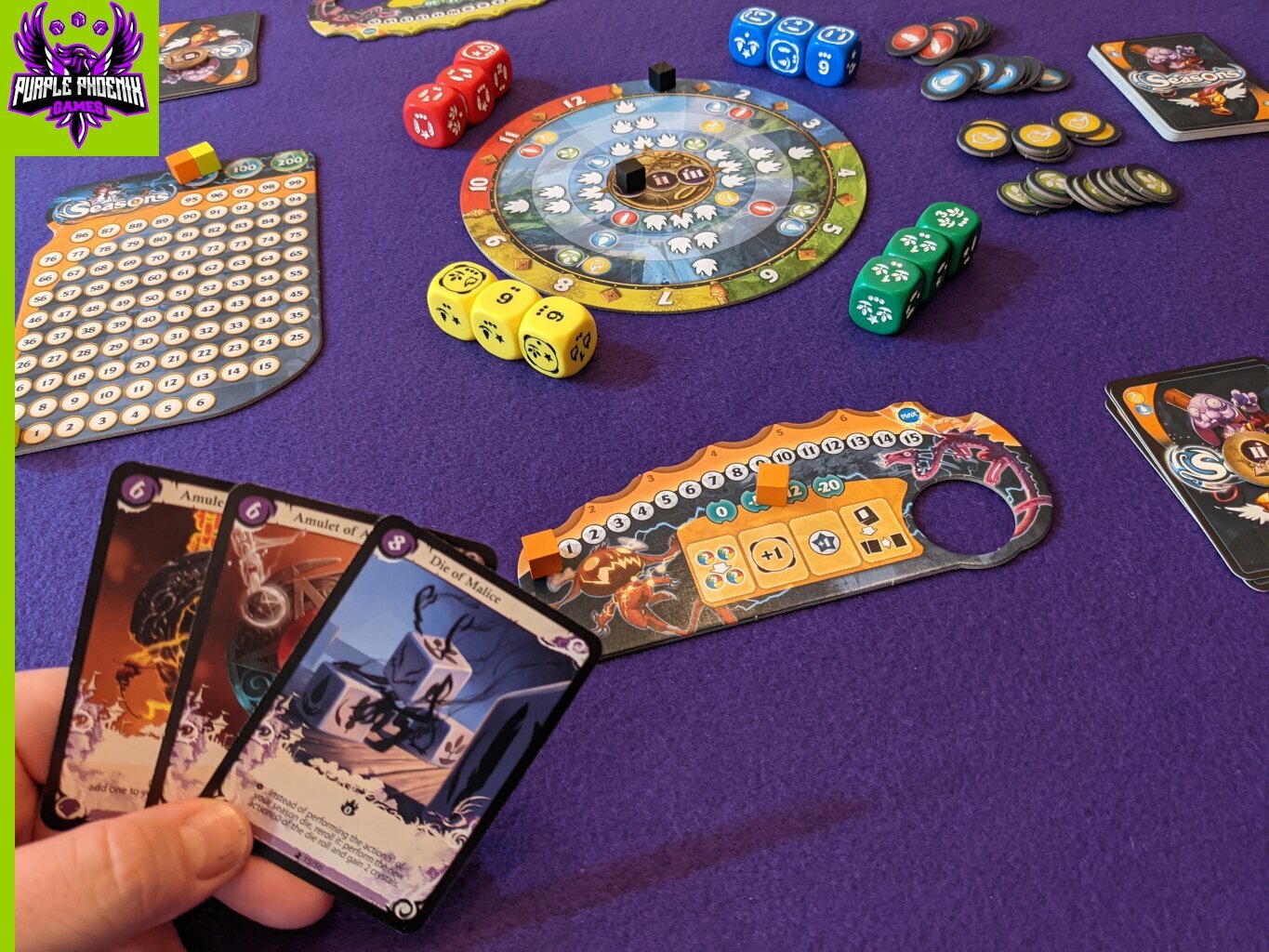
To setup, follow the rules in the rulebook (there are many steps, and I have feeble and weak fingers) until the table looks somewhat similar to the photo below – except for the obvious oversight in placing the orange cube on the zero space of bonus actions. The main areas of interest are the main game board where the years and seasons are tracked, the Crystal score track, and player board/tableau area. Players will be dealt a hand of nine cards to start, and then draft one card at a time, passing to their neighbor each time, and deciding which three cards they would like to start the game with, and assigning three more cards each into the Library for rounds two and three. The game begins in Winter, and the black cube is placed on the number 1 of the seasons board. The game is now setup and ready to begin with the first player!
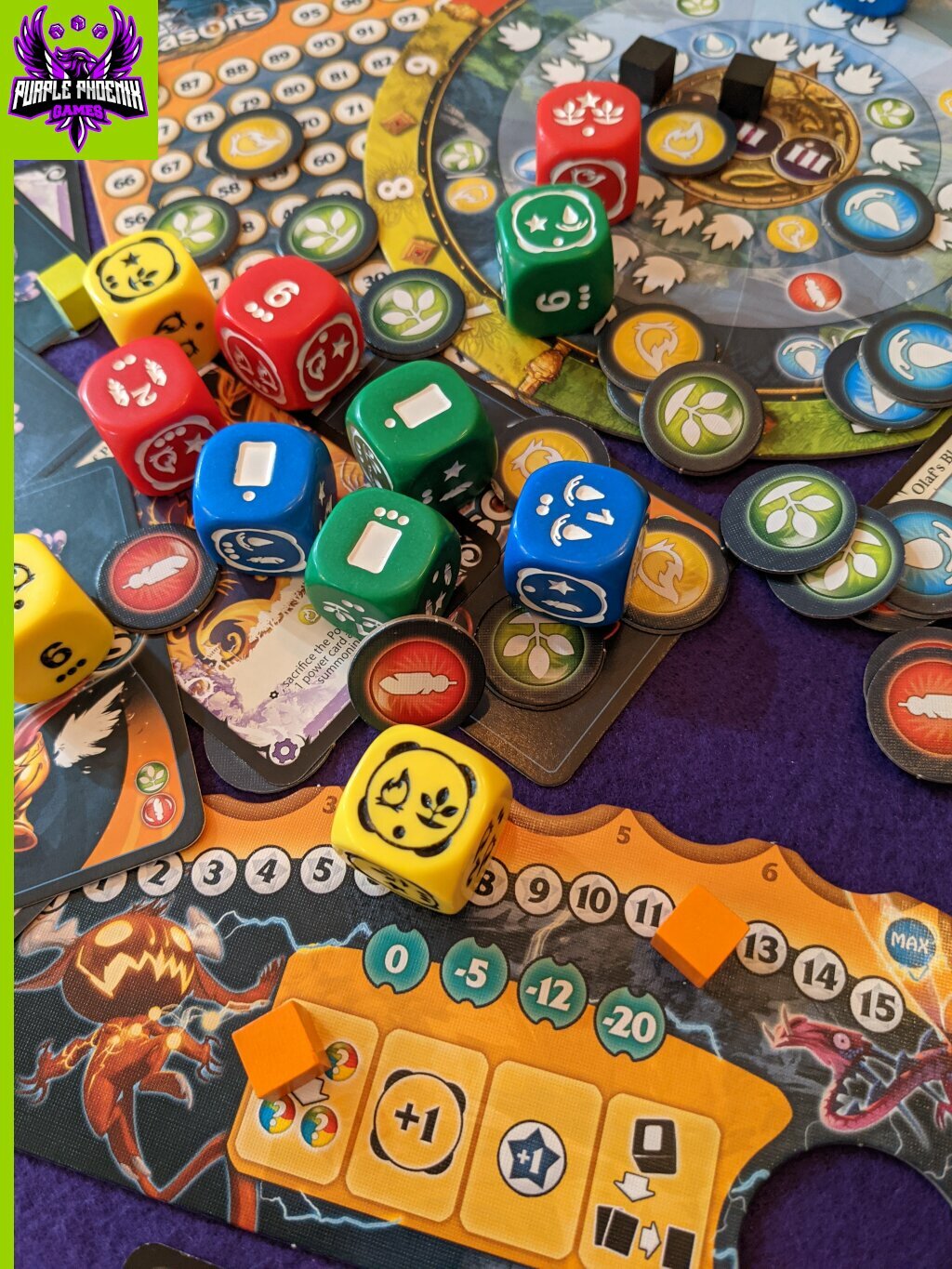
Each turn the active player will roll all dice in the current season (this game is setup for two players, so three total dice are used each turn). They will choose one die to use for the turn, and other players will choose theirs. The players then gather the resources present on the die face. These could be element tokens, crystals (VP), summon gauge stars, cards drawn from the deck, or even transmutation powers. Once resources are gained, the active player may then choose to play a card from their hand to their personal tableau, given they have adequate summoning power (the number of cards that can be played) available on their board. The cost to play the card is found under the illustration, and is usually paid in crystals, element tokens, or a combination of both. These Power Cards may allow the player immediate benefits, ongoing benefits, or benefits that may be activated at certain times during the game.
Another option players have from their chosen die is the ability to transmutate. When a player chooses a die with this option, they are able to consult the current season on the main board and exchange element tokens for crystals, depending on the provided exchange system. For example, a player wishing to exchange earth tokens (the green plant) during Winter will be provided with three crystals each, while attempting the same transmutation during Spring will only provide one crystal each.
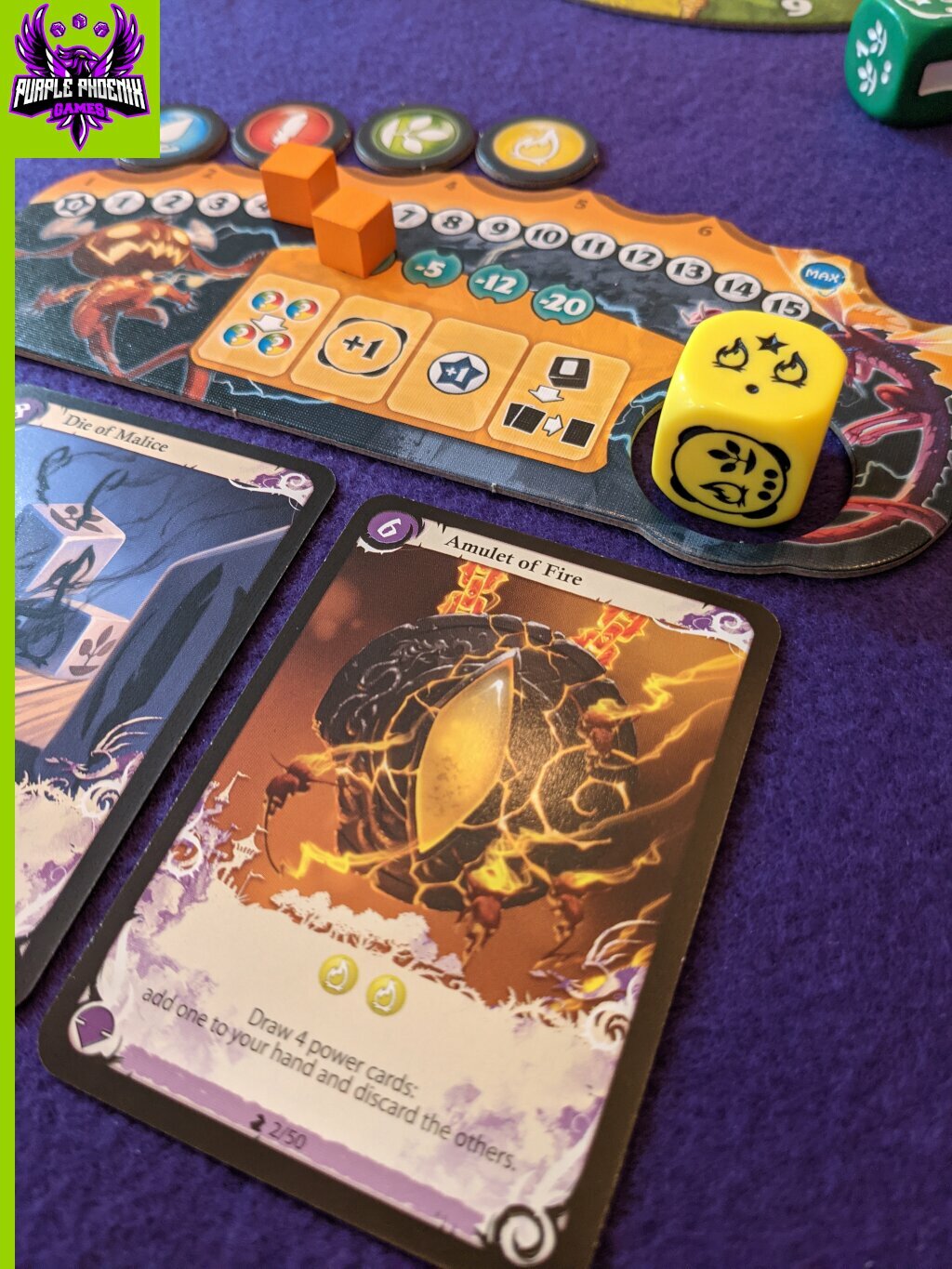
Once each player has taken their turn to collect their resources, complete their turn actions, and pass onto the next player, the unchosen die is resolved. Each die face also shows a number of dotted pips at the bottom. The number of pips shown on the unchosen die refers to the number of spaces the cube on the main board season tracker is to be moved forward around the board. One pip, one space forward. This could result in the current season continuing or progressing into the next season. When the cube progresses from Fall to Winter, players will collect their cards set aside for year two or three, respectively. These cards are added to their hand and available to be used immediately on their turn. If, however, on their turn a player has little they can do, or simply wish to boost their turn, they may use one of four bonus actions, as printed on their player board. These actions allow the player to trade two element tokens from their reserves for any other two element tokens from the main supply, allow transmutation if the symbol is not present on their chosen die face, increase their summoning gauge by one, or draw two power cards from the deck and choose one to add to their hand instead of drawing one, per their die face. Each player can use three total bonus actions for each game at a cost of crystals for each usage. Certainly a trade-off.
Play continues in this fashion of choosing and resolving dice, playing cards, and transmuting tokens for crystals until the cube has completed its three year journey around the main board. At that time crystals are scored from cards and added to the tracker, with five points deducted for each card remaining in hand and points deducted for the usage of bonus actions. The player with the most crystals at the end of the game is the winner!
Components. I have a lot to say here, but will attempt to be as succinct as I can. The components in Seasons are simply phenomenal. Yes, the boards, cards, and cubes are all fine quality and unimpressive. However, the art style throughout the game and those big chunky dice are the real standouts to me. I mean, who DOESN’T like to roll big, chunky dice? And the player colors? Oh man, I love them! Players can choose orange, purple, gray, or lime green. Those are some great color options, and such a simple upgrade from primary colors used on many other games. The dice are primary colors, but I still enjoy them and I will let it slide. No real complaints on components from me. I have heard complaints about people not vibing on the color choices associate with the elements/energy, but I applaud the mold-breaking here. Why can’t Fall be red and associated with a feather? Why can’t Summer be yellow and associated with a flame? Fire doesn’t always have to be red. Go on, Seasons! Be you!
Our thoughts on each game should never be a surprise. I will say this for Seasons – I believe that when I auctioned it off the first time, part of the reasoning was because I did not fully understand the rules. I was a newer gamer at the time and was lured in by colors and art style (which are still stunning). More than likely I thought I was smarter than I truly am and included all the cards in my first plays instead of heeding the suggestions given by the rulebook for easier first games. Now, being a more seasoned (I couldn’t resist) gamer, I can better appreciate what is in this box. The unique card play, the dice drafting for resources and actions, the progression of time as a result of the rejected die, all come together to make a very solid and different game. I am trying to think my way through my collection to find a parallel that uses all these mechanics together as well as Seasons does and I am finding it difficult. It is so easy to just throw mechanics into a blender and see the goo that results, but everything with Seasons feels right and I am just in love.
Why did I ever get rid of Seasons? I will claim young and dumb, though I wasn’t very young. Do not emulate my decision to shed this one out of your collection. You don’t have a copy? I would recommend visiting your FLGS to see if they might have a copy in stock. It’s a great one, and one that I will treasure from here on out. Purple Phoenix Games officially gives this one an amazingly colorful 5 / 6. I know the others will enjoy it too, but until they play it, I will be giddy with excitement each time I am able to play my copy. Why are you still here? Go get Seasons!
Seasons is a fantastical dice rolling, card drafting, hand management game for two to four players. In it, players are sorcerers competing in a legendary magical tournament that spans three years in an attempt to be crowned the next Archmage of the kingdom. As the seasons change, sorcerers may draw power from changing mana sources, and utilizing these sources most efficiently and effectively will earn victory over all. So tighten up your belt and get to casting, young mage!
To setup, follow the rules in the rulebook (there are many steps, and I have feeble and weak fingers) until the table looks somewhat similar to the photo below – except for the obvious oversight in placing the orange cube on the zero space of bonus actions. The main areas of interest are the main game board where the years and seasons are tracked, the Crystal score track, and player board/tableau area. Players will be dealt a hand of nine cards to start, and then draft one card at a time, passing to their neighbor each time, and deciding which three cards they would like to start the game with, and assigning three more cards each into the Library for rounds two and three. The game begins in Winter, and the black cube is placed on the number 1 of the seasons board. The game is now setup and ready to begin with the first player!
Each turn the active player will roll all dice in the current season (this game is setup for two players, so three total dice are used each turn). They will choose one die to use for the turn, and other players will choose theirs. The players then gather the resources present on the die face. These could be element tokens, crystals (VP), summon gauge stars, cards drawn from the deck, or even transmutation powers. Once resources are gained, the active player may then choose to play a card from their hand to their personal tableau, given they have adequate summoning power (the number of cards that can be played) available on their board. The cost to play the card is found under the illustration, and is usually paid in crystals, element tokens, or a combination of both. These Power Cards may allow the player immediate benefits, ongoing benefits, or benefits that may be activated at certain times during the game.
Another option players have from their chosen die is the ability to transmutate. When a player chooses a die with this option, they are able to consult the current season on the main board and exchange element tokens for crystals, depending on the provided exchange system. For example, a player wishing to exchange earth tokens (the green plant) during Winter will be provided with three crystals each, while attempting the same transmutation during Spring will only provide one crystal each.
Once each player has taken their turn to collect their resources, complete their turn actions, and pass onto the next player, the unchosen die is resolved. Each die face also shows a number of dotted pips at the bottom. The number of pips shown on the unchosen die refers to the number of spaces the cube on the main board season tracker is to be moved forward around the board. One pip, one space forward. This could result in the current season continuing or progressing into the next season. When the cube progresses from Fall to Winter, players will collect their cards set aside for year two or three, respectively. These cards are added to their hand and available to be used immediately on their turn. If, however, on their turn a player has little they can do, or simply wish to boost their turn, they may use one of four bonus actions, as printed on their player board. These actions allow the player to trade two element tokens from their reserves for any other two element tokens from the main supply, allow transmutation if the symbol is not present on their chosen die face, increase their summoning gauge by one, or draw two power cards from the deck and choose one to add to their hand instead of drawing one, per their die face. Each player can use three total bonus actions for each game at a cost of crystals for each usage. Certainly a trade-off.
Play continues in this fashion of choosing and resolving dice, playing cards, and transmuting tokens for crystals until the cube has completed its three year journey around the main board. At that time crystals are scored from cards and added to the tracker, with five points deducted for each card remaining in hand and points deducted for the usage of bonus actions. The player with the most crystals at the end of the game is the winner!
Components. I have a lot to say here, but will attempt to be as succinct as I can. The components in Seasons are simply phenomenal. Yes, the boards, cards, and cubes are all fine quality and unimpressive. However, the art style throughout the game and those big chunky dice are the real standouts to me. I mean, who DOESN’T like to roll big, chunky dice? And the player colors? Oh man, I love them! Players can choose orange, purple, gray, or lime green. Those are some great color options, and such a simple upgrade from primary colors used on many other games. The dice are primary colors, but I still enjoy them and I will let it slide. No real complaints on components from me. I have heard complaints about people not vibing on the color choices associate with the elements/energy, but I applaud the mold-breaking here. Why can’t Fall be red and associated with a feather? Why can’t Summer be yellow and associated with a flame? Fire doesn’t always have to be red. Go on, Seasons! Be you!
Our thoughts on each game should never be a surprise. I will say this for Seasons – I believe that when I auctioned it off the first time, part of the reasoning was because I did not fully understand the rules. I was a newer gamer at the time and was lured in by colors and art style (which are still stunning). More than likely I thought I was smarter than I truly am and included all the cards in my first plays instead of heeding the suggestions given by the rulebook for easier first games. Now, being a more seasoned (I couldn’t resist) gamer, I can better appreciate what is in this box. The unique card play, the dice drafting for resources and actions, the progression of time as a result of the rejected die, all come together to make a very solid and different game. I am trying to think my way through my collection to find a parallel that uses all these mechanics together as well as Seasons does and I am finding it difficult. It is so easy to just throw mechanics into a blender and see the goo that results, but everything with Seasons feels right and I am just in love.
Why did I ever get rid of Seasons? I will claim young and dumb, though I wasn’t very young. Do not emulate my decision to shed this one out of your collection. You don’t have a copy? I would recommend visiting your FLGS to see if they might have a copy in stock. It’s a great one, and one that I will treasure from here on out. Purple Phoenix Games officially gives this one an amazingly colorful 5 / 6. I know the others will enjoy it too, but until they play it, I will be giddy with excitement each time I am able to play my copy. Why are you still here? Go get Seasons!
Bogle on Mutual Funds: New Perspectives for the Intelligent Investor
Book
The seminal work on mutual funds investing is now a Wiley Investment Classic Certain books have...

Nicola Jane (6 KP) created a post
May 7, 2019 (Updated May 7, 2019)

Hadley (567 KP) rated The Ghost of Villa Winter in Books
Mar 12, 2021

A cult (1 more)
Description of environment
All of the characters (1 more)
Amateur writing mistakes
Little does the reader know when they pick up a copy of The Ghost of Villa Winter by Isobel Blackthorn that a cult is lurking about inside the pages.
We begin our journey with Clarissa ,our main character, boarding a tour bus where she lets her personality shine through, which turns out to be extremely judgmental of anyone who isn't like her, or doesn't fit into the categories she places them in. For example, the driver of the tour bus is automatically labeled by Clarissa as a bad man because he has an uneven face and a French accent, and much of the same is said about the other seven passengers, as well. When she finally manages to stop judging the passengers, readers find out that Clarissa is somewhat of a psychic: "Ghosts spoke a language of their own and if a member of the spirit world inhabited the abandoned abode, she was sure to pick up on it. She was never wrong in these matters. Only three of the thirty or more premises she'd investigated on so-called ghost tours had contained a legitimate ghost. She prided herself on her mediumistic prowess. She was apt to pick up on preternatural inhabitants of places said not to be haunted. Sometimes she thought she could singlehandedly re-write history based on information she had gleaned, but that was being arrogant. She followed her dreams and her visions and her intuition, that was all. A natural psychic and a cynic to boot. "
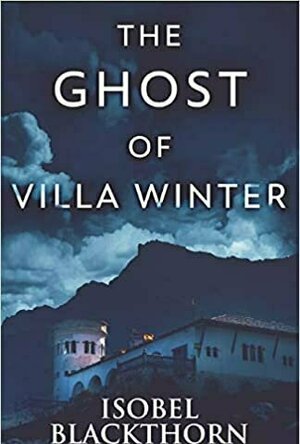
It turns out that Clarissa is on the tour to see if she can encounter any spirits that may be at the infamous Villa Winter; a place that is believed to have been a secret Nazi base, as well as a place for human experiments - - - the tower was also believed to have been used as a lighthouse for German U-boats - - - which, in reality, Villa Winter is an actual place that exists on the Canary Islands in Spain.
The Ghost of Villa Winter is the fourth book in Blackthorn's Canary Islands Mysteries series, but it can be easily read as an introduction to it because you don't need any background information to understand what is going on. The novel takes on the usual tropes of a murder-mystery plot (a body is found, people are stranded and trying to figure out who among them is the murderer). Agatha Christie is one of the best authors of the murder-mystery genre who loved using her knowledge of poisons in her stories - - - Blackthorn treats the tropes with the right amount of respect which makes The Ghost of Villa Winter a pretty good story.
My major complaint for the Ghost of Villa Winter are the characters, which I found every single one quite unlikable, and even by the end, I couldn't bring myself to care at all for Clarissa. The way that she judged everyone so harshly, and her viewpoint that if no one acted the way she wanted them to, she would believe something was wrong with them that needed to be addressed in a rude manner: "He was the most anxious man she had come across in a long time. Anxious, unsure of himself and preoccupied. Far too self-conscious. The way he'd aligned his plate at lunch. That was obsessive-compulsive. And he certainly couldn't handle Fred Spice. She was sure he could be charming with pretty young ladies, patronizing even, but around her he was awkward. It was clear, too, that he was broken. It wouldn't be easy being an author knowing as you aged that all of your success was behind you and your future held nothing but diminishment. Writing was one of those activities you could pursue until you dropped and many successful authors did just that. As irritating as he could be, she felt sorry for him. "
The other characters are all seen from Clarissa's viewpoint, so they come off quite annoying, but at one point it seemed like Blackthorn was trying to redeem Clarissa's negative qualities by making her an advocate for a possibly wrongly convicted man. This story line didn't come off as redemption for me, but rather to fuel Clarissa's need to be important and in the right. Blackthorn failed to make any of the characters grow above pettiness. If a reader doesn't have a character to root for, the story becomes unenjoyable - - - which is the main reason I gave the book such a low rating; the murder-mystery was interesting, but the characters were not.
The murder, a woman who may have been part of a cult, is found inside a nailed-up crate with a tattoo of a number on her body being one of the only clues that puts Clarissa into sleuth-mode. After believing that one of the tourists is the killer, she decides to keep the discovery of the murder between her and Richard - - - a crime author who came to Villa Winter in hopes of a book inspiration. The two slowly begin to investigate their fellow tourists to figure out who had the mind and motive to kill the young woman, but this doesn't seem to be as easy as it is in Richard's books. I did have a problem though with the ending which ends up being very reminiscent of a majority of short stories: the ending came abruptly and the pieces fell into a place that was unbelievable.
I had never read any of Blackthorn's books before, so I didn't have much of an expectation reading the Ghost of Villa Winter. Unfortunately, I came away from this one pretty dissatisfied because all of the interesting points in the story (such as the cult) are rarely shown/explored further. Also, the fact that 'ghost' is in the title, I was pretty let down with only a couple of scenes where a ghost actually shows up, one such short-lived scene: "She [Clarissa] was about to carry on when a figure appeared in one of the uppermost tower windows. Appeared, and then was gone. At least, what she thought to be a figure. Could have been a ghost. " The scenes are so short that I believe 'ghost' shouldn't be in the title because it's misleading.
With quite a few amateur writing mistakes, and unlikable characters, I don't think I will read anymore of the books in this series. I loved the idea of a cult murder and a haunting in a possible Nazi base, but too much of the focus in the story was on Clarissa's judgmental outlook on everything that it ended up not being the story it could have been. I can only recommend this book to people who want a quick murder-mystery (what most call the genre 'cozy mystery'), but for paranormal lovers, the ghosts practically disappeared within a few pages.
We begin our journey with Clarissa ,our main character, boarding a tour bus where she lets her personality shine through, which turns out to be extremely judgmental of anyone who isn't like her, or doesn't fit into the categories she places them in. For example, the driver of the tour bus is automatically labeled by Clarissa as a bad man because he has an uneven face and a French accent, and much of the same is said about the other seven passengers, as well. When she finally manages to stop judging the passengers, readers find out that Clarissa is somewhat of a psychic: "Ghosts spoke a language of their own and if a member of the spirit world inhabited the abandoned abode, she was sure to pick up on it. She was never wrong in these matters. Only three of the thirty or more premises she'd investigated on so-called ghost tours had contained a legitimate ghost. She prided herself on her mediumistic prowess. She was apt to pick up on preternatural inhabitants of places said not to be haunted. Sometimes she thought she could singlehandedly re-write history based on information she had gleaned, but that was being arrogant. She followed her dreams and her visions and her intuition, that was all. A natural psychic and a cynic to boot. "
It turns out that Clarissa is on the tour to see if she can encounter any spirits that may be at the infamous Villa Winter; a place that is believed to have been a secret Nazi base, as well as a place for human experiments - - - the tower was also believed to have been used as a lighthouse for German U-boats - - - which, in reality, Villa Winter is an actual place that exists on the Canary Islands in Spain.
The Ghost of Villa Winter is the fourth book in Blackthorn's Canary Islands Mysteries series, but it can be easily read as an introduction to it because you don't need any background information to understand what is going on. The novel takes on the usual tropes of a murder-mystery plot (a body is found, people are stranded and trying to figure out who among them is the murderer). Agatha Christie is one of the best authors of the murder-mystery genre who loved using her knowledge of poisons in her stories - - - Blackthorn treats the tropes with the right amount of respect which makes The Ghost of Villa Winter a pretty good story.
My major complaint for the Ghost of Villa Winter are the characters, which I found every single one quite unlikable, and even by the end, I couldn't bring myself to care at all for Clarissa. The way that she judged everyone so harshly, and her viewpoint that if no one acted the way she wanted them to, she would believe something was wrong with them that needed to be addressed in a rude manner: "He was the most anxious man she had come across in a long time. Anxious, unsure of himself and preoccupied. Far too self-conscious. The way he'd aligned his plate at lunch. That was obsessive-compulsive. And he certainly couldn't handle Fred Spice. She was sure he could be charming with pretty young ladies, patronizing even, but around her he was awkward. It was clear, too, that he was broken. It wouldn't be easy being an author knowing as you aged that all of your success was behind you and your future held nothing but diminishment. Writing was one of those activities you could pursue until you dropped and many successful authors did just that. As irritating as he could be, she felt sorry for him. "
The other characters are all seen from Clarissa's viewpoint, so they come off quite annoying, but at one point it seemed like Blackthorn was trying to redeem Clarissa's negative qualities by making her an advocate for a possibly wrongly convicted man. This story line didn't come off as redemption for me, but rather to fuel Clarissa's need to be important and in the right. Blackthorn failed to make any of the characters grow above pettiness. If a reader doesn't have a character to root for, the story becomes unenjoyable - - - which is the main reason I gave the book such a low rating; the murder-mystery was interesting, but the characters were not.
The murder, a woman who may have been part of a cult, is found inside a nailed-up crate with a tattoo of a number on her body being one of the only clues that puts Clarissa into sleuth-mode. After believing that one of the tourists is the killer, she decides to keep the discovery of the murder between her and Richard - - - a crime author who came to Villa Winter in hopes of a book inspiration. The two slowly begin to investigate their fellow tourists to figure out who had the mind and motive to kill the young woman, but this doesn't seem to be as easy as it is in Richard's books. I did have a problem though with the ending which ends up being very reminiscent of a majority of short stories: the ending came abruptly and the pieces fell into a place that was unbelievable.
I had never read any of Blackthorn's books before, so I didn't have much of an expectation reading the Ghost of Villa Winter. Unfortunately, I came away from this one pretty dissatisfied because all of the interesting points in the story (such as the cult) are rarely shown/explored further. Also, the fact that 'ghost' is in the title, I was pretty let down with only a couple of scenes where a ghost actually shows up, one such short-lived scene: "She [Clarissa] was about to carry on when a figure appeared in one of the uppermost tower windows. Appeared, and then was gone. At least, what she thought to be a figure. Could have been a ghost. " The scenes are so short that I believe 'ghost' shouldn't be in the title because it's misleading.
With quite a few amateur writing mistakes, and unlikable characters, I don't think I will read anymore of the books in this series. I loved the idea of a cult murder and a haunting in a possible Nazi base, but too much of the focus in the story was on Clarissa's judgmental outlook on everything that it ended up not being the story it could have been. I can only recommend this book to people who want a quick murder-mystery (what most call the genre 'cozy mystery'), but for paranormal lovers, the ghosts practically disappeared within a few pages.