The Andalite's Gift (Animorphs, #7.5)
Book
We never should have done it. But we needed a break. You know, some time off from the superhero...
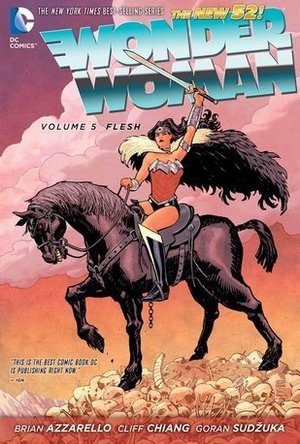
Wonder Woman, Volume 5: Flesh
Book
Wonder Woman’s life is changed forever when she is called on to take the place of War on Olympus!...

The Secret Runners of New York
Book
ossip Girl meets Mad Max in this breakneck thriller from an international bestselling author where...

For Your Own Good
Book
Teddy Crutcher has won Teacher of the Year at the esteemed Belmont Academy, home to the best and...
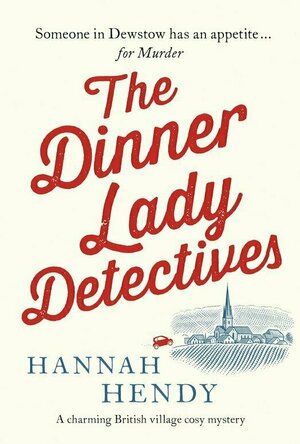
The Dinner Lady Detectives
Book
Margery and Clementine are enjoying a peaceful middle-age together in the small, idyllic town of...
Lore of the Bambino: 100 Great Babe Ruth Stories
Book
More than seventy years after his death, Babe Ruth continues to fascinate generations of fans. His...
Sports History Biography
Run, Run, Baby
Book
Only I can hear your screams and decide your fate... As the chatty classroom of kindergarten...
horror
ClareR (6106 KP) rated North is the Night in Books
Oct 5, 2025
The main attraction for me was the promise of some Finnish mythology and it’s diminishment under the cosh of Christianity. I love a bit of myth and legend in any and/ or all of its forms and nationalities, and North is the Night didn’t disappoint.
I loved the premis of the two female characters ending up in Tuonela (the land of the dead) even though they’re both very much alive.
Love, magic, death, life and bravery - it’s a heady mix!
Hazel (1853 KP) rated Saint Death in Books
Dec 17, 2018
What must life be like living in a poor neighbourhood? Every night your sleep is disturbed by gunshots, the people you know slowly disappear each time a gang raids the town, you live in fear for your own life. This is the concept international award-winning author Marcus Sedgwick explores in his latest Young Adult novel. Set in Anapra, one of the poorest communities in Mexico, Sedgwick delivers a story of poverty, gang crime and greed.
A young man – presumably still in his teens – named Arturo is living in a falling down shack, surviving on the small amount he earns at the local garage. Having kept to himself for the past year in order to remain safe, he experiences mixed emotions when his long lost friend turns up on his door stop – if you can call it that – and asks him to win $1000 by gambling at cards to appease a brutal gang leader.
What follows is an intense game against dangerous criminals with only prayers to Santa Muerte – Saint Death – to help Arturo get by. However, in the same way that the gang leaders are obsessed with wealth, Arturo begins to be overcome with greed, putting both himself and his friend in mortal danger.
<i>Saint Death</i> is not a book to be <i>liked</i>, after all, who would be fond of death, pain and violence? Instead it is a story that introduces an alternative culture to the readers – presuming that most will be from the more typical western world. Sedgwick throws us right into the slums of Mexico where religion, superstition, law and safety have an entirely different meaning. We learn that life in these areas is mostly a war between power and poverty, with the wealthy naturally championing over the rest.
Unfortunately <i>Saint Death</i> is a difficult book to read. For a start, it is a little bit boring. Whilst the events may be realistic there is no thrill or enjoyment garnered from reading about them. Understandably, Sedgwick is trying to bring a sense of culture into his work, however there is barely anything that a Young Adult reader can relate to. We are never told Arturo’s age and only assume he his in his teens, however he acts like a much older adult. It is difficult to imagine and comprehend the poverty, gangs and violence when we have not been witness to it ourselves. Whilst attempting to shock, Sedgwick lacks on description making it a challenge to picture the scene in our heads.
Prior to this book, I had only read Sedgwick’s <i>My Sword Hand is Singing</i> (2006), therefore I was unsure what to expect with his latest novel. It was my understanding that he tends to write horror or paranormal novels, whereas <i>Saint Death</i> was a complete change of genre. Of course authors experiment with their writing style all the time; some are successful, others less so. In this instance I personally think Sedgwick fell short of his goal, trying too hard to copy other writers that had influenced him to make this conversion. Whether Sedgwick decides to continue along this theme or revert back to what he has already been successful with remains to be seen, but I am hoping for the latter.