
Search
Search results

Lucy Buglass (45 KP) rated The House That Jack Built (2018) in Movies
Jun 20, 2019
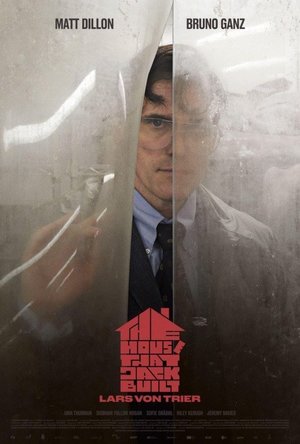


Danish director Lars Von Trier is no stranger to controversy. He has certainly divided film fans with some praising his work and some condemning it. The House That Jack Built is his most recent creation, causing audience members at Cannes to either walk out in disgust or stand up and applaud. This seriously mixed reception caught my interest and I wanted to find out what he’d done to generate such a response.
I’ve only seen two of his previous films; Antichrist and Melancholia, the former being a film that disturbed me so much I haven’t been able to watch it a second time. Its visceral, raw and harrowing portrayal of sex, violence, and self-mutilation is something that is a thoroughly uncomfortable and unpleasant watch. Because of Antichrist, I felt nervous yet strangely excited to see what The House That Jack Built had in store for me. I was surprised, however, to discover that it is arguably his tamest film to date, with a lot of the more graphic content happening off-screen. That doesn’t mean it doesn’t have its disturbing moments, but it was a lot less visceral than I was expecting based on its recent backlash.
The film is split into five chapters labelled ‘The Incidents’ and an epilogue, detailing some of the murders that Jack carried out over a 12-year span. Two of these incidents include child abuse and female mutilation, but is presented in a much more psychologically disturbing way rather than uncomfortable close-ups and drawn out scenes that you watch from behind your hands. The House That Jack Built spends more time tapping into Jack’s own psyche than it does the atrocities he commits, with Matt Dillon really stealing the show as the titular character.
It’s also darkly funny in places, which I certainly wasn’t expecting. Dillon’s portrayal of a psychotic killer with OCD is both terrifying and amusing. He is simultaneously charming and unhinged, which is a difficult thing to pull off. He was by far my favourite thing about the film, reminiscent of so many iconic serial killers that have fascinated the general public. The film relied heavily on Jack’s character and inner thoughts so it was great to see Dillon pull it off so brilliantly.
Much like Von Trier’s previous work, The House That Jack Built features lots of symbolism throughout the narrative. In this case, it focuses heavily on religion, art and family, with Jack being challenged on all of these as he recounts the incidents. The voice challenging him is a mystery to us until the third act, where Bruno Ganz’s character is finally revealed to us. I found this reveal to be a little jarring and strange, but not unexpected from one of his films. For me, the third act is where it started to go downhill and I lost interest, which is a real shame after the strength of the first two. Despite seeing some really great analyses online, it wasn’t enough to change my own views on the way it ended. It just seemed a little too out of place for my liking.
The visual style is interesting and combines live action with animation and still images. This feels very random but in the context of this particular film, it actually works in its favour. Both Dillon and Ganz narrate over the animation and still images, giving us monologues that act as food for thought and raise questions about morality, life, death and so on. It’s an intense film in that regard and one that you have to really concentrate on in order to enjoy properly.
The House That Jack Built is a depressing, harrowing and strange film. Its blend of sadistic violence and humour makes it a truly unique horror film that seems to appeal to a very specific audience. It’s not for the faint of heart, and Jack’s misogynistic killing sprees teamed with his nihilistic outlook on life is bound to be uncomfortable for many to witness. As a case study on a serial killer it’s a fascinating watch, but out of the three films I’ve seen, this one is unfortunately the weakest in my eyes.
https://jumpcutonline.co.uk/review-the-house-that-jack-built-2018/
I’ve only seen two of his previous films; Antichrist and Melancholia, the former being a film that disturbed me so much I haven’t been able to watch it a second time. Its visceral, raw and harrowing portrayal of sex, violence, and self-mutilation is something that is a thoroughly uncomfortable and unpleasant watch. Because of Antichrist, I felt nervous yet strangely excited to see what The House That Jack Built had in store for me. I was surprised, however, to discover that it is arguably his tamest film to date, with a lot of the more graphic content happening off-screen. That doesn’t mean it doesn’t have its disturbing moments, but it was a lot less visceral than I was expecting based on its recent backlash.
The film is split into five chapters labelled ‘The Incidents’ and an epilogue, detailing some of the murders that Jack carried out over a 12-year span. Two of these incidents include child abuse and female mutilation, but is presented in a much more psychologically disturbing way rather than uncomfortable close-ups and drawn out scenes that you watch from behind your hands. The House That Jack Built spends more time tapping into Jack’s own psyche than it does the atrocities he commits, with Matt Dillon really stealing the show as the titular character.
It’s also darkly funny in places, which I certainly wasn’t expecting. Dillon’s portrayal of a psychotic killer with OCD is both terrifying and amusing. He is simultaneously charming and unhinged, which is a difficult thing to pull off. He was by far my favourite thing about the film, reminiscent of so many iconic serial killers that have fascinated the general public. The film relied heavily on Jack’s character and inner thoughts so it was great to see Dillon pull it off so brilliantly.
Much like Von Trier’s previous work, The House That Jack Built features lots of symbolism throughout the narrative. In this case, it focuses heavily on religion, art and family, with Jack being challenged on all of these as he recounts the incidents. The voice challenging him is a mystery to us until the third act, where Bruno Ganz’s character is finally revealed to us. I found this reveal to be a little jarring and strange, but not unexpected from one of his films. For me, the third act is where it started to go downhill and I lost interest, which is a real shame after the strength of the first two. Despite seeing some really great analyses online, it wasn’t enough to change my own views on the way it ended. It just seemed a little too out of place for my liking.
The visual style is interesting and combines live action with animation and still images. This feels very random but in the context of this particular film, it actually works in its favour. Both Dillon and Ganz narrate over the animation and still images, giving us monologues that act as food for thought and raise questions about morality, life, death and so on. It’s an intense film in that regard and one that you have to really concentrate on in order to enjoy properly.
The House That Jack Built is a depressing, harrowing and strange film. Its blend of sadistic violence and humour makes it a truly unique horror film that seems to appeal to a very specific audience. It’s not for the faint of heart, and Jack’s misogynistic killing sprees teamed with his nihilistic outlook on life is bound to be uncomfortable for many to witness. As a case study on a serial killer it’s a fascinating watch, but out of the three films I’ve seen, this one is unfortunately the weakest in my eyes.
https://jumpcutonline.co.uk/review-the-house-that-jack-built-2018/

Hazel (1853 KP) rated There Will Be Lies in Books
Dec 17, 2018


<i>This eBook was provided by the publisher via NetGalley in exchange for an honest review </i>
Award winning Nick Lake has returned to the limelight with a young adult thriller so full of emotion that you will be gripped from beginning to end. <i>There Will Be Lies </i>starts with a happy relationship between mother and daughter, then rips it apart revealing that everything you once believed true is a lie.
From the very beginning seventeen year old Shelby Jane Cooper warns the reader that bad things are going to happen. She speaks of death and of a car collision that is about to occur within the first few chapters of the story. But this is not the climax of the story. It is merely the small stone dropped on the top of a mountain, causing an avalanche of questions, danger and the slowly unraveling truth.
All her life Shelby has been homeschooled, isolated from society and shadowed by her over protective mother. After being hit by a car, resulting in a fractured foot, Shelby is ushered into a car by her mother and driven in the opposite direction from home. Supposedly an abusive father, a man Shelby cannot recall, is on their tail whom they must hide from to avoid a disastrous confrontation. Despite initially believing this story, peculiar things start happening to Shelby that suggest all is not as it seems.
The first quarter of <i>There Will Be Lies</i> follows a typical contemporary storyline, but as it becomes more thrilling, the author incorporates fantasy/American mythology into the mix. Finding herself slipping in and out of a dying, impossible world known as the <i>Dreaming</i>, Shelby begins to hesitate to believe the things her mother is telling her, especially after being warned that there will be two lies followed by a truth. Yet she cannot work out what they are; and what if the truth is something she cannot, does not want, to consider?
I loved this book from the very beginning. I loved Shelby’s character: the way she spoke, her sarcasm, her wit, her intelligence. I liked that despite being so sheltered from the world, she was not weird or awkward. What made it even better was discovering she was deaf. Readers will not even be able to guess at that for almost half the novel, when Shelby reveals the fact herself. She is not portrayed as stupid or any less human for having a disability. Nick Lake has done a superb job of avoiding any forms of stigma or prejudice.
With the story picking up the pace, my love was almost turned to hate. Almost. The fantastical elements, the American mythology, which gave it the appearance of a half fairytale, very nearly ruined the entire book for me. I admit I liked the concept and enjoyed reading the scenes set in the <i>Dreaming</i>, but it seemed so out of place with the rest of the novel. It felt as though Lake had written two different stories and decided to combine them together instead of publishing them separately. However, as I said, this only ALMOST ruined it.
As the story progressed, the relevance of the fairy-tale-like elements became clearer. You cannot say for sure whether the <i>Dreaming</i> was real or whether Shelby was merely doing that: dreaming. But what you can say is that the mythological storyline is a metaphorical way of showing what Shelby was dealing with in the real world. In a place where she was confused about what was true, she needed the <i>Dreaming</i> to explain things to her, to make her understand her predicament.
<i>There Will Be Lies </i>is full of little metaphors, some that you do not notice at first, but can easily be applied to life in general. It is an extremely quotable narrative with beautiful phrasing. With two thrilling storylines that eventually merge together, it is guaranteed that you will be gripped, wanting to know what happens; yet also not wanting it to end.
Award winning Nick Lake has returned to the limelight with a young adult thriller so full of emotion that you will be gripped from beginning to end. <i>There Will Be Lies </i>starts with a happy relationship between mother and daughter, then rips it apart revealing that everything you once believed true is a lie.
From the very beginning seventeen year old Shelby Jane Cooper warns the reader that bad things are going to happen. She speaks of death and of a car collision that is about to occur within the first few chapters of the story. But this is not the climax of the story. It is merely the small stone dropped on the top of a mountain, causing an avalanche of questions, danger and the slowly unraveling truth.
All her life Shelby has been homeschooled, isolated from society and shadowed by her over protective mother. After being hit by a car, resulting in a fractured foot, Shelby is ushered into a car by her mother and driven in the opposite direction from home. Supposedly an abusive father, a man Shelby cannot recall, is on their tail whom they must hide from to avoid a disastrous confrontation. Despite initially believing this story, peculiar things start happening to Shelby that suggest all is not as it seems.
The first quarter of <i>There Will Be Lies</i> follows a typical contemporary storyline, but as it becomes more thrilling, the author incorporates fantasy/American mythology into the mix. Finding herself slipping in and out of a dying, impossible world known as the <i>Dreaming</i>, Shelby begins to hesitate to believe the things her mother is telling her, especially after being warned that there will be two lies followed by a truth. Yet she cannot work out what they are; and what if the truth is something she cannot, does not want, to consider?
I loved this book from the very beginning. I loved Shelby’s character: the way she spoke, her sarcasm, her wit, her intelligence. I liked that despite being so sheltered from the world, she was not weird or awkward. What made it even better was discovering she was deaf. Readers will not even be able to guess at that for almost half the novel, when Shelby reveals the fact herself. She is not portrayed as stupid or any less human for having a disability. Nick Lake has done a superb job of avoiding any forms of stigma or prejudice.
With the story picking up the pace, my love was almost turned to hate. Almost. The fantastical elements, the American mythology, which gave it the appearance of a half fairytale, very nearly ruined the entire book for me. I admit I liked the concept and enjoyed reading the scenes set in the <i>Dreaming</i>, but it seemed so out of place with the rest of the novel. It felt as though Lake had written two different stories and decided to combine them together instead of publishing them separately. However, as I said, this only ALMOST ruined it.
As the story progressed, the relevance of the fairy-tale-like elements became clearer. You cannot say for sure whether the <i>Dreaming</i> was real or whether Shelby was merely doing that: dreaming. But what you can say is that the mythological storyline is a metaphorical way of showing what Shelby was dealing with in the real world. In a place where she was confused about what was true, she needed the <i>Dreaming</i> to explain things to her, to make her understand her predicament.
<i>There Will Be Lies </i>is full of little metaphors, some that you do not notice at first, but can easily be applied to life in general. It is an extremely quotable narrative with beautiful phrasing. With two thrilling storylines that eventually merge together, it is guaranteed that you will be gripped, wanting to know what happens; yet also not wanting it to end.

Gareth von Kallenbach (980 KP) rated Avatar (2009) in Movies
Aug 8, 2019

With a budget reported to be around $400 million dollars and a four year production cycle, “Avatar” by James Cameron is poised to usher in a new age in digital fx and 3d.
The film is set in 2154 and involves a disabled vet named Jake (Sam Worthington), who is sent to the distant moon of Pandora following the death of his brother.
It is learned that Pandora possesses a highly valuable resource that sells on the resource ravaged earth for $200 million a kilo and, which naturally sets off a frenzy of mining on the moon.
With the cultivation of the resource at a premium a facility has been established to ensure a constant mining operation and protect those on the base from the hostile wildlife that is everywhere.
While the wildlife on Pandora is a big issue, it pales in comparison to the issues poised by the native Na’vi who are a blue-skinned race who live in the forests of the moon and are in harmony with the nature of the planet which have caused them to hamper the mining efforts of the humans.
Anxious to keep the mining operations going, and limit the use of brute force to avoid any p.r. issues, a program known as “Avatar” is put into motion which allows select individuals to pilot a surrogate made from Na’vi and human D.N.A. in an effort to get the Na’vi to move and end their opposition to the mining.
It is hoped that the pilots will in time find a way to force the cooperation of the Na’vi after spending time amongst them.
Jake is thrilled with the program as once his remote link is established, he is free to run and jump again and in time finds himself absorbed by the Na’vi who wish to show him their ways as a test of his worthiness after he is separated from his fellow humans.
At this point Jake leads a double life as his surrogate learns what it is to be Na’vi and when the surrogate is asleep, Jake unhooks himself from his control bed, and is back on the base with his fellow humans. Jake is approached by Colonel Quaritch (Stephen Lang), who tasks the Marine to obtain tactical data on the Na’vi should his forces be called into action to force their cooperation. Jake is promised a costly procedure in return which would allow him to regain the use of his legs and live a life outside of his wheelchair.
As time passes, Jake grows closer to his Na’vi mentor Neytire (Zoe Saldana), who aside from being the daughter of the chief is a skilled hunter for her people. At this point Jake begins to question the motives and methods of his people and sees the exploitation and possible massacre of the Na’vi as something he can no longer accept. Jake puts a plan in motion to protect his human and Na’vi friends and what follows is an epic confrontation that is awash in visual splendor and action as James Cameron once again pushes the boundaries of technology.
Some may cite the story as resembling “Dances with Wolves’; and other films that deal with the exploitation of the native races, but the true magic of the film is that it is not limited to the lavish visuals but is instead powered by the compelling characters.
The 3d fx shine as Cameron has created another world with a thriving ecosystem that is as much a character in the film as the flesh and blood and digital creations that power the story.
The film has good supporting work from Sigourney Weaver, and Michelle Rodriquez as well as the fine ensemble cast. The amazing blend of story, digital splendor, and characters all combine to make “Avatar” a truly amazing visual film with a strong message of love, hope, and unity. James Cameron has once again proved that he is one of the true masters of cinema and has crafted a magical experience that enchants and informs.
The film is set in 2154 and involves a disabled vet named Jake (Sam Worthington), who is sent to the distant moon of Pandora following the death of his brother.
It is learned that Pandora possesses a highly valuable resource that sells on the resource ravaged earth for $200 million a kilo and, which naturally sets off a frenzy of mining on the moon.
With the cultivation of the resource at a premium a facility has been established to ensure a constant mining operation and protect those on the base from the hostile wildlife that is everywhere.
While the wildlife on Pandora is a big issue, it pales in comparison to the issues poised by the native Na’vi who are a blue-skinned race who live in the forests of the moon and are in harmony with the nature of the planet which have caused them to hamper the mining efforts of the humans.
Anxious to keep the mining operations going, and limit the use of brute force to avoid any p.r. issues, a program known as “Avatar” is put into motion which allows select individuals to pilot a surrogate made from Na’vi and human D.N.A. in an effort to get the Na’vi to move and end their opposition to the mining.
It is hoped that the pilots will in time find a way to force the cooperation of the Na’vi after spending time amongst them.
Jake is thrilled with the program as once his remote link is established, he is free to run and jump again and in time finds himself absorbed by the Na’vi who wish to show him their ways as a test of his worthiness after he is separated from his fellow humans.
At this point Jake leads a double life as his surrogate learns what it is to be Na’vi and when the surrogate is asleep, Jake unhooks himself from his control bed, and is back on the base with his fellow humans. Jake is approached by Colonel Quaritch (Stephen Lang), who tasks the Marine to obtain tactical data on the Na’vi should his forces be called into action to force their cooperation. Jake is promised a costly procedure in return which would allow him to regain the use of his legs and live a life outside of his wheelchair.
As time passes, Jake grows closer to his Na’vi mentor Neytire (Zoe Saldana), who aside from being the daughter of the chief is a skilled hunter for her people. At this point Jake begins to question the motives and methods of his people and sees the exploitation and possible massacre of the Na’vi as something he can no longer accept. Jake puts a plan in motion to protect his human and Na’vi friends and what follows is an epic confrontation that is awash in visual splendor and action as James Cameron once again pushes the boundaries of technology.
Some may cite the story as resembling “Dances with Wolves’; and other films that deal with the exploitation of the native races, but the true magic of the film is that it is not limited to the lavish visuals but is instead powered by the compelling characters.
The 3d fx shine as Cameron has created another world with a thriving ecosystem that is as much a character in the film as the flesh and blood and digital creations that power the story.
The film has good supporting work from Sigourney Weaver, and Michelle Rodriquez as well as the fine ensemble cast. The amazing blend of story, digital splendor, and characters all combine to make “Avatar” a truly amazing visual film with a strong message of love, hope, and unity. James Cameron has once again proved that he is one of the true masters of cinema and has crafted a magical experience that enchants and informs.


Jordan Binkerd (567 KP) rated Star Wars, Vol. 2: Showdown on the Smuggler's Moon in Books
Aug 9, 2019
Note: this review is transposted from my personal review blog, and so was originally written several years ago. I figured if I reposted it here, someone might actually read it….
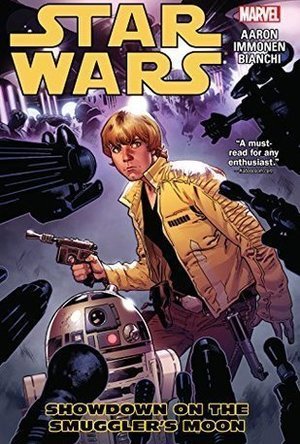
I very much enjoyed the first volume of Marvel’s ongoing Star Wars series, but many other reviewers took issue with it for playing things safe and giving us a story like many we’d seen before. These criticisms are not completely unfounded, I’ll admit, but neither are they completely fair. Either way, this is not a problem the series has going forward…. This second volume also includes the one-off flashback story THE LAST OF HIS BREED, featuring Obi-Wan Kenobi adjusting to his exile on Tatooine, which is discussed separately below.
Luke Skywalker has successfully escaped the clutches of the bounty hunter Boba Fett, but all he got for his troubles was the journal of Obi-Wan Kenobi–no small prize, but probably not all that helpful in furthering his Jedi training. So what’s the next logical step in learning about the Jedi? Try and sneak onto Coruscant to infiltrate the old Jedi Temple, of course! But when his attempt to find a discreet ship and pilot in a seedy bar on Nar Shaddaa goes horribly awry, Luke finds himself the prisoner of Grakkus the Hutt. In addition to the traditional crime and vice, Grakkus has made a name for himself as one of the foremost collectors of Jedi artifacts. Now Luke faces the battle of his life in Grakkus’ arena, billed as “the last Jedi” and pitted against a fearsome creature for the amusement of Grakkus’ fellow crime lords….Meanwhile, Han and Leia are out scouting potential locations for a new Rebel base when they run across a figure from Han’s past. Her name is Sana, and she claims to be his wife….
As with the previous volume, this was some stellar work. Jason Aaron nails the banter between Han & Leia, to the point where you can almost hear Carrie Fisher and Harrison Ford delivering the lines, and Luke’s mix of cockiness and self-doubt is spot-on for his character and situation. Also of note is Stuart Immonen’s spectacular artwork. From the character closeups to the panoramic vistas, this was pure Star Wars. Also amusing was watching our entire cast wade into battle wielding lightsabers. Did Luke manage to salvage anything of value from Grakkus’ stash on his way out? I guess we’ll have to wait and see….
Then there’s the Obi-Wan backup story. It’s been seven years since the rise of the Empire, seven years since the death of the Jedi and the Republic. Formerly one of the greatest Jedi of his generation, now Obi-Wan Kenobi lives a life of obscurity on the desert planet of Tatooine. Where once he protected the innocent of the galaxy, now “Old Ben” forces himself to look the other way lest he draw the Empire’s notice as Jabba’s thugs extort water from the locals. All that matters is protecting the boy, Luke Skywalker, on whose unknowing shoulders rest the fate of the galaxy. But there are limits to the patience of even the greatest of Jedi….
This was a good one. The story was solid, and it’s always interesting to see Obi-Wan’s state of mind during his exile. Was this done better in John Jackson Miller’s KENOBI? Yes. That goes without saying, if only because he had more than twenty-four pages to tell his story. At any rate, KENOBI isn’t canon anymore, so we’ll not dwell on it. Simone Bianchi’s art here was stellar, I must say, and his Kenobi managed to blend Ewan McGregor and Alec Guinness superbly. I would very much like to see more of these one-off excerpts from Obi-Wan’s journal appear in future issues of the comic.
CONTENT: Moderate violence, not too gruesome most of the time. Mild profanity. Mild sexual innuendo and flirting.
Original posts: Main story (https://jordanbinkerd.wordpress.com/2015/11/23/review-star-wars-showdown-on-the-smugglers-moon-by-jason-aaron-stuart-immonen/) & Obi-Wan Flashback (https://jordanbinkerd.wordpress.com/2015/11/23/review-star-wars-the-last-of-his-breed-by-jason-aaron-simone-bianchi/)
I very much enjoyed the first volume of Marvel’s ongoing Star Wars series, but many other reviewers took issue with it for playing things safe and giving us a story like many we’d seen before. These criticisms are not completely unfounded, I’ll admit, but neither are they completely fair. Either way, this is not a problem the series has going forward…. This second volume also includes the one-off flashback story THE LAST OF HIS BREED, featuring Obi-Wan Kenobi adjusting to his exile on Tatooine, which is discussed separately below.
Luke Skywalker has successfully escaped the clutches of the bounty hunter Boba Fett, but all he got for his troubles was the journal of Obi-Wan Kenobi–no small prize, but probably not all that helpful in furthering his Jedi training. So what’s the next logical step in learning about the Jedi? Try and sneak onto Coruscant to infiltrate the old Jedi Temple, of course! But when his attempt to find a discreet ship and pilot in a seedy bar on Nar Shaddaa goes horribly awry, Luke finds himself the prisoner of Grakkus the Hutt. In addition to the traditional crime and vice, Grakkus has made a name for himself as one of the foremost collectors of Jedi artifacts. Now Luke faces the battle of his life in Grakkus’ arena, billed as “the last Jedi” and pitted against a fearsome creature for the amusement of Grakkus’ fellow crime lords….Meanwhile, Han and Leia are out scouting potential locations for a new Rebel base when they run across a figure from Han’s past. Her name is Sana, and she claims to be his wife….
As with the previous volume, this was some stellar work. Jason Aaron nails the banter between Han & Leia, to the point where you can almost hear Carrie Fisher and Harrison Ford delivering the lines, and Luke’s mix of cockiness and self-doubt is spot-on for his character and situation. Also of note is Stuart Immonen’s spectacular artwork. From the character closeups to the panoramic vistas, this was pure Star Wars. Also amusing was watching our entire cast wade into battle wielding lightsabers. Did Luke manage to salvage anything of value from Grakkus’ stash on his way out? I guess we’ll have to wait and see….
Then there’s the Obi-Wan backup story. It’s been seven years since the rise of the Empire, seven years since the death of the Jedi and the Republic. Formerly one of the greatest Jedi of his generation, now Obi-Wan Kenobi lives a life of obscurity on the desert planet of Tatooine. Where once he protected the innocent of the galaxy, now “Old Ben” forces himself to look the other way lest he draw the Empire’s notice as Jabba’s thugs extort water from the locals. All that matters is protecting the boy, Luke Skywalker, on whose unknowing shoulders rest the fate of the galaxy. But there are limits to the patience of even the greatest of Jedi….
This was a good one. The story was solid, and it’s always interesting to see Obi-Wan’s state of mind during his exile. Was this done better in John Jackson Miller’s KENOBI? Yes. That goes without saying, if only because he had more than twenty-four pages to tell his story. At any rate, KENOBI isn’t canon anymore, so we’ll not dwell on it. Simone Bianchi’s art here was stellar, I must say, and his Kenobi managed to blend Ewan McGregor and Alec Guinness superbly. I would very much like to see more of these one-off excerpts from Obi-Wan’s journal appear in future issues of the comic.
CONTENT: Moderate violence, not too gruesome most of the time. Mild profanity. Mild sexual innuendo and flirting.
Original posts: Main story (https://jordanbinkerd.wordpress.com/2015/11/23/review-star-wars-showdown-on-the-smugglers-moon-by-jason-aaron-stuart-immonen/) & Obi-Wan Flashback (https://jordanbinkerd.wordpress.com/2015/11/23/review-star-wars-the-last-of-his-breed-by-jason-aaron-simone-bianchi/)

Darren (1599 KP) rated Little Monsters (2019) in Movies
Nov 15, 2019
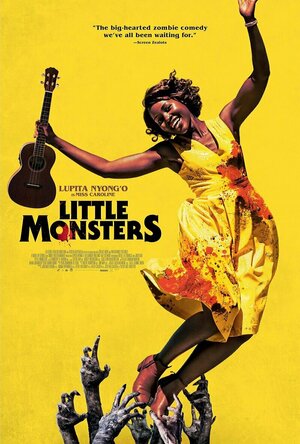
Verdict: Delightful
Story: Little Monsters starts when a washed up musician Dave (England) breaks up with his girlfriend Sara (Townsend) moving in with his sister Tess (Stewart) and her son Felix (Le Torraca), after getting his heart broken, Dave gets left on his last warning with Tess and after he meets Felix’s teacher Miss Caroline (Nyong’o) he ends up agreeing to go on a school trip.
When the trip seems to be going well, the school kids, Miss Caroline and Dave must find safety as zombies have broken free and heading to the petting zoo, joined by celebrity children’s host Teddy McGiggle (Gad) they must stay safe or face death.
Thoughts on Little Monsters
Characters – Miss Caroline is the kindergarten teacher that has the respect from all her students, treating them like nothing is going wrong no matter what is happening, she will always remain calm, with a smile on her face she takes complete control of the zombie outbreak. She has seen the father hit on her in the past which makes it easy for her to ignore them. Dave was once in a metal band, he had a girlfriend he always fought with him leading to him moving in with his sister and nephew. He is a terrible role model for Felix with his swearing, not listening and accepting it ok for a 5-year-old to play zombie games. He wants to get to know Miss Caroline and over this school trip he learns that there is more to life. Teddy McGiggle is a children’s entertainer who is world famous with every kid loving his work, when the zombies arrive, he shows the worst in mankind. The kids are all brilliant without being annoying like most would become in zombie films.
Performances – Lupita Nyong’o is wonderful to watch being a ray of sunshine through the film, bring a character that is completely different to anything we have seen before. Alexander England is excellent too, being someone, you could never see around children, getting so many laughs in the film. Josh Gad is great too, though it does seem like his character is slightly too much over the top at times. The young actors look like they are having a ball which is important for a film like this.
Story – The story here follows a teacher, a washed up musician and a group of school kids that get trapped during a zombie outbreak in a petting zoo. The best way to describe this story would be that we be, that we are focused on the human factors over the zombies, who are just background problem. We get to see how one man must learn about his life and start taking it more serious after years of wasting his time. We see zombies tackled a different way without needing to give us any sort of flashy zombie kill, which most all try to do, this is a character piece that shows positivity can give you hope no matter what is in your way. If you don’t end up smiling by the end of this film, it will be a surprise.
Comedy/Horror – The comedy is the highlight of this film, we get plenty of laughs, being part of the idea of Dave saying things or doing things around children along with how relaxing the survival attempts end up looking.
Settings – The film is mostly set on a petting zoo, which is meant to be a happy place for the children, despite it turning into a nightmare situation for the adults once the zombies come out.
Special Effects – The zombies are done with great practical effects, while any of the violence is withheld away from the camera.
Scene of the Movie – The tractor rescue.
That Moment That Annoyed Me – It seems like we didn’t need Teddy’s character if we are being completely honest.
Final Thoughts – This is a truly delightful watch, with loveable characters, adorable kids and a fresh take on the zombie genre, showing it is about the characters, not the zombies.
Overall: Enjoyable from start to finish.
Story: Little Monsters starts when a washed up musician Dave (England) breaks up with his girlfriend Sara (Townsend) moving in with his sister Tess (Stewart) and her son Felix (Le Torraca), after getting his heart broken, Dave gets left on his last warning with Tess and after he meets Felix’s teacher Miss Caroline (Nyong’o) he ends up agreeing to go on a school trip.
When the trip seems to be going well, the school kids, Miss Caroline and Dave must find safety as zombies have broken free and heading to the petting zoo, joined by celebrity children’s host Teddy McGiggle (Gad) they must stay safe or face death.
Thoughts on Little Monsters
Characters – Miss Caroline is the kindergarten teacher that has the respect from all her students, treating them like nothing is going wrong no matter what is happening, she will always remain calm, with a smile on her face she takes complete control of the zombie outbreak. She has seen the father hit on her in the past which makes it easy for her to ignore them. Dave was once in a metal band, he had a girlfriend he always fought with him leading to him moving in with his sister and nephew. He is a terrible role model for Felix with his swearing, not listening and accepting it ok for a 5-year-old to play zombie games. He wants to get to know Miss Caroline and over this school trip he learns that there is more to life. Teddy McGiggle is a children’s entertainer who is world famous with every kid loving his work, when the zombies arrive, he shows the worst in mankind. The kids are all brilliant without being annoying like most would become in zombie films.
Performances – Lupita Nyong’o is wonderful to watch being a ray of sunshine through the film, bring a character that is completely different to anything we have seen before. Alexander England is excellent too, being someone, you could never see around children, getting so many laughs in the film. Josh Gad is great too, though it does seem like his character is slightly too much over the top at times. The young actors look like they are having a ball which is important for a film like this.
Story – The story here follows a teacher, a washed up musician and a group of school kids that get trapped during a zombie outbreak in a petting zoo. The best way to describe this story would be that we be, that we are focused on the human factors over the zombies, who are just background problem. We get to see how one man must learn about his life and start taking it more serious after years of wasting his time. We see zombies tackled a different way without needing to give us any sort of flashy zombie kill, which most all try to do, this is a character piece that shows positivity can give you hope no matter what is in your way. If you don’t end up smiling by the end of this film, it will be a surprise.
Comedy/Horror – The comedy is the highlight of this film, we get plenty of laughs, being part of the idea of Dave saying things or doing things around children along with how relaxing the survival attempts end up looking.
Settings – The film is mostly set on a petting zoo, which is meant to be a happy place for the children, despite it turning into a nightmare situation for the adults once the zombies come out.
Special Effects – The zombies are done with great practical effects, while any of the violence is withheld away from the camera.
Scene of the Movie – The tractor rescue.
That Moment That Annoyed Me – It seems like we didn’t need Teddy’s character if we are being completely honest.
Final Thoughts – This is a truly delightful watch, with loveable characters, adorable kids and a fresh take on the zombie genre, showing it is about the characters, not the zombies.
Overall: Enjoyable from start to finish.
Darren (1599 KP) rated From Dusk Till Dawn (1996) in Movies
Sep 2, 2019
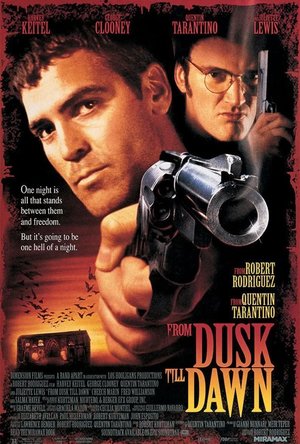
Thoughts on From Dusk till Dawn
Characters – Seth Gecko has just been sprung from prison by his brother, he wants to get across the border to complete a deal which would see them both have freedom, he is the one that remains in control wanting to keep everything calm, which would mean not leaving a pile of bodies behind them. He does deliver the threats which would see them as a danger, though he does just want things to be simple. Richard or Ritchie is must more of a loose cannon, he is paranoid and this makes him more dangerous, as he will kill people putting their safety at risk. He is protected by his brother, as he doesn’t seem like he is capable of putting a plan together himself. Jacob was a priest that has lost his faith after his wife’s death, he I taking his family on a vacation and gets forced into helping the brothers, he wants to keep them safe, willing to risk his own life to make this happen. Kate and Scott are his children, they are dealing with their own loss the best way they know how to and being supportive to their father. Santanico is the beautiful dancer that will stop a bar with her dance, she is one of the leaders of the vampires who has been waiting for the food in human form.
Performances – George Clooney is great to see in this role, after this we only usually see him in smooth talking roles, rather than a rough criminal, showing he could become any role offered to him. Tarantino in this film is creepy and putting himself in the supporting role does hide any restrictions he might have as an actor. Harvey Keitel is great showing a character that is meant to be hating his life choice, but remaining strong for his children. Juliette Lewis and Ernest Liu are both solid enough in the supporting roles without getting too much more to work with, while Salma Hayek turns heads with her performance.
Story – The story here follows two criminals trying to get to Mexico, the family they force to help them across the border and the bar they find, filled with vampires that they must fight to survive the night. Where this story stands up on its own, is by making it a criminal tory to start with, having no hints of horror or vampires involved, as we just watch the two loose cannons trying to get to safety, by pulling the rug out from under us to thrown us into the horror idea is genius switch of pace for the story. we do have themes going on especially with the Jacob character needing to find his lost faith which finding it will become the big part in fight the vampires. The story also exists in a world where vampire stories do exist, which gives them ideas on how to fight back, which was the main attraction to the 90’s horror stories.
Action/Horror – The action in the film involves the fighting with the vampires, we get to take everything to a new level for this side of the genre, with the blood splatter in the action, which the horror gives us because we vampires which are a staple of horror, but we do focus on the action over the scares.
Settings – The film uses the getting to the location setting of the camper van which does show us the road trip feel to the film, but it is the bar that will be one that is always going to be hard to forget, being a run down biker and trucker bar.
Special Effects – The special effects are some of the best you will see in the vampire genre, it shows that you can get plenty done with practical effects, with the only weakness come from the human to vampire transformations, which look CGI and have dated.
Scene of the Movie – The battle.
That Moment That Annoyed Me – The transformations have dated badly.
Final Thoughts – This is one of the most fun vampire movies you will ever see, it has plenty of blood flying around the screen and will keep you entertained from start to finish.
Overall: Purely entertaining vampire movie.
Characters – Seth Gecko has just been sprung from prison by his brother, he wants to get across the border to complete a deal which would see them both have freedom, he is the one that remains in control wanting to keep everything calm, which would mean not leaving a pile of bodies behind them. He does deliver the threats which would see them as a danger, though he does just want things to be simple. Richard or Ritchie is must more of a loose cannon, he is paranoid and this makes him more dangerous, as he will kill people putting their safety at risk. He is protected by his brother, as he doesn’t seem like he is capable of putting a plan together himself. Jacob was a priest that has lost his faith after his wife’s death, he I taking his family on a vacation and gets forced into helping the brothers, he wants to keep them safe, willing to risk his own life to make this happen. Kate and Scott are his children, they are dealing with their own loss the best way they know how to and being supportive to their father. Santanico is the beautiful dancer that will stop a bar with her dance, she is one of the leaders of the vampires who has been waiting for the food in human form.
Performances – George Clooney is great to see in this role, after this we only usually see him in smooth talking roles, rather than a rough criminal, showing he could become any role offered to him. Tarantino in this film is creepy and putting himself in the supporting role does hide any restrictions he might have as an actor. Harvey Keitel is great showing a character that is meant to be hating his life choice, but remaining strong for his children. Juliette Lewis and Ernest Liu are both solid enough in the supporting roles without getting too much more to work with, while Salma Hayek turns heads with her performance.
Story – The story here follows two criminals trying to get to Mexico, the family they force to help them across the border and the bar they find, filled with vampires that they must fight to survive the night. Where this story stands up on its own, is by making it a criminal tory to start with, having no hints of horror or vampires involved, as we just watch the two loose cannons trying to get to safety, by pulling the rug out from under us to thrown us into the horror idea is genius switch of pace for the story. we do have themes going on especially with the Jacob character needing to find his lost faith which finding it will become the big part in fight the vampires. The story also exists in a world where vampire stories do exist, which gives them ideas on how to fight back, which was the main attraction to the 90’s horror stories.
Action/Horror – The action in the film involves the fighting with the vampires, we get to take everything to a new level for this side of the genre, with the blood splatter in the action, which the horror gives us because we vampires which are a staple of horror, but we do focus on the action over the scares.
Settings – The film uses the getting to the location setting of the camper van which does show us the road trip feel to the film, but it is the bar that will be one that is always going to be hard to forget, being a run down biker and trucker bar.
Special Effects – The special effects are some of the best you will see in the vampire genre, it shows that you can get plenty done with practical effects, with the only weakness come from the human to vampire transformations, which look CGI and have dated.
Scene of the Movie – The battle.
That Moment That Annoyed Me – The transformations have dated badly.
Final Thoughts – This is one of the most fun vampire movies you will ever see, it has plenty of blood flying around the screen and will keep you entertained from start to finish.
Overall: Purely entertaining vampire movie.
Uptown Oracle (24 KP) rated Moroda in Books
Jun 30, 2017
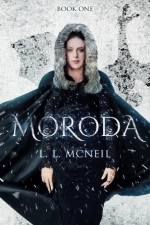
A Great Debut Fantasy Novel!
As we traipse the countries and cities of Linaria following a band of unlikely comrades, we're introduced to magic, dragons, and a foe leading a trail of destruction in his wake. Moroda and her allies must find a way to save Linaria before the war destroys them and everything around them.
One of my favourite parts of the book is that there's multiple wonderful characters. We have our main character, Moroda and her sister Eryn, two former Goldstones trying to survive after their fathers death. There's Morgen an Imperial Guard from Corhaven, who's unsure as to whether life in the Guard is for him. Amarah, a brusk sky pirate who cares more for money and treasure. Palom and Anahrik, two Ittallan traders who want to get back to their homeland before war hits. Sapora, a Varkain who also wants to return to his homeland, away from the prejudice against his kind. And Kohl, an exiled Arillian who can control wind and lightening. Groups are often used within the fantasy genre but Moroda doesn't confuse you with multitudes of characters.
The world of Linaria has different prejudices and stereotypes against races and the inclusion of these races allows to get a much better, unbiased opinion. Each of our characters has their own thoughts, motivations, backgrounds and histories. Despite preconceived views of each other, the characters are all individual. There's also strong character growth, especially for Moroda throughout the book. There was definitely the risk of falling into common female fantasy tropes with Moroda, but McNeil manages to miss each of these skillfully.
The only criticism is the antagonist, Aciel. Being told by other characters what Aciel was doing and how, is very different to be able to see it. There was a lost connection that I personally like having with the villains. We meet him and he does speak a little bit, but there's definitely that lack of attachment. This criticism is also very personal, as I know a lot of people wouldn't mind this at all.
As with any fantasy novel, you need a wonderful fantasy land. There's exploration of multiple cities, and also some comparisons by the characters themselves. Each place has it's own background and vivid descriptions. I'm really looking forward to more exploration of Sereth, the Varkain capital. There's also undertones of myth, lore and legend within Linaria. Which although not explored completely within this book will be fantastic to build upon in later books.
Moroda is romance free which I loved. I've read so many books recently where the romantic subplot overshadows the real plot, and this was so refreshing. The focus was on the friendships being made over the journey, and the sisterly bond between Moroda and Eryn.
Overall I loved Moroda. Perfect to go into reading more over summer as I've finally finished exams!
One of my favourite parts of the book is that there's multiple wonderful characters. We have our main character, Moroda and her sister Eryn, two former Goldstones trying to survive after their fathers death. There's Morgen an Imperial Guard from Corhaven, who's unsure as to whether life in the Guard is for him. Amarah, a brusk sky pirate who cares more for money and treasure. Palom and Anahrik, two Ittallan traders who want to get back to their homeland before war hits. Sapora, a Varkain who also wants to return to his homeland, away from the prejudice against his kind. And Kohl, an exiled Arillian who can control wind and lightening. Groups are often used within the fantasy genre but Moroda doesn't confuse you with multitudes of characters.
The world of Linaria has different prejudices and stereotypes against races and the inclusion of these races allows to get a much better, unbiased opinion. Each of our characters has their own thoughts, motivations, backgrounds and histories. Despite preconceived views of each other, the characters are all individual. There's also strong character growth, especially for Moroda throughout the book. There was definitely the risk of falling into common female fantasy tropes with Moroda, but McNeil manages to miss each of these skillfully.
The only criticism is the antagonist, Aciel. Being told by other characters what Aciel was doing and how, is very different to be able to see it. There was a lost connection that I personally like having with the villains. We meet him and he does speak a little bit, but there's definitely that lack of attachment. This criticism is also very personal, as I know a lot of people wouldn't mind this at all.
As with any fantasy novel, you need a wonderful fantasy land. There's exploration of multiple cities, and also some comparisons by the characters themselves. Each place has it's own background and vivid descriptions. I'm really looking forward to more exploration of Sereth, the Varkain capital. There's also undertones of myth, lore and legend within Linaria. Which although not explored completely within this book will be fantastic to build upon in later books.
Moroda is romance free which I loved. I've read so many books recently where the romantic subplot overshadows the real plot, and this was so refreshing. The focus was on the friendships being made over the journey, and the sisterly bond between Moroda and Eryn.
Overall I loved Moroda. Perfect to go into reading more over summer as I've finally finished exams!
Hazel (1853 KP) rated To Kill a Kingdom in Books
Apr 9, 2018
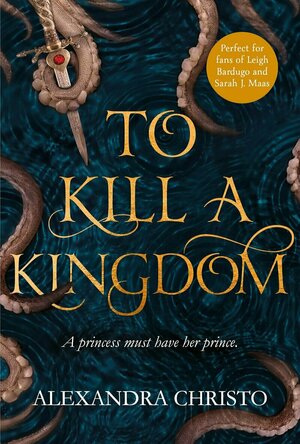
A princess must have her prince but perhaps not in the usual happy-ever-after fairytale way. With sirens, princes, pirates, mermaids and magic, To Kill a Kingdom by Alexandra Christo is a dark fantasy novel perfect for those who grew up with Peter Pan and The Little Mermaid. But, as with most traditional fairy tales, this book is riddled with trickery and lies, making it a heart-stopping adventure.
Lira is a siren princess who is nearing her eighteenth birthday. In order to celebrate the life of their goddess Keto and get revenge for her death at the hands of the humans, each siren must kill and remove the heart of a human victim. Lira has always targeted princes and aims to steal the heart of Prince Elian of Midasan, however, her mother, the sea queen, has different ideas.
As punishment for disobeying her orders, the evil queen temporarily turns Lira into a human, stripping her of her siren power. In order to return, she must kill Prince Elian and return to the sea with his heart. However, things get complicated when Prince Elian saves Lira from drowning and takes her aboard his ship.
Elian is a prince-cum-pirate who has no wish to be the heir of the golden kingdom of Midasan. He spends his days as the captain of his ship, hunting and killing sirens. Not realising Lira is the siren he most wishes to destroy, he gradually gets used to her presence and believes she will be useful to him on his quest to find a crystal that will destroy the sea queen forever. Lira agrees to help, however, she has an ulterior motive – perhaps she can help Elian find the crystal then kill him and destroy her mother …
It takes a while for this dark, romantic young adult novel to get going; there is a lot of introduction to characters and the way their fantasy world operates. With different customs to get familiar with, particularly in the case of the sirens, it is a little monotonous for the first few chapters. However, once Lira and Elian meet, events become far more interesting.
The banter and insults hurled between Elian, Lira and the rest of the crew is a humorous addition to the storyline and makes the prince and princesses growing relationship all the more exciting. With the sea queen lurking in the shadows, the story builds up to a fateful conclusion, however, maybe Lira can steal the prince’s heart a different way.
Once the story is well underway it becomes an engrossing piece of literature that is difficult to put down. With romance, danger and a cataclysmic ending, it has everything that a young adult fantasy fan wishes for. To Kill a Kingdom is Christo’s debut and it is exciting to find out what she will write next.
Lira is a siren princess who is nearing her eighteenth birthday. In order to celebrate the life of their goddess Keto and get revenge for her death at the hands of the humans, each siren must kill and remove the heart of a human victim. Lira has always targeted princes and aims to steal the heart of Prince Elian of Midasan, however, her mother, the sea queen, has different ideas.
As punishment for disobeying her orders, the evil queen temporarily turns Lira into a human, stripping her of her siren power. In order to return, she must kill Prince Elian and return to the sea with his heart. However, things get complicated when Prince Elian saves Lira from drowning and takes her aboard his ship.
Elian is a prince-cum-pirate who has no wish to be the heir of the golden kingdom of Midasan. He spends his days as the captain of his ship, hunting and killing sirens. Not realising Lira is the siren he most wishes to destroy, he gradually gets used to her presence and believes she will be useful to him on his quest to find a crystal that will destroy the sea queen forever. Lira agrees to help, however, she has an ulterior motive – perhaps she can help Elian find the crystal then kill him and destroy her mother …
It takes a while for this dark, romantic young adult novel to get going; there is a lot of introduction to characters and the way their fantasy world operates. With different customs to get familiar with, particularly in the case of the sirens, it is a little monotonous for the first few chapters. However, once Lira and Elian meet, events become far more interesting.
The banter and insults hurled between Elian, Lira and the rest of the crew is a humorous addition to the storyline and makes the prince and princesses growing relationship all the more exciting. With the sea queen lurking in the shadows, the story builds up to a fateful conclusion, however, maybe Lira can steal the prince’s heart a different way.
Once the story is well underway it becomes an engrossing piece of literature that is difficult to put down. With romance, danger and a cataclysmic ending, it has everything that a young adult fantasy fan wishes for. To Kill a Kingdom is Christo’s debut and it is exciting to find out what she will write next.

Kristy H (1252 KP) rated When the lights go out in Books
Mar 11, 2019
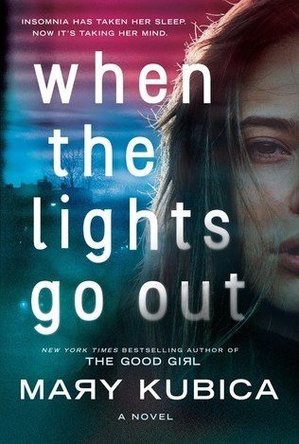
Creepy & befuddling but diminished by its ending
Jessie Sloane's mom has passed away, but before doing so, she encouraged Jessie to find herself. Jessie decides to apply to college, but the college flags her social security number. Apparently it belongs to someone who is deceased. As Jessie attempts to unravel the bureaucracy behind her application, she becomes more and more convinced that something is up with her past. Even worse, her thoughts are jumbled by the fact that she hasn't slept well since her mother's death. She's no longer able to tell what's truly happening around her. What's the story with her identity? And is she crazy or is something sinister going on in her life?
"Find yourself, Mom told me. One of two wishes she had for me before she died. Maybe she didn't mean for me to apply to college. Maybe it was far less esoteric than that. Maybe it was quite literal. Find yourself, she said, because Jessie Sloane isn't you."
Well, I'm not so sure about this one. The novel goes back in forth in time between present-day Jessie and her story and a woman named Eden, whose story mainly takes place in the 1990s. Eden's timeline varies a bit though, which makes it hard to keep track of. (At least for me.) A lot of Eden's storyline revolves around infertility, which I thought was handled very well. As someone who has struggled with that, I identified with her and probably liked the book a bit more just because of that.
As for Jessie and her tale, it was definitely creepy at times, which is something Mary Kubica can do very well. With her sleep deprivation, Jessie is the ultimate unreliable narrator, and it's very hard to tell if she's crazy or what on earth is happening. At times, it seems as if the book is leading you down a particular path, but you're never exactly sure who or what to trust.
And then, of course, there's that twist. I'd heard a lot about it, so I was expecting something, but with Kubica, it's hard to know what. I'll admit, it wasn't this. I had sort of figured out where things were leading, but it didn't diminish how cheated I felt by the ending. I've seen a lot of reviews where folks loved it and others where they didn't--I just felt letdown. I won't go further so as to avoid spoilers, but know that it did diminish my overall enjoyment of the book. And while I wasn't loving it entirely--it's sort of a jumble of confusion and weird characters--the ending deflates what I did enjoy.
Overall, this is a creepy book in many ways, with a story that befuddles but intrigues you. It's compelling but the ending diminishes a lot of the early drama and excitement.
I received a copy of this novel from the publisher and Netgalley/Edelweiss in return for an unbiased review (thank you!).
"Find yourself, Mom told me. One of two wishes she had for me before she died. Maybe she didn't mean for me to apply to college. Maybe it was far less esoteric than that. Maybe it was quite literal. Find yourself, she said, because Jessie Sloane isn't you."
Well, I'm not so sure about this one. The novel goes back in forth in time between present-day Jessie and her story and a woman named Eden, whose story mainly takes place in the 1990s. Eden's timeline varies a bit though, which makes it hard to keep track of. (At least for me.) A lot of Eden's storyline revolves around infertility, which I thought was handled very well. As someone who has struggled with that, I identified with her and probably liked the book a bit more just because of that.
As for Jessie and her tale, it was definitely creepy at times, which is something Mary Kubica can do very well. With her sleep deprivation, Jessie is the ultimate unreliable narrator, and it's very hard to tell if she's crazy or what on earth is happening. At times, it seems as if the book is leading you down a particular path, but you're never exactly sure who or what to trust.
And then, of course, there's that twist. I'd heard a lot about it, so I was expecting something, but with Kubica, it's hard to know what. I'll admit, it wasn't this. I had sort of figured out where things were leading, but it didn't diminish how cheated I felt by the ending. I've seen a lot of reviews where folks loved it and others where they didn't--I just felt letdown. I won't go further so as to avoid spoilers, but know that it did diminish my overall enjoyment of the book. And while I wasn't loving it entirely--it's sort of a jumble of confusion and weird characters--the ending deflates what I did enjoy.
Overall, this is a creepy book in many ways, with a story that befuddles but intrigues you. It's compelling but the ending diminishes a lot of the early drama and excitement.
I received a copy of this novel from the publisher and Netgalley/Edelweiss in return for an unbiased review (thank you!).

Whatchareadin (174 KP) rated The Favorite Sister in Books
Apr 9, 2019
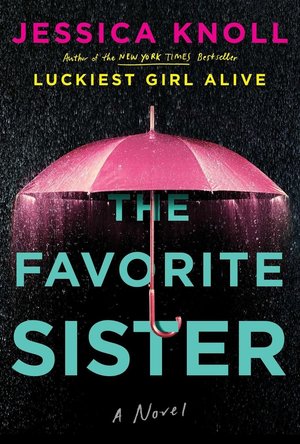

Goal Diggers is a reality TV show based on women entrepreneurs. These women have made their own way in life without the help of a man. The story centers around two characters on the show, Brett and Stephanie. Brett is the lesbian who doesn't care about what others things about her, with the bike riding studio who donates proceeds from her studios to women in Morocco who have to walk miles for water. They use the money to purchase bikes for these women. Stephanie is just the opposite refusing to film without a full face of makeup and she has written a few novels and now is on tour for her first "memoir". The other 2 characters on the show are Jen and Lauren, who don't really get along with the rest of the cast, and joining them this season is Kelly, Brett's older sister. Is reality TV really real? Are what is going on in these women's lives really happening or is it played up for the audience. This book takes us from Pre-Production on the show to Post-Production for one of the most explosive seasons. Are you ready for the ride?
Thank you to NetGalley and Simon & Schuster for the opportunity to read and review this book.
Getting into this book was hard. It took me 10 days to read it and I thought I would get through it pretty quickly. I love the Real Housewives series with my favorites being Atlanta, and Beverly Hills and this book I thought was going to be like taking a behind the scenes look at a show like that. It was, but for me it fell a little short.
The book starts with Kelly talking about Brett's death. But we have to go through the whole season of filming to see how that all plays out. Each woman has a secret to keep with one being bigger and juicier than the next. So from the start I was intrigued and I had to find out how Brett died, but it just took so long to get there. Back stories and front stories, and Interviews and lies. It's all a complete mess. The best part of the book for me was the last 10%.
Do you watch Reality TV? My husband calls it mind polluting. But he watches a couple of them with me. I've always wanted to know if the show was scripted and if these women were all either enemies or best friends when the cameras go off. You get a glimpse of that in this book. They take us through an entire filming season before the audience gets to see what happens. Producers sending texts to cast members before they are going to meet up with certain people to remind them of last filmed conversations? I need to ask Andy Cohen if that really happens. But with so much drama going on, whose lies do you believe?
Thank you to NetGalley and Simon & Schuster for the opportunity to read and review this book.
Getting into this book was hard. It took me 10 days to read it and I thought I would get through it pretty quickly. I love the Real Housewives series with my favorites being Atlanta, and Beverly Hills and this book I thought was going to be like taking a behind the scenes look at a show like that. It was, but for me it fell a little short.
The book starts with Kelly talking about Brett's death. But we have to go through the whole season of filming to see how that all plays out. Each woman has a secret to keep with one being bigger and juicier than the next. So from the start I was intrigued and I had to find out how Brett died, but it just took so long to get there. Back stories and front stories, and Interviews and lies. It's all a complete mess. The best part of the book for me was the last 10%.
Do you watch Reality TV? My husband calls it mind polluting. But he watches a couple of them with me. I've always wanted to know if the show was scripted and if these women were all either enemies or best friends when the cameras go off. You get a glimpse of that in this book. They take us through an entire filming season before the audience gets to see what happens. Producers sending texts to cast members before they are going to meet up with certain people to remind them of last filmed conversations? I need to ask Andy Cohen if that really happens. But with so much drama going on, whose lies do you believe?