
Search
Search results

Darren (1599 KP) rated Flight 7500 (TBD) in Movies
Oct 31, 2019

Characters – Chev Chelios somehow survives his mile high fall from the first film, he is given a new artificial heart which he must keep charged or he will die, he goes in search of his own heart which will see him go against another gang in LA, Eve now knows about Chev’s career, she has become a stripper and will supporting him trying to get his heart back. Doc Miles will do everything he can to help Chev giving him advice on how to keep his heart going. Venus is the brother of Kaylo who goes on to help Chev to get revenge for his own brother’s death. We have more gangs that are working against Chev this time, some return others are new.
Performances – Jason Statham does what he can with the leading role, he handles the action with ease, only he just doesn’t reach the same levels as before, this does affect the rest of the cast who do struggle to make an impact in this film.
Story – The story does follow the next chapter of Chev’s life, the one after he should have died, only for him to get a new chance which sees him needing to race against time to get his own heart back. This side is simple enough at does work for what the film is doing, Chev take on endless amounts of enemies, the problem here with the story is that we dive too much into the side characters of what is going on and end up getting too many completely random scenes which just seem offensive on too many levels. This story does end up becoming messy and just has one of the worst scripts out there.
Action/Crime – The action does try to become bigger, only for it to be shot in a style which doesn’t make it easy to connect. The criminal world does feel bigger, but now everything does seem more personal rather gang controlled.
Settings – The film remains set in LA which does continue to show the crazy gangs that are meant to operate in this city.
Special Effects – The effects do feel like they are being more ambitious, only for some to be so farfetched they only seem to make things look confusing, including an insulting looking Godzilla like fight.
Scene of the Movie – Final showdown.
That Moment That Annoyed Me – Godzilla like fight.
Final Thoughts – This is a wildly over the top sequel which only ends up becoming too much to handle for the crazy nature of everything going on.
Overall: Too wild.
Performances – Jason Statham does what he can with the leading role, he handles the action with ease, only he just doesn’t reach the same levels as before, this does affect the rest of the cast who do struggle to make an impact in this film.
Story – The story does follow the next chapter of Chev’s life, the one after he should have died, only for him to get a new chance which sees him needing to race against time to get his own heart back. This side is simple enough at does work for what the film is doing, Chev take on endless amounts of enemies, the problem here with the story is that we dive too much into the side characters of what is going on and end up getting too many completely random scenes which just seem offensive on too many levels. This story does end up becoming messy and just has one of the worst scripts out there.
Action/Crime – The action does try to become bigger, only for it to be shot in a style which doesn’t make it easy to connect. The criminal world does feel bigger, but now everything does seem more personal rather gang controlled.
Settings – The film remains set in LA which does continue to show the crazy gangs that are meant to operate in this city.
Special Effects – The effects do feel like they are being more ambitious, only for some to be so farfetched they only seem to make things look confusing, including an insulting looking Godzilla like fight.
Scene of the Movie – Final showdown.
That Moment That Annoyed Me – Godzilla like fight.
Final Thoughts – This is a wildly over the top sequel which only ends up becoming too much to handle for the crazy nature of everything going on.
Overall: Too wild.
Darren (1599 KP) rated The Midnight Man (2016) in Movies
Oct 31, 2019


Characters – Chev Chelios somehow survives his mile high fall from the first film, he is given a new artificial heart which he must keep charged or he will die, he goes in search of his own heart which will see him go against another gang in LA, Eve now knows about Chev’s career, she has become a stripper and will supporting him trying to get his heart back. Doc Miles will do everything he can to help Chev giving him advice on how to keep his heart going. Venus is the brother of Kaylo who goes on to help Chev to get revenge for his own brother’s death. We have more gangs that are working against Chev this time, some return others are new.
Performances – Jason Statham does what he can with the leading role, he handles the action with ease, only he just doesn’t reach the same levels as before, this does affect the rest of the cast who do struggle to make an impact in this film.
Story – The story does follow the next chapter of Chev’s life, the one after he should have died, only for him to get a new chance which sees him needing to race against time to get his own heart back. This side is simple enough at does work for what the film is doing, Chev take on endless amounts of enemies, the problem here with the story is that we dive too much into the side characters of what is going on and end up getting too many completely random scenes which just seem offensive on too many levels. This story does end up becoming messy and just has one of the worst scripts out there.
Action/Crime – The action does try to become bigger, only for it to be shot in a style which doesn’t make it easy to connect. The criminal world does feel bigger, but now everything does seem more personal rather gang controlled.
Settings – The film remains set in LA which does continue to show the crazy gangs that are meant to operate in this city.
Special Effects – The effects do feel like they are being more ambitious, only for some to be so farfetched they only seem to make things look confusing, including an insulting looking Godzilla like fight.
Scene of the Movie – Final showdown.
That Moment That Annoyed Me – Godzilla like fight.
Final Thoughts – This is a wildly over the top sequel which only ends up becoming too much to handle for the crazy nature of everything going on.
Overall: Too wild.
Performances – Jason Statham does what he can with the leading role, he handles the action with ease, only he just doesn’t reach the same levels as before, this does affect the rest of the cast who do struggle to make an impact in this film.
Story – The story does follow the next chapter of Chev’s life, the one after he should have died, only for him to get a new chance which sees him needing to race against time to get his own heart back. This side is simple enough at does work for what the film is doing, Chev take on endless amounts of enemies, the problem here with the story is that we dive too much into the side characters of what is going on and end up getting too many completely random scenes which just seem offensive on too many levels. This story does end up becoming messy and just has one of the worst scripts out there.
Action/Crime – The action does try to become bigger, only for it to be shot in a style which doesn’t make it easy to connect. The criminal world does feel bigger, but now everything does seem more personal rather gang controlled.
Settings – The film remains set in LA which does continue to show the crazy gangs that are meant to operate in this city.
Special Effects – The effects do feel like they are being more ambitious, only for some to be so farfetched they only seem to make things look confusing, including an insulting looking Godzilla like fight.
Scene of the Movie – Final showdown.
That Moment That Annoyed Me – Godzilla like fight.
Final Thoughts – This is a wildly over the top sequel which only ends up becoming too much to handle for the crazy nature of everything going on.
Overall: Too wild.
Darren (1599 KP) rated From Russia With Love (1964) in Movies
Nov 7, 2019
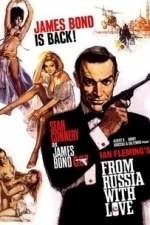

Characters – James Bond is forced into his next mission which includes seducing a spy that is wanting to turn on Russia, he shows us again just how skilled he is when it comes to dealing with life and death situations and his awareness of dangers around him. Tatiana Romanova is the Russian spy that has offered to give up information for safety to England, she might not be as true as James is told about, even though we know she is being forced into this mission. Rosa Klebb is the one that is recruiting the agents with Tatiana and Grant being her picks to help SPECTRE eliminate James Bond. Grant is the newest recruit assassin, hard as nails, resourceful and everything James will find difficult to beat in a fight.
Performances – Sean Connery has grown into this role being even better than the first film, he become the superstar name after this outing. Daniela Bianchi is good for a Bond girl, she is stronger than the first one and now we know what type of women will get in this role. Robert Shaw as the villain is great, he looks cold calculated through every single scene.
Story – The story here is a lot more interesting than the first film, we learn early on about the SPECTRE plan which shows us how we have a growing villainous threat for Bond to tackle. This helps make the franchise even more enjoyable because it isn’t just Bond solving a case, it is him trying to stay ahead while we know the twists coming. The story leaves us open to learn more about SPECTRE in future film which again is a pleasure for the audience to be seeing. How everything unfolds well we know Bond can solve the problems he is facing and we get to see the start of the infamous gadgets.
Action/Adventure – The action in the film is bigger, the fights last longer and the adventure that Bond must go on is showing us just how big the terrorist battle will be.
Settings – The film takes place for the most part in Turkey, which shows us another neutral country in the middle of the battle, the train sequences could be argued to be the most enjoyable though.
Scene of the Movie – The gadgets being introduced.
That Moment That Annoyed Me – James Bond attitude toward women.
Final Thoughts – This is a wonderful second instalment in the franchise, it gives us a bigger threat for long term villains in SPECTRE and does have big action throughout.
Overall: The sequel that makes things bigger.
Performances – Sean Connery has grown into this role being even better than the first film, he become the superstar name after this outing. Daniela Bianchi is good for a Bond girl, she is stronger than the first one and now we know what type of women will get in this role. Robert Shaw as the villain is great, he looks cold calculated through every single scene.
Story – The story here is a lot more interesting than the first film, we learn early on about the SPECTRE plan which shows us how we have a growing villainous threat for Bond to tackle. This helps make the franchise even more enjoyable because it isn’t just Bond solving a case, it is him trying to stay ahead while we know the twists coming. The story leaves us open to learn more about SPECTRE in future film which again is a pleasure for the audience to be seeing. How everything unfolds well we know Bond can solve the problems he is facing and we get to see the start of the infamous gadgets.
Action/Adventure – The action in the film is bigger, the fights last longer and the adventure that Bond must go on is showing us just how big the terrorist battle will be.
Settings – The film takes place for the most part in Turkey, which shows us another neutral country in the middle of the battle, the train sequences could be argued to be the most enjoyable though.
Scene of the Movie – The gadgets being introduced.
That Moment That Annoyed Me – James Bond attitude toward women.
Final Thoughts – This is a wonderful second instalment in the franchise, it gives us a bigger threat for long term villains in SPECTRE and does have big action throughout.
Overall: The sequel that makes things bigger.
The Oxford English Literary History: Volume 1: 1000-1350: Conquest and Transformation
Book
The Oxford English Literary History is the new century's definitive account of a rich and diverse...
Do Your Children Believe?: Becoming Intentional About Your Family's Faith and Spiritual Legacy
Book
Are your children ready to live out their faith in the real world? Most parents who value Christian...

Matthew Krueger (10051 KP) rated Nosferatu the Vampyre (1979) in Movies
Oct 28, 2020 (Updated Oct 28, 2020)
The Vampire Among Them
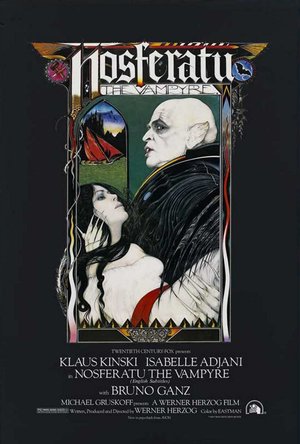
Nosferatu The Vampyre- is a very slow movie. Very slow, for 90% of the time nothing happens and when some does happens its only for three minutes max. I always wanted to watch the oringal, never got a chance to, hopefully soon i will. As for this remake its so-so.
The plot: Jonathan Harker is sent away to Count Dracula's castle to sell him a house in Virna, where he lives. But Count Dracula is a vampire, an undead ghoul living off men's blood. Inspired by a photograph of Lucy Harker, Jonathan's wife, Dracula moves to Virna, bringing with him death and plague... An unusually contemplative version of Dracula, in which the vampire bears the cross of not being able to get old and die.
There are two different versions of the film, one in which the actors speak English, and one in which they speak German.
Herzog's production of Nosferatu was very well received by critics and enjoyed a comfortable degree of commercial success.
The film also marks the second of five collaborations between director Herzog and actor Kinski.
While the basic story is derived from Bram Stoker's novel Dracula, director Herzog made the 1979 film primarily as an homage remake of F. W. Murnau's silent film Nosferatu (1922), which differs somewhat from Stoker's original work. The makers of the earlier film could not obtain the rights for a film adaptation of Dracula, so they changed a number of minor details and character names in an unsuccessful attempt to avoid copyright infringement on the intellectual property owned (at the time) by Stoker's widow Florence. A lawsuit was filed, resulting in an order for the destruction of all prints of the film. Some prints survived, and were restored after Florence Stoker had died and the copyright had expired.
By the 1960s and early 1970s the original silent returned to circulation, and was enjoyed by a new generation of moviegoers.
In 1979, by the very day the copyright for Dracula had entered the public domain, Herzog proceeded with his updated version of the classic German film, which could now include the original character names.
Herzog saw his film as a parable about the fragility of order in a staid, bourgeois town. "It is more than a horror film", he says. "Nosferatu is not a monster, but an ambivalent, masterful force of change. When the plague threatens, people throw their property into the streets, they discard their bourgeois trappings. A re‐evaluation
of life and its meaning takes place."
Like i said its a decent movie.
The plot: Jonathan Harker is sent away to Count Dracula's castle to sell him a house in Virna, where he lives. But Count Dracula is a vampire, an undead ghoul living off men's blood. Inspired by a photograph of Lucy Harker, Jonathan's wife, Dracula moves to Virna, bringing with him death and plague... An unusually contemplative version of Dracula, in which the vampire bears the cross of not being able to get old and die.
There are two different versions of the film, one in which the actors speak English, and one in which they speak German.
Herzog's production of Nosferatu was very well received by critics and enjoyed a comfortable degree of commercial success.
The film also marks the second of five collaborations between director Herzog and actor Kinski.
While the basic story is derived from Bram Stoker's novel Dracula, director Herzog made the 1979 film primarily as an homage remake of F. W. Murnau's silent film Nosferatu (1922), which differs somewhat from Stoker's original work. The makers of the earlier film could not obtain the rights for a film adaptation of Dracula, so they changed a number of minor details and character names in an unsuccessful attempt to avoid copyright infringement on the intellectual property owned (at the time) by Stoker's widow Florence. A lawsuit was filed, resulting in an order for the destruction of all prints of the film. Some prints survived, and were restored after Florence Stoker had died and the copyright had expired.
By the 1960s and early 1970s the original silent returned to circulation, and was enjoyed by a new generation of moviegoers.
In 1979, by the very day the copyright for Dracula had entered the public domain, Herzog proceeded with his updated version of the classic German film, which could now include the original character names.
Herzog saw his film as a parable about the fragility of order in a staid, bourgeois town. "It is more than a horror film", he says. "Nosferatu is not a monster, but an ambivalent, masterful force of change. When the plague threatens, people throw their property into the streets, they discard their bourgeois trappings. A re‐evaluation
of life and its meaning takes place."
Like i said its a decent movie.
Countdown 1945
Book
From Chris Wallace, the veteran journalist and anchor of Fox News Sunday, comes an electrifying...

Lifeline...
Games and Entertainment
App
“[A] surprising iPhone and Apple Watch bestseller is pushing the boundaries of fiction” -...

Hazel (1853 KP) rated A Song for Issy Bradley in Books
May 30, 2017

Heart Wrenching
I received this book for free through Goodreads First Reads.
A Song for Issy Bradley is the captivating debut novel of talented author Carys Bray. Set in modern day Britain this heart-breaking story shows a family’s struggle to overcome the loss of their youngest child whilst also adhering to the strict rules of their Mormon religion.
It begins with seven-year-old Jacob’s birthday and Mum, Claire, is rushing around with last minute party preparations, whilst her husband, Bishop Ian, is off attending to his religious duties. Although Claire is aware that Issy is feeling poorly she does not realize how serious it is until much later - too much later. After being rushed to hospital with meningitis Issy’s prognosis is not good. Despite Ian’s blessings and prayers no miracle occurs and Issy passes away the following day.
The main storyline is about how the characters cope with this shockingly sudden loss. Claire hides herself away from everyone by remaining in bed for weeks and ignoring her duties and her family’s pleas. Ian, worried that Claire is not grieving in the proper Mormon way, throws himself even deeper into religion by focusing on what is expected of him as a Bishop rather than concentrating on his children’s needs.
Zipporah, the eldest, is expected to become the woman of the house until Claire returns to “normal”. As well as studying for her exams and doing the housework, Ian insists she attend all church events for people her age. Alone she worries about love, marriage and falling into sin; she would really like to be able to talk to her Mum. Alma, on the other hand, is becoming more and more rebellious. Not only does he have a stupid name (Alma was named after a prophet in the book of Mormon) his ambition to become a professional footballer is not conducive to living the gospel. Although he makes jokes and rude remarks about religious ideas there is still a part of him that believes, and despite his attitude it is clear he is deeply affected by Issy’s death.
Jacob’s reaction is the most heart wrenching of all. Being so young he believes everything he is told especially the bible stories he hears at church. If Jesus can bring people back to life, perhaps Issy can live again? He puts his faith in God and waits in vain for his sister’s miraculous return.
The story is shown through each of these five character’s point of views, which is interesting as the reader gets a chance to see how each person’s actions affect the others and gives a greater insight into character developments. It is gratifying to witness, albeit slowly, the family pick themselves up and begin to work together and carry on.
As to be expected with a story about Mormons there is a large amount of bible quotation. Many are from the Book of Mormon but there are numerous biblical references that Christians of all denominations will appreciate. The author was raised as a Mormon so it can only be assumed that all the details are accurate. Non-believers, however, should not be put off from reading this beautiful book: it is the way in which people deal with loss that is important and there is no preaching at the reader or attempts to convert.
This novel is highly recommended for female and male readers alike, particularly those who enjoy emotionally charged stories; and, of course, those interested in religion will love this book too.
A Song for Issy Bradley is the captivating debut novel of talented author Carys Bray. Set in modern day Britain this heart-breaking story shows a family’s struggle to overcome the loss of their youngest child whilst also adhering to the strict rules of their Mormon religion.
It begins with seven-year-old Jacob’s birthday and Mum, Claire, is rushing around with last minute party preparations, whilst her husband, Bishop Ian, is off attending to his religious duties. Although Claire is aware that Issy is feeling poorly she does not realize how serious it is until much later - too much later. After being rushed to hospital with meningitis Issy’s prognosis is not good. Despite Ian’s blessings and prayers no miracle occurs and Issy passes away the following day.
The main storyline is about how the characters cope with this shockingly sudden loss. Claire hides herself away from everyone by remaining in bed for weeks and ignoring her duties and her family’s pleas. Ian, worried that Claire is not grieving in the proper Mormon way, throws himself even deeper into religion by focusing on what is expected of him as a Bishop rather than concentrating on his children’s needs.
Zipporah, the eldest, is expected to become the woman of the house until Claire returns to “normal”. As well as studying for her exams and doing the housework, Ian insists she attend all church events for people her age. Alone she worries about love, marriage and falling into sin; she would really like to be able to talk to her Mum. Alma, on the other hand, is becoming more and more rebellious. Not only does he have a stupid name (Alma was named after a prophet in the book of Mormon) his ambition to become a professional footballer is not conducive to living the gospel. Although he makes jokes and rude remarks about religious ideas there is still a part of him that believes, and despite his attitude it is clear he is deeply affected by Issy’s death.
Jacob’s reaction is the most heart wrenching of all. Being so young he believes everything he is told especially the bible stories he hears at church. If Jesus can bring people back to life, perhaps Issy can live again? He puts his faith in God and waits in vain for his sister’s miraculous return.
The story is shown through each of these five character’s point of views, which is interesting as the reader gets a chance to see how each person’s actions affect the others and gives a greater insight into character developments. It is gratifying to witness, albeit slowly, the family pick themselves up and begin to work together and carry on.
As to be expected with a story about Mormons there is a large amount of bible quotation. Many are from the Book of Mormon but there are numerous biblical references that Christians of all denominations will appreciate. The author was raised as a Mormon so it can only be assumed that all the details are accurate. Non-believers, however, should not be put off from reading this beautiful book: it is the way in which people deal with loss that is important and there is no preaching at the reader or attempts to convert.
This novel is highly recommended for female and male readers alike, particularly those who enjoy emotionally charged stories; and, of course, those interested in religion will love this book too.
Hazel (1853 KP) rated A Song for Issy Bradley in Books
Dec 7, 2018

<i>I received this book for free through Goodreads First Reads.</i>
<i>A Song for Issy Bradley</i> is the captivating debut novel of talented author Carys Bray. Set in modern day Britain this heart-breaking story shows a family’s struggle to overcome the loss of their youngest child whilst also adhering to the strict rules of their Mormon religion.
It begins with seven-year-old Jacob’s birthday and Mum, Claire, is rushing around with last minute party preparations, whilst her husband, Bishop Ian, is off attending to his religious duties. Although Claire is aware that Issy is feeling poorly she does not realize how serious it is until much later - too much later. After being rushed to hospital with meningitis Issy’s prognosis is not good. Despite Ian’s blessings and prayers no miracle occurs and Issy passes away the following day.
The main storyline is about how the characters cope with this shockingly sudden loss. Claire hides herself away from everyone by remaining in bed for weeks and ignoring her duties and her family’s pleas. Ian, worried that Claire is not grieving in the proper Mormon way, throws himself even deeper into religion by focusing on what is expected of him as a Bishop rather than concentrating on his children’s needs.
Zipporah, the eldest, is expected to become the woman of the house until Claire returns to “normal”. As well as studying for her exams and doing the housework, Ian insists she attend all church events for people her age. Alone she worries about love, marriage and falling into sin; she would really like to be able to talk to her Mum. Alma, on the other hand, is becoming more and more rebellious. Not only does he have a stupid name (Alma was named after a prophet in the book of Mormon) his ambition to become a professional footballer is not conducive to living the gospel. Although he makes jokes and rude remarks about religious ideas there is still a part of him that believes, and despite his attitude it is clear he is deeply affected by Issy’s death.
Jacob’s reaction is the most heart wrenching of all. Being so young he believes everything he is told especially the bible stories he hears at church. If Jesus can bring people back to life, perhaps Issy can live again? He puts his faith in God and waits in vain for his sister’s miraculous return.
The story is shown through each of these five character’s point of views, which is interesting as the reader gets a chance to see how each person’s actions affect the others and gives a greater insight into character developments. It is gratifying to witness, albeit slowly, the family pick themselves up and begin to work together and carry on.
As to be expected with a story about Mormons there is a large amount of bible quotation. Many are from the Book of Mormon but there are numerous biblical references that Christians of all denominations will appreciate. The author was raised as a Mormon so it can only be assumed that all the details are accurate. Non-believers, however, should not be put off from reading this beautiful book: it is the way in which people deal with loss that is important and there is no preaching at the reader or attempts to convert.
This novel is highly recommended for female and male readers alike, particularly those who enjoy emotionally charged stories; and, of course, those interested in religion will love this book too.
<i>A Song for Issy Bradley</i> is the captivating debut novel of talented author Carys Bray. Set in modern day Britain this heart-breaking story shows a family’s struggle to overcome the loss of their youngest child whilst also adhering to the strict rules of their Mormon religion.
It begins with seven-year-old Jacob’s birthday and Mum, Claire, is rushing around with last minute party preparations, whilst her husband, Bishop Ian, is off attending to his religious duties. Although Claire is aware that Issy is feeling poorly she does not realize how serious it is until much later - too much later. After being rushed to hospital with meningitis Issy’s prognosis is not good. Despite Ian’s blessings and prayers no miracle occurs and Issy passes away the following day.
The main storyline is about how the characters cope with this shockingly sudden loss. Claire hides herself away from everyone by remaining in bed for weeks and ignoring her duties and her family’s pleas. Ian, worried that Claire is not grieving in the proper Mormon way, throws himself even deeper into religion by focusing on what is expected of him as a Bishop rather than concentrating on his children’s needs.
Zipporah, the eldest, is expected to become the woman of the house until Claire returns to “normal”. As well as studying for her exams and doing the housework, Ian insists she attend all church events for people her age. Alone she worries about love, marriage and falling into sin; she would really like to be able to talk to her Mum. Alma, on the other hand, is becoming more and more rebellious. Not only does he have a stupid name (Alma was named after a prophet in the book of Mormon) his ambition to become a professional footballer is not conducive to living the gospel. Although he makes jokes and rude remarks about religious ideas there is still a part of him that believes, and despite his attitude it is clear he is deeply affected by Issy’s death.
Jacob’s reaction is the most heart wrenching of all. Being so young he believes everything he is told especially the bible stories he hears at church. If Jesus can bring people back to life, perhaps Issy can live again? He puts his faith in God and waits in vain for his sister’s miraculous return.
The story is shown through each of these five character’s point of views, which is interesting as the reader gets a chance to see how each person’s actions affect the others and gives a greater insight into character developments. It is gratifying to witness, albeit slowly, the family pick themselves up and begin to work together and carry on.
As to be expected with a story about Mormons there is a large amount of bible quotation. Many are from the Book of Mormon but there are numerous biblical references that Christians of all denominations will appreciate. The author was raised as a Mormon so it can only be assumed that all the details are accurate. Non-believers, however, should not be put off from reading this beautiful book: it is the way in which people deal with loss that is important and there is no preaching at the reader or attempts to convert.
This novel is highly recommended for female and male readers alike, particularly those who enjoy emotionally charged stories; and, of course, those interested in religion will love this book too.