Search

Search only in certain items:

Velvet Underground by The Velvet Underground
1969 | Experimental
8.4 (7 Ratings)
Album Favorite

"""When VU came out in 1985, everyone I knew had absorbed the official Velvets albums from the late 60s and early 70s, and had listened to all the bootlegs they could get their hands on. We had heard in the press mention of lost recordings and there were a couple of those songs on bootlegs that were hard to get. So, when this album came out it was like finding The Commandments 11 to 20. I almost didn't want to get my hopes up too much as it promised amazing things. When I did get it, I couldn't believe how good it was. It has a particularly important part in my life, in that The Smiths were already going at that point and we were a successful band. To be hit by something as a fan of music when you are already number one in the album charts yourself - I think Meat Is Murder had just come out at that point - was an utterly brilliant thing. It dropped into my life like a ton of inspiration. I was obsessed with it and, in particular, the versions of 'I Can't Stand It' and 'Foggy Notion'. I couldn't understand why that version of 'Ocean' hadn't come out before as it was easily the best one. I played 'I Can't Stand It' so many times that it stuck in my subconscious and that came out as the inspiration for the rhythm part on the song 'The Queen Is Dead'. So, the VU album was what I was listening to almost exclusively before I started writing the album The Queen Is Dead. The earlier Velvets albums are so revered that to better them is quite a feat. I have been in many an argument with people who think I am insane for preferring this record. When you take away the reverence for the early albums - which are undeniably incredibly important - VU is my favourite listen."""

Source
  
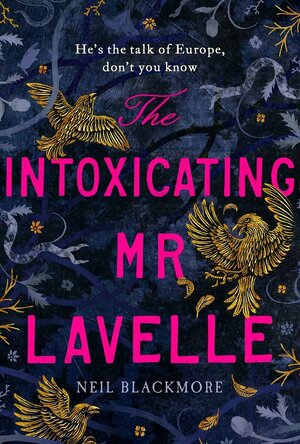
The Intoxicating Mr Lavelle
Neil Blackmore | 2020 | Fiction & Poetry, LGBTQ+, Romance
8
8.0 (1 Ratings)
Book Rating
The Intoxicating Mr Lavelle rather intoxicated me, if I’m honest. It’s one of those witty yet heart-rending books that I didn’t want to stop listening to.
Ben Aldridge, the narrator, did his part so well. I believed that he was each of the separate characters - he made each of them sound so different, and he especially made Lavelle sound just how I would have imagined him to.
Two brothers, Benjamin and Edgar are on what is probably the most exciting and daunting trip of their young lives - a Grand Tour of Europe. It was what all the well-heeled young men and women would do at the time, in the hope that they’d make good business and, you never know, romantic connections. However, it quickly becomes apparent that the Bowen brothers are looked down on as being of the mercantile class. This horrified me as a modern day reader. Firstly, that two sheltered, innocent boys should be sent out to travel across Europe alone (must be the ‘Mother of Sons’ in me), secondly, that the upper classes were so bloody rude! They had the power to destroy someone with just a word. I could have scooped these boys up and taken them home, just to remove them from these horrendous people.
This is also the story of Benjamin’s self discovery. He meets and falls in love with Horace Lavelle at a time when men could be hanged as a ‘sodomite’. The author is upfront at the start that he had taken some liberties with this book. Homosexuality was illegal. No-one would take a chance of showing that they were gay. And there is that element of danger, of being found out, in this book despite those liberties.
But it’s such a lovely book - I wanted Benjamin to be happy, and I could see the potential for a train wreck ahead. And that’s all I’ll say! What I will say, is that this is a novel well worth your time!
  
It Don't Mean a Thing by Elvin Jones
1993 | Rock
(0 Ratings)
Album Favorite

"I first met Chris Bear when I was fifteen. We were both at a jazz programme and he was the one person there that was frighteningly talented, just ridiculously talented, I was very intimidated by him. “He introduced me to this and it was one of the first records the two of us bonded over. I didn’t see him again for a few years, but this record was something I kept with me throughout the last few years of high school and I always remembered this amazing drummer who introduced me to it. “That first meeting with Chris Bear has been influential in my music and my life. We were all trying to be cool kids, trading on stuff that we knew and he had this record. There’s a wildness and a subtle funkiness to it, it’s functioning within the bounds of what the genre is but it’s pushing these tiny gradations of feeling. That’s what makes really good jazz really great, it sucks you into these funny little changes in the way that people are playing. It’s so human you feel like you’re in it, like you’re the person making it happen, it’s very physical. “The playing on this is incredibly fiery, Elvin Jones is a classic player and I think Chris Bear’s drumming comes a little bit from his playing at times, but this record is a little bit outside of pure jazz. I feel in our band, and in Chris Bear’s playing, he’s always had that subtlety of feeling, you can play within any one genre, but there’s this lightness of touch and a really subtle dynamic going on. “It takes knowing the right thing to find what’s good in jazz, it’s got a language and a history and it’s easy to hear terrible shit too, I get that. I remember riding around L.A in the back of someone’s car getting really stoned and listening to the whole record was like seeing colours, it was really intense and overwhelming"

Source
  

"I was 12 when it came out. I remember it very well. It was a Saturday morning, and I went round to a friend's house and he'd been out shopping that morning and he'd bought the album. And we played the album, and it was something like you'd never heard before. We were in the middle of what I might describe as somewhat traditional rock music – you know, The Stones and Led Zeppelin were at their peaks. This thing came along and it didn't sound like anything else. The production values, the production's quite dry, and also you've got this visual of Bowie with the spiky hair, it just was something so different. You felt that music itself just got changed, and that rock music per se moved into some other place. The best way I can describe it is that rock music became modern. It became a new thing. I have no doubt in my mind that David Bowie is the greatest solo artist that Britain's ever produced. I can't think of a better solo artist. The other thing I would say is I thoroughly underestimated the brilliance, and the input made by Mick Ronson, in the period he was with the band. I had no idea Mick Ronson did all the orchestration, and did all the arrangements. So when you're listening to a track like 'Life On Mars' off Hunky Dory and, this album, 'Moonage Daydream', when you take into consideration that he did the string arrangements, that really puts him in a different sphere as well. And without Mick Ronson I don't think it would have sounded as original as it did. It made me so sad seeing this documentary about him [Beside Bowie: The Mick Ronson Story on Sky Arts], somehow the Bowie machine swept Mick Ronson under the carpet, which is incredibly unfair. It was heartbreaking, to be honest. I felt really sorry for the guy that he'd been so underestimated while he was alive. At least now we can celebrate his brilliance."

Source
  
40x40

Illeana Douglas recommended Amarcord (1973) in Movies (curated)
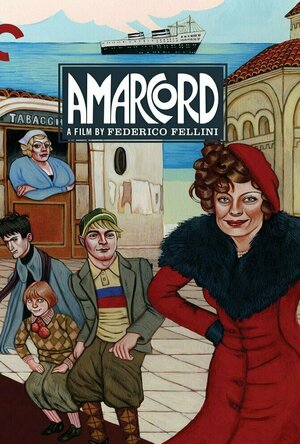
 
Amarcord (1973)
Amarcord (1973)
1973 | Comedy, Drama
(0 Ratings)
Movie Favorite

"It’s the first Fellini film I ever saw, so I think it’s my favorite. My Italian relatives always told me we were distantly related to Fellini—not sure if there is any truth in that, but that’s one of the reasons we went to see it. “Oh yeah, he’s our cousin,” they would say. Growing up with Italians, you see that life is absurd: it’s a circus, with some sex in it, and Amarcord simply confirmed that for me. I can watch this movie again and again; it’s that enjoyable. And although some scenes are over the top—and yes, Fellini is obsessed with big-bottomed women and very large breasts—it’s a movie about his childhood. And by learning about his childhood, I learned to appreciate my own. When I was young, I spent every summer with my Italian relatives in Astoria, Queens. Here’s what I learned: every day is a drama, and it all ends with everyone laughing and drinking wine and eating spaghetti. There was an unbelievable tale to be heard about every third cousin. Somebody would whisper, “That’s Rose—the day her mother died, her face froze into a scowl. And that’s why she looks like that.” We never questioned these things. Listening to stories was part of the immigrant experience. Amarcord feels that way. Fellini is telling stories about people in his village, but I related to all the stories. This was a movie my Italian relatives took me to, that they wanted to see so they could see themselves and laugh. I think that by watching how much they enjoyed the movie, I began to understand and appreciate my own culture for the first time. Watching Amarcord was also the first time I experienced the music of the great Nino Rota. When you think of Fellini, you always think of the music, which acts as the perfect bridge between the stories. I challenge anyone to see this film and not want to make love. Amarcord means “I remember.” You will remember."

Source
  
40x40

Nick McCabe recommended Octet by Steve Reich in Music (curated)
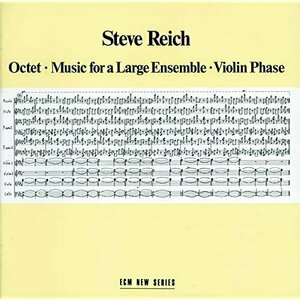
 
Octet by Steve Reich
1980 | Classical
(0 Ratings)
Album Favorite

"It's simply a favourite piece of music. There are a lot of associations. I was listening to it around the time my daughter was born. She used to fall asleep to this occasionally. It reminds me of travelling around America back in the day when you had to carry around bags of cassettes and Walkmans. It's brilliant for train journeys and even now when I find myself on the motorway, Octet is the perfect listen for me. It reminds me of driving from Bath, where I lived at time, to London, to Richmond. It's just stuck with me for most of my life. Growing up we had Drumming in the house, my dad got that for next to nothing from the same charity shop. That's just repetitive patterns for a few hours, it's hard going really. If you came to Steve Reich from that idea, you'd think it was just academic music and not for enjoyment's sake and dismiss it. I was lucky to pick up a book from a book shop in St Helens, New Sounds: A Listener's Guide To New Music, by this New York radio presenter, John Schaefer – it was like the holy grail for me. I found that book in about '91 and it was a pretty rare thing at the time in that it had measured discussion on things like Stockhausen. We've got The Wire now, for good or bad, but to find that book at the time in St Helens was amazing really. By the time I got to America I had a shopping list of things I had to hear, like Paul Dresher, early John Adams pieces, things like that. I think the common thread with things like this is that you're constantly looking for the up and down stream of things – the connections, where something came from and what came out of it; how it got finessed or improved or whatever. I think with Octet, I'm not really that interested, it's just that piece of music. It's another world in itself."

Source
  
40x40

Jarvis Cocker recommended 12 Crass Songs by Jeffrey Lewis in Music (curated)
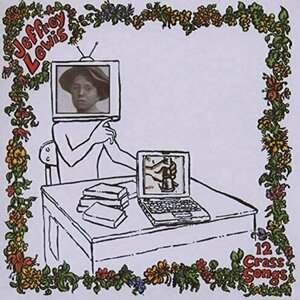
 
12 Crass Songs by Jeffrey Lewis
2007 | Alternative, Folk, Pop, Rock
(0 Ratings)
Album Favorite

"Crass were maybe a bit too late for me or maybe John Peel didn't play it, because that was the only place I ever heard things, so I was aware of them and I remember seeing the records in the shops but never really listened to them. And then it was by chance that I heard this record, because Jeffrey Lewis is on Rough Trade and I was in the Rough Trade office, and it was being played downstairs. I went down and asked 'what's this?' We mentioned Bill Callahan earlier, and Jeffrey Lewis is another modern lyricist who's really great, but of course on this record none of the words are his, they are cover versions of songs by the group Crass. But with all the songs that are on here, I've never even heard the originals so I don't know what the relationship is like. My favourite is 'I Ain't Thick, It's Just A Trick', but unfortunately I didn't get to play in on the Sunday Service because it's got swearwords in it, but I have occasionally when I've been DJing if it's the right kind of place. It's great that song. There's something about the way he... I guess it's a little bit similar to what we were talking about with Stallion and the Pink Floyd thing, it's taking something and... I never would have thought of listening to Crass, I had an idea of what they were and what they were about, and thought they were crusties and squat punks and that wasn't what I wanted in my life, but the way he frames those lyrics in more accessible, slightly folky arrangements, really throws them into relief. In our current political predicament those words from 40 years ago really ring true again and you hear them in a different way - the art of the cover version is to bring the song alive in a different way."

Source
  
Columbia Studio Recordings, 1964-1970 by Simon & Garfunkel
2001 | Rock
(0 Ratings)
Album Favorite

"I often listen to Simon & Garfunkel now and think they’re terribly produced, but they’re certainly a band who are perfect performers on record. There’s something to be said for their restraint; on a lot of tracks you think there might be a drummer but it’s just so quiet in the mix. When you think about what The Beatles were producing at the same time it’s kind of crazy actually - but it doesn’t matter, because their voices were always there when you needed them and that was all you were listening to essentially. They would supply the harmony for each other, as well as the melody and the words. “’Wednesday Morning, 3am’ has got this absolute perfection to it. Fleet Foxes get pretty close in terms of recording multiple voices, but it’s not somewhere people tend to go. I loved it so much, because you could sing with it and you didn’t even have to sing either of their parts; there was always room for more. I always liked choral music growing up, but I felt that this was what choral music should be doing. “I’ve always loved this particular song: just the sadness in it, the description of his girlfriend and the description of having to go because he’s committed a crime. It’s a really weird angle about these few hours he’s got left and it makes me sad every time I hear it. There’s loads of stuff that I didn’t understand in it too: a ‘hard liquor store’ for example. I had no idea what that meant! But they went to dark places. “By the time I’d heard something like ‘7 O’Clock News/Silent Night’ the whole collage thing had been done so much and it didn’t seem that powerful to me. You’ve seen a hundred films that do it now and having sample speech in songs isn’t that crazy. But I bet when it first came out it would have been pretty amazing."

Source
  
40x40

Moby recommended Movement by New Order in Music (curated)

 
Movement by New Order
1981 | Rock
(0 Ratings)
Album Favorite

"This was also quite a challenging record for me. I bought the 7"" of 'Ceremony' when it came out, and I thought that's what Movement was going to sound like. A very pretty, emotional, bucolic record, and of course it has moments like that, but in a strange way it's almost darker than Closer. When I was 14 or 15-years-old I was full ensconced on the cult of Ian Curtis, so when I got Movement I listened to it and tried to decode it... how many songs were influenced by Ian Curtis, how many songs were written by Ian Curtis, were they trying to communicate with Ian from beyond the grave. It's certainly the darkest of all the New Order records, and after this they became much more melodic and happy. The first track on the record is quite uplifting, then everything else is quite dark. One of the things I've always loved about Bernard Sumner's voice is there's a naive, vulnerable quality to it. I was at an airport the other day and 'A Perfect Kiss' came on, I hadn't listened to it in about 25 years, and it's such a perfect song. His vocals are sing-songy, like a nursery rhyme, but they're so effective. Each of these records that we've talked about, one thing they have in common is that they're all primarily electronic. At the time I was completely surrounded by very traditional rock music, and it felt interesting and subversive to be listening to these records primarily made with electronic instruments. I think that affected me a lot. I was a guitar player at the time, and I was so bored and frustrated with playing the guitar because it didn't do that much. I couldn't figure out how to make a guitar not sound like a guitar, and then you hear all these electronic records with all these textures and atmospheres and sounds that I'd never heard before, and I found that quite exciting."

Source
  
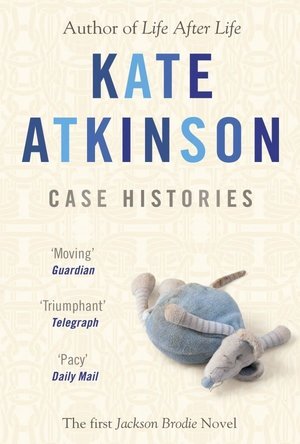
Case Histories (Jackson Brodie, #1)
Kate Atkinson | 2010 | Crime, Fiction & Poetry, Thriller
9
9.0 (1 Ratings)
Book Rating
I quite honestly don’t know why it took me so long to get round to reading/ listening to these books. I listened to Case Histories on my library’s audiobook app, and loved how the narrator, Susan Jameson, brought the story to life. The cases at first sight seem unrelated, but coincidences occur as the story goes on. They’re all quite quirky characters, which I enjoyed, particularly the sisters from case one. They ask Jackson to find out what happened to their little sister 40 years ago. Whilst sleeping in a tent in the back garden, three year old Olivia went missing. When find her beloved Blue Mouse in their deceased fathers desk drawer, they start to think that there is more to her disappearance - and it’s close to home.
Case two is about the death of a young woman at her fathers solicitors offices. After many years, the man who murdered her in broad daylight in the busy office, has still never been found.
The third case is a famous one. Tanya, a nurse, had been given the task of bringing up her niece after her sister murders her husband with an axe. However, Tanya has lost contact with the child (now a woman), and wants to find her again.
The fourth case is that of Jacksons own sister. After their mothers death, Jacksons sister is murdered on her way home from work. The murderer is never found.
It was really interesting to see how the cases wove together as the story went on, but what I really found interesting were the flashbacks to around the times of the murders.
Many of the characters are pretty unpleasant - except for the very moral Jackson Brodie - and I found that an interesting contrast.
I think that this is a series that I’m going to have to read more of. I like the Brodie character, and I’m intrigued to see if the next book is set up in a similar way.