
Something Nasty in the Slushpile
Book
Most publishers keep a "slushpile" - the stack of unsolicited manuscripts which contains a large...
The Soviet Gulag: Evidence, Interpretation and Comparison
Book
Before the collapse of the Soviet Union and the subsequent archival revolution, Aleksandr...

Her Voice Will be on the Side of Right: Gender and Power in Women's Antebellum Antislavery Fiction
Book
Decades before the Civil War, the free American public was gripped by increasingly acrimonious...

Shakespeare’s Sonnets
Entertainment and Education
App
A masterly app...As accessible as it is scholarly, it’s an extraordinary achievement, that brings...

St. Josemaria for iPad
Reference and Lifestyle
App
This application helps you to do your daily “Plan of Life” or “The Norms of Piety”. ...
The Beast Side: Living (and Dying) While Black in America
9.0 Rate It
Book
A New York Times Best Seller! To many, the past 8 years under President Obama were meant to...
politics social issues
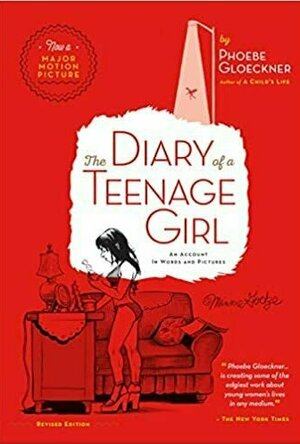
The Diary of a Teenage Girl: An Account In Words and Pictures
Book
First released in 2002, this provocative, critically acclaimed novel is now a major motion picture...
Debbiereadsbook (1818 KP) rated In Good Spirits: An MMMM Christmas Daddy Romance in Books
Dec 23, 2024
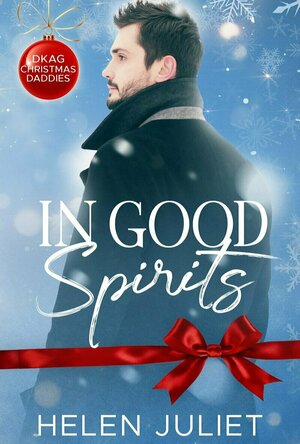
Helen Juliet usually retells fairy tales, and a cracking job she has of those too! This is not a fairy tale, but a literary classic. And a cracking job she does of this too!
I have one minor niggle, and it really is just a personal preference.
First person
Present tense
AND
Multi point of view!
Now, if you follow my reviews you'll know I have dumped many MANY books that I discover are written this way. I will make no apologies for that, I know what I like and I will own it every time. I wasn't able to dump this one, as apart from this point I really enjoyed it!
Sai and Jude are married, and they have Tian as their third. It has been so for 3 years. But Tian looks at Evan and sees so much pain, he just wants to be such a good boy for him.
The established 3-way works best because of 2 rules: you always come home, and communication. I found the communication in this book between Tian, Jude and Sai was outstanding and it paved the way for all three men to find themselves attracted to Evan in ways they really didn't see coming.
I loved how things changed for them all over time. Sai found himself wanting to be looked after, even though he was the Daddy in the three way. Jude wanted to be a good boy for Daddy Evan, while he was a brat to Daddy Sai. And Tian? Well just was just gonna be the bestest little boy a Daddy could wish for. Evan changed too, settling his ghosts to rest, and letting someone else into his heart. Well, someones, plural.
It's incredibly well written, and well delivered. It pushes most of my buttons, (point already made!) and is Ms Juliet at her best. Sweet and so very smexy. But deeply emotional too. Mostly from Evan letting go of Beau.
I loved how I was able to slot this book along side the Dickens version, and even if he might be not be best pleased, I really loved it!
4 very VERY good stars
*same worded review will appear elsewhere

Gareth von Kallenbach (980 KP) rated Cloud Atlas (2012) in Movies
Aug 7, 2019

Allow me to explain. About an hour into the film I had a young film reviewer to my left and I noticed he started to nod his head in approval at each new developing story throughout the film. To my right was a friend of mine, I would consider as an average film viewer, who at this same time I could tell was counting the minutes till the lights came up but felt trapped with nowhere to go but forward. And for me, I can see both sides of these reactions.
The plot is comprised of a multi-narrative of six stories, each with a complete beginning, middle and end. These stories are told from different timelines following a group of souls throughout the ages to show how everything is woven together and the connection between them; From the 1849 slave trader, to a young composer in 1936 Britain, to a 1973 journalist attempting to uncover corruption of the big business ruling class, to a 2012 literary publisher who’s life becomes a daring escape from a geriatric home, to a 2144 Neo-Soul synthetic learning to become human, to a post-apocalyptic tribesman trying to save his world and family… Lost yet? Believe me you will want to focus during the first hour of this film as we are introduced to the sudden shift of timelines. All of the main actors appear as varying characters of significance in every narrative, each with different accents and types of language. It is a bit of an unexpected bother to keep everything straight at first, however if you pay attention it is fairly easy to follow. This first hour is where I feel the film becomes a make or break for those actively thinking about what they are watching and the average movie viewer who is just there to be entertained and see the new Tom Hanks (Extremely Loud and Incredibly Close) or Halle Berry (Perfect Stanger) movie. For those who make it through that first hour still engaged, the film moves along at a steady pace and provides everything from romance to action that keeps you guessing and intrigued at what is next to come.
The Wachowskis and Tykwer do an outstanding job of visually fleshing out each timeline in its own visual style, especially the futuristic ones, which subtlety organize each narrative for the viewer. Additionally, there are so many talented actors in this film and it is somewhat fascinating to try and pick them out throughout the film. It is almost like a giant game of Where’s Waldo on screen as the makeup and special effects artists do a fantastic job of making the actors fit each character in every timeline. In fact, during the fourth or fifth timeline a lady in my row asked her partner if the man on screen was Forrest Gump, which was surprising because Hanks was the easiest character to pick out among them all.
Tom Hanks delivers one of his better performances in years. We watch his character’s soul transition from a sinister and vile doctor to a tribesman making the righteous choice while struggling with that inkling of evil that is the devil within us all. It was refreshing to see Hanks play parts that were not just an “everyman” that he has played in recent years.
Halle Berry’s performance is mostly average in her parts with the exception of 1973 journalist role where she is the main protagonist. Hugo Weaving channels a bit of his Agent Smith role from The Matrix as he plays a villain throughout the timelines. Hugh Grant (Love Actually) makes unexpected soild appearances throughout the timelines. With Jim Sturgess (One Day), James D’Arcy (Mansfield Park) and Ben Whishaw (who is the new Q in the upcoming James Bond film Skyfall) rounding out the cast with a young contrast to the already heavy acting handled by the bigger names of this film. Each of these young actors hold’s their own against their older more notable counterparts. Whishaw’s performance as the lead in the 1936 composer role is especially noteworthy.
The other stand out performance in the film comes from Jim Broadbent best known in the states as Professor Slughorn in the Harry Potter Films. His performance in the 1936 composer and 2012 literary publisher are excellent. The Publisher story was my favorite timeline throughout the film. Not only did it deliver some much needed comic relief to an emotionally engaging and heavy film, but it also made me care the most about the elderly characters trying to escape the clutches of the geriatric prison of a nursing home. Unfortunately, other than the aforementioned comic relief this timeline seemed the most unnecessary to the overarching story at hand.
When I left the film and talked it over with my friend I was indifferent to the film. It was not great, it was not bad either. As my friend described it, it was a movie that was trying too hard. We agreed that somewhere in the six storylines there may be a great film, but we were not sure if we watched it.
However as the days have passed I have found myself thinking about the stories constantly. More specifically about how the main protagonist played by a different actor in each narrative has the same birthmark of a shooting star that in some way symbolizes some universal soul encompassing a new shell of a body in each timeline. Like some kind of reincarnation of that soul is fighting the same revolution throughout the ages against the powerful class and illusion of natural order. Additionally how each of the central characters found themselves connected with the main characters in the stories that preceded them through some kind of medium; whether it was by an old journal, or love letters, or a written story, or film, or message of hope. These subtle insights of growth and change for this main soul leaping into a new life in each timeline has caused me to examine our world and how we as people can be truly connected to one another not only today, but throughout the ages. I want to view the film again and am inspired to read the novel in some sort of effort to better understand these concepts.
Nevertheless as a film that is almost three hours long it does its best to be an epic sci-fi film and give something for everyone. And while it succeeds in many aspects of feel, it also falls short in aspects that are probably best accomplished in a literary form. As I said above, somewhere in the six storylines there may be a great film, but I am not sure if I watched it. Or maybe I am not intelligent enough to comprehend it. Because of that I can only give it an average score. Though I believe if you ask me after a second viewing, I may be inclined to raise it.