
Sophia (Bookwyrming Thoughts) (530 KP) rated Gamer Girl in Books
Jan 23, 2020


There's much to love about Gamer Girl: the synopsis made the book sound like a very happy book something that I've been on the hunt for awhile. The cover is simplistic and gorgeous it definitely puts down the entire idea of the book with the drawing of the main character, Maddy, and the avatar she uses in a game (Fields of Fantasy) she gets for her birthday shortly after her parents divorce. The interior is just as gorgeous as the cover the chapter headings depict Maddy's main emotions she's feeling by the end of the chapter.
Mancusi's writing style and use of Maddy's voice is great as well Maddy is a very relatable character and she has an attitude that isn't annoying, making the book feel perfectly paced as Maddy gets to know SirLeo in Fields of Fantasy and falls in love with him. For awhile it probably feels as though Maddy will find out SirLeo is really an online predator.
Much as I really loved Gamer Girl and Mancusi's writing style, the book feels as though it's aimed more toward middle grade than a high schooler my age. The book is stereotypical with Maddy being bullied by the "Royal Court" as soon as she starts a new school and Maddy tries to escape from the troubles of her reality by entering the gaming world and playing Fields of Fantasy with an elfin character named Allora, someone she would rather be. It all leads to a very cute and adorable ending with the popular guy falling for the outcast very happy and light-hearted, and certainly not something you're likely to come across in real life, compared to the realistic drama of Margo Kelly's Who R U Really.
----------------
Review originally posted at <a href="http://bookwyrming-thoughts.blogspot.com/2015/01/review-gamer-girl-by-mari-mancusi.html">Bookwyrming Thoughts</a>
<a href="http://bookwyrming-thoughts.blogspot.com/"><img src="http://3.bp.blogspot.com/-cG5gfBqJVzk/VA5BIojjZ9I/AAAAAAAAD1g/7srLUfpAGEU/s1600/banner.png"; /></a>

Leanne Crabtree (480 KP) rated The Ballerino and the Biker (The Hedonist, #1) in Books
Jan 11, 2021
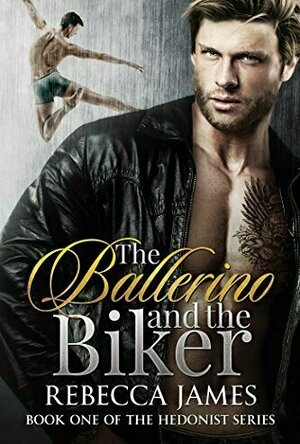

In this one Morgan has just buried his older brother, Jake, who was part of an MC. He was the only family that Morgan had left in the world and now so he focuses on his ballet with the help of his best friend, Nikki. Only Morgan arrives home to someone in his apartment and he struggles against the man. It turns out the man, Zeke, is from Jake's MC and is there to protect him from a rival biker club after Jake died with a female from the other MC. Zeke is drawn to Morgan and vice versa so it's not long before sparks are flying, though Zeke is adamant he's straight.
This definitely felt like a gay-for-you story. Zeke wasn't attracted to any other guys really, though in the end he settled on himself being bisexual. He's the strong silent type and completely opposite to ballerino - Italian for male ballerina - Morgan. They do have an intense attraction for each other and it takes a while for anything to happen but once it does, it quickly turns into more than physical attraction. Opposites attract and all that.
I'm intrigued by some of the other MC members like Blaze and what's going to happen between Dante and Swish.
Speaking of the MC, we didn't really see much of that side of the story. Most of the time Zeke was working on cars in the garage or the guys were settling down to meals together. We know the MC run a business out back that films their own pornography but that's about it. And we had that short bit at the start involving the Hedonist's rivals wanting to hurt Morgan in retaliation for the death of one of theirs but that was it.
That end bit with Morgan's stalker was a bit strange, if you ask me. I wasn't expecting it to take that turn or be that person and it threw me a little but it all worked out in the end due to Morgan's quick thinking
As mentioned above I do think I'll look up this series in the future to see what happens with Dante and Swish and Blaze with his questions on gay sex etc.

Stretching Sworkit - Increase Flexibilty & Pilates
Health & Fitness and Travel
App
Increase Flexibility with this Pilates & stretching workout trainer with free workouts to improve...

Butt Sworkit - Free Workout Trainer to tone & lift
Health & Fitness and Travel
App
Glute workout trainer for free workouts to tone, tighten, and lift that booty. Want workouts for...

Upper Body Sworkit - Arm, chest & shoulder trainer
Health & Fitness and Travel
App
Flex Hard - arm, chest & shoulder workout trainer for free workouts for a sculpted upper body. Want...

Intro Designer for iMovie and Youtube
Photo & Video and Entertainment
App
--- Special Sale - 25% OFF --- "This is a great little app that can help you create...

Equalizer+ Premium HD quality
Music
App
Equalizer+ Premium is an all-in-one music player - equalizer - bass booster that offers brilliant...

Equalizer+ Bass booster
Music
App
Equalizer+ is an all-in-one music player - equalizer - bass booster that offers brilliant sound...

15000 Easy Recipes
Food & Drink and Lifestyle
App
No time to cook? Need quick and easy recipes? Browse our favorite cooking recipes for delicious,...

Eilidh G Clark (177 KP) rated Optograms in Books
May 13, 2017
I go to my room, wiping
the admirer’s lipstick clean
with tights beneath jeans
retrieved from a friend’s house,
and with the words
Big Girl’s Blouse
reverberating inside my head
This poem speaks volumes in so little words and the reader is forced to look inwardly at their own behaviour toward people who do not conform to the norm. Similarly, ‘Prayers to Aliens and Satellites’ is a raw and candid view of homelessness which digs deep into the readers conscience,
where bloodless, xylophonic fingers
sink into armpits –
petitioned hands closed to benefits
and the friendships of passersby.
Like the previous poem, ‘Prayers to Aliens and Satellites’ urges the reader to become more aware of the social problems in society. If these poems are not enough to capture the heart of the reader, Watt surprises us with his heart crushing honesty in poems such as ‘Clinics Lip’ – a grief stricken account of miscarriage,
A husband, once the acme of affection,
now lollygagging in the garden;
crossmaker in waiting
for the small plot earmarked for the hill’s crest.
My own personal favourite is ‘Trouble was Someone Else’s Kid’, a short account of childhood memories, like a fragment of memoir condensed into neatly arranged stanza’s. There is something funny yet tragic about this poem that brought to me both nostalgia and a desire to relive my own fading youth.
We moved in shadows, kept the lid
on, as if peanut butter sandwiches
had pasted our lips together.
Other neighbourhoods sizzled
with pyromaniacs and politics,
alcoholics who played tin whistles
when Di and Charles got hitched.
These are only a few of the delights that can be found in this little treasure of a pamphlet and I would urge poetry lovers as well as those who are new to poetry to seek out a copy of this work. With twenty-six wonderful poems Optograms, is undoubtedly one of the best collections of contemporary Scottish poetry that I have read.
To learn more about the Stephen Watt you can visit The Scottish Poetry Library, http://www.scottishpoetrylibrary.org.uk/poetry/poets/stephen-watt or like his Facebook page @StephenWattSpit. Optograms, can be purchased from stephenwattspit299@gmail.com or the publisher Marc Sherland marcsherland@me.com at Wild Word Press.