
Search
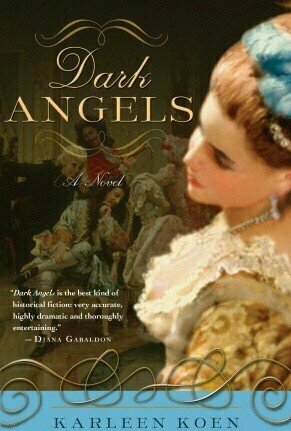
Dark Angels
Book
Alice Verney is a young woman intent on achieving her dreams. Having left Restoration England in the...
Hazel (2934 KP) rated The Vanishing of Margaret Small [Audiobook] in Books
Dec 18, 2022
![The Vanishing of Margaret Small [Audiobook]](/uploads/profile_image/292/07af28d6-184f-436e-a53d-a1ddb1c79292.jpg?m=1671380186)
Oh my word! This is a debut novel for Mr Alexander and what a debut it is.
I absolutely love Margaret ... what a likeable and strong character she is despite what she experienced in her young life. She has every reason to dislike her fellow human beings but she is much better person than most ... she is kind, thoughtful and understanding.
The book is told in two timelines, the past and the present.
The present: Margaret is 75 and living independently with the support of her excellent support worker Wayne. Margaret loves Cilla Black and she likes nothing more than listening to Cilla's autobiography but when she starts receiving notes and gifts from someone who signs them with "C", Margaret thinks Cilla is back from the dead but it can't be so who is it? The notes revive memories from Margaret's past.
The past: Margaret's story starts at 7 years old when she is "vanished" into a long-stay institution called St Mary's where she lives for the majority of her life. I won't say she is 'cared for' as what she endured is not care in any way, shape or form but Margaret endures it with innocent acceptance of knowing it's not right but being powerless to do anything about it. There are scenes which broke my heart but others that also warmed it.
Both timelines are equally captivating and enthralling but the past had me in bits at times at the cruelties of how children and adults who are "different" were treated but through it all, was the voice of Margaret who I can only describe as being a beautiful person.
I listened to the audiobook and I can highly recommend it; the narrators are just brilliant particularly the voice of Margaret ... oh my, she was brought to life for me; it was like she was sitting right next to me telling me her story myself ... just brilliant.
Margaret is a fictional character however, her story is based on the experiences of 'real' people the author has met during his working life which makes this book even more powerful and I must thank Bonnier UK Audio, Embla Books and NetGalley for enabling me to listen to and share my thoughts of The Vanishing of Margaret Small.
I absolutely love Margaret ... what a likeable and strong character she is despite what she experienced in her young life. She has every reason to dislike her fellow human beings but she is much better person than most ... she is kind, thoughtful and understanding.
The book is told in two timelines, the past and the present.
The present: Margaret is 75 and living independently with the support of her excellent support worker Wayne. Margaret loves Cilla Black and she likes nothing more than listening to Cilla's autobiography but when she starts receiving notes and gifts from someone who signs them with "C", Margaret thinks Cilla is back from the dead but it can't be so who is it? The notes revive memories from Margaret's past.
The past: Margaret's story starts at 7 years old when she is "vanished" into a long-stay institution called St Mary's where she lives for the majority of her life. I won't say she is 'cared for' as what she endured is not care in any way, shape or form but Margaret endures it with innocent acceptance of knowing it's not right but being powerless to do anything about it. There are scenes which broke my heart but others that also warmed it.
Both timelines are equally captivating and enthralling but the past had me in bits at times at the cruelties of how children and adults who are "different" were treated but through it all, was the voice of Margaret who I can only describe as being a beautiful person.
I listened to the audiobook and I can highly recommend it; the narrators are just brilliant particularly the voice of Margaret ... oh my, she was brought to life for me; it was like she was sitting right next to me telling me her story myself ... just brilliant.
Margaret is a fictional character however, her story is based on the experiences of 'real' people the author has met during his working life which makes this book even more powerful and I must thank Bonnier UK Audio, Embla Books and NetGalley for enabling me to listen to and share my thoughts of The Vanishing of Margaret Small.



interesting (2 more)
intricately plotted
nuanced
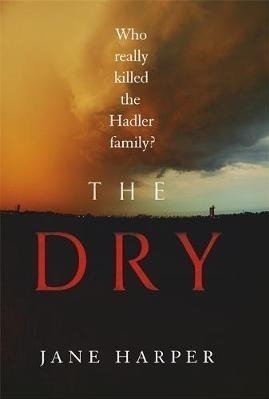
Aaron Falk is an investigator for the federal police in Melbourne. There, he follows money trails left by criminals. And while he may live a rather solitary life, at least he's also left behind his childhood home of Kiewarra, where the locals literally ran him and his father out of town. But all that changes when Aaron finds out that his best friend in Kiewarra, Luke Hadler, is dead. So is Luke's wife, Karen, and their young son, Billy. Luke apparently killed Karen and Billy before turning the gun on himself: the only person he spared in his family was his baby daughter, Charlotte. Aaron grew up as a second son to Luke's parents, and they call on him now to look into Luke and Karen's finances. Were things really so bad that Luke would enact such violence? As Aaron and the local police sergeant, Raco, begin investigating, it's quickly apparent that the case isn't as cut and dried as it seems. But the people of Kiewarra have long memories, and they still blame Aaron for something that happened over 20 years ago. Is Aaron safe in his hometown? And can he clear Luke's name--if it even needs clearing?
I have been hearing about THE DRY since before its release and wasn't sure it would live up to the hype, but I was wrong. I really, really enjoyed this novel and read it over the span of about 24 hours. My only regret about the entire experience was that it was over so quickly. This was an incredibly well-written, interesting, and intricately plotted novel that just flowed effortlessly. The story at its core is a dark one, and the town of Kiewarra is a sad and depressing place: the townspeople find it easy to believe Luke killed his family because everyone is down on their luck. The town is plagued by a horrible drought (hence the title), which spells certain doom for a community that makes it living primarily on farming. Luke and Karen had bought their farm from Luke's parents, and many think he killed himself because the farm couldn't remain profitable. Harper does an excellent job at portraying the people of Kiewarra--the small town town becomes almost another character in the novel. She does an excellent job of depicting depressed small town living.
In fact, I loved all the nuanced characters in THE DRY. You know when an author just captures her characters' voices perfectly? That was this book for me. Falk just slides effortlessly off the page, and I was completely taken with Sergeant Raco, as well. But you can also easily visualize all the people in Kiewarra that Aaron encounters. While the story primarily takes place in the present-day, we get key flashbacks to the past, when Luke and Aaron were teens, and they hung out with two other kids, Gretchen and Ellie. The slow buildup to a big event surrounding this foursome also creates incredible suspense, as both stories (what happened with Luke and family and what happened when all four were kids) unravel in parallel. It's remarkably well-done.
I enjoyed how the story kept me guessing the entire time, which isn't easy to do. Even when I had a decent inkling what happened with Luke, there was still so much I hadn't figured out. I was completely captivated by the story and frantically turning the pages to find out what had happened--both in the present and the past. I could see the setting, the people, and the town so clearly. The novel truly hooked me from the very beginning and never let me go.
I'm very excited to see that this might be a series featuring Aaron, as I really loved his character and Harper's writing. I read a lot of thrillers, but this one packaged everything together perfectly, and I highly recommend it.
I have been hearing about THE DRY since before its release and wasn't sure it would live up to the hype, but I was wrong. I really, really enjoyed this novel and read it over the span of about 24 hours. My only regret about the entire experience was that it was over so quickly. This was an incredibly well-written, interesting, and intricately plotted novel that just flowed effortlessly. The story at its core is a dark one, and the town of Kiewarra is a sad and depressing place: the townspeople find it easy to believe Luke killed his family because everyone is down on their luck. The town is plagued by a horrible drought (hence the title), which spells certain doom for a community that makes it living primarily on farming. Luke and Karen had bought their farm from Luke's parents, and many think he killed himself because the farm couldn't remain profitable. Harper does an excellent job at portraying the people of Kiewarra--the small town town becomes almost another character in the novel. She does an excellent job of depicting depressed small town living.
In fact, I loved all the nuanced characters in THE DRY. You know when an author just captures her characters' voices perfectly? That was this book for me. Falk just slides effortlessly off the page, and I was completely taken with Sergeant Raco, as well. But you can also easily visualize all the people in Kiewarra that Aaron encounters. While the story primarily takes place in the present-day, we get key flashbacks to the past, when Luke and Aaron were teens, and they hung out with two other kids, Gretchen and Ellie. The slow buildup to a big event surrounding this foursome also creates incredible suspense, as both stories (what happened with Luke and family and what happened when all four were kids) unravel in parallel. It's remarkably well-done.
I enjoyed how the story kept me guessing the entire time, which isn't easy to do. Even when I had a decent inkling what happened with Luke, there was still so much I hadn't figured out. I was completely captivated by the story and frantically turning the pages to find out what had happened--both in the present and the past. I could see the setting, the people, and the town so clearly. The novel truly hooked me from the very beginning and never let me go.
I'm very excited to see that this might be a series featuring Aaron, as I really loved his character and Harper's writing. I read a lot of thrillers, but this one packaged everything together perfectly, and I highly recommend it.

Darren (1599 KP) rated Z For Zachariah (2015) in Movies
Jul 6, 2019


Director: Craig Zobel
Writer: Nissar Modi (Screenplay) Robert C O’Brien (Novel)
Starring: Chiwetel Ejiofor, Margot Robbie, Chris Pine
Plot: In the wake of a disaster that wipes out most of civilization, two men and a young woman find themselves in an emotionally charged love triangle as the last known survivors.
Tagline – What remains after the world ends?..
Runtime: 1 Hour 36 Minutes
There may be spoilers in the rest of the review
Verdict: Starts Promising, Ends Slow
Story: Z for Zachariah starts as Ann (Robbie) goes about her daily routine in a disaster hit world, living on a farm with her dog, she does everything she can just to survive, until she sees a stranger wondering through the mountain range, John (Ejiofor) who was underground during the incident.
Ann and John start trying to put a life together using his knowledge of engineering to help with the work around the farm until another stranger, a miner Caleb (Pine) turns up on the land, which starts to create a new problem, a love triangle.
Thoughts on Z for Zachariah
Characters – Ann is a farm girl that has been with just her dog since the incident that has wiped out most of the population, she is keeps the land together preparing for the harsh winters which she barely made it through before, she does have the lonely feeling until she meet John and Caleb who help show her life after people. John I a scientist who was underground when the incident happened, he decides to come to the surface in search of a life up there, which sees him stumble into Ann’s land, the two might have difference of opinions when it comes to religion and science, but they do try to help make a life together, he uses his skills to help make the farm work easier. Caleb is a miner that ends up on the land, he becomes competition for John in search for attention from Ann, being much more laidback about life and where it will go next.
Performances – The performances are the highlight of this film, Margot Robbie, Chiwetel Ejiofor and Chris Pine all give us wonderful performances, showing the difficult moments they would have been through in this world, we see guilt and hope coming through strong through the performances.
Story – The story follows three people living in a world destroyed by an incident (which we never learn what it is) that has left most of the population dead, with most of land being unliveable and then we get thrown into a love triangle. The side of the story that explores the world that has been through an incident because we start to explore what could have caused it taking science version religion, as soon as we start getting to the love triangle things just get dragged down because we don’t need this, as we do have the complex side to the story already in place.
Sci-Fi – The world that we enter shows us the sci-fi side of the film by seeing just how difficult surviving would be in this world, only it would be nice to have learnt what happened to cause the incident.
Settings – The film does take us to a beautiful location which give us stunning shots, making it a lovely place to live in a world like this.
Scene of the Movie – The water system.
That Moment That Annoyed Me – Not learning what has happened to the world.
Final Thoughts – This is a film that starts so well, only to fall into a bland love triangle which only drags all the potential away from this story.
Overall: Doesn’t live up to potential.
Rating
Writer: Nissar Modi (Screenplay) Robert C O’Brien (Novel)
Starring: Chiwetel Ejiofor, Margot Robbie, Chris Pine
Plot: In the wake of a disaster that wipes out most of civilization, two men and a young woman find themselves in an emotionally charged love triangle as the last known survivors.
Tagline – What remains after the world ends?..
Runtime: 1 Hour 36 Minutes
There may be spoilers in the rest of the review
Verdict: Starts Promising, Ends Slow
Story: Z for Zachariah starts as Ann (Robbie) goes about her daily routine in a disaster hit world, living on a farm with her dog, she does everything she can just to survive, until she sees a stranger wondering through the mountain range, John (Ejiofor) who was underground during the incident.
Ann and John start trying to put a life together using his knowledge of engineering to help with the work around the farm until another stranger, a miner Caleb (Pine) turns up on the land, which starts to create a new problem, a love triangle.
Thoughts on Z for Zachariah
Characters – Ann is a farm girl that has been with just her dog since the incident that has wiped out most of the population, she is keeps the land together preparing for the harsh winters which she barely made it through before, she does have the lonely feeling until she meet John and Caleb who help show her life after people. John I a scientist who was underground when the incident happened, he decides to come to the surface in search of a life up there, which sees him stumble into Ann’s land, the two might have difference of opinions when it comes to religion and science, but they do try to help make a life together, he uses his skills to help make the farm work easier. Caleb is a miner that ends up on the land, he becomes competition for John in search for attention from Ann, being much more laidback about life and where it will go next.
Performances – The performances are the highlight of this film, Margot Robbie, Chiwetel Ejiofor and Chris Pine all give us wonderful performances, showing the difficult moments they would have been through in this world, we see guilt and hope coming through strong through the performances.
Story – The story follows three people living in a world destroyed by an incident (which we never learn what it is) that has left most of the population dead, with most of land being unliveable and then we get thrown into a love triangle. The side of the story that explores the world that has been through an incident because we start to explore what could have caused it taking science version religion, as soon as we start getting to the love triangle things just get dragged down because we don’t need this, as we do have the complex side to the story already in place.
Sci-Fi – The world that we enter shows us the sci-fi side of the film by seeing just how difficult surviving would be in this world, only it would be nice to have learnt what happened to cause the incident.
Settings – The film does take us to a beautiful location which give us stunning shots, making it a lovely place to live in a world like this.
Scene of the Movie – The water system.
That Moment That Annoyed Me – Not learning what has happened to the world.
Final Thoughts – This is a film that starts so well, only to fall into a bland love triangle which only drags all the potential away from this story.
Overall: Doesn’t live up to potential.
Rating
Sophia (Bookwyrming Thoughts) (530 KP) rated Titans in Books
Jan 23, 2020

<b><i>I received this book for free from Publisher in exchange for an honest review. This does not affect my opinion of the book or the content of my review.</i></b>
<i>Titans</i> is amazing, I adored the book and everything that came with it, and...
I want a Titan of my own as well.... Then again, I don't have horse riding experience, so I'll probably fall straight onto the ground face first. I'll stick with those wooden sticks that only have a horse head.
Here's what I adored and loved about Victoria Scott's latest novel (this is my first time reading her works....):
<ul>
<li>Mechanical horses, and it's not just a mechanical horse for experimental purposes. The mechanical horses, known as Titans in the book are horses used for racing. They not only resemble real horses, but they have emotions as well, and that's a little scary. The Kentucky Derby just got a new twist.</li>
<li>Victoria Scott almost always has a dash of humor in her characters' dialogue. I think this takes talent.</li>
<li>I adored each and every one of the major characters in the story. And if I didn't like them at first, I loved them by the end. That says something.</li>
</ul>
We have Astrid, a girl living an extremely rough life with everything on the line and sometimes scavenging to make a living. Being able to race in the Titan Derby allows her the chance to turn her rough life around, and she is determined to do what it takes within honorable boundaries. She also has a talent with math and can probably Calculus better than I ever did.
Then there's Magnolia, Astrid's best friend since childhood with the same amount of problems as Astrid if not more. But despite all of that, there is a strong bond of friendship between the two girls and Magnolia is there for Astrid every step of the way throughout the race, encouraging and supporting her. She is also hilarious and basically makes everything seem much better than they really are.
Victoria also introduces us to Rags, one of the key players who started the whole Titans spiel for Astrid (okay, he also started the whole Titans spiel in the first place) and allowing her the opportunity to race in the derby. He's a grumpy old man who comes across as overly crabby at first, but is secretly warm, fuzzy, and grandpa-ish.
Another key player to the whole Titans spiel is Barney, and he is definitely not the purple dinosaur from childhood. Although to be honest... he certainly reminds me of Childhood Barney in a weird way.
And later completing the ensemble, Victoria eventually introduces us to Lottie, a wealthy lady who has a history with Rags and gives off an "I seem intimidating because of my status, but I'm not <em>that</em> intimidating" vibe. She is also one of the few people who has hopes for Astrid early in the races and offers to be Astrid's sponsor, along with teaching her (and Magnolia) proper etiquette among the upper classes. Lottie is almost a surrogate mother outside of Astrid's home.
But even though they are all different from each other and normally wouldn't be caught dead together, the five of them click well throughout the duration of the race, forming a lasting friendship. The combination of friendship with the aspect of mechanical horses put together makes <i>Titans</i> a fantastic read for all ages.
<a href="https://bookwyrmingthoughts.com/arc-review-titans-by-victoria-scott/"; target="_blank">This review was originally posted on Bookwyrming Thoughts</a>
<i>Titans</i> is amazing, I adored the book and everything that came with it, and...
I want a Titan of my own as well.... Then again, I don't have horse riding experience, so I'll probably fall straight onto the ground face first. I'll stick with those wooden sticks that only have a horse head.
Here's what I adored and loved about Victoria Scott's latest novel (this is my first time reading her works....):
<ul>
<li>Mechanical horses, and it's not just a mechanical horse for experimental purposes. The mechanical horses, known as Titans in the book are horses used for racing. They not only resemble real horses, but they have emotions as well, and that's a little scary. The Kentucky Derby just got a new twist.</li>
<li>Victoria Scott almost always has a dash of humor in her characters' dialogue. I think this takes talent.</li>
<li>I adored each and every one of the major characters in the story. And if I didn't like them at first, I loved them by the end. That says something.</li>
</ul>
We have Astrid, a girl living an extremely rough life with everything on the line and sometimes scavenging to make a living. Being able to race in the Titan Derby allows her the chance to turn her rough life around, and she is determined to do what it takes within honorable boundaries. She also has a talent with math and can probably Calculus better than I ever did.
Then there's Magnolia, Astrid's best friend since childhood with the same amount of problems as Astrid if not more. But despite all of that, there is a strong bond of friendship between the two girls and Magnolia is there for Astrid every step of the way throughout the race, encouraging and supporting her. She is also hilarious and basically makes everything seem much better than they really are.
Victoria also introduces us to Rags, one of the key players who started the whole Titans spiel for Astrid (okay, he also started the whole Titans spiel in the first place) and allowing her the opportunity to race in the derby. He's a grumpy old man who comes across as overly crabby at first, but is secretly warm, fuzzy, and grandpa-ish.
Another key player to the whole Titans spiel is Barney, and he is definitely not the purple dinosaur from childhood. Although to be honest... he certainly reminds me of Childhood Barney in a weird way.
And later completing the ensemble, Victoria eventually introduces us to Lottie, a wealthy lady who has a history with Rags and gives off an "I seem intimidating because of my status, but I'm not <em>that</em> intimidating" vibe. She is also one of the few people who has hopes for Astrid early in the races and offers to be Astrid's sponsor, along with teaching her (and Magnolia) proper etiquette among the upper classes. Lottie is almost a surrogate mother outside of Astrid's home.
But even though they are all different from each other and normally wouldn't be caught dead together, the five of them click well throughout the duration of the race, forming a lasting friendship. The combination of friendship with the aspect of mechanical horses put together makes <i>Titans</i> a fantastic read for all ages.
<a href="https://bookwyrmingthoughts.com/arc-review-titans-by-victoria-scott/"; target="_blank">This review was originally posted on Bookwyrming Thoughts</a>

Becs (244 KP) rated Silent Lee and the Adventure of the Side Door Key in Books
May 30, 2019
Story Development (2 more)
Character Development
Plot was amazing
Cute and simple read!
My rating: ☆☆☆☆☆
Review:
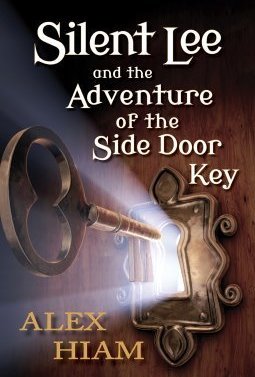
I received Silent Lee and the Adventure of the Side Door Key by Alex Hiam from Smith Publicity to read and review for my honest opinion. Since this novel has such a long title, I will be shortening it to just Silent Lee.
Silent Lee is about a young girl about the age of fourteen named Silent Lee, (she prefers Sie). Sie has been living in the Side Door world majority of her life.
A note on the Side Door world and the Front Door world:
Side Door world - the magical world that you can only enter through the side door of a house. You must have the special key in order to activate this world. Not all side doors are a part of the Side Door world. If there is a side door that doesn't have an exit, then you're in luck!
Front Door world - the modern world that you enter via the front door, back door, or windows. This is the world that Raahi lives in along with Sie's mother.
One day, Sie's mother takes Sie away from her Auntie Gen's. Then, before Sie realizes, Auntie Gen dies (or so we think). The story continues to follow Sie as she gets dropped off at her cousins house, who eventually leave her for summer vacation, and Raahi entering Sie's life. Sie gets a note from her Auntie Gen and she begins questioning what it could mean and whether her Aunt is actually dead. So, being the curious soul that she is, she follows the note as best as she can. Raahi is by her side throughout the entirety of the story and even to the very ending when they find and rescue Auntie Gen from being held captive by Sie's mother who is a CIA agent.
This was a fast-paced, middle grade novel that will keep your attention until the very end. I can't wait to read more of Sie's story!
Characters:
Silent Lee (Sie) - the protagonist, fourteen years old and a witch who travels from the Side Door world and the Front Door world. Mixed ethnicity - African American and European.
Raahi - a minor protagonist who befriends Sie because he has a crush on her. Same age as Sie and follows her throughout the story. Indian ethnicity.
Auntie Gen - Sie's aunt who is originally presumed dead, but was actually held captive by the CIA and Sie's mother. Also a witch and the holder of the Side Door key until she gives it to Sie.
Agent Lee - Sie's adoptive mother, may not actually be a part of the Side Door world at all. She tries to steal the power within the Side Door world to bring back into the Front Door world.
Mr. Vose - art gallery owner who helps Sie and Raahi.
The Custodian - balance keeper of the Front Door world, helps Sie and Raahi in a time of need.
Reasons why I rated it 5 stars:
1. The plot:
The plot was very driven and I did not find any plot holes. The story was written in a very high level for a middle grade novel and I truly enjoyed it.
2. My enjoyment:
I loved Silent Lee and the Adventure of the Side Door Key so much!
3. Character and story development:
Man oh man! There was a ton of background and development for both the characters and the story!! I was really blown away as there was more then the average young adult novel.
4. Grammar and spelling:
I did not find any grammatical or spelling errors and Silent Lee was very well-written.
5. The overall story:
This was such an adorable story! I really loved the modern and historical balance that the author created while also adding a bit of magic into the story.
"Bookworms ate books - they didn't read them. And what was wrong with reading, anyway?"
Review:
I received Silent Lee and the Adventure of the Side Door Key by Alex Hiam from Smith Publicity to read and review for my honest opinion. Since this novel has such a long title, I will be shortening it to just Silent Lee.
Silent Lee is about a young girl about the age of fourteen named Silent Lee, (she prefers Sie). Sie has been living in the Side Door world majority of her life.
A note on the Side Door world and the Front Door world:
Side Door world - the magical world that you can only enter through the side door of a house. You must have the special key in order to activate this world. Not all side doors are a part of the Side Door world. If there is a side door that doesn't have an exit, then you're in luck!
Front Door world - the modern world that you enter via the front door, back door, or windows. This is the world that Raahi lives in along with Sie's mother.
One day, Sie's mother takes Sie away from her Auntie Gen's. Then, before Sie realizes, Auntie Gen dies (or so we think). The story continues to follow Sie as she gets dropped off at her cousins house, who eventually leave her for summer vacation, and Raahi entering Sie's life. Sie gets a note from her Auntie Gen and she begins questioning what it could mean and whether her Aunt is actually dead. So, being the curious soul that she is, she follows the note as best as she can. Raahi is by her side throughout the entirety of the story and even to the very ending when they find and rescue Auntie Gen from being held captive by Sie's mother who is a CIA agent.
This was a fast-paced, middle grade novel that will keep your attention until the very end. I can't wait to read more of Sie's story!
Characters:
Silent Lee (Sie) - the protagonist, fourteen years old and a witch who travels from the Side Door world and the Front Door world. Mixed ethnicity - African American and European.
Raahi - a minor protagonist who befriends Sie because he has a crush on her. Same age as Sie and follows her throughout the story. Indian ethnicity.
Auntie Gen - Sie's aunt who is originally presumed dead, but was actually held captive by the CIA and Sie's mother. Also a witch and the holder of the Side Door key until she gives it to Sie.
Agent Lee - Sie's adoptive mother, may not actually be a part of the Side Door world at all. She tries to steal the power within the Side Door world to bring back into the Front Door world.
Mr. Vose - art gallery owner who helps Sie and Raahi.
The Custodian - balance keeper of the Front Door world, helps Sie and Raahi in a time of need.
Reasons why I rated it 5 stars:
1. The plot:
The plot was very driven and I did not find any plot holes. The story was written in a very high level for a middle grade novel and I truly enjoyed it.
2. My enjoyment:
I loved Silent Lee and the Adventure of the Side Door Key so much!
3. Character and story development:
Man oh man! There was a ton of background and development for both the characters and the story!! I was really blown away as there was more then the average young adult novel.
4. Grammar and spelling:
I did not find any grammatical or spelling errors and Silent Lee was very well-written.
5. The overall story:
This was such an adorable story! I really loved the modern and historical balance that the author created while also adding a bit of magic into the story.
"Bookworms ate books - they didn't read them. And what was wrong with reading, anyway?"
A Bibliophagist (113 KP) rated The Toll (Arc of a Scythe, #3) in Books
Feb 5, 2020
Characters (3 more)
Worldbuilding
Plot
Pacing
A fantasic finale
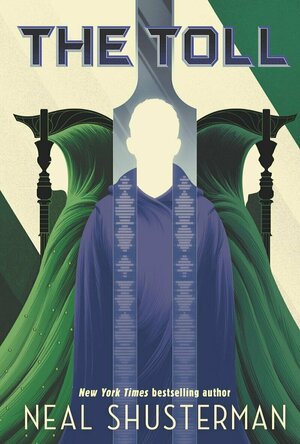
After the amazing cliffhanger of Thunderhead, I rushed to pick up this because I just HAD TO KNOW. This cover is even prettier, they really nailed this series (sans the transformers font) and I hope it inspires more YA books to hire illustrators and not photo manip garbage. I'm an Illustrator though, so I'm biased. This review will have spoilers for Thunderhead, so don't read if you haven't read that!
The Toll picks up immediately after Thunderhead. Goddard has returned the MidMerica, no one knows that he was demoted to apprentice and with the death of Scythe Curie he stands uncontested for replacing Xenocrates. Anastasia and Rowan rest at the bottom of the ocean, and Goddard has made the site a site of remembrance to avoid any evidence being drudged up. The sinking of Endura is also squarely blamed on Rowan, and the world suffers as the Thunderhead punishes everyone, marking them unsavory. Cutting off communication with all but one, our former unsavory, Greyson.
With the rise of Goddard, the Schism amongst the Scythedom widens. He seizes more power, overturns rules and makes new ones and slowly starts taking control of other nations. Dubbing himself the Overblade. The story arches over 3 years post Thunderhead, and we jump around a little bit. During the three years Goddard continues to take a chokehold on the world, Greyson suddenly finds himself a living god amongst the tonists and humanity, as the only one able to speak to the thunderhead, he takes on the role of the Tonist's mythological figure, The Toll. Acting as a go-between, and manipulating those around him to fulfill the Thunderhead's goals.
Meanwhile, Faraday continues his search for the land of nod, making serious headway and discovering something that makes the Thunderhead uncertain. So the Thunderhead starts making plans. Faraday finds himself stranded with his helper, far away from the Scythedom, the Thunderhead and the horrible things that have been happening far away. He knows nothing of the fate of Marie, Goddard, Citra, Rowan, or the world. Finally, in the third year since the sinking of Endura, Rowan and Citra are raised from the depths, squirreled away by the Amazonian Scythes before Goddard knows they aren't dead. Being raised from the dead did wonders for Goddard's cause, so can Anastaisa's return do wonders for the plight of the old guard? But first Anastasia must plan and play her cards right, digging deep in the Thunderheads back brain to piece together mysteries long since written off and uncover the secrets of the Scythedom.
This book was really good, and a very satisfying finale to the series. The already rich worldbuilding is made richer by his choice to cut the world off from the Thunderhead, showing us what happens when people lose their connection to the world. He believably shows the influence one charismatic politician can have, and how easy it is for things to fall into disarray. You can tell he had a gameplan when he wrote these books, because everything comes together just right, not loose ends, everything had a purpose. Characters are tested, grow and develop. New parts of the world are further explored, completing the picture he begun in the other two books. I thoroughly enjoyed his take on the age-old sci-fi trope of "How does the benevolent computer protect humans from themselves". Well written, and elevated, especially in terms of other YA fiction. Shusterman really wrote a fantastic series. Once again, the romance is understated, but the emotions run deep enough at this point to pull at your heartstrings and make you believe in their love, even if it came from somewhat unbelievable beginnings.
This series is well worth the read, and a breath of fresh air in an otherwise stale and formulaic YA world.
The Toll picks up immediately after Thunderhead. Goddard has returned the MidMerica, no one knows that he was demoted to apprentice and with the death of Scythe Curie he stands uncontested for replacing Xenocrates. Anastasia and Rowan rest at the bottom of the ocean, and Goddard has made the site a site of remembrance to avoid any evidence being drudged up. The sinking of Endura is also squarely blamed on Rowan, and the world suffers as the Thunderhead punishes everyone, marking them unsavory. Cutting off communication with all but one, our former unsavory, Greyson.
With the rise of Goddard, the Schism amongst the Scythedom widens. He seizes more power, overturns rules and makes new ones and slowly starts taking control of other nations. Dubbing himself the Overblade. The story arches over 3 years post Thunderhead, and we jump around a little bit. During the three years Goddard continues to take a chokehold on the world, Greyson suddenly finds himself a living god amongst the tonists and humanity, as the only one able to speak to the thunderhead, he takes on the role of the Tonist's mythological figure, The Toll. Acting as a go-between, and manipulating those around him to fulfill the Thunderhead's goals.
Meanwhile, Faraday continues his search for the land of nod, making serious headway and discovering something that makes the Thunderhead uncertain. So the Thunderhead starts making plans. Faraday finds himself stranded with his helper, far away from the Scythedom, the Thunderhead and the horrible things that have been happening far away. He knows nothing of the fate of Marie, Goddard, Citra, Rowan, or the world. Finally, in the third year since the sinking of Endura, Rowan and Citra are raised from the depths, squirreled away by the Amazonian Scythes before Goddard knows they aren't dead. Being raised from the dead did wonders for Goddard's cause, so can Anastaisa's return do wonders for the plight of the old guard? But first Anastasia must plan and play her cards right, digging deep in the Thunderheads back brain to piece together mysteries long since written off and uncover the secrets of the Scythedom.
This book was really good, and a very satisfying finale to the series. The already rich worldbuilding is made richer by his choice to cut the world off from the Thunderhead, showing us what happens when people lose their connection to the world. He believably shows the influence one charismatic politician can have, and how easy it is for things to fall into disarray. You can tell he had a gameplan when he wrote these books, because everything comes together just right, not loose ends, everything had a purpose. Characters are tested, grow and develop. New parts of the world are further explored, completing the picture he begun in the other two books. I thoroughly enjoyed his take on the age-old sci-fi trope of "How does the benevolent computer protect humans from themselves". Well written, and elevated, especially in terms of other YA fiction. Shusterman really wrote a fantastic series. Once again, the romance is understated, but the emotions run deep enough at this point to pull at your heartstrings and make you believe in their love, even if it came from somewhat unbelievable beginnings.
This series is well worth the read, and a breath of fresh air in an otherwise stale and formulaic YA world.

Matthew Krueger (10051 KP) rated Ghost Stories in Tabletop Games
Jul 28, 2020 (Updated Jul 30, 2020)
The Gameplay (4 more)
The Strategy
Replay Value
Thinking Ten Steps Ahead
The Concept
Hard (2 more)
Luck of the dice
The cruse dice
Spooky Scary Ghosts
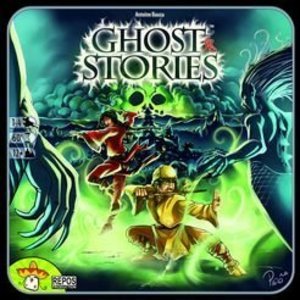
I learned about this game through Dice Tower reviews, Rahdo runthrough and BoardGameGeek. And it looked really good. A cooperative game in which the players protect the village from incarnations of the lord of hell – Wu-Feng – and his legions of ghosts before they haunt a town and recover the ashes that will allow him to return to life. That sounded really intresting and unquite. So i bought it and its a excellent game. Let me talk more about it..
Gameplay:
Each Player represents a Taoist monk working together with the others to fight off waves of ghosts.
The players, using teamwork, will have to exorcise the ghosts that appear during the course of the game. At the beginning of his turn, a player brings a ghost into play and places it on a free spot, and more than one can come in at the same time. The ghosts all have abilities of their own – some affecting the Taoists and their powers, some causing the active player to roll the curse die for a random effect, and others haunting the villager tiles and blocking that tile's special action. On his turn, a Taoist can move on a tile in order to exorcise adjacent ghosts or to benefit from the villager living on the tile, providing it is not haunted. Each tile of the village allows the players to benefit from a different bonus. With the cemetery, for example, Taoists can bring a dead Taoist back to life, while the herbalist allows to recover spent Tao tokens, etc. It will also be possible to get traps or move ghosts or unhaunt other village tiles.
To exorcise a ghost, the Taoist rolls three Tao dice with different colors: red, blue, green, yellow, black, and white. If the result of the roll matches the color(s) of the ghost or incarnation of Wu-Feng, the exorcism succeeds. The white result is a wild color that can be used as any color. For example, to exorcise a green ghost with 3 resistance, you need to roll three green, three white, or a combination of both. If your die rolls fall short, you can also use Tao tokens that match the color in addition to your roll. You may choose to use these after your roll. Taoists gain these tokens by using certain village tiles or by exorcising certain ghosts. One of the Taoists has a power that allows him to receive such a token once per turn.
To win, the players must defeat the incarnation of Wu-Feng, a boss who arrives at the end of the game. There are also harder difficulty levels that add more incarnations of Wu-Feng, in which to win, you must defeat all of them.
There are many more ways to lose, however. The players lose if three of the village's tiles are haunted, if the draw pile is emptied while the incarnation of Wu-Feng is still in play, or if all the priests are dead.
It is hard game but the strategy to this game is excellent cause you have to think about your moves and what to do next. That and the clock is ticking down to one of the ten Wu-Feng Minions. Also if 3 village spaces get crushed than you lose. Also the luck of the dice and the cards. The strategy is ten fold. Its hard but a excellent game and a must play game. Buy it if you havent already cause its a must. If you want to learn more or see a runthrough of the game go to BoardGameGeek, Rahdo Runthroughs or Dice Tower Reviews.
Gameplay:
Each Player represents a Taoist monk working together with the others to fight off waves of ghosts.
The players, using teamwork, will have to exorcise the ghosts that appear during the course of the game. At the beginning of his turn, a player brings a ghost into play and places it on a free spot, and more than one can come in at the same time. The ghosts all have abilities of their own – some affecting the Taoists and their powers, some causing the active player to roll the curse die for a random effect, and others haunting the villager tiles and blocking that tile's special action. On his turn, a Taoist can move on a tile in order to exorcise adjacent ghosts or to benefit from the villager living on the tile, providing it is not haunted. Each tile of the village allows the players to benefit from a different bonus. With the cemetery, for example, Taoists can bring a dead Taoist back to life, while the herbalist allows to recover spent Tao tokens, etc. It will also be possible to get traps or move ghosts or unhaunt other village tiles.
To exorcise a ghost, the Taoist rolls three Tao dice with different colors: red, blue, green, yellow, black, and white. If the result of the roll matches the color(s) of the ghost or incarnation of Wu-Feng, the exorcism succeeds. The white result is a wild color that can be used as any color. For example, to exorcise a green ghost with 3 resistance, you need to roll three green, three white, or a combination of both. If your die rolls fall short, you can also use Tao tokens that match the color in addition to your roll. You may choose to use these after your roll. Taoists gain these tokens by using certain village tiles or by exorcising certain ghosts. One of the Taoists has a power that allows him to receive such a token once per turn.
To win, the players must defeat the incarnation of Wu-Feng, a boss who arrives at the end of the game. There are also harder difficulty levels that add more incarnations of Wu-Feng, in which to win, you must defeat all of them.
There are many more ways to lose, however. The players lose if three of the village's tiles are haunted, if the draw pile is emptied while the incarnation of Wu-Feng is still in play, or if all the priests are dead.
It is hard game but the strategy to this game is excellent cause you have to think about your moves and what to do next. That and the clock is ticking down to one of the ten Wu-Feng Minions. Also if 3 village spaces get crushed than you lose. Also the luck of the dice and the cards. The strategy is ten fold. Its hard but a excellent game and a must play game. Buy it if you havent already cause its a must. If you want to learn more or see a runthrough of the game go to BoardGameGeek, Rahdo Runthroughs or Dice Tower Reviews.
Charmed & Dangerous
10.0 Rate It
Book
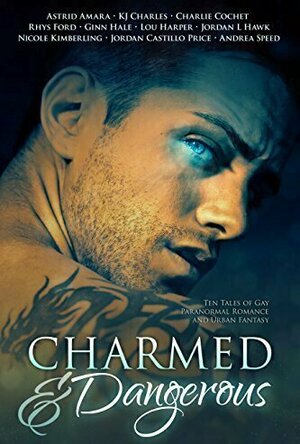
Magic takes many forms. From malignant hexes to love charms gone amok, you’ll find a vast array of...
Urban Fantasy Paranormal MM Romance

Whatchareadin (174 KP) rated If I Stay (If I Stay, #1) in Books
May 10, 2018

Mia is a typical 17 year old girl. She has a great family, plays the cello, has good friends and an incredible boyfriend. On a very non-typical day in her home of Oregon, a dusting of snow keeps the whole family home from work and school. Her family decides to take a drive and visit some family and friends. Unfortunately, on this journey, tragedy strikes. Mia's family is involved in a car accident. As Mia's life hangs in the balance, she reflects on all that has happened in her short time on earth and what would or could happen if she decided to stay.
I thought this was going to be a tear-jerker, but it wasn't so much. The events that took place are sad for sure, but I didn't find myself crying like I thought I would. Imagine if everyone in your immediate family is killed in a car accident and you are the only survivor. What do you do? You watch your whole family laying in pools of blood and then you watch yourself being operated on and see the looks in the eyes of your friends and family as they try to make sense of it all as well. In the book, the movie Ghost is referenced, and this book does remind me a bit of that movie. Patrick Swayze is dead though, and Mia is just trying to figure out if she should stay with the living, or go and be with her parents and her brother. It's a hard decision to make and I'm not sure if it is one that I could make. For me or for any other member of my family. How can you make the decision to let someone live or die? How do you make that decision yourself? Are we really able to make that decision?
My favorite part of this book, is looking back into Mia's life. Getting an understanding of who she is and who her family was. I love the fact that her family was so close and most of her life treated her like a little adult instead of a child. They were encouraging and always there for her. Her boyfriend and her best friend were the same way. They may not have always agreed on everything, but they were always understanding and willing to give a listening ear. I'm not sure if the series follows Mia along the rest of her journey, but I would like to know what her decision was.
I thought this was going to be a tear-jerker, but it wasn't so much. The events that took place are sad for sure, but I didn't find myself crying like I thought I would. Imagine if everyone in your immediate family is killed in a car accident and you are the only survivor. What do you do? You watch your whole family laying in pools of blood and then you watch yourself being operated on and see the looks in the eyes of your friends and family as they try to make sense of it all as well. In the book, the movie Ghost is referenced, and this book does remind me a bit of that movie. Patrick Swayze is dead though, and Mia is just trying to figure out if she should stay with the living, or go and be with her parents and her brother. It's a hard decision to make and I'm not sure if it is one that I could make. For me or for any other member of my family. How can you make the decision to let someone live or die? How do you make that decision yourself? Are we really able to make that decision?
My favorite part of this book, is looking back into Mia's life. Getting an understanding of who she is and who her family was. I love the fact that her family was so close and most of her life treated her like a little adult instead of a child. They were encouraging and always there for her. Her boyfriend and her best friend were the same way. They may not have always agreed on everything, but they were always understanding and willing to give a listening ear. I'm not sure if the series follows Mia along the rest of her journey, but I would like to know what her decision was.