

Colombia Social - Chat & Meet Colombian Singles
Lifestyle and Social Networking
App
Are you attracted to Colombian people or are you looking to meet people in Colombia? We have a great...

Korea Social - Dating Chat Korean Singles Nearby
Lifestyle and Social Networking
App
Are you attracted to Korean people or are you looking to meet people in Korea? We have a great new...

Filipino Social - Dating Chat Philippine Singles
Lifestyle and Social Networking
App
Are you attracted to Filipino people or are you looking to meet people in Philippines? We have a...

Venezuela Social - Meet & Chat with Venezuelans
Lifestyle and Social Networking
App
Are you attracted to Venezuelan people or are you looking to meet people in Venezuela? We have a...

Nick Rhodes recommended Man-Machine by Kraftwerk in Music (curated)



GREG - A Mathematical Puzzle Game To Train Your Brain Skills
Games and Education
App
### • Apple Best New Games • #1 Puzzle Game App • “A puzzle game that will test your speed...

ClareR (6256 KP) rated The First Woman in Books
Aug 11, 2021
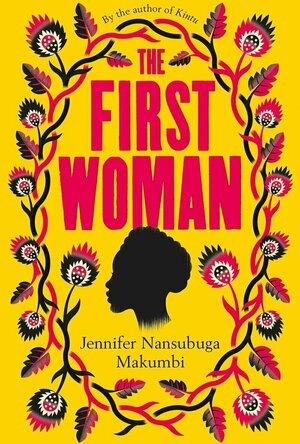

The First Woman taught me so much that I didn’t know about the clan system in Uganda, and about what it means to be a woman there. To be honest, it seems something of a minefield to live in a system of not just clans, but also class and ethnic groups.
Kirabo, the main character, also has to deal with the patriarchal system, colonialism and the hardships of Idi Amin’s regime.
But this is essentially a coming of age story. It’s the story of how Kirabo lives and grows up, about her longing fo the mother she has never met, about how she wants to find a place for herself in the world. It’s about mwenkanonkano - feminism - and how hard it is for Ugandan men to accept it. And finally, it’s about kweluma, and how people police, instead of support, one another. As Nsuuta says to Kirabo: “That is when oppressed people turn on each other or on themselves and bite. It is a form of relief. If you cannot bite your oppressor, you bite yourself.”
I loved this book: I empathised with Kirabo and her grandmothers friend Nsuuta. I admired that children were always first and foremost in a family and a clans mind, and I have to admit to struggling a little with the fact that women didn’t seem to have any rights over their children.
Would I recommend this book? Yes, I would. It’s a book that I’m glad came up on the Jellybooks programme, so thank you Jellybooks!

Chloe (514 KP) rated Inside Out (2015) in Movies
Mar 5, 2019

I watched this when I was about 17 and found it ok if a bit simplified in some area which is to be expected it being mainly family orientated but to be honest I love a bit of Disney to cheer me up although obviously I didn't get that from this.
Despite my personal tastes the movie itself has a good solid plot and a relatable and identifiable character as the main character is just experiencing regular life. I did like how they didn't shy away from presenting what happens when you can be in a bad situation as it increases awareness.

Lindsay (1818 KP) rated Be Still My Soul (The Cadence of Grace, #1) in Books
Feb 15, 2018

Gideon was somewhat like Lonnie father in terms with whiskey but doe change for the family he is got. Can he really change for the love of Lonnie or does he move on.
Find out by picking this book up and reading it. The Author put some really good issues in the book and Can Lonnie learn to trust or does her mistake ruin it for her and her son.

Amanda (1 KP) rated Avengers: Infinity War (2018) in Movies
Jan 2, 2019
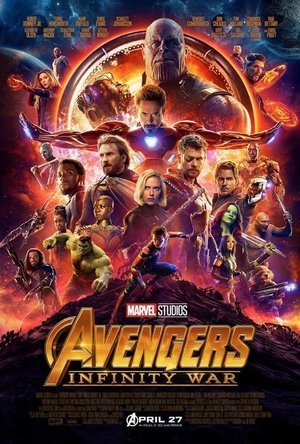
For me, this was has probably been the best addition to the franchise yet. Going into it, I certainly didn’t expect the wide range of emotions I would go through, I went from laughing with rocket and the guardians to being right in the middle of the grief.
What I like about this movie was that the ending was not one you may have necessarily guessed would happen but that’s what makes it more exciting. Personally I can’t wait to see the next instalment.
My only problem was...there was not enough Bucky or Captain America, they are my two favourite characters and would like to have seen more of them.