
Search
Search results
Ola cabs - Book taxi in India
Travel
App
The Ola cabs app is the easiest and fastest way to book a cab or a taxi in your city. With more than...
Soccer Star 2017 Top Leagues
Games and Entertainment
App
It’s the last match of the League and you are in a drawn. It’s your turn to choose the destiny...

Precision Ukulele Tuner - with Chords & Metronome
Music and Utilities
App
Precision Ukulele Tuner uses your device's microphone and visual feedback to enable you to tune your...

Bob Mann (459 KP) rated Crazy Rich Asians (2018) in Movies
Sep 28, 2021

Singapore Bling.
I’ve been catching up on films that I missed at the cinema during 2018. And this is one of the ones I most wanted to see but missed due to work commitments.
The Plot.
Rachel (Constance Wu) and Nick (Henry Golding) are young New Yorker professionals in love: Rachel is a successful economics professor and Nick… well, I’m not sure we ever find out what Nick ever does for a job, but his dress and confidence imply he’s doing well. Nick has an announcement: that his best friend Colin (Chris Pang) is getting married in Singapore and he invites Rachel to join him and meet his parents.
The trip discloses something previously hidden to Rachel: that Nick is actually heir to one of the richest families in Singapore. Indeed, as they got their money from property, the family effectively BUILT Singapore! But once in Singapore, life becomes hard for Rachel. She has to deal with the “not good enough for my Nick” disapproval of Nick’s family (led by Nick’s mother, the imperious Eleanor (Michelle Yeoh). Not only that, but thanks to Nick’s eligible-batchelor status and the pervasive nature of social media, everyone in Singapore knows about Nick and Rachel. As such, many of the ‘hens’ of Colin’s fiancee Araminta have it in for Rachel. (Araminta is played by Sonoya Mizuno, so memorable in “Ex Machina“).
Layers of rich characters.
This is not your average rom-com. Because here there’s a depth of characters within Nick’s broader family to entertain, each with their own set of quirks and issues. The dynamic of the family matriarch, grandmother (Lisa Lu), with the rest of the family is also fascinating; Friend or foe for Rachel? – it’s often difficult to tell.
Also entertaining is the introduction of Rachel’s old college room-mate Peil Lin Goh (a superbly over-the-top bonkers performance by Awkwafina) and her ‘nouveau-riche’ family. Her father (Ken Jeong) is simply hilarious in a bat-shit crazy sort of way.
But it’s the two engaging leads that impress most, particularly Henry Golding. Prior to this – his debut movie role – he was a Malaysian TV travel reporter! (He of course followed this performance up a month later with his equally impressive role as Blake Lively’s husband in “A Simple Favour“).
As sponsored by the Singapore tourist board.
Much of the action could be lifted from “My Best Friend’s Wedding”, “Meet the Parents” or “Mean Girls”. But it’s all given a refreshing asian facelift with its Singapore setting.
Singapore is one of my favourite cities: safe, clean and vibrant and with drop-dead gorgeous architecture. And I actually saw this movie while flying back out of Singapore itself. As such, I reflected on just what a great promotional flick for the tourist industry it was. From the wedding party at the Gardens by the Bay to the utterly jaw-dropping infinity pool at the “ship-hotel” (the Marina Bay Sands hotel, featured through a stunning fireworks-infused drone shot), all convey the excitement of the place.
A fun feel-good classic.
What’s impressive about the sharp writing is that this is the movie screenplay debut for co-writers Peter Chiarelli and Adele Lim. It’s a movie that makes you occasionally sit up and go ‘wow’. As an example, there’s a quirky ‘social media tsunami’ scene in the first 10 minutes. But the movie then builds with character-development stories that, while not particularly novel, are engagingly well-written and well delivered by the enthusiastic ensemble cast.
The director is John M Chu, whose less-than-stellar CV includes “GI: Joe” and “Now You See Me 2”, but here delivers a breathless momentum that lasts to the final scene.
The perfect wife and the perfect husband? Michael (Pierre Png), the boy who married well (which feels a plot borrowed from “Lost”), with the lovely Astrid (Gemma Chan). (Source: Warner Brothers).
And it’s that denouement that got to me. I don’t tend to get slushy about these sort of romantic comedies. But there’s a “reveal” in the final few minutes of the movie that completely surprised me (even though it should have been obvious!). It actually made me well-up!
It didn’t make a big dent in the awards nominations. But for fans of quirky romantic comedies it’s a recommended watch. It’s really difficult to dislike!
The Plot.
Rachel (Constance Wu) and Nick (Henry Golding) are young New Yorker professionals in love: Rachel is a successful economics professor and Nick… well, I’m not sure we ever find out what Nick ever does for a job, but his dress and confidence imply he’s doing well. Nick has an announcement: that his best friend Colin (Chris Pang) is getting married in Singapore and he invites Rachel to join him and meet his parents.
The trip discloses something previously hidden to Rachel: that Nick is actually heir to one of the richest families in Singapore. Indeed, as they got their money from property, the family effectively BUILT Singapore! But once in Singapore, life becomes hard for Rachel. She has to deal with the “not good enough for my Nick” disapproval of Nick’s family (led by Nick’s mother, the imperious Eleanor (Michelle Yeoh). Not only that, but thanks to Nick’s eligible-batchelor status and the pervasive nature of social media, everyone in Singapore knows about Nick and Rachel. As such, many of the ‘hens’ of Colin’s fiancee Araminta have it in for Rachel. (Araminta is played by Sonoya Mizuno, so memorable in “Ex Machina“).
Layers of rich characters.
This is not your average rom-com. Because here there’s a depth of characters within Nick’s broader family to entertain, each with their own set of quirks and issues. The dynamic of the family matriarch, grandmother (Lisa Lu), with the rest of the family is also fascinating; Friend or foe for Rachel? – it’s often difficult to tell.
Also entertaining is the introduction of Rachel’s old college room-mate Peil Lin Goh (a superbly over-the-top bonkers performance by Awkwafina) and her ‘nouveau-riche’ family. Her father (Ken Jeong) is simply hilarious in a bat-shit crazy sort of way.
But it’s the two engaging leads that impress most, particularly Henry Golding. Prior to this – his debut movie role – he was a Malaysian TV travel reporter! (He of course followed this performance up a month later with his equally impressive role as Blake Lively’s husband in “A Simple Favour“).
As sponsored by the Singapore tourist board.
Much of the action could be lifted from “My Best Friend’s Wedding”, “Meet the Parents” or “Mean Girls”. But it’s all given a refreshing asian facelift with its Singapore setting.
Singapore is one of my favourite cities: safe, clean and vibrant and with drop-dead gorgeous architecture. And I actually saw this movie while flying back out of Singapore itself. As such, I reflected on just what a great promotional flick for the tourist industry it was. From the wedding party at the Gardens by the Bay to the utterly jaw-dropping infinity pool at the “ship-hotel” (the Marina Bay Sands hotel, featured through a stunning fireworks-infused drone shot), all convey the excitement of the place.
A fun feel-good classic.
What’s impressive about the sharp writing is that this is the movie screenplay debut for co-writers Peter Chiarelli and Adele Lim. It’s a movie that makes you occasionally sit up and go ‘wow’. As an example, there’s a quirky ‘social media tsunami’ scene in the first 10 minutes. But the movie then builds with character-development stories that, while not particularly novel, are engagingly well-written and well delivered by the enthusiastic ensemble cast.
The director is John M Chu, whose less-than-stellar CV includes “GI: Joe” and “Now You See Me 2”, but here delivers a breathless momentum that lasts to the final scene.
The perfect wife and the perfect husband? Michael (Pierre Png), the boy who married well (which feels a plot borrowed from “Lost”), with the lovely Astrid (Gemma Chan). (Source: Warner Brothers).
And it’s that denouement that got to me. I don’t tend to get slushy about these sort of romantic comedies. But there’s a “reveal” in the final few minutes of the movie that completely surprised me (even though it should have been obvious!). It actually made me well-up!
It didn’t make a big dent in the awards nominations. But for fans of quirky romantic comedies it’s a recommended watch. It’s really difficult to dislike!
Bob Mann (459 KP) rated Fantastic Beasts and Where to Find Them (2016) in Movies
Sep 29, 2021
Marvelous Cash Cows and How to Milk Them.
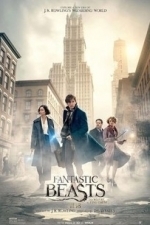
As just about everyone in the whole muggle world (or nomaj world if you’re reading this in the States) knows, FBaWtFT is the first of a five film spin-off series from the Potter franchise, still under the careful stewardship of David Yates. (And if the other films in the series were ‘amber-lit’ rather than ‘green-lit’, their production now seems assured after the US opening weekend alone has brought in nearly half its $180 million budget).
Set in New York in the mid-1920’s Eddie Redmayne (“The Danish Girl”; “The Theory of Everything”) plays Newt Scamander, a Brit newly arrived with a case full of trouble. Newt is a bit like an amiable and ditsy David Attenborough, with a strong desire to protect and establish breeding colonies for endangered species. It’s fair to say though that these are creatures that even Sir David hasn’t yet filmed.
Within the battered old case (a forerunner of Hermione Grainger’s bag, which was probably borrowed from Mary Poppins), Newt stores a menagerie of strange and wonderful creatures which – after a bump and a mishap – get released by wannabe baker and muggle Jacob Kowalski (Dan Fogler, “Fanboys”). Newt has the job of rounding up the strays with the help of Tina (Katherine Waterston, “Steve Jobs”), an out of favour member of the Magical Congress of the USA (MACUSA). Unfortunately this couldn’t be happening at a worse time: something else – nothing to do with Newt – is wreaking havoc across New York and MACUSA is on red alert suspecting the involvement of a dark wizard, Gellert Grindelwald, following attacks in Europe. And keeping the secrets of wizardry from the NoMaj population is getting increasingly difficult, especially with the efforts of the “Second Salemers” movement run by Mary Lou (Samantha Morton, “Minority Report”) and her strange adopted family.
This film will obviously be an enormous success given the love of all things Potter, but is it any good? Well, its different for sure, being set many years before Potter and only having glancing references to Hogwarts and related matters. And that gives the opportunity to start afresh with new characters and new relationships which is refreshing. It’s all perfectly amiable, with Redmayne’s slightly embarrassed lack of eye-contact* in delivering his lines being charming. [* Is this perhaps the second leading character in a month that is high on the autistic spectrum?] . Redmayne does have a tendency to mutter though and (particularly with the sound system for the cinema I saw this in) this made a lot of his dialogue inaudible. Waterston makes for a charming if somewhat insipid heroine, not being given an awful lot to do in the action sequences.
Kowalski adds a humorous balance to the mixture, but the star comic turns are some of the creatures, especially the Niffler… a light fingered magpie-like creature with a voluminous pouch and expensive tastes!
In the ‘I-almost-know-who-that-is-behind-the-make-up-but-can’t-quite-place-him’ role is Ron “Hellboy” Perlman as the untrustworthy gangster Gnarlack. And in another cameo – and probably paid an enormous fee for his 30 seconds of screen time – is Johnny Depp, which was money well-wasted since, like most of his roles, he was completely unrecognisable (I only knew it was him from checking imdb afterwards).
At the pen is J.K.Rowling herself, and there are a few corking lines in the script. However, in common with many of her novels, there is also a tendency for extrapolation and padding. Some judicial editing could have knocked at least twenty minutes off its child-unfriendly 133 minute running time and made a better film. Undoubtedly the first half of the film is better than the second, with the finale slouching into – as my other half put it – “superhero” territory with much CGI destruction and smashing of glass. What is perhaps most surprising about the story is that there are few obvious set-ups for the next film.
Quirky and original, its a film that will no-doubt please Potter fans and it stands as a decent fantasy film in its own right. It’s difficult though to get the smell of big business and exploitation out of your nostrils: no doubt stockings throughout the world will be full of plush toy nifflers this Christmas.
Set in New York in the mid-1920’s Eddie Redmayne (“The Danish Girl”; “The Theory of Everything”) plays Newt Scamander, a Brit newly arrived with a case full of trouble. Newt is a bit like an amiable and ditsy David Attenborough, with a strong desire to protect and establish breeding colonies for endangered species. It’s fair to say though that these are creatures that even Sir David hasn’t yet filmed.
Within the battered old case (a forerunner of Hermione Grainger’s bag, which was probably borrowed from Mary Poppins), Newt stores a menagerie of strange and wonderful creatures which – after a bump and a mishap – get released by wannabe baker and muggle Jacob Kowalski (Dan Fogler, “Fanboys”). Newt has the job of rounding up the strays with the help of Tina (Katherine Waterston, “Steve Jobs”), an out of favour member of the Magical Congress of the USA (MACUSA). Unfortunately this couldn’t be happening at a worse time: something else – nothing to do with Newt – is wreaking havoc across New York and MACUSA is on red alert suspecting the involvement of a dark wizard, Gellert Grindelwald, following attacks in Europe. And keeping the secrets of wizardry from the NoMaj population is getting increasingly difficult, especially with the efforts of the “Second Salemers” movement run by Mary Lou (Samantha Morton, “Minority Report”) and her strange adopted family.
This film will obviously be an enormous success given the love of all things Potter, but is it any good? Well, its different for sure, being set many years before Potter and only having glancing references to Hogwarts and related matters. And that gives the opportunity to start afresh with new characters and new relationships which is refreshing. It’s all perfectly amiable, with Redmayne’s slightly embarrassed lack of eye-contact* in delivering his lines being charming. [* Is this perhaps the second leading character in a month that is high on the autistic spectrum?] . Redmayne does have a tendency to mutter though and (particularly with the sound system for the cinema I saw this in) this made a lot of his dialogue inaudible. Waterston makes for a charming if somewhat insipid heroine, not being given an awful lot to do in the action sequences.
Kowalski adds a humorous balance to the mixture, but the star comic turns are some of the creatures, especially the Niffler… a light fingered magpie-like creature with a voluminous pouch and expensive tastes!
In the ‘I-almost-know-who-that-is-behind-the-make-up-but-can’t-quite-place-him’ role is Ron “Hellboy” Perlman as the untrustworthy gangster Gnarlack. And in another cameo – and probably paid an enormous fee for his 30 seconds of screen time – is Johnny Depp, which was money well-wasted since, like most of his roles, he was completely unrecognisable (I only knew it was him from checking imdb afterwards).
At the pen is J.K.Rowling herself, and there are a few corking lines in the script. However, in common with many of her novels, there is also a tendency for extrapolation and padding. Some judicial editing could have knocked at least twenty minutes off its child-unfriendly 133 minute running time and made a better film. Undoubtedly the first half of the film is better than the second, with the finale slouching into – as my other half put it – “superhero” territory with much CGI destruction and smashing of glass. What is perhaps most surprising about the story is that there are few obvious set-ups for the next film.
Quirky and original, its a film that will no-doubt please Potter fans and it stands as a decent fantasy film in its own right. It’s difficult though to get the smell of big business and exploitation out of your nostrils: no doubt stockings throughout the world will be full of plush toy nifflers this Christmas.
Kayleigh (12 KP) rated Beautiful Creatures (Caster Chronicles, #1) in Books
Jan 2, 2019
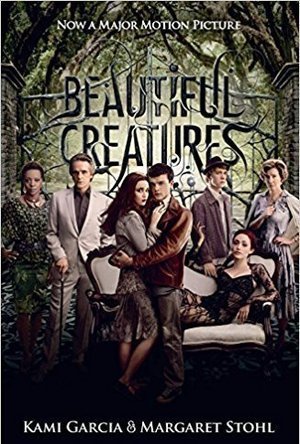
I was made aware of this book when, at the cinema to see Les Miserables, I saw the trailer for the film adaptation. Apart from loving the song, which immediately went on my iPod when I got home (Seven Devils – Florence + the Machine), what I saw caught my attention enough to jot down the name and read the book.
Beautiful Creatures is set in the fictional town of Gatlin, South Carolina. Ethan Wate, from whose perspective the book is written, describes his town’s residents as either “stupid or stuck”, and can’t wait to leave, bored with the banality of his life. Fairly soon into the book, the reader is pulled into his dream, where we meet a girl smelling of lemons and rosemary, in need of help. A girl who, although he hasn’t yet met her, Ethan can’t live without.
The girl is Lena Duchannes (“Duchannes rhymes with rain”), with black hair, green eyes, and mysterious powers that see her surrounded by the pathetic fallacy. It’s often raining when Lena’s upset, and at one point there’s even a tornado. Lena’s a Caster, a broader term for a witch that, within her family, also includes a palimpsest, a siren and an incubus. The main premise of the story is that Lena’s family is cursed, and on the night of their sixteenth birthday each member of that family becomes ‘claimed’ as either a dark or light Caster. Lena keeps a count on her hand of how many days she has left until this night, but until she gets to that point, she’s tormented by a Carrie-esque group of Gatlin-born-and-raised girls, alongside much of the rest of the town.
I read quite a good blog post on this a few days ago, although, sorry, I can’t find it again for love nor money now! They pointed out that Ethan had a fair few feminine qualities (being very observant of Lena’s clothes, for example), but that if the story had been written from Lena’s perspective, it would have been 900 pages of teenage angst. I agree with that! It’s easy to see why she would be feeling so fraught though – it is made clear that she has no control over which way she will turn. If she is claimed as a Dark Caster, the book says, her personality will completely change, and she’ll no longer be able to see the family she has grown up with (apart from Ridley, I guess).
I did enjoy the story – it was fast paced, there was always enough going on to hold my attention, and there was a great twist at the end that I didn’t see coming. I really liked the fact that Lena craved normality, even though it was, ironically, the thing that Ethan hates about his town. As a teenager with medical/weight/my share of social issues, I could really relate to the idea that, despite whatever else she had going on, she just wanted to be able to do what everyone else does, no matter how boring or basic it may seem. That really resonated with me.
I was also really fascinated with the character of Ridley. She came strutting onto the scene and automatically made my jaw drop, as I think she was supposed to. Even when we’re told she’s a Dark Caster, her struggle with good and bad always seems to be lurking somewhere. <spoiler>I thought it really added grit to the book that she and Lena were best friends all through their childhood – you can really tell that Ridley still wants what’s best for Lena, even if that later translates to her trying to help Sarafine turn Lena towards the dark side. Then, later on, it’s obvious she has feelings for Link, and even the darkness within her can’t squash that. It’s an intriguing conflict!</spoiler>
However, I think this book will only ever be a guilty pleasure, and that’s because of the love thing. Now, I must admit, it’s not as bad as the Twilight film (which sickened me, and put me off reading the books), where Bella and Edward meet and she’s almost straight away “in love” with him. However, it’s still obvious almost from the beginning that by the end of the book, Lena and Ethan will have said those 3 overused, under-meant words – “I love you”. She’s 15, and he’s 16, by the way. <spoiler>The book manages to make it seem like their destiny by making their ancestors romantically linked, but I’m still not sure.</spoiler> I admit this may be because I’m slightly biased; I’ve never been in love, and didn’t actually have a boyfriend as a teenager. Maybe it is really easy to fall in love, I don’t know. To me though, being realistic is important – even in a fantasy book. As a reader, I need to be able to relate to the characters in some way, and it seemed like a cliche to make their feelings so intense, despite the events in the book.
Then, there’s the ending. While I really enjoyed the twist at the end, it was over too quickly. <spoiler>There was so much build up to meeting Sarafine, only for her to die (it seemed like) 10 minutes after she was first introduced. Plus, what happened to Ridley? Technically, Lena didn’t choose a side, so I do want to read further on in the series to see what happened to her – I’ll be really disappointed if she’s just forgotten about. As well as this, I want to know more about the name changes – why are they necessary, and do the new names fit them better somehow?</spoiler>
Well, if you’ve made it through my rambling, I’m impressed! I know I haven’t mentioned several important characters (Amma, for one), but I’ve covered most of the things I remember thinking about the book. Overall, I did like it and I reckon I'll see the film when it comes out on DVD, as well as reading more of the series, but I did see some parallels with Twilight, which isn't necessarily a good thing!
This review is also on my <a href="http://awowords.wordpress.com">blog</a> - if you liked it, please check it out!
Beautiful Creatures is set in the fictional town of Gatlin, South Carolina. Ethan Wate, from whose perspective the book is written, describes his town’s residents as either “stupid or stuck”, and can’t wait to leave, bored with the banality of his life. Fairly soon into the book, the reader is pulled into his dream, where we meet a girl smelling of lemons and rosemary, in need of help. A girl who, although he hasn’t yet met her, Ethan can’t live without.
The girl is Lena Duchannes (“Duchannes rhymes with rain”), with black hair, green eyes, and mysterious powers that see her surrounded by the pathetic fallacy. It’s often raining when Lena’s upset, and at one point there’s even a tornado. Lena’s a Caster, a broader term for a witch that, within her family, also includes a palimpsest, a siren and an incubus. The main premise of the story is that Lena’s family is cursed, and on the night of their sixteenth birthday each member of that family becomes ‘claimed’ as either a dark or light Caster. Lena keeps a count on her hand of how many days she has left until this night, but until she gets to that point, she’s tormented by a Carrie-esque group of Gatlin-born-and-raised girls, alongside much of the rest of the town.
I read quite a good blog post on this a few days ago, although, sorry, I can’t find it again for love nor money now! They pointed out that Ethan had a fair few feminine qualities (being very observant of Lena’s clothes, for example), but that if the story had been written from Lena’s perspective, it would have been 900 pages of teenage angst. I agree with that! It’s easy to see why she would be feeling so fraught though – it is made clear that she has no control over which way she will turn. If she is claimed as a Dark Caster, the book says, her personality will completely change, and she’ll no longer be able to see the family she has grown up with (apart from Ridley, I guess).
I did enjoy the story – it was fast paced, there was always enough going on to hold my attention, and there was a great twist at the end that I didn’t see coming. I really liked the fact that Lena craved normality, even though it was, ironically, the thing that Ethan hates about his town. As a teenager with medical/weight/my share of social issues, I could really relate to the idea that, despite whatever else she had going on, she just wanted to be able to do what everyone else does, no matter how boring or basic it may seem. That really resonated with me.
I was also really fascinated with the character of Ridley. She came strutting onto the scene and automatically made my jaw drop, as I think she was supposed to. Even when we’re told she’s a Dark Caster, her struggle with good and bad always seems to be lurking somewhere. <spoiler>I thought it really added grit to the book that she and Lena were best friends all through their childhood – you can really tell that Ridley still wants what’s best for Lena, even if that later translates to her trying to help Sarafine turn Lena towards the dark side. Then, later on, it’s obvious she has feelings for Link, and even the darkness within her can’t squash that. It’s an intriguing conflict!</spoiler>
However, I think this book will only ever be a guilty pleasure, and that’s because of the love thing. Now, I must admit, it’s not as bad as the Twilight film (which sickened me, and put me off reading the books), where Bella and Edward meet and she’s almost straight away “in love” with him. However, it’s still obvious almost from the beginning that by the end of the book, Lena and Ethan will have said those 3 overused, under-meant words – “I love you”. She’s 15, and he’s 16, by the way. <spoiler>The book manages to make it seem like their destiny by making their ancestors romantically linked, but I’m still not sure.</spoiler> I admit this may be because I’m slightly biased; I’ve never been in love, and didn’t actually have a boyfriend as a teenager. Maybe it is really easy to fall in love, I don’t know. To me though, being realistic is important – even in a fantasy book. As a reader, I need to be able to relate to the characters in some way, and it seemed like a cliche to make their feelings so intense, despite the events in the book.
Then, there’s the ending. While I really enjoyed the twist at the end, it was over too quickly. <spoiler>There was so much build up to meeting Sarafine, only for her to die (it seemed like) 10 minutes after she was first introduced. Plus, what happened to Ridley? Technically, Lena didn’t choose a side, so I do want to read further on in the series to see what happened to her – I’ll be really disappointed if she’s just forgotten about. As well as this, I want to know more about the name changes – why are they necessary, and do the new names fit them better somehow?</spoiler>
Well, if you’ve made it through my rambling, I’m impressed! I know I haven’t mentioned several important characters (Amma, for one), but I’ve covered most of the things I remember thinking about the book. Overall, I did like it and I reckon I'll see the film when it comes out on DVD, as well as reading more of the series, but I did see some parallels with Twilight, which isn't necessarily a good thing!
This review is also on my <a href="http://awowords.wordpress.com">blog</a> - if you liked it, please check it out!
Kirk Bage (1775 KP) rated Roma (2018) in Movies
Mar 2, 2020 (Updated Mar 3, 2020)
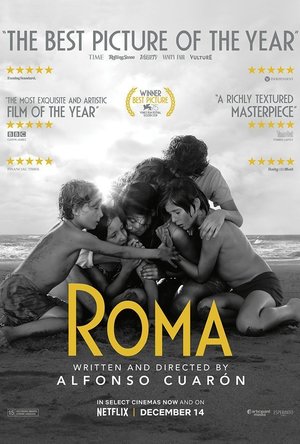
I watched Roma exactly a week ago today. And although I knew 20 minutes in that I loved it, and at the end that I really loved it, I have taken that time to let it settle within me in before coming to write about it. Some films are so good that you have to do that: let it sink into you fully, before doing anything so trivial as judging and comparing them. Roma is incomparable! I have never seen anything like it, or felt as deeply moved by a film in a long time.
Not that it didn’t get attention at the time of its release, it did, receiving 10 Oscar nominations and winning 3, for best foreign language film, director and cinematography, but it certainly wasn’t seen by as many people as it should have been, despite its presence on Netflix from the start. Having digested it now, and spending some time reading about how and why it was made, I feel a slight mission to recommend it to as many people as I can.
Based on Alfonso Cuarón’s own childhood in Mexico City, and his memories of his family and especially their housemaid, Liboria (Libo) Rodriguez, to whom the film is dedicated, it is a masterpiece labour of love that few directors ever achieve or even attempt to make. After a strong career of exceptional films, including Y Tu Mamá También, Children of Men and Gravity, it was the box office and critical success of the latter that gave Cuarón carte blanche to go and make whatever project he chose. Where many might have been tempted by the big money of superhero or fantasy movies (for which he had some experience with Harry Potter and the Prisoner of Azkaban) he went back to his roots and shot a very personal non-English film, in black and white, where no music exists except that which occurs naturally, and on the surface not much happens.
At least it feels like not much is happening, such is the naturalistic, almost improvised (although it wasn’t) style and pace; shot with a lens capturing detail and nuance with some of the most beautiful photography I have ever had the privilege to see. Truly, an awful lot is happening, but you have to feel and experience it, not simply be told it by the narrative. It takes a while for our Hollywood conditioned brains to accept this at first, and many might come to it and give up half an hour in because of that challenge. I can promise, however, there is not a single thing boring about this film, unless humanity is boring.
Oscar nominated lead Yalitza Aparicio as the shy, loving maid, Cleo, was not an actor before this film. She auditioned and was hand picked by Cuarón from hundreds of young women, without knowing who he was or what the film was about. Apparently, the film was shot in sequence so as not to confuse her emotionally on her extraordinary journey. She is so unassuming and natural that part of you falls in love with her immediately. In time, we almost come to forget we are watching an act at all, and almost become her, such is the empathy she evokes.
Which isn’t an easy ride, as we watch her be gently and then cruelly ignored, mistreated and used; climaxing in one of the most astonishingly painful and jaw-dropping scenes imaginable, and then a scene of such powerful redemption and humanity it instantly breaks the heart and lifts the soul. All the while she never asks for attention or love, but is just herself: a young woman living a difficult but beautiful life in a country and time full of turmoil, prejudice and social change.
The recreation of Mexico in 1970 is so breathtaking, it is hard to imagine at times we are not watching a documentary from that era. But, it is the detail the lens chooses to capture that reminds you this is a visual poem and a love-letter to a time, a place and a family far away in history and the memory of one man (represented by ten year old Carlos Peralta as Paco). At times it evokes the work of the very greatest film artists of all time: Bergman, Fellini, Hitchcock etc. Not one image is wasted or insignificant, from the reflection of the sky in water, to the dog-shit constantly lining the driveway. Everything is chosen and meaningful in the full context of the work.
There is no awkward exposition, no dramatic moments milked for all they are worth, no sequences of heightened excitement that manipulate us; simply truthful moments that hang in the air for what they are, leaving us to decide how we relate to them without ever preaching or teaching us how. In that way, it is a work of such maturity that I doubt many living directors could emulate it at all. The closest comparison I can think of is the personal passion Spielberg put into Shindler’s List, but really it is a moot comparison, and in fact owes much more to films like Haneke’s The White Ribbon.
Can it be faulted? Well, yes, certainly. But, honestly, I don’t see the point in trying. It is as close to perfection a small story of this kind can be. Importantly, I think it is an open film, that allows us to take from it whatever we like, relating to our own experiences and cares. For me, it said that any pain and hardship can be overcome, as long as there is love and beauty walking by its side. A message of no small importance. If you haven’t seen it, I urge you to do so. If you have, then please keep spreading the word. I believe it to be a genuine classic that will endure the criticism of many decades to come. Without a doubt in my mind something very special indeed.
Not that it didn’t get attention at the time of its release, it did, receiving 10 Oscar nominations and winning 3, for best foreign language film, director and cinematography, but it certainly wasn’t seen by as many people as it should have been, despite its presence on Netflix from the start. Having digested it now, and spending some time reading about how and why it was made, I feel a slight mission to recommend it to as many people as I can.
Based on Alfonso Cuarón’s own childhood in Mexico City, and his memories of his family and especially their housemaid, Liboria (Libo) Rodriguez, to whom the film is dedicated, it is a masterpiece labour of love that few directors ever achieve or even attempt to make. After a strong career of exceptional films, including Y Tu Mamá También, Children of Men and Gravity, it was the box office and critical success of the latter that gave Cuarón carte blanche to go and make whatever project he chose. Where many might have been tempted by the big money of superhero or fantasy movies (for which he had some experience with Harry Potter and the Prisoner of Azkaban) he went back to his roots and shot a very personal non-English film, in black and white, where no music exists except that which occurs naturally, and on the surface not much happens.
At least it feels like not much is happening, such is the naturalistic, almost improvised (although it wasn’t) style and pace; shot with a lens capturing detail and nuance with some of the most beautiful photography I have ever had the privilege to see. Truly, an awful lot is happening, but you have to feel and experience it, not simply be told it by the narrative. It takes a while for our Hollywood conditioned brains to accept this at first, and many might come to it and give up half an hour in because of that challenge. I can promise, however, there is not a single thing boring about this film, unless humanity is boring.
Oscar nominated lead Yalitza Aparicio as the shy, loving maid, Cleo, was not an actor before this film. She auditioned and was hand picked by Cuarón from hundreds of young women, without knowing who he was or what the film was about. Apparently, the film was shot in sequence so as not to confuse her emotionally on her extraordinary journey. She is so unassuming and natural that part of you falls in love with her immediately. In time, we almost come to forget we are watching an act at all, and almost become her, such is the empathy she evokes.
Which isn’t an easy ride, as we watch her be gently and then cruelly ignored, mistreated and used; climaxing in one of the most astonishingly painful and jaw-dropping scenes imaginable, and then a scene of such powerful redemption and humanity it instantly breaks the heart and lifts the soul. All the while she never asks for attention or love, but is just herself: a young woman living a difficult but beautiful life in a country and time full of turmoil, prejudice and social change.
The recreation of Mexico in 1970 is so breathtaking, it is hard to imagine at times we are not watching a documentary from that era. But, it is the detail the lens chooses to capture that reminds you this is a visual poem and a love-letter to a time, a place and a family far away in history and the memory of one man (represented by ten year old Carlos Peralta as Paco). At times it evokes the work of the very greatest film artists of all time: Bergman, Fellini, Hitchcock etc. Not one image is wasted or insignificant, from the reflection of the sky in water, to the dog-shit constantly lining the driveway. Everything is chosen and meaningful in the full context of the work.
There is no awkward exposition, no dramatic moments milked for all they are worth, no sequences of heightened excitement that manipulate us; simply truthful moments that hang in the air for what they are, leaving us to decide how we relate to them without ever preaching or teaching us how. In that way, it is a work of such maturity that I doubt many living directors could emulate it at all. The closest comparison I can think of is the personal passion Spielberg put into Shindler’s List, but really it is a moot comparison, and in fact owes much more to films like Haneke’s The White Ribbon.
Can it be faulted? Well, yes, certainly. But, honestly, I don’t see the point in trying. It is as close to perfection a small story of this kind can be. Importantly, I think it is an open film, that allows us to take from it whatever we like, relating to our own experiences and cares. For me, it said that any pain and hardship can be overcome, as long as there is love and beauty walking by its side. A message of no small importance. If you haven’t seen it, I urge you to do so. If you have, then please keep spreading the word. I believe it to be a genuine classic that will endure the criticism of many decades to come. Without a doubt in my mind something very special indeed.

Ivana A. | Diary of Difference (1171 KP) rated Daisy's Vintage Cornish Camper Van in Books
Aug 3, 2020
<a href="https://amzn.to/2Wi7amb">Wishlist</a> | <a
<a href="https://diaryofdifference.com/">Blog</a> | <a href="https://www.facebook.com/diaryofdifference/">Facebook</a> | <a href="https://twitter.com/DiaryDifference">Twitter</a> | <a href="https://www.instagram.com/diaryofdifference/">Instagram</a> | <a href="https://www.pinterest.co.uk/diaryofdifference/pins/">Pinterest</a>
<img src="https://diaryofdifference.com/wp-content/uploads/2020/04/Book-Review-Banner-40.png"/>
Daisy's Vintage Cornish Camper Van by Ali McNamara is exactly the book I thought I needed to put me in a better mood!
When Ana inherits a camper van from her best friend, she needs to go to Cornwall to get it. A nice sea air and fish and chips are enver a bad choice.
But when she arrives, she realises that the camper van is in a much worse state than she imagined. The fixing will take longer than she anticipated. On top of this, Ana finds a series of unsent postcards dating back to the 1940s, hidden in the van. This is a sign and Ana wants to make sure the postcards are delivered.
And while the camper van is restored and Ana is helping other people be happy, she may eventually notice she is finding her way back to happiness again.
<b><i>My Thoughts:</i></b>
Daisy's Vintage Cornish Camper Van got my attention from the moment I saw that beautiful cover. Then, I read the synopsis and I was sold.
For me, both camper vans and postcards have a big importance in my life. I have always wanted to have a camper van and be able to go on a road trips and experience that freedom. Even though I was lucky to be able to travel the world, it is never enough.
<b><i>"Yes, there's definitely something about a camper van that makes people smile. They're a happy vehicle, so people enjoy seeing them as much as their owners enjoy driving them."</i></b>
And postcards were always a way to travel without living my home. Get to meet other places and cultures, meet other people. It is extraordinary how many things I have learned about the world and the people from other countries just by reading their postcards.
<b><i>"Deltiology - it's the name for the study and collection of postcards. It comes from the Greek word deltios, which means "writing tablet" or "letter"."</i></b>
Ana is working in London, busy in her day-to-day job. When her best friend Daisy dies, she is completely lost. Daisy was everything she had, and now she is gone. When she inherits this van, Ana is eager to pick the van up and return to her normal London routine. She is not really a fan of travel, camper vans or camping. But Daisy was, and if she wanted for Ana to have this van and that was her last wish, this is the least Ana can do for her.
<b><i>"These old vehicles are very sensitive - especially camper vans. They're the worst, very temperamental they can be."</i></b>
Throughout her stay, Ana meets Malachi, the mechanic, who sold the van to Daisy and who will help Ana restore it. He is a very interesting character with an interesting point of view on life.
He was my favourite character in the book.
<b><i>"People pay a lot of money these days to find themselves. They're not really finding themselves, they're finding a version of themselves they feel happy to be for a while."
"We all change through our lives, and what you're happy to be when you're twenty is unlikely to be what you're happy being when you're older."</i></b>
Malachi also has a camper van himself. He always tells Ana why camper vans are amazing. If you are a fan of camper van, this book will be a favourite by default.
<b><i>"But... you'd be mad not to at least try camping in her. It's a wonderful experience. You can drive where you like, set up camp and cook your dinner in the open air, even bed down under the stars if you're lucky. The freedom is amazing."</i></b>
I loved everything about this book. The story was beautiful. All the characters were likeable and real. They all had their stories and points of development. It was nice to see Ana finally healing and learning to be happy again. Malachi's story was beautiful and it was the perfect closure to his mission. Noah's personal story was also heartwarming, as he learns to accept what happened in the past and be able to move on. I also really want to talk about the mystery couple from the postcards, but I won't, in fear that I will spoil anything. But the development on that story was amazing and it helped Ana in many ways to heal herself, which was magical!
<b><i>"If something is worth doing, Ana - I hear one of her favourite sayings echo in my ears - it's worth doing well."</i></b>
To summarize - Daisy's Vintage Cornish Camper Van is my new favorite!
Beautiful and heartwarming. It will make you want to go on a road trip. I definitely recommend Daisy's Vintage Cornish Camper Van. And as with every book, I love learning random things, and here are some things I learned:
<b><i>"Did you know the phrase "dilly-dally" is commonly attributed to the English music hall singer Marie Lloyd, but was actually in use much earlier than her 1918 song, as far back as the seventeenth century?"
"A Splitty. It's what we call a split screen camper van. All pre-1967 camper vans have a windscreen split in two. After that the new models all had the solid bay windows."</i></b>
<a href="https://amzn.to/2Wi7amb">Wishlist</a> | <a
<a href="https://diaryofdifference.com/">Blog</a> | <a href="https://www.facebook.com/diaryofdifference/">Facebook</a> | <a href="https://twitter.com/DiaryDifference">Twitter</a> | <a href="https://www.instagram.com/diaryofdifference/">Instagram</a> | <a href="https://www.pinterest.co.uk/diaryofdifference/pins/">Pinterest</a>
<img src="https://diaryofdifference.com/wp-content/uploads/2020/04/Book-Review-Banner-40.png"/>
Daisy's Vintage Cornish Camper Van by Ali McNamara is exactly the book I thought I needed to put me in a better mood!
When Ana inherits a camper van from her best friend, she needs to go to Cornwall to get it. A nice sea air and fish and chips are enver a bad choice.
But when she arrives, she realises that the camper van is in a much worse state than she imagined. The fixing will take longer than she anticipated. On top of this, Ana finds a series of unsent postcards dating back to the 1940s, hidden in the van. This is a sign and Ana wants to make sure the postcards are delivered.
And while the camper van is restored and Ana is helping other people be happy, she may eventually notice she is finding her way back to happiness again.
<b><i>My Thoughts:</i></b>
Daisy's Vintage Cornish Camper Van got my attention from the moment I saw that beautiful cover. Then, I read the synopsis and I was sold.
For me, both camper vans and postcards have a big importance in my life. I have always wanted to have a camper van and be able to go on a road trips and experience that freedom. Even though I was lucky to be able to travel the world, it is never enough.
<b><i>"Yes, there's definitely something about a camper van that makes people smile. They're a happy vehicle, so people enjoy seeing them as much as their owners enjoy driving them."</i></b>
And postcards were always a way to travel without living my home. Get to meet other places and cultures, meet other people. It is extraordinary how many things I have learned about the world and the people from other countries just by reading their postcards.
<b><i>"Deltiology - it's the name for the study and collection of postcards. It comes from the Greek word deltios, which means "writing tablet" or "letter"."</i></b>
Ana is working in London, busy in her day-to-day job. When her best friend Daisy dies, she is completely lost. Daisy was everything she had, and now she is gone. When she inherits this van, Ana is eager to pick the van up and return to her normal London routine. She is not really a fan of travel, camper vans or camping. But Daisy was, and if she wanted for Ana to have this van and that was her last wish, this is the least Ana can do for her.
<b><i>"These old vehicles are very sensitive - especially camper vans. They're the worst, very temperamental they can be."</i></b>
Throughout her stay, Ana meets Malachi, the mechanic, who sold the van to Daisy and who will help Ana restore it. He is a very interesting character with an interesting point of view on life.
He was my favourite character in the book.
<b><i>"People pay a lot of money these days to find themselves. They're not really finding themselves, they're finding a version of themselves they feel happy to be for a while."
"We all change through our lives, and what you're happy to be when you're twenty is unlikely to be what you're happy being when you're older."</i></b>
Malachi also has a camper van himself. He always tells Ana why camper vans are amazing. If you are a fan of camper van, this book will be a favourite by default.
<b><i>"But... you'd be mad not to at least try camping in her. It's a wonderful experience. You can drive where you like, set up camp and cook your dinner in the open air, even bed down under the stars if you're lucky. The freedom is amazing."</i></b>
I loved everything about this book. The story was beautiful. All the characters were likeable and real. They all had their stories and points of development. It was nice to see Ana finally healing and learning to be happy again. Malachi's story was beautiful and it was the perfect closure to his mission. Noah's personal story was also heartwarming, as he learns to accept what happened in the past and be able to move on. I also really want to talk about the mystery couple from the postcards, but I won't, in fear that I will spoil anything. But the development on that story was amazing and it helped Ana in many ways to heal herself, which was magical!
<b><i>"If something is worth doing, Ana - I hear one of her favourite sayings echo in my ears - it's worth doing well."</i></b>
To summarize - Daisy's Vintage Cornish Camper Van is my new favorite!
Beautiful and heartwarming. It will make you want to go on a road trip. I definitely recommend Daisy's Vintage Cornish Camper Van. And as with every book, I love learning random things, and here are some things I learned:
<b><i>"Did you know the phrase "dilly-dally" is commonly attributed to the English music hall singer Marie Lloyd, but was actually in use much earlier than her 1918 song, as far back as the seventeenth century?"
"A Splitty. It's what we call a split screen camper van. All pre-1967 camper vans have a windscreen split in two. After that the new models all had the solid bay windows."</i></b>
<a href="https://amzn.to/2Wi7amb">Wishlist</a> | <a
<a href="https://diaryofdifference.com/">Blog</a> | <a href="https://www.facebook.com/diaryofdifference/">Facebook</a> | <a href="https://twitter.com/DiaryDifference">Twitter</a> | <a href="https://www.instagram.com/diaryofdifference/">Instagram</a> | <a href="https://www.pinterest.co.uk/diaryofdifference/pins/">Pinterest</a>
Chris Sawin (602 KP) rated Free Guy (2021) in Movies
Dec 14, 2021 (Updated Dec 14, 2021)
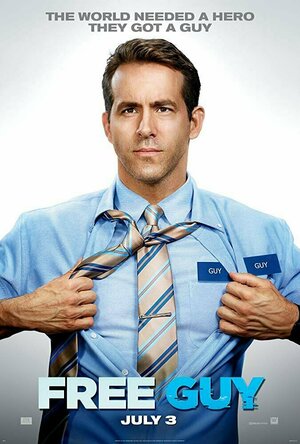
Taika Waititi. (2 more)
The cameos.
Impressive special effects.
Not as funny as it could have been. (2 more)
Love being the "hokey" solution.
Mouser.
Artificial Excellence
Filmed in 2019 and finally seeing release after five separate delays from its original July 2020 premiere date, Free Guy is a sci-fi action comedy directed by Shawn Levy (Real Steal, the Night at the Museum trilogy) and written by Matt Lieberman (Scoob!) and Zak Penn (Ready Player One), which follows the life of Guy (Ryan Reynolds), an NPC that and lives and works as a bank teller in Free City.
Completely content with every day being exactly the same as the day before, Guy’s life is changed forever following a chance encounter with a ‘Sunglasses Person’ (the film’s term for player characters) named Molotov Girl (Jodie Comer).
An homage to Grand Theft Auto’s Vice City, with some elements from Fortnite sprinkled in for good measure, Free City is located within a video game of the same name, and boasts a population of various NPCs (non-player characters) as they go through their daily routines completely unaware that they’re stuck within the confines of a video game.
These NPCs cater to the whim of the Sunglasses People, who are seen as unapproachable heroes, but in actuality are just players from the real world who want to loot, steal, and cause chaos in order to achieve virtual richness in free city.
Ryan Reynolds’ real-life demeanor and sense of humor are so similar to his portrayal of Deadpool that almost anything Reynolds has done since 2016 has undoubtedly reminded you of The Merc With A Mouth.
To that end, in Free Guy, Reynolds’ narration of his own story, combined with the film’s explosive action, will definitely have filmgoers reminiscing about Marvel’s pair of R-rated X-men spin-offs – an inevitable circumstance of being a successful actor and allowing oneself to be typecast into roles similar to their most popular one.
While there are some laugh out loud moments in Free Guy, the “Oh, he found the button,” scene being the most notable, the film simply isn’t as funny as you think it’s going to be.
There’s no arguing that Free Guy is amusing to a certain extent, but its repeated gags and attempts at humor, more often than not, fall flat. Taika Waititi’s Antwan character, the man calling the shots when it comes to Free City’s game development, is a highlight of the film.
However, the promotional clip of Waititi’s outtakes released to hype the film, whose content supposedly made it into the film (spoiler alert: they didn’t), is better than any of Antwan’s actual lines of dialogue in the theatrical cut.
The cameos in Free Guy are some of the best surprises to stumble onto while seeing the film. They won’t be spoiled here, though some of them have been spoiled on the internet already, but there are a couple of really fun ones that are so much more entertaining if you go in not expecting them.
In fact, one of the lengthier such cameos, which extends across multiple scenes and features in several minutes of screen time, is a major source for hilarity in Free Guy.
The premise of Free Guy a A background character in a video game becomes sentient – is its most promising aspect. Guy, motivated by a desire to get more out of life than the daily routine he’s accustomed to, essentially betters himself simply because he wants to. In a way, it’s an I, Robot kind of concept burrito’d within a world that would fit within the walls of Ready Player One.
Surprisingly, given its filming before the outbreak of the pandemic, the film is also extremely relatable to how our reality is still under the thumb of an unpredictable coronavirus. Guy being trapped within the walls of Free City and wanting more out of life is an awfully similar sentiment to wanting everything back to normal after being stuck in months-long lockdowns.
Yet, Free Guy’s solid special effects, absurd humor, and surprisingly effective cameos are nearly derailed by how much time it devotes to the its love story.
Guy’s big awakening all comes down to finding the girl of his dreams, which then branches off into a different sort of relationship in the real world that was right under two character’s noses from the start. It feels like it was meant to be this sort of revelation in the film, but comes off as this, “Duh,” moment anyone besides the writers could have predicted.
Speaking of the film’s writing, the character of Mouser (Utkarsh Ambudkar) is so poorly written that it’s unbearable and exhausting.
A developer working alongside Antwan and Keys (Joe Kerry), Mouser comes off a rival to the later, acting like he can do Keys’ job better than Keys can and constantly breaking his balls from the moment he is introduced. Throughout the film, Mouser wants to do nothing more than whatever Antwan says, even if it’s morally reprehensible.
But, predictably, in the film’s final moments, Mouser is suddenly Keys’ best friend, wanting to do what’s right all for the sake of a happy ending.
Ultimately, while Free Guy has an amazing concept, it’s trapped within a massively underwhelming execution.
Admittedly, the film looks like it was an absolute blast to make, but also incredibly expensive. This tall budget, combined with public hesitancy to return to theaters and the Delta variant of COVID seemingly on the verge of backtracking all the progress we’ve made since the vaccine became readily available to the public, it makes you wonder if Free Guy has any sort of chance of making a respectable amount of money at the box office or even just breaking even.
Note: This was originally written when the film opened in theaters. Free Guy would go on to make $331.5 million on a $100-$125 million budget. A sequel is currently in the works.
Completely content with every day being exactly the same as the day before, Guy’s life is changed forever following a chance encounter with a ‘Sunglasses Person’ (the film’s term for player characters) named Molotov Girl (Jodie Comer).
An homage to Grand Theft Auto’s Vice City, with some elements from Fortnite sprinkled in for good measure, Free City is located within a video game of the same name, and boasts a population of various NPCs (non-player characters) as they go through their daily routines completely unaware that they’re stuck within the confines of a video game.
These NPCs cater to the whim of the Sunglasses People, who are seen as unapproachable heroes, but in actuality are just players from the real world who want to loot, steal, and cause chaos in order to achieve virtual richness in free city.
Ryan Reynolds’ real-life demeanor and sense of humor are so similar to his portrayal of Deadpool that almost anything Reynolds has done since 2016 has undoubtedly reminded you of The Merc With A Mouth.
To that end, in Free Guy, Reynolds’ narration of his own story, combined with the film’s explosive action, will definitely have filmgoers reminiscing about Marvel’s pair of R-rated X-men spin-offs – an inevitable circumstance of being a successful actor and allowing oneself to be typecast into roles similar to their most popular one.
While there are some laugh out loud moments in Free Guy, the “Oh, he found the button,” scene being the most notable, the film simply isn’t as funny as you think it’s going to be.
There’s no arguing that Free Guy is amusing to a certain extent, but its repeated gags and attempts at humor, more often than not, fall flat. Taika Waititi’s Antwan character, the man calling the shots when it comes to Free City’s game development, is a highlight of the film.
However, the promotional clip of Waititi’s outtakes released to hype the film, whose content supposedly made it into the film (spoiler alert: they didn’t), is better than any of Antwan’s actual lines of dialogue in the theatrical cut.
The cameos in Free Guy are some of the best surprises to stumble onto while seeing the film. They won’t be spoiled here, though some of them have been spoiled on the internet already, but there are a couple of really fun ones that are so much more entertaining if you go in not expecting them.
In fact, one of the lengthier such cameos, which extends across multiple scenes and features in several minutes of screen time, is a major source for hilarity in Free Guy.
The premise of Free Guy a A background character in a video game becomes sentient – is its most promising aspect. Guy, motivated by a desire to get more out of life than the daily routine he’s accustomed to, essentially betters himself simply because he wants to. In a way, it’s an I, Robot kind of concept burrito’d within a world that would fit within the walls of Ready Player One.
Surprisingly, given its filming before the outbreak of the pandemic, the film is also extremely relatable to how our reality is still under the thumb of an unpredictable coronavirus. Guy being trapped within the walls of Free City and wanting more out of life is an awfully similar sentiment to wanting everything back to normal after being stuck in months-long lockdowns.
Yet, Free Guy’s solid special effects, absurd humor, and surprisingly effective cameos are nearly derailed by how much time it devotes to the its love story.
Guy’s big awakening all comes down to finding the girl of his dreams, which then branches off into a different sort of relationship in the real world that was right under two character’s noses from the start. It feels like it was meant to be this sort of revelation in the film, but comes off as this, “Duh,” moment anyone besides the writers could have predicted.
Speaking of the film’s writing, the character of Mouser (Utkarsh Ambudkar) is so poorly written that it’s unbearable and exhausting.
A developer working alongside Antwan and Keys (Joe Kerry), Mouser comes off a rival to the later, acting like he can do Keys’ job better than Keys can and constantly breaking his balls from the moment he is introduced. Throughout the film, Mouser wants to do nothing more than whatever Antwan says, even if it’s morally reprehensible.
But, predictably, in the film’s final moments, Mouser is suddenly Keys’ best friend, wanting to do what’s right all for the sake of a happy ending.
Ultimately, while Free Guy has an amazing concept, it’s trapped within a massively underwhelming execution.
Admittedly, the film looks like it was an absolute blast to make, but also incredibly expensive. This tall budget, combined with public hesitancy to return to theaters and the Delta variant of COVID seemingly on the verge of backtracking all the progress we’ve made since the vaccine became readily available to the public, it makes you wonder if Free Guy has any sort of chance of making a respectable amount of money at the box office or even just breaking even.
Note: This was originally written when the film opened in theaters. Free Guy would go on to make $331.5 million on a $100-$125 million budget. A sequel is currently in the works.
Mothergamer (1631 KP) rated the PlayStation 3 version of Fallout New Vegas in Video Games
Apr 3, 2019
Once I finished Fallout 3, I went on to playing Fallout New Vegas. I really liked the opening introduction to the game's main story line because it hooks you in right away showing just a glimpse of the underlying chaos in the Mojave wasteland with a pretty badass introduction narrated by Ron Perlman. Then you get to meet your main character the Courier who is in a messed up situation as they're getting mugged for a platinum chick they're delivering and some jerk in a checkered suit is explaining that the Courier has made their last delivery and while it may seem like bad luck, it's just that the game was rigged from the start. I knew right then it was going to get worse and it did as he shot the Courier in the head. I admit my initial thought was, how the heck is this going to work if the main character is dead? I got my answer fairly quickly as it showed the Courier waking up in a bed with an old man hovering over her looking concerned and asking if she was alright. The man introduced himself as Doc Mitchell and explains how the Courier survived thanks to a Securitron robot named Victor and the adventure of Fallout New Vegas begins in a town called Goodsprings.
Goodsprings of course gives you a chance to explore and get familiar with the game controls and how everything works. The controls are much better here than they were in Fallout 3 which made me happy. It also introduces you to the people in the town and you get a couple of quests from them. You also get a chance to speak with Victor the robot who saved your life. Honestly, I found Victor to be really creepy. He seemed friendly enough with his cowboy icon face and talking in a friendly cowboy drawl, but there was just something weird about him. It also didn't help that he kept popping up in odd places during my adventures and seemed to be following me. He did own up to it which I will give him, but he was creepy.
Once the tutorial introduction and quests are finished, you get to really explore the Mojave with the main goal being to find Benny; the man who stole the platinum chip from you and shot you leaving you for dead to get answers. For me it was to get answers, get the platinum chip back, and beat the crap out of him. I was still pretty ticked off about that whole ordeal with him shooting me.
To say that the world of Fallout New Vegas is big is an understatement. It is huge and you get an immediate sense of just how vast the Mojave wasteland is as you explore it. There are three big main factions fighting for control of the Mojave and the Hoover Dam and your decisions throughout the story affect which side you will help. There's the NCR a military expansion government, Caesar's Legion a group of Roman style slavers, and Mr. House the mysterious ruler of New Vegas.
There are so many side quests to do alongside the main story quests which isn't a bad thing. A lot of them were fun to do and the companion quests are interesting especially for the character of Boone. I liked Boone a great deal. There was a complexity to him that was intriguing and as my Courier got to know him better there was an understanding of why he was the way he was and a path towards him atoning for some of his past. It made for a great companion story and by the end of Boone's personal quest I liked him even more.
While I enjoyed Fallout New Vegas, there were many frustrating issues with it that had me swearing up a storm when they happened. The major thing were the constant dropped frame rates and freezing that caused the game to crash. When the game worked, it was a lot of fun to play. It just killed it for me when the game would freeze every couple of hours. I make sure to save my game often anyway with my games and I think that games like New Vegas are why. I did all the tricks too with clearing the cache on the PS3 and rebooting and it would still crash after a bit of time. That's incredibly irritating when I want to fully enjoy a game.
Then there's the weird quest bugs. I couldn't finish a quest for a couple of my companions because in one the quest item was nowhere to be found and in the other a quest the NPC I needed to complete the quest had disappeared completely. There were also occasions where I would get stuck in a wall or my companion would and I would have to reload my last save. I understand that there are going to be bugs and glitches in a game sometimes, they happen. However, the vast amount of glitches, bugs, and technical difficulties is inexcusable. I know that Obsidian the developers that worked on New Vegas apologized for all of that, but the thing is slapping a band aid on it is not going to cut it. For as long as the game has been out and the patches they had to fix the game, it should be fixed and yet those irritating issues remain.
Speaking of the DLC quests, I wanted to like all of them. I really did, but there were so many flaws. I only really liked two of the quests out of four. That's saying something. One of them I just could not stand at all. That was the Dead Money quest. I could not stand Dead Money. It was very clunky with the navigation and hard to see at some points. Getting gassed and waking up in a strange place without any of my gear and some crazy ex Brotherhood of Steel jerk was not good. As part of the story you also have a slave collar around your neck that happens to be on the same frequency as the radios in the surrounding areas and if you don't destroy the radios the collar will explode and kill you. This is an exercise in futility as every damn five minutes the collar beeps and you have to figure out exactly where the radio is. I found this tedious and slow which made this quest one of the worst I have ever played and I played Dragon Age The Descent. Yeah, I said it. The ending was a little satisfying, but not much because you don't really get anything out of it except a little payback to the egomaniac who put me through that nonsense.
Old World Blues was alright, but I hated the fact that once again I'm basically drugged and wake up in a strange place without all my gear. Seriously, was this the same writer for Dead Money? So I had to figure out where I was and I met the insane scientists in robot bodies who had brought me there. The thing that kept Old World Blues moderately entertaining for me was the humor. There were moments that had me laughing especially when one of the scientists claimed that my toes looked like tiny penises. There were some cool places to explore and some interesting things to see. The big thing that makes Old World Blues shine are the smartly written jokes and the humor about trying to understand another species and the differences between you. That's what made it fun for me.
The Lonesome Road was disappointing for me. It started out strongly with the introduction of this other mysterious courier, Ulysses demanding you show up to answer for what happened in a place called The Divide. There isn't really a strong urge to explore and it just seems to be travel from point A to point B. During that time you get to hear Ulysses drone on and on about the NCR, the Legion, and how you were the catalyst for nuclear missiles blowing up in the Divide. I like history a lot, but Ulysses made it freaking boring because he kept harping on the same thing repeatedly. It shows just how nuts Ulysses is because essentially he's blaming a mailman for something that had nothing to do with them. What happened in the Divide was an accident and while yes the Courier was delivering the package (a detonator) that awoke and caused all that, they had no idea what it was. The NCR did however and probably the Legion, so that's on them. Look, I get it. Ulysses had something very traumatizing happen to him and he needed something or someone to blame in order to be able to wrap his head around it, but when I was there face to face with him all I could think was, this whole thing was not my fault and you're crazy! I mean he wanted to punish a bunch of innocent people for the traumatizing thing for just a chance to wipe out the NCR and the Legion; that does not sound like someone who is operating at full capacity. Luckily, my speech, intelligence, and science perks were high enough that I convinced him peacefully that destroying all those people would help and even earned his respect. It's obvious in the writing that they meant for Ulysses to be a companion, but I guess they couldn't quite figure out how to make it work and this is what happened. It was okay, but it wasn't perfect and they could have made this a great story instead of a mediocre one.
Once I finished all those, I wrapped up the game with the final quest which was the battle for Hoover Dam. I had decided to help the NCR because while they're far from perfect I felt that they were a better choice than the group of rapist slavers that represented Caesar's Legion. I also liked and respected the fact that the NCR seemed to be protecting the idea of democracy and while they had their flaws, they were at least trying to do something good. The battle for the dam was epic and because I had successfully convinced the minor factions to join the NCR I had a lot of help battling Caesar's Legion. I totally loved the Boomers with their salvaged airplane taking out Legion soldiers from the sky. We fought hard and the battle was won; the NCR still had control of the dam. The game ends then showing all the different things that happen to the people and areas in the Mojave depending on your choices. Overall, the ending was pretty good and I was glad to see that many of my choices helped a lot of people who needed it. I can honestly say that I enjoyed playing Fallout New Vegas in spite of the technical issues and I'm glad I only paid 10 bucks for it. When the game works, it is worth playing and there is lots of adventuring to do with a great main story and solid side stories. Play through it at least once is my take on it.
Goodsprings of course gives you a chance to explore and get familiar with the game controls and how everything works. The controls are much better here than they were in Fallout 3 which made me happy. It also introduces you to the people in the town and you get a couple of quests from them. You also get a chance to speak with Victor the robot who saved your life. Honestly, I found Victor to be really creepy. He seemed friendly enough with his cowboy icon face and talking in a friendly cowboy drawl, but there was just something weird about him. It also didn't help that he kept popping up in odd places during my adventures and seemed to be following me. He did own up to it which I will give him, but he was creepy.
Once the tutorial introduction and quests are finished, you get to really explore the Mojave with the main goal being to find Benny; the man who stole the platinum chip from you and shot you leaving you for dead to get answers. For me it was to get answers, get the platinum chip back, and beat the crap out of him. I was still pretty ticked off about that whole ordeal with him shooting me.
To say that the world of Fallout New Vegas is big is an understatement. It is huge and you get an immediate sense of just how vast the Mojave wasteland is as you explore it. There are three big main factions fighting for control of the Mojave and the Hoover Dam and your decisions throughout the story affect which side you will help. There's the NCR a military expansion government, Caesar's Legion a group of Roman style slavers, and Mr. House the mysterious ruler of New Vegas.
There are so many side quests to do alongside the main story quests which isn't a bad thing. A lot of them were fun to do and the companion quests are interesting especially for the character of Boone. I liked Boone a great deal. There was a complexity to him that was intriguing and as my Courier got to know him better there was an understanding of why he was the way he was and a path towards him atoning for some of his past. It made for a great companion story and by the end of Boone's personal quest I liked him even more.
While I enjoyed Fallout New Vegas, there were many frustrating issues with it that had me swearing up a storm when they happened. The major thing were the constant dropped frame rates and freezing that caused the game to crash. When the game worked, it was a lot of fun to play. It just killed it for me when the game would freeze every couple of hours. I make sure to save my game often anyway with my games and I think that games like New Vegas are why. I did all the tricks too with clearing the cache on the PS3 and rebooting and it would still crash after a bit of time. That's incredibly irritating when I want to fully enjoy a game.
Then there's the weird quest bugs. I couldn't finish a quest for a couple of my companions because in one the quest item was nowhere to be found and in the other a quest the NPC I needed to complete the quest had disappeared completely. There were also occasions where I would get stuck in a wall or my companion would and I would have to reload my last save. I understand that there are going to be bugs and glitches in a game sometimes, they happen. However, the vast amount of glitches, bugs, and technical difficulties is inexcusable. I know that Obsidian the developers that worked on New Vegas apologized for all of that, but the thing is slapping a band aid on it is not going to cut it. For as long as the game has been out and the patches they had to fix the game, it should be fixed and yet those irritating issues remain.
Speaking of the DLC quests, I wanted to like all of them. I really did, but there were so many flaws. I only really liked two of the quests out of four. That's saying something. One of them I just could not stand at all. That was the Dead Money quest. I could not stand Dead Money. It was very clunky with the navigation and hard to see at some points. Getting gassed and waking up in a strange place without any of my gear and some crazy ex Brotherhood of Steel jerk was not good. As part of the story you also have a slave collar around your neck that happens to be on the same frequency as the radios in the surrounding areas and if you don't destroy the radios the collar will explode and kill you. This is an exercise in futility as every damn five minutes the collar beeps and you have to figure out exactly where the radio is. I found this tedious and slow which made this quest one of the worst I have ever played and I played Dragon Age The Descent. Yeah, I said it. The ending was a little satisfying, but not much because you don't really get anything out of it except a little payback to the egomaniac who put me through that nonsense.
Old World Blues was alright, but I hated the fact that once again I'm basically drugged and wake up in a strange place without all my gear. Seriously, was this the same writer for Dead Money? So I had to figure out where I was and I met the insane scientists in robot bodies who had brought me there. The thing that kept Old World Blues moderately entertaining for me was the humor. There were moments that had me laughing especially when one of the scientists claimed that my toes looked like tiny penises. There were some cool places to explore and some interesting things to see. The big thing that makes Old World Blues shine are the smartly written jokes and the humor about trying to understand another species and the differences between you. That's what made it fun for me.
The Lonesome Road was disappointing for me. It started out strongly with the introduction of this other mysterious courier, Ulysses demanding you show up to answer for what happened in a place called The Divide. There isn't really a strong urge to explore and it just seems to be travel from point A to point B. During that time you get to hear Ulysses drone on and on about the NCR, the Legion, and how you were the catalyst for nuclear missiles blowing up in the Divide. I like history a lot, but Ulysses made it freaking boring because he kept harping on the same thing repeatedly. It shows just how nuts Ulysses is because essentially he's blaming a mailman for something that had nothing to do with them. What happened in the Divide was an accident and while yes the Courier was delivering the package (a detonator) that awoke and caused all that, they had no idea what it was. The NCR did however and probably the Legion, so that's on them. Look, I get it. Ulysses had something very traumatizing happen to him and he needed something or someone to blame in order to be able to wrap his head around it, but when I was there face to face with him all I could think was, this whole thing was not my fault and you're crazy! I mean he wanted to punish a bunch of innocent people for the traumatizing thing for just a chance to wipe out the NCR and the Legion; that does not sound like someone who is operating at full capacity. Luckily, my speech, intelligence, and science perks were high enough that I convinced him peacefully that destroying all those people would help and even earned his respect. It's obvious in the writing that they meant for Ulysses to be a companion, but I guess they couldn't quite figure out how to make it work and this is what happened. It was okay, but it wasn't perfect and they could have made this a great story instead of a mediocre one.
Once I finished all those, I wrapped up the game with the final quest which was the battle for Hoover Dam. I had decided to help the NCR because while they're far from perfect I felt that they were a better choice than the group of rapist slavers that represented Caesar's Legion. I also liked and respected the fact that the NCR seemed to be protecting the idea of democracy and while they had their flaws, they were at least trying to do something good. The battle for the dam was epic and because I had successfully convinced the minor factions to join the NCR I had a lot of help battling Caesar's Legion. I totally loved the Boomers with their salvaged airplane taking out Legion soldiers from the sky. We fought hard and the battle was won; the NCR still had control of the dam. The game ends then showing all the different things that happen to the people and areas in the Mojave depending on your choices. Overall, the ending was pretty good and I was glad to see that many of my choices helped a lot of people who needed it. I can honestly say that I enjoyed playing Fallout New Vegas in spite of the technical issues and I'm glad I only paid 10 bucks for it. When the game works, it is worth playing and there is lots of adventuring to do with a great main story and solid side stories. Play through it at least once is my take on it.