
Search
Search results

Night Reader Reviews (683 KP) rated Lithium in Books
Jan 9, 2020
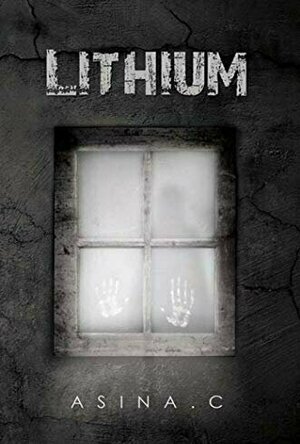

Lithium by Asina C is not the typical book style that comes to mind when I think about a fiction book based in Chernobyl. Normally I would expect such a book to be full of zombies or mutants who go around terrorizing a group of tourist that get lost but that is not the case with Lithium. Instead, this book mixes truth with science and a little bit of fantasy and gives readers a different type of story altogether. This book also talks about the Red Forest in Chernobyl and it sparked an interest in me to look up some pictures of the forest. I also did not notice too much that widely away from the actual facts about Chernobyl, though I would by no means consider myself to be well informed on the subject.
Zurin has lived with her mother for all of her twelve years in a small shack in Pripyat. Her mother has always kept Zurin inside her home for fear of radiation sickness and being seen. This is in part because the area in which they live is believed to be uninhabitable because of all the radiation still in everything following the explosion. Zurin has always been obedient to her mothers rules until one day when her mother goes to get supplies and Zurin decides to step outside for the first time but may have been seen by someone.
Then one day, shortly after her birthday Zurin wakes up to find her mother gone and blood on the floor. Zurin then ventures out into the Red Forest in search of her mother but gets extremely lost and succumbs to radiation sickness. Luckily she is found by a young couple who work for a travel company and snuck into a restricted area of Chernobyl to take pictures for their website. The couple takes Zurin to the hospital and adopts her once she gets better. As fate would have it months later Zurin returns to Pripyat in search of her mother yet again and finds herself in an abandoned hospital. It is in this hospital that she learns the truth about her mother and her life up to this point. Her only hope is to team up with a doctor she is not completely trusting of, the young couple, and a man she has never met before.
What I liked best was the idea of people still being able to live in a highly irradiated area such as Pripyat with few side effects was interesting. The book also offered some mystery as to who Zurin and her mother are and why they chose to continue to live in an isolated area such a Pripyat. What I liked least was a little more complicated. I understand the fact that people exposed to nuclear radiation and or uranium may mutate both physically and/or mentally if they survive. What I did not understand was Nikolavs goal by purposefully mutating the patients who survived the explosion but were trapped in the mental ward of the hospital.
This is definitely a young adult book, but for many, after high school, I feel like it would quickly lose its strong appeal. It is a good book but I feel like it would need to be a little more detailed, making the book a bit longer in order for it to have more of an appeal to adults. I ended up rating this book a 2 out of 4. This is because while I enjoy books set around Chernobyl (especially if mutated people or zombies are involved because it offers a plausible explanation for it) this book fell short of my expectations. One of the main issues I had was how the book fails to give solid reasoning and jumps from one topic to another.
https://nightreaderreviews.blogspot.com/
https://www.austinmacauley.com/book/lithium
Zurin has lived with her mother for all of her twelve years in a small shack in Pripyat. Her mother has always kept Zurin inside her home for fear of radiation sickness and being seen. This is in part because the area in which they live is believed to be uninhabitable because of all the radiation still in everything following the explosion. Zurin has always been obedient to her mothers rules until one day when her mother goes to get supplies and Zurin decides to step outside for the first time but may have been seen by someone.
Then one day, shortly after her birthday Zurin wakes up to find her mother gone and blood on the floor. Zurin then ventures out into the Red Forest in search of her mother but gets extremely lost and succumbs to radiation sickness. Luckily she is found by a young couple who work for a travel company and snuck into a restricted area of Chernobyl to take pictures for their website. The couple takes Zurin to the hospital and adopts her once she gets better. As fate would have it months later Zurin returns to Pripyat in search of her mother yet again and finds herself in an abandoned hospital. It is in this hospital that she learns the truth about her mother and her life up to this point. Her only hope is to team up with a doctor she is not completely trusting of, the young couple, and a man she has never met before.
What I liked best was the idea of people still being able to live in a highly irradiated area such as Pripyat with few side effects was interesting. The book also offered some mystery as to who Zurin and her mother are and why they chose to continue to live in an isolated area such a Pripyat. What I liked least was a little more complicated. I understand the fact that people exposed to nuclear radiation and or uranium may mutate both physically and/or mentally if they survive. What I did not understand was Nikolavs goal by purposefully mutating the patients who survived the explosion but were trapped in the mental ward of the hospital.
This is definitely a young adult book, but for many, after high school, I feel like it would quickly lose its strong appeal. It is a good book but I feel like it would need to be a little more detailed, making the book a bit longer in order for it to have more of an appeal to adults. I ended up rating this book a 2 out of 4. This is because while I enjoy books set around Chernobyl (especially if mutated people or zombies are involved because it offers a plausible explanation for it) this book fell short of my expectations. One of the main issues I had was how the book fails to give solid reasoning and jumps from one topic to another.
https://nightreaderreviews.blogspot.com/
https://www.austinmacauley.com/book/lithium
Sophia (Bookwyrming Thoughts) (530 KP) rated The 5th Wave: Book 1 in Books
Jan 23, 2020
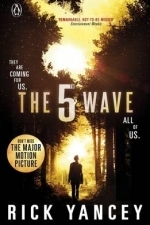


I really wanted to like <i>The 5th Wave</i>. The synopsis sounded fantastic, it's becoming a movie – the book just sounded like one of those that I would probably read quickly, enjoy it, demand the second book (in other words, snag it straight off Lupe's shelf), read through that quickly, and pretty much have another favorite book this year (there's really only two so far that are special).
I didn't even last thirty pages. <i>Thirty</i> pages, which says <i>a lot</i>, because while I may give up on books more often now, I don't usually give up THAT early.
The premise wasn't what made me give up reading <i>The 5th Wave</i> – characters trying to fight for survival? Sounds like <i>Hatchet</i>, only with the "aliens" attacking with "waves."
I only stopped because of Cassie. Cassie, short for Cassiopeia, the main character of the book. I couldn't stand her for the life of me.
She's materialistic – in a world when the world is literally falling apart around you, who <i>cares</i> about hygiene being top priority? It's great she cares (because you can't just walk to a job interview smelling like horse poop), but by the whatever wave that's past the first, I'm pretty sure you're too busy making surviving the <i>day</i> your priority.
She's rude – if there's one thing I don't like, it's texting while in a conversation simply because you're bored. Then, she says, "Oh, and in case you're an alien reading this? BITE ME."
Totally. I'm totally willing to bite Cassie... in a review, that is.
Basically, there was a vibe about her I didn't like early on. But with all of the flashbacks at literally every chapter, I not only got to know the world <i>before</i> the 1st Wave, I got to know Cassie as a person. And Cassie probably tops the list of the most annoying characters I've ever come across in a book.
Someone please tell me I'm not the only one who couldn't stand Cassie. If I am, I'm willing to cry in a little corner alone with my lonesome self...
<a href="https://bookwyrmingthoughts.com/dnf-review-the-5th-wave-by-rick-yancey/"; target="_blank">This review was originally posted on Bookwyrming Thoughts</a>
I didn't even last thirty pages. <i>Thirty</i> pages, which says <i>a lot</i>, because while I may give up on books more often now, I don't usually give up THAT early.
The premise wasn't what made me give up reading <i>The 5th Wave</i> – characters trying to fight for survival? Sounds like <i>Hatchet</i>, only with the "aliens" attacking with "waves."
I only stopped because of Cassie. Cassie, short for Cassiopeia, the main character of the book. I couldn't stand her for the life of me.
She's materialistic – in a world when the world is literally falling apart around you, who <i>cares</i> about hygiene being top priority? It's great she cares (because you can't just walk to a job interview smelling like horse poop), but by the whatever wave that's past the first, I'm pretty sure you're too busy making surviving the <i>day</i> your priority.
She's rude – if there's one thing I don't like, it's texting while in a conversation simply because you're bored. Then, she says, "Oh, and in case you're an alien reading this? BITE ME."
Totally. I'm totally willing to bite Cassie... in a review, that is.
Basically, there was a vibe about her I didn't like early on. But with all of the flashbacks at literally every chapter, I not only got to know the world <i>before</i> the 1st Wave, I got to know Cassie as a person. And Cassie probably tops the list of the most annoying characters I've ever come across in a book.
Someone please tell me I'm not the only one who couldn't stand Cassie. If I am, I'm willing to cry in a little corner alone with my lonesome self...
<a href="https://bookwyrmingthoughts.com/dnf-review-the-5th-wave-by-rick-yancey/"; target="_blank">This review was originally posted on Bookwyrming Thoughts</a>
The Football Pocket Bible: The Perfect Gift for Every Football Fan
Book
The perfect gift for every football fan When was the first World Cup held? Which football team has...
KittyMiku (138 KP) rated A Throne For Sisters in Books
May 23, 2019
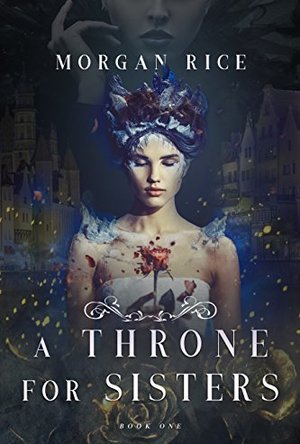

This was a fairly good novel that teaches you that lying can bring you more harm than good, even if it buys you a little happiness. It also teaches you that no matter what, you can't escape those who wish to harm you. Even if the people who do so change. The story was the best to help create the intrigue in the story itself, but it did have a lot of errors that left something to be desired. I have to say the characters were pretty interesting, even if their backgrounds, personalities and such were lacking. An example being the sisters. They were given some distinct personality traits and an ability that made you want to know more about them, yet it hinted at their past making you really wish it would be delved into, so you can understand their situation and their different ways of thinking. I can only hope more will be revealed in the rest of the series, though with how the story is going, makes me wonder if it will ever be touched base again.
Though the novel is written in a way that allows the reader to see what each girl is doing on their own, you can't help but want a better way to see this happen. It really makes things confusing, going from one chapter to the next, knowing you will see what one girls doing this chapter and the other girl next chapter, but it can be hard when trying to make a timeline of the story. If the chapter headers would at least give you a time period so you knew exactly what was going on when, it would definitely had helped. I got the gist it was supposed to be each chapter was happening at the last chapter was, but it drove me insane when I found myself thinking that what this girl was doing might be happening after the girl I just finish reading about. I would have loved a better transition.
I also found, though the book had some good conversations, when they got voiced, that their weren't a lot of conversations going on in the book and the details of the scenery didn't make up for this. I am used to being able to see what the characters are thinking in the middle of conversations, but to not have a whole lot of them was very disappointing. It felt as if the conversations were skipped at times, just giving you a basis of what was discussed, when I would have loved to know more. I understand mundane conversations being skipped, but when the two characters are falling in love, it would be nice to have more conversations, details on the different characters actions, etc. However, none of that happened. Just brief sentences about it.
Though, I will probably read the rest of the series, just to figure out what happens next and because I am a little OCD about finishing series I start, I fear it won't stand up to my standards. With that said, I do think this book would be good for teens. It is fast paced, doesn't dwell on some of the finer details someone like I would enjoy, and had a great idea in the story plot. I would rate this book 2 stars out of 5 stars because of how it was written. I would have definitely loved more and hope in the future books, Rice will give us just that and not skimp out on things that may help the story become deeper and much more fulfilling.
Though the novel is written in a way that allows the reader to see what each girl is doing on their own, you can't help but want a better way to see this happen. It really makes things confusing, going from one chapter to the next, knowing you will see what one girls doing this chapter and the other girl next chapter, but it can be hard when trying to make a timeline of the story. If the chapter headers would at least give you a time period so you knew exactly what was going on when, it would definitely had helped. I got the gist it was supposed to be each chapter was happening at the last chapter was, but it drove me insane when I found myself thinking that what this girl was doing might be happening after the girl I just finish reading about. I would have loved a better transition.
I also found, though the book had some good conversations, when they got voiced, that their weren't a lot of conversations going on in the book and the details of the scenery didn't make up for this. I am used to being able to see what the characters are thinking in the middle of conversations, but to not have a whole lot of them was very disappointing. It felt as if the conversations were skipped at times, just giving you a basis of what was discussed, when I would have loved to know more. I understand mundane conversations being skipped, but when the two characters are falling in love, it would be nice to have more conversations, details on the different characters actions, etc. However, none of that happened. Just brief sentences about it.
Though, I will probably read the rest of the series, just to figure out what happens next and because I am a little OCD about finishing series I start, I fear it won't stand up to my standards. With that said, I do think this book would be good for teens. It is fast paced, doesn't dwell on some of the finer details someone like I would enjoy, and had a great idea in the story plot. I would rate this book 2 stars out of 5 stars because of how it was written. I would have definitely loved more and hope in the future books, Rice will give us just that and not skimp out on things that may help the story become deeper and much more fulfilling.

Lucy Buglass (45 KP) rated Black Mirror: Bandersnatch (2018) in Movies
Jun 20, 2019
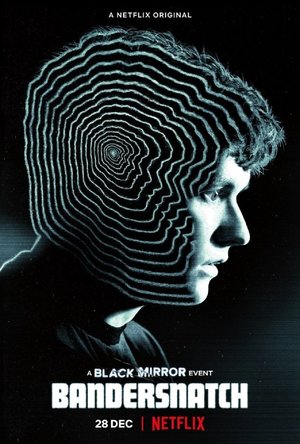

It comes as no surprise that Black Mirror was Netflix’s guinea pig for their first ever interactive film. Charlie Brooker’s anthology series about the dark side of technology has captivated fans ever since it first aired on Channel 4 in the UK. With Netflix being a leading entertainment service, the time had come for them to try something brand new. The film dropped over the Christmas break, and I for one was very excited to sit down and try it.
Black Mirror: Bandersnatch is set in the ’80s and follows teenager Stefan Butler as he works to create a choice/consequence video game called ‘Bandersnatch’. He’s basing it off one of his mother’s ‘choose your own adventure’ books, where you could flick back and forth between chapters to change the course of your story. He’s been invited to speak with video games company Tuckersoft, comprised of video game creator Colin Ritman and savvy businessman Mohan Thaku, in the hopes he can make the game for their company.
As Stefan works on ‘Bandersnatch’, he also visits a therapist to help with his depression following the loss of his mother. He takes an unnamed medication in an attempt to ease his symptoms. Soon, the lines between reality and the video game world start to blur for Stefan, and he becomes more and more unhinged before our eyes.
That’s about all I’m going to tell you about the plot itself, because I don’t want to give away any spoilers. My advice when approaching this for the first time is to go in completely blind and just make your own decisions. You can find numerous pathway guides online, but try to avoid these until your later playthroughs if you can. Black Mirror: Bandersnatch is an experience that requires multiple watches and a lot of patience, but I promise you it’s worth it.
Personally I adore this episode, and I think they did such a fantastic job of bringing it to life. It’s so fluid and engaging; the scenes continue to play even when the options pop up on screen. The acting is absolutely stunning, with Fionn Whitehead (Stefan) and Will Poulter (Colin) impressing me the most, but every character is so well acted and believable. For the very first time, you feel part of the Black Mirror universe, and everything starts to feel so meta. There are also a lot of references to previous episodes which will delight long term fans, but aren’t too jarring for those new to the series.
Both Black Mirror and Netflix have proven they can work with interactivity without making it too gimmicky or tedious. It’s a fascinating format that I’m excited to see more of, and I’m sure we haven’t seen the last of this. I have equal amounts of praise for both the series and Netflix themselves, because they’re constantly upping the entertainment game which makes me fall in love even more. This is the kind of stuff that really excites me!
In classic Black Mirror style, there are some disturbing pathways but they’re arguably my favourite. They’re chilling, harrowing and bloody brilliant. At this point I think I’ve explored every possible ending or pathway, but I’m reluctant to spoil any of them on here because that would ruin the experience. However, if you do want to discuss anything, please do message me on @LGTHBlog so we can fangirl together!
https://lucygoestohollywood.com/2019/01/06/netflixs-first-interactive-film-my-thoughts-on-black-mirror-bandersnatch/
Black Mirror: Bandersnatch is set in the ’80s and follows teenager Stefan Butler as he works to create a choice/consequence video game called ‘Bandersnatch’. He’s basing it off one of his mother’s ‘choose your own adventure’ books, where you could flick back and forth between chapters to change the course of your story. He’s been invited to speak with video games company Tuckersoft, comprised of video game creator Colin Ritman and savvy businessman Mohan Thaku, in the hopes he can make the game for their company.
As Stefan works on ‘Bandersnatch’, he also visits a therapist to help with his depression following the loss of his mother. He takes an unnamed medication in an attempt to ease his symptoms. Soon, the lines between reality and the video game world start to blur for Stefan, and he becomes more and more unhinged before our eyes.
That’s about all I’m going to tell you about the plot itself, because I don’t want to give away any spoilers. My advice when approaching this for the first time is to go in completely blind and just make your own decisions. You can find numerous pathway guides online, but try to avoid these until your later playthroughs if you can. Black Mirror: Bandersnatch is an experience that requires multiple watches and a lot of patience, but I promise you it’s worth it.
Personally I adore this episode, and I think they did such a fantastic job of bringing it to life. It’s so fluid and engaging; the scenes continue to play even when the options pop up on screen. The acting is absolutely stunning, with Fionn Whitehead (Stefan) and Will Poulter (Colin) impressing me the most, but every character is so well acted and believable. For the very first time, you feel part of the Black Mirror universe, and everything starts to feel so meta. There are also a lot of references to previous episodes which will delight long term fans, but aren’t too jarring for those new to the series.
Both Black Mirror and Netflix have proven they can work with interactivity without making it too gimmicky or tedious. It’s a fascinating format that I’m excited to see more of, and I’m sure we haven’t seen the last of this. I have equal amounts of praise for both the series and Netflix themselves, because they’re constantly upping the entertainment game which makes me fall in love even more. This is the kind of stuff that really excites me!
In classic Black Mirror style, there are some disturbing pathways but they’re arguably my favourite. They’re chilling, harrowing and bloody brilliant. At this point I think I’ve explored every possible ending or pathway, but I’m reluctant to spoil any of them on here because that would ruin the experience. However, if you do want to discuss anything, please do message me on @LGTHBlog so we can fangirl together!
https://lucygoestohollywood.com/2019/01/06/netflixs-first-interactive-film-my-thoughts-on-black-mirror-bandersnatch/

Joe Goodhart (27 KP) rated Wonder Woman & Justice League Dark: The Witching Hour in Books
Nov 30, 2020
Marvel continues to push me away, as the comics market is littered with bad editorial decisions and choices. With me, all it has succeeded in doing was alienating me and reminding me of how much I love DC (despite the trainwreck of lateness that is DOOMSDAY CLOCK)... especially the character of Superman!
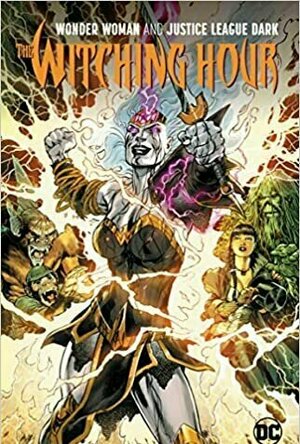
That said, I have been playing catch-up with a number of titles, as I try to determine which ones I will specifically be subscribed to on Comixology. Besides the Bendis-helmed SUPERMAN books, I am also leaning toward JUSTICE LEAGUE DARK as the next one to add to the list. It was with the conclusion of WW & JLD: THE WITCHING HOUR that the decision to add JLD to my subscription list was cemented!
I knew of Tynion's name prior to undertake the reading of it. Not really familiar to his writing style, just that his name carries a lot of weight in the comic world. Having witnessed his writing here, I can see where that aforementioned "weight" comes from. Seriously, this was a solid read, from beginning to end!
I feel that Zatanna is a character that most people don't seem to get write, which seems odd unto itself. However, here, she was frikkin' brilliant! Strong-willed, with a good heart and moral compass. I wasn't sure how I would like her without her token "top hat, coattails and fishnets", but I did (partly due also to recent mental changes on my part, as I find myself looking at the female characters, in both the DC Universe as well as Marvel, as more than just "fanboy eye candy")! With Tynion's writing, as well as the uber-talents of Jesus Merino, Amanuela Lupachino, Alvaro Martinez Bueno, Fernando Blanco and Miguel Mendonca on art, Zee was truly in good hands!
Swamp Thing was another who I wasn't sure how he would be handled by someone other than Alan Moore (who, whether he's a kook now or not now, was still one of the best ST writers, outside of ST's creator, Len Wein). My fears and initial apprehension were quickly dispelled, as Tynion, along with the aforementioned artists on this story, turned out out one hell of a good Earth Elemental! I even found myself warming to the faux floral dreds that Swampy was sportin'!
Besides my excitement at how well Zee and ST were handled, the rest of the players, including Wonder Woman, were written well, with attention given to have them be more than just comic tropes. All the characters contributed to making this a tense, magic-heavy story, with ramifications carrying over into the JLD regular series.
And one last thing.. Circe. Not really a spoiler, just mentioning her. I always thought her character was kinda meh, especially the garb she had been given over the years. However, here, Tynion did awesome things with her, writing (and dressing) in a manner that would not be out of place in SANDMAN! Soooo COOL!!!
Look, if you like your brain to be crushed by angst and characters who keep getting rebooted what seems like every/every other year, then, by all means, continue to ride the Marvel Trainwreck. If you want a story you can sink your teeth into, then look no further. This truly one I can not recommend enought!
That said, I have been playing catch-up with a number of titles, as I try to determine which ones I will specifically be subscribed to on Comixology. Besides the Bendis-helmed SUPERMAN books, I am also leaning toward JUSTICE LEAGUE DARK as the next one to add to the list. It was with the conclusion of WW & JLD: THE WITCHING HOUR that the decision to add JLD to my subscription list was cemented!
I knew of Tynion's name prior to undertake the reading of it. Not really familiar to his writing style, just that his name carries a lot of weight in the comic world. Having witnessed his writing here, I can see where that aforementioned "weight" comes from. Seriously, this was a solid read, from beginning to end!
I feel that Zatanna is a character that most people don't seem to get write, which seems odd unto itself. However, here, she was frikkin' brilliant! Strong-willed, with a good heart and moral compass. I wasn't sure how I would like her without her token "top hat, coattails and fishnets", but I did (partly due also to recent mental changes on my part, as I find myself looking at the female characters, in both the DC Universe as well as Marvel, as more than just "fanboy eye candy")! With Tynion's writing, as well as the uber-talents of Jesus Merino, Amanuela Lupachino, Alvaro Martinez Bueno, Fernando Blanco and Miguel Mendonca on art, Zee was truly in good hands!
Swamp Thing was another who I wasn't sure how he would be handled by someone other than Alan Moore (who, whether he's a kook now or not now, was still one of the best ST writers, outside of ST's creator, Len Wein). My fears and initial apprehension were quickly dispelled, as Tynion, along with the aforementioned artists on this story, turned out out one hell of a good Earth Elemental! I even found myself warming to the faux floral dreds that Swampy was sportin'!
Besides my excitement at how well Zee and ST were handled, the rest of the players, including Wonder Woman, were written well, with attention given to have them be more than just comic tropes. All the characters contributed to making this a tense, magic-heavy story, with ramifications carrying over into the JLD regular series.
And one last thing.. Circe. Not really a spoiler, just mentioning her. I always thought her character was kinda meh, especially the garb she had been given over the years. However, here, Tynion did awesome things with her, writing (and dressing) in a manner that would not be out of place in SANDMAN! Soooo COOL!!!
Look, if you like your brain to be crushed by angst and characters who keep getting rebooted what seems like every/every other year, then, by all means, continue to ride the Marvel Trainwreck. If you want a story you can sink your teeth into, then look no further. This truly one I can not recommend enought!
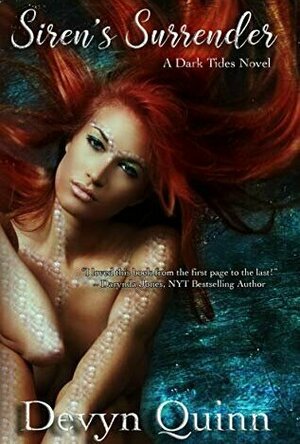
Siren's Surrender (Dark Tides #2)
7.0 Rate It
Book
Never embracing her mermaid heritage, Gwen Lonike lives in the human world as the owner of a Maine...

Kristy H (1252 KP) rated Never Let You Go in Books
Jan 22, 2018
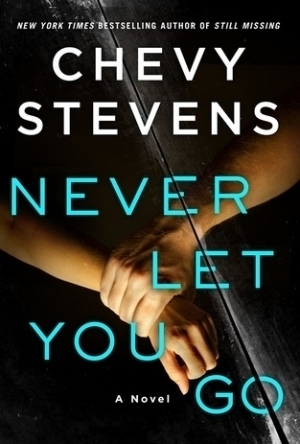
Lindsey Nash has not had the easiest of lives.
She escaped in the dark one night with her six-year-old daughter, Sophie, and just a few of their possessions. They were running from Andrew, Lindsey's drunken, abusive, and possessive husband. Lindsey knew that it was only a matter of time before Andrew killed her, leaving Sophie without her mom. But the night the two disappear, something else happens: a drunken Andrew gets behind the wheel, crashes his vehicle, and kills another woman. The accident puts him in prison for 10 years, giving Lindsey a small sense of freedom, but it's short-lived. Before she knows it, he's out, and headed for the town where Lindsey and Sophie have started over. Strange things start happen, and Lindsey is terrified for her life again--and Sophie's. Andrew claims prison has changed him, but Lindsey can't believe it. How will she and her daughter ever be safe?
This is my fourth Stevens book, and I know by now that she will keep you up late, frantically turning the pages, wondering what will happen. Of the ones I've read, I still think That Night is my favorite, but this one was quite an enjoyable and fast-paced read as well. I blew through it on vacation in about 24 hours, and it had a chilling creepiness to it that made me feel like I should be looking over my shoulder or continually pulling the curtains shut.
First, let's just put out there, as with most of Stevens' books, a big warning for abuse triggers. Please make that known to anyone who might be affected by such a storyline.
One of the best things about this novel was the way Stevens slowly unfurled bits of the plot, making you go "wow" each time something was revealed. The book is divided into three parts, and the first one switches between the present and the past, showcasing some of Lindsey and Andrew's abusive marriage. It's very effective. In the later parts, we hear from both Lindsey and Sophie, who is now a nearly grown teenager. Again, it's a compelling storytelling tool and allows Stevens to work the unreliable narrator angle. Is Lindsey just imagining all this? Can we trust her? Has she just brainwashed Sophie against her father?
The novel sets up a series of suspects, and I admit that I guessed "who did it" before page 100, but I still enjoyed the book immensely. It took me longer to work out why, and I was quite engrossed in the characters. I liked both Lindsey and Sophie, though I didn't love them or feel particularly attached to either, but I so enjoyed the mechanics of the story and what was going to come next that I was completely engaged nonetheless. The novel is very chilling, very eerie, and written so vividly that you can quite imagine many of its more frightening and suspenseful scenes. I can easily see it being made into a movie where I would be peeking tensely through my sleeves.
She escaped in the dark one night with her six-year-old daughter, Sophie, and just a few of their possessions. They were running from Andrew, Lindsey's drunken, abusive, and possessive husband. Lindsey knew that it was only a matter of time before Andrew killed her, leaving Sophie without her mom. But the night the two disappear, something else happens: a drunken Andrew gets behind the wheel, crashes his vehicle, and kills another woman. The accident puts him in prison for 10 years, giving Lindsey a small sense of freedom, but it's short-lived. Before she knows it, he's out, and headed for the town where Lindsey and Sophie have started over. Strange things start happen, and Lindsey is terrified for her life again--and Sophie's. Andrew claims prison has changed him, but Lindsey can't believe it. How will she and her daughter ever be safe?
This is my fourth Stevens book, and I know by now that she will keep you up late, frantically turning the pages, wondering what will happen. Of the ones I've read, I still think That Night is my favorite, but this one was quite an enjoyable and fast-paced read as well. I blew through it on vacation in about 24 hours, and it had a chilling creepiness to it that made me feel like I should be looking over my shoulder or continually pulling the curtains shut.
First, let's just put out there, as with most of Stevens' books, a big warning for abuse triggers. Please make that known to anyone who might be affected by such a storyline.
One of the best things about this novel was the way Stevens slowly unfurled bits of the plot, making you go "wow" each time something was revealed. The book is divided into three parts, and the first one switches between the present and the past, showcasing some of Lindsey and Andrew's abusive marriage. It's very effective. In the later parts, we hear from both Lindsey and Sophie, who is now a nearly grown teenager. Again, it's a compelling storytelling tool and allows Stevens to work the unreliable narrator angle. Is Lindsey just imagining all this? Can we trust her? Has she just brainwashed Sophie against her father?
The novel sets up a series of suspects, and I admit that I guessed "who did it" before page 100, but I still enjoyed the book immensely. It took me longer to work out why, and I was quite engrossed in the characters. I liked both Lindsey and Sophie, though I didn't love them or feel particularly attached to either, but I so enjoyed the mechanics of the story and what was going to come next that I was completely engaged nonetheless. The novel is very chilling, very eerie, and written so vividly that you can quite imagine many of its more frightening and suspenseful scenes. I can easily see it being made into a movie where I would be peeking tensely through my sleeves.

Hazel (1853 KP) rated The Screaming Staircase: Lockwood & Co. #1 in Books
Dec 7, 2018

<i>This eBook was provided by the publisher via NetGalley in exchange for an honest</i>
Fantasy author Jonathan Stroud is widely known for the <i>Bartimaeus</i> trilogy, a children’s series about magicians, however none of his other works seem to be much talked about. This includes his latest paranormal series <i>Lockwood & Co</i>. It is about time that the world became aware of this clever, exciting adventure.
<i>The Screaming Staircase</i> is the first of four books set in a version of London that has suddenly become plagued by ghosts of the past. It is unclear why the dead have come back to haunt the living, but something must be done about them. Unfortunately adults are unable to see these ghastly phantoms and rely on trained psychic investigators, i.e. children, to dispatch the dead.
<i>Lockwood & Co</i> is comprised of three young teenagers with the ability to hunt and destroy these eerie Visitors: Anthony Lockwood, Lucy Carlyle and their friend George. Unfortunately, despite having the right skills, something always seems to go wrong on their jobs. So, when a prestigious gentleman offers them a very dangerous task, they jump at the chance to prove themselves a competent agency, if not one of the best. Conversely, they find themselves in a lot more trouble than they bargained for.
Although there is a central plot, <i>The Screaming Staircase</i> is made up of several events that combine to create a mind-blowing conclusion. But it is not solely the ghost fighting, heart stopping scenes that make this story a success. Even without the sinister setting this series would be enjoyable due to the hilarious three main characters. Not once are the ages of Lockwood, Lucy and George mentioned, however it can be presumed that are around thirteen years old. Their relationship takes on a form similar to a brotherly, sisterly bond complete with bickering, threats and sharp, witty comebacks. Despite the dangerous atmosphere there is always the opportunity for at least one of the characters to get in a quick insult that is bound to make the reader laugh out loud.
<i>Lockwood & Co</i> is primarily targeted at readers between the ages of ten and fifteen, although there is nothing to prevent anyone else from enjoying it too. Thankfully no romantic relationships are formed, leaving Lucy to become as independent and strong as the boys, thus making this a suitable series for both genders. While there is a lot of humour, there is mild horror too, so perhaps young children should wait until they are a bit older to join in with the entertainment this series provides.
When I was younger I attempted to read the <i>Bartemaeus</i> trilogy and found it rather dull, so I was not expecting all that much with this series. However, <i>The Screaming Staircase</i> was fantastic in comparison. It is fast paced, amusing, thrilling, and never a boring moment. I guarantee once you’ve read this book you will immediately want to read the sequel. <i>Lockwood & Co</i> is a series that definitely needs more attention that it is getting.
Fantasy author Jonathan Stroud is widely known for the <i>Bartimaeus</i> trilogy, a children’s series about magicians, however none of his other works seem to be much talked about. This includes his latest paranormal series <i>Lockwood & Co</i>. It is about time that the world became aware of this clever, exciting adventure.
<i>The Screaming Staircase</i> is the first of four books set in a version of London that has suddenly become plagued by ghosts of the past. It is unclear why the dead have come back to haunt the living, but something must be done about them. Unfortunately adults are unable to see these ghastly phantoms and rely on trained psychic investigators, i.e. children, to dispatch the dead.
<i>Lockwood & Co</i> is comprised of three young teenagers with the ability to hunt and destroy these eerie Visitors: Anthony Lockwood, Lucy Carlyle and their friend George. Unfortunately, despite having the right skills, something always seems to go wrong on their jobs. So, when a prestigious gentleman offers them a very dangerous task, they jump at the chance to prove themselves a competent agency, if not one of the best. Conversely, they find themselves in a lot more trouble than they bargained for.
Although there is a central plot, <i>The Screaming Staircase</i> is made up of several events that combine to create a mind-blowing conclusion. But it is not solely the ghost fighting, heart stopping scenes that make this story a success. Even without the sinister setting this series would be enjoyable due to the hilarious three main characters. Not once are the ages of Lockwood, Lucy and George mentioned, however it can be presumed that are around thirteen years old. Their relationship takes on a form similar to a brotherly, sisterly bond complete with bickering, threats and sharp, witty comebacks. Despite the dangerous atmosphere there is always the opportunity for at least one of the characters to get in a quick insult that is bound to make the reader laugh out loud.
<i>Lockwood & Co</i> is primarily targeted at readers between the ages of ten and fifteen, although there is nothing to prevent anyone else from enjoying it too. Thankfully no romantic relationships are formed, leaving Lucy to become as independent and strong as the boys, thus making this a suitable series for both genders. While there is a lot of humour, there is mild horror too, so perhaps young children should wait until they are a bit older to join in with the entertainment this series provides.
When I was younger I attempted to read the <i>Bartemaeus</i> trilogy and found it rather dull, so I was not expecting all that much with this series. However, <i>The Screaming Staircase</i> was fantastic in comparison. It is fast paced, amusing, thrilling, and never a boring moment. I guarantee once you’ve read this book you will immediately want to read the sequel. <i>Lockwood & Co</i> is a series that definitely needs more attention that it is getting.
KittyMiku (138 KP) rated Witch's Bell in Books
May 23, 2019
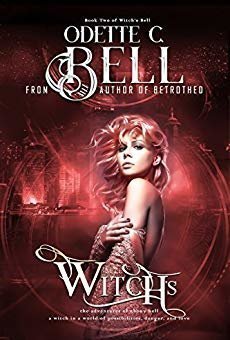
This was a free book on Amazon and the reviews make you wonder if you should even pick it up, but I still did and I have never been happier. I did find some of the complaints to be true to word, but I did enjoy the book way too much to just say it wasn't worth the read. However, we will be discussing Ebony Bell and her adventures and what Bell may have been done to make it better. Let's dive in.
So first of all, I fell in love with the idea behind this book and apparently the series. With characters like Nathan Wall and Ebony Bell, I couldn't help but be intrigued on whatever relationships was forming between them. I think this book was pretty well thought out considering it cold have left the scenes bare making it hard to visualize where the characters were and what was exactly going on. However, I did think there could have been a little less rambling about different things, though I feel it may be foreshadowing for other books. I feel that even though Ebony was pretty fleshed out, that there could have been a little more on the other characters we find ourselves following a bit. For example, Avery's mother is described by her looks and a bit of how she acted when Ebony was a child, but as a member of the Coven, I wanted a little more. Like how did she become apart of the Coven who were supposedly the strongest witches around as well as the oldest? It left a few questions popping to mind and hope they will be answered in the future. Nathan was another character I felt could have been fleshed out a bit more and not really semi revealed at the end. It left a lot to be desired, but again could just be information that makes you want to read on.
I loved, and I mean LOVED, how when Ebony had her magic blocked from her, the way she saw things changed a bit. Do not get me wrong, her outfits made me giggle, but seeing her actually notice the small things even though she didn't have to and hadn't noticed before, was kind of nice. You were able to see her actually begin to appreciate things she hadn't before. I always love seeing characters grow as a person. Ebony had learned to really appreciate what she was seeing as well as what she had. To see her struggle had brought some delight and I found myself a little mad at how she would forget the most important thing she had thought about until it was almost too late. I did find that the use of other characters did help make what was going on around her seem a little more dire.
I found the love interest between Ebony and Nathan to be a bit subtle, which was kind of nice since it left a lot of room for something to blossom a wonderful romance. I do like how Nate gets under Ebony's skin and no matter how hard she tries rattle him he is unfazed. This made them polar opposites, which made me smile a bit, Though I would have loved to see more between them in the form of witty banter and teasing. but what I was given, I didn't think it was all that bad, just could have been more.
Overall, I would rate this book 4 stars out of 5 stars. There could have been more given and even explained something better while not rambling on things that made you begin to question a character's mental state. I loved the story line and hope that as the books move forward we can figure it all out about our mysterious Detective Nathan Wall, the Coven and whoever is behind trying to rewrite Ebony Bell's story.
So first of all, I fell in love with the idea behind this book and apparently the series. With characters like Nathan Wall and Ebony Bell, I couldn't help but be intrigued on whatever relationships was forming between them. I think this book was pretty well thought out considering it cold have left the scenes bare making it hard to visualize where the characters were and what was exactly going on. However, I did think there could have been a little less rambling about different things, though I feel it may be foreshadowing for other books. I feel that even though Ebony was pretty fleshed out, that there could have been a little more on the other characters we find ourselves following a bit. For example, Avery's mother is described by her looks and a bit of how she acted when Ebony was a child, but as a member of the Coven, I wanted a little more. Like how did she become apart of the Coven who were supposedly the strongest witches around as well as the oldest? It left a few questions popping to mind and hope they will be answered in the future. Nathan was another character I felt could have been fleshed out a bit more and not really semi revealed at the end. It left a lot to be desired, but again could just be information that makes you want to read on.
I loved, and I mean LOVED, how when Ebony had her magic blocked from her, the way she saw things changed a bit. Do not get me wrong, her outfits made me giggle, but seeing her actually notice the small things even though she didn't have to and hadn't noticed before, was kind of nice. You were able to see her actually begin to appreciate things she hadn't before. I always love seeing characters grow as a person. Ebony had learned to really appreciate what she was seeing as well as what she had. To see her struggle had brought some delight and I found myself a little mad at how she would forget the most important thing she had thought about until it was almost too late. I did find that the use of other characters did help make what was going on around her seem a little more dire.
I found the love interest between Ebony and Nathan to be a bit subtle, which was kind of nice since it left a lot of room for something to blossom a wonderful romance. I do like how Nate gets under Ebony's skin and no matter how hard she tries rattle him he is unfazed. This made them polar opposites, which made me smile a bit, Though I would have loved to see more between them in the form of witty banter and teasing. but what I was given, I didn't think it was all that bad, just could have been more.
Overall, I would rate this book 4 stars out of 5 stars. There could have been more given and even explained something better while not rambling on things that made you begin to question a character's mental state. I loved the story line and hope that as the books move forward we can figure it all out about our mysterious Detective Nathan Wall, the Coven and whoever is behind trying to rewrite Ebony Bell's story.