Search
Search results

Hadley (567 KP) rated The Amazing Crime and Trial of Leopold and Loeb in Books
Apr 13, 2019
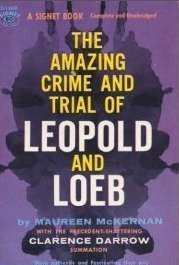

"The crime itself was indefensible. The brilliant, spoiled and bored sons of two of Chicago's wealthiest families planned to commit the perfect crime both for the thrill of and to prove their perverse misunderstanding of Friedrich Nietzsche's philosophy of the 'superman,' who was above all law so long as he made no mistake. Their plan, worked out over several months, was to kidnap and immediately kill one of their younger neighbors and hide his body. They would then demand and collect a ransom. The body would never be discovered, the crime would never be solved and only they would know that they had prevailed over ordinary human beings and their simple-minded legal system. But far from being the 'perfect crime,' the murder of 14-year-old Bobby Franks turned out to be amateurishly botched. Before any ransom could be paid, the boy's body was discovered in a culvert near where Nathan Leopold often went bird-watching. A pair of telltale glasses were found adjacent to the body. They were easily traced to Leopold who first came up with a paper-thin alibi and soon thereafter confessed to the crime. His fellow murderer likewise confessed. Each of the 'superboys' placed blame for the actual killing on the other." - Alan M. Dershowitz
If you mentioned the names Leopold and Loeb today, many people wouldn't know who you were talking about, but if you had mentioned them just thirty years ago, many people would recall the 'murder of the century.'
If you are a fan of the True Crime genre, you'll come across the case of two wealthy Chicago boys who thought they could get away with murder. (The trial is probably the most talked about trial to-date because this is the first time that psychology was brought before a court room.)
For a good part of the late 1920's, Leopold and Loeb were household names for good reason: they came from millionaire families, they were college graduates before they were 18-years-old, and their trial was the first time in history that the world saw psychology put in front of a judge. The trial was even more unforgettable due to a closing speech given by famous defense attorney, Clarence Darrow, which is reprinted in its entirety,spanning a hefty 93 pages.
Nathan Leopold, Jr. and Richard Loeb were two people who should have never met, according to the courtroom. The two met at about the age of fifteen, soon after they began to embark on criminal acts together, ranging from theft to arson. It's stated in 'the Amazing Crime and Trial of Leopold and Loeb' that Loeb had created a fantasy world where he was a crime ringleader that was too smart for the police to catch. Readers get to judge for themselves whether or not they believe Loeb was the cause of their crimes, or if Leopold was the one really in charge.
After robbing Loeb's fraternity house together, Leopold and Loeb came up with a plan to kidnap a wealthy child that they could then ransom. "They began to devise elaborate plans for this kidnapping, and soon the planning became the all-important thing. They gave up the idea of kidnapping this particular person [a young man named William], and settled on the idea of kidnapping anyone who would fit in their kidnapping plans." Throughout the book, we find out that the boys were pretty desperate for a kidnapping victim, that they even thought about kidnapping one of their close friends:
"The plan of kidnaping Dick Rubel was given up because Dick Rubel's father was so tight we might not get any money from him."
Leopold and Loeb discussed everything from how they would receive the ransom, what weapons they would use, how they would get the victim inside a rented vehicle, and what they would do with the body afterwards. "In March, 1924, the patient [Loeb] conceived the idea of securing the money by having it thrown off a moving train. This idea was discussed in great detail, and gradually developed into a carefully systematized plan. As time wore on the plan became greatly modified from the original one. They discussed at considerable length the choice of a suitable subject for kidnapping. The patient's companion [Leopold] suggested that they kidnap a young girl instead of a boy, but the patient [Loeb] objected to this. His companion [Leopold] also suggested that they kidnap the patient's [Loeb] younger brother, but the patient apparently did not seriously consider doing this. They then considered half a dozen boys, any one of whom would do, for the following reasons: that they were physically small enough to be easily handled and their parents were extremely wealthy and would have no difficulty or disinclination to pay ransom money."
During the trial, Leopold and Loeb's psychological evaluations became the forefront of their guilty plea, stating that they were not responsible for their actions due to their upbringing and environment. "I submit the facts do not rest on the evidence of these boys alone. It is proven by the writings; it is proven by every act. It is proven by their companions, and there can by no question about it." Clarence Darrow explains in his famous closing statement. "We brought into this courtroom a number of their boy friends, whom they had known day by day, who had associated with them in the club house, were their constant companions, and they tell the same stories. They tell the story that neither of these two boys was responsible for his conduct."
'The Amazing Crime and Trial of Leopold and Loeb' contains the portions of the psychiatric evaluations that were submitted in court,but the testimony of character witnesses is omitted. For a factual telling of a real life trial, this book is okay. If the reader pays attention, they may notice that some of the book contradicts itself, such as one page states that the car robe used to wrap up Franks' body was found buried near Lake Michigan,but then pages later, the book states it had been burned at Loeb's home.
The psychiatric reports are very repetitive,just using different words to describe the same things. Yet, these reports are the backbone of the trial and well worth a read. The evaluations and Darrow's extensive speech were what saved Leopold and Loeb from a death sentence.
There are very few books written about the 'murder of the century,' and even less about the 'lawyer of the century.' Leopold and Loeb, as well as Darrow, have faded into the obscurity of the True Crime genre, but because the boys' mental state was brought into question, we now accept forensic science/psychology in the court room today. I feel that only people who are truly interested in True Crime, or even have a fascination for the court room are the only ones who will enjoy 'The Amazing Crime and Trial of Leopold and Loeb.'
If you mentioned the names Leopold and Loeb today, many people wouldn't know who you were talking about, but if you had mentioned them just thirty years ago, many people would recall the 'murder of the century.'
If you are a fan of the True Crime genre, you'll come across the case of two wealthy Chicago boys who thought they could get away with murder. (The trial is probably the most talked about trial to-date because this is the first time that psychology was brought before a court room.)
For a good part of the late 1920's, Leopold and Loeb were household names for good reason: they came from millionaire families, they were college graduates before they were 18-years-old, and their trial was the first time in history that the world saw psychology put in front of a judge. The trial was even more unforgettable due to a closing speech given by famous defense attorney, Clarence Darrow, which is reprinted in its entirety,spanning a hefty 93 pages.
Nathan Leopold, Jr. and Richard Loeb were two people who should have never met, according to the courtroom. The two met at about the age of fifteen, soon after they began to embark on criminal acts together, ranging from theft to arson. It's stated in 'the Amazing Crime and Trial of Leopold and Loeb' that Loeb had created a fantasy world where he was a crime ringleader that was too smart for the police to catch. Readers get to judge for themselves whether or not they believe Loeb was the cause of their crimes, or if Leopold was the one really in charge.
After robbing Loeb's fraternity house together, Leopold and Loeb came up with a plan to kidnap a wealthy child that they could then ransom. "They began to devise elaborate plans for this kidnapping, and soon the planning became the all-important thing. They gave up the idea of kidnapping this particular person [a young man named William], and settled on the idea of kidnapping anyone who would fit in their kidnapping plans." Throughout the book, we find out that the boys were pretty desperate for a kidnapping victim, that they even thought about kidnapping one of their close friends:
"The plan of kidnaping Dick Rubel was given up because Dick Rubel's father was so tight we might not get any money from him."
Leopold and Loeb discussed everything from how they would receive the ransom, what weapons they would use, how they would get the victim inside a rented vehicle, and what they would do with the body afterwards. "In March, 1924, the patient [Loeb] conceived the idea of securing the money by having it thrown off a moving train. This idea was discussed in great detail, and gradually developed into a carefully systematized plan. As time wore on the plan became greatly modified from the original one. They discussed at considerable length the choice of a suitable subject for kidnapping. The patient's companion [Leopold] suggested that they kidnap a young girl instead of a boy, but the patient [Loeb] objected to this. His companion [Leopold] also suggested that they kidnap the patient's [Loeb] younger brother, but the patient apparently did not seriously consider doing this. They then considered half a dozen boys, any one of whom would do, for the following reasons: that they were physically small enough to be easily handled and their parents were extremely wealthy and would have no difficulty or disinclination to pay ransom money."
During the trial, Leopold and Loeb's psychological evaluations became the forefront of their guilty plea, stating that they were not responsible for their actions due to their upbringing and environment. "I submit the facts do not rest on the evidence of these boys alone. It is proven by the writings; it is proven by every act. It is proven by their companions, and there can by no question about it." Clarence Darrow explains in his famous closing statement. "We brought into this courtroom a number of their boy friends, whom they had known day by day, who had associated with them in the club house, were their constant companions, and they tell the same stories. They tell the story that neither of these two boys was responsible for his conduct."
'The Amazing Crime and Trial of Leopold and Loeb' contains the portions of the psychiatric evaluations that were submitted in court,but the testimony of character witnesses is omitted. For a factual telling of a real life trial, this book is okay. If the reader pays attention, they may notice that some of the book contradicts itself, such as one page states that the car robe used to wrap up Franks' body was found buried near Lake Michigan,but then pages later, the book states it had been burned at Loeb's home.
The psychiatric reports are very repetitive,just using different words to describe the same things. Yet, these reports are the backbone of the trial and well worth a read. The evaluations and Darrow's extensive speech were what saved Leopold and Loeb from a death sentence.
There are very few books written about the 'murder of the century,' and even less about the 'lawyer of the century.' Leopold and Loeb, as well as Darrow, have faded into the obscurity of the True Crime genre, but because the boys' mental state was brought into question, we now accept forensic science/psychology in the court room today. I feel that only people who are truly interested in True Crime, or even have a fascination for the court room are the only ones who will enjoy 'The Amazing Crime and Trial of Leopold and Loeb.'

Daniel Boyd (1066 KP) rated Ready Player One (2018) in Movies
Sep 20, 2018 (Updated Sep 20, 2018)
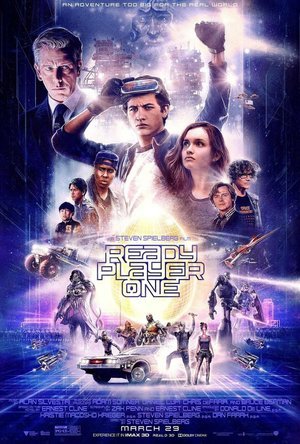


Not Quite Ready
I saw this movie in the cinema back when it came out in March earlier this year and I honestly didn't feel ready to review it after a single viewing because of all of the references etc that there was to take in. After watching the movie a couple more times and watching a bunch of Easter Egg videos on Youtube, I feel more equipped to discuss the film.
Up top, I never read the book that this film is based on. It has been recommended to me quite a few times, but I have never gotten around to reading it, so I was going into this with no pre-conceived ideas of what it was going to be other than what I had seen in the various trailers for the movie.
Let's start with the good stuff. Although I have some issues with the overabundance of CGI onscreen, as a 3d animator myself I was extremely impressed at the sheer quality of the animation in the movie. I know that this thing had a pretty high budget behind it, but still the level of quality in the animation is really high throughout the film. The references are also pretty cool, at least for the first third of the movie but the novelty of seeing some of your favourite pop culture characters does wear off after a while and ends up feeling like a cheap gimmick before too long. Finally, if all you are looking for is a big dumb fun blockbuster, then this movie provides that in spades.
Ok, onto the stuff that bothered me. As I said above, although the quality of the CGI is pretty incredible, the vast amount of it gets tiresome after a while. I also don't like the character designs at all, Parzival looks like a rejected piece of Final Fantasy artwork, Art3mis looks like a stereotypical version of a what a middle aged man thinks a cool hacker looks like with a weird resemblance to a feline, Aech just looked chunky and awkward, like something from a last-gen Gears Of War game, I-R0k's weird, edgy, fantasy-based design didn't fit his voice or the tone of the scenes he appeared in and Sorrento's avatar just looked distractingly like a dastardly Clark Kent for some reason. Also, these original character designs seemed oddly out of place being surrounded by other characters from franchises that we already know like DC and Mortal Kombat, none of it meshed well.
From this point on I am going to delve into some mid-movie spoilers, so here's your warning.
It really annoyed me how they kept touching on the idea that someone in the Oasis might not necessarily look the same as they do in real life and if you ever met them in real life you would be sorely disappointed, only for the reason for all of this to be a birthmark on Olivia Cooke's character's face. The way that they make her out to some sort of beast-like monster because of a slight skin-irregularity is ridiculous and also kinda offensive. Also, we are told during the movie's opening sequence that the Oasis is a worldwide thing, where people from anywhere on the planet can meet up online and fight together or kill each other for coins, then halfway through the movie, all of the characters meet up in a small ice cream truck in the real world and it turns out that they all live within a few miles of each other. It just made the whole thing feel really small scale. Another issue is that the movie is only 6 months old at this point and it already feels slightly dated. I don't see this movie ageing very well at all and this is both due to the CGI and the references that they choose to include.
Lastly, as I said earlier, if what you want out of this movie is mindless fun, then you'll walk away satisfied, the problem with that is that the movie seems to want to be more than that. The way that the movie treats itself and the way it was marketed along with the fact that it's got Spielberg in the director's chair, signifies that the filmmakers were intending for this to be this generation's Back To The Future or Star Wars and on that front it totally fails. In these other movies that this film is aspiring to be, you care about what happens to the characters and want to see where they go, whereas here the audience cares way more about seeing the next popular franchise references than anything that happens to the main characters at the heart of this story and once you've seen the film, you are going to leave talking about the characters that appeared from outside franchises rather than the ones created for this story. The characters are also instantly forgettable, for example I have seen this film three times now and still couldn't tell you the real world names of any of the characters other than Wade Watts and Sorrento and that's only because he has the same name in the real world as he does in the Oasis. I also don't care if I ever see any of these characters again if I'm being honest. I'm sure there is probably a sequel to this already being planned seeing as it made a bunch of money at the box office and there is apparently a sequel book in the works, but frankly I wouldn't care if I never saw any of these characters again and I don't care where the story is going either.
In conclusion, Ready Player One doesn't achieve the goal that it sets for itself of being a modern sci-fi classic, but there is a lot of fun to be had here along with some impressive animation to boot. The movie has a fairly shallow, hollow feel to it throughout, as if we are scratching the surface of something potentially engaging and worth investing in, but the filmmakers constantly keep distracting us with flashy visuals and obscure pop culture references. If the movie committed to telling a more original story rather than being obsessed with the 80's classics it is exploiting, then it may be more worthwhile. Also, it's definitely not Spielberg's best, this may be a bit harsh but it's probably closer to Kingdom Of The Crystal Skull than Raiders Of The Lost Ark. I wish that Smashbomb had a half star rating system, because although I feel that the movie was better than a 6, I don't like it enough to give it a 7, so a 6.5 would sum up how I felt about the film more accurately.
Up top, I never read the book that this film is based on. It has been recommended to me quite a few times, but I have never gotten around to reading it, so I was going into this with no pre-conceived ideas of what it was going to be other than what I had seen in the various trailers for the movie.
Let's start with the good stuff. Although I have some issues with the overabundance of CGI onscreen, as a 3d animator myself I was extremely impressed at the sheer quality of the animation in the movie. I know that this thing had a pretty high budget behind it, but still the level of quality in the animation is really high throughout the film. The references are also pretty cool, at least for the first third of the movie but the novelty of seeing some of your favourite pop culture characters does wear off after a while and ends up feeling like a cheap gimmick before too long. Finally, if all you are looking for is a big dumb fun blockbuster, then this movie provides that in spades.
Ok, onto the stuff that bothered me. As I said above, although the quality of the CGI is pretty incredible, the vast amount of it gets tiresome after a while. I also don't like the character designs at all, Parzival looks like a rejected piece of Final Fantasy artwork, Art3mis looks like a stereotypical version of a what a middle aged man thinks a cool hacker looks like with a weird resemblance to a feline, Aech just looked chunky and awkward, like something from a last-gen Gears Of War game, I-R0k's weird, edgy, fantasy-based design didn't fit his voice or the tone of the scenes he appeared in and Sorrento's avatar just looked distractingly like a dastardly Clark Kent for some reason. Also, these original character designs seemed oddly out of place being surrounded by other characters from franchises that we already know like DC and Mortal Kombat, none of it meshed well.
From this point on I am going to delve into some mid-movie spoilers, so here's your warning.
It really annoyed me how they kept touching on the idea that someone in the Oasis might not necessarily look the same as they do in real life and if you ever met them in real life you would be sorely disappointed, only for the reason for all of this to be a birthmark on Olivia Cooke's character's face. The way that they make her out to some sort of beast-like monster because of a slight skin-irregularity is ridiculous and also kinda offensive. Also, we are told during the movie's opening sequence that the Oasis is a worldwide thing, where people from anywhere on the planet can meet up online and fight together or kill each other for coins, then halfway through the movie, all of the characters meet up in a small ice cream truck in the real world and it turns out that they all live within a few miles of each other. It just made the whole thing feel really small scale. Another issue is that the movie is only 6 months old at this point and it already feels slightly dated. I don't see this movie ageing very well at all and this is both due to the CGI and the references that they choose to include.
Lastly, as I said earlier, if what you want out of this movie is mindless fun, then you'll walk away satisfied, the problem with that is that the movie seems to want to be more than that. The way that the movie treats itself and the way it was marketed along with the fact that it's got Spielberg in the director's chair, signifies that the filmmakers were intending for this to be this generation's Back To The Future or Star Wars and on that front it totally fails. In these other movies that this film is aspiring to be, you care about what happens to the characters and want to see where they go, whereas here the audience cares way more about seeing the next popular franchise references than anything that happens to the main characters at the heart of this story and once you've seen the film, you are going to leave talking about the characters that appeared from outside franchises rather than the ones created for this story. The characters are also instantly forgettable, for example I have seen this film three times now and still couldn't tell you the real world names of any of the characters other than Wade Watts and Sorrento and that's only because he has the same name in the real world as he does in the Oasis. I also don't care if I ever see any of these characters again if I'm being honest. I'm sure there is probably a sequel to this already being planned seeing as it made a bunch of money at the box office and there is apparently a sequel book in the works, but frankly I wouldn't care if I never saw any of these characters again and I don't care where the story is going either.
In conclusion, Ready Player One doesn't achieve the goal that it sets for itself of being a modern sci-fi classic, but there is a lot of fun to be had here along with some impressive animation to boot. The movie has a fairly shallow, hollow feel to it throughout, as if we are scratching the surface of something potentially engaging and worth investing in, but the filmmakers constantly keep distracting us with flashy visuals and obscure pop culture references. If the movie committed to telling a more original story rather than being obsessed with the 80's classics it is exploiting, then it may be more worthwhile. Also, it's definitely not Spielberg's best, this may be a bit harsh but it's probably closer to Kingdom Of The Crystal Skull than Raiders Of The Lost Ark. I wish that Smashbomb had a half star rating system, because although I feel that the movie was better than a 6, I don't like it enough to give it a 7, so a 6.5 would sum up how I felt about the film more accurately.

Purple Phoenix Games (2266 KP) rated Tumble Town in Tabletop Games
Mar 5, 2020
Fun fact about me: I used to live in Le Claire, Iowa (birthplace of “Buffalo Bill” Cody) on a street named Wild West Drive. While the town named many of their streets after American West figures and items, it was not your typical Iowa ghost town – if there are such things. That said, I do have an affinity for the Wild West in my gaming preferences, so when I heard about a dice/building game with an American West theme designed by Kevin Russ (who also recently designed Calico) I was immediately interested. But how does this one… stack up?
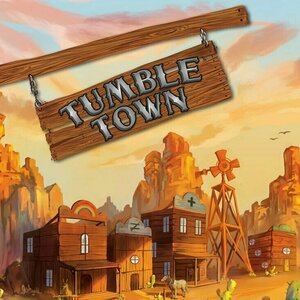
Tumble Town is dice rolling, structure building, drafting game with variable player powers. You are charged with choosing building plans to be added to Main Street of Tumble Town. You do this throughout the game by selecting the plans that will make best use of the resources (dice) you gain. The buildings that you construct may allow you special powers to be used on future turns, or one-time bonuses to be used once built. The player who can turn the greatest profit (in terms of VP) at the end of the game will be the winner!
DISCLAIMER: We were provided a prototype copy of this game for the purposes of this review. These are preview copy components, and the final components will definitely be different from these shown. Also, it is not my intention to detail every rule in the game, as there are just too many. You are invited to back the game through the Kickstarter campaign, from your FLGS, or through any other retailers stocking it after fulfillment. -T
To setup, deal each player a packet of starting components: a unique Horse card, two reference cards, Storehouse card, Main Street card, and two brown (they are red in the prototype) dice to be rolled and placed within the Storehouse. Shuffle and display the 1-, 2-, and 3-cactus building cards per the rulebook instructions to form the market. Set aside a number of each die type per the rulebook (both the building cards and dice are determined by number of players). Determine the first player and give them the first player token (a colorful rubber potted cactus). Players will connect their two Main Street cards at the central icon to create a two-card street (we chose the wagon wheel – Easy) and the game can begin!
Turns in Tumble Town consist of four mini-phases that flow into each other rather naturally. The first phase will have the players choosing a revealed building plan card from the offer market. The face-down draw stack will inform the active player as to how many and which type of dice they must draw and roll. Once they have these dice in their Storehouse, the player may now build plans using the dice they control. Buildings can be constructed and placed right onto Main Street, or be placed on the plan card to be placed on Main Street on a later turn. If the player has collected more dice than their Storehouse can hold, they must discard any of the dice they wish. This concludes a turn and the next player can begin their turn.
Certain iconography on the building plan cards allow players to use special powers throughout the game once built, and there are three types. Cards with the silvery bottom panel of symbols and the 1x notation are powers that must be used only once and only when the building is constructed. These powers could be collecting a die of the player’s choice, or receiving various dice counters. The building plan cards that feature a circular arrow notation are powers that can be used once per turn, every turn, if wished. These powers are found on each player’s Horse as well and can be adjusting a die’s face value, or re-rolling two dice, as examples. The third type of power is from the golden paneled cards that have an arrow pointing to a vertical line. These powers are only activated at the end of the game and mostly include scoring variances, like 1VP for each building a player has constructed that has a vulture icon (or a windmill, for example) featured on the card art.
Once a building is erected, the player may choose to place it onto their Main Street cards. When they place them, the player will need to choose where on Main Street these buildings should live. Like Bob Ross always says, “There are no mistakes, just happy accidents.” A player can place their buildings anywhere they wish on Main Street, but the Main Street cards will give extra bonuses to those players who plan ahead and place their buildings strategically. Some plots will ask for a building of a specific height (one die high or three dice high). Some will ask for the base level of the structure to be made of a specific material/die color (brown wood, black coal, silver metal, and gold… gold). Extra points are awarded if one-die-width alleyways are allotted, and these Main Street placements can score a bunch of endgame points.
Turns can be very quick or very deliberate, depending on the types of players involved. AP-prone players will take longer on their turns as they internalize all possibilities of their rolled results, while people like me just fly by the seats of our breeches. The game continues in this fashion: four mini-phases of drafting cards from the market, grabbing the associated dice, rolling them, and attempting to erect the best buildings on Main Street until two dice pools contain two or fewer dice. The current turn order finishes and the game is over.
Components. Again, this is a prototype copy of the game, and the publisher was decent enough to include a listing of items to be improved in the final version (like the red dice being poured brown in final – that really messed up someone’s strategy during a play-through for us because they kept forgetting that red is actually brown). The overall art style is very simplistic and I do NOT mean that negatively. The graphics and artwork are great, and give exactly what is needed without being so distracting that you cannot concentrate on your strategy. The dice are normal dice quality (that always seem to roll poorly when I’m rolling… hmm…). Once you see the photos of how the game will look during production, you will appreciate how great this is going to look on the table. No problems with components at all, save for the red vs. brown debacle that happened on our table. I really hope they keep the awwwwesome rubber cactus first player marker because it’s amazing.
I absolutely loved this one. I have always enjoyed using items for purposes other than originally intended – in this case, using dice as building materials. Of course, playing any game with dice introduces a bit of luck and instability in strategy, but Tumble Town offers quite a bit of manipulation of dice rolls that keeps almost all dice results feasible and useful. I really enjoyed the stacking, the quick turns, and the desperation when someone takes the last wood die when I was gunning for a wood-based building on my next turn. This game is light, but is chocked full of difficult decisions and luck of the roll. Tumble Town is for people who enjoy the rolling and stacking from FUSE (minus the frenzy), and the spatial building placement chaining of Villages of Valeria.
If this is the game for you, then we highly encourage you to check out the Kickstarter campaign which is running until Thursday, March 26. Tumble Town has already exceeding the funding goal at time of this review, but all future pledges will contribute to stretch goals that will improve components and add other components (spoiler?). So get out there and build up Tumble Town, ya yella-bellied greenhorns!
Tumble Town is dice rolling, structure building, drafting game with variable player powers. You are charged with choosing building plans to be added to Main Street of Tumble Town. You do this throughout the game by selecting the plans that will make best use of the resources (dice) you gain. The buildings that you construct may allow you special powers to be used on future turns, or one-time bonuses to be used once built. The player who can turn the greatest profit (in terms of VP) at the end of the game will be the winner!
DISCLAIMER: We were provided a prototype copy of this game for the purposes of this review. These are preview copy components, and the final components will definitely be different from these shown. Also, it is not my intention to detail every rule in the game, as there are just too many. You are invited to back the game through the Kickstarter campaign, from your FLGS, or through any other retailers stocking it after fulfillment. -T
To setup, deal each player a packet of starting components: a unique Horse card, two reference cards, Storehouse card, Main Street card, and two brown (they are red in the prototype) dice to be rolled and placed within the Storehouse. Shuffle and display the 1-, 2-, and 3-cactus building cards per the rulebook instructions to form the market. Set aside a number of each die type per the rulebook (both the building cards and dice are determined by number of players). Determine the first player and give them the first player token (a colorful rubber potted cactus). Players will connect their two Main Street cards at the central icon to create a two-card street (we chose the wagon wheel – Easy) and the game can begin!
Turns in Tumble Town consist of four mini-phases that flow into each other rather naturally. The first phase will have the players choosing a revealed building plan card from the offer market. The face-down draw stack will inform the active player as to how many and which type of dice they must draw and roll. Once they have these dice in their Storehouse, the player may now build plans using the dice they control. Buildings can be constructed and placed right onto Main Street, or be placed on the plan card to be placed on Main Street on a later turn. If the player has collected more dice than their Storehouse can hold, they must discard any of the dice they wish. This concludes a turn and the next player can begin their turn.
Certain iconography on the building plan cards allow players to use special powers throughout the game once built, and there are three types. Cards with the silvery bottom panel of symbols and the 1x notation are powers that must be used only once and only when the building is constructed. These powers could be collecting a die of the player’s choice, or receiving various dice counters. The building plan cards that feature a circular arrow notation are powers that can be used once per turn, every turn, if wished. These powers are found on each player’s Horse as well and can be adjusting a die’s face value, or re-rolling two dice, as examples. The third type of power is from the golden paneled cards that have an arrow pointing to a vertical line. These powers are only activated at the end of the game and mostly include scoring variances, like 1VP for each building a player has constructed that has a vulture icon (or a windmill, for example) featured on the card art.
Once a building is erected, the player may choose to place it onto their Main Street cards. When they place them, the player will need to choose where on Main Street these buildings should live. Like Bob Ross always says, “There are no mistakes, just happy accidents.” A player can place their buildings anywhere they wish on Main Street, but the Main Street cards will give extra bonuses to those players who plan ahead and place their buildings strategically. Some plots will ask for a building of a specific height (one die high or three dice high). Some will ask for the base level of the structure to be made of a specific material/die color (brown wood, black coal, silver metal, and gold… gold). Extra points are awarded if one-die-width alleyways are allotted, and these Main Street placements can score a bunch of endgame points.
Turns can be very quick or very deliberate, depending on the types of players involved. AP-prone players will take longer on their turns as they internalize all possibilities of their rolled results, while people like me just fly by the seats of our breeches. The game continues in this fashion: four mini-phases of drafting cards from the market, grabbing the associated dice, rolling them, and attempting to erect the best buildings on Main Street until two dice pools contain two or fewer dice. The current turn order finishes and the game is over.
Components. Again, this is a prototype copy of the game, and the publisher was decent enough to include a listing of items to be improved in the final version (like the red dice being poured brown in final – that really messed up someone’s strategy during a play-through for us because they kept forgetting that red is actually brown). The overall art style is very simplistic and I do NOT mean that negatively. The graphics and artwork are great, and give exactly what is needed without being so distracting that you cannot concentrate on your strategy. The dice are normal dice quality (that always seem to roll poorly when I’m rolling… hmm…). Once you see the photos of how the game will look during production, you will appreciate how great this is going to look on the table. No problems with components at all, save for the red vs. brown debacle that happened on our table. I really hope they keep the awwwwesome rubber cactus first player marker because it’s amazing.
I absolutely loved this one. I have always enjoyed using items for purposes other than originally intended – in this case, using dice as building materials. Of course, playing any game with dice introduces a bit of luck and instability in strategy, but Tumble Town offers quite a bit of manipulation of dice rolls that keeps almost all dice results feasible and useful. I really enjoyed the stacking, the quick turns, and the desperation when someone takes the last wood die when I was gunning for a wood-based building on my next turn. This game is light, but is chocked full of difficult decisions and luck of the roll. Tumble Town is for people who enjoy the rolling and stacking from FUSE (minus the frenzy), and the spatial building placement chaining of Villages of Valeria.
If this is the game for you, then we highly encourage you to check out the Kickstarter campaign which is running until Thursday, March 26. Tumble Town has already exceeding the funding goal at time of this review, but all future pledges will contribute to stretch goals that will improve components and add other components (spoiler?). So get out there and build up Tumble Town, ya yella-bellied greenhorns!
Purple Phoenix Games (2266 KP) rated Cult of the Deep in Tabletop Games
Feb 24, 2021
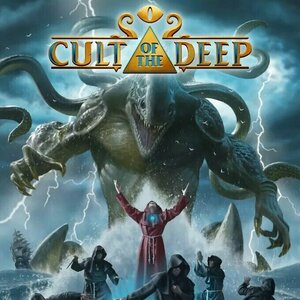
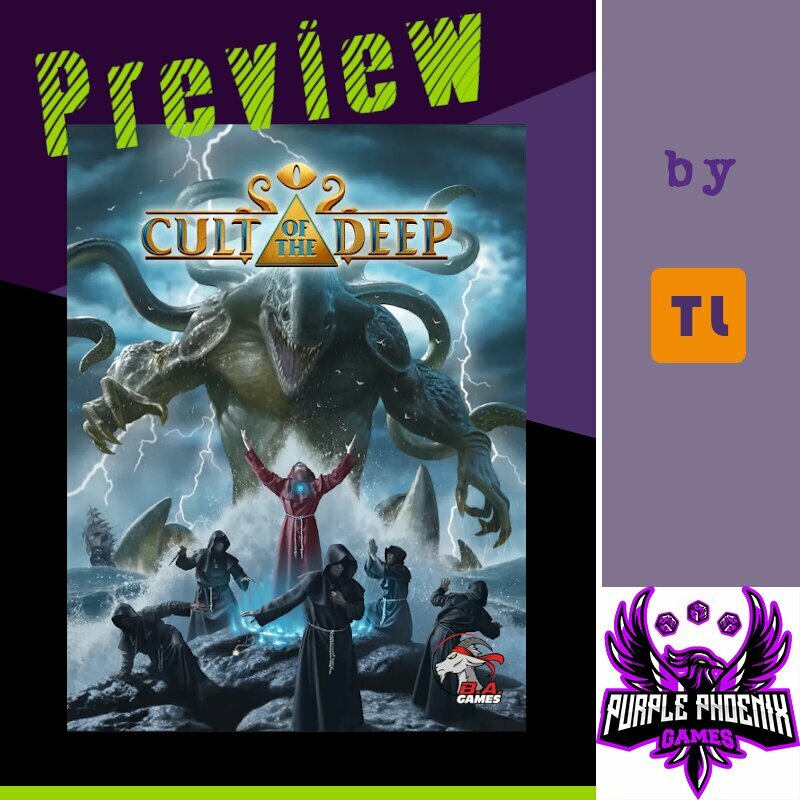
You see that cultist in the foreground of the box art about to dab? If I knew being in a cult was THIS cool… Well, I have never been in a cult. At least not that I am aware. However, if I ever were to be in a cult, I certainly wouldn’t wish it to be one that is intent on reviving or calling upon the scourges of the earth. I would rather be in one of those happy cults that take wisdom from a prophet and make delicious breads or something. But how does the Cult of the Deep operate and would I want to join?
Cult of the Deep is a dice-driven, fantasy horror, hidden role game with similarities to some classic games. In it players will be donning the personas (personae?) of cultists with different roles and agendas. Players will be forming alliances with other cultists of unknown roles and possibly having their character perish and return to play as a Wraith with a totally new agenda. Each cultist’s role will have their own victory conditions to fulfill and the game ends once a player (or players) have fulfilling their victory conditions.
DISCLAIMER: We were provided a prototype copy of this game for the purposes of this review. These are preview copy components, and I do not know for sure if the final components will be any different from these shown. Also, it is not my intention to detail every rule in the game, as there are just too many. You are invited to download the rulebook, back the game through the Kickstarter campaign, or through any retailers stocking it after fulfillment. -T
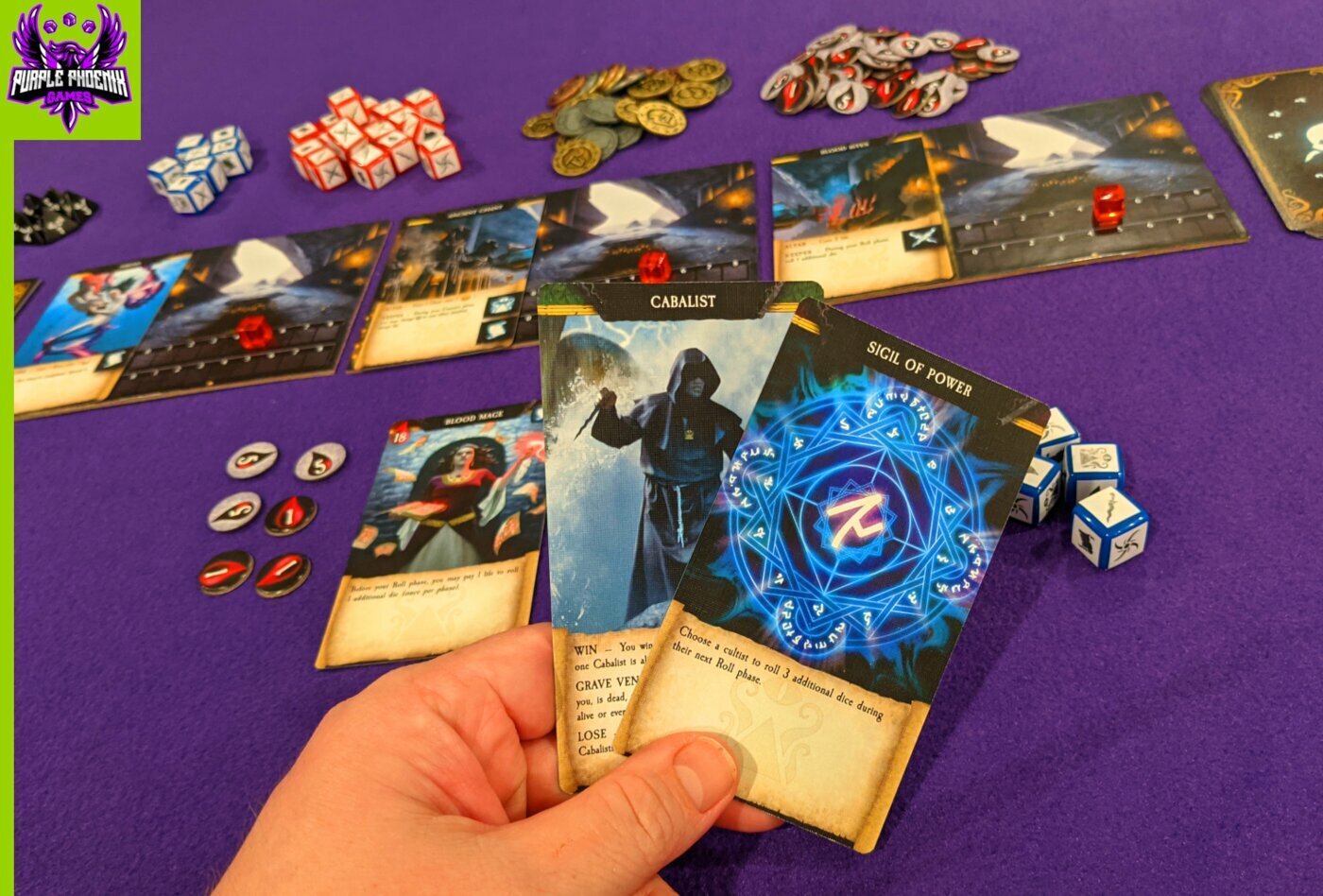
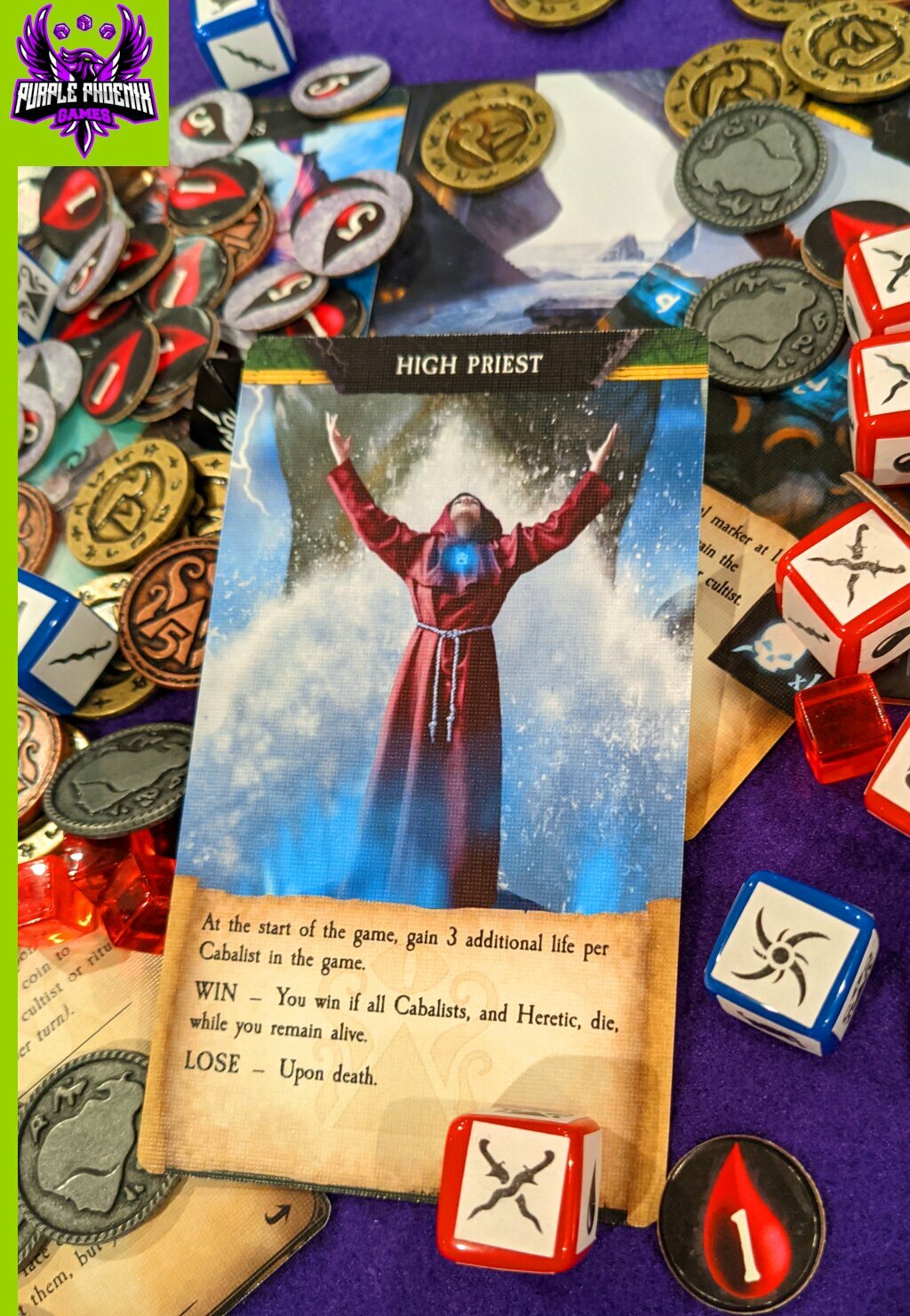
Setup involves placing out the Altar Boards and Ritual Cards upon them. Players will also receive one Role, Character, Sigil, and Reference Card to use during play. Players will reveal their Character Cards and collect enough Life Tokens to equal what is shown upon these cards. Each set of dice and the coins are to be set on the table within reach. The player who received the High Priest Role Card reveals it, takes extra Life Counters, and becomes the first player. They take five Cultist Dice and the game may begin!
Each turn is divided into four phases: Roll, Commit, Response, Resolve. During the Roll phase the active player will roll five dice, and any dice may be re-rolled another two times. Once all re-rolls are complete or the player decides to stop, they will take each die and Commit them to other players, altars, or themselves. For example, if the player rolls two blood drop icons they may wish to heal themselves by two, so they can commit these dice to themselves. Should this player also have rolled any dagger icons they may commit these dice to other players in order to attack them for one life per icon. If any player has a special ability that can be enacted during the Response phase, they must now use it. One such ability may be turning a one-dagger icon into a two-dagger icon, or other abilities. Once all players have had a chance to activate any abilities during this phase, the dice must now be Resolved in any order of the active player’s choosing. So now the player can regain life counters (or even surpass their starting life total), attack other players’ life points, or activate any Altar abilities if dice were placed on Ritual Cards on altars.
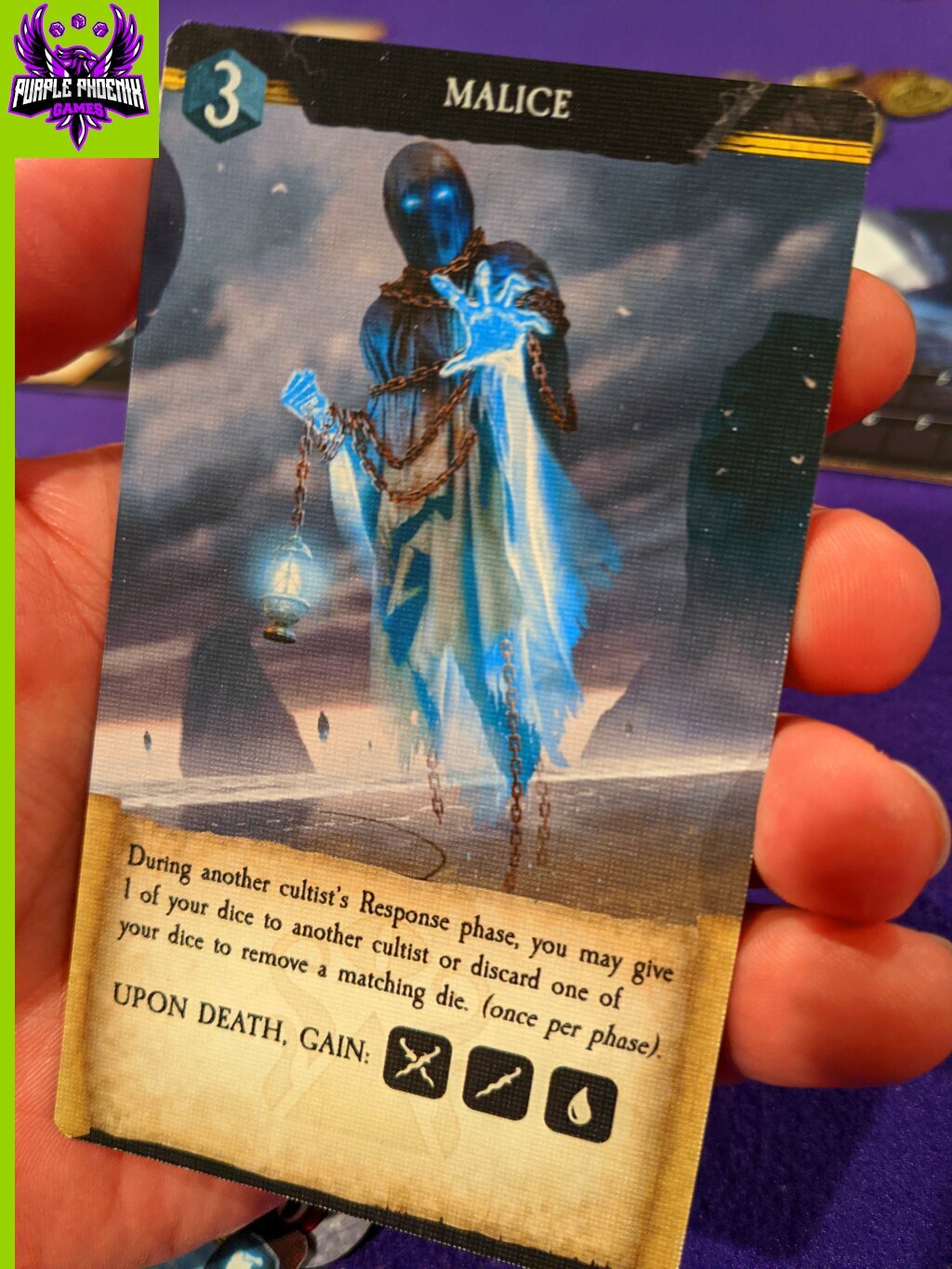
The Resolve phase is where the action happens, and can lead to some serious actions. Players can be killed, Rituals can be activated, and players can be healed. If a Ritual is completed (no more activation slots remaining) during this phase, the active player becomes the Keeper of the Ritual and collects its card from the altar to be used for an immediate effect, or an ongoing effect for the rest of the game. Should a player be slain, they may return to the game as a Wraith, and thus draws a Wraith card (shown below) to now represent their altered state. Wraiths play the game differently, as they will not be able to commit any dice during their turn, but rather have their dice to be used during other cultists’ Response phases.
Play continues in this fashion of taking turns around the table until victory conditions have been met for a player or group of players. The game may be over, but the lasting effects of the results will remain in each player’s heart for some time.
Components. Again, this is a prototype copy of the game, so not all components are as they will be in the finished version. That said, we received an excellent prototype copy of the game. The cards are great, the cardboard components are equally great, and I know we were provided with examples of the Kickstarter exclusive add-on metal coins, but I certainly would spring for them. These coins are the real deal and just feel amazing to handle. I know the dice will be different upon a successful campaign, as stickered dice simply will not hold up to many plays (and I see on the KS page that the d4s will have numbers ON TOP, which is where they should be). So once all is said and done, I believe this will be a beautiful, if not dark, game with excellent components and art style.
I mentioned in my open that this game reminds me of bits of other classic games. Perhaps you were able to discern these in my description, but here are my thoughts. I enjoy dice-based hidden-role games like BANG! The Dice Game. Cult of the Deep feels similar in that players may suss out roles of other players simply by attacking them until roles are revealed or cultists slain. This is not the ideal strategy, as I have been repeatedly told by my wife, but it certain is effective. What is improved here is that players come back as Wraiths and really are not ever out of the game. This is very good, as I usually am the player who is ganged up on and first to exit any game of this type.
Secondly, rolling dice and then committing them to certain areas of the game feels extremely reminiscent of the classic Biblios. Biblios uses cards and each turn the different areas MUST be committed to, but here again Cult of the Deep improves on this mechanic by allowing the player to choose every location to which they wish to commit their dice. Maybe every turn a player will commit daggers to one player (more than likely the High Priest), or certain dice faces to heal another player, but it is not necessary, and always being aware of what faces the Rituals need to progress will also dissuade players from ganging on one player each turn.
I didn’t mention it in my description, but each player is also given a Sigil card that can be used once per game, and they are especially powerful. Having so many choices available during a turn, or even during other players’ turns makes this game unique and incredibly enjoyable.
If you are looking for a game that has that Cthulhu-esque theme, hints of other classic game mechanics, and a deluxe look, then Cult of the Deep is certainly highly recommended. It is a notch more difficult than BANG! The Dice Game, and utilizes Biblios’s resource allocation mechanic better, thus creating a great blend of each. I do think you should check out the Kickstarter campaign ending Wednesday, March 3, 2021 to back it and add it to your collection. Obviously, this isn’t for everyone, but if you have read this far, I will assume at least a small measure of interest. I believe it will be a great game to have available for the right group of people who can handle the theme and don’t mind dying and becoming a character in Lord of the Rings.
Cult of the Deep is a dice-driven, fantasy horror, hidden role game with similarities to some classic games. In it players will be donning the personas (personae?) of cultists with different roles and agendas. Players will be forming alliances with other cultists of unknown roles and possibly having their character perish and return to play as a Wraith with a totally new agenda. Each cultist’s role will have their own victory conditions to fulfill and the game ends once a player (or players) have fulfilling their victory conditions.
DISCLAIMER: We were provided a prototype copy of this game for the purposes of this review. These are preview copy components, and I do not know for sure if the final components will be any different from these shown. Also, it is not my intention to detail every rule in the game, as there are just too many. You are invited to download the rulebook, back the game through the Kickstarter campaign, or through any retailers stocking it after fulfillment. -T
Setup involves placing out the Altar Boards and Ritual Cards upon them. Players will also receive one Role, Character, Sigil, and Reference Card to use during play. Players will reveal their Character Cards and collect enough Life Tokens to equal what is shown upon these cards. Each set of dice and the coins are to be set on the table within reach. The player who received the High Priest Role Card reveals it, takes extra Life Counters, and becomes the first player. They take five Cultist Dice and the game may begin!
Each turn is divided into four phases: Roll, Commit, Response, Resolve. During the Roll phase the active player will roll five dice, and any dice may be re-rolled another two times. Once all re-rolls are complete or the player decides to stop, they will take each die and Commit them to other players, altars, or themselves. For example, if the player rolls two blood drop icons they may wish to heal themselves by two, so they can commit these dice to themselves. Should this player also have rolled any dagger icons they may commit these dice to other players in order to attack them for one life per icon. If any player has a special ability that can be enacted during the Response phase, they must now use it. One such ability may be turning a one-dagger icon into a two-dagger icon, or other abilities. Once all players have had a chance to activate any abilities during this phase, the dice must now be Resolved in any order of the active player’s choosing. So now the player can regain life counters (or even surpass their starting life total), attack other players’ life points, or activate any Altar abilities if dice were placed on Ritual Cards on altars.
The Resolve phase is where the action happens, and can lead to some serious actions. Players can be killed, Rituals can be activated, and players can be healed. If a Ritual is completed (no more activation slots remaining) during this phase, the active player becomes the Keeper of the Ritual and collects its card from the altar to be used for an immediate effect, or an ongoing effect for the rest of the game. Should a player be slain, they may return to the game as a Wraith, and thus draws a Wraith card (shown below) to now represent their altered state. Wraiths play the game differently, as they will not be able to commit any dice during their turn, but rather have their dice to be used during other cultists’ Response phases.
Play continues in this fashion of taking turns around the table until victory conditions have been met for a player or group of players. The game may be over, but the lasting effects of the results will remain in each player’s heart for some time.
Components. Again, this is a prototype copy of the game, so not all components are as they will be in the finished version. That said, we received an excellent prototype copy of the game. The cards are great, the cardboard components are equally great, and I know we were provided with examples of the Kickstarter exclusive add-on metal coins, but I certainly would spring for them. These coins are the real deal and just feel amazing to handle. I know the dice will be different upon a successful campaign, as stickered dice simply will not hold up to many plays (and I see on the KS page that the d4s will have numbers ON TOP, which is where they should be). So once all is said and done, I believe this will be a beautiful, if not dark, game with excellent components and art style.
I mentioned in my open that this game reminds me of bits of other classic games. Perhaps you were able to discern these in my description, but here are my thoughts. I enjoy dice-based hidden-role games like BANG! The Dice Game. Cult of the Deep feels similar in that players may suss out roles of other players simply by attacking them until roles are revealed or cultists slain. This is not the ideal strategy, as I have been repeatedly told by my wife, but it certain is effective. What is improved here is that players come back as Wraiths and really are not ever out of the game. This is very good, as I usually am the player who is ganged up on and first to exit any game of this type.
Secondly, rolling dice and then committing them to certain areas of the game feels extremely reminiscent of the classic Biblios. Biblios uses cards and each turn the different areas MUST be committed to, but here again Cult of the Deep improves on this mechanic by allowing the player to choose every location to which they wish to commit their dice. Maybe every turn a player will commit daggers to one player (more than likely the High Priest), or certain dice faces to heal another player, but it is not necessary, and always being aware of what faces the Rituals need to progress will also dissuade players from ganging on one player each turn.
I didn’t mention it in my description, but each player is also given a Sigil card that can be used once per game, and they are especially powerful. Having so many choices available during a turn, or even during other players’ turns makes this game unique and incredibly enjoyable.
If you are looking for a game that has that Cthulhu-esque theme, hints of other classic game mechanics, and a deluxe look, then Cult of the Deep is certainly highly recommended. It is a notch more difficult than BANG! The Dice Game, and utilizes Biblios’s resource allocation mechanic better, thus creating a great blend of each. I do think you should check out the Kickstarter campaign ending Wednesday, March 3, 2021 to back it and add it to your collection. Obviously, this isn’t for everyone, but if you have read this far, I will assume at least a small measure of interest. I believe it will be a great game to have available for the right group of people who can handle the theme and don’t mind dying and becoming a character in Lord of the Rings.


Charlie Cobra Reviews (1840 KP) rated Zack Snyder's Justice League (2021) in Movies
Mar 26, 2021 (Updated Mar 26, 2021)
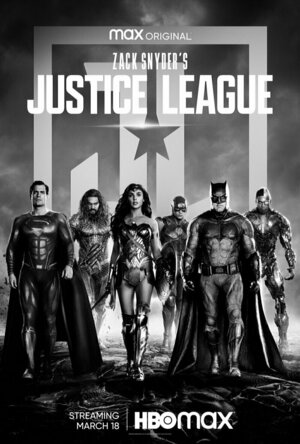
The movie as a whole is better than the original. (2 more)
The darker tone, R rating and additional scenes of violence and bloodshed.
The additional scenes for Cyborg's and Flash's story arc were welcome and did their characters justice.
4 hour length was way too long. (2 more)
The aspect ratio being in 4:3 instead of widescreen.
I didn't like certain things about the addition of Darkseid.
This Version Far Surpasses The Original Released
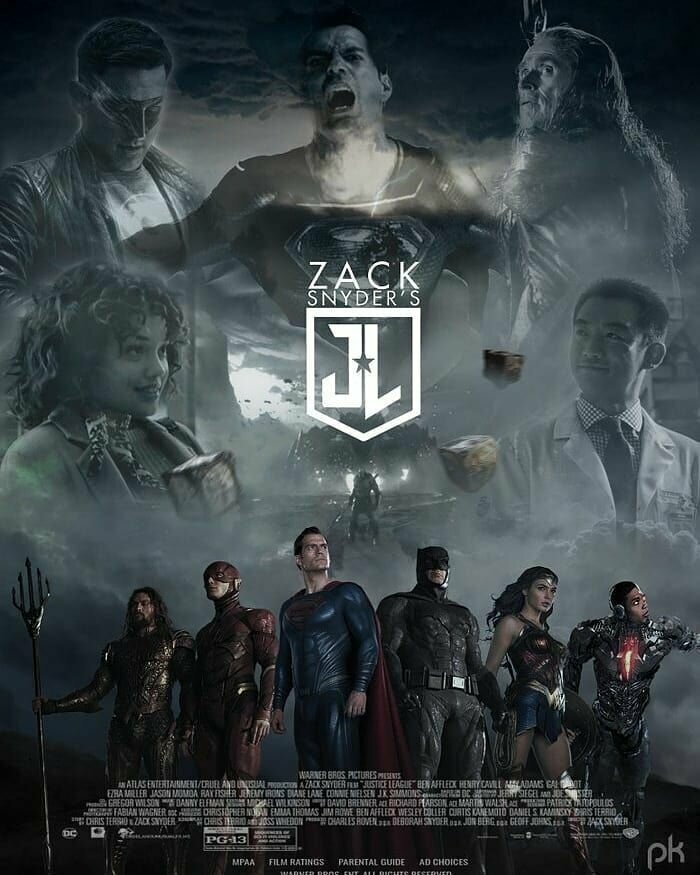
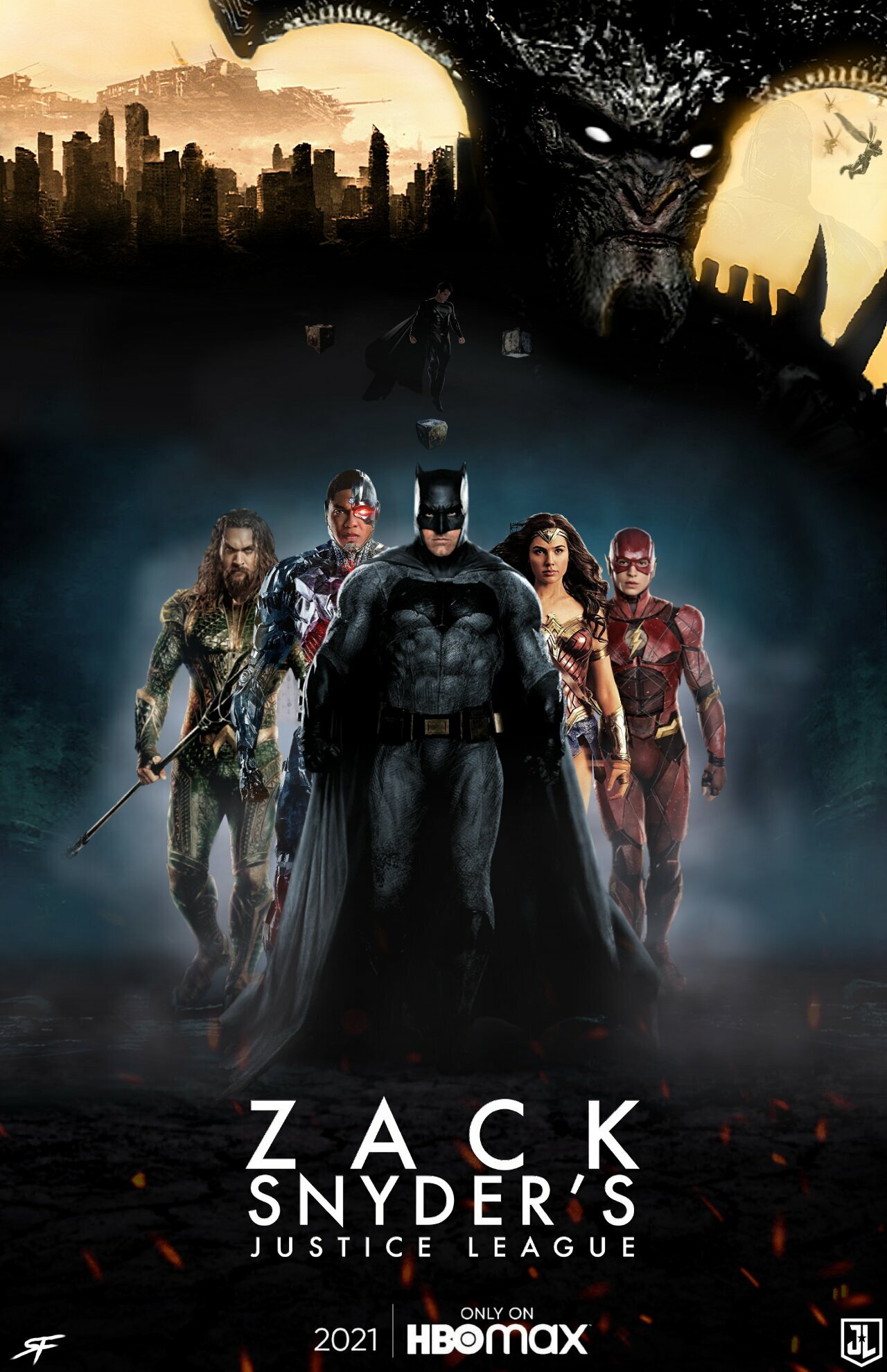
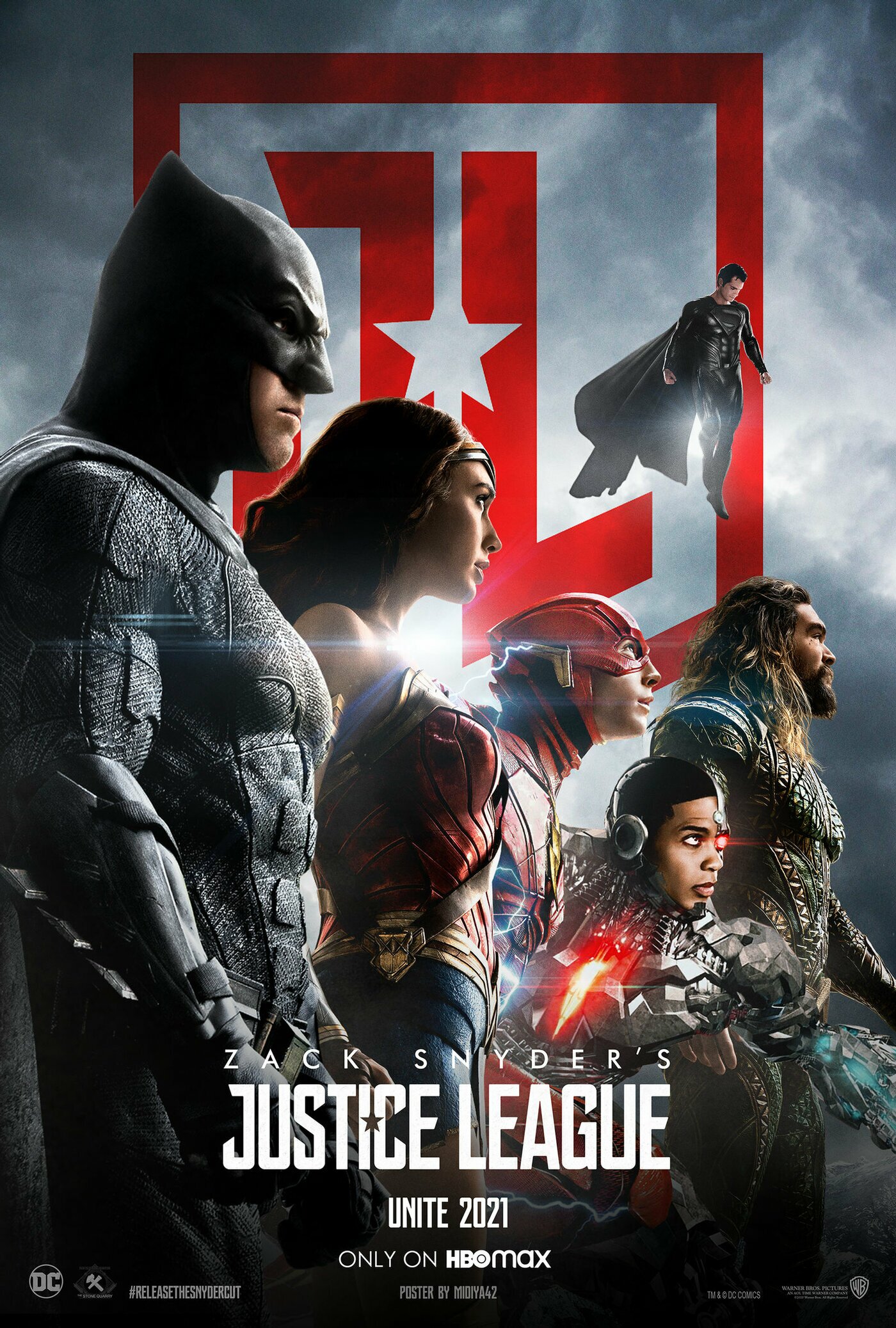
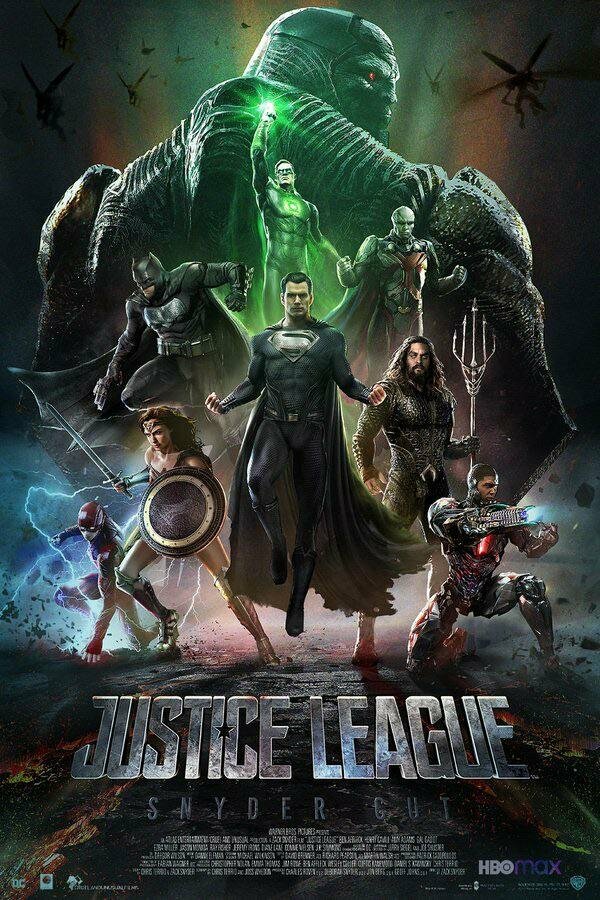
This movie was way better than the one that was released in theaters. I have to say it is a super long movie but honestly the time just flew by while I was watching it. I also broke it up into 2x two hour halves but another way would be to break it into 6 parts like it has been segmented into in the movie already with 5 chapters/parts and an epilogue. I think it helped that I didn't watch the original one right before I saw this one too. I didn't because I didn't want to be too "Justice Leagued" out and because I knew that it was going to be a 4 hour movie already. There were definitely some parts that felt like they needed to be included in the original for the story to make more sense and be more cohesive story-wise but there were more than a couple that were unnecessary and could have still been left on the cutting floor in my opinion. Now people that are expecting this to be a whole new movie will probably feel disappointed and that this movie is very much the same but fans of DC or the DCEU will more than likely enjoy this film over the original. I really like the way that they included more story and scenes for characters like Cyborg and Flash. I feel that they definitely helped in fleshing out their characters who got the short end of the stick the first time around and since their characters didn't have their own stand alone movies. I also feel they fixed the way Wonder Woman was portrayed and the tension between her and Batman in the movie. I know I could bring up more points here in this part of the review and although the movie was released in 2017 and most people have seen it already, I don't want to spoil it for those who might not have seen it and their first time is going to be this version. So with that being said I'll save the rest for the spoiler review section. And now for my score/rating, I'd have to say that this movie still had a lot of issues like unnecessary scenes and a long run time and some of them stick out like a sore thumb but I really liked it and say that this was a great movie, I'm probably a little bias because I generally enjoy comic book movies and like DC as well but I give it a 8/10. And this movie gets my "Must See Seal of Approval" but only if you are a fan of DC, the DC movies or film in general and have what it takes to sit through a 4 hour movie. Also I think it's worth getting a subscription to HBOMax, if only for 1 month at the price of $15 a month because if you sign up now you'll also be able to enjoy all the other content; plus you'll be able to see Godzilla vs Kong when it's released on March 31st and Mortal Kombat on April 16th.
-------------------------------------------------------
Spoiler Section Review:
So I really enjoyed this movie and thought it was great. At 4 hours it was a monster of a film to get through but I'm definitely glad I watched it because it was way better than the first one that came out in theaters. One of the biggest reasons I think I liked it too was that it was rated R instead of PG-13 which is why we hear Batman and Cyborg drop F-bombs in the movie and why there is significantly more violence and bloodshed shown. The beginning was also different and had a different feel to it right away because in the original it had the memorial for Superman and in this one it doesn't. One thing that I didn't care for and thought was really annoying was how the movie wasn't widescreen but the 4:3 ratio but luckily I have a setting on my tv to change it to widescreen and I think that helped a lot. I know the composer was also changed from the original which I think was better but hard to say but the music definitely fit better. A big change was how the movie felt like it had less humor and really felt darker in tone. I think that at 4 hours long though they really added back or too many additional scenes that didn't need to be there and were completely unnecessary. The part after Bruce Wayne tries to recruit Aquaman and the Swedish or Norwegian girls sing that song was pretty unnecessary and could have been taken out as well as when Wonder Woman goes to the fire arrow place of the Amazons and walks down the stairs to look at the ancient murals. I liked how Bruce Wayne/Batman had more scenes with Alfred Pennyworth. The greatest addition to this movie in my opinion were the additional scenes for Cyborg's story arc and for Flash. These really helped flesh out their characters and do them justice especially for them not having had their own individual movies before this movie of forming the Justice League. I like how Flash saved Iris in that one scene in front of the pet shop. The flashbacks for Cyborg were really cool too and how they showed more of his Mom that we never got to see humanized him a lot more. One of my favorite things that they changed was black suit Superman, that was awesome that they added that, straight out of the comics. I liked how they showed more action scenes of Wonder Woman especially the extended version of her fighting off the terrorists in the museum or wherever it was they went to blow up the kids. I also liked how they changed the scenes of Batman and her and instead made it more about the team and them together. Another thing I really liked was how they showed Willem Dafoe's character Vulko and how he talked to Aquaman. That was one thing that really bothered me about the original was how Mera and Aquaman acted like they knew each other already but in Aquaman they barely met for the first time so it just really threw me off. That and how did he know to go to Atlantis right when Steppenwolf was about to attack. It also bothered me how the Amazons had such an epic battle against Steppenwolf to defend him taking the mother box and the Atlanteans didn't even put up a fight. With this correction they added the dialogue that Aquaman's brother Orm (Ocean Master) was already starting to make moves to take over the other kingdoms that he needed all his soldiers and wouldn't spare any to protect the mother box. I had mixed feelings about Steppenwolf's redesign but I think ultimately it was a good thing and you were able to see his motivations better and think he came out more of a badass and better bad guy. It was cool to see him communicate using the mother boxes and talk to Darkseid's other henchmen Desaad. One thing I really didn't like was how they did Darkseid dirty and showed him lose in the past instead of how it was Steppenwolf who lost in the original to the combined armies of Amazons, Greek Gods, humans and a Green Lantern. They didn't even show him use his Omega beams against them but he did use it against the Atlanteans in a vision of the future that Cyborg sees and it was awesome. I felt they watered down Darkseid from how hardcore he's supposed to be in the comics and cartoons, etc... I liked how in the end they showed how he had Desaad with him and Granny Goodness with him on the other side of the boom tube. I really didn't like how they had this whole thing about Darkseid not remembering which planet the mother boxes were on or where he had seen the "anti-life equation". It doesn't make sense to me that he would forget the planet where he got his ass kicked and almost died or at least was defeated. I heard a theory that maybe he didn't forget he just didn't want his followers to know he suffered a defeat and didn't let them know or killed everyone who knew but then it also didn't make sense that Steppenwolf remembered. It also never explained in this version how or why Steppenwolf fell out of favor with Darkseid and why he was trying so desperately to please him and his whole debt of having to conquer 100,000 worlds. I think this movie could have been cut down to 3 hours and been just as good, and think that 4 hours was a bit too much and that's considering 10% is in slow motion scenes (that's 24 minutes give or take). To me it looks like the success of this version of the movie could possibly generate enough buzz to get a sequel but Zack Snyder has already stated that he more than likely wouldn't come back to make it. As I said above I really dug this version and probably am a little biased and should maybe give it a point lower than what I scored/rated it but I give it a 8/10 and it get's my "Must See Seal of Approval".
https://youtu.be/EvpnLXHBYZU
-------------------------------------------------------
Spoiler Section Review:
So I really enjoyed this movie and thought it was great. At 4 hours it was a monster of a film to get through but I'm definitely glad I watched it because it was way better than the first one that came out in theaters. One of the biggest reasons I think I liked it too was that it was rated R instead of PG-13 which is why we hear Batman and Cyborg drop F-bombs in the movie and why there is significantly more violence and bloodshed shown. The beginning was also different and had a different feel to it right away because in the original it had the memorial for Superman and in this one it doesn't. One thing that I didn't care for and thought was really annoying was how the movie wasn't widescreen but the 4:3 ratio but luckily I have a setting on my tv to change it to widescreen and I think that helped a lot. I know the composer was also changed from the original which I think was better but hard to say but the music definitely fit better. A big change was how the movie felt like it had less humor and really felt darker in tone. I think that at 4 hours long though they really added back or too many additional scenes that didn't need to be there and were completely unnecessary. The part after Bruce Wayne tries to recruit Aquaman and the Swedish or Norwegian girls sing that song was pretty unnecessary and could have been taken out as well as when Wonder Woman goes to the fire arrow place of the Amazons and walks down the stairs to look at the ancient murals. I liked how Bruce Wayne/Batman had more scenes with Alfred Pennyworth. The greatest addition to this movie in my opinion were the additional scenes for Cyborg's story arc and for Flash. These really helped flesh out their characters and do them justice especially for them not having had their own individual movies before this movie of forming the Justice League. I like how Flash saved Iris in that one scene in front of the pet shop. The flashbacks for Cyborg were really cool too and how they showed more of his Mom that we never got to see humanized him a lot more. One of my favorite things that they changed was black suit Superman, that was awesome that they added that, straight out of the comics. I liked how they showed more action scenes of Wonder Woman especially the extended version of her fighting off the terrorists in the museum or wherever it was they went to blow up the kids. I also liked how they changed the scenes of Batman and her and instead made it more about the team and them together. Another thing I really liked was how they showed Willem Dafoe's character Vulko and how he talked to Aquaman. That was one thing that really bothered me about the original was how Mera and Aquaman acted like they knew each other already but in Aquaman they barely met for the first time so it just really threw me off. That and how did he know to go to Atlantis right when Steppenwolf was about to attack. It also bothered me how the Amazons had such an epic battle against Steppenwolf to defend him taking the mother box and the Atlanteans didn't even put up a fight. With this correction they added the dialogue that Aquaman's brother Orm (Ocean Master) was already starting to make moves to take over the other kingdoms that he needed all his soldiers and wouldn't spare any to protect the mother box. I had mixed feelings about Steppenwolf's redesign but I think ultimately it was a good thing and you were able to see his motivations better and think he came out more of a badass and better bad guy. It was cool to see him communicate using the mother boxes and talk to Darkseid's other henchmen Desaad. One thing I really didn't like was how they did Darkseid dirty and showed him lose in the past instead of how it was Steppenwolf who lost in the original to the combined armies of Amazons, Greek Gods, humans and a Green Lantern. They didn't even show him use his Omega beams against them but he did use it against the Atlanteans in a vision of the future that Cyborg sees and it was awesome. I felt they watered down Darkseid from how hardcore he's supposed to be in the comics and cartoons, etc... I liked how in the end they showed how he had Desaad with him and Granny Goodness with him on the other side of the boom tube. I really didn't like how they had this whole thing about Darkseid not remembering which planet the mother boxes were on or where he had seen the "anti-life equation". It doesn't make sense to me that he would forget the planet where he got his ass kicked and almost died or at least was defeated. I heard a theory that maybe he didn't forget he just didn't want his followers to know he suffered a defeat and didn't let them know or killed everyone who knew but then it also didn't make sense that Steppenwolf remembered. It also never explained in this version how or why Steppenwolf fell out of favor with Darkseid and why he was trying so desperately to please him and his whole debt of having to conquer 100,000 worlds. I think this movie could have been cut down to 3 hours and been just as good, and think that 4 hours was a bit too much and that's considering 10% is in slow motion scenes (that's 24 minutes give or take). To me it looks like the success of this version of the movie could possibly generate enough buzz to get a sequel but Zack Snyder has already stated that he more than likely wouldn't come back to make it. As I said above I really dug this version and probably am a little biased and should maybe give it a point lower than what I scored/rated it but I give it a 8/10 and it get's my "Must See Seal of Approval".
https://youtu.be/EvpnLXHBYZU