Search

Search only in certain items:

Music for 18 Musicians by Steve Reich
1998 | Classical
(0 Ratings)
Album Favorite

"I think this is Steve's masterpiece. On my first day on foundation in Winchester, the tutor played everybody 'Piano Phase' and it was the first time I'd heard music like that. It completely blew my mind. The repetition; the shifting; the way those two pianos phased in and out with each other; it's an extraordinary piece of work. And he resolved that through a number of pieces and he came up with Music For 18 Musicians, which was the first large scored piece he'd done. I went to India in the early 80s and I had a very small number of cassettes with me that I could listen to, and that was one of them. I remember sitting on a roof somewhere listening to that and looking up at the sky. It is a kind of cosmic record in a way. I don't know if you have to like Steve Reich to know what that is, in a way. If someone was coming to it and they didn't know that music I don't know what they'd make of it. If you're used to listening to tunes would you just wonder where the tune is? It's all about harmony and rhythm, but it's intensely beautiful."

Source
  
2001: A Space Odyssey (1968)
1968 | Classics, Sci-Fi

"My first memory was being in the movie theater — the strongest one up to this date, 60 or 48 years later. I still remember the shock of being transported into another dimension. Also, going through the gate of light like if I’d taken a huge dose of acid, like discovering other dimensions. But when you discover dimensions in a safe context as a movie theater, it looks even better. When I came out from that movie, I felt someone had injected me with something in the brain. I was obsessed with going to see the end of 2001. I liked the ape scenes, I like the beginning, but I just wanted to go again and again to see the movie, to go through the Stargate. And I’m happy, I met lately Douglas Trumbull [who did the visual effects on 2001], and we discussed Love, and he’s seen Enter the Void. For me, Douglas Trumbull was one of the very best partners in crime in this masterpiece, and just meeting him for me was just like discovering what was happening behind the curtain of the movie. This is the guy who like opened my mind when I was six years old."

Source
  
40x40

J.A. Bayona recommended Superman (1978) in Movies (curated)
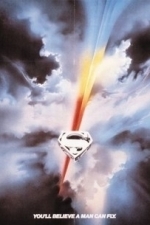
 
Superman (1978)
Superman (1978)
1978 | Action, Drama

"It’s the first movie I saw when I was a kid, and it’s also my first memory of my life. It’s the first thing I remember. I was three years old — I know that because it was 1978. The first thing I remember in my life is the shot of Christopher Reeve wearing the Superman clothes and flying. That image provoked such an impact on me that from that moment on, I wanted to be Superman. And then as I grew up, I wanted to be the guy who made Superman possible. So I found out that there were these guys called actors and I wanted to be one. I was obsessed with movies when I was a kid. That movie created such an impact on me, and when I watch it again nowadays, I still believe it’s a masterpiece. It established the superhero genre on a level that, I think nowadays there’s not any movie that has it better than that for me, in the genre. The reality of the special effects, the chemistry between Christopher Reeve and Margot Kidder is still there. The way Richard Donner recreates Smallville… It’s an endless film to me. It’s an amazing film, especially nowadays."

Source
  
Fanny and Alexander (1982)
1982 | Drama, International

"Ingmar Bergman’s masterpiece was an international critical and financial success, winning four Oscars. And that was in its truncated, just-over-three-hour version. Included in this set is Bergman’s full version, made for Swedish television. Presented in four parts, it comes in at over five hours, nearly twice as long as the theatrical cut. It’s truly a marvel to behold, intricately detailing every aspect of the lives of the Ekdahl family in turn-of-the-twentieth-century Sweden. As it brilliantly charts a span of several years through the eyes of children, the film is equally detailed with its adult characters’ points of view. Equal parts joyous and tragic. A marvelous and loving tribute to Bergman’s life in the theater. Full of magical realism and stark, painful reality. A meditation on death and a celebration of life. Dickensian in nature (Dickens is said to have been a major influence on Bergman for this film). Truly unlike anything else he ever did. It recalls the great epics of David Lean, which were massive in scope while also being concerned with intimate details of the human condition and its fragility. A masterwork in either version. Watch them both and never be bored for a moment."

Source
  
Suspiria (1977)
Suspiria (1977)
1977 | Horror
Dario Argento's body of work throughout the 70s and 80s is pretty damn solid, and Suspiria is arguably his strongest entry. It's a damn masterpiece.

The lighting, colours, and camerawork are all phenomenal. Throw them together, and you get one of the most visually striking horrors ever made.
It has excellent pacing - the opening ten minutes are incredibly intense, and culminate in a truly iconic horror cinema kill. The vast majority of what follows is a slower build up of plot, but in true Giallo fashion, keeps a sturdy mystery going for the whole time. The climax of the film ramps everything up again, as things take a supernatural turn, providing the audience with a solid reveal, disturbing imagery, and a decent helping of blood, all the while being backed by an absurd soundtrack courtesy of Italian prog band Goblin. The music goes from being enchanting, to downright jarring at the click of a finger, and just adds to Suspria's otherworldliness in spades.
Some memorable performances from the likes of Jessica Harper, Stefania Casini, Alida Valli and Joan Bennett also help in elevating this movie to horror greatness.

Suspiria is one of those films that you must see before you die. Horror at its weird, sense-assaulting best!

  
The Discreet Charm of the Bourgeoisie (1972)
1972 | Comedy
6.0 (2 Ratings)
Movie Favorite

"As I was a young film fan growing up in a VCR-less household in rural England, my access to international cinema was limited to whatever was playing on the (then) four channels of network television. Which basically meant that Sergio Leone’s Dollars trilogy and Jacques Tati were some of the only European films I saw until I was in my late teens. During a brief art college stint, my eyes were opened as I was exposed to surrealism. First Luis Buñuel’s Un chien Andalou and L’age d’or, but then later, my favorite film of his, the 1972 masterpiece The Discreet Charm of the Bourgeoisie. Dipping into the history of cinema is an exciting yet overwhelming task for some. When appreciating older works, I like to contextualize by tracing back to them from their influences. So if the work of Buñuel ever seems daunting, know this: he directly influenced Monty Python, and John Landis was inspired by this movie for a classic shock sequence in An American Werewolf in London. I know that has now inspired some of you to watch the film immediately. Buñuel has a fiendishly prankish sense of humor to go along with his endless smarts. If you have never watched a film of his, this is a good place to start."

Source
  
40x40

Josh Sadfie recommended Close-Up (1990) in Movies (curated)
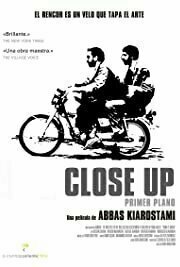
 
Close-Up (1990)
Close-Up (1990)
1990 | Biography, Crime, Drama
(0 Ratings)
Movie Favorite

"Close Up by Abbas Kiarostami. The way that that film blends fiction and reality, it is a north star for me. He made a movie about a contemporary Iranian filmmaker named Mohsen Makhmalbaf, and he read an article in the paper about a person who went around pretending to be this filmmaker in order to scam a family out of money and resources. And he went and cast the guy who was going around pretending to be Makhmalbaf, and he cast the real family that he scammed. And he recreated each scenario as if it was a script. He used real life as a script, and you’re watching the real players re-enact something that happened recently in their life, and the result is magical. The result is something that only film can give you. It makes you question your own self. It makes you question, what is a personality? It makes you question empathy. Because you start to actually see that this guy is actually a great actor, the main guy. And then you have one of the most complicated moments in all movies, when Makhmalbaf himself picks up the guy from the prison and rides on a motorcycle through Tehran. Masterpiece"

Source
  
40x40

John Taylor recommended Brazil (1985) in Movies (curated)
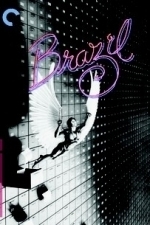
 
Brazil (1985)
Brazil (1985)
1985 | Comedy, Drama, Sci-Fi

"In 1985, I was taking meetings in Hollywood, looking for film work. An agent at Universal said to me, “Come back tonight, I want to show you a film we need help with, and we’d like your take on it.” I dutifully showed up at the Hitchcock Theater on the Universal lot and was granted an exclusive screening of this film, Brazil. Within minutes, my mouth was dry. I knew I was viewing a masterpiece, and yet they wanted my input on it. Of course, I had so many ideas, I would have said anything to get a chance to be a part of it, whatever it was (I had not been told anything about it). I called my friend Russell Mulcahy and told him, “I’ve just seen the most extraordinary film, and Universal want some music ideas from me.” “Don’t touch it!” said Russell. “That’s Terry Gillam’s film. He’s in a battle with Universal over it.” With some disappointment, I knew whose side I had to take. But I did get two pneumatic tapes of the film in the mail for my trouble. For months, I played it on my first flat-screen TV, just freezing on shot after shot for days on end. Weirdly perfect."

Source
  
Fanny and Alexander (1982)
1982 | Drama, International

"The television cut of Fanny and Alexander, of course, which is the one and only version Bergman approved of. It is called the television version because that’s how it was financed, but this is meant to be seen on a big screen with one intermission. It is Bergman’s final masterpiece. Well, not exactly, as he kept on making great films for years afterward. But in the master plan, this is the last actual film, the closing of his main body of work—others are supposed to be footnotes (they’re not). Initially, this film was overlooked because, in the shortened so-called theatrical version, it lost some of the richness of its texture. It was only gradually, when it was revisited in its full version, that it imposed itself, at least on me, as the key to his whole body of work. I had to fit Topsy-Turvy into this list. It is also a period piece. This misunderstood, underrated biography of Gilbert and Sullivan must be one of the most touching, funniest—and cruelest—depictions of show business, split between art and commerce. We see both the torments of creation and the anxieties of the box office. To me, it compares only with Jean Renoir’s French Cancan."

Source
  
40x40

Olivier Assayas recommended Topsy-Turvy (1999) in Movies (curated)
 
Topsy-Turvy (1999)
Topsy-Turvy (1999)
1999 | International, Comedy, Drama
(0 Ratings)
Movie Favorite

"The television cut of Fanny and Alexander, of course, which is the one and only version Bergman approved of. It is called the television version because that’s how it was financed, but this is meant to be seen on a big screen with one intermission. It is Bergman’s final masterpiece. Well, not exactly, as he kept on making great films for years afterward. But in the master plan, this is the last actual film, the closing of his main body of work—others are supposed to be footnotes (they’re not). Initially, this film was overlooked because, in the shortened so-called theatrical version, it lost some of the richness of its texture. It was only gradually, when it was revisited in its full version, that it imposed itself, at least on me, as the key to his whole body of work. I had to fit Topsy-Turvy into this list. It is also a period piece. This misunderstood, underrated biography of Gilbert and Sullivan must be one of the most touching, funniest—and cruelest—depictions of show business, split between art and commerce. We see both the torments of creation and the anxieties of the box office. To me, it compares only with Jean Renoir’s French Cancan."

Source