



I’m not about to write a synopsis of the whole book, but these characters are really put through the wringer, keeping closely to the ethos of the original Russian author! It’s a really bittersweet ending too.
I should add that whilst it’s a YA book, it’s definitely for the more mature end of the age range. There’s a lot of alcohol, drugs and sex involved.
Many thanks to Readers First for my copy of this book.

Matthew Krueger (10051 KP) rated The Hunchback of Notre Dame (1996) in Movies
Mar 23, 2020
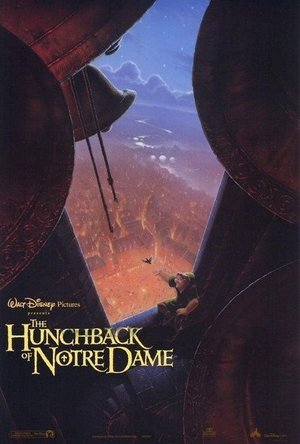

This movie has good songs like.."The Bells of Notre Dame", "Out There", "Topsy Turvy", "God Help The Outcast", "Heaven's Light/Hellfire" and "A Guy Like You".
The plot: An animated Disney adventure follows disfigured Quasimodo (Tom Hulce), the bell-ringer of Notre Dame Cathedral, who bides his time locked away in a tower. With only gargoyles to keep him company, Quasimodo longs to be with other people, leading to his chance encounter with the enchanting Gypsy Esmeralda (Demi Moore). When the beautiful young woman catches the attention of Quasimodo's guardian, sinister Frollo (Tony Jay), Quasimodo must help to keep her out of his clutches.
Intrest fact: The film is considered to be one of Disney's darkest animated films as its narrative explores such mature themes as infanticide, lust, damnation, genocide, and sin, despite the changes made from the original source material in order to ensure a G rating received by the MPAA.
Its a good movie.
The First Modern Japanese: The Life of Ishikawa Takuboku
Book
Many books in Japanese have been devoted to the poet and critic Ishikawa Takuboku (1886-1912)....

Older Workforces: Re-Imagining Later Life Learning
Book
Extended working lives are here to stay due to dismissal of the default retirement age in the UK,...
Hopscotch: A Memoir
Book
"Quite brilliant; beautifully, cleverly observed; funny, heart-breaking." (Roddy Doyle). Hilary is...

Citizen Warhol
Book
More than any other ?gure throughout art's long history, Andy Warhol has attracted fans, a?cionados,...
Digitized: The Science of Computers and How it Shapes Our World
Book
There's a hidden science that affects every part of your life. You are fluent in its terminology of...
Journalism
Book
'The blessing of an inherently interpretive medium like comics is that it hasn't allowed me to...

River Cottage Baby and Toddler Cookbook
Book
'This is a book about feeding children, but these recipes are for adults too. I don't think there...

The Sheridans' Guide to Cheese
Kevin Sheridan, Seamus Sheridan and Catherine Cleary
Book
Winner of BEST COOKBOOK, IRELAND, at the Gourmand World Cookbook Awards. Kevin and Seamus Sheridan...