
Search
Search results

ClareR (6256 KP) rated Once There Were Wolves in Books
Oct 24, 2023
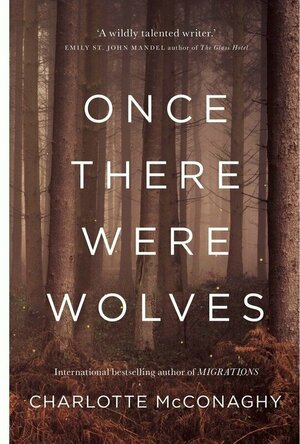

Animal protection, Climate Change and a mystery - perfect Clare reading fodder! The relationship between the two sisters, Inti and Aggie, was touching, and the relationship between the main character (Inti) and the townsfolk was tense, to say the least.
The idea of reintroducing wolves to the Highlands of Scotland in order to enrich and preserve the ecosystems there, is fascinating and exciting as a reader - and as someone who doesn’t have to farm under those circumstances. The writing was sensitive to every side of the story, but as Inti was leading the project to reintroduce wild wolves, the novel leant more in her favour - and I enjoyed that.
Aggie, Inti’s twin, has had a very traumatic experience, and she has severe depression along with other mental health problems. Inti hopes that by living in the wilds of Scotland, the isolation and wild country will begin to heal her.
But when one of the townsfolk is hurt, it’s hard to know who is safe - not the wolves, that’s for sure.
There are some really deep, involved themes in this: climate change, ecology, domestic abuse, violence, relationships.
Incidentally, I went on holiday in the Cairngorms this summer. We stayed in a cottage, away from all the other cottages on the estate (we couldn’t even see them), surrounded by fields containing alpacas and deer, with the odd buzzard, peregrine and even an osprey! I half expected to see a wolf-pack!! Sadly, there aren’t any wild wolves in Scotland now, but that estate was a weeks worth of heaven for me and my family - and would have fed a wolf pack for about that long, too!
The idea of reintroducing wolves to the Highlands of Scotland in order to enrich and preserve the ecosystems there, is fascinating and exciting as a reader - and as someone who doesn’t have to farm under those circumstances. The writing was sensitive to every side of the story, but as Inti was leading the project to reintroduce wild wolves, the novel leant more in her favour - and I enjoyed that.
Aggie, Inti’s twin, has had a very traumatic experience, and she has severe depression along with other mental health problems. Inti hopes that by living in the wilds of Scotland, the isolation and wild country will begin to heal her.
But when one of the townsfolk is hurt, it’s hard to know who is safe - not the wolves, that’s for sure.
There are some really deep, involved themes in this: climate change, ecology, domestic abuse, violence, relationships.
Incidentally, I went on holiday in the Cairngorms this summer. We stayed in a cottage, away from all the other cottages on the estate (we couldn’t even see them), surrounded by fields containing alpacas and deer, with the odd buzzard, peregrine and even an osprey! I half expected to see a wolf-pack!! Sadly, there aren’t any wild wolves in Scotland now, but that estate was a weeks worth of heaven for me and my family - and would have fed a wolf pack for about that long, too!

Jayme (18 KP) rated Turtles All The Way Down in Books
Apr 15, 2018 (Updated Apr 15, 2018)


Characters (3 more)
Plot
Accurate depiciton of mental illness
Didn't have an "easy" or cliche "fairytale" ending
I’ve been meaning to pick up a John Green book for a very long time, but it wasn’t until I heard good reviews of this book that I finally did. My initial thought after finishing the book is this: I now understand all the hype.
I read a great deal of YA fiction, but it is not very often that I finish the book feeling whole. Not because the ending was that of a fairy tale — John Green has a reputation for ensuring those endings don’t exist in his novels — but because the book was just so well-written. I feel as if many YA writers sit down to write books, but forget who their audience is. They are writing a much more washed out and juvenile version of what teenagers are actually like today. They are afraid to let their characters cuss or talk about sex, as if neither action actually exists among young adults. YA authors tend to stray away from the reality of teen behavior, but this book faced realities in a compelling way.
The novel follows Aza, a sixteen year old with an obsessive compulsive disorder, as she navigates the implications of her illness on her relationships with other people. Simultaneously, Aza and her best friend Daisy make it their mission to find Davis Pickett’s billionaire father wanted by the police, and it just so happens that Davis is an old friend of Aza’s from camp.
I appreciated the way the Aza, Daisy, and Davis (as well as the other secondary characters) were facing so many different conflicts (i.e. grief, financial classes, love, mental health, college decisions) at once, because that is exactly how the world works. Real teenagers do not fixate their lives on one specific conflict for extended periods of time, rather they balance several conflicts. I love the way this book was able to depict that struggle to maintain a balance in such a way that allowed readers to follow each plot line to the very end.
I loved the characterization, as they all felt tangible. Their mannerisms and tendancies were displayed through each appearance on the page. There was not a single moment in any interaction that made me feel as if the personalities of these characters were lost, not even in the dialogue (which was also incredible). This attention to detail is something that will drive me to pick up another John Green novel in the near future.
I read a great deal of YA fiction, but it is not very often that I finish the book feeling whole. Not because the ending was that of a fairy tale — John Green has a reputation for ensuring those endings don’t exist in his novels — but because the book was just so well-written. I feel as if many YA writers sit down to write books, but forget who their audience is. They are writing a much more washed out and juvenile version of what teenagers are actually like today. They are afraid to let their characters cuss or talk about sex, as if neither action actually exists among young adults. YA authors tend to stray away from the reality of teen behavior, but this book faced realities in a compelling way.
The novel follows Aza, a sixteen year old with an obsessive compulsive disorder, as she navigates the implications of her illness on her relationships with other people. Simultaneously, Aza and her best friend Daisy make it their mission to find Davis Pickett’s billionaire father wanted by the police, and it just so happens that Davis is an old friend of Aza’s from camp.
I appreciated the way the Aza, Daisy, and Davis (as well as the other secondary characters) were facing so many different conflicts (i.e. grief, financial classes, love, mental health, college decisions) at once, because that is exactly how the world works. Real teenagers do not fixate their lives on one specific conflict for extended periods of time, rather they balance several conflicts. I love the way this book was able to depict that struggle to maintain a balance in such a way that allowed readers to follow each plot line to the very end.
I loved the characterization, as they all felt tangible. Their mannerisms and tendancies were displayed through each appearance on the page. There was not a single moment in any interaction that made me feel as if the personalities of these characters were lost, not even in the dialogue (which was also incredible). This attention to detail is something that will drive me to pick up another John Green novel in the near future.

Eleanor Luhar (47 KP) rated Highly Illogical Behavior in Books
Jun 24, 2019
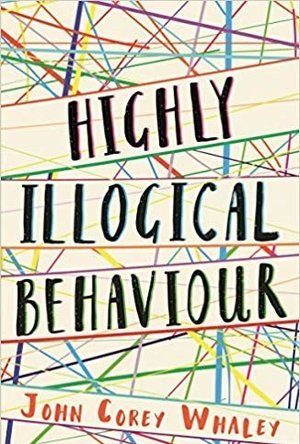

This is only a short book, but there is a huge story between these pages. I personally found this book amazing because I related so much to one character, Solomon, due to my own personal experiences with mental illness. (Hah! You'll get that reference if you read the book.) But I still think that anyone will enjoy this book, and gain a deeper understanding of the mental health issues that are discussed.
Lisa seeks out Solomon, the "crazy" kid who jumped into a fountain three years ago, in hopes of writing a scholarship-winning essay on him. Solomon hasn't left the house in three years. Not even to go in his own back garden. Every time he tries to, or even thinks about it, he has severe panic attacks. So instead of trying anymore, he gave up and made peace with a life inside four walls.
As an aspiring psychologist, Solomon's case is perfect. But they become close friends, and eventually, Lisa even brings her boyfriend, Clark, to meet Sol. One thing they never expected was Sol falling in love... with Clark.
I have had times where I have been unable to leave my house. I used to have my school work sent home, and would avoid seeing anyone for as long as I could. It never got as bad as Sol's case, but I would happily stay inside my house 24/7. (My mum won't let me, though.) So I really did relate to Solomon. The descriptions of his behaviours and thoughts were really accurate in my opinion. It was quite inspiring to watch him slowly emerge from his shell and start living again.
Of course, there's also the topic of homosexuality in this. I love how Clark remained so friendly even when he knew Sol was gay - not doing the whole "ew he might fancy me" thing that a lot of guys tend to. They were best friends. But Lisa was fed ideas by her friend, Janis, that made her worry Clark was cheating on her with Sol. Yeah. Awkward.
Overall, I just thought this was fantastically written. There are aspects for everyone to relate to, I think. And hopefully, it will help people understand why some of us may seem so "crazy".
I can easily give this book 4.5 stars. I really enjoyed it, and loved the characters and their relationships. Even when Lisa was using Sol, I could see how she had good intentions. It was so well written.
Lisa seeks out Solomon, the "crazy" kid who jumped into a fountain three years ago, in hopes of writing a scholarship-winning essay on him. Solomon hasn't left the house in three years. Not even to go in his own back garden. Every time he tries to, or even thinks about it, he has severe panic attacks. So instead of trying anymore, he gave up and made peace with a life inside four walls.
As an aspiring psychologist, Solomon's case is perfect. But they become close friends, and eventually, Lisa even brings her boyfriend, Clark, to meet Sol. One thing they never expected was Sol falling in love... with Clark.
I have had times where I have been unable to leave my house. I used to have my school work sent home, and would avoid seeing anyone for as long as I could. It never got as bad as Sol's case, but I would happily stay inside my house 24/7. (My mum won't let me, though.) So I really did relate to Solomon. The descriptions of his behaviours and thoughts were really accurate in my opinion. It was quite inspiring to watch him slowly emerge from his shell and start living again.
Of course, there's also the topic of homosexuality in this. I love how Clark remained so friendly even when he knew Sol was gay - not doing the whole "ew he might fancy me" thing that a lot of guys tend to. They were best friends. But Lisa was fed ideas by her friend, Janis, that made her worry Clark was cheating on her with Sol. Yeah. Awkward.
Overall, I just thought this was fantastically written. There are aspects for everyone to relate to, I think. And hopefully, it will help people understand why some of us may seem so "crazy".
I can easily give this book 4.5 stars. I really enjoyed it, and loved the characters and their relationships. Even when Lisa was using Sol, I could see how she had good intentions. It was so well written.

LeftSideCut (3776 KP) rated Joker (2019) in Movies
Oct 8, 2019 (Updated Oct 23, 2019)

Believe the hype
Contains spoilers, click to show
Full disclaimer - I have not been a massive fan of any movies DC related since the Dark Knight trilogy. There have been highlights here and there, but it's a been a rough few years to say the least.
I went to see Joker under a pretty neutral assumption - I had heard the good reviews, the bad reviews, and seen the incredibly well put together trailers - but I was still worried that I wouldn't like it.
What I was presented with was quite possibly the film of the year (I can't realistically see anything beating it at this point)
Make no mistake - Joker is a character driven think piece, light on action, and at times difficult to watch.
Jaoquin Phoenix is absolutely phenomenal as Arthur Fleck, and as we watch his descent into madness (or mental freedom depending on which way you look at it), it's hard not to sympathise with him - I felt myself welling up on more than one occasion.
Frances Conroy deserves a round of applause as well, carving out a fading and sad character failing to realise just how low Arthur is spiralling.
The film itself is bleak, painting a realistic Gotham City, on the brink of anarchy, not too dissimilar to how our world is IRL. All it takes is someone ballsy enough to pull the trigger to set it all off.
The film is draped with tense scene after tense scene as the plot builds up to its climax.
The films depiction of mental health issues rings louder than ever, showing us an all too real world that dismisses and laughs at those who suffer with such issues. It's haunting.
The final act is breathtaking - watching Arthur/Joker on Murray Franklin's talk show - when he's underneath the make up, he's a completely different person, threatening, but with a point that makes sense, and that what makes him so sinister.
The much discussed violence is seldom, but impactful, and most importantly, has a purpose as it builds character growth. Everything just seems so wonderfully crafted - hats off to Todd Phillips.
The score is pretty much flawless, hitting all the right notes, as is the cinematography, showcasing fantastic shots continuously throughout.
Joker feels like a true stand-alone, and is concrete evidence why DC should maybe concentrate on one off efforts rather than building an underwhelming connected universe...
It's a fantastic film through and through, and Phoenix deserves an Oscar, at the very least a nomination.
I went to see Joker under a pretty neutral assumption - I had heard the good reviews, the bad reviews, and seen the incredibly well put together trailers - but I was still worried that I wouldn't like it.
What I was presented with was quite possibly the film of the year (I can't realistically see anything beating it at this point)
Make no mistake - Joker is a character driven think piece, light on action, and at times difficult to watch.
Jaoquin Phoenix is absolutely phenomenal as Arthur Fleck, and as we watch his descent into madness (or mental freedom depending on which way you look at it), it's hard not to sympathise with him - I felt myself welling up on more than one occasion.
Frances Conroy deserves a round of applause as well, carving out a fading and sad character failing to realise just how low Arthur is spiralling.
The film itself is bleak, painting a realistic Gotham City, on the brink of anarchy, not too dissimilar to how our world is IRL. All it takes is someone ballsy enough to pull the trigger to set it all off.
The film is draped with tense scene after tense scene as the plot builds up to its climax.
The films depiction of mental health issues rings louder than ever, showing us an all too real world that dismisses and laughs at those who suffer with such issues. It's haunting.
The final act is breathtaking - watching Arthur/Joker on Murray Franklin's talk show - when he's underneath the make up, he's a completely different person, threatening, but with a point that makes sense, and that what makes him so sinister.
The much discussed violence is seldom, but impactful, and most importantly, has a purpose as it builds character growth. Everything just seems so wonderfully crafted - hats off to Todd Phillips.
The score is pretty much flawless, hitting all the right notes, as is the cinematography, showcasing fantastic shots continuously throughout.
Joker feels like a true stand-alone, and is concrete evidence why DC should maybe concentrate on one off efforts rather than building an underwhelming connected universe...
It's a fantastic film through and through, and Phoenix deserves an Oscar, at the very least a nomination.

Yoga Mudras
Health & Fitness and Lifestyle
App
Yoga Mudras - Hand Gestures for Energy Flow, Wellness and enhanced Perception. BACKGROUND Mudras...


Danielle (6 KP) rated A Little Life in Books
Jul 25, 2017

Queer relationships (3 more)
Character driven
Insanely engrossing
Beautifully written
Read this months ago and I'm still crying over it
oh my god. this fucking book. IT MADE ME CRY THREE TIMES. AND I'M NOT ONE TO CRY OVER BOOKS.
I loved this book. It was so incredibly engrossing and heart wrenching. I am surprised that I liked this book though because most of the themes in this book (mental health issues, self-harm, self-deprecation, that pretty much all the characters in the book were men) would typically have me going "ehh, this wasn't for me".
As the reader I felt like I was in the same boat as Willem and Harold where we were all in love (in some fashion) with Jude and we all just wanted to shake him and be like "talk to us, Jude! it's okay!".
I also found this book to be unbelievable only because I am doubting how good humanity could be. Like I found it unbelievable that Jude had people like Willem, Harold, Andy, Richard who all just unfaltering were there for him over and over and over again. How did they just not give up on him? Regardless, I think I also loved the book for these same reasons that I found unbelievable.
Also, the cover of this book is just so fucking perfect. I would have the book on my desk at work and I would always flip it over so I didn't have to look at how heartbreakingly sad the man looked on the cover. Then I found on the back sleeve that the photo is titled "Orgasmic Man" and ughhhh it's all just so perfect for this story.
UGH. MY HEART. IT'S TOO HEAVY.
I loved this book. It was so incredibly engrossing and heart wrenching. I am surprised that I liked this book though because most of the themes in this book (mental health issues, self-harm, self-deprecation, that pretty much all the characters in the book were men) would typically have me going "ehh, this wasn't for me".
As the reader I felt like I was in the same boat as Willem and Harold where we were all in love (in some fashion) with Jude and we all just wanted to shake him and be like "talk to us, Jude! it's okay!".
I also found this book to be unbelievable only because I am doubting how good humanity could be. Like I found it unbelievable that Jude had people like Willem, Harold, Andy, Richard who all just unfaltering were there for him over and over and over again. How did they just not give up on him? Regardless, I think I also loved the book for these same reasons that I found unbelievable.
Also, the cover of this book is just so fucking perfect. I would have the book on my desk at work and I would always flip it over so I didn't have to look at how heartbreakingly sad the man looked on the cover. Then I found on the back sleeve that the photo is titled "Orgasmic Man" and ughhhh it's all just so perfect for this story.
UGH. MY HEART. IT'S TOO HEAVY.

Midge (525 KP) rated The Year After You in Books
Feb 19, 2019
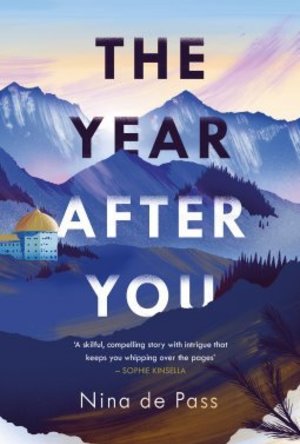
A Story Of Hope And Sadness
This is a wonderful, soul-searching, but sad story of hope and grief and it is one of the best books that I have read in a while.
It is set in Hope Hall, a Swiss boarding school located in the Alps. For me, one of the things that Nina de Pass did very cleverly was using the setting to maximum effect in THE YEAR AFTER YOU. Since my childhood, I have loved boarding school settings, as everything is so much more intense when in close proximity, such as romantic liaisons and relationships which tend to run at a different rate.
The main protagonist in this novel is Cara, who I found to be exceptionally frustrating at times, though this did not spoil the story for me in any way. From an honesty point of view, she was pretty unreliable as a narrator, however, I had a great deal of empathy for her because of what happened to her best friend Georgina. I loved that Nina de Pass developed Cara’s character so well.
I really liked all of the characters in THE YEAR AFTER YOU because they were so well formed as people with their own parts to play and were not just added after-thoughts to make the protagonist look better. For me, the story-telling also held some poignant messages about support mechanisms of friends and family and mental health issues.
I think that THE YEAR AFTER YOU is a book that I will remember. I would certainly recommend reading it.
Thank you to NetGalley, Black & White Publishing and Nina de Pass for a free ARC of this book in exchange for a voluntary, honest review.
It is set in Hope Hall, a Swiss boarding school located in the Alps. For me, one of the things that Nina de Pass did very cleverly was using the setting to maximum effect in THE YEAR AFTER YOU. Since my childhood, I have loved boarding school settings, as everything is so much more intense when in close proximity, such as romantic liaisons and relationships which tend to run at a different rate.
The main protagonist in this novel is Cara, who I found to be exceptionally frustrating at times, though this did not spoil the story for me in any way. From an honesty point of view, she was pretty unreliable as a narrator, however, I had a great deal of empathy for her because of what happened to her best friend Georgina. I loved that Nina de Pass developed Cara’s character so well.
I really liked all of the characters in THE YEAR AFTER YOU because they were so well formed as people with their own parts to play and were not just added after-thoughts to make the protagonist look better. For me, the story-telling also held some poignant messages about support mechanisms of friends and family and mental health issues.
I think that THE YEAR AFTER YOU is a book that I will remember. I would certainly recommend reading it.
Thank you to NetGalley, Black & White Publishing and Nina de Pass for a free ARC of this book in exchange for a voluntary, honest review.
ClareR (6256 KP) rated The Silver Road in Books
Mar 7, 2019
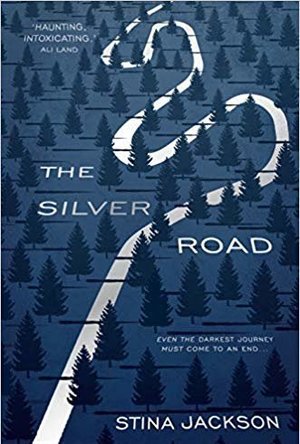
A wonderful debut
This is a novel of love and loss, guilt and grief, and of family in both the good and bad sense of the word. It has been translated so well from the Swedish by Susan Beard that I didn't actually occur to me that it had been translated at all.
Lille's daughter has been missing for three years, and he spends every night of the summer driving the Silver Road in an effort to find her. This has caused the breakdown of his marriage, and he has a tenuous grasp on his sanity: he drinks too much, he smokes too much, and he sleeps too little in the summer. His wife has left him, and he spends a lot of time alone with the ghost of the daughter he is searching for.
Enter Meja: her mother has mental health problems, and has decided to move in with a man she has only met online. Meja is used to being her mothers carer, and she's used to a series of men moving in and out of their lives. This is such an emotional novel. I became really invested in the characters of Lelle and Meja. There was a real atmosphere of sadness around both of them.
The peripheral characters were really well written as well: from the ex-wife to the local police officer, from the family of 'Preppers' to Meja's mother and her new boyfriend, Torbjorn.
I loved the atmosphere of this book: there was an air of 'something drastic is going to happen very soon', and the melancholy was palpable. Although the subject matter was very sad, it really was a joy to read.
Many thanks to Readers First, The Pigeonhole and the publisher for the chance to read this book.
Lille's daughter has been missing for three years, and he spends every night of the summer driving the Silver Road in an effort to find her. This has caused the breakdown of his marriage, and he has a tenuous grasp on his sanity: he drinks too much, he smokes too much, and he sleeps too little in the summer. His wife has left him, and he spends a lot of time alone with the ghost of the daughter he is searching for.
Enter Meja: her mother has mental health problems, and has decided to move in with a man she has only met online. Meja is used to being her mothers carer, and she's used to a series of men moving in and out of their lives. This is such an emotional novel. I became really invested in the characters of Lelle and Meja. There was a real atmosphere of sadness around both of them.
The peripheral characters were really well written as well: from the ex-wife to the local police officer, from the family of 'Preppers' to Meja's mother and her new boyfriend, Torbjorn.
I loved the atmosphere of this book: there was an air of 'something drastic is going to happen very soon', and the melancholy was palpable. Although the subject matter was very sad, it really was a joy to read.
Many thanks to Readers First, The Pigeonhole and the publisher for the chance to read this book.

Sam (74 KP) rated All That She Can See in Books
Mar 27, 2019
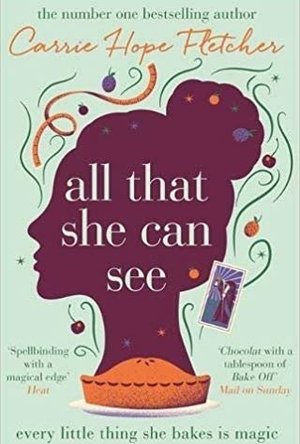

Cherry has a bakery. She knows exactly what people need and serves them something to cheer them up. What her customers don’t understand is that she bakes magic into everything to defeat their problems.
Cherry sees Meddlums – creatures that personify people’s problems. They are everywhere, following people around and never leaving them alone. That is until people go into her bakery, and Meddlums are stuck outside, slowly disappearing as Cherry solves everyone’s problems through food.
All That She Can See reminded me a lot of a Disney story, which isn’t surprising coming from Carrie. Lots of the reviews over on Goodreads slate this for being too Disney and pink and fluffy but I loved it. It makes a great change from the books I’ve been reading lately and it’s nice to read something that’s soft and an easy read.
It does have an abstract focus on mental health, showing how everyone has their own problems. It also raises the question of whether you can ever fully fix someone’s emotions. Cherry does everything to make people where she is happy, but in Plymouth, where this book is set, the happiness becomes too much and raises its own issues. It just goes to show that no matter what you do and how hard you work, people will always have their own issues.
I loved the way that Cherry sees bad feelings as monsters and Chase sees good ones as monsters. It shows their different personalities and how a generally happy person will easily see the bad things and a generally sad person will always see the good things happening to other people.
This is an absolutely brilliant read and I need a sequel!
Cherry sees Meddlums – creatures that personify people’s problems. They are everywhere, following people around and never leaving them alone. That is until people go into her bakery, and Meddlums are stuck outside, slowly disappearing as Cherry solves everyone’s problems through food.
All That She Can See reminded me a lot of a Disney story, which isn’t surprising coming from Carrie. Lots of the reviews over on Goodreads slate this for being too Disney and pink and fluffy but I loved it. It makes a great change from the books I’ve been reading lately and it’s nice to read something that’s soft and an easy read.
It does have an abstract focus on mental health, showing how everyone has their own problems. It also raises the question of whether you can ever fully fix someone’s emotions. Cherry does everything to make people where she is happy, but in Plymouth, where this book is set, the happiness becomes too much and raises its own issues. It just goes to show that no matter what you do and how hard you work, people will always have their own issues.
I loved the way that Cherry sees bad feelings as monsters and Chase sees good ones as monsters. It shows their different personalities and how a generally happy person will easily see the bad things and a generally sad person will always see the good things happening to other people.
This is an absolutely brilliant read and I need a sequel!