

Flight Simulator Paris 2015 Online - FlyWings FREE TO PLAY
Games and Entertainment
App
THE MOST EXPECTED FLIGHT SIMULATOR OF THE YEAR!! FlyWings is the most advanced flight simulation...
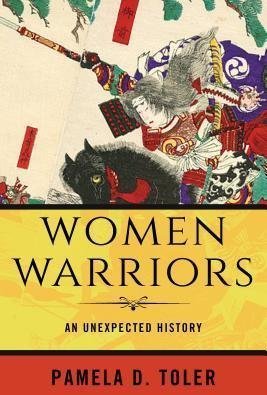
Women Warriors: An Unexpected History
Book
Who says women don't go to war? From Vikings and African queens to cross-dressing military doctors...

T2: Infiltrator
6.0 Rate It
Book
You've got to feel sorry for Sarah Connor. Try as she might, she just can't seem to finish off...

A Game of Thrones the Board Game (2nd Edition)
8.0 Rate It
Tabletop Game
King Robert Baratheon is dead, and the lands of Westeros brace for battle. In A Game of Thrones:...
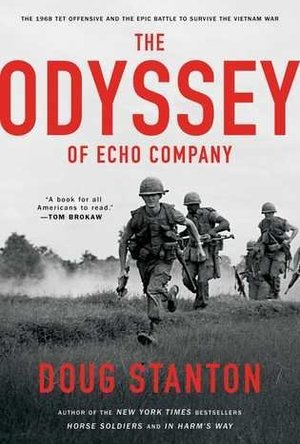
Odyssey: The Tet Offensive and the Epic Battle of Echo Company to Survive the Vietnam War
7.0 Rate It
Book
A powerful work of literary military history from the New York Times bestselling author of In...

Check Out
5.5 Rate It
Book
When Nash, a Marine returning home with an injury, who is rebuilding his life, walks into the...
Contemporary Romance Suspense

Kingsburg
8.2
Rate It
Tabletop Game
In Kingsburg, players are Lords sent from the King to administer frontier territories. The game...
Boardgames WorkerPlacementGames

Lyndsey Gollogly (2893 KP) rated The Poppy War (The Poppy War #1) in Books
Mar 11, 2024

Book
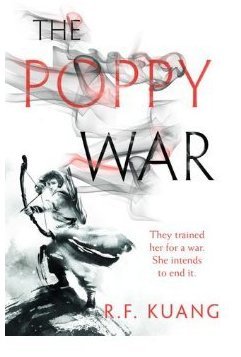
The poppy War ( Book 1)
By R.F. Kuang
⭐️⭐️⭐️⭐️⭐️
When Rin aced the Keju – the test to find the most talented students in the Empire – it was a shock to everyone: to the test officials, who couldn’t believe a war orphan from Rooster Province could pass without cheating; to Rin’s guardians, who had hoped to get rich by marrying her off; and to Rin herself, who realized she was finally free from a life of servitude. That she got into Sinegard – the most elite military school in Nikan – was even more surprising.
But surprises aren’t always good.
Because being a dark-skinned peasant girl from the south is not an easy thing at Sinegard. Fighting the prejudice of rival classmates, Rin discovers that she possesses a lethal, unearthly power – an aptitude for the nearly-mythical art of shamanism. Exploring the depths of her gift with the help of psychoactive substances and a seemingly insane teacher, Rin learns that gods long thought dead are very much alive – and that mastering these powers could mean more than just surviving school.
For while the Nikara Empire is at peace, the Federation of Mugen still lurks across a narrow sea. The Federation occupied Nikan for decades after the First Poppy War, and only barely lost the continent in the Second. And while most people calmly go about their lives, a few are aware that a Third Poppy War is just a spark away
I was really nervous going into this book as I tried to read Babel and really hated it!
But this was another level I absolutely loved it. I really enjoyed part 1 but the part 2 was even better and that ending was definitely worth it. This didn’t hold back on the details either really really good read. So much to take in and I love anything to do with the gods.

Merissa (14198 KP) rated Refuge (Relentless, #2) in Books
Jun 8, 2023


This is one of those books that I bought immediately after I finished Relentless, but just never got the chance to read before life got in the way. Let me just say, that since I've finished this, life isn't going to get a chance to get in the way as I am starting Rogue straight away!!
In Refuge, Sara is living in a 'military-style compound' where she was dumped by Nikolas. Let's just leave it at he is not her favourite person right now. She is struggling in training as she fears losing control of her Mori demon. She hasn't really made new friends, instead stays in phone contact with Roland, Peter, and of course, Uncle Nate.
There is too much to give you a rundown of this book, and seriously, why on earth would I do that? That's what the synopsis is for!! Suffice it to say, Sara has a big learning curve in front of her. With her magic, she is learning new 'tricks', as well as receiving her very own early warning vampire radar.
So many bits made me smile, so many bits made me frustrated for Sara, but most of all, I can't wait to see where it will go next. With one heckuva cliffhanger that really Nikolas should have seen coming a mile off knowing Sara (remember, I'm writing this before reading Rogue so I have no idea if he realises or not!)
If you want a paranormal romance that is full of Mori demons, the fae, griffins, Alex the wyvern (love him!), hellhounds, vampires, shifters, absolutely gripping, full of action and adventure, romance, and 'real-life' reactions, then look no further. I really can't recommend this highly enough!!!
* Verified Purchase on Amazon *
Merissa
Archaeolibrarian - I Dig Good Books!
Jun 7, 2016

Sassy Brit (97 KP) rated Jefferson's Treasure: How Albert Gallatin Saved the New Nation from Debt in Books
Jun 5, 2019
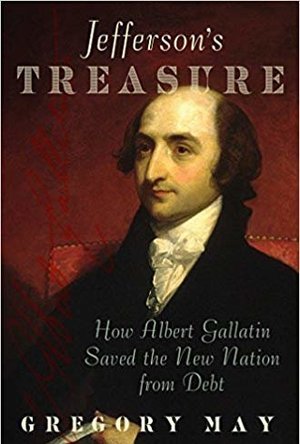
So who was this man that undid Alexander Hamilton’s fiscal system, rejecting it along with Madison and Jefferson? Because both Presidents did not understand the financial system, they depended on Gallatin to reform it. Gallatin arrived in America in 1790 from Geneva and rose up to become a trusted advisor of the Republicans. Six years before Jefferson was elected President, Gallatin’s Pennsylvania neighbors rebelled against the tax on whiskey. He supported them in principle but opposed the violence that ensued, burning the local tax collector’s house, robbing the mail, and marching on Pittsburgh.
The play “Hamilton” uses revisionist history. The real Hamilton believed in big government and wanted to continue funding federal deficits. He based his theories on the British who used the money to fund their large military conflicts, believing that the ability to borrow endless amounts of money would allow the new United States to become a great nation. Jefferson and Madison thought Hamilton’s system, straight from the British way, was tainted with tyranny. As May noted, “It made the people pay obnoxious taxes in order to fund interest payments on a mounting federal debt and the costs of an expensive military establishment. It shifted money from ordinary taxpayers to the relatively few rich men who held the government’s bonds. That was just the sort of thing that had led Americans to revolt against Britain in the first place.”
May believes, “The hip-hop immigrant hero of the Broadway musical is a myth. The musical might be a great work of art, but is relies on misconceptions of Hamilton. He was not an immigrant, but a migrant within the British Empire. Also, he was not a man of the people, as Gallatin was, but an elitist.”
While Hamilton committed to paying only the interest on the government’s debt, Gallatin committed the government to repaying fixed amounts of the principal each year. He also insisted that the government should never spend more than it earned except in times of war. By slashing federal expenses, Gallatin was able to get rid of the tax on whiskey and abolish the entire internal revenue service.
The Republicans, an agrarian society, distrusted these elitists where two-thirds of the government debt belonged to a few hundred very wealthy men residing mainly in Philadelphia, New York, and other mercantile cities. They saw Hamilton’s plan of collecting taxes from ordinary citizens as a way for a few rich men to become even wealthier. Implementing these excise taxes required government officials to inspect, quantify, and mark the items subject to tax.
The Hamilton system benefited the wealthy debt holders and spectators at the expense of the average taxpayer who had to pay the interest. The government would borrow more than the people could pay. Hamilton tried to hide how much money the government was actually spending and spiraled the debt higher and higher.
This was an important part of the British tax base, and “I wanted to show how unpopular it was. Hamilton and company were resented because they created a tax collection network that affected the lives of ordinary citizens. The excise tax is a form of internal taxation, while tariffs are a form of external taxation that fell on the well to do. Remember mostly the well to do bought imports. The Republicans once they came to power relied on import duties rather than excise taxes.”
May further explained, “When Jefferson and his administration came to power it was Gallatin who got rid of Hamilton’s deficit finance system and cut taxes. By the time he has left office he has repaid half the federal debt and set up a program for repaying the rest.”
Anyone who wants to understand the early economic systems of the Founding Fathers will enjoy this book. It shows how Gallatin, by killing Hamilton’s financial system, abolished internal revenue taxes in peacetime, slashed federal spending, and repaid half of the national debt.