
Search

The War of the Worlds by H. G. Wells
Podcast
Extraterrestrial invasion, the earth taken over by omniscient intelligences from Mars, the whole of...
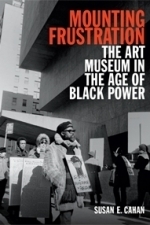
Mounting Frustration: The Art Museum in the Age of Black Power
Book
Prior to 1967 fewer than a dozen museum exhibitions had featured the work of African American...
Art social issues politics

Sassy Brit (97 KP) rated Jefferson's Treasure: How Albert Gallatin Saved the New Nation from Debt in Books
Jun 5, 2019
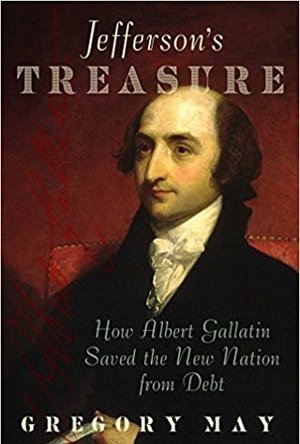

Jefferson’s Treasure, by Gregory May, details, “how Albert Gallatin saved the new nation from debt.” Appointed by President Thomas Jefferson to be his Treasury Secretary, Gallatin continued under President Madison, maintaining that position for twelve years. During his tenure, he abolished internal revenue taxes in peacetime, slashed federal spending, and repaid half of the national debt.
So who was this man that undid Alexander Hamilton’s fiscal system, rejecting it along with Madison and Jefferson? Because both Presidents did not understand the financial system, they depended on Gallatin to reform it. Gallatin arrived in America in 1790 from Geneva and rose up to become a trusted advisor of the Republicans. Six years before Jefferson was elected President, Gallatin’s Pennsylvania neighbors rebelled against the tax on whiskey. He supported them in principle but opposed the violence that ensued, burning the local tax collector’s house, robbing the mail, and marching on Pittsburgh.
The play “Hamilton” uses revisionist history. The real Hamilton believed in big government and wanted to continue funding federal deficits. He based his theories on the British who used the money to fund their large military conflicts, believing that the ability to borrow endless amounts of money would allow the new United States to become a great nation. Jefferson and Madison thought Hamilton’s system, straight from the British way, was tainted with tyranny. As May noted, “It made the people pay obnoxious taxes in order to fund interest payments on a mounting federal debt and the costs of an expensive military establishment. It shifted money from ordinary taxpayers to the relatively few rich men who held the government’s bonds. That was just the sort of thing that had led Americans to revolt against Britain in the first place.”
May believes, “The hip-hop immigrant hero of the Broadway musical is a myth. The musical might be a great work of art, but is relies on misconceptions of Hamilton. He was not an immigrant, but a migrant within the British Empire. Also, he was not a man of the people, as Gallatin was, but an elitist.”
While Hamilton committed to paying only the interest on the government’s debt, Gallatin committed the government to repaying fixed amounts of the principal each year. He also insisted that the government should never spend more than it earned except in times of war. By slashing federal expenses, Gallatin was able to get rid of the tax on whiskey and abolish the entire internal revenue service.
The Republicans, an agrarian society, distrusted these elitists where two-thirds of the government debt belonged to a few hundred very wealthy men residing mainly in Philadelphia, New York, and other mercantile cities. They saw Hamilton’s plan of collecting taxes from ordinary citizens as a way for a few rich men to become even wealthier. Implementing these excise taxes required government officials to inspect, quantify, and mark the items subject to tax.
The Hamilton system benefited the wealthy debt holders and spectators at the expense of the average taxpayer who had to pay the interest. The government would borrow more than the people could pay. Hamilton tried to hide how much money the government was actually spending and spiraled the debt higher and higher.
This was an important part of the British tax base, and “I wanted to show how unpopular it was. Hamilton and company were resented because they created a tax collection network that affected the lives of ordinary citizens. The excise tax is a form of internal taxation, while tariffs are a form of external taxation that fell on the well to do. Remember mostly the well to do bought imports. The Republicans once they came to power relied on import duties rather than excise taxes.”
May further explained, “When Jefferson and his administration came to power it was Gallatin who got rid of Hamilton’s deficit finance system and cut taxes. By the time he has left office he has repaid half the federal debt and set up a program for repaying the rest.”
Anyone who wants to understand the early economic systems of the Founding Fathers will enjoy this book. It shows how Gallatin, by killing Hamilton’s financial system, abolished internal revenue taxes in peacetime, slashed federal spending, and repaid half of the national debt.
So who was this man that undid Alexander Hamilton’s fiscal system, rejecting it along with Madison and Jefferson? Because both Presidents did not understand the financial system, they depended on Gallatin to reform it. Gallatin arrived in America in 1790 from Geneva and rose up to become a trusted advisor of the Republicans. Six years before Jefferson was elected President, Gallatin’s Pennsylvania neighbors rebelled against the tax on whiskey. He supported them in principle but opposed the violence that ensued, burning the local tax collector’s house, robbing the mail, and marching on Pittsburgh.
The play “Hamilton” uses revisionist history. The real Hamilton believed in big government and wanted to continue funding federal deficits. He based his theories on the British who used the money to fund their large military conflicts, believing that the ability to borrow endless amounts of money would allow the new United States to become a great nation. Jefferson and Madison thought Hamilton’s system, straight from the British way, was tainted with tyranny. As May noted, “It made the people pay obnoxious taxes in order to fund interest payments on a mounting federal debt and the costs of an expensive military establishment. It shifted money from ordinary taxpayers to the relatively few rich men who held the government’s bonds. That was just the sort of thing that had led Americans to revolt against Britain in the first place.”
May believes, “The hip-hop immigrant hero of the Broadway musical is a myth. The musical might be a great work of art, but is relies on misconceptions of Hamilton. He was not an immigrant, but a migrant within the British Empire. Also, he was not a man of the people, as Gallatin was, but an elitist.”
While Hamilton committed to paying only the interest on the government’s debt, Gallatin committed the government to repaying fixed amounts of the principal each year. He also insisted that the government should never spend more than it earned except in times of war. By slashing federal expenses, Gallatin was able to get rid of the tax on whiskey and abolish the entire internal revenue service.
The Republicans, an agrarian society, distrusted these elitists where two-thirds of the government debt belonged to a few hundred very wealthy men residing mainly in Philadelphia, New York, and other mercantile cities. They saw Hamilton’s plan of collecting taxes from ordinary citizens as a way for a few rich men to become even wealthier. Implementing these excise taxes required government officials to inspect, quantify, and mark the items subject to tax.
The Hamilton system benefited the wealthy debt holders and spectators at the expense of the average taxpayer who had to pay the interest. The government would borrow more than the people could pay. Hamilton tried to hide how much money the government was actually spending and spiraled the debt higher and higher.
This was an important part of the British tax base, and “I wanted to show how unpopular it was. Hamilton and company were resented because they created a tax collection network that affected the lives of ordinary citizens. The excise tax is a form of internal taxation, while tariffs are a form of external taxation that fell on the well to do. Remember mostly the well to do bought imports. The Republicans once they came to power relied on import duties rather than excise taxes.”
May further explained, “When Jefferson and his administration came to power it was Gallatin who got rid of Hamilton’s deficit finance system and cut taxes. By the time he has left office he has repaid half the federal debt and set up a program for repaying the rest.”
Anyone who wants to understand the early economic systems of the Founding Fathers will enjoy this book. It shows how Gallatin, by killing Hamilton’s financial system, abolished internal revenue taxes in peacetime, slashed federal spending, and repaid half of the national debt.

Steph Freeman (26 KP) rated Altered Carbon in TV
Feb 19, 2018


Excellent character development (2 more)
Phenomenal special effects
Edge of your seat action throughout the plot line, never felt the story lagging.
Phenomenal Show
Contains spoilers, click to show
In this age of technology I am rarely singularly glued to the television when a show is playing; I'm playing Candy Crush, surfing Etsy, creating new glassware designs... From the moment Takeshi Kovacs is apprehended from the Protectorate until the very last scene of the series this show had me glued to the screen. It combines the "locked room" mystery Agatha Christie made famous with a sci-fi Game of Thrones feel that evokes the Red Rising trilogy sense of Golds vs. Reds.
The lack of regard for anyone below them (literally as well as figuratively) makes it easy to hate the Meths and the decadence that surrounds them. Their wealth allows a god-like immortality, and a lack of respect for life and "real death". Kovacs was detained for crimes against the Protectorate and his stack placed "on ice" for 250 years until the meth Laurens Bancroft pays for his release and a new skin. As Kovacs accepts the offer to find Bancrofts murder, and as he searches for the killer he finds friendship in an AI Edgar Allen Poe (one of the best characters in the whole show), a former military drunk and his wife and daughter, who is damaged emotionally trapped in virtual life, and a police officer. There are also several people after Elias Ryker (a police officer who was a little too curious), which causes issue for Kovacs because that is the skin Bancroft selected when he was taken off ice.
The locked room mystery portion of the season ends in episode 7, but that is far from the end of the action. As we learn more about Kovacs' history his interest in the Envoy mission of recapturing humanity and forcing real death on the world is made more evident, as is his love for Quell. His sister, Rei, did not believe in the mission as much as spending eternity with her big brother. While Kovacs was on ice his sister built a meth empire, acquiring wealth and power, becoming everything Quell and Kovacs fought against. The final moments with his sister, and his decision to find Quell's stack were gripping.
The cinematography, costuming, and CGI in this show are phenomenal, and the attention to detail is obvious. As Netflix is transitioning to big budget productions it's clear they have the right people handling the decisions. I didn't realize this series was also a book trilogy written by Richard Morgan, this series has definitely peaked my interest and I will be reading the books before the next season drops.
The lack of regard for anyone below them (literally as well as figuratively) makes it easy to hate the Meths and the decadence that surrounds them. Their wealth allows a god-like immortality, and a lack of respect for life and "real death". Kovacs was detained for crimes against the Protectorate and his stack placed "on ice" for 250 years until the meth Laurens Bancroft pays for his release and a new skin. As Kovacs accepts the offer to find Bancrofts murder, and as he searches for the killer he finds friendship in an AI Edgar Allen Poe (one of the best characters in the whole show), a former military drunk and his wife and daughter, who is damaged emotionally trapped in virtual life, and a police officer. There are also several people after Elias Ryker (a police officer who was a little too curious), which causes issue for Kovacs because that is the skin Bancroft selected when he was taken off ice.
The locked room mystery portion of the season ends in episode 7, but that is far from the end of the action. As we learn more about Kovacs' history his interest in the Envoy mission of recapturing humanity and forcing real death on the world is made more evident, as is his love for Quell. His sister, Rei, did not believe in the mission as much as spending eternity with her big brother. While Kovacs was on ice his sister built a meth empire, acquiring wealth and power, becoming everything Quell and Kovacs fought against. The final moments with his sister, and his decision to find Quell's stack were gripping.
The cinematography, costuming, and CGI in this show are phenomenal, and the attention to detail is obvious. As Netflix is transitioning to big budget productions it's clear they have the right people handling the decisions. I didn't realize this series was also a book trilogy written by Richard Morgan, this series has definitely peaked my interest and I will be reading the books before the next season drops.

Phillip McSween (751 KP) rated Saving Private Ryan (1998) in Movies
Apr 13, 2020
One of the GOATS
At the time of this writing, Saving Private Ryan is sitting at fourteen on my all-time list. It is one of those once-in-a-lifetime movies that doesn’t come along too often. The story revolves around an army captain in WWII taking his men on a suicide mission to rescue a private before he is killed in action. Private Ryan’s three brothers have already been killed in action and the military wants to get the remaining Ryan home so his mother won’t have lost all of her children in one war.
Acting: 10
Where do I start? With Tom Hanks and his brilliant performance as Captain John Miller? Vin Diesel in probably one of his best roles as Private Caparzo. Tom Sizemore…Matt Damon…There are so many amazing performances that contributed to the greatness of this movie. You usually see it in glimpses as each character doesn’t get much in the way of their own screen time. The movie is packed with so many of those glimpse moments from these stellar actors, it’s hard to forget each of their roles.
Beginning: 10
Boasts one of the best opening twenty minutes in movie history. It’s violent, touching, and sucks you right in to the meat of the movie. There is so much intensity here, from the raucous sounds to the visceral feel of everything, that it’s hard to catch your breath afterwards.
Characters: 10
Cinematography/Visuals: 10
Conflict: 10
If you want knock-your-socks-off action from beginning to end, Saving Private Ryan is absolutely the movie for you. The battles are amazing giving you a front row seat to World War II. Steven Spielberg relies on a number of different camera angles to give you the full effect. Every scene is heartstopping as you realize the stakes and understand that no one is safe in this ultimate battle to stay alive. This movie has more action in the first twenty minutes than most films do through their entirety.
Entertainment Value: 10
Memorability: 10
Pace: 10
Plot: 10
For the most part, the story is pretty linear. There is a mission. Go and complete the mission. The end. However, there are two existing twists within the movie that definitely make things more interesting and entertaining. Those small tweaks were enough to satisfy my craving for originality.
Resolution: 10
Overall: 100
There is a scene on the beach where the camera shoots from underwater then repeatedly rises and falls in the water showing the grit of everything happening. This is one of a number of shots that makes Saving Private Ryan one of the all-time movies to ever exist in cinema. This movie is flat out amazing.
Acting: 10
Where do I start? With Tom Hanks and his brilliant performance as Captain John Miller? Vin Diesel in probably one of his best roles as Private Caparzo. Tom Sizemore…Matt Damon…There are so many amazing performances that contributed to the greatness of this movie. You usually see it in glimpses as each character doesn’t get much in the way of their own screen time. The movie is packed with so many of those glimpse moments from these stellar actors, it’s hard to forget each of their roles.
Beginning: 10
Boasts one of the best opening twenty minutes in movie history. It’s violent, touching, and sucks you right in to the meat of the movie. There is so much intensity here, from the raucous sounds to the visceral feel of everything, that it’s hard to catch your breath afterwards.
Characters: 10
Cinematography/Visuals: 10
Conflict: 10
If you want knock-your-socks-off action from beginning to end, Saving Private Ryan is absolutely the movie for you. The battles are amazing giving you a front row seat to World War II. Steven Spielberg relies on a number of different camera angles to give you the full effect. Every scene is heartstopping as you realize the stakes and understand that no one is safe in this ultimate battle to stay alive. This movie has more action in the first twenty minutes than most films do through their entirety.
Entertainment Value: 10
Memorability: 10
Pace: 10
Plot: 10
For the most part, the story is pretty linear. There is a mission. Go and complete the mission. The end. However, there are two existing twists within the movie that definitely make things more interesting and entertaining. Those small tweaks were enough to satisfy my craving for originality.
Resolution: 10
Overall: 100
There is a scene on the beach where the camera shoots from underwater then repeatedly rises and falls in the water showing the grit of everything happening. This is one of a number of shots that makes Saving Private Ryan one of the all-time movies to ever exist in cinema. This movie is flat out amazing.

WolframAlpha
Reference and Education
App
Remember the Star Trek computer? It's finally happening--with Wolfram|Alpha. Building on 25 years of...

Gareth von Kallenbach (980 KP) rated Free State of Jones (2016) in Movies
Aug 6, 2019

When we look at the Civil War period, we are often confronted with numbers: the numbers of the dead, the numbers of those fighting, the pay, the amount of bullets and munitions used. One thing we rarely discuss is depth with regard to the people and circumstances surrounding the war. We are concerned with particular battles and what major leaders were victorious or fell. We, either through school or the collective of movies created about the period, do not get to see the people for who they are and the variables surrounding their existence during this period. We do not have the ability to comprehend how the war affected them in losing their property, loved ones, or even how they face starvation and violence. We don’t get the chance to see slaves other than a myopic, generalized representation that doesn’t show us how they were able to survive in the face of danger multiple sides. The Free State of Jones corrects many of the mistakes and missed opportunities of previous films, of which there are many, that deal with slavery, the Civil War, the Reconstruction Era, and the South.
In The Free State of Jones, Matthew McConaughey plays Newt Knight a southerner who begins to see the hypocrisy of the Civil War and deserts from the Confederate Military. Upon his return he seeks to support his relatives and neighbors who are being taken advantage of by the Confederacy. His movement grows to where he and an army of men and women of different backgrounds begin fighting back against the Confederacy in the attempt to assert their autonomy and sovereignty.
The film is beautifully shot and allows for the display of serenity during all of the chaos that is shown throughout. One strength that director Gary Ross demonstrates is his ability to demonstrate that there were many layers to the War. Slavery is the central theme and he goes beyond this to show how much race played into the war and its lasting effect that we are still dealing with today. He points out through the film that we had a moment to be a transformative nation, but there were so many people who wanted to the status quo to remain that they prevented any and all social progress that seemed to threaten their perceived social standing. With respect to slavery, Free State gives voices to slaves and Freedmen during the period rather than having them on the periphery or invisible all together. The film offers an authenticity and depth that many films of this period are fearful or reluctant to engage in. There is warfare, there is violence, there is struggle, but the film offers more. It shows humanity. It demonstrates how people recognized what was wrong and took a stand. It also does not play with the history in order to have issues romanticized. It is honest in its application and for some, that will not sit well.
In The Free State of Jones, Matthew McConaughey plays Newt Knight a southerner who begins to see the hypocrisy of the Civil War and deserts from the Confederate Military. Upon his return he seeks to support his relatives and neighbors who are being taken advantage of by the Confederacy. His movement grows to where he and an army of men and women of different backgrounds begin fighting back against the Confederacy in the attempt to assert their autonomy and sovereignty.
The film is beautifully shot and allows for the display of serenity during all of the chaos that is shown throughout. One strength that director Gary Ross demonstrates is his ability to demonstrate that there were many layers to the War. Slavery is the central theme and he goes beyond this to show how much race played into the war and its lasting effect that we are still dealing with today. He points out through the film that we had a moment to be a transformative nation, but there were so many people who wanted to the status quo to remain that they prevented any and all social progress that seemed to threaten their perceived social standing. With respect to slavery, Free State gives voices to slaves and Freedmen during the period rather than having them on the periphery or invisible all together. The film offers an authenticity and depth that many films of this period are fearful or reluctant to engage in. There is warfare, there is violence, there is struggle, but the film offers more. It shows humanity. It demonstrates how people recognized what was wrong and took a stand. It also does not play with the history in order to have issues romanticized. It is honest in its application and for some, that will not sit well.
Gareth von Kallenbach (980 KP) rated Midway (2019) in Movies
Nov 7, 2019
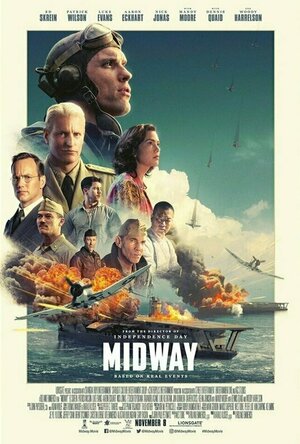


The events of December 7th 1941 left an indelible mark on the psyche of America and became a date that truly has lived in infamy. Though historians, authors, and filmmakers have attempted to analyze the events during and leading to the attack on Pearl Harbor; there is still a great deal of interest about the attack and the aftermath.
While Pearl Harbor was for many the opening shots of the U.S. entry into World War II; some would say that the stage was set earlier when the United States attempted to curtail what they saw as an aggressive and Imperialistic Japan by placing restrictions on their vital resources such as oil and the tonnage of their Navy.
In the new film “Midway” we are given a glimpse into this when four years before the attack, when Edwin Layton (Patrick Wilson) meets with Admiral Nagumo (Jun Kunimura) who lets him know that hardline factions in his government have been buoyed by their invasion of China and will do what is needed to make sure the vital oil that is supplied by the U.S. remains constant.
Flash forward to the day of the attack and Layton who has warned that an attack was possible at Pearl Harbor is seeing his worst predictions come true. In the aftermath he is assigned to Admiral Nimitz (Woody Harrelson); who has been given the thankless task of taking charge of what is left of the Pacific Fleet and finding a way to stop the Japanese fleet.
The U.S. finds themselves outnumbered, outgunned, and waging war with ships and planes that are inferior to the Japanese but they must find a way to overcome the great obstacles before them and defeat a relentless enemy.
Layton and a team of code breakers are convinced the Japanese intend to attack the island of Midway and go all in to set a trap with the goal of destroying the enemy carriers so the U.S. can gain an aerial advantage in the Pacific.
With a strong cast which features Luke Evans, Dennis Quaid, Mandy Moore, Aaron Eckhart, Nick Jonas and a fine supporting cast, Director Roland Emmerich has given audiences a gripping war movie that despite the impressive visual effects; never loses site of the fact that this is a story of real people who found themselves in pivotal moments of history.
The film also shows how the Japanese commanders had differing views of the Americans they fought. Some considered them to lack braveness while others admired their tenacity and were grateful that they had what they saw as inferior and outdated planes to attack them in.
The film also does a great job showing the Doolittle Raid and how what from a military standpoint caused minor damage yet was a huge psychological boost as Japan believed they were immune from attack yet the American forces found a way to bomb Tokyo by the impossible task of using land based bombers off a carrier.
The film is a great mix of human drama that shows not only the terrible toll of war but how a group of extraordinary individuals gave their all.
While Pearl Harbor was for many the opening shots of the U.S. entry into World War II; some would say that the stage was set earlier when the United States attempted to curtail what they saw as an aggressive and Imperialistic Japan by placing restrictions on their vital resources such as oil and the tonnage of their Navy.
In the new film “Midway” we are given a glimpse into this when four years before the attack, when Edwin Layton (Patrick Wilson) meets with Admiral Nagumo (Jun Kunimura) who lets him know that hardline factions in his government have been buoyed by their invasion of China and will do what is needed to make sure the vital oil that is supplied by the U.S. remains constant.
Flash forward to the day of the attack and Layton who has warned that an attack was possible at Pearl Harbor is seeing his worst predictions come true. In the aftermath he is assigned to Admiral Nimitz (Woody Harrelson); who has been given the thankless task of taking charge of what is left of the Pacific Fleet and finding a way to stop the Japanese fleet.
The U.S. finds themselves outnumbered, outgunned, and waging war with ships and planes that are inferior to the Japanese but they must find a way to overcome the great obstacles before them and defeat a relentless enemy.
Layton and a team of code breakers are convinced the Japanese intend to attack the island of Midway and go all in to set a trap with the goal of destroying the enemy carriers so the U.S. can gain an aerial advantage in the Pacific.
With a strong cast which features Luke Evans, Dennis Quaid, Mandy Moore, Aaron Eckhart, Nick Jonas and a fine supporting cast, Director Roland Emmerich has given audiences a gripping war movie that despite the impressive visual effects; never loses site of the fact that this is a story of real people who found themselves in pivotal moments of history.
The film also shows how the Japanese commanders had differing views of the Americans they fought. Some considered them to lack braveness while others admired their tenacity and were grateful that they had what they saw as inferior and outdated planes to attack them in.
The film also does a great job showing the Doolittle Raid and how what from a military standpoint caused minor damage yet was a huge psychological boost as Japan believed they were immune from attack yet the American forces found a way to bomb Tokyo by the impossible task of using land based bombers off a carrier.
The film is a great mix of human drama that shows not only the terrible toll of war but how a group of extraordinary individuals gave their all.

Man of Steel and Honour: General Stanislaw Maczek: Soldier of Poland, Commander of the 1st Polish Armoured Division in North-West Europe 1944-45
Book
This is a biography of one of the most undervalued commanders of the Second World War, General...

Lyndsey Gollogly (2893 KP) rated Resilience ( Rise of Iliri book 6) in Books
Jan 5, 2023

Contains spoilers, click to show
4 of 235
Kindle
Resilience ( Rise of Iliri book 6)
By Auryn Hadley
⭐️⭐️⭐️⭐️⭐️
Auryn Hadley's sixth action-adventure in The Rise of the Iliri fantasy series asks how far mankind will go to protect their pride. Because it seems they'll guard it at the expense of all else. Reminiscent of a futuristic Lord of the Rings, this epic fantasy romance traces not only the personal journey of its heroine and her family - a reverse harem made up of nine indomitable warriors who comprise an elite military force called the Black Blades - but also the liberation of a people and a new way of thinking for the whole world. For the source of iliri power is not domination, but connection. They seek it, cultivate it, and use it to defeat their enemies.
It's the iliri - now a rising, formidable race of underdogs - who must decide whether to risk their lives for the ungracious human race. Unbeknownst to humans, their fate lies in the capable hands of the iliri leader, the powerful Salryc Luxx. And she's no longer willing to be yanked around at any price.
Sal and the Black Blades have been summoned to a meeting with Parliament representatives of the Conglomerate of Free Citizens. But this time, she's not serving as their slave. Nor is she about to be captured and brought to trial again. Now the ruler of all iliri in her adopted country of Anglia - and de facto queen - she knows she has the upper hand.
The enemy Terrans have besieged Eastward, engaging in brutal guerrilla tactics throughout the country - hitting without mercy and killing all in their path. The world of humans is desperate.
"Tell me why I should send my brothers and sisters to die for humans that care so little for us?" Sal asks. The answer she's searching for comes from a frail iliri servant, whose telltale snow-colored skin is almost as light as Sal's: If she leaves the humans to die by the Terrans, war and enslavement will continue. History will repeat itself. But if it's the iliri and their allies who manage to defeat evil, perhaps humans can learn to respect them.
She knows she isn't finished fighting. Iliri warriors haven't yet "done enough." Not while so many of their brothers are still enslaved.
Alongside her faithful friends and leaders--and the tireless Black Blades - Sal must choose whether to surrender to her role as their leader and contend with The Emperor's murderous army - as well as the treacherous pride of the human race.
!!! Has a spoiler for book 5!!!
Every time I pick one of these books up I say it’s the best one yet and yes I’m saying it again! After the tears at the end of Book 5 we catch up with Sal and the blades dealing with the aftermath of losing Blaec and finding her feet with her new role and new male. This is non stop from the first word to the last. Brilliantly written it has to be one of my favourite series. Highly recommended for the fantasy readers!
Kindle
Resilience ( Rise of Iliri book 6)
By Auryn Hadley
⭐️⭐️⭐️⭐️⭐️
Auryn Hadley's sixth action-adventure in The Rise of the Iliri fantasy series asks how far mankind will go to protect their pride. Because it seems they'll guard it at the expense of all else. Reminiscent of a futuristic Lord of the Rings, this epic fantasy romance traces not only the personal journey of its heroine and her family - a reverse harem made up of nine indomitable warriors who comprise an elite military force called the Black Blades - but also the liberation of a people and a new way of thinking for the whole world. For the source of iliri power is not domination, but connection. They seek it, cultivate it, and use it to defeat their enemies.
It's the iliri - now a rising, formidable race of underdogs - who must decide whether to risk their lives for the ungracious human race. Unbeknownst to humans, their fate lies in the capable hands of the iliri leader, the powerful Salryc Luxx. And she's no longer willing to be yanked around at any price.
Sal and the Black Blades have been summoned to a meeting with Parliament representatives of the Conglomerate of Free Citizens. But this time, she's not serving as their slave. Nor is she about to be captured and brought to trial again. Now the ruler of all iliri in her adopted country of Anglia - and de facto queen - she knows she has the upper hand.
The enemy Terrans have besieged Eastward, engaging in brutal guerrilla tactics throughout the country - hitting without mercy and killing all in their path. The world of humans is desperate.
"Tell me why I should send my brothers and sisters to die for humans that care so little for us?" Sal asks. The answer she's searching for comes from a frail iliri servant, whose telltale snow-colored skin is almost as light as Sal's: If she leaves the humans to die by the Terrans, war and enslavement will continue. History will repeat itself. But if it's the iliri and their allies who manage to defeat evil, perhaps humans can learn to respect them.
She knows she isn't finished fighting. Iliri warriors haven't yet "done enough." Not while so many of their brothers are still enslaved.
Alongside her faithful friends and leaders--and the tireless Black Blades - Sal must choose whether to surrender to her role as their leader and contend with The Emperor's murderous army - as well as the treacherous pride of the human race.
!!! Has a spoiler for book 5!!!
Every time I pick one of these books up I say it’s the best one yet and yes I’m saying it again! After the tears at the end of Book 5 we catch up with Sal and the blades dealing with the aftermath of losing Blaec and finding her feet with her new role and new male. This is non stop from the first word to the last. Brilliantly written it has to be one of my favourite series. Highly recommended for the fantasy readers!