
Search

INSTALL SOLAR POWER: Solar Energy Without any Upfront Costs
Book
Solar Power Is Always “On” This book is written for people who want to save on ENERGY....
Self-Help Home Improvement Reference

Purple Phoenix Games (2266 KP) rated Battlestar Galactica: The Board Game in Tabletop Games
Feb 23, 2021
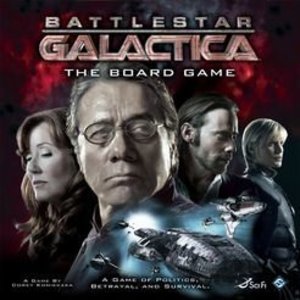


Welcome aboard the Battlestar Galactica, a ship home to the remnants of the human race. After an uprising and near-annihilation by the Cylons (cyborg workers/soldiers created by the humans), the human survivors have taken to space to outrun their mechanical enemies and search for a new world to inhabit. Hardly a walk in the park, this journey through space is filled with many challenges – from fuel and food shortages to mutiny and battles for power. The biggest challenge of all, however, is that the Cylons have advanced to such a high level that they actually appear to be human. Are the Galactica’s misfortunes just bad luck, or are they being orchestrated by a Cylon who has infiltrated the ship and is yet to be discovered? Who can you trust? Which race will end up victorious?
Disclaimer: There are several expansions for Battlestar Galactica. This review will not take any expansions into account, and will focus solely on the base game. Also, I do not intend to rehash the entire rulebook in this review, but rather provide an overview of the gameplay. – L
To setup for a game, follow the instructions in the rulebook – there are simply too many to detail here. Each player selects a Character, and receives the corresponding Character sheet and tokens. Based on the Characters selected, one player will receive the President title and another the Admiral title. Depending on how many players there are, a Loyalty deck is created and each player is secretly dealt a Loyalty card – either “You are not a Cylon” or “You Are a Cylon.” The Loyalty cards determine how you will play the game: human players win if they complete their given objective, and Cylon players win if they prevent the humans from completing their objective (by depleting resources, successfully invading the Galactica, or destroying the Galactica itself). The game is now ready to begin!
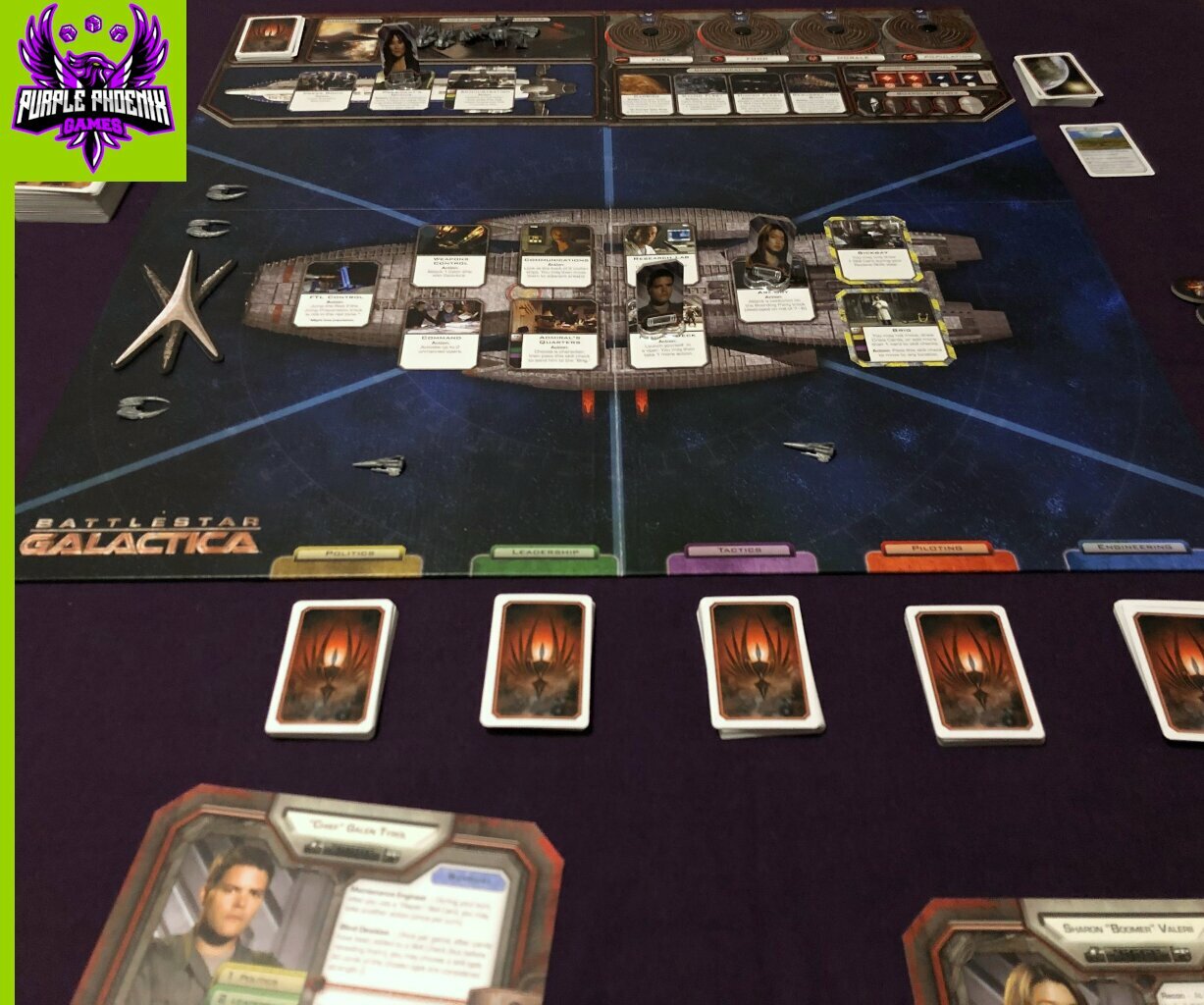
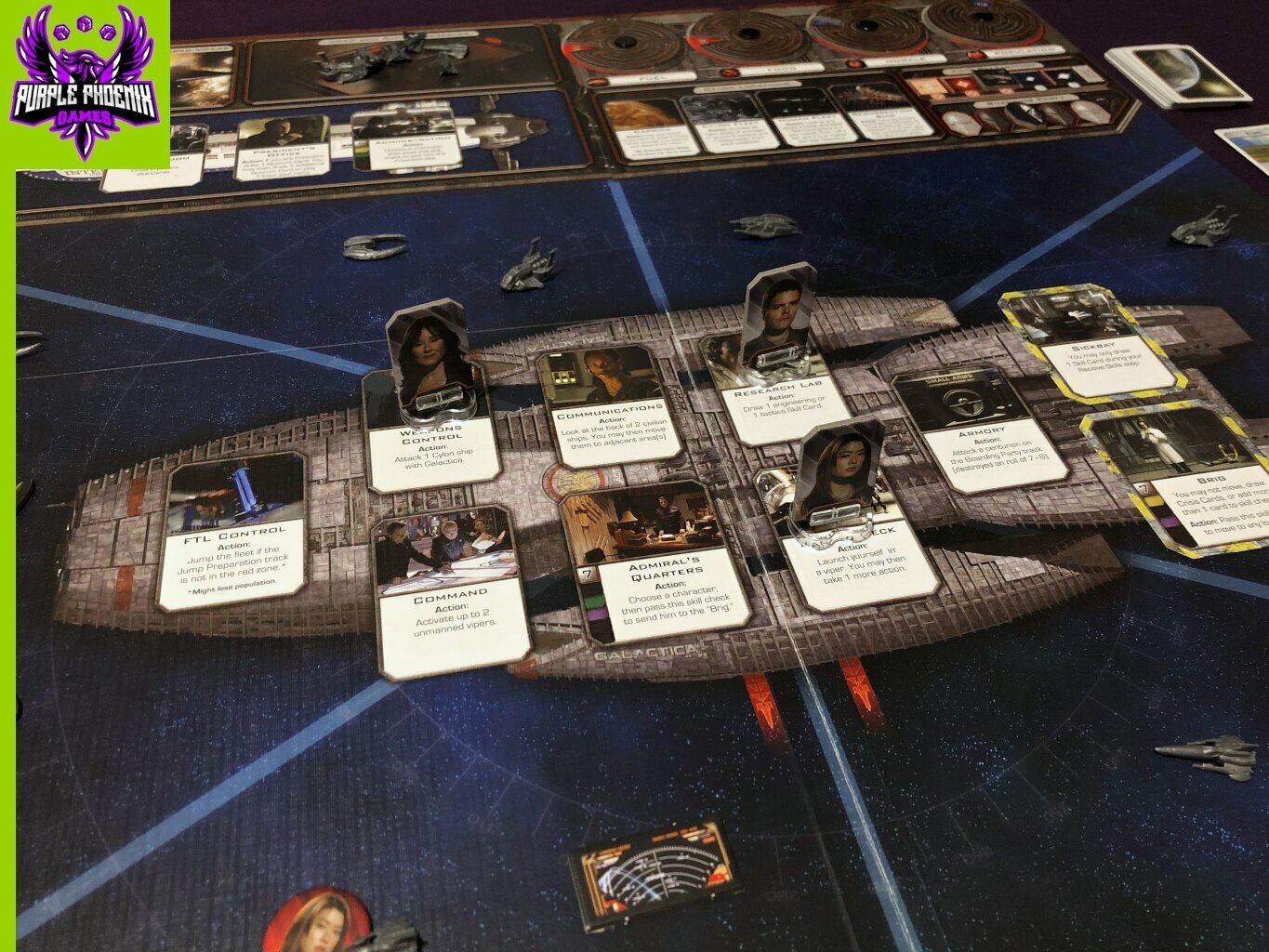
Battlestar Galactica is played over a series of rounds in which players take turns moving, performing actions, playing/drawing cards, etc. until either the human players or Cylon players have won the game. A player’s turn consists of 4 main steps, carried out in the following order: Receive Skills, Movement, Action, and Crisis. To begin your turn, you will draw Skill cards according to the skills listed on your Character sheet. Skill cards can be used to address crises or can provide special abilities. In the next step, Movement, you may move your Character to a different location/ship (all provide special actions). After moving, you will then choose one Action to perform – either listed on your current location, Character sheet, by using a Skill card, or you may choose to perform no action at all. Once you have completed your action, draw the top card of the Crisis deck, and resolve it. Depending on the Crisis card drawn, you may need to then Activate Cylon Ships or Prepare for Jump (more on this in a bit). If neither of those are listed on the Crisis card, then your turn ends and play moves to the next player.
I know that seems like a lot, but each turn of Battlestar Galactica can essentially be broken down into 2 phases: Player Actions and Space Combat. The first phase, Player Actions, is what is detailed above – drawing Skills, Movement, Actions, and drawing Crisis cards. This phase is where players make progress towards their objectives. Certain Actions or Skill cards earn specific rewards necessary to move forward in the game. Crisis cards can consist of Cylon attacks (activating and adding new Cylon ships to the board), Skill checks (all players secretly contribute Skill cards to either aid or sabotage the Skill check), or Events (resolved immediately). The second phase of play, Space Combat, takes place after the Crisis card has been drawn on each turn. Certain Crisis cards will show icons of Cylon ships, indicating that they are to be activated for combat, launched into play, or moved around the Galactica. Cylon ships will act based upon an action hierarchy, detailed in the rulebook. If the drawn Crisis card has the “Prepare for Jump” icon, move the fleet token forward on the Jump Preparation track, jumping the fleet if necessary (and moving the humans closer to their game-end objective). I have purposefully left out some elements of play, for you to discover on your own, or because they just provide intricate detail for the steps and actions described above. When the game-end objective is met by either the human players or the Cylons, the game is over and that respective race wins the game!
To say that there is a lot going on in Battlestar Galactica is quite an understatement. There are several rules and game elements that I did not touch upon, just because if I did then this review would be too long. With so many elements in play and of which to keep track, this game is not exactly for the faint of heart. The gameplay is very involved and requires a good amount of strategy – this is definitely a game that could take up most of a game night to play. That being said, I love this game. There is a lot going on, but that just provides players with so many different strategies to complete their objectives. Maybe you want to focus on dealing with Skill checks or Crisis cards, but maybe you’d rather think offensively and be prepared for any potential Space Combat. Can you help the crew efficiently manage its resources, or position its fleet to protect the Galactica itself? Your strategy must be adaptable at a moment’s notice to help you complete your objective….whatever it may be.
Speaking of which, the fact that there may or may not be secret Cylon players attempting to disrupt your plans really takes a hidden identity game to the next level. Cylons want to sabotage the humans, but in subtle ways as to not be found out – because once a Cylon is revealed, the humans can target and hinder their turns. Can you convince the humans that your previous actions were honest mistakes, or will they catch on that you are trying to undermine their efforts? The elements of deception and bluffing in this regard make the game much more immersive and make it feel realistic – there is a traitor among us and we have to find them, while also completing our own objectives. You really start to question who to trust and how your own actions can be perceived by your fellow players. There have been times, when playing this game, that we have taken breaks for dinner or snacks, and all players pocketed their cards rather than leave them on the table, vulnerable to sneaky opponents. Battlestar Galactica is definitely engaging for all players, and for such an involved and lengthy game, that is something to be applauded.
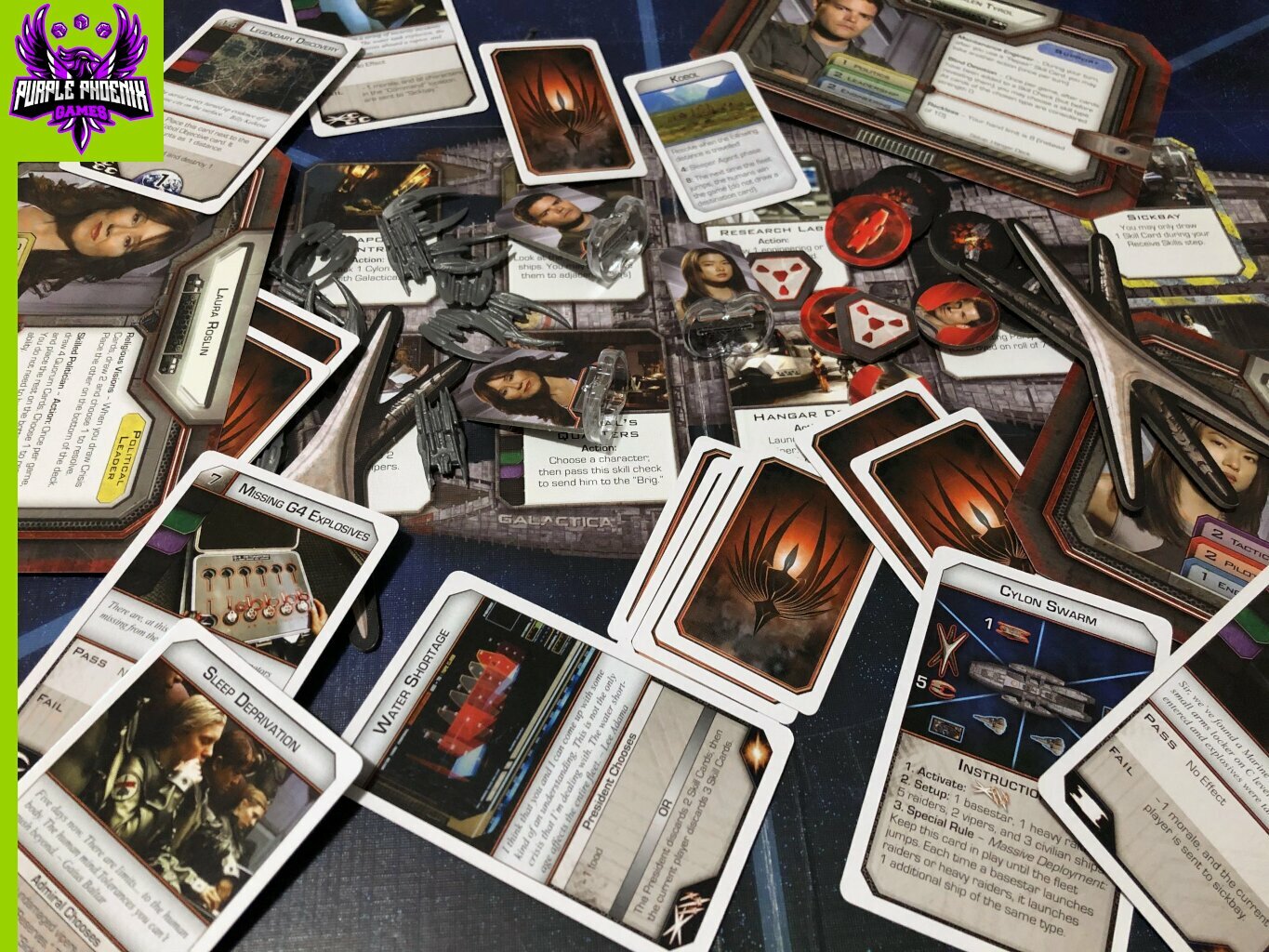
Let’s touch on components for a minute. The production quality of this game is great. The cardboard elements, including resource dials, are thick and sturdy. The cards and Character sheets are quality, colorful, and feel good in hand. And the plastic ships are well made too. The artwork consists mainly of screen caps from the TV show (which I admittedly have not yet seen…) but the theme and cohesiveness of the components makes for an immersive and engaging game overall.
In general, I am not a person who enjoys hidden identity games – simply because I am a bad liar and get found out almost immediately. However, the way this mechanic is incorporated into Battlestar Galactica makes it more a game of strategy than simple deception. And games of strategy are what I truly love. Managing your hand of Skill cards to best overcome Crisis cards, thinking tactically about how to deploy your fleet and battle Cylon ships, and having to determine who among the crew can actually be trusted keeps all players engaged across the board. Nobody can just sit back and relax, every single turn can drastically affect the outcome of the game. Everyone is in it, and that is what I love about this game. Purple Phoenix Games gives it a 11 / 12. This game has been out of print for a while now, but if you ever get a chance to play – jump on it! You don’t have to know the show to enjoy the game. Trust me, I haven’t seen a single episode yet.
Disclaimer: There are several expansions for Battlestar Galactica. This review will not take any expansions into account, and will focus solely on the base game. Also, I do not intend to rehash the entire rulebook in this review, but rather provide an overview of the gameplay. – L
To setup for a game, follow the instructions in the rulebook – there are simply too many to detail here. Each player selects a Character, and receives the corresponding Character sheet and tokens. Based on the Characters selected, one player will receive the President title and another the Admiral title. Depending on how many players there are, a Loyalty deck is created and each player is secretly dealt a Loyalty card – either “You are not a Cylon” or “You Are a Cylon.” The Loyalty cards determine how you will play the game: human players win if they complete their given objective, and Cylon players win if they prevent the humans from completing their objective (by depleting resources, successfully invading the Galactica, or destroying the Galactica itself). The game is now ready to begin!
Battlestar Galactica is played over a series of rounds in which players take turns moving, performing actions, playing/drawing cards, etc. until either the human players or Cylon players have won the game. A player’s turn consists of 4 main steps, carried out in the following order: Receive Skills, Movement, Action, and Crisis. To begin your turn, you will draw Skill cards according to the skills listed on your Character sheet. Skill cards can be used to address crises or can provide special abilities. In the next step, Movement, you may move your Character to a different location/ship (all provide special actions). After moving, you will then choose one Action to perform – either listed on your current location, Character sheet, by using a Skill card, or you may choose to perform no action at all. Once you have completed your action, draw the top card of the Crisis deck, and resolve it. Depending on the Crisis card drawn, you may need to then Activate Cylon Ships or Prepare for Jump (more on this in a bit). If neither of those are listed on the Crisis card, then your turn ends and play moves to the next player.
I know that seems like a lot, but each turn of Battlestar Galactica can essentially be broken down into 2 phases: Player Actions and Space Combat. The first phase, Player Actions, is what is detailed above – drawing Skills, Movement, Actions, and drawing Crisis cards. This phase is where players make progress towards their objectives. Certain Actions or Skill cards earn specific rewards necessary to move forward in the game. Crisis cards can consist of Cylon attacks (activating and adding new Cylon ships to the board), Skill checks (all players secretly contribute Skill cards to either aid or sabotage the Skill check), or Events (resolved immediately). The second phase of play, Space Combat, takes place after the Crisis card has been drawn on each turn. Certain Crisis cards will show icons of Cylon ships, indicating that they are to be activated for combat, launched into play, or moved around the Galactica. Cylon ships will act based upon an action hierarchy, detailed in the rulebook. If the drawn Crisis card has the “Prepare for Jump” icon, move the fleet token forward on the Jump Preparation track, jumping the fleet if necessary (and moving the humans closer to their game-end objective). I have purposefully left out some elements of play, for you to discover on your own, or because they just provide intricate detail for the steps and actions described above. When the game-end objective is met by either the human players or the Cylons, the game is over and that respective race wins the game!
To say that there is a lot going on in Battlestar Galactica is quite an understatement. There are several rules and game elements that I did not touch upon, just because if I did then this review would be too long. With so many elements in play and of which to keep track, this game is not exactly for the faint of heart. The gameplay is very involved and requires a good amount of strategy – this is definitely a game that could take up most of a game night to play. That being said, I love this game. There is a lot going on, but that just provides players with so many different strategies to complete their objectives. Maybe you want to focus on dealing with Skill checks or Crisis cards, but maybe you’d rather think offensively and be prepared for any potential Space Combat. Can you help the crew efficiently manage its resources, or position its fleet to protect the Galactica itself? Your strategy must be adaptable at a moment’s notice to help you complete your objective….whatever it may be.
Speaking of which, the fact that there may or may not be secret Cylon players attempting to disrupt your plans really takes a hidden identity game to the next level. Cylons want to sabotage the humans, but in subtle ways as to not be found out – because once a Cylon is revealed, the humans can target and hinder their turns. Can you convince the humans that your previous actions were honest mistakes, or will they catch on that you are trying to undermine their efforts? The elements of deception and bluffing in this regard make the game much more immersive and make it feel realistic – there is a traitor among us and we have to find them, while also completing our own objectives. You really start to question who to trust and how your own actions can be perceived by your fellow players. There have been times, when playing this game, that we have taken breaks for dinner or snacks, and all players pocketed their cards rather than leave them on the table, vulnerable to sneaky opponents. Battlestar Galactica is definitely engaging for all players, and for such an involved and lengthy game, that is something to be applauded.
Let’s touch on components for a minute. The production quality of this game is great. The cardboard elements, including resource dials, are thick and sturdy. The cards and Character sheets are quality, colorful, and feel good in hand. And the plastic ships are well made too. The artwork consists mainly of screen caps from the TV show (which I admittedly have not yet seen…) but the theme and cohesiveness of the components makes for an immersive and engaging game overall.
In general, I am not a person who enjoys hidden identity games – simply because I am a bad liar and get found out almost immediately. However, the way this mechanic is incorporated into Battlestar Galactica makes it more a game of strategy than simple deception. And games of strategy are what I truly love. Managing your hand of Skill cards to best overcome Crisis cards, thinking tactically about how to deploy your fleet and battle Cylon ships, and having to determine who among the crew can actually be trusted keeps all players engaged across the board. Nobody can just sit back and relax, every single turn can drastically affect the outcome of the game. Everyone is in it, and that is what I love about this game. Purple Phoenix Games gives it a 11 / 12. This game has been out of print for a while now, but if you ever get a chance to play – jump on it! You don’t have to know the show to enjoy the game. Trust me, I haven’t seen a single episode yet.

Hadley (567 KP) rated Heart-Shaped Box in Books
Jun 18, 2019


Unlikable characters (1 more)
Parts that weren't needed
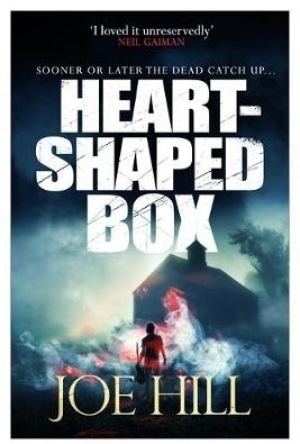
Which one of us hasn't imagined being a successful rock star? The main character of this novel is an aging one, who has become the stereo-typical hard-ass that is expected of a death metal rock star. We begin with Judas Coyne, who hasn't made an album in years, and who is constantly running from his past- - -a habit he acquired when he ran away from home in Louisiana at the age of 19, and this is the problem that permeates Hill's 'Heart-Shaped Box.'
'Heart-Shaped Box' does a successful job of not only painting a picture of ghosts, but also of the spirits that reside in animals (like a witch's familiar), but the likable characters in this book are few and far between. Coyne treats women as objects(he literally only calls them by the State name they are from,such as Florida), and also ended his own marriage by refusing to throw away a snuff film he had obtained from a police. When the story begins, Coyne is shacked up with a young woman (nearly 30 years younger) he calls Georgia; she is described as a stereo-typical goth: black hair, black nail polish, pale white skin. This description of the women Coyne has been with seem to be about the same, but maybe a different hair color, but any other woman that is ever mentioned in the book is either very old or very overweight.
Coyne, a collector of all things dark, buys a dead man's suit that is supposedly haunted by a woman's deceased stepfather. Quite quickly things begin to happen after the suit arrives, including a decaying smell, first noticed by Coyne's 'girlfriend,' Georgia: " I know. I was wondering if there was something in one of the pockets. Something going bad. Old food." She makes Coyne take a look at the suit to see if there is something dead inside of it, but he never finds the source of the smell. Instead, he finds a picture of a young girl in one of the pockets, a girl that is very familiar to Coyne, a girl he once called 'Florida.'
Coyne doesn't seem to take any of the signs seriously that he may be haunted by a ghost that wants to harm him and anyone who comes in contact with him. Until Coyne finds himself sitting inside his restored vintage Mustang in a closed-off barn: " He snorted softly to himself. It wasn't selling souls that got you into trouble, it was buying them. Next time he would have to make sure there was a return policy. He laughed, opened his eyes a little. The dead man, Craddock, sat in the passenger seat next to him. He smiled at Jude, to show stained teeth and a black tongue. He smelled of death, also of car exhaust. His eyes were hidden behind those odd, continuously moving black brushstrokes."
Craddock turns out to be, without giving too much away, a man who was a spiritualist in his living life. He wants nothing but pain and misery for Coyne, who happened to kick his young step daughter to the curb a year before. The parts of the story that deal with both Coyne and Craddock interacting are the most interesting ones. Without these interactions, the story would have fallen very short.
That said, 'Heart-Shaped Box' had quite a few faults to it. Readers may notice that some pages contradict themselves on the very next page, Hill's overuse of Georgia's bangs (hair) as a description for all of her facial expressions, also Hill's habit of being repetitive with words that he uses to describe most things, the unbelievable part where Coyne- - - a collector of occult items- - - claims he has never used a Ouija board before (and lacks the knowledge of how to use one), and last but not least, chapter 34, a chapter that was not needed and completely stopped the story in it's tracks.
And speaking of things that were not needed in the story- - - a part where Georgia has a gun in her mouth, ready to commit suicide, Coyne can only think to remove the gun and replace it with his penis. I understand that Hill may have been going for unlikable characters from the beginning, to really have Coyne play the part of a jaded man, but sometimes Hill seems to go too far. Every book has to have a character to root for, otherwise your readers will put the book down, luckily, this book has Bammy; she is Georgia's grandmother, unfortunately, in less than 15 pages, she never appears in the story again. "You strung out? Christ. You smell like a dog." Bammy says to Georgia after she and Coyne show up at her home.
Is this book a good ghost story, yes, is this story a great horror story, no. Hill lacks on likable characters enough that I don't think a lot of people could enjoy this book. If I were to recommend it, I wouldn't recommend it to teenagers because of a much talked about snuff film, drugs and suicide. I don't think I would read this again.
'Heart-Shaped Box' does a successful job of not only painting a picture of ghosts, but also of the spirits that reside in animals (like a witch's familiar), but the likable characters in this book are few and far between. Coyne treats women as objects(he literally only calls them by the State name they are from,such as Florida), and also ended his own marriage by refusing to throw away a snuff film he had obtained from a police. When the story begins, Coyne is shacked up with a young woman (nearly 30 years younger) he calls Georgia; she is described as a stereo-typical goth: black hair, black nail polish, pale white skin. This description of the women Coyne has been with seem to be about the same, but maybe a different hair color, but any other woman that is ever mentioned in the book is either very old or very overweight.
Coyne, a collector of all things dark, buys a dead man's suit that is supposedly haunted by a woman's deceased stepfather. Quite quickly things begin to happen after the suit arrives, including a decaying smell, first noticed by Coyne's 'girlfriend,' Georgia: " I know. I was wondering if there was something in one of the pockets. Something going bad. Old food." She makes Coyne take a look at the suit to see if there is something dead inside of it, but he never finds the source of the smell. Instead, he finds a picture of a young girl in one of the pockets, a girl that is very familiar to Coyne, a girl he once called 'Florida.'
Coyne doesn't seem to take any of the signs seriously that he may be haunted by a ghost that wants to harm him and anyone who comes in contact with him. Until Coyne finds himself sitting inside his restored vintage Mustang in a closed-off barn: " He snorted softly to himself. It wasn't selling souls that got you into trouble, it was buying them. Next time he would have to make sure there was a return policy. He laughed, opened his eyes a little. The dead man, Craddock, sat in the passenger seat next to him. He smiled at Jude, to show stained teeth and a black tongue. He smelled of death, also of car exhaust. His eyes were hidden behind those odd, continuously moving black brushstrokes."
Craddock turns out to be, without giving too much away, a man who was a spiritualist in his living life. He wants nothing but pain and misery for Coyne, who happened to kick his young step daughter to the curb a year before. The parts of the story that deal with both Coyne and Craddock interacting are the most interesting ones. Without these interactions, the story would have fallen very short.
That said, 'Heart-Shaped Box' had quite a few faults to it. Readers may notice that some pages contradict themselves on the very next page, Hill's overuse of Georgia's bangs (hair) as a description for all of her facial expressions, also Hill's habit of being repetitive with words that he uses to describe most things, the unbelievable part where Coyne- - - a collector of occult items- - - claims he has never used a Ouija board before (and lacks the knowledge of how to use one), and last but not least, chapter 34, a chapter that was not needed and completely stopped the story in it's tracks.
And speaking of things that were not needed in the story- - - a part where Georgia has a gun in her mouth, ready to commit suicide, Coyne can only think to remove the gun and replace it with his penis. I understand that Hill may have been going for unlikable characters from the beginning, to really have Coyne play the part of a jaded man, but sometimes Hill seems to go too far. Every book has to have a character to root for, otherwise your readers will put the book down, luckily, this book has Bammy; she is Georgia's grandmother, unfortunately, in less than 15 pages, she never appears in the story again. "You strung out? Christ. You smell like a dog." Bammy says to Georgia after she and Coyne show up at her home.
Is this book a good ghost story, yes, is this story a great horror story, no. Hill lacks on likable characters enough that I don't think a lot of people could enjoy this book. If I were to recommend it, I wouldn't recommend it to teenagers because of a much talked about snuff film, drugs and suicide. I don't think I would read this again.
Purple Phoenix Games (2266 KP) rated Death Valley in Tabletop Games
Jan 18, 2022
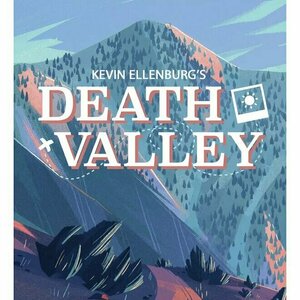
This past summer, 2021, I had the opportunity to visit Las Vegas for the first time in my life. The casinos, the strip, the lights – everything was over-the-top and pretty impressive. But my trip took me beyond the city borders, as I got to visit several national parks and see some unique landmarks as well. One of which being Death Valley National Park. They’re not lying with the name – during my trip there, the temperature climbed to over 110°F. Does this pocket-sized game about the real-life location do justice to the scorching scenery? Keep reading to find out!
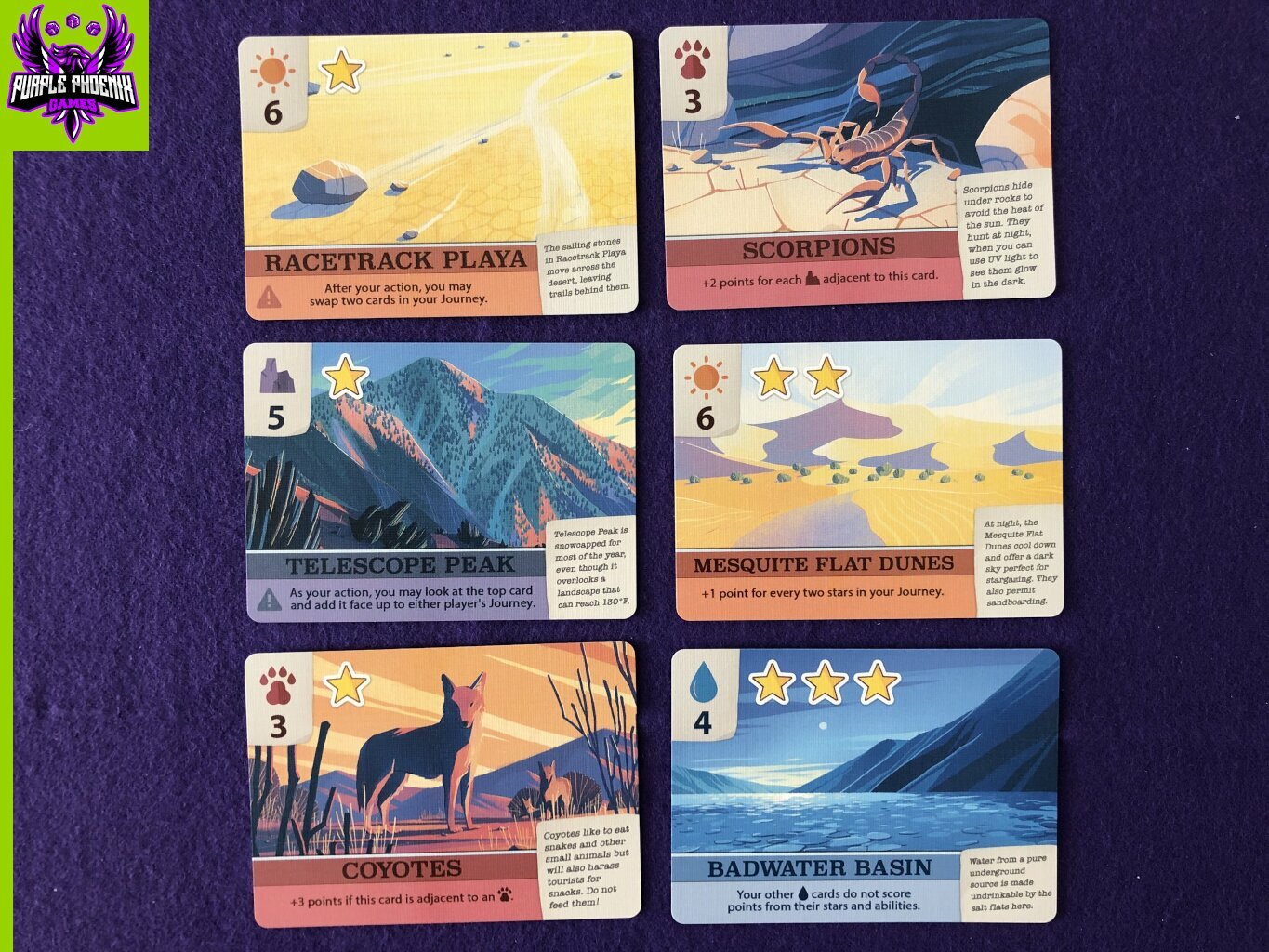
Death Valley is a game for 1-2 players in which you are documenting your journey across the Death Valley park. You will see different sights on your journey, and add cherished memories to your scrapbook. The player who amasses the most points by the end of the game is the winner! To setup for a game, shuffle the deck of Feature cards and reveal one face-up while the rest remain in a face-down deck. These cards make up the Desert. That’s it. The game is ready to start! Choose a starting player and get to sight-seeing!
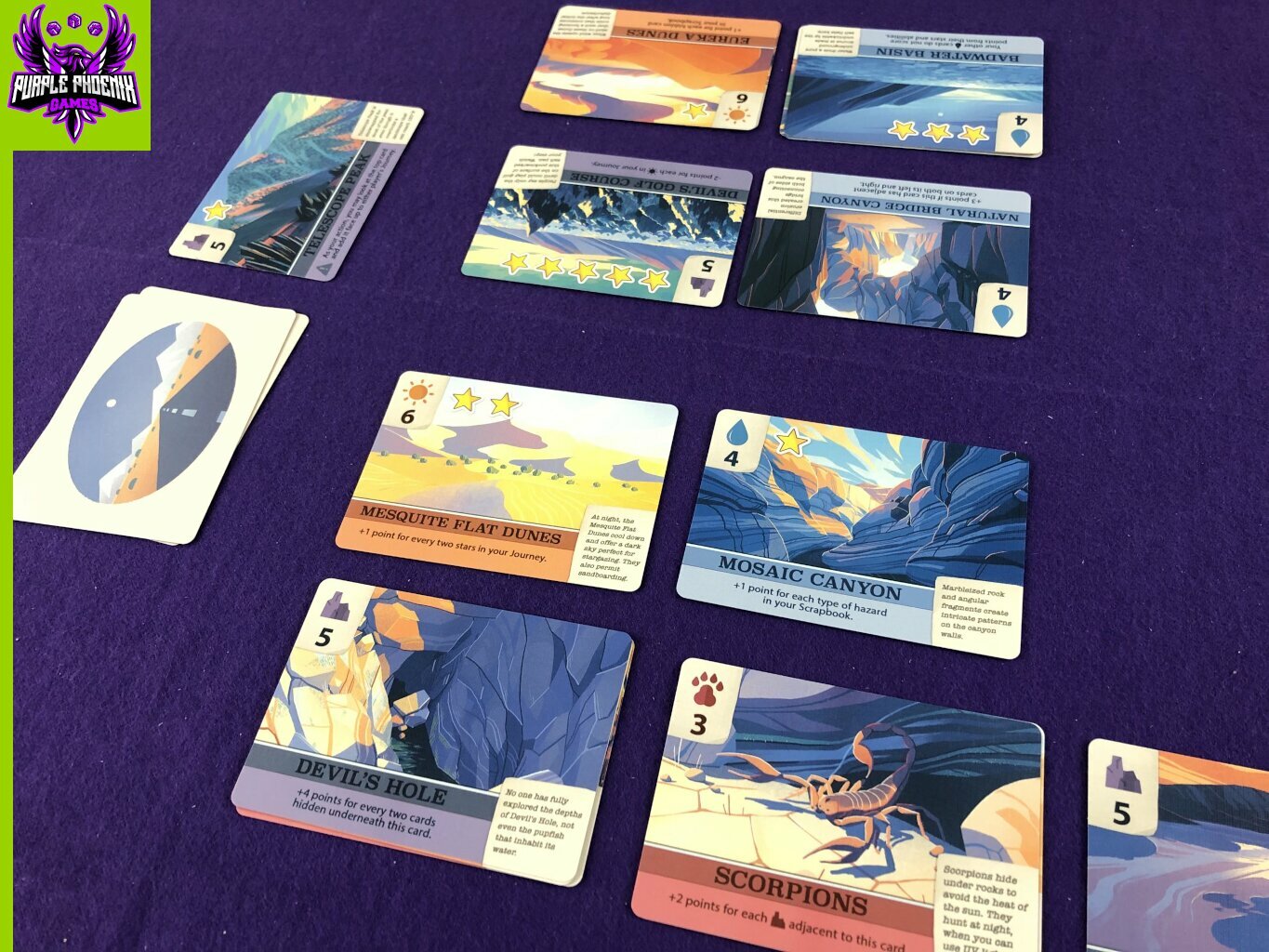
Throughout the game, players will be adding Feature cards to their Journey tableau (places they have visited) and their Scrapbook tableau (the more memorable locations). On your turn, you will perform one of 2 actions: Travel or Rest. When you choose to Travel, you will select either the Feature card from the Desert (the face-up card), or draw the top card from the face-down deck and add it to your Journey. Conversely, when you choose to Rest, you will move a Feature card from your Journey into your Scrapbook. When moving Feature cards to your Scrapbook, you are allowed to hide other cards from your Journey underneath that card. Hiding cards can be beneficial for end-game points, or for preventing you from Busting. Many Feature cards have additional text at the bottom, that either provides ongoing abilities for the remainder of the game, or that provide extra scoring abilities at the end of the game. Choosing which Feature cards to move when and where is key!
After you have performed your chosen Action, you check to see if you Bust. If you have 3 Feature cards of the same type in your Journey and Scrapbook, you Bust! To resolve a Bust, you will discard from the game the right-most card in your Journey, and then will re-shuffle any remaining Journey cards back into the draw deck. So there’s a small element of push-your-luck in here! Once you resolve a Bust (if necessary), you will refresh the Desert – reveal a new face-up card if you just took the face-up card this turn. Your turn then ends, and play moves to your opponent. The game continues in this fashion, with players drawing/placing/moving Feature cards in their 2 tableaus, until only 1 card remains in the Desert. Points are then tallied: 1 point per Star on cards visible in your Journey, and points based on the extra scoring abilities of cards in your Journey and/or Scrapbook. The player with the highest score is declared the winner!
So, let’s get into this gameplay. For being a 2-player game, I appreciate that it’s not necessarily directly competitive. Yes, you want to score more points at the end of the game, but there really isn’t any player interaction, which keeps the energy level of the game more low-key. That being said, it’s decently strategic. Some Feature cards provide on-going abilities that can be used throughout the game, and can help you get some benefit out of a Bust. Certain card abilities rely on adjacency of other cards, so you have to know when/where to place a card to get the most points for the end of the game. That being said, you also have to make sure you don’t Bust. Luckily, you don’t resolve/check for a Bust until after you have performed your action, so perhaps you are able to sneak by with some clever planning. One part of the gameplay that misses the mark for me is the fact that you can only perform 1 Action per turn. I feel like that can really inhibit your ability to strategize, and makes it difficult to feel like you’re accomplishing something on your turns. Maybe if players had to perform both Actions per turn (either Travel/Rest, or vice versa), it would offer a few more options in terms of strategy. I just personally feel like taking only 1 Action per turn makes the gameplay a little too choppy, and makes it hard to really get into – especially when the game itself is so short. Maybe I’m not thinking strategically enough, but these are my thoughts thus far with Death Valley!
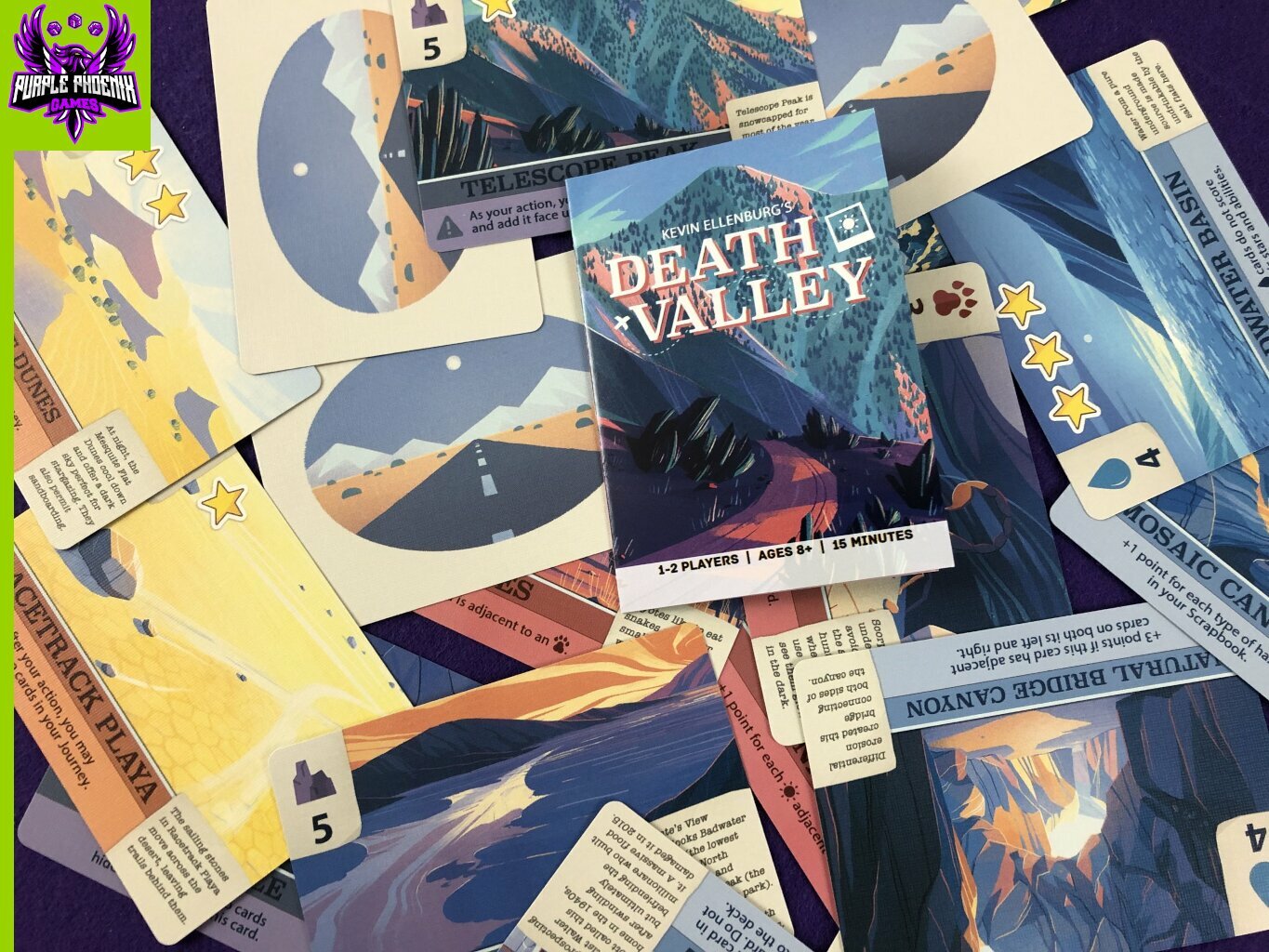
Components. As to be expected from ButtonShy – excellent quality of the cards and wallet. The artwork is colorful and thematic, and I just like looking at the different locations represented in the game. This game is satisfying to look at, and it earns high marks from me. Another neat thing? Each Feature card has a little interesting fact about its location, so you can learn a neat tidbit while playing the game!
Nothing can really compare to seeing Death Valley in person, but this game does offer a nice representation. The beauty of the location artwork coupled with the interesting facts has me intrigued outside of the game itself. The gameplay isn’t necessarily a home-run in my eyes, but it is strategic enough that I know I’ll keep pulling this one out from time to time. There is a solo mode, as well as a variant to give you more of a press-your-luck element, and I will definitely be trying those to see if they change my thoughts on this game. But for the time being, Purple Phoenix Games gives Death Valley a singed 4 / 6.
Death Valley is a game for 1-2 players in which you are documenting your journey across the Death Valley park. You will see different sights on your journey, and add cherished memories to your scrapbook. The player who amasses the most points by the end of the game is the winner! To setup for a game, shuffle the deck of Feature cards and reveal one face-up while the rest remain in a face-down deck. These cards make up the Desert. That’s it. The game is ready to start! Choose a starting player and get to sight-seeing!
Throughout the game, players will be adding Feature cards to their Journey tableau (places they have visited) and their Scrapbook tableau (the more memorable locations). On your turn, you will perform one of 2 actions: Travel or Rest. When you choose to Travel, you will select either the Feature card from the Desert (the face-up card), or draw the top card from the face-down deck and add it to your Journey. Conversely, when you choose to Rest, you will move a Feature card from your Journey into your Scrapbook. When moving Feature cards to your Scrapbook, you are allowed to hide other cards from your Journey underneath that card. Hiding cards can be beneficial for end-game points, or for preventing you from Busting. Many Feature cards have additional text at the bottom, that either provides ongoing abilities for the remainder of the game, or that provide extra scoring abilities at the end of the game. Choosing which Feature cards to move when and where is key!
After you have performed your chosen Action, you check to see if you Bust. If you have 3 Feature cards of the same type in your Journey and Scrapbook, you Bust! To resolve a Bust, you will discard from the game the right-most card in your Journey, and then will re-shuffle any remaining Journey cards back into the draw deck. So there’s a small element of push-your-luck in here! Once you resolve a Bust (if necessary), you will refresh the Desert – reveal a new face-up card if you just took the face-up card this turn. Your turn then ends, and play moves to your opponent. The game continues in this fashion, with players drawing/placing/moving Feature cards in their 2 tableaus, until only 1 card remains in the Desert. Points are then tallied: 1 point per Star on cards visible in your Journey, and points based on the extra scoring abilities of cards in your Journey and/or Scrapbook. The player with the highest score is declared the winner!
So, let’s get into this gameplay. For being a 2-player game, I appreciate that it’s not necessarily directly competitive. Yes, you want to score more points at the end of the game, but there really isn’t any player interaction, which keeps the energy level of the game more low-key. That being said, it’s decently strategic. Some Feature cards provide on-going abilities that can be used throughout the game, and can help you get some benefit out of a Bust. Certain card abilities rely on adjacency of other cards, so you have to know when/where to place a card to get the most points for the end of the game. That being said, you also have to make sure you don’t Bust. Luckily, you don’t resolve/check for a Bust until after you have performed your action, so perhaps you are able to sneak by with some clever planning. One part of the gameplay that misses the mark for me is the fact that you can only perform 1 Action per turn. I feel like that can really inhibit your ability to strategize, and makes it difficult to feel like you’re accomplishing something on your turns. Maybe if players had to perform both Actions per turn (either Travel/Rest, or vice versa), it would offer a few more options in terms of strategy. I just personally feel like taking only 1 Action per turn makes the gameplay a little too choppy, and makes it hard to really get into – especially when the game itself is so short. Maybe I’m not thinking strategically enough, but these are my thoughts thus far with Death Valley!
Components. As to be expected from ButtonShy – excellent quality of the cards and wallet. The artwork is colorful and thematic, and I just like looking at the different locations represented in the game. This game is satisfying to look at, and it earns high marks from me. Another neat thing? Each Feature card has a little interesting fact about its location, so you can learn a neat tidbit while playing the game!
Nothing can really compare to seeing Death Valley in person, but this game does offer a nice representation. The beauty of the location artwork coupled with the interesting facts has me intrigued outside of the game itself. The gameplay isn’t necessarily a home-run in my eyes, but it is strategic enough that I know I’ll keep pulling this one out from time to time. There is a solo mode, as well as a variant to give you more of a press-your-luck element, and I will definitely be trying those to see if they change my thoughts on this game. But for the time being, Purple Phoenix Games gives Death Valley a singed 4 / 6.


Lee (2222 KP) rated The Founder (2017) in Movies
Jul 26, 2017
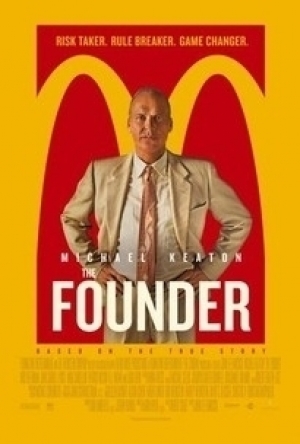
These days McDonalds is everywhere. You don’t have to travel too far before you see those familiar golden arches – in fact, there are three of them within a two mile radius of my home! I’m not personally a big fan of them, but that’s not to say I haven’t enjoyed the odd meal occasionally when in a hurry. It’s one of those things that’s just always been there in life, taken for granted without much of a thought as to how it all came to be so huge. Turns out there’s a pretty interesting story to be told involving a couple of pioneering brothers, and the guy who eventually completely screwed them over…
Michael Keaton is Ray Kroc, a hardworking salesman who always seems to be on the road while his bored wife (Laura Dern) is at home. Repeatedly getting the brush off from restaurant owners who don’t want to buy his amazing new five-spindled milkshake machine and frustrated by the slow, unreliable service from the drive-ins where he goes to get his lunch. For this part of the movie, we’re actually pretty sympathetic with Ray as he struggles in his lonely, boring, unfullfilling job, listening to motivational records in motel rooms as he drifts off to sleep. And then he gets a call from two brothers, Dick and Mac McDonald. They don’t just want to buy one of his milkshake machines, they want to buy at least six in order to cope with demand in their restaurant. Ray puts down the phone and his mind immediately goes into overdrive – what kind of restaurant have these guys got that’s producing this kind of demand? He pulls out a map and looks them up – they’re in San Bernadino California, so he heads off in his car to pay them a visit.
When he arrives, the place is packed with customers queuing for food. As Ray joins the queue a woman assures him that he won’t have to wait long and sure enough, after placing his 15 cent order for a burger, fries and soft drink (bargain!), he promptly gets his order within 30 seconds – served in a paper bag, no plates, no cutlery. He thinks there must be some mistake and it’s pretty amusing to see the bemused look on his face as he struggles to accept the concept that we now all take for granted. Fast, cheap food that you can eat absolutely anywhere you want – in your car, at the park, it’s up to you.
Ray offers to take the brothers out to dinner so that he can hear their story. It’s a wonderful, captivating story too, one that could so easily have been the entire movie. The brothers have such a good rapport as they passionately talk about what they’ve worked to achieve. Moving their restaurant to where it is now, developing their own machines for applying perfect amounts of ketchup and mustard into each bun and spending six hours sketching out potential restaurant layouts on a tennis court while their restaurant staff choreograph their optimised cooking routines. Everything has been tweaked to perfection, even down to the exact cooking time and temperature for their fries. After sleeping on all this information, Ray goes back to the brothers early the next morning and offers them the idea of franchising. But, it’s something they’ve dabbled in before and gave up on, having felt that they had no control over the quality and attention to detail that they pride themselves on in their own restaurant. Eventually Ray wins them over though and a contract is drawn up. The brothers get final say on everything and get half a percent of the profits but it’s up to Ray to setup the franchises and find the people to run them.
It’s a slow, hard process though and although Ray does setup a few successful restaurants, he soon becomes frustrated at the lack of money he seems to be making and the lack of control he has on the decision making process whenever he wants to save costs. The McDonald brothers just seem to keep saying ‘no’! But after he receives some business advice, telling him he should be concentrating on buying the land that the restaurants are on rather than the burgers being cooked, the tide begins to turn. He eventually becomes powerful enough to overpower the brothers, trademark their name, and generally take credit for everything the brothers worked for and built, eventually putting them out of business.
Kroc becomes ruthless, and a complete arsehole. The brothers did eventually make some decent money out of their final deal with Ray, but it certainly wasn’t the 100 million dollars a year they could have been making if they’d been treated right. You really feel for them, as they completely lose control of everything. But you can’t help wondering if things would have worked out that much different for them if they had never met Ray at all. Their restaurant will certainly have continued to do well for a while, but by focusing on just their one restaurant, how long before somebody else stole their idea and ran with it, somebody with the drive and vision to make real money like Ray, leaving them with no money settlement at all? After all, as the motivational LP that Ray listens to clearly pointed out at the start of the movie, “Nothing in the world can take the place of persistence, talent will not, nothing is more common than unsuccessful men with talent …”.
Michael Keaton is Ray Kroc, a hardworking salesman who always seems to be on the road while his bored wife (Laura Dern) is at home. Repeatedly getting the brush off from restaurant owners who don’t want to buy his amazing new five-spindled milkshake machine and frustrated by the slow, unreliable service from the drive-ins where he goes to get his lunch. For this part of the movie, we’re actually pretty sympathetic with Ray as he struggles in his lonely, boring, unfullfilling job, listening to motivational records in motel rooms as he drifts off to sleep. And then he gets a call from two brothers, Dick and Mac McDonald. They don’t just want to buy one of his milkshake machines, they want to buy at least six in order to cope with demand in their restaurant. Ray puts down the phone and his mind immediately goes into overdrive – what kind of restaurant have these guys got that’s producing this kind of demand? He pulls out a map and looks them up – they’re in San Bernadino California, so he heads off in his car to pay them a visit.
When he arrives, the place is packed with customers queuing for food. As Ray joins the queue a woman assures him that he won’t have to wait long and sure enough, after placing his 15 cent order for a burger, fries and soft drink (bargain!), he promptly gets his order within 30 seconds – served in a paper bag, no plates, no cutlery. He thinks there must be some mistake and it’s pretty amusing to see the bemused look on his face as he struggles to accept the concept that we now all take for granted. Fast, cheap food that you can eat absolutely anywhere you want – in your car, at the park, it’s up to you.
Ray offers to take the brothers out to dinner so that he can hear their story. It’s a wonderful, captivating story too, one that could so easily have been the entire movie. The brothers have such a good rapport as they passionately talk about what they’ve worked to achieve. Moving their restaurant to where it is now, developing their own machines for applying perfect amounts of ketchup and mustard into each bun and spending six hours sketching out potential restaurant layouts on a tennis court while their restaurant staff choreograph their optimised cooking routines. Everything has been tweaked to perfection, even down to the exact cooking time and temperature for their fries. After sleeping on all this information, Ray goes back to the brothers early the next morning and offers them the idea of franchising. But, it’s something they’ve dabbled in before and gave up on, having felt that they had no control over the quality and attention to detail that they pride themselves on in their own restaurant. Eventually Ray wins them over though and a contract is drawn up. The brothers get final say on everything and get half a percent of the profits but it’s up to Ray to setup the franchises and find the people to run them.
It’s a slow, hard process though and although Ray does setup a few successful restaurants, he soon becomes frustrated at the lack of money he seems to be making and the lack of control he has on the decision making process whenever he wants to save costs. The McDonald brothers just seem to keep saying ‘no’! But after he receives some business advice, telling him he should be concentrating on buying the land that the restaurants are on rather than the burgers being cooked, the tide begins to turn. He eventually becomes powerful enough to overpower the brothers, trademark their name, and generally take credit for everything the brothers worked for and built, eventually putting them out of business.
Kroc becomes ruthless, and a complete arsehole. The brothers did eventually make some decent money out of their final deal with Ray, but it certainly wasn’t the 100 million dollars a year they could have been making if they’d been treated right. You really feel for them, as they completely lose control of everything. But you can’t help wondering if things would have worked out that much different for them if they had never met Ray at all. Their restaurant will certainly have continued to do well for a while, but by focusing on just their one restaurant, how long before somebody else stole their idea and ran with it, somebody with the drive and vision to make real money like Ray, leaving them with no money settlement at all? After all, as the motivational LP that Ray listens to clearly pointed out at the start of the movie, “Nothing in the world can take the place of persistence, talent will not, nothing is more common than unsuccessful men with talent …”.
Purple Phoenix Games (2266 KP) rated DiTiC in Tabletop Games
Oct 2, 2019
Purple Phoenix Games Preview
Abstract strategy games hold a special place in my heart. I’m not really a fan of Chess, but I am a fan of games that are light on rules and components but heavier in strategy needed to best your opponents. Yes, I like games that have zombies and gore or adventure and treasures as well, but abstracts are a great escape from those Ameritrashy games we all love.
So my original thought was to try to open this preview with a dastardly abstract statement to truly emphasize how theming is irrelevant with some activities. Not quite having done that, DiTiC is an abstract strategy game of “tile placement and dice-pawn” movement. How does it play? Read on.
In DiTiC the winner is the first player to upgrade one of their dice from a smaller-valued die into a value of six. Bring out smaller value dice and move them around the “board” to combine with other dice and win the game!
DISCLAIMER: We were provided a review copy of this game for the purposes of this review. These are preview copy components, and I do not know if the final components will be similar or different, or if the Kickstarter campaign will alter or add anything through stretch goals. -T
To setup a game of DiTiC, each player chooses a color of dice and takes all dice into their hand. The tile with “DiTiC START” on it is the, well, starting tile and is placed in the middle of the table. Roll off to see who goes first and you are ready to play!
On a turn a player may draw and place a tile or move one of their dice. Players start with zero dice on the board, so the first few turns will be drawing a tile from the bag and placing it on the board either side face-up. As you can see from the photos the tiles will have different colored (and shaped) corners. It’s when these corners complete an intersection of four tile corners that dice may enter the board. Depending on the color of the intersection’s majority control a die of said majority color comes into play on the value of the number of icons present. That’s a mouthful. So there are four corners to the intersection. If said intersection contains two red, a blue, and a black icon then red will place a die with value of two pips showing on that intersection. These dice may now be moved and combined with like-valued dice (with an exception). If a player has at least one die on the board when initiating this action, they may roll the action die after placement and complete any other actions the die result allows.
When a player decides instead to move, combine, or overtake a die, they simply move the die along the edge of a tile to the next closest intersection. Exception to movement: players can move all dice with a value of one BEFORE any other dice movement, and dice with value of one or two may move in any direction – even diagonally.
To combine/upgrade dice players will need to move one die into the same intersection as an equal-valued die in order to combine into a die of value +1. Example: a four die and a four die combine to make a five die. Exception to combinations: a value one die may combine with a value three die (remember the exception from the previous paragraph?) to create a value four die.
To overtake an opponent’s die, a player simply moves a superior die onto an occupied intersection. Typically, a die of larger value can overtake any die of smaller value. Exceptions: nothing may overtake a four or five, and only a five can overtake a three. Three-value dice seem to be the superheros of DiTiC.
So after many back-and-forth turns of placing tiles and rolling dice or moving/combining/overtaking dice the winner is crowned once they have upgraded any die into a value six die.
Components. Again, this is a prototype version of the game, so I will comment on what I can. I think the game looks very nice, even in this stage of production. The icons on the tiles are clear – and THANK YOU for considering the colorblind gamer community by making each icon different by both color and art style. The dice are your typical d6 (and I do not know if there will be any changes made to these as a result of a successful campaign). The icons on the action die make sense and I really dig the laser-etched wooden design, and I kinda hope that detail makes it into the final product. But I prefer wooden dice to plastic every time. The game also came with a burlap bag to house and conceal the tiles, and coupled with the wooden dice makes a nice little natural organic combo. My only request for the final version of the game? Go crazy with the color scheme. Black, red, white, and blue are great colors, but fling out the purple and the gold and the orange and the aqua. But I’m no designer. It looks great as it is.
So like I said up top, I love abstracts. Surprisingly so. The more I play them the more I love them. And this game definitely adds to my love of the genre. The rules are kinda wacky, and the dice of different values each can do their own thing, and I think that’s really interesting. It’s not simply a game of moving big dice around eating all the little dice. I mean, you CAN do that, but you will not advance your own strategies. But there is an amount of take that in this game, from the action dice to the tile placement to the overtaking of dice, that will really appeal to lots of people. It’s not a big game, but it looks great on the table, and plays really well once you have immersed yourself in the rules. I really believe that the more I play it the more I will fall in love with it. In fact, as I type this I want to go home and play it right now. And that’s a mark of a good, if not great, game, isn’t it?
If you like abstract strategy games and have a little room for this small game in your collection (or better, MAKE some room for it) then you should definitely consider backing it on Kickstarter, or (depending on when you read this) picking it up at your FLGS.
So my original thought was to try to open this preview with a dastardly abstract statement to truly emphasize how theming is irrelevant with some activities. Not quite having done that, DiTiC is an abstract strategy game of “tile placement and dice-pawn” movement. How does it play? Read on.
In DiTiC the winner is the first player to upgrade one of their dice from a smaller-valued die into a value of six. Bring out smaller value dice and move them around the “board” to combine with other dice and win the game!
DISCLAIMER: We were provided a review copy of this game for the purposes of this review. These are preview copy components, and I do not know if the final components will be similar or different, or if the Kickstarter campaign will alter or add anything through stretch goals. -T
To setup a game of DiTiC, each player chooses a color of dice and takes all dice into their hand. The tile with “DiTiC START” on it is the, well, starting tile and is placed in the middle of the table. Roll off to see who goes first and you are ready to play!
On a turn a player may draw and place a tile or move one of their dice. Players start with zero dice on the board, so the first few turns will be drawing a tile from the bag and placing it on the board either side face-up. As you can see from the photos the tiles will have different colored (and shaped) corners. It’s when these corners complete an intersection of four tile corners that dice may enter the board. Depending on the color of the intersection’s majority control a die of said majority color comes into play on the value of the number of icons present. That’s a mouthful. So there are four corners to the intersection. If said intersection contains two red, a blue, and a black icon then red will place a die with value of two pips showing on that intersection. These dice may now be moved and combined with like-valued dice (with an exception). If a player has at least one die on the board when initiating this action, they may roll the action die after placement and complete any other actions the die result allows.
When a player decides instead to move, combine, or overtake a die, they simply move the die along the edge of a tile to the next closest intersection. Exception to movement: players can move all dice with a value of one BEFORE any other dice movement, and dice with value of one or two may move in any direction – even diagonally.
To combine/upgrade dice players will need to move one die into the same intersection as an equal-valued die in order to combine into a die of value +1. Example: a four die and a four die combine to make a five die. Exception to combinations: a value one die may combine with a value three die (remember the exception from the previous paragraph?) to create a value four die.
To overtake an opponent’s die, a player simply moves a superior die onto an occupied intersection. Typically, a die of larger value can overtake any die of smaller value. Exceptions: nothing may overtake a four or five, and only a five can overtake a three. Three-value dice seem to be the superheros of DiTiC.
So after many back-and-forth turns of placing tiles and rolling dice or moving/combining/overtaking dice the winner is crowned once they have upgraded any die into a value six die.
Components. Again, this is a prototype version of the game, so I will comment on what I can. I think the game looks very nice, even in this stage of production. The icons on the tiles are clear – and THANK YOU for considering the colorblind gamer community by making each icon different by both color and art style. The dice are your typical d6 (and I do not know if there will be any changes made to these as a result of a successful campaign). The icons on the action die make sense and I really dig the laser-etched wooden design, and I kinda hope that detail makes it into the final product. But I prefer wooden dice to plastic every time. The game also came with a burlap bag to house and conceal the tiles, and coupled with the wooden dice makes a nice little natural organic combo. My only request for the final version of the game? Go crazy with the color scheme. Black, red, white, and blue are great colors, but fling out the purple and the gold and the orange and the aqua. But I’m no designer. It looks great as it is.
So like I said up top, I love abstracts. Surprisingly so. The more I play them the more I love them. And this game definitely adds to my love of the genre. The rules are kinda wacky, and the dice of different values each can do their own thing, and I think that’s really interesting. It’s not simply a game of moving big dice around eating all the little dice. I mean, you CAN do that, but you will not advance your own strategies. But there is an amount of take that in this game, from the action dice to the tile placement to the overtaking of dice, that will really appeal to lots of people. It’s not a big game, but it looks great on the table, and plays really well once you have immersed yourself in the rules. I really believe that the more I play it the more I will fall in love with it. In fact, as I type this I want to go home and play it right now. And that’s a mark of a good, if not great, game, isn’t it?
If you like abstract strategy games and have a little room for this small game in your collection (or better, MAKE some room for it) then you should definitely consider backing it on Kickstarter, or (depending on when you read this) picking it up at your FLGS.
Hadley (567 KP) rated A Luminous Republic in Books
Aug 13, 2020
Well-written (1 more)
Unpredictable
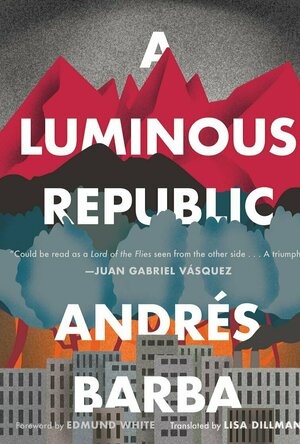
Andres Barba's A Luminous Republic has feral children, senseless murders, and a plot that keeps the story moving enough that the reader won't want to put the book down. This story creatively combines politics, murder, fear and family - - - but the best part is, the book is unpredictable.
We first meet our main character, whose name is never given throughout the entire story, when he and his family are moving to San Cristobal because of a job opportunity. He works for the Department of Social Affairs, and has just received a promotion because he has come up with a very successful plan: " I had developed a social integration program for indigenous communities. The idea was simple and the program proved to be an effective model; it consisted of granting the indigenous exclusive rights to farm certain specific product." Our main character believes that this plan will bring the farmers more money. And he is more than happy to go back to the city where he fell in-love with his now wife, Maia - - - a violin teacher who had a daughter before meeting him, who he calls 'girl' throughout the story because she is also named Maia.
While on his way to work one day, our main character comes across one of the unknown children of the jungle, which shakes him up a bit. The unknown jungle children were known to beg at street lights for money and food, but one of the grimy, frizzy-haired boys stared the man down, only to end up giving him a very wide smile. "The boy's smile unsettled me because it confirmed that there had been a connection between us, that something had begun in me ended in him." Pretty soon after, he begins to notice these unknown jungle children running around a lot more, and that sometimes their intentions are not always innocent - - - he and the 'girl' witness an elderly woman get robbed of her groceries by a group of these children in the middle of the street in a subtle but violent way.
The unknown jungle children soon begin to rob several people,and when a police officer is killed while being attacked by them, the Mayor and the police want the children off the streets as soon as possible. Working with our main character, the former and the latter try to figure out the strange language these children use, whom may be the leader among them, and where they disappear to at night. Since the story is being told from our main character's past, the book is written like a True Crime story, with names of professionals and such being cited throughout. Our main character brings up a woman, who was a young girl at the time of the jungle children's invasion on San Cristobal: Teresa Otano, who happened to 'publish' her diary from that time, which gives readers insights into the jungle children: "Often, some of the thirty-two [jungle children], on their nightly journey back to the jungle, congregated next to Teresa's house, on one corner of Antartida Avenue. At first, Teresa, enthralled, simply makes notes, logging the days on which they appeared, whether there were three, four or five of them, what they were wearing, and so forth. She establishes patterns and identifies a few of the kids..." our main character explains to the reader.
But soon, the children cross a line that they can never come back from; being told by our main character from the view of surveillance video tapes, he describes to us that the jungle children entered a supermarket after an incident with a guard that works there, they block the entrance doors and begin to destroy items throughout the store, but the chaos quickly escalates, and two adults are murdered by the children - - - fear now holds the town in its grip, causing search parties to sweep through the dense jungle after the children fled.
But murder wasn't something new to San Cristobal, our main character explains to us that the suburbs of this area usually had a murder a week all year long, and that on the outskirts of the jungle, there were known spots for drug trafficking and assaults. What made the 'Dakota Supermarket' murders scare the town was that the residents' own children began to behave differently afterwards - - - they start to play a 'game' where they put their ears to the ground, believing that they can hear the jungle children talking to them. Our main character even walks in on the 'girl' playing this exact game. "For a second it was as if I were witnessing a ritual invented by a twelve-year-old girl, and I thought of how afraid my daughter must have felt when I found her in the bathroom that day. People often remark on the self-assured quality of the invocation, its instruction-manual tone, but I'd say that its intensity actually stems from what it dispenses: adult logic, a world that no longer serves. How could our children possibly have explained to us what they were doing? We weren't prepared for their world or their logic. Somewhere out there, underground, that dissonant sound was being sent, in code: down below, chaos. "
This phenomenon attracts the attention of money/fame seekers, which includes the Zapata children. Four siblings, ranging from the ages of five to nine, claimed that the jungle children were speaking to them through their dreams. They would make drawings from what they were told by the jungle children, but state that even they didn't know what the drawings meant. The media quickly jumped on them and put them in front of a camera, causing the family's home to be surrounded by civilians at all hours of the day and night. One night, the crowd outside becomes anxious, and breaks into the house, stealing not only the drawings from the Zapata children, but also the life savings of the family. At this point, the Zapatas had had enough, and retreat from the story altogether for reasons I won't disclose here. I can't give away much more of the book without ruining the story.
Barba's attempt at making a different kind of Lord of the Flies was done well, but the lack of emotion is felt throughout the entire story which makes the characters flat, especially our main character, who I didn't find likable in any such way. He calls a grieving woman a 'whore,' and he seems rude towards his family, especially his step-daughter.
A Luminous Republic is redeemed by is unpredictability, which is something that doesn't come along in fiction that often anymore. I enjoyed that the story was written like a True Crime novel, with fictitious documentaries, news reports and books. So, I would recommend this book to people who like True Crime and Mysteries.
We first meet our main character, whose name is never given throughout the entire story, when he and his family are moving to San Cristobal because of a job opportunity. He works for the Department of Social Affairs, and has just received a promotion because he has come up with a very successful plan: " I had developed a social integration program for indigenous communities. The idea was simple and the program proved to be an effective model; it consisted of granting the indigenous exclusive rights to farm certain specific product." Our main character believes that this plan will bring the farmers more money. And he is more than happy to go back to the city where he fell in-love with his now wife, Maia - - - a violin teacher who had a daughter before meeting him, who he calls 'girl' throughout the story because she is also named Maia.
While on his way to work one day, our main character comes across one of the unknown children of the jungle, which shakes him up a bit. The unknown jungle children were known to beg at street lights for money and food, but one of the grimy, frizzy-haired boys stared the man down, only to end up giving him a very wide smile. "The boy's smile unsettled me because it confirmed that there had been a connection between us, that something had begun in me ended in him." Pretty soon after, he begins to notice these unknown jungle children running around a lot more, and that sometimes their intentions are not always innocent - - - he and the 'girl' witness an elderly woman get robbed of her groceries by a group of these children in the middle of the street in a subtle but violent way.
The unknown jungle children soon begin to rob several people,and when a police officer is killed while being attacked by them, the Mayor and the police want the children off the streets as soon as possible. Working with our main character, the former and the latter try to figure out the strange language these children use, whom may be the leader among them, and where they disappear to at night. Since the story is being told from our main character's past, the book is written like a True Crime story, with names of professionals and such being cited throughout. Our main character brings up a woman, who was a young girl at the time of the jungle children's invasion on San Cristobal: Teresa Otano, who happened to 'publish' her diary from that time, which gives readers insights into the jungle children: "Often, some of the thirty-two [jungle children], on their nightly journey back to the jungle, congregated next to Teresa's house, on one corner of Antartida Avenue. At first, Teresa, enthralled, simply makes notes, logging the days on which they appeared, whether there were three, four or five of them, what they were wearing, and so forth. She establishes patterns and identifies a few of the kids..." our main character explains to the reader.
But soon, the children cross a line that they can never come back from; being told by our main character from the view of surveillance video tapes, he describes to us that the jungle children entered a supermarket after an incident with a guard that works there, they block the entrance doors and begin to destroy items throughout the store, but the chaos quickly escalates, and two adults are murdered by the children - - - fear now holds the town in its grip, causing search parties to sweep through the dense jungle after the children fled.
But murder wasn't something new to San Cristobal, our main character explains to us that the suburbs of this area usually had a murder a week all year long, and that on the outskirts of the jungle, there were known spots for drug trafficking and assaults. What made the 'Dakota Supermarket' murders scare the town was that the residents' own children began to behave differently afterwards - - - they start to play a 'game' where they put their ears to the ground, believing that they can hear the jungle children talking to them. Our main character even walks in on the 'girl' playing this exact game. "For a second it was as if I were witnessing a ritual invented by a twelve-year-old girl, and I thought of how afraid my daughter must have felt when I found her in the bathroom that day. People often remark on the self-assured quality of the invocation, its instruction-manual tone, but I'd say that its intensity actually stems from what it dispenses: adult logic, a world that no longer serves. How could our children possibly have explained to us what they were doing? We weren't prepared for their world or their logic. Somewhere out there, underground, that dissonant sound was being sent, in code: down below, chaos. "
This phenomenon attracts the attention of money/fame seekers, which includes the Zapata children. Four siblings, ranging from the ages of five to nine, claimed that the jungle children were speaking to them through their dreams. They would make drawings from what they were told by the jungle children, but state that even they didn't know what the drawings meant. The media quickly jumped on them and put them in front of a camera, causing the family's home to be surrounded by civilians at all hours of the day and night. One night, the crowd outside becomes anxious, and breaks into the house, stealing not only the drawings from the Zapata children, but also the life savings of the family. At this point, the Zapatas had had enough, and retreat from the story altogether for reasons I won't disclose here. I can't give away much more of the book without ruining the story.
Barba's attempt at making a different kind of Lord of the Flies was done well, but the lack of emotion is felt throughout the entire story which makes the characters flat, especially our main character, who I didn't find likable in any such way. He calls a grieving woman a 'whore,' and he seems rude towards his family, especially his step-daughter.
A Luminous Republic is redeemed by is unpredictability, which is something that doesn't come along in fiction that often anymore. I enjoyed that the story was written like a True Crime novel, with fictitious documentaries, news reports and books. So, I would recommend this book to people who like True Crime and Mysteries.

Kristy H (1252 KP) rated How to Make a Wish in Books
Apr 8, 2019
Sweet, funny, and heartbreaking at times
Grace has had to grow up too quickly, thanks to her unpredictable mom, Maggie. So when Grace returns from piano camp and realizes that the flighty, alcoholic Maggie has forced her to move in with yet another of her boyfriends, it feels like the last straw. Even worse, his son happens to be Grace's ex--the same ex who posted their sexts all over Tumblr after their breakup--and Maggie has no clue. It feels like the last straw. But then Grace meets Eva, who has moved in with Grace's best friend's family after her own tragedy. Eva and Grace form a fast friendship, and Grace feels her world shift slightly when Eva reveals to her that she's a lesbian. But there's still Maggie to deal with, and her erratic behavior. Grace feels tied to her mother above all, but those ties are preventing her from happiness. Can Grace find the strength to choose herself for once?
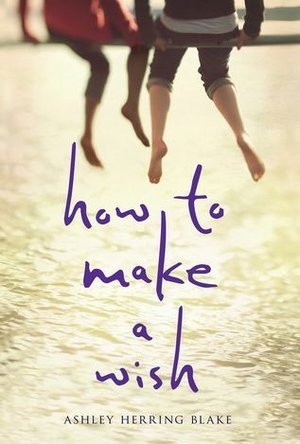
Ashley Herring Blake's HOW TO MAKE A WISH was one of the best books I read in 2018. It was gorgeous and heartbreaking and amazing. This book certainly had some echoes of that one; Blake is a wonderful writer, and I will be continuing my quest to track down all of her books.
So Grace is a tough character. I felt for her immensely: she's living the life of adult, basically, trying to care for and worry about her mother, who is a real piece of work. By doing so, she's essentially paralyzed and unable to live her own life. Grace is a talented pianist who dreams of moving to New York to study at a conservatory there, but she lives in fear of living her mom behind. Her mom manipulates this fear, leaning on her daughter at every turn. (She was really a terrible woman; I couldn't make myself feel sorry for her, even though she'd lost her husband when Grace was small.) Still, there were times when I wanted to shake Grace: you have a group of people who do love you and care about you! Go to them, use their support, stop defending your mom, you're not a child anymore! I took this as a sign of Blake's excellent writing abilities, as I was totally immersed in the book to the point that I was frustrated with and in love with her characters.
"I can't leave her. She's my mom; I'm her kid. We belong together."
I really, really loved the Grace/Eva relationship in this book. I mean, what is there not to love? For one thing, Eva is a biracial lesbian. Can we say hurray representation?! I adored this sweet, fragile, yet incredibly tough girl. She was so funny and real to me. And then we have Grace, who was such a realistic bisexual. It's just so heartening to see well-done bisexual relationships portrayed in YA books. Oh my goodness, I wish I had this to read when I was struggling with my bisexuality as a teen. And it makes me so happy to think about teens today reading this and seeing this representation as completely normal.
"But... well, I like who I like. I like the person."
This book definitely sucks you into the characters' lives. It's quite well-written, and I really liked the supporting characters, especially Grace's best friend, Luca and his mom. He's a good friend. These poor kids are dealing with a lot, and your heart goes out to them, watching them struggle. At the same time, Grace and Eva's relationship is so lovely.
"I know a lot of people on this godforsaken waste of space and a lot of people know me. But no one really knows me... I've had a handful of friends here and there, but with the ebb and flow of my existence, it was easier to keep my world as small as possible. Less explaining. Less lying to cover up why I'd moved again. Less worrying about what totally messed-up situation I'd encounter when I brought a friend home."
Overall, I really enjoyed this book. It features intricate characters and a great relationship in Eva and Grace. It's sweet, funny, and heartbreaking at times.
Ashley Herring Blake's HOW TO MAKE A WISH was one of the best books I read in 2018. It was gorgeous and heartbreaking and amazing. This book certainly had some echoes of that one; Blake is a wonderful writer, and I will be continuing my quest to track down all of her books.
So Grace is a tough character. I felt for her immensely: she's living the life of adult, basically, trying to care for and worry about her mother, who is a real piece of work. By doing so, she's essentially paralyzed and unable to live her own life. Grace is a talented pianist who dreams of moving to New York to study at a conservatory there, but she lives in fear of living her mom behind. Her mom manipulates this fear, leaning on her daughter at every turn. (She was really a terrible woman; I couldn't make myself feel sorry for her, even though she'd lost her husband when Grace was small.) Still, there were times when I wanted to shake Grace: you have a group of people who do love you and care about you! Go to them, use their support, stop defending your mom, you're not a child anymore! I took this as a sign of Blake's excellent writing abilities, as I was totally immersed in the book to the point that I was frustrated with and in love with her characters.
"I can't leave her. She's my mom; I'm her kid. We belong together."
I really, really loved the Grace/Eva relationship in this book. I mean, what is there not to love? For one thing, Eva is a biracial lesbian. Can we say hurray representation?! I adored this sweet, fragile, yet incredibly tough girl. She was so funny and real to me. And then we have Grace, who was such a realistic bisexual. It's just so heartening to see well-done bisexual relationships portrayed in YA books. Oh my goodness, I wish I had this to read when I was struggling with my bisexuality as a teen. And it makes me so happy to think about teens today reading this and seeing this representation as completely normal.
"But... well, I like who I like. I like the person."
This book definitely sucks you into the characters' lives. It's quite well-written, and I really liked the supporting characters, especially Grace's best friend, Luca and his mom. He's a good friend. These poor kids are dealing with a lot, and your heart goes out to them, watching them struggle. At the same time, Grace and Eva's relationship is so lovely.
"I know a lot of people on this godforsaken waste of space and a lot of people know me. But no one really knows me... I've had a handful of friends here and there, but with the ebb and flow of my existence, it was easier to keep my world as small as possible. Less explaining. Less lying to cover up why I'd moved again. Less worrying about what totally messed-up situation I'd encounter when I brought a friend home."
Overall, I really enjoyed this book. It features intricate characters and a great relationship in Eva and Grace. It's sweet, funny, and heartbreaking at times.

Cynthia Armistead (17 KP) rated Fire Study (Study, #3) in Books
Mar 1, 2018

I strongly recommend reading <i>Poison Study</i>, <i>Assassin Study</i>, <i>Magic Study</i>, and <i>Power Study</i> all at a go. The two novellas are optional, but canonical and fun.
Snyder's world seems to be made up of just two countries: Ixia and Sitia. Ixia has been ruled by Commander Ambrose and his generals for about a decade when <i>Poison Study</i> starts, after a military coup overthrew the old monarchy. There are no beggars, every child is entitled to an education, nobody has to go hungry or homeless, and promotions are based solely on skill, with no gender or racial discrimination—but every citizen also has to wear a uniform declaring his or her proper location and job function, government approval is required for marrying, moving to a new home, or changing jobs, and anybody identified as having magic talent is killed immediately. Everyone is subject to the Code of Behavior, and there are no exceptions for any kind of extenuating circumstances. If you kill someone, you are sentenced to death, even if you were defending yourself or another.
Yelena has been in the Commander's dungeon for most of a year after killing the son of General Brazell. Valek, Ambrose's spymaster, gives her a choice: go to the gallows, or become the Commander's food taster. The job doesn't have a long life expectancy, as poisoning attempts are fairly common, but Yelena sees a chance at life better than immediate death, and takes the job.
Yelena manages to survive several attempts to murder her. The fact that Brazell wants her dead is understandable, but the other attempts are mysterious. Why would a Sitian master magician try to kill her? Who would slip poison into her wine?
<i>Magic Study</i> finds Yelena in Sitia, learning to cope with a very different way of life. Magic is almost taken for granted, and a strong family/clan structure forms the backbone of the government. But why are there beggars in the streets, and why is it that only those who can afford it are educated? Everyone in Sitia believes that life in Ixia must be horrific, but looking around her, Yelena sees that Ambrose's rule does have its benefits.
<i>Fire Study</i> moves between Sitia and Ixia, involving the leaders of both nations and intriguers who want to bring both of them down by pitching them against each other. Yelena and her friends are trying to prevent a war and reveal the traitors, but they've been declared outlaw and have to sneak around trying to figure out what's going on.
Another reviewer found Yelena too talented for belief, but I found her fairly realistic. She certainly isn't good at everything—she could use a lot of help in terms of social skills!—and the skills that she begins with and gains over the course of the trilogy do make sense. She trained as an acrobat when she was a child, so it does make sense that she is able to learn some types of self-defense without too much trouble. Some of her aptitudes make more sense after she learns more about her family background. She does find that she has magical abilities, but she isn't good at everything, and indeed, cannot seem to master some tasks that other magicians consider rudimentary.
I did find some of the betrayals to be difficult to comprehend, as some of the traitors would have no defense against mental scans. There's a Sitian Ethical Code of Conduct that prohibits non-consensual scans, but it doesn't apply to criminals, and in a war situation, I found it hard to believe that nobody ever did a little telepathic peeking at the people around them.
These were fun books, and they could be useful in looking at the pros and cons of different types of governments with teens. There's some sex in the books, but nothing terribly explicit. The violence is more troublesome, but the author never dwells on it.
Snyder's world seems to be made up of just two countries: Ixia and Sitia. Ixia has been ruled by Commander Ambrose and his generals for about a decade when <i>Poison Study</i> starts, after a military coup overthrew the old monarchy. There are no beggars, every child is entitled to an education, nobody has to go hungry or homeless, and promotions are based solely on skill, with no gender or racial discrimination—but every citizen also has to wear a uniform declaring his or her proper location and job function, government approval is required for marrying, moving to a new home, or changing jobs, and anybody identified as having magic talent is killed immediately. Everyone is subject to the Code of Behavior, and there are no exceptions for any kind of extenuating circumstances. If you kill someone, you are sentenced to death, even if you were defending yourself or another.
Yelena has been in the Commander's dungeon for most of a year after killing the son of General Brazell. Valek, Ambrose's spymaster, gives her a choice: go to the gallows, or become the Commander's food taster. The job doesn't have a long life expectancy, as poisoning attempts are fairly common, but Yelena sees a chance at life better than immediate death, and takes the job.
Yelena manages to survive several attempts to murder her. The fact that Brazell wants her dead is understandable, but the other attempts are mysterious. Why would a Sitian master magician try to kill her? Who would slip poison into her wine?
<i>Magic Study</i> finds Yelena in Sitia, learning to cope with a very different way of life. Magic is almost taken for granted, and a strong family/clan structure forms the backbone of the government. But why are there beggars in the streets, and why is it that only those who can afford it are educated? Everyone in Sitia believes that life in Ixia must be horrific, but looking around her, Yelena sees that Ambrose's rule does have its benefits.
<i>Fire Study</i> moves between Sitia and Ixia, involving the leaders of both nations and intriguers who want to bring both of them down by pitching them against each other. Yelena and her friends are trying to prevent a war and reveal the traitors, but they've been declared outlaw and have to sneak around trying to figure out what's going on.
Another reviewer found Yelena too talented for belief, but I found her fairly realistic. She certainly isn't good at everything—she could use a lot of help in terms of social skills!—and the skills that she begins with and gains over the course of the trilogy do make sense. She trained as an acrobat when she was a child, so it does make sense that she is able to learn some types of self-defense without too much trouble. Some of her aptitudes make more sense after she learns more about her family background. She does find that she has magical abilities, but she isn't good at everything, and indeed, cannot seem to master some tasks that other magicians consider rudimentary.
I did find some of the betrayals to be difficult to comprehend, as some of the traitors would have no defense against mental scans. There's a Sitian Ethical Code of Conduct that prohibits non-consensual scans, but it doesn't apply to criminals, and in a war situation, I found it hard to believe that nobody ever did a little telepathic peeking at the people around them.
These were fun books, and they could be useful in looking at the pros and cons of different types of governments with teens. There's some sex in the books, but nothing terribly explicit. The violence is more troublesome, but the author never dwells on it.

Daniel Boyd (1066 KP) rated BlacKkKlansman (2018) in Movies
Oct 1, 2018 (Updated Oct 2, 2018)
Brilliant performances by the entire cast (1 more)
Funny, while still being relevant and sending a serious message
Spike Lee's Best In Years
BlackkKlansman released while I was on holiday, so after playing a bit of catchup at my local cinema, I eventually got around to seeing this film that I was looking forward to ever since seeing the first trailer for it. It lived up to my expectations and I really enjoyed it. Also, just a heads up; I usually don't like to get political in movie reviews, but I feel that with a film as politically charged as this one, it makes it inevitable to get around, so there may be some stuff in here that you disagree with.
The movie worked in several different ways, it definitely worked as a comedy and had me laughing raucously at certain points and then it would drop an important and relevant point on you and suddenly things wouldn't seem so funny any more. All of a sudden, these laughably ignorant racists suddenly became a very real threat, which I don't think was an accident in paralleling how Lee feels about a good amount of modern day Americans like Donald Trump. Remember when he first announced that he was running for office and everybody, (including the current president at that time,) laughed at him? Now he is the most powerful man in the world and poses a very real threat to minorities in the US. I thought that this was a very clever, subtle way to take a shot without being too blatant.
Then there was a slightly more obvious shot at him when characters are discussing a man filled with hate potentially working his way into power and getting the majority of the American public on his side and how awful that would be. Although this particular dig is way more obvious, it still didn't bother me too much and I accepted it as a filmmaker using his platform to send a message to someone that he morally disagrees with.
The final dig was a step too far for me. During a phone conversation between David Duke and Ron Stallworth, Duke says something about getting rid of non-whites to "make America great again." It was so heavy handed that the characters onscreen might as well have turned around and winked at the camera. Please don't get me wrong, I think that Donald Trump is a scumbag and am totally fine with Lee taking a couple of shots at him, but I much preferred the more subtle undertones that he sent his way earlier in the film to this blatantly obvious, slightly cringey callout.
I did enjoy Lee's references to Blaxploitation films of the 70's and I liked the whole aesthetic that this movie had. The score was brilliant and the cast did a great job, the performance that stayed with me the most after the film, was Corey Hawkins monologue as Kwame Ture. He only appears in one scene in the film, but his speech, (in which I felt he strongly channelled Denzel,) was mesmerising and electrifying to watch.
The way that Spike Lee chose to end this movie has stirred some controversy, but I found it to be incredibly powerful and moving. It really sent home the message that this kind of intense, despicable hatred isn't just something that was around in the 70's and 80's, it is something that is still sadly prevalent and happening in today's society and we have people in power, like Trump, who is willing to defend and stand by these people and their violent, hateful behaviour. It was also a fitting tribute to Heather Heyer who was killed when a car crashed into a crowd of people who had been peacefully protesting the Unite the Right rally in Charlottesville, Virginia one-year prior to this film's release.
Overall, this is a funny, entertaining, uncomfortable and anger-inducing film and all of these emotion are equally relevant. I also feel that this movie does exactly what it intends to on a moral level, whether you agree with the ideals portrayed or not, Lee does a terrific job in turning a period piece movie into a painfully relevant message for modern audiences.
The movie worked in several different ways, it definitely worked as a comedy and had me laughing raucously at certain points and then it would drop an important and relevant point on you and suddenly things wouldn't seem so funny any more. All of a sudden, these laughably ignorant racists suddenly became a very real threat, which I don't think was an accident in paralleling how Lee feels about a good amount of modern day Americans like Donald Trump. Remember when he first announced that he was running for office and everybody, (including the current president at that time,) laughed at him? Now he is the most powerful man in the world and poses a very real threat to minorities in the US. I thought that this was a very clever, subtle way to take a shot without being too blatant.
Then there was a slightly more obvious shot at him when characters are discussing a man filled with hate potentially working his way into power and getting the majority of the American public on his side and how awful that would be. Although this particular dig is way more obvious, it still didn't bother me too much and I accepted it as a filmmaker using his platform to send a message to someone that he morally disagrees with.
The final dig was a step too far for me. During a phone conversation between David Duke and Ron Stallworth, Duke says something about getting rid of non-whites to "make America great again." It was so heavy handed that the characters onscreen might as well have turned around and winked at the camera. Please don't get me wrong, I think that Donald Trump is a scumbag and am totally fine with Lee taking a couple of shots at him, but I much preferred the more subtle undertones that he sent his way earlier in the film to this blatantly obvious, slightly cringey callout.
I did enjoy Lee's references to Blaxploitation films of the 70's and I liked the whole aesthetic that this movie had. The score was brilliant and the cast did a great job, the performance that stayed with me the most after the film, was Corey Hawkins monologue as Kwame Ture. He only appears in one scene in the film, but his speech, (in which I felt he strongly channelled Denzel,) was mesmerising and electrifying to watch.
The way that Spike Lee chose to end this movie has stirred some controversy, but I found it to be incredibly powerful and moving. It really sent home the message that this kind of intense, despicable hatred isn't just something that was around in the 70's and 80's, it is something that is still sadly prevalent and happening in today's society and we have people in power, like Trump, who is willing to defend and stand by these people and their violent, hateful behaviour. It was also a fitting tribute to Heather Heyer who was killed when a car crashed into a crowd of people who had been peacefully protesting the Unite the Right rally in Charlottesville, Virginia one-year prior to this film's release.
Overall, this is a funny, entertaining, uncomfortable and anger-inducing film and all of these emotion are equally relevant. I also feel that this movie does exactly what it intends to on a moral level, whether you agree with the ideals portrayed or not, Lee does a terrific job in turning a period piece movie into a painfully relevant message for modern audiences.