
Search
Search results

Lottie disney bookworm (1056 KP) rated Rebel Rose (The Queen's Council #1) in Books
Dec 29, 2020

Contains spoilers, click to show
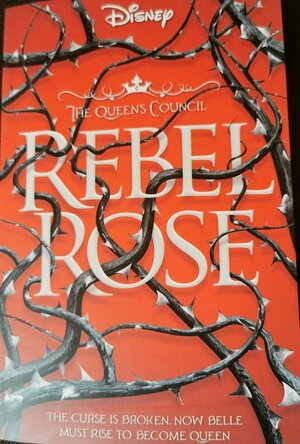
Set against the backdrop of revolutionary France, ‘Rebel Rose’ continues the story of Beauty and the Beast after the curse is broken. Belle and her Prince now have to find a way to navigate married life, rank, politics and explain a 10-year absence from the French Court of Versailles.
Controversially, Emma Theriault baits the hardcore Disney fans straight out of the gates by naming her Prince Lio (Lio, Lion, beast, gettit?) rather than Adam. In the grand scheme of things this can easily be forgiven but it still seems a strange choice. Maybe Adam was too English for a French Prince?
However, the use of first person perspective ensures that our protagonist remains firmly in Belle. Belle has refused the title of Princess upon marriage in order to stay true to her roots but is constantly hiding her true self: even referring to a trip around Europe as “one last adventure before the walls of the castle close around her”. When Belle witnesses the revolutionary sparks within the city this divides her further: how can she be part of the nobility these people rally against and an avid “commoner” at the same time?
In truth, Belle as a character divided me as well. Belle has always been my favourite Disney Princess (possibly to do with that massive library) and, in the most part, I feel Theriault wrote her well and stayed true to the character. However, in the early pages Belle felt very spoilt and selfish to me: preferring to disguise herself and explore Paris rather than support Lio in explaining his decade-long disappearing act to King Louis.
I was intrigued to know what my fellow reviewers thought and was unsurprised to see a LOT of criticism of our heroine, her shunning of the title of Princess and her lack of enthusiasm to be a leader. However, I almost felt that this made the story more realistic. Just because she broke a curse and married a Prince doesn’t mean she can automatically feel ready and comfortable leading a kingdom! Maybe she just has a fondness for hairy men?
Belle’s reluctance and tentativeness to lead also fed very nicely into her passion to improve the lives of the residents of the kingdom of Aveyon. This is common sense to her and therefore doesn’t feel like ruling. Indeed, it is not seen by any of the main characters as ruling but in the end it saves them all from a revolution of their own.
I would have liked Lio to be a little bit more developed than he was. The fact that he harboured an element of PTSD from the curse was really interesting but not explored any further than his nightmares and aversion towards roses. There was undoubtedly chemistry between him and Belle but it was just a bit lacklustre in my opinion. This may be due to his absence for a lot of the book but I felt the reader could have loved him a lot more than we did.
Lio’s cousin Bastien is the slimy villain of the tale and I would have liked a bit more mystery and suspense within his character. I appreciated that Belle didn’t like him initially as he was a powdered, wig wearing noble who was close to King Louis, basically as far away from Belle as possible. Bastien is also quite snobby towards Belle in his earliest chapters so you can’t blame her for disliking him.
However, by using language to plainly show that Belle distrusts her husband’s cousin, Theriault instantly creates a flashing neon “villain” sign above his head. This would have been fine in a middle-grade book but within YA I think the reader could have been afforded to be misled a couple of times before uncovering Bastien’s real intentions.
**This section contains spoilers**
I also believe that Bastien’s eventual story arc was a tad unbelievable. At first I thought his revolutionary sympathies and further plots with various goons was a ruse in order to gain the throne for himself, particularly once he had established himself firmly with the advisory. Emma Theriault’s decision to keep Bastien true to the revolution seemed rushed, and a bit odd to be honest. This is a noble who lives in the lap of luxury and attends to King Louis himself but who then turns on his own kind after basically forcing the kingdom of Aveyon to break away from France? It didn’t seem plausible to me.
Rebel Rose is an easy to read continuation of one of our favourite Disney tales. It reintroduces us to old favourites such as Mrs Potts and Lumiere as well as introducing new characters such as Marguerite and Bastien. Belle’s journey to staying true to herself and following her gut is one anyone can empathise with and her discovery that she does not have to appease to outsider’s expectations will never cease to be important.
The magic contained within this novel is a perfect springboard for the rest of the novels within the Queen’s Council series: the next one is based on Mulan and will be written by Livia Blackburne before Jasmine’s story by Alexandra Monir follows in 2022. The majority of the action within this novel does take place towards the end so it can be a little slow paced and politics focused but I enjoyed seeing Belle and Lio break free of their fairytale life and become a little more real.
Although this isn’t my favourite Disney novel, I do appreciate the break away from the retelling genre and the move towards bringing these well-known characters into the real world. For a debut novel I think Emma Theriault should be immensely proud: the research for the historical context alone must have been a mission!
Controversially, Emma Theriault baits the hardcore Disney fans straight out of the gates by naming her Prince Lio (Lio, Lion, beast, gettit?) rather than Adam. In the grand scheme of things this can easily be forgiven but it still seems a strange choice. Maybe Adam was too English for a French Prince?
However, the use of first person perspective ensures that our protagonist remains firmly in Belle. Belle has refused the title of Princess upon marriage in order to stay true to her roots but is constantly hiding her true self: even referring to a trip around Europe as “one last adventure before the walls of the castle close around her”. When Belle witnesses the revolutionary sparks within the city this divides her further: how can she be part of the nobility these people rally against and an avid “commoner” at the same time?
In truth, Belle as a character divided me as well. Belle has always been my favourite Disney Princess (possibly to do with that massive library) and, in the most part, I feel Theriault wrote her well and stayed true to the character. However, in the early pages Belle felt very spoilt and selfish to me: preferring to disguise herself and explore Paris rather than support Lio in explaining his decade-long disappearing act to King Louis.
I was intrigued to know what my fellow reviewers thought and was unsurprised to see a LOT of criticism of our heroine, her shunning of the title of Princess and her lack of enthusiasm to be a leader. However, I almost felt that this made the story more realistic. Just because she broke a curse and married a Prince doesn’t mean she can automatically feel ready and comfortable leading a kingdom! Maybe she just has a fondness for hairy men?
Belle’s reluctance and tentativeness to lead also fed very nicely into her passion to improve the lives of the residents of the kingdom of Aveyon. This is common sense to her and therefore doesn’t feel like ruling. Indeed, it is not seen by any of the main characters as ruling but in the end it saves them all from a revolution of their own.
I would have liked Lio to be a little bit more developed than he was. The fact that he harboured an element of PTSD from the curse was really interesting but not explored any further than his nightmares and aversion towards roses. There was undoubtedly chemistry between him and Belle but it was just a bit lacklustre in my opinion. This may be due to his absence for a lot of the book but I felt the reader could have loved him a lot more than we did.
Lio’s cousin Bastien is the slimy villain of the tale and I would have liked a bit more mystery and suspense within his character. I appreciated that Belle didn’t like him initially as he was a powdered, wig wearing noble who was close to King Louis, basically as far away from Belle as possible. Bastien is also quite snobby towards Belle in his earliest chapters so you can’t blame her for disliking him.
However, by using language to plainly show that Belle distrusts her husband’s cousin, Theriault instantly creates a flashing neon “villain” sign above his head. This would have been fine in a middle-grade book but within YA I think the reader could have been afforded to be misled a couple of times before uncovering Bastien’s real intentions.
**This section contains spoilers**
I also believe that Bastien’s eventual story arc was a tad unbelievable. At first I thought his revolutionary sympathies and further plots with various goons was a ruse in order to gain the throne for himself, particularly once he had established himself firmly with the advisory. Emma Theriault’s decision to keep Bastien true to the revolution seemed rushed, and a bit odd to be honest. This is a noble who lives in the lap of luxury and attends to King Louis himself but who then turns on his own kind after basically forcing the kingdom of Aveyon to break away from France? It didn’t seem plausible to me.
Rebel Rose is an easy to read continuation of one of our favourite Disney tales. It reintroduces us to old favourites such as Mrs Potts and Lumiere as well as introducing new characters such as Marguerite and Bastien. Belle’s journey to staying true to herself and following her gut is one anyone can empathise with and her discovery that she does not have to appease to outsider’s expectations will never cease to be important.
The magic contained within this novel is a perfect springboard for the rest of the novels within the Queen’s Council series: the next one is based on Mulan and will be written by Livia Blackburne before Jasmine’s story by Alexandra Monir follows in 2022. The majority of the action within this novel does take place towards the end so it can be a little slow paced and politics focused but I enjoyed seeing Belle and Lio break free of their fairytale life and become a little more real.
Although this isn’t my favourite Disney novel, I do appreciate the break away from the retelling genre and the move towards bringing these well-known characters into the real world. For a debut novel I think Emma Theriault should be immensely proud: the research for the historical context alone must have been a mission!

Bob Mann (459 KP) rated The Farewell (2019) in Movies
Sep 28, 2021


Simply brilliant. Go see it!
The Long Goodbye.
With “Downton Abbey” and now “The Farewell”, the excesses of the summer blockbusters are fading away. (Though I’m sure Rambo might have something to say about that!)
The Plot.
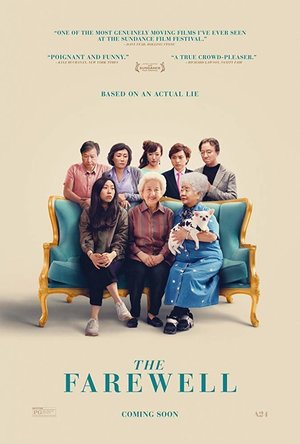
Billi (Awkwafina) is a young Chinese New Yorker struggling to make her way in the world. She has a place of her own to distance herself from her parents – Haiyan (“Arrival“‘s Tzi Ma) and Lu Jian (Diana Lin) – but is struggling to fund it. But despite a typically spiky teenage relationship with her parents, family is important to her.
There’s a big shock then when her beloved “Nai Nai” (Shuzhen Zhao) is diagnosed back in China with terminal cancer. The slight complication is that no-one has told her. Her younger sister (Hong Lu) has taken the decision to keep the news from her. This is in line with the Chinese saying “When people get Cancer they die”. (Based on the rationale that it is not necessarily the disease that kills you, but the fear that destroys your useful life).
The whole extended family sign up – reluctantly – to the decision. They stage a final get together back in China around the pretence of a trumped-up wedding. This is between the comically reluctant grandson Hao Hao (Han Chen) and his new Japanese girlfriend Aiko (Aoi Mizuhara).
Faced with seeing Nai Nai face-to-face, and being forced to “celebrate” together, can the family – and the emotionally attached Billi in particular – hold it together and keep the secret?
A laff a minute then?
You might naturally assume that given the subject matter that this was going to be SERIOUSLY heavy going. And in many ways you would be right. Most of us over 50 will have lost an elderly relative. And, unless it was a sudden event, you have probably been through the mental pain of having to drive away from a nursing home certain that that will be the final time you will see your loved one alive. If you are therefore not affected by this film, you are not human.
So I was frankly bracing myself.
However, the film is so beautifully put together, and the comedy – albeit some of it very dark – so brilliantly inserted that the film is an UTTER DELIGHT from start to end. There are truly insightful scenes that get under the skin of the well-developed social approach in China to family. (Like the illustrious Mrs Movie-Man, they love big family dinners around a round-table!) Although there is always the teen – Bau (Jinhang Liu) in this case – with his face permanently in his phone!
There are also scenes familiar to anyone who’s visited China. The gaggle of “helpful” taxi drivers outside the airport made me laugh out loud.
Also (unintentionally) funny are the multiple company logos at the start of the film. This is reminiscent of the classic “Family Guy” scene (I think “The Simpsons” also did a similar spoof).
Cinematic.
For such a ‘small’ film, the scale is sometimes truly cinematic. Director and writer, Lulu Wang, achieves some gloriously memorable movie moments. A stony-faced, determined march of the key players towards the camera – which could be subtitled “The Magnificent Eight” – is slo-mo’d for about 30 seconds and is utterly mesmeric.
And a scene at a cemetery is a comic masterpiece of Chinese tradition. Bau of course still has his face in his phone throughout!
This is only Lulu Wang‘s second feature, but it makes me now want to check out her first film (“Posthumous”).
Not afraid to offend either country.
What I found particularly interesting is that the film is truly multi-cultural. It’s not an American film with some local content crudely inserted to cater for the Far East markets. The film is an almost equal blend of American language and Mandarin language with subtitles.
Lulu Wang is also not afraid to upset officials in either country. Which is better: US or China? The question keeps getting posed to Billi and discussed among the family. And – as you might expect – there are positives and negatives on each side. The film doesn’t really take sides. It’s a really balanced position to take.
A quirky soundtrack.
The music is by Alex Weston, and its one of the stars of the film. It’s truly quirky with everything as diverse as a vocalised version of Beethoven’s Sonata No. 8 “Pathetique”; a karaoke version of “Killing Me Softly”; and a hugely entertaining Chinese version of Niilson’s “Without You” over the end titles.
A brilliant ensemble cast.
It’s a great ensemble cast (SAG awards, are you listening?), and everyone pulls their weight. Even the minor members of the cast are superb: Aoi Mizuhara in particular displays acute awkwardness brilliantly!
But leading the charge is Awkwafina. She was in the disappointing “Ocean’s 8” but much more memorable in “Crazy Rich Asians” as Rachel’s wacky Singapore friend. Here it’s a bravado performance that is genuinely moving. She IS the slightly sulky but emotionally crushed teen.
Sub-titles? I don’t do sub-titles.
Get a grip! Yes, this is a film that has sub-titles. But it uses them when required (unless you happen to be fluent in Mandarin that is!). There is also a large percentage of the film that is in English. It’s all eminently watchable, even for “sub-title-phobes”.
This is a feelgood film about a tough subject. The ending of the film pulls off the trick of being both devastating and uplifting at the same time.
So get yourself to the cinema and see this film! Without question, it gets my “highly recommended” tag. It’s also firmly placed itself very high up in my “Films of the Year” list.
And it’s all “based on a true lie”!
With “Downton Abbey” and now “The Farewell”, the excesses of the summer blockbusters are fading away. (Though I’m sure Rambo might have something to say about that!)
The Plot.
Billi (Awkwafina) is a young Chinese New Yorker struggling to make her way in the world. She has a place of her own to distance herself from her parents – Haiyan (“Arrival“‘s Tzi Ma) and Lu Jian (Diana Lin) – but is struggling to fund it. But despite a typically spiky teenage relationship with her parents, family is important to her.
There’s a big shock then when her beloved “Nai Nai” (Shuzhen Zhao) is diagnosed back in China with terminal cancer. The slight complication is that no-one has told her. Her younger sister (Hong Lu) has taken the decision to keep the news from her. This is in line with the Chinese saying “When people get Cancer they die”. (Based on the rationale that it is not necessarily the disease that kills you, but the fear that destroys your useful life).
The whole extended family sign up – reluctantly – to the decision. They stage a final get together back in China around the pretence of a trumped-up wedding. This is between the comically reluctant grandson Hao Hao (Han Chen) and his new Japanese girlfriend Aiko (Aoi Mizuhara).
Faced with seeing Nai Nai face-to-face, and being forced to “celebrate” together, can the family – and the emotionally attached Billi in particular – hold it together and keep the secret?
A laff a minute then?
You might naturally assume that given the subject matter that this was going to be SERIOUSLY heavy going. And in many ways you would be right. Most of us over 50 will have lost an elderly relative. And, unless it was a sudden event, you have probably been through the mental pain of having to drive away from a nursing home certain that that will be the final time you will see your loved one alive. If you are therefore not affected by this film, you are not human.
So I was frankly bracing myself.
However, the film is so beautifully put together, and the comedy – albeit some of it very dark – so brilliantly inserted that the film is an UTTER DELIGHT from start to end. There are truly insightful scenes that get under the skin of the well-developed social approach in China to family. (Like the illustrious Mrs Movie-Man, they love big family dinners around a round-table!) Although there is always the teen – Bau (Jinhang Liu) in this case – with his face permanently in his phone!
There are also scenes familiar to anyone who’s visited China. The gaggle of “helpful” taxi drivers outside the airport made me laugh out loud.
Also (unintentionally) funny are the multiple company logos at the start of the film. This is reminiscent of the classic “Family Guy” scene (I think “The Simpsons” also did a similar spoof).
Cinematic.
For such a ‘small’ film, the scale is sometimes truly cinematic. Director and writer, Lulu Wang, achieves some gloriously memorable movie moments. A stony-faced, determined march of the key players towards the camera – which could be subtitled “The Magnificent Eight” – is slo-mo’d for about 30 seconds and is utterly mesmeric.
And a scene at a cemetery is a comic masterpiece of Chinese tradition. Bau of course still has his face in his phone throughout!
This is only Lulu Wang‘s second feature, but it makes me now want to check out her first film (“Posthumous”).
Not afraid to offend either country.
What I found particularly interesting is that the film is truly multi-cultural. It’s not an American film with some local content crudely inserted to cater for the Far East markets. The film is an almost equal blend of American language and Mandarin language with subtitles.
Lulu Wang is also not afraid to upset officials in either country. Which is better: US or China? The question keeps getting posed to Billi and discussed among the family. And – as you might expect – there are positives and negatives on each side. The film doesn’t really take sides. It’s a really balanced position to take.
A quirky soundtrack.
The music is by Alex Weston, and its one of the stars of the film. It’s truly quirky with everything as diverse as a vocalised version of Beethoven’s Sonata No. 8 “Pathetique”; a karaoke version of “Killing Me Softly”; and a hugely entertaining Chinese version of Niilson’s “Without You” over the end titles.
A brilliant ensemble cast.
It’s a great ensemble cast (SAG awards, are you listening?), and everyone pulls their weight. Even the minor members of the cast are superb: Aoi Mizuhara in particular displays acute awkwardness brilliantly!
But leading the charge is Awkwafina. She was in the disappointing “Ocean’s 8” but much more memorable in “Crazy Rich Asians” as Rachel’s wacky Singapore friend. Here it’s a bravado performance that is genuinely moving. She IS the slightly sulky but emotionally crushed teen.
Sub-titles? I don’t do sub-titles.
Get a grip! Yes, this is a film that has sub-titles. But it uses them when required (unless you happen to be fluent in Mandarin that is!). There is also a large percentage of the film that is in English. It’s all eminently watchable, even for “sub-title-phobes”.
This is a feelgood film about a tough subject. The ending of the film pulls off the trick of being both devastating and uplifting at the same time.
So get yourself to the cinema and see this film! Without question, it gets my “highly recommended” tag. It’s also firmly placed itself very high up in my “Films of the Year” list.
And it’s all “based on a true lie”!
Bob Mann (459 KP) rated Marriage Story (2019) in Movies
Sep 28, 2021

One Mann’s Movies Review of “Marriage Story” – a “Kramer vs Kramer lite” in my book, albeit with some great acting performances.
K vs K Lite.
For me, mention the phrase “divorce movie” and there’s only one film that comes to mind – the Oscar-laden classic from 1979 starring an immaculate Dustin Hoffman and Meryl Streep. THAT toy plane; THOSE stiches! (Gulp). This is the yardstick by which I judge such movies… and to be honest, “Marriage Story” didn’t measure up.
The story.
We start the movie seeing the apparently idyllic married life of theatre impresario Charlie (Adam Driver) and his lead actress and muse Nicole (Scarlett Johansson), together bringing up their young child. But spin forwards and the pair are in the middle of an ‘amicable’ separation, with Nicole returning to her home roots in California and Charlie having an expensive commute to and from New York where he’s struggling to premiere his show on Broadway.
But despite an agreement to keep lawyers out of the equation, Nicole is persuaded to lawyer up with Nora Fanshaw (Laura Dern) tightening up the legal screws until Charlie’s life risks being torn apart. It’s time for him to fight back.
Well regarded by the Academy.
As for “Kramer vs Kramer”, this is a movie that has been garlanded with multiple Oscar nominations. Both Driver and Johansson are nominated in the lead acting roles and Laura Dern seems to be favourite for the Best Supporting Actress gong (after winning the Golden Globe and the BAFTA). Three more Oscar nominations come for the score (by Randy Newman); the original screenplay (by director Noah Baumbach); and a Best Film nomination.
Both leads deliver really emotional performances, with Johansson in particular being very believable in the role. But who knew she was so short?! She always strikes me as a statuesque beauty, but she’s only 5′ 3” and it’s particularly noticeable in a scene filmed at Warner Brothers Studios.
It’s also fabulous to see both the great Alan Alda (here showing signs of his Parkinson’s) and Ray Liotta on screen again, as both low-rent and top-dollar lawyers respectively.
But WHY exactly are they divorcing?
I found the whole set up of the movie as frustrating. There seemed no clear understanding of why the separation is happening. True there is an affair involved (and Mrs Movie Man and I have always lived our nearly 40 years of marriage with the understanding that a “one strike” rule applies). But notwithstanding that, it seems to be more of a ‘drifting apart’ that’s gone on. I just wanted to give them a good shaking and get them to work it out!
This is all obviously unfair – because (and I also know this from experience) that in many marriages ‘shit happens’: some people do just want to do different things; feel suffocated; etc. And – thinking about it – I’m not sure there was any real reason given for Meryl Streep‘s departure in K vs K: which was part of the reason for Dustin Hoffman‘s character’s frustration.
Who do you sympathise with?
This is a movie where the audience is bound to take a side. But for me, there was only one side to take and that was Charlie’s. The actions of Nicole seem reprehensible and unforgivable, and when there are lines to be crossed she seems to have little hesitation in crossing them.
Many people seem to rave about this movie, but…
…I found the pace to be inconsistent. At one point, the story just stops for a soulful rendition by Charlie of a song in a bar, and I frankly just got bored with it. And while there’s a steady build up of the legal case involved, suddenly we seem to skip to a resolution without any real rationale for it. Or did I fall asleep??
A further irritation for me was Julie Hagerty as Nicole’s mum Sandra. She does the kooky mum turn that she did perfectly well in last year’s funny “Instant Family“, but its a role that really didn’t seem to fit in this movie. There’s an element of slapstick comedy in these scenes that just didn’t suit the general tone of the movie.
Overall, I just don’t share the love for this movie. Given the choice, I’d much rather watch Kramer vs Kramer again.
And what was that punchline?
By the way, Alan Alda is a fantastic comedian, and really knows how to deliver a joke. In this movie he’s regaling Charlie with a long-winded story (on the clock) when Charlie interrupts him. How did it end…. Alda revealed the full joke after a press screening at the New York Film Festival… and it’s a corker!
This woman’s at her hairdresser’s, and she says, “I’m going to Rome on holiday.”
He says, “Oh really, what airline are you taking?”
She says, “Alitalia.”
He says, “Alitalia, are you crazy? That’s terrible, don’t take that.”
He says, “Where are you gonna stay?”
She says, “I’m gonna stay at The Hassler.”
“The Hassler! What, are you kidding? They’re renovating the Hassler. You’ll hear hammering all night long. You won’t sleep! What are you gonna see?”
She says, “I think I’m going to try to go to the Vatican.” “The Vatican? You’ll be standing in line all day long—”
(Charlie interrupts at this point, but the joke goes on)
So she goes to Rome. She comes back, and the hairdresser says, “How was it?”
She says, “It was a great trip, it was wonderful.”
“How was the Vatican?”
“Wonderful! We happened to meet the Pope.”
“You met the Pope?”
“Yeah, and he spoke to me.”
“What did he say to you?”
“He said, ‘Where’d you get that f***ing haircut?’”
LOL!
For me, mention the phrase “divorce movie” and there’s only one film that comes to mind – the Oscar-laden classic from 1979 starring an immaculate Dustin Hoffman and Meryl Streep. THAT toy plane; THOSE stiches! (Gulp). This is the yardstick by which I judge such movies… and to be honest, “Marriage Story” didn’t measure up.
The story.
We start the movie seeing the apparently idyllic married life of theatre impresario Charlie (Adam Driver) and his lead actress and muse Nicole (Scarlett Johansson), together bringing up their young child. But spin forwards and the pair are in the middle of an ‘amicable’ separation, with Nicole returning to her home roots in California and Charlie having an expensive commute to and from New York where he’s struggling to premiere his show on Broadway.
But despite an agreement to keep lawyers out of the equation, Nicole is persuaded to lawyer up with Nora Fanshaw (Laura Dern) tightening up the legal screws until Charlie’s life risks being torn apart. It’s time for him to fight back.
Well regarded by the Academy.
As for “Kramer vs Kramer”, this is a movie that has been garlanded with multiple Oscar nominations. Both Driver and Johansson are nominated in the lead acting roles and Laura Dern seems to be favourite for the Best Supporting Actress gong (after winning the Golden Globe and the BAFTA). Three more Oscar nominations come for the score (by Randy Newman); the original screenplay (by director Noah Baumbach); and a Best Film nomination.
Both leads deliver really emotional performances, with Johansson in particular being very believable in the role. But who knew she was so short?! She always strikes me as a statuesque beauty, but she’s only 5′ 3” and it’s particularly noticeable in a scene filmed at Warner Brothers Studios.
It’s also fabulous to see both the great Alan Alda (here showing signs of his Parkinson’s) and Ray Liotta on screen again, as both low-rent and top-dollar lawyers respectively.
But WHY exactly are they divorcing?
I found the whole set up of the movie as frustrating. There seemed no clear understanding of why the separation is happening. True there is an affair involved (and Mrs Movie Man and I have always lived our nearly 40 years of marriage with the understanding that a “one strike” rule applies). But notwithstanding that, it seems to be more of a ‘drifting apart’ that’s gone on. I just wanted to give them a good shaking and get them to work it out!
This is all obviously unfair – because (and I also know this from experience) that in many marriages ‘shit happens’: some people do just want to do different things; feel suffocated; etc. And – thinking about it – I’m not sure there was any real reason given for Meryl Streep‘s departure in K vs K: which was part of the reason for Dustin Hoffman‘s character’s frustration.
Who do you sympathise with?
This is a movie where the audience is bound to take a side. But for me, there was only one side to take and that was Charlie’s. The actions of Nicole seem reprehensible and unforgivable, and when there are lines to be crossed she seems to have little hesitation in crossing them.
Many people seem to rave about this movie, but…
…I found the pace to be inconsistent. At one point, the story just stops for a soulful rendition by Charlie of a song in a bar, and I frankly just got bored with it. And while there’s a steady build up of the legal case involved, suddenly we seem to skip to a resolution without any real rationale for it. Or did I fall asleep??
A further irritation for me was Julie Hagerty as Nicole’s mum Sandra. She does the kooky mum turn that she did perfectly well in last year’s funny “Instant Family“, but its a role that really didn’t seem to fit in this movie. There’s an element of slapstick comedy in these scenes that just didn’t suit the general tone of the movie.
Overall, I just don’t share the love for this movie. Given the choice, I’d much rather watch Kramer vs Kramer again.
And what was that punchline?
By the way, Alan Alda is a fantastic comedian, and really knows how to deliver a joke. In this movie he’s regaling Charlie with a long-winded story (on the clock) when Charlie interrupts him. How did it end…. Alda revealed the full joke after a press screening at the New York Film Festival… and it’s a corker!
This woman’s at her hairdresser’s, and she says, “I’m going to Rome on holiday.”
He says, “Oh really, what airline are you taking?”
She says, “Alitalia.”
He says, “Alitalia, are you crazy? That’s terrible, don’t take that.”
He says, “Where are you gonna stay?”
She says, “I’m gonna stay at The Hassler.”
“The Hassler! What, are you kidding? They’re renovating the Hassler. You’ll hear hammering all night long. You won’t sleep! What are you gonna see?”
She says, “I think I’m going to try to go to the Vatican.” “The Vatican? You’ll be standing in line all day long—”
(Charlie interrupts at this point, but the joke goes on)
So she goes to Rome. She comes back, and the hairdresser says, “How was it?”
She says, “It was a great trip, it was wonderful.”
“How was the Vatican?”
“Wonderful! We happened to meet the Pope.”
“You met the Pope?”
“Yeah, and he spoke to me.”
“What did he say to you?”
“He said, ‘Where’d you get that f***ing haircut?’”
LOL!
Bob Mann (459 KP) rated No Time to Die (2021) in Movies
Oct 7, 2021 (Updated Oct 10, 2021)
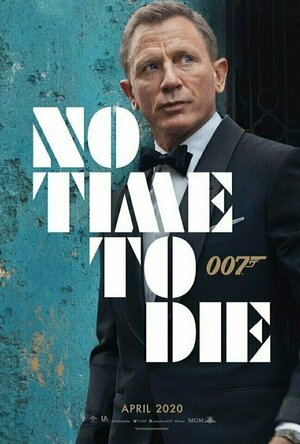
What a wait it’s been for Bond 25! But Daniel Craig’s last outing as Bond is finally here and I thought it was great! It has all the elements of Bond… but perhaps not as we traditionally know it.
Plot Summary:
We pick up immediately after the ending of “Spectre“, with Bond (Daniel Craig) and Madeleine (Léa Seydoux) all loved up and driving off into the sunset together. But their romantic getaway to Italy is rudely broken short by Spectre as elements of Madeleine’s past emerge to haunt the couple.
One element of that past – the horribly disfigured Lyutsifer Safin (Rami Malek) has a plan to make his mark on mankind with a biochemical weapon. And the retired Bond teams with the CIA’s Felix Leiter (a very welcome return of Jeffrey Wright) in a mission to Jamaica to combat it.
Certification:
US: PG-13. UK: 12A.
Talent:
Starring: Daniel Craig, Léa Seydoux, Rami Malek, Lashana Lynch, Ralph Fiennes, Ben Whishaw, Naomie Harris, Ana de Armas.
Directed by: Cary Joji Fukunaga.
Written by: Neal Purvis, Robert Wade, Cary Joji Fukunaga and Phoebe Waller-Bridge. (From a story by Purvis, Wade and Fukunaga).
Positives:
- The script has all the trappings of Bond: exotic locations; great stunts; thrilling action sequences; and more gadgets on show than in recent times. Yet it’s a real character piece too, delving far more into Bond’s emotions. The story running through it with Madeleine is both deep and emotional: something we haven’t seen since the Bond and Tracy romance in OHMSS. (And with Craig’s acting, he manages to pull this off far better than George Lazenby ever could!).
- I found the finale to be magnificent, bold and surprising. We’re back to the megalomaniac owning an island lair, à la Dr No. It even has its own submarine pen (a nod to Austin Power’s “Goldmember” perhaps!?). For me, the production design harks back to the superbly over-the-top Ken Adams creations of the Connery years. There are no sharks with frickin’ laser beams… but there could have been. (The set is a rather obvious redressing of the 007 stage at Pinewood, created of course for the tanker scenes in “The Spy Who Loved Me”. It even re-uses of the gantry level control room.)
- Craig is magnificent in his swan-song performance. There’s a scene, during the extended pre-credits sequence, where he’s sat in his bullet-ridden Aston just glowering for an extended period. I thought this was Craig’s acting at its best. I thought this again in a dramatic showdown scene with Rami Malek. Malek is not given a huge amount to do in the film, But what he does he does wonderfully, particularly in that electrifying scene with Craig.
- The film has a great deal more female empowerment than any previous Bond, with the tell-tale signs (although this might be a sexist presumption) of Phoebe Waller-Bridge on the script. Newcomer Lashana Lynch acquits herself well as the first female 00-agent, getting not just kick-ass action sequences but also her fair share of quips. But stealing the show is Ana de Armas (reunited with Craig of course from “Knives Out“). Her scenes in Cuba are brief but memorable, delivering a delicious mixture of action and comedy that makes you think “cast HER as the next Bond”!
- The music by Hans Zimmer! It’s a glorious soundtrack that pays deference not only to the action style of recent composers, like David Arnold and Thomas Newman, but particularly to the classic scores of John Barry. It actually incorporates not one but two classic themes from “On Her Majesty’s Secret Service”, directly into the film. I’m even starting to warm to the Billie Eilish theme song, although I think it’s too similar in style to the Sam Smith offering from “Spectre“.
- The cinematography from Linus Sandgren (who did “La La Land“) is gorgeous: in turns colourful and vibrant for the Italian and Cuban scenes and cool and blue for the tense Norwegian action sequences.
Negatives:
- My main criticism is not of the film, but of the trailer(s). There are so many of the money shots from the film (particularly from the Matera-based action of the pre-title sequence) included in the trailers that I had an “OK, move on, seen this” attitude. Why did they have to spoil the movie so much? IT’S A NEW BOND… OF COURSE WE’RE GOING TO SEE IT. All you EVER needed for this is a 20-second teaser trailer. Just put white “Bond is Back” text on a black background and the Craig tunnel shot to the camera. Job done. It really infuriates me. B arbara Broccoli and Michael Wilson, PLEASE take note!
- At 163 minutes it’s the longest Bond ever and a bit of a bladder tester. But, having said that, there are no more than a few minutes here and there that I would want to trim. To do more you’d need to cut out whole episodes, and leaving Ana de Armas on the cutting room floor would have been criminal. As the illustrious Mrs Movie Man commented, “I wish they’d bring in the half time Intermission card like they used to do in the old days”. I agree. Everyone would have been a whole lot more comfortable and less fidgety.
Summary Thoughts on “No Time to Die”: Reading the comments on IMDB for the movie, I’m perplexed at the diatribe coming from supposed ‘Bond fans’ on this one. One-star review after one-star review (despite, I note, the overall film getting an overall 7.8/10 at the time of writing). In this regard, I class myself as very much a Bond fan. (My first film at the cinema was the release of “Live and Let Die” in 1973, but I then binge-watched all the other Bond films at the cinema: they used to do repeated double-features in those days). And I thought this was a fabulous Bond film. Full of drama, action, humour and deep-seated emotion. Couldn’t be better for me, and certainly on a par with “Casino Royale” and “Skyfall” for me as my favourite Craig outings.
As the end of the end credits said – “James Bond Will Return”. Who will they cast as the next Bond? And where will they take the story from here? Two of the most intriguing movie questions to take into 2022.
(For the full graphical review and video review, please search for @onemannsmovies. Thanks.)
Plot Summary:
We pick up immediately after the ending of “Spectre“, with Bond (Daniel Craig) and Madeleine (Léa Seydoux) all loved up and driving off into the sunset together. But their romantic getaway to Italy is rudely broken short by Spectre as elements of Madeleine’s past emerge to haunt the couple.
One element of that past – the horribly disfigured Lyutsifer Safin (Rami Malek) has a plan to make his mark on mankind with a biochemical weapon. And the retired Bond teams with the CIA’s Felix Leiter (a very welcome return of Jeffrey Wright) in a mission to Jamaica to combat it.
Certification:
US: PG-13. UK: 12A.
Talent:
Starring: Daniel Craig, Léa Seydoux, Rami Malek, Lashana Lynch, Ralph Fiennes, Ben Whishaw, Naomie Harris, Ana de Armas.
Directed by: Cary Joji Fukunaga.
Written by: Neal Purvis, Robert Wade, Cary Joji Fukunaga and Phoebe Waller-Bridge. (From a story by Purvis, Wade and Fukunaga).
Positives:
- The script has all the trappings of Bond: exotic locations; great stunts; thrilling action sequences; and more gadgets on show than in recent times. Yet it’s a real character piece too, delving far more into Bond’s emotions. The story running through it with Madeleine is both deep and emotional: something we haven’t seen since the Bond and Tracy romance in OHMSS. (And with Craig’s acting, he manages to pull this off far better than George Lazenby ever could!).
- I found the finale to be magnificent, bold and surprising. We’re back to the megalomaniac owning an island lair, à la Dr No. It even has its own submarine pen (a nod to Austin Power’s “Goldmember” perhaps!?). For me, the production design harks back to the superbly over-the-top Ken Adams creations of the Connery years. There are no sharks with frickin’ laser beams… but there could have been. (The set is a rather obvious redressing of the 007 stage at Pinewood, created of course for the tanker scenes in “The Spy Who Loved Me”. It even re-uses of the gantry level control room.)
- Craig is magnificent in his swan-song performance. There’s a scene, during the extended pre-credits sequence, where he’s sat in his bullet-ridden Aston just glowering for an extended period. I thought this was Craig’s acting at its best. I thought this again in a dramatic showdown scene with Rami Malek. Malek is not given a huge amount to do in the film, But what he does he does wonderfully, particularly in that electrifying scene with Craig.
- The film has a great deal more female empowerment than any previous Bond, with the tell-tale signs (although this might be a sexist presumption) of Phoebe Waller-Bridge on the script. Newcomer Lashana Lynch acquits herself well as the first female 00-agent, getting not just kick-ass action sequences but also her fair share of quips. But stealing the show is Ana de Armas (reunited with Craig of course from “Knives Out“). Her scenes in Cuba are brief but memorable, delivering a delicious mixture of action and comedy that makes you think “cast HER as the next Bond”!
- The music by Hans Zimmer! It’s a glorious soundtrack that pays deference not only to the action style of recent composers, like David Arnold and Thomas Newman, but particularly to the classic scores of John Barry. It actually incorporates not one but two classic themes from “On Her Majesty’s Secret Service”, directly into the film. I’m even starting to warm to the Billie Eilish theme song, although I think it’s too similar in style to the Sam Smith offering from “Spectre“.
- The cinematography from Linus Sandgren (who did “La La Land“) is gorgeous: in turns colourful and vibrant for the Italian and Cuban scenes and cool and blue for the tense Norwegian action sequences.
Negatives:
- My main criticism is not of the film, but of the trailer(s). There are so many of the money shots from the film (particularly from the Matera-based action of the pre-title sequence) included in the trailers that I had an “OK, move on, seen this” attitude. Why did they have to spoil the movie so much? IT’S A NEW BOND… OF COURSE WE’RE GOING TO SEE IT. All you EVER needed for this is a 20-second teaser trailer. Just put white “Bond is Back” text on a black background and the Craig tunnel shot to the camera. Job done. It really infuriates me. B arbara Broccoli and Michael Wilson, PLEASE take note!
- At 163 minutes it’s the longest Bond ever and a bit of a bladder tester. But, having said that, there are no more than a few minutes here and there that I would want to trim. To do more you’d need to cut out whole episodes, and leaving Ana de Armas on the cutting room floor would have been criminal. As the illustrious Mrs Movie Man commented, “I wish they’d bring in the half time Intermission card like they used to do in the old days”. I agree. Everyone would have been a whole lot more comfortable and less fidgety.
Summary Thoughts on “No Time to Die”: Reading the comments on IMDB for the movie, I’m perplexed at the diatribe coming from supposed ‘Bond fans’ on this one. One-star review after one-star review (despite, I note, the overall film getting an overall 7.8/10 at the time of writing). In this regard, I class myself as very much a Bond fan. (My first film at the cinema was the release of “Live and Let Die” in 1973, but I then binge-watched all the other Bond films at the cinema: they used to do repeated double-features in those days). And I thought this was a fabulous Bond film. Full of drama, action, humour and deep-seated emotion. Couldn’t be better for me, and certainly on a par with “Casino Royale” and “Skyfall” for me as my favourite Craig outings.
As the end of the end credits said – “James Bond Will Return”. Who will they cast as the next Bond? And where will they take the story from here? Two of the most intriguing movie questions to take into 2022.
(For the full graphical review and video review, please search for @onemannsmovies. Thanks.)

Bob Mann (459 KP) rated Mank (2020) in Movies
Dec 10, 2020

Cinematography - glorious to look at (1 more)
A fabulous ensemble cast, with Oldham, Seyfried, Arliss and Dance excelling
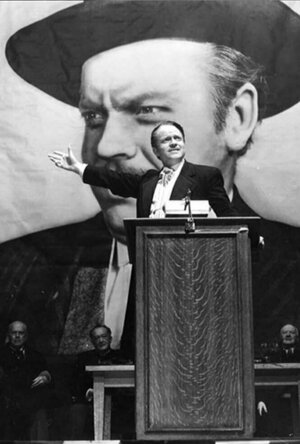
"Mank" is a biopic slice of the career of Herman Jacob Mankiewicz (Gary Oldman), the Hollywood screenwriter who was the pen behind what is regularly voted by critics as being the greatest movie of all time - "Citizen Kane". "Citizen Kane" was written in 1940 (and released the following year) and much of the action in "Mank" takes place in a retreat in the Mojave desert when Mank, crippled by a full-cast on the leg, has been 'sent' by Orson Welles (Tom Burke) to complete the screenplay without alcohol and other worldly distractions. Helping administer to his writing and care needs are English typist Rita Alexander (Lily Collins) and carer Fraulein Freda (Monika Gossmann). However, although Mank produces brilliant stuff, his speed of progress exasperates his 'minder' and editor John Houseman (Sam Troughton). (Yes, THAT John Houseman, the actor.)
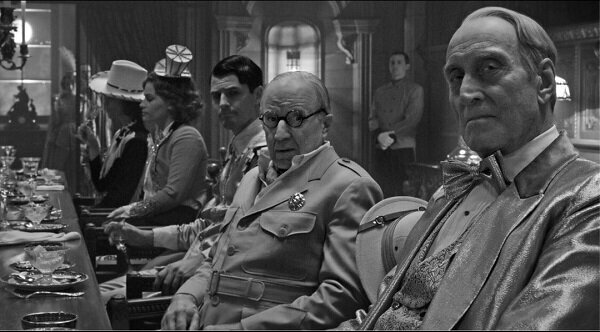
In developing the story, we continuously flash-back six years - - nicely indicated by typed 'script notes' - - to 1934 where Mank is working at MGM studios for Louis B. Mayer (Arliss Howard) and mixing in the circles of millionaire publisher William Randolph Hearst (Charles Dance) and his glamorous young wife, actress Marion Davies (Amanda Seyfried). Allegedly, the "Citizen Kane" script was based on Hearst. But what souring of the relationship could have led to such a stinging betrayal during those six years?
Mank has an embarrassment of acting riches. Mankiewicz is a fascinating character: charismatic, reckless, passionate and the definition of a loose cannon. Basically, a dream for a great actor to portray. And Gary Oldham IS a great actor. After doing Churchill in "Darkest Hour", he here turns in a magnificent performance as the alcoholic writer. Never more so than in a furious tirade at a dinner table late in the film, which will likely be the equivalent to the Churchill "tiger" speech come Oscar time. Surely, there's a Best Actor nomination there?
Equally impressive though are some of the supporting cast.
- Tom Burke - so good as TV's "Strike" - gives a fine impersonation of the great Orson Welles: full of confidence and swagger. It's only a cameo role, but he genuinely 'feels' like the young Welles.
- Amanda Seyfried: It took me almost half of the film to recognize her as Marion Davies, and her performance is pitch perfect - the best of her career in my view, and again Oscar-worthy.
- Arliss Howard for me almost steals the show as the megalomaniac Mayer: his introduction to Mank's brother Joe (Tom Pelphrey) has a memorable "walk with me" walkthrough of the studio with Mayer preaching on the real meaning of MGM and the movies in general. Breathtakingly good.
- But - I said "nearly steals the show".... the guy who made off with it in a swag-bag for me was our own Charles Dance as Hearst. Quietly impressive throughout, he just completely nails it with his "organ-grinder's monkey" speech towards the end of the movie. Probably my favourite monologue of 2020. Chilling. I'd really like to see Dance get a Supporting Actor nomination for this.
The screenplay was originally written by director David Fincher's late father Jack. Jack Fincher died in 2002, and this project has literally been decades in the planning. Mankiewicz has a caustic turn of phrase, and there are laugh-out lines of dialogue scattered throughout the script. "Write hard, aim low" implores Houseman at one point. And my personal favourite: Mank's puncturing of the irony that the Screen Writers Guild has been formed without an apostrophe! A huge LOL!
Aside from the witty dialogue, the script has a nuance to the storytelling that continually surprises. A revelation from Freda about Mank's philanthropic tendencies brings you up short in your face-value impression of his character. And the drivers that engineer the rift between Mankiewicz and Hearst - based around the story of the (fictional) director Shelly Metcalf (Jamie McShane) - are not slapped in your face, but elegantly slipped into your subconscious.
In addition, certain aspects are frustratingly withheld from you. Mank's long-suffering wife (a definition of the phrase) Sara (Tuppence Middleton) only occasionally comes into focus. The only reference to his kids are a crash in the background as they "remodel" the family home. Is the charismatic Mank a faithful husband or a philanderer? Is the relationship with Rita Alexander just professional and platonic (you assume so), or is there more going on? There's a tension there in the storytelling that never quite gets resolved: and that's a good thing.
Mank also has an embarrassment of technical riches. Even from the opening titles, you get the impression that this is a work of genius. All in black and white, and with the appearance of 40's titling, they scroll majestically in the sky and then - after "Charles Dance" - effortlessly scroll down to the desert highway. It's evidence of an attention to detail perhaps forced by lockdown. ("MUM - I'm bored". "Go up to your room and do some more work on that movie then".)
It's deliciously modern, yet retro. I love the fact that the cross-reel "circle" cue-marks appear so prominently... the indicators that the projectionist needs to spin up the next reel. I think they are still used in most modern films, but not as noticeably as in the old films... and this one!
A key contributor to the movie is cinematographer Erik Messerschmidt. Everything looks just BEAUTIFUL, and it is now a big regret that I didn't go to watch this on the big screen after all. Surely there will be a cinematography Oscar nomination for this one. Unbelievably, this is Messerschmidt's debut feature as director of cinematography!
Elsewhere, you can imagine multiple other technical Oscar noms. The tight and effective editing is by Kirk Baxter. And the combination of the glorious production design (Donald Graham Burt) and the costume design (Trish Summerville) make the movie emanate the same nostalgia for Hollywood as did last year's "Once Upon a Time... In Hollywood".... albeit set forty years earlier. Even the music (by the regular team of Trent Reznor and Atticus Ross) might get nominated, since I had to go back and check that it actually HAD music at all: it's subtly unobtrusive and effective.
The only area I had any issue with here was the sound mixing, since I had trouble picking up some of the dialogue.
Although I can gush about this movie as a technical work of art, I'm going to hold off a 10* review on this one. For one reason only. I just didn't feel 100% engaged with the story (at least with a first watch). The illustrious Mrs Movie Man summed it up with the phrase "I just didn't care enough what happened to any of the characters". I think though that this one is sufficiently subtle and cerebral that it deserves another watch.
Will it win Oscars. Yes, for sure. Hell, I would like to put a bet on that "Mank" will top the list of the "most nominations" when they are announced. (Hollywood likes nothing more than a navel-gazing look at its history of course). And an obvious nomination here will be David Fincher for Best Director. But, for me, this falls into a similar bucket as that other black and white multi-Oscar winner of two year's ago "Roma". It's glorious to look at; brilliantly directed; but not a movie I would choose to readily reach for to repeatedly watch again.
(For the full graphical review, please check out the review here - https://bob-the-movie-man.com/2020/12/10/mank-divines-for-oscar-gold-in-a-sea-of-pyrites/. Thanks.)
In developing the story, we continuously flash-back six years - - nicely indicated by typed 'script notes' - - to 1934 where Mank is working at MGM studios for Louis B. Mayer (Arliss Howard) and mixing in the circles of millionaire publisher William Randolph Hearst (Charles Dance) and his glamorous young wife, actress Marion Davies (Amanda Seyfried). Allegedly, the "Citizen Kane" script was based on Hearst. But what souring of the relationship could have led to such a stinging betrayal during those six years?
Mank has an embarrassment of acting riches. Mankiewicz is a fascinating character: charismatic, reckless, passionate and the definition of a loose cannon. Basically, a dream for a great actor to portray. And Gary Oldham IS a great actor. After doing Churchill in "Darkest Hour", he here turns in a magnificent performance as the alcoholic writer. Never more so than in a furious tirade at a dinner table late in the film, which will likely be the equivalent to the Churchill "tiger" speech come Oscar time. Surely, there's a Best Actor nomination there?
Equally impressive though are some of the supporting cast.
- Tom Burke - so good as TV's "Strike" - gives a fine impersonation of the great Orson Welles: full of confidence and swagger. It's only a cameo role, but he genuinely 'feels' like the young Welles.
- Amanda Seyfried: It took me almost half of the film to recognize her as Marion Davies, and her performance is pitch perfect - the best of her career in my view, and again Oscar-worthy.
- Arliss Howard for me almost steals the show as the megalomaniac Mayer: his introduction to Mank's brother Joe (Tom Pelphrey) has a memorable "walk with me" walkthrough of the studio with Mayer preaching on the real meaning of MGM and the movies in general. Breathtakingly good.
- But - I said "nearly steals the show".... the guy who made off with it in a swag-bag for me was our own Charles Dance as Hearst. Quietly impressive throughout, he just completely nails it with his "organ-grinder's monkey" speech towards the end of the movie. Probably my favourite monologue of 2020. Chilling. I'd really like to see Dance get a Supporting Actor nomination for this.
The screenplay was originally written by director David Fincher's late father Jack. Jack Fincher died in 2002, and this project has literally been decades in the planning. Mankiewicz has a caustic turn of phrase, and there are laugh-out lines of dialogue scattered throughout the script. "Write hard, aim low" implores Houseman at one point. And my personal favourite: Mank's puncturing of the irony that the Screen Writers Guild has been formed without an apostrophe! A huge LOL!
Aside from the witty dialogue, the script has a nuance to the storytelling that continually surprises. A revelation from Freda about Mank's philanthropic tendencies brings you up short in your face-value impression of his character. And the drivers that engineer the rift between Mankiewicz and Hearst - based around the story of the (fictional) director Shelly Metcalf (Jamie McShane) - are not slapped in your face, but elegantly slipped into your subconscious.
In addition, certain aspects are frustratingly withheld from you. Mank's long-suffering wife (a definition of the phrase) Sara (Tuppence Middleton) only occasionally comes into focus. The only reference to his kids are a crash in the background as they "remodel" the family home. Is the charismatic Mank a faithful husband or a philanderer? Is the relationship with Rita Alexander just professional and platonic (you assume so), or is there more going on? There's a tension there in the storytelling that never quite gets resolved: and that's a good thing.
Mank also has an embarrassment of technical riches. Even from the opening titles, you get the impression that this is a work of genius. All in black and white, and with the appearance of 40's titling, they scroll majestically in the sky and then - after "Charles Dance" - effortlessly scroll down to the desert highway. It's evidence of an attention to detail perhaps forced by lockdown. ("MUM - I'm bored". "Go up to your room and do some more work on that movie then".)
It's deliciously modern, yet retro. I love the fact that the cross-reel "circle" cue-marks appear so prominently... the indicators that the projectionist needs to spin up the next reel. I think they are still used in most modern films, but not as noticeably as in the old films... and this one!
A key contributor to the movie is cinematographer Erik Messerschmidt. Everything looks just BEAUTIFUL, and it is now a big regret that I didn't go to watch this on the big screen after all. Surely there will be a cinematography Oscar nomination for this one. Unbelievably, this is Messerschmidt's debut feature as director of cinematography!
Elsewhere, you can imagine multiple other technical Oscar noms. The tight and effective editing is by Kirk Baxter. And the combination of the glorious production design (Donald Graham Burt) and the costume design (Trish Summerville) make the movie emanate the same nostalgia for Hollywood as did last year's "Once Upon a Time... In Hollywood".... albeit set forty years earlier. Even the music (by the regular team of Trent Reznor and Atticus Ross) might get nominated, since I had to go back and check that it actually HAD music at all: it's subtly unobtrusive and effective.
The only area I had any issue with here was the sound mixing, since I had trouble picking up some of the dialogue.
Although I can gush about this movie as a technical work of art, I'm going to hold off a 10* review on this one. For one reason only. I just didn't feel 100% engaged with the story (at least with a first watch). The illustrious Mrs Movie Man summed it up with the phrase "I just didn't care enough what happened to any of the characters". I think though that this one is sufficiently subtle and cerebral that it deserves another watch.
Will it win Oscars. Yes, for sure. Hell, I would like to put a bet on that "Mank" will top the list of the "most nominations" when they are announced. (Hollywood likes nothing more than a navel-gazing look at its history of course). And an obvious nomination here will be David Fincher for Best Director. But, for me, this falls into a similar bucket as that other black and white multi-Oscar winner of two year's ago "Roma". It's glorious to look at; brilliantly directed; but not a movie I would choose to readily reach for to repeatedly watch again.
(For the full graphical review, please check out the review here - https://bob-the-movie-man.com/2020/12/10/mank-divines-for-oscar-gold-in-a-sea-of-pyrites/. Thanks.)

Hadley (567 KP) rated In Cold Blood: A True Account of a Multiple Murder and Its Consequences in Books
Aug 2, 2020
The writing (1 more)
The flow
In the 'Introduction' of Capote's true crime novel In Cold Blood, American writer Bob Colacello states: "Capote was one of the first who dared to elevate journalism to the level of art. In Cold Blood is a work of great discipline and even greater restraint, a tale of fate, as spare and elegiac as a Greek tragedy, as rich in its breadth and depth as the classic French novels of Stendhal and Flaubert. 'We all have our souls and we all have facades,' Truman Capote told his friend Kay Meehan a year or so before he came upon the news that would inspire his masterpiece, 'and then there's something in between that makes us function as people. That's what I have the ability to communicate.' "
The novel, which was published in 1965, is an eyewitness account of Capote's visitation to the scene of the murder as well as meetings with the murderers and townspeople- - - a retelling of the crime and aftermath, mostly from the eyes of those affected, by hundreds of hours of interviews and interrogations. The novel, ultimately, was the end of Capote which led him to alcoholism that took his life in 1984.
Like most small-town murders, a tension between residences is created when a well-known and well-liked family of four is brutally murdered, and everyone begins to point a finger at the other: "But afterward the townspeople, theretofore sufficiently unfearful of each other to seldom trouble to lock their doors, found fantasy re-creating them over and again - - - those somber explosions that stimulated fires of mistrust in the glare of which many old neighbors viewed each other strangely, and as strangers." Fortunately, the KBI (Kansas Bureau of Investigation) didn't allow these accusations to keep them from finding the real killers.
" 'Deep down,' Perry continued, 'way, way rock bottom, I never thought I could do it. A thing like that.' " Perry Smith, one of the murderers, confesses to his cohort and partner-in-crime, Richard Hickock, about murdering the Clutter family. "Presently, he said, 'Know what it is that really bugs me? About that other thing[Clutter murder]? It's just I don't believe it- - - that anyone can get away with a thing like that.' And he suspected that Dick [Richard] didn't, either. For Dick was at least partly inhabited by Perry's mystical-moral apprehensions. Thus: 'Now, just shut up!' "
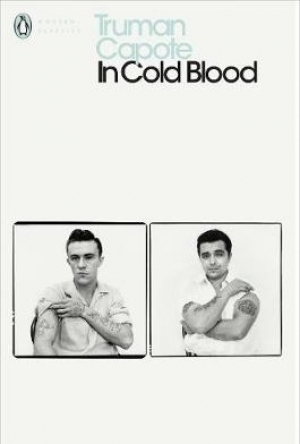
Capote writes clearly of the impact that Smith's and Hickock's past may have played leading up to the murders, mostly focusing on Smith's traumatic childhood. During the trial portion of the book, a psychologist is brought in to point out how the two murderers may not have been responsible for their actions due-to instances in their past - - - a horrific car crash in Hickock's that left him with a lop-sided face and black-out spells, as well as Smith being physically and emotional abused by his alcoholic mother and father. In exploring these traumas, In Cold Blood leaves the impression that these two men were merely ticking time bombs and that the Clutter family, unfortunately, had to pay for it.
The trauma shared by Hickock and Smith help to shape the two murderers into actual human beings rather than monsters throughout the novel: one scene, where we get to read a letter to Smith from his last living sister, readers get to see how he was perceived by his family members, as his sister goes on to degrade him to the maturity level of a child and that she is above him because of that- - -but she also reveals her jealousy of their father loving him more than he ever loved her (despite the excessive abuse). A close friend of Smith's tells him to be careful writing her anymore because he believes that: 'they can only serve to increase your already dangerous anti-social instincts.'
Part of the narrative, too, is the KBI agent in-charge of the Clutter murder, Alvin Dewey: One day while visiting Holcomb's well-known cafe (Hartman's) where Dewey is told he looks awful from weight loss and fatigue - - - Dewey recalls that he had spent: 'two wearying and wasted days trying to trace that phantom pair, the Mexicans sworn by Paul Helm to have visited Mr. Clutter on the eve of the murders.' And then he gets heckled by a local, who wants to know why he hasn't found the people responsible yet,but Dewey simply smiles and walks away, having put up with numerous people being angry that the murders were taking so long to solve.
But it wasn't footwork that got the pair arrested, it was an old cellmate who had given Hickock the idea that there was $10,000 in a safe at the Clutter farm that came forward: (read this on my blog because I had to cut it out since my review was too long!).
Meanwhile, readers also get to experience Hickock and Smith's troubles as they are on the run after the murders which is done masterfully by Capote. And although one would assume that the killers would stay as far away from Kansas as possible, the two end up back there, only to miraculously get out before the police can catch up with them. The pair decide to head to Florida, where, on December 19, 1959, an entire family was murdered in the exact same way as the Clutters; Hickock and Smith both adamantly denied that they were involved with it - - - and back in 2012- - - Hickock and Smith's bodies were exhumed to compare their DNA with a profile found on one of the victim's clothing: they were not a match. The case remains unsolved til this day.
" Presently he[Smith] came across an inner-page story that won his entire attention. It concerned murder, the slaying of a Florida family, a Mr. and Mrs. Clifford Walker, their four-year-old son, and their two-year-old daughter. Each of the victims, though not bound or gagged, had been shot through the head with a .22 weapon. The crime, clueless and apparently motiveless, had taken place Saturday night, December 19, at the Walker home, on a cattle-raising ranch not far from Tallahassee."
Not soon after the pair leave the Florida beaches, they are arrested on what they believe to be parole violations, but it's clear, when the arresting officers are KBI agents that they had been caught for the Clutter murders. " 'Listen good, Perry. Because Mr. Duntz[KBI agent] is going to tell you where you really were...' Midway in the questioning, after he'd[Smith] begun to notice the number of allusions to a particular November weekend, he'd nerved himself for what he knew was coming, yet when it did, when the big cowboy with the sleepy voice said, 'You were killing the Clutter family' - - - well, he'd damn near died. That's all. "
The confession that follows is the most intense part of the book, given in it's entirety, readers finally get to know what happened to the Clutter family that cold night in November, 1959. Smith reveals that he never had the intention to kill anyone in the home, and that when the safe hadn't been found, he had fully intended to leave, even without Hickock, but what kept him there was Hickock threatening to rape Nancy Clutter. Smith states that he hates people who can't control themselves sexually, and that he didn't allow his partner to touch her at all. He also reveals that he thought about killing Hickock afterwards,stating: " no witnesses."
Capote didn't write 'In Cold Blood' until after Hickock and Smith were executed. The amount of interviews, court room appearances, and even witnessing the executions of both murderers shines through in this novel. But the book has also brought about doubters; a handful of people have since come forward to state that Capote's masterpiece is either 'not the full story' or 'completely wrong.' Just as recent as 2017, a man came forward with a 'manuscript' of a book that Hickock was writing, that contained a different confession on how and why the murders took place- - - Hickock states in this unpublished manuscript that a man by the name 'Roberts' had hired him and Smith to kill the Clutters.
Whether or not you believe that Capote wrote the whole truth or some of the truth, this novel is flawless and beautiful. The writing is poetic and the flow of the story keeps moving, page after page, never stopping long enough to bore the reader. I highly recommend this book as a MUST READ for anyone who loves the True Crime genre.
The novel, which was published in 1965, is an eyewitness account of Capote's visitation to the scene of the murder as well as meetings with the murderers and townspeople- - - a retelling of the crime and aftermath, mostly from the eyes of those affected, by hundreds of hours of interviews and interrogations. The novel, ultimately, was the end of Capote which led him to alcoholism that took his life in 1984.
Like most small-town murders, a tension between residences is created when a well-known and well-liked family of four is brutally murdered, and everyone begins to point a finger at the other: "But afterward the townspeople, theretofore sufficiently unfearful of each other to seldom trouble to lock their doors, found fantasy re-creating them over and again - - - those somber explosions that stimulated fires of mistrust in the glare of which many old neighbors viewed each other strangely, and as strangers." Fortunately, the KBI (Kansas Bureau of Investigation) didn't allow these accusations to keep them from finding the real killers.
" 'Deep down,' Perry continued, 'way, way rock bottom, I never thought I could do it. A thing like that.' " Perry Smith, one of the murderers, confesses to his cohort and partner-in-crime, Richard Hickock, about murdering the Clutter family. "Presently, he said, 'Know what it is that really bugs me? About that other thing[Clutter murder]? It's just I don't believe it- - - that anyone can get away with a thing like that.' And he suspected that Dick [Richard] didn't, either. For Dick was at least partly inhabited by Perry's mystical-moral apprehensions. Thus: 'Now, just shut up!' "
Capote writes clearly of the impact that Smith's and Hickock's past may have played leading up to the murders, mostly focusing on Smith's traumatic childhood. During the trial portion of the book, a psychologist is brought in to point out how the two murderers may not have been responsible for their actions due-to instances in their past - - - a horrific car crash in Hickock's that left him with a lop-sided face and black-out spells, as well as Smith being physically and emotional abused by his alcoholic mother and father. In exploring these traumas, In Cold Blood leaves the impression that these two men were merely ticking time bombs and that the Clutter family, unfortunately, had to pay for it.
The trauma shared by Hickock and Smith help to shape the two murderers into actual human beings rather than monsters throughout the novel: one scene, where we get to read a letter to Smith from his last living sister, readers get to see how he was perceived by his family members, as his sister goes on to degrade him to the maturity level of a child and that she is above him because of that- - -but she also reveals her jealousy of their father loving him more than he ever loved her (despite the excessive abuse). A close friend of Smith's tells him to be careful writing her anymore because he believes that: 'they can only serve to increase your already dangerous anti-social instincts.'
Part of the narrative, too, is the KBI agent in-charge of the Clutter murder, Alvin Dewey: One day while visiting Holcomb's well-known cafe (Hartman's) where Dewey is told he looks awful from weight loss and fatigue - - - Dewey recalls that he had spent: 'two wearying and wasted days trying to trace that phantom pair, the Mexicans sworn by Paul Helm to have visited Mr. Clutter on the eve of the murders.' And then he gets heckled by a local, who wants to know why he hasn't found the people responsible yet,but Dewey simply smiles and walks away, having put up with numerous people being angry that the murders were taking so long to solve.
But it wasn't footwork that got the pair arrested, it was an old cellmate who had given Hickock the idea that there was $10,000 in a safe at the Clutter farm that came forward: (read this on my blog because I had to cut it out since my review was too long!).
Meanwhile, readers also get to experience Hickock and Smith's troubles as they are on the run after the murders which is done masterfully by Capote. And although one would assume that the killers would stay as far away from Kansas as possible, the two end up back there, only to miraculously get out before the police can catch up with them. The pair decide to head to Florida, where, on December 19, 1959, an entire family was murdered in the exact same way as the Clutters; Hickock and Smith both adamantly denied that they were involved with it - - - and back in 2012- - - Hickock and Smith's bodies were exhumed to compare their DNA with a profile found on one of the victim's clothing: they were not a match. The case remains unsolved til this day.
" Presently he[Smith] came across an inner-page story that won his entire attention. It concerned murder, the slaying of a Florida family, a Mr. and Mrs. Clifford Walker, their four-year-old son, and their two-year-old daughter. Each of the victims, though not bound or gagged, had been shot through the head with a .22 weapon. The crime, clueless and apparently motiveless, had taken place Saturday night, December 19, at the Walker home, on a cattle-raising ranch not far from Tallahassee."
Not soon after the pair leave the Florida beaches, they are arrested on what they believe to be parole violations, but it's clear, when the arresting officers are KBI agents that they had been caught for the Clutter murders. " 'Listen good, Perry. Because Mr. Duntz[KBI agent] is going to tell you where you really were...' Midway in the questioning, after he'd[Smith] begun to notice the number of allusions to a particular November weekend, he'd nerved himself for what he knew was coming, yet when it did, when the big cowboy with the sleepy voice said, 'You were killing the Clutter family' - - - well, he'd damn near died. That's all. "
The confession that follows is the most intense part of the book, given in it's entirety, readers finally get to know what happened to the Clutter family that cold night in November, 1959. Smith reveals that he never had the intention to kill anyone in the home, and that when the safe hadn't been found, he had fully intended to leave, even without Hickock, but what kept him there was Hickock threatening to rape Nancy Clutter. Smith states that he hates people who can't control themselves sexually, and that he didn't allow his partner to touch her at all. He also reveals that he thought about killing Hickock afterwards,stating: " no witnesses."
Capote didn't write 'In Cold Blood' until after Hickock and Smith were executed. The amount of interviews, court room appearances, and even witnessing the executions of both murderers shines through in this novel. But the book has also brought about doubters; a handful of people have since come forward to state that Capote's masterpiece is either 'not the full story' or 'completely wrong.' Just as recent as 2017, a man came forward with a 'manuscript' of a book that Hickock was writing, that contained a different confession on how and why the murders took place- - - Hickock states in this unpublished manuscript that a man by the name 'Roberts' had hired him and Smith to kill the Clutters.
Whether or not you believe that Capote wrote the whole truth or some of the truth, this novel is flawless and beautiful. The writing is poetic and the flow of the story keeps moving, page after page, never stopping long enough to bore the reader. I highly recommend this book as a MUST READ for anyone who loves the True Crime genre.