
Merissa (14132 KP) rated Ariadne Unraveled: A Mythic Retelling in Books
Jul 6, 2021 (Updated Jul 17, 2023)
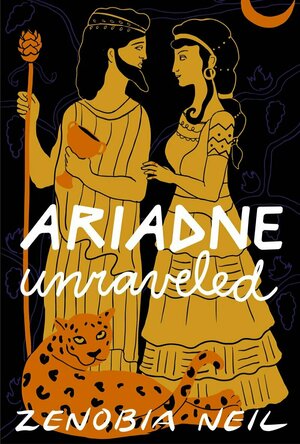

The story takes various myths and legends and weaves them into one epic story that features betrayal, transformation, friendship, loyalty, and love. Instead of the usual Athenian telling of the Minotaur, we hear from the Minoans themselves. We learn how their women knew things about their own bodies that others didn't. We see how the Minoans were a magical, intelligent race that made mistakes just like any other. And woven through is Dionysus as he feels his way and figures out just who he is.
Wow! Just... wow! What a story. So intricate and rich in detail, I was totally immersed in Ariadne's story. I loved hearing about her - both the big picture and also the small, intimate details that made her life. And, yes, I know this is myth, but with how it has been written, I could see myself there and it all seemed real. There were even tears shed at some points, it was that good! The pacing is perfect and the writing style is smooth.
This is the first book by this author I have read, but I can guarantee you it won't be the last. Absolutely brilliant and highly recommended by me.
** same worded review will appear elsewhere **
* A copy of this book was provided to me with no requirements for a review. I voluntarily read this book, and the comments here are my honest opinion. *
Merissa
Archaeolibrarian - I Dig Good Books!
Jul 6, 2021
Merissa (14132 KP) rated Bishop to Knight One (Diviner's Game #1) in Books
Feb 12, 2021 (Updated Aug 3, 2023)
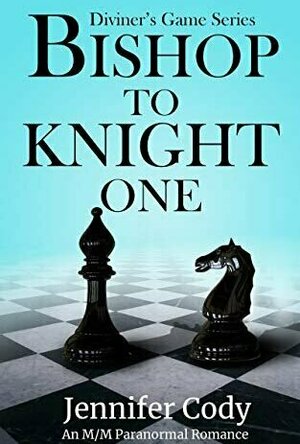
Deejay takes in the unwanted sons of his sisters but ends up taking in step-sons too. One of these is Matt, supposedly human. Both Deejay and Matt fight their attraction as inappropriate in both the human and non-human worlds. Things come to light that show a ten-year difference will mean absolutely nothing as the years go by.
I loved their slow-burn, hot as hell, romance. This book is simply outstanding and had me gripped from the very beginning. I have my own list of characters that I like and dislike but will admit to being shocked with a twist at the end of this book. I really hope it is explained further in subsequent books as I really don't want to dislike this character, but his actions make me question!!!
I found the pacing to be perfect for the story, with plenty of action and romance to take me from page to page. There is intrigue, betrayal (maybe), curses, and fights. It's all here and I loved every single word.
I highly recommend this book and can't wait to continue the series. Bring it on!
* A copy of this book was provided to me with no requirements for a review. I voluntarily read this book, and the comments here are my honest opinion. *
Merissa
Archaeolibrarian - I Dig Good Books!
Feb 12, 2021

Eilidh G Clark (177 KP) rated A Portable Shelter in Books
May 13, 2017


Kirsty Logan’s first collection of short stories, The Rental Heart and Other Fairytales, published by Salt in 2014, won the Polari First Book Prize in 2015. A Portable Shelter is her second collection. Set in a small cottage in the rural north coast of Scotland, Ruth and Liska are expecting their first child. The couple believe that their unborn baby will have a better chance of survival away from the harshness of suburban life. They make a pact with one another, that they will only ever tell their child the truth. Yet while Liska is asleep or Ruth is at work, each whispers secret stories to their unborn child. Delving into fantastical tales about people from their past and re-telling stories that span from generation to generation, the couple unfold the horrors of the real world. Whilst these tales, laced in myth and legend, and fattened with the magic of the imagination, demonstrate the art of oral storytelling, Logan reaches further to show the reader why storytelling is important.
While this book is primarily a collection of short stories, its novel like structure frames each story with a preceding monologue from either Ruth or Liska. The monologues offer delightful morsels of description that bring the harshness of Mother Nature into the safety of the couple’s bedroom, “right now our home is speaking to you. The walls creak their approval in the wind. The rain applauds on the roof. The lighthouse beam swoops, swoops, swoops. The tide breathes loud and slow like a giant. If you listen carefully, perhaps you can even hear the moon hum.” The pace of these sentences, combined with the delicacy of language demonstrates Logan’s skill at describing the sublime spirit of the natural world, which brings the narrative to life.
Most impressive though, is Logan’s poetic language and carefully crafted sentences which create the most beautiful imagery. In ‘Flinch,’ for example – James is a fisherman struggling with his identity, yet his affiliation with the land is locked into his first-person point of view where the reader gets to closely experience what he sees, “The sky is pinkish-grey like the insides of shells. Speckled bonxies wheel overhead. Seals loll on the rocks, fat as kings. The rising mist is cool and milky.” Any of these lines could easily be arranged into a poem and with sentences that are squeezed tight; they create a wonderful poetic rhythm. Logan uses this technique throughout her novel, demonstrating the precision and craft in her work. There are definite similarities in her writing style to fellow Scottish novelist and poet Jenni Fagan. Both authors use rich language, which is well crafted and smattered with vernacular. Furthermore, combining this with the reoccurring theme of identity, the oral storytelling tradition, landscape, folklore, and myth, it is clear to see why these authors contribute to the growing canon in Scottish literature.
This is a book that I will read over and over again because I know that in each reading, I will find something new. A Portable Shelter, I feel, deserves a place on my ‘keep’ book shelf.
A Portable Shelter, Kirsty Logan, London: Vintage, 2015
Sophia (Bookwyrming Thoughts) (530 KP) rated Alice Takes Back Wonderland in Books
Jan 23, 2020

This review and more can be found at <a href="http://www.inwonderlandbookblog.com/2016/01/alice-takes-back-wonderland-review.html">In Wonderland</a>
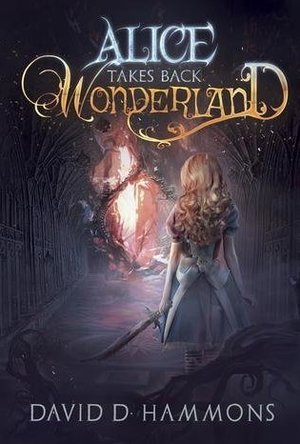
Alice Takes Back Wonderland is one peculiar book – it took awhile for me to get into the story, but not bad overall (I've read worse).
The main character, Alice, is a little similar to Alyssa from Splintered – she talks to bugs and flowers, and they talk to her as well. And unlike Alyssa, who keeps her "ability" a secret, those around Alice assume she's a nutcase – she's been assumed to have schizophrenia along with ADHD. Alice also isn't related to Wonderland Alice – she just ended up going down the rabbit hole at seven and came back a completely different person.
Years later, just when Alice thinks everything in Wonderland was an imagination, the White Rabbit appears again to bring Alice back to save Wonderland. There, Ace of Spades has taken over the land and has been trying to "humanize" the creatures by taking the wonder out of them, thus taking Alice back down the rabbit hole once more.
When Hammons introduces us to Wonderland and Alice tries to reunite with the creatures she met when she was seven, it's really hard to get into the story (and at the beginning too – no fun). There's a lot of nonsense going on in Wonderland with very little sense – I haven't read Alice In Wonderland by Lewis Carroll myself, but I personally think Hammons did a pretty good job trying to capture the nonsensical aspect Carroll uses in the original story.
Now, in the case of getting me to read the story, however, I'm starting to think I should just call it off (much to Ella's dismay).
As soon as Alice leaves Wonderland to recruit other kingdoms (fairy tales), on the other hand, the story becomes less nonsensical and more of something that I could fully comprehend and wrap my head around. (I got the gist of Wonderland – I did not understand what all the creatures were saying.) Hammons introduces us Peter Pan and the Lost Boys, Pinocchio, Cinderella, Snow White, Sleeping Beauty – all recognizable in some way. But that's not all the fairy tales involved.
Hammons also throws in heroes of myth and legend as well – people such as Joan the Ark, Hercules, King Arthur, Loki, etc. At that point, I pretty much took a step back (or almost) from the book. There are way too many tales involved in this battle to take back Wonderland and stop the Ace of Spades from taking the wonder out of everyone. Those characters don't play a major role like Peter Pan, Pinocchio, Snow White, and all the ones mentioned earlier, so it's less confusing. I just think Hammons should have kept it strictly at fairy tales rather than all of them.
(I'll give him this: all of them are individual kingdoms instead of mushed together into one. Less confusing.)
To make it worse, most of the characters also play multiple roles, which I won't say because I might spoil something. But still – too much myth and legend is mentioned in this vast world Hammons creates.
Overall, not bad for a book that takes far too many tales into its plot. It takes some time to get used to the story, but once you get past Wonderland's bit of remaining nonsense and enter Neverland and the Grimm Kingdom, the story has an adventure or two as Alice learns that maybe fairy tales aren't as literal as they seem.
Deborah (162 KP) rated What Matters in Jane Austen?: Twenty Crucial Puzzles Solved in Books
Dec 21, 2018

For example, there is a chapter on the games played in the novels. No one (that I know!) plays at Speculation any more, but we can grasp both the fundamentals of the game ("I am never to see my cards and Mr Crawford does all the rest" as Lady Bertram puts it!) and read into it some further illumination of the participating characters. And of course understand why Sir Thomas thought that it might not amuse him to have wife wife as a partner in Whist!
There are sections on characters who have no reported speech (it had not occurred before that we never hear Captain Benwick speak, but it is quite true!), clears away the myth that there are no scenes where women are not present and wraps up with an important consideration of Jane Austen's place in the development of the novel. I think that as she is so very readable, and perhaps also because she is a woman writer, people in general are too apt to dismiss her importance, but her innovations in style are immeasurable. I don't think it is going too far to say that without Austen the novel would not have developed in the way it has. If you read Henry James, Flaubert, Kafka and a long et cetera, you best give your thanks to Jane Austen!

Young Hitler: The Making of the Fuhrer
Book
When Adolf Hitler went to war in 1914, he was just 25 years old. It was a time he would later call...

Pasha - My Story: The Autobiography of TV's Hottest Dance Star
Book
Pasha's talent and determination has taken him to some amazing places all around the world including...
Richard III: A Ruler and His Reputation
Book
Famously depicted as 'Crookback Dick', and as Shakespeare's 'bunch-back'd toad', the alleged...
Edith Piaf: A Cultural History
Book
The world-famous French singer Edith Piaf (1915-63) was never just a singer. Dozens of biographies...
Jerusalem: The Real Life of William Blake
Book
'Truly astonishing in its detail...this must be one of the most illuminating and enlightening...