
Search
Search results

Sassy Brit (97 KP) rated Jefferson's Treasure: How Albert Gallatin Saved the New Nation from Debt in Books
Jun 5, 2019
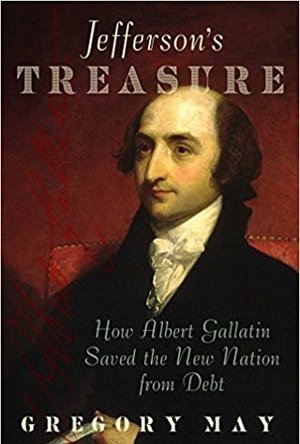

Jefferson’s Treasure, by Gregory May, details, “how Albert Gallatin saved the new nation from debt.” Appointed by President Thomas Jefferson to be his Treasury Secretary, Gallatin continued under President Madison, maintaining that position for twelve years. During his tenure, he abolished internal revenue taxes in peacetime, slashed federal spending, and repaid half of the national debt.
So who was this man that undid Alexander Hamilton’s fiscal system, rejecting it along with Madison and Jefferson? Because both Presidents did not understand the financial system, they depended on Gallatin to reform it. Gallatin arrived in America in 1790 from Geneva and rose up to become a trusted advisor of the Republicans. Six years before Jefferson was elected President, Gallatin’s Pennsylvania neighbors rebelled against the tax on whiskey. He supported them in principle but opposed the violence that ensued, burning the local tax collector’s house, robbing the mail, and marching on Pittsburgh.
The play “Hamilton” uses revisionist history. The real Hamilton believed in big government and wanted to continue funding federal deficits. He based his theories on the British who used the money to fund their large military conflicts, believing that the ability to borrow endless amounts of money would allow the new United States to become a great nation. Jefferson and Madison thought Hamilton’s system, straight from the British way, was tainted with tyranny. As May noted, “It made the people pay obnoxious taxes in order to fund interest payments on a mounting federal debt and the costs of an expensive military establishment. It shifted money from ordinary taxpayers to the relatively few rich men who held the government’s bonds. That was just the sort of thing that had led Americans to revolt against Britain in the first place.”
May believes, “The hip-hop immigrant hero of the Broadway musical is a myth. The musical might be a great work of art, but is relies on misconceptions of Hamilton. He was not an immigrant, but a migrant within the British Empire. Also, he was not a man of the people, as Gallatin was, but an elitist.”
While Hamilton committed to paying only the interest on the government’s debt, Gallatin committed the government to repaying fixed amounts of the principal each year. He also insisted that the government should never spend more than it earned except in times of war. By slashing federal expenses, Gallatin was able to get rid of the tax on whiskey and abolish the entire internal revenue service.
The Republicans, an agrarian society, distrusted these elitists where two-thirds of the government debt belonged to a few hundred very wealthy men residing mainly in Philadelphia, New York, and other mercantile cities. They saw Hamilton’s plan of collecting taxes from ordinary citizens as a way for a few rich men to become even wealthier. Implementing these excise taxes required government officials to inspect, quantify, and mark the items subject to tax.
The Hamilton system benefited the wealthy debt holders and spectators at the expense of the average taxpayer who had to pay the interest. The government would borrow more than the people could pay. Hamilton tried to hide how much money the government was actually spending and spiraled the debt higher and higher.
This was an important part of the British tax base, and “I wanted to show how unpopular it was. Hamilton and company were resented because they created a tax collection network that affected the lives of ordinary citizens. The excise tax is a form of internal taxation, while tariffs are a form of external taxation that fell on the well to do. Remember mostly the well to do bought imports. The Republicans once they came to power relied on import duties rather than excise taxes.”
May further explained, “When Jefferson and his administration came to power it was Gallatin who got rid of Hamilton’s deficit finance system and cut taxes. By the time he has left office he has repaid half the federal debt and set up a program for repaying the rest.”
Anyone who wants to understand the early economic systems of the Founding Fathers will enjoy this book. It shows how Gallatin, by killing Hamilton’s financial system, abolished internal revenue taxes in peacetime, slashed federal spending, and repaid half of the national debt.
So who was this man that undid Alexander Hamilton’s fiscal system, rejecting it along with Madison and Jefferson? Because both Presidents did not understand the financial system, they depended on Gallatin to reform it. Gallatin arrived in America in 1790 from Geneva and rose up to become a trusted advisor of the Republicans. Six years before Jefferson was elected President, Gallatin’s Pennsylvania neighbors rebelled against the tax on whiskey. He supported them in principle but opposed the violence that ensued, burning the local tax collector’s house, robbing the mail, and marching on Pittsburgh.
The play “Hamilton” uses revisionist history. The real Hamilton believed in big government and wanted to continue funding federal deficits. He based his theories on the British who used the money to fund their large military conflicts, believing that the ability to borrow endless amounts of money would allow the new United States to become a great nation. Jefferson and Madison thought Hamilton’s system, straight from the British way, was tainted with tyranny. As May noted, “It made the people pay obnoxious taxes in order to fund interest payments on a mounting federal debt and the costs of an expensive military establishment. It shifted money from ordinary taxpayers to the relatively few rich men who held the government’s bonds. That was just the sort of thing that had led Americans to revolt against Britain in the first place.”
May believes, “The hip-hop immigrant hero of the Broadway musical is a myth. The musical might be a great work of art, but is relies on misconceptions of Hamilton. He was not an immigrant, but a migrant within the British Empire. Also, he was not a man of the people, as Gallatin was, but an elitist.”
While Hamilton committed to paying only the interest on the government’s debt, Gallatin committed the government to repaying fixed amounts of the principal each year. He also insisted that the government should never spend more than it earned except in times of war. By slashing federal expenses, Gallatin was able to get rid of the tax on whiskey and abolish the entire internal revenue service.
The Republicans, an agrarian society, distrusted these elitists where two-thirds of the government debt belonged to a few hundred very wealthy men residing mainly in Philadelphia, New York, and other mercantile cities. They saw Hamilton’s plan of collecting taxes from ordinary citizens as a way for a few rich men to become even wealthier. Implementing these excise taxes required government officials to inspect, quantify, and mark the items subject to tax.
The Hamilton system benefited the wealthy debt holders and spectators at the expense of the average taxpayer who had to pay the interest. The government would borrow more than the people could pay. Hamilton tried to hide how much money the government was actually spending and spiraled the debt higher and higher.
This was an important part of the British tax base, and “I wanted to show how unpopular it was. Hamilton and company were resented because they created a tax collection network that affected the lives of ordinary citizens. The excise tax is a form of internal taxation, while tariffs are a form of external taxation that fell on the well to do. Remember mostly the well to do bought imports. The Republicans once they came to power relied on import duties rather than excise taxes.”
May further explained, “When Jefferson and his administration came to power it was Gallatin who got rid of Hamilton’s deficit finance system and cut taxes. By the time he has left office he has repaid half the federal debt and set up a program for repaying the rest.”
Anyone who wants to understand the early economic systems of the Founding Fathers will enjoy this book. It shows how Gallatin, by killing Hamilton’s financial system, abolished internal revenue taxes in peacetime, slashed federal spending, and repaid half of the national debt.

Movie Metropolis (309 KP) rated King Arthur: Legend Of The Sword (2017) in Movies
Jun 10, 2019

Schrodinger's Film
There is a thought experiment that is used to help make sense of the Copenhagen Interpretation of Quantum Mechanics. Say you have a cat, a box and a fragile vial of poison. You put the cat and the poison in the box knowing that the vial may break, you lunatic.
At this point, so goes the thought experiment, until we can perceive whether or not the cat is dead, the cat is dead AND alive simultaneously, and it is only when you look into the box that you know whether you have a friend for life or a Korean meal.
I bring this up because I often insist that I prefer a bad movie with great moments than a movie that’s adequate across the board, but Guy Ritchie’s most recent film certainly puts that to the test. It’s almost my favourite film of the year but is full of nigh-unforgiveable blunders that I don’t think I can watch it again. But I don’t regret seeing it. King Arthur is both good and not good and the cat is still in the box.
Well, I might as well start with what’s good about the film. For one, the character of Arthur himself has a pretty interesting arc. Normally interpretations of the Arthur myth focus on the King bit, so despite it being yet another origin story, it at least is for a character who rarely gets one, and it’s an interesting spin on the reluctant hero arc.
In addition, the world itself feels like it desperately needs a hero. You get the sense that this world is falling apart, which is much better than some other chosen one narratives like Harry Potter, where even when Voldemort took over the wizarding world he didn’t seem to do anything. Also, this is a fantasy film that isn’t just Lord of the Rings again, but a more Celtic mystic mythology that is ripe for exploration.
Then there’s Jude Law, who is so moustache-twirlingly evil that he’s hilarious. He’s clearly having the time of his life playing this cartoon super villain and making him campy enough to be fun while still threatening and compelling when he needs to be.
Shame about the rest of the cast, who all have the same personality, that of “Ah’m just one o’ tha lads, apples and pears, apples and pears.” It’s like a Chelsea game but set in the Dark Ages. So it’s identical to a Chelsea game. The only exception is Astrid Frizbee’s mage, whose intense magic power is so devastating that she manages to put a sleep spell on the audience every time she opens her noise-hole and lets out a monotone bored drone.
There’s also the action, and Hollywood, we need to talk. I thought that shaky cam was just a phase, but I’ve seen you doing it again, and you need to stop. I’ve played VR games where you do nothing but ride particularly unstable cows and came out the other end less motion sick than your sword fighting scenes. Come on, you’re better than this, and we just what’s best for you, so just buy a steady-cam already.
Maybe it’s Guy Ritchie himself, though. Nothing in the film seems to last longer than three minutes aside Arthur’s whining. Sometimes it works, like the very snappy but informative way we see Arthur grow from stupid baby to stupid adult, and sometimes it’s stupid, like when an entire other movie’s worth of content gets squashed into an uninspired montage.
But that’s the great dilemma; the montages are good and bad, like the movie itself. You will only enjoy the movie if you enjoy the movie but if you don’t then you won’t. I write this piece a defeated critic, ladies and gentlemen. Is it worth seeing? I don’t really know. A bigger fan of Guy Ritchie or quantum mechanics than I will probably get something out of it and there are worse movies out there, but it also can’t help but disappoint somehow. The cat isn’t dead, but it has a bit of a cold.
https://moviemetropolis.net/2017/05/25/schrodingers-film-king-arthur-legend-of-the-sword-review/
At this point, so goes the thought experiment, until we can perceive whether or not the cat is dead, the cat is dead AND alive simultaneously, and it is only when you look into the box that you know whether you have a friend for life or a Korean meal.
I bring this up because I often insist that I prefer a bad movie with great moments than a movie that’s adequate across the board, but Guy Ritchie’s most recent film certainly puts that to the test. It’s almost my favourite film of the year but is full of nigh-unforgiveable blunders that I don’t think I can watch it again. But I don’t regret seeing it. King Arthur is both good and not good and the cat is still in the box.
Well, I might as well start with what’s good about the film. For one, the character of Arthur himself has a pretty interesting arc. Normally interpretations of the Arthur myth focus on the King bit, so despite it being yet another origin story, it at least is for a character who rarely gets one, and it’s an interesting spin on the reluctant hero arc.
In addition, the world itself feels like it desperately needs a hero. You get the sense that this world is falling apart, which is much better than some other chosen one narratives like Harry Potter, where even when Voldemort took over the wizarding world he didn’t seem to do anything. Also, this is a fantasy film that isn’t just Lord of the Rings again, but a more Celtic mystic mythology that is ripe for exploration.
Then there’s Jude Law, who is so moustache-twirlingly evil that he’s hilarious. He’s clearly having the time of his life playing this cartoon super villain and making him campy enough to be fun while still threatening and compelling when he needs to be.
Shame about the rest of the cast, who all have the same personality, that of “Ah’m just one o’ tha lads, apples and pears, apples and pears.” It’s like a Chelsea game but set in the Dark Ages. So it’s identical to a Chelsea game. The only exception is Astrid Frizbee’s mage, whose intense magic power is so devastating that she manages to put a sleep spell on the audience every time she opens her noise-hole and lets out a monotone bored drone.
There’s also the action, and Hollywood, we need to talk. I thought that shaky cam was just a phase, but I’ve seen you doing it again, and you need to stop. I’ve played VR games where you do nothing but ride particularly unstable cows and came out the other end less motion sick than your sword fighting scenes. Come on, you’re better than this, and we just what’s best for you, so just buy a steady-cam already.
Maybe it’s Guy Ritchie himself, though. Nothing in the film seems to last longer than three minutes aside Arthur’s whining. Sometimes it works, like the very snappy but informative way we see Arthur grow from stupid baby to stupid adult, and sometimes it’s stupid, like when an entire other movie’s worth of content gets squashed into an uninspired montage.
But that’s the great dilemma; the montages are good and bad, like the movie itself. You will only enjoy the movie if you enjoy the movie but if you don’t then you won’t. I write this piece a defeated critic, ladies and gentlemen. Is it worth seeing? I don’t really know. A bigger fan of Guy Ritchie or quantum mechanics than I will probably get something out of it and there are worse movies out there, but it also can’t help but disappoint somehow. The cat isn’t dead, but it has a bit of a cold.
https://moviemetropolis.net/2017/05/25/schrodingers-film-king-arthur-legend-of-the-sword-review/

Darren (1599 KP) rated Scary Stories to Tell in the Dark (2019) in Movies
Aug 24, 2019


Verdict: Goosebumps With Pure Horror
Story: Scary Stories to Tell in the Dark starts with the backdrop of the Richard Nixon election, where high school students Stella (Colletti), Auggie (Rush) and Chuck (Zajur) look to get revenge on the school bully, which sees them stumble into stranger’s Ramon (Garza) car on Halloween which sees them head to a haunted house that has the story about the daughter of the family Sarah Bellows, writing scary stories for the local kids that soon went missing.
When Stella finds the story book she starts to investigate the stories, only to see the stories writing themselves with the locals starting to go missing, including her friends, Stella must investigate the myth about Sarah to stop the people she loves going missing.
Thoughts on Scary Stories to Tell in the Dark
Characters – Stella is an outsider at her school, she has always struggled with the people talking about her mother that disappeared, she is known for writing stories and enjoys a horror film, she wants to investigate the haunted house and is fascinated by what she finds, even though she must do anything to protect her friends once she learns the evil involved. Most of this film Stella feels like a young Velma from Scooby Doo too, which can be hard to shake without realizing. Ramon Morales is a stranger in town, the police don’t take to him too kindly, but Stella sees him as a nice guy, it is slightly confusing trying to figure out how old he is and why he is hanging out with the high schoolers, but he does have a reason to be on the run. Auggie and Chuck are the two banter filled friends of Stella that do make the smart decisions when it comes to dealing with horror moments. Roy Nicholls is the father of Stella that has been struggling with his wife’s disappearance, which has seen him become distant from Stella too.
Performances – Zoe Margaret Colletti is great in the leading role, we see her give us a vulnerable, but strong character that needs to break out of her shell. Michael Garza is strong through the film, playing the mysterious stranger, needing to keep a lot of his secrets close to his chest. Gabriel Rush and Austin Zajur have great chemistry and the friends, while Dean Norris doesn’t do anything wrong, but does feel wasted at times.
Story – The story here follows a group of teenagers that find a book that tells scary stories that come true with horrifying outcomes and they must figure out how to break the curse placed upon them. This does feel like a much darker version of a Goosebumps set of stories, with each horror figure being terrifying in their own right, which will lead to an event that you don’t see coming. We do have the investigation side of the film which does answer the questions about what is going on and why, which as always is entertaining to watch in a horror and with everything adding up nicely we will be left with a story that flows smoothly throughout.
Horror/Mystery – The horror in the film comes from the different creations of horror, for the most part the trailer does show us each of the creations involved in the film, the mystery plays into why the horror events are happening and just what Sarah is making this happen.
Settings – The film is set in a small town, where everybody knows everyone, which does play into the idea that the stories around the town can destroy reputations and feelings.
Special Effects – The effects in the film are used to make the horror creatures seem more terrifying where they look like practical effects too, which is a delight to see.
Scene of the Movie – Chuck’s visit.
That Moment That Annoyed Me – The trailer gives away all of the horror figures.
Final Thoughts – This is a fun horror film that is filled with scary figures that will fill you with dread as they are original creations and will surprise with what happens to the characters.
Overall: Fun Dark Horror.
Story: Scary Stories to Tell in the Dark starts with the backdrop of the Richard Nixon election, where high school students Stella (Colletti), Auggie (Rush) and Chuck (Zajur) look to get revenge on the school bully, which sees them stumble into stranger’s Ramon (Garza) car on Halloween which sees them head to a haunted house that has the story about the daughter of the family Sarah Bellows, writing scary stories for the local kids that soon went missing.
When Stella finds the story book she starts to investigate the stories, only to see the stories writing themselves with the locals starting to go missing, including her friends, Stella must investigate the myth about Sarah to stop the people she loves going missing.
Thoughts on Scary Stories to Tell in the Dark
Characters – Stella is an outsider at her school, she has always struggled with the people talking about her mother that disappeared, she is known for writing stories and enjoys a horror film, she wants to investigate the haunted house and is fascinated by what she finds, even though she must do anything to protect her friends once she learns the evil involved. Most of this film Stella feels like a young Velma from Scooby Doo too, which can be hard to shake without realizing. Ramon Morales is a stranger in town, the police don’t take to him too kindly, but Stella sees him as a nice guy, it is slightly confusing trying to figure out how old he is and why he is hanging out with the high schoolers, but he does have a reason to be on the run. Auggie and Chuck are the two banter filled friends of Stella that do make the smart decisions when it comes to dealing with horror moments. Roy Nicholls is the father of Stella that has been struggling with his wife’s disappearance, which has seen him become distant from Stella too.
Performances – Zoe Margaret Colletti is great in the leading role, we see her give us a vulnerable, but strong character that needs to break out of her shell. Michael Garza is strong through the film, playing the mysterious stranger, needing to keep a lot of his secrets close to his chest. Gabriel Rush and Austin Zajur have great chemistry and the friends, while Dean Norris doesn’t do anything wrong, but does feel wasted at times.
Story – The story here follows a group of teenagers that find a book that tells scary stories that come true with horrifying outcomes and they must figure out how to break the curse placed upon them. This does feel like a much darker version of a Goosebumps set of stories, with each horror figure being terrifying in their own right, which will lead to an event that you don’t see coming. We do have the investigation side of the film which does answer the questions about what is going on and why, which as always is entertaining to watch in a horror and with everything adding up nicely we will be left with a story that flows smoothly throughout.
Horror/Mystery – The horror in the film comes from the different creations of horror, for the most part the trailer does show us each of the creations involved in the film, the mystery plays into why the horror events are happening and just what Sarah is making this happen.
Settings – The film is set in a small town, where everybody knows everyone, which does play into the idea that the stories around the town can destroy reputations and feelings.
Special Effects – The effects in the film are used to make the horror creatures seem more terrifying where they look like practical effects too, which is a delight to see.
Scene of the Movie – Chuck’s visit.
That Moment That Annoyed Me – The trailer gives away all of the horror figures.
Final Thoughts – This is a fun horror film that is filled with scary figures that will fill you with dread as they are original creations and will surprise with what happens to the characters.
Overall: Fun Dark Horror.
The New PSYCHOLOGY
Book
From the mind of genius to the suicide bombers of today’s news, from science to sex, understanding...

LilyLovesIndie (123 KP) rated A Time of Myths in Books
Nov 5, 2018

I received this book as a complimentary, signed review copy through the Goodreads Giveaway scheme. Instantly after reading the title and the blurb, I was incredibly intrigued by this book that promised myth, events of legendary stature (Woodstock) and a mysterious edge to it as well.
It seemed perfect, and when I received it I was eager to get started, but then I hit what I thought would be a huge stumbling block for me. It was right up my street with regards to the content and genre, but when I started to read I initially struggled with Blamires' style of writing. He switches perspective initially to introduce all of the main characters, which, in someone with less talent would be confusing, however Blamires does this with a certain skill which weaves the separate narratives together into one intertwining story of humanity at it's grittiest and most basic level.
Initially set in the mid 80s, the mystery set and questions begin to swirl in the readers head before jumping into the next 'book'. As the story progresses, in a very natural and well written way, we follow this intertwined story of a group of youngsters from the age of free love, flower power and smoking dope, of course, I'm referring to the 60s for those of you scratching your heads! The description and atmosphere created by Blamires in describing the Woodstock festival is admirably done, and as someone who only knows of 'hippies' from watching reruns of bad tv shows and my own limited cultural knowledge, I have to hold my hands up and say I'm no expert. However, it felt utterly believable and very much in line with my limited knowledge, so much so that at times I actually felt like I would have loved to be part of this group of people.
Again, the book returns to the modern day of the 80s, told from the perspective of Nathan, the character who seems the most likeable and least tragic of the group, but oh how that changes! I won't spoil it, but his perspective is fantastic and easy to read, and he is a very believable character. You want to help him uncover his past and in the process find out exactly what happened to the rest of the group as, if there isn't enough that Blamires does well, he is also fantastic at drawing you totally into the story and keeping you guessing right to the very end, truly engaging you with every character. Well, except Derek, he simply repulsed me and I was glad with his ending!
The final 'book' was fantastically written, full of the same atmosphere and drama seen in the rest of the story, but also neatly tidying up all, well, nearly all, the questions you ask throughout the story, whilst still delivering the drama and tension you have come to expect from the book so far. Again, Blamires tells it in a very believable and engaging manner, and I think the greatest strength of this story is that it is so believable, I actually found myself wondering if there weren't groups of people just like these out there today as lost as Nathan and Maddy are in this 'hellhole' of a world we live in.
Great credit has to be given to Blamires in the creation of this story as it is truly fantastic. The characters are engaging, in their own ways, real and so easy to relate to. I wanted so badly to be their friend, to help Jo with her inner turmoil, to fix the issues they all had, and more than anything to have been part of that group at Woodstock having a laugh with like minded people. It transported me to times and places I will never be able to experience, but through this book, I feel I have, in some small way, been able to experience a tiny ounce of what it may have been like. The story was never superficial, at times it is really philosophical and 'deep', and this is absorbed by the reader without really noticing it, but at the end, it al makes sense.
Chris Blamires is a hugely talented author, great story teller, deep thinker and all of this comes through in just over 300 pages of excellently written tales. I thoroughly enjoyed this book, as I think is clear, and it is one I look forward to reading again and recommending to my friends. And as for the author, well, he certainly is one to watch and I look forward to reading more of his work in the near future!
It seemed perfect, and when I received it I was eager to get started, but then I hit what I thought would be a huge stumbling block for me. It was right up my street with regards to the content and genre, but when I started to read I initially struggled with Blamires' style of writing. He switches perspective initially to introduce all of the main characters, which, in someone with less talent would be confusing, however Blamires does this with a certain skill which weaves the separate narratives together into one intertwining story of humanity at it's grittiest and most basic level.
Initially set in the mid 80s, the mystery set and questions begin to swirl in the readers head before jumping into the next 'book'. As the story progresses, in a very natural and well written way, we follow this intertwined story of a group of youngsters from the age of free love, flower power and smoking dope, of course, I'm referring to the 60s for those of you scratching your heads! The description and atmosphere created by Blamires in describing the Woodstock festival is admirably done, and as someone who only knows of 'hippies' from watching reruns of bad tv shows and my own limited cultural knowledge, I have to hold my hands up and say I'm no expert. However, it felt utterly believable and very much in line with my limited knowledge, so much so that at times I actually felt like I would have loved to be part of this group of people.
Again, the book returns to the modern day of the 80s, told from the perspective of Nathan, the character who seems the most likeable and least tragic of the group, but oh how that changes! I won't spoil it, but his perspective is fantastic and easy to read, and he is a very believable character. You want to help him uncover his past and in the process find out exactly what happened to the rest of the group as, if there isn't enough that Blamires does well, he is also fantastic at drawing you totally into the story and keeping you guessing right to the very end, truly engaging you with every character. Well, except Derek, he simply repulsed me and I was glad with his ending!
The final 'book' was fantastically written, full of the same atmosphere and drama seen in the rest of the story, but also neatly tidying up all, well, nearly all, the questions you ask throughout the story, whilst still delivering the drama and tension you have come to expect from the book so far. Again, Blamires tells it in a very believable and engaging manner, and I think the greatest strength of this story is that it is so believable, I actually found myself wondering if there weren't groups of people just like these out there today as lost as Nathan and Maddy are in this 'hellhole' of a world we live in.
Great credit has to be given to Blamires in the creation of this story as it is truly fantastic. The characters are engaging, in their own ways, real and so easy to relate to. I wanted so badly to be their friend, to help Jo with her inner turmoil, to fix the issues they all had, and more than anything to have been part of that group at Woodstock having a laugh with like minded people. It transported me to times and places I will never be able to experience, but through this book, I feel I have, in some small way, been able to experience a tiny ounce of what it may have been like. The story was never superficial, at times it is really philosophical and 'deep', and this is absorbed by the reader without really noticing it, but at the end, it al makes sense.
Chris Blamires is a hugely talented author, great story teller, deep thinker and all of this comes through in just over 300 pages of excellently written tales. I thoroughly enjoyed this book, as I think is clear, and it is one I look forward to reading again and recommending to my friends. And as for the author, well, he certainly is one to watch and I look forward to reading more of his work in the near future!

Ryan Hill (152 KP) rated The Last Samurai (2003) in Movies
Jun 23, 2019
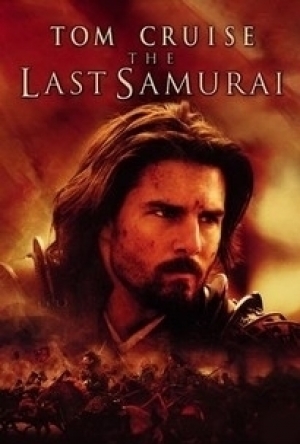
" I will tell you, how he lived"
The honour and code of the samurai has always been enticing to a Western civilisation that is far removed from such customs, which perhaps makes The Last Samurai such an enticing, enigmatic film. Edward Zwick crafts quite an epic adventure rich in mythology & thematic resonance that while traditionally Hollywood in its construction still manages to exist a cut above many such movies of its ilk, a touch of class surrounding how the story of Captain Nathan Algren is put together, based as it is on several real life legendary American figures who played key roles in the Satsuma Rebellion in Japan during the late 19th century. This isn't a direct re-telling of those events but serves as a leaping off point to construct a tale about a stranger in a strange land, of a man haunted by fighting an unjust war who rediscovers his honour & place in the world through a dying culture. Zwick's film is slick, sweeping, beautifully shot and frequently involving, backed up by a strong performance by Tom Cruise in one of those roles that remind you just what a good actor he can be.
In the role of Algren, Cruise begins a dejected man living out of a bottle, bereft of purpose & suffering post-Civil War nightmares of a man touted as a hero despite feeling the guilt of slaughtering Indians crushed under the might of a military machine; in that sense, The Last Samurai is very anti-war in its message, John Logan's story painting the Americans and specifically the Imperialist Japanese not in the greatest light. Cruise takes Algren on a traditional voyage of discovery, first pitted against the samurai code & eventually becoming consumed by it, consumed by the similarity of the way of the warrior between both cultures - and Ken Watanabe's dignified samurai 'rebel' Katsumoto learns from him, as well as the other way around, with Cruise remaining stoic & only getting flashes of a chance to display the usual Cruise charm, but that's OK - Algren isn't the kind of character to benefit from that, Cruise's natural magnetism is enough here. Wit is provided thankfully through, albeit briefly, Billy Connolly as a tough old Irish veteran & chiefly Timothy Spall as our portly 'narrator' of sorts, who serves to help mythologise Algren & the legend itself. Zwick is most concerned with that, you see, the idea of legends and how men become them, exploring that concept alongside digging into the cultural rituals and practises of a changing Japan.
Algren's story is placed at a time when the old ways of Japan were shifting, under the pressures of global politics & business; the Emperor here is a naive young man, sitting on an empty throne, looking to Watanabe for validation as his advisor's push to quash a rebellion fighting to preserve the old ways, preserve Japanese interests as America knocks on the door. That's why Cruise's role here is so interesting, his character learning of the samurai code & helping those around him remember their history, and Zwick explores well the concept of national identity alongside personal ideas of myth, legend & destiny. It all boils together in a careful script, never overblown, which neatly develops the relationships involved & helps you fully believe Algren's transformation into the eponymous 'last samurai'. Along the way, Zwick doesn't forget theatrics - staging plenty of well staged & intense fight scenes which utilise the strong Japanese production design, before building to a quite epic war climax with army pitted against army, with personal stakes cutting through it, backed up indeed by another superlative score by Hans Zimmer. It becomes more than just a historical swords & armour film, reaching deeper on several levels.
What could have been a slow paced, potentially ponderous movie is avoided well by Edward Zwick, who with The Last Samurai delivers one of the stronger historical adventure epics of recent years. Beautifully shot in many places, with some excellent cinematography & production standards, not to mention an impressive script well acted in particular by Tom Cruise & Ken Watanabe, Zwick creates a recognisably Hollywood picture but for once a movie that doesn't dumb down, doesn't pander and ultimately serves as an often involving, often damn well made story. Especially one to check out if you love the way of the samurai.
In the role of Algren, Cruise begins a dejected man living out of a bottle, bereft of purpose & suffering post-Civil War nightmares of a man touted as a hero despite feeling the guilt of slaughtering Indians crushed under the might of a military machine; in that sense, The Last Samurai is very anti-war in its message, John Logan's story painting the Americans and specifically the Imperialist Japanese not in the greatest light. Cruise takes Algren on a traditional voyage of discovery, first pitted against the samurai code & eventually becoming consumed by it, consumed by the similarity of the way of the warrior between both cultures - and Ken Watanabe's dignified samurai 'rebel' Katsumoto learns from him, as well as the other way around, with Cruise remaining stoic & only getting flashes of a chance to display the usual Cruise charm, but that's OK - Algren isn't the kind of character to benefit from that, Cruise's natural magnetism is enough here. Wit is provided thankfully through, albeit briefly, Billy Connolly as a tough old Irish veteran & chiefly Timothy Spall as our portly 'narrator' of sorts, who serves to help mythologise Algren & the legend itself. Zwick is most concerned with that, you see, the idea of legends and how men become them, exploring that concept alongside digging into the cultural rituals and practises of a changing Japan.
Algren's story is placed at a time when the old ways of Japan were shifting, under the pressures of global politics & business; the Emperor here is a naive young man, sitting on an empty throne, looking to Watanabe for validation as his advisor's push to quash a rebellion fighting to preserve the old ways, preserve Japanese interests as America knocks on the door. That's why Cruise's role here is so interesting, his character learning of the samurai code & helping those around him remember their history, and Zwick explores well the concept of national identity alongside personal ideas of myth, legend & destiny. It all boils together in a careful script, never overblown, which neatly develops the relationships involved & helps you fully believe Algren's transformation into the eponymous 'last samurai'. Along the way, Zwick doesn't forget theatrics - staging plenty of well staged & intense fight scenes which utilise the strong Japanese production design, before building to a quite epic war climax with army pitted against army, with personal stakes cutting through it, backed up indeed by another superlative score by Hans Zimmer. It becomes more than just a historical swords & armour film, reaching deeper on several levels.
What could have been a slow paced, potentially ponderous movie is avoided well by Edward Zwick, who with The Last Samurai delivers one of the stronger historical adventure epics of recent years. Beautifully shot in many places, with some excellent cinematography & production standards, not to mention an impressive script well acted in particular by Tom Cruise & Ken Watanabe, Zwick creates a recognisably Hollywood picture but for once a movie that doesn't dumb down, doesn't pander and ultimately serves as an often involving, often damn well made story. Especially one to check out if you love the way of the samurai.

Bob Mann (459 KP) rated Emma (2020) in Movies
Feb 21, 2020
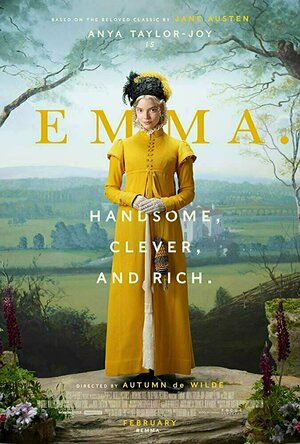

Anya Taylor-Joy.... mesmerising (2 more)
Gorgeous to look at; stunning locations and costumes
Witty and well-observed debut script
Simply Sublime
I loved the look of "Emma" from the trailer. And I was not disappointed. It is a simply sublime piece of comic entertainment.
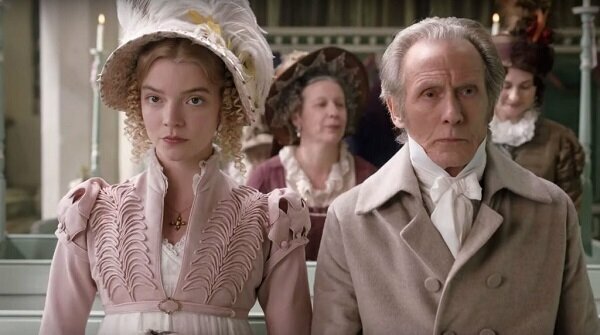
Emma Woodhouse (Anya Taylor-Joy) is a rich, privileged 21 year-old looking after her elderly and quirky father (Bill Nighy) in the family stately home. She has never loved, despite the persistent presence of 'family friend' George Knightley (Johnny Flynn), but finds it entertaining to engage in matchmaking, particularly in respect to her somewhat lower class friend Harriet Smith (Mia Goth). Emma has high ambitions for Harriet... ideas significantly above what her social station and looks might suggest.
Emma has her sights on a dream.... the mystery man Frank Churchill (Callum Turner), son of wealthy local landowner Mr Weston (Rupert Graves). She has never actually met him, but is obsessed with his myth. #fangirl. As a source of immense annoyance to her, but often a source of valuable information on news of Churchill, is the village 'old maid' Miss Bates (Miranda Hart). "Such fun"!
But Emma's perfect life is about to face sticky times, as her machinations fail to yield the expected results and a stray comment, at a disastrous picnic, threatens to damage both her reputation and her social standing.
If you like your movies full of action and suspense, you are digging in the wrong place. "Emma" is slow... glacially slow... wallowing in beautiful bucolic scenes (with superb cinematography by Christopher Blauvelt); gorgeous costumes by Alexandra Byrne; and hair styling by Marese Langan.
The movie also benefits from a joyfully tight and funny script by debut screenwriter Eleanor Catton (a Man-Booker prize winner). This picks relentlessly at the strata of the class system set up by Jane Austen's novel: "Every body has their level" spits spurned suitor Mr Elton (Josh O'Connor).
I know Anya Taylor-Joy as the spirited Casey from "Split" and "Glass": she was impressive in "Split"; less so for me in the disappointing "Glass". But here, I found her UTTERLY mesmerising. She has such striking features - those eyes! - that she fully inhabits the role of the beautiful heiress who haunts multiple men sequentially. I even muttered the word "Oscar nomination" at the end of the film: though we are too early in the year to seriously go there.
An even bigger surprise was the actor playing George Knightley. Johnny Flynn has been in a number of TV shows I haven't seen, and a few films I haven't seen either (e.g. "Beast"). But I had the nagging feeling I knew him really well. The illustrious Mrs Movie Man clocked him: he's the Cineworld "plaid man"! (For those outside the UK or not patrons of Cineworld cinemas, he was the 'star' of a Cineworld advert that played over and Over AND OVER again for months on end before every film I saw. Arrrgggghhhh!).
Here, Flynn is excellent as the frustrated and brooding Austen-hunk. He even gets away with an ar*e-shot within a U-certificate!
Particularly strong in the supporting cast are Bill Nighy (being delightfully more restrained in his performance); Miranda Hart (being "Miranda", but perfectly cast) and Mia Goth (memorable for that eel-bath in "A Cure for Wellness").
And a big thank-you for a web review in the online Radio Times for naming one of the comical (and bizarrely uncredited) footmen as Angus Imrie - - the truly disturbed stepson of Claire in "Fleabag". It was driving me crazy where I knew him from!
The one criticism I would have is that I found the (perfectly fine and well-fitting) music, by David Schweitzer and Isobel Waller-Bridge (sister of Phoebe) poorly mixed within the soundtrack. There were times when I found it overly intrusive, suddenly ducking under dialogue and then BLASTING out again. Sometimes music should be at the forefront.... but more often it should be barely perceptible.
As you might guess....
...I loved this one. The story is brilliant (obsv!); the film is simply gorgeous to look at; the locations (including the village of Lower Slaughter in the Cotswolds and Wilton House - near me - in Salisbury) are magnificent and a blessing for the English Tourist Board.
All the more impressive then that this is the directorial feature of video/short director Autumn de Wilde.
This comes with a "highly recommended" from both myself and the illustrious Mrs Movie-Man.
(For the full graphical review, please check out https://bob-the-movie-man.com/2020/02/20/one-manns-movies-film-review-emma-2020/ .)
Emma Woodhouse (Anya Taylor-Joy) is a rich, privileged 21 year-old looking after her elderly and quirky father (Bill Nighy) in the family stately home. She has never loved, despite the persistent presence of 'family friend' George Knightley (Johnny Flynn), but finds it entertaining to engage in matchmaking, particularly in respect to her somewhat lower class friend Harriet Smith (Mia Goth). Emma has high ambitions for Harriet... ideas significantly above what her social station and looks might suggest.
Emma has her sights on a dream.... the mystery man Frank Churchill (Callum Turner), son of wealthy local landowner Mr Weston (Rupert Graves). She has never actually met him, but is obsessed with his myth. #fangirl. As a source of immense annoyance to her, but often a source of valuable information on news of Churchill, is the village 'old maid' Miss Bates (Miranda Hart). "Such fun"!
But Emma's perfect life is about to face sticky times, as her machinations fail to yield the expected results and a stray comment, at a disastrous picnic, threatens to damage both her reputation and her social standing.
If you like your movies full of action and suspense, you are digging in the wrong place. "Emma" is slow... glacially slow... wallowing in beautiful bucolic scenes (with superb cinematography by Christopher Blauvelt); gorgeous costumes by Alexandra Byrne; and hair styling by Marese Langan.
The movie also benefits from a joyfully tight and funny script by debut screenwriter Eleanor Catton (a Man-Booker prize winner). This picks relentlessly at the strata of the class system set up by Jane Austen's novel: "Every body has their level" spits spurned suitor Mr Elton (Josh O'Connor).
I know Anya Taylor-Joy as the spirited Casey from "Split" and "Glass": she was impressive in "Split"; less so for me in the disappointing "Glass". But here, I found her UTTERLY mesmerising. She has such striking features - those eyes! - that she fully inhabits the role of the beautiful heiress who haunts multiple men sequentially. I even muttered the word "Oscar nomination" at the end of the film: though we are too early in the year to seriously go there.
An even bigger surprise was the actor playing George Knightley. Johnny Flynn has been in a number of TV shows I haven't seen, and a few films I haven't seen either (e.g. "Beast"). But I had the nagging feeling I knew him really well. The illustrious Mrs Movie Man clocked him: he's the Cineworld "plaid man"! (For those outside the UK or not patrons of Cineworld cinemas, he was the 'star' of a Cineworld advert that played over and Over AND OVER again for months on end before every film I saw. Arrrgggghhhh!).
Here, Flynn is excellent as the frustrated and brooding Austen-hunk. He even gets away with an ar*e-shot within a U-certificate!
Particularly strong in the supporting cast are Bill Nighy (being delightfully more restrained in his performance); Miranda Hart (being "Miranda", but perfectly cast) and Mia Goth (memorable for that eel-bath in "A Cure for Wellness").
And a big thank-you for a web review in the online Radio Times for naming one of the comical (and bizarrely uncredited) footmen as Angus Imrie - - the truly disturbed stepson of Claire in "Fleabag". It was driving me crazy where I knew him from!
The one criticism I would have is that I found the (perfectly fine and well-fitting) music, by David Schweitzer and Isobel Waller-Bridge (sister of Phoebe) poorly mixed within the soundtrack. There were times when I found it overly intrusive, suddenly ducking under dialogue and then BLASTING out again. Sometimes music should be at the forefront.... but more often it should be barely perceptible.
As you might guess....
...I loved this one. The story is brilliant (obsv!); the film is simply gorgeous to look at; the locations (including the village of Lower Slaughter in the Cotswolds and Wilton House - near me - in Salisbury) are magnificent and a blessing for the English Tourist Board.
All the more impressive then that this is the directorial feature of video/short director Autumn de Wilde.
This comes with a "highly recommended" from both myself and the illustrious Mrs Movie-Man.
(For the full graphical review, please check out https://bob-the-movie-man.com/2020/02/20/one-manns-movies-film-review-emma-2020/ .)

Kara Skinner (332 KP) rated The Mistletoe Bride in Books
Sep 10, 2019
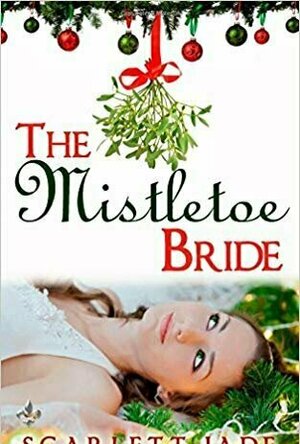
Sometimes we all need a little bit of a pick-me-up during the holiday season. It’s supposed to be the most wonderful time of the year and all that, but it’s frickin’ stressful. Between the in-laws and the holiday shopping (not to mention the calories. Yikes!), December can quickly turn into a jolly nightmare. However, The Mistletoe Bride is perfect for getting into the holiday season.
You see, Eve is having her own trouble this Christmas season. Two weeks before Christmas, her fiance breaks everything off with her because he had been having an affair with his secretary and had gotten her pregnant. This leaves her single and with two tickets to paradise she had been going to surprise her husband with. And she plans to do something crazy. Instead of moping at home, or going on vacation by herself, she plans on asking a perfect stranger on going on vacation with her.
Nick Christmas is shocked when a beautiful and mysterious woman asks him to go on a trip with her, and he’s a little wary, too. But after talking with her for a few minutes in a coffee shop, he’s drawn to her. He’s more than ready to go on vacation with Eve and help her forget her sorrows, but he knows there’s more to everything than an innocent holiday when she starts hearing bells in his laugh. After all, Nick is destined to become the next Santa Claus– and it looks like Eve is destined to be his bride.
First of all, “Two Tickets to Paradise” by Eddie Money will get stuck in your head when you’re reading this. So if you know the song but hate it (but why would you hate it, unless you’re insane?), this might not be the best stress reliever. (I happen to like the song just fine, so no harm done to me.)
Like I said before, this is a great pick-me-up for the holiday season. And that’s all it is: a pick me up to enjoy that will get you in the mood for Christmas. If you like made-for-TV Christmas romances, then you’ll probably like The Mistletoe Bride. It’s adorable. Eve is all innocent and vulnerable and kind, and Nick is all strong and protective and kind. He really wants to help Eve heal from the damage done from her last relationship, and he doesn’t rush her even though he knows she’s his mistletoe bride. It’s incredibly sweet. And I really like how Scarlett Jade build the magic and myth of Santa Claus like she did. Inheriting the role of Santa, a magic suit that fits all Santas perfectly, the knowledge of everyone, as if he’s a god…. it’s pretty awesome.
But the book isn’t perfect. It was anticlimactic, honestly. Yes, there was a lot of suspense what with the Winter Elf trying to destroy Christmas and the race to the altar and everything, but it was rushed. The Winter Elf didn’t even come in until later and probably just to add a little spice to the mainly bland aftermath of Eve’s and Nick’s betrothal. The big villain in the whole book just wanted to make toys for Santa’s workshop. That’s it. I mean really? It’s a romance, not a thriller, I know, but we could have drawn it out a little bit more.
There also shouldn’t have been any sex scenes in this book. I know, this is a really strange complaint for me. After all I love sex scenes and they’re never a problem, right? (But hell is not freezing over right now because the Winter Elf is too effing busy making toys for Santa to cause some damn chaos!) The thing is, the love interest is Santa. Even if he’s young and about to marry his soul mate, he should not have sex appeal. Why? Because he’s Santa. He defined at least a third of my childhood (I really love Christmas) and he’s supposed to be a jolly gift-giver who loves cookies. Having a Santa Clause with sex appeal is like having a Mickey Mouse with sex appeal. Just. Don’t. Do it.
Even Spock thinks a sexy Santa is weird.
Since I was in the right mood for this book when I read it, I’m giving it four out of five stars. But most days I would probably only give it three.
You see, Eve is having her own trouble this Christmas season. Two weeks before Christmas, her fiance breaks everything off with her because he had been having an affair with his secretary and had gotten her pregnant. This leaves her single and with two tickets to paradise she had been going to surprise her husband with. And she plans to do something crazy. Instead of moping at home, or going on vacation by herself, she plans on asking a perfect stranger on going on vacation with her.
Nick Christmas is shocked when a beautiful and mysterious woman asks him to go on a trip with her, and he’s a little wary, too. But after talking with her for a few minutes in a coffee shop, he’s drawn to her. He’s more than ready to go on vacation with Eve and help her forget her sorrows, but he knows there’s more to everything than an innocent holiday when she starts hearing bells in his laugh. After all, Nick is destined to become the next Santa Claus– and it looks like Eve is destined to be his bride.
First of all, “Two Tickets to Paradise” by Eddie Money will get stuck in your head when you’re reading this. So if you know the song but hate it (but why would you hate it, unless you’re insane?), this might not be the best stress reliever. (I happen to like the song just fine, so no harm done to me.)
Like I said before, this is a great pick-me-up for the holiday season. And that’s all it is: a pick me up to enjoy that will get you in the mood for Christmas. If you like made-for-TV Christmas romances, then you’ll probably like The Mistletoe Bride. It’s adorable. Eve is all innocent and vulnerable and kind, and Nick is all strong and protective and kind. He really wants to help Eve heal from the damage done from her last relationship, and he doesn’t rush her even though he knows she’s his mistletoe bride. It’s incredibly sweet. And I really like how Scarlett Jade build the magic and myth of Santa Claus like she did. Inheriting the role of Santa, a magic suit that fits all Santas perfectly, the knowledge of everyone, as if he’s a god…. it’s pretty awesome.
But the book isn’t perfect. It was anticlimactic, honestly. Yes, there was a lot of suspense what with the Winter Elf trying to destroy Christmas and the race to the altar and everything, but it was rushed. The Winter Elf didn’t even come in until later and probably just to add a little spice to the mainly bland aftermath of Eve’s and Nick’s betrothal. The big villain in the whole book just wanted to make toys for Santa’s workshop. That’s it. I mean really? It’s a romance, not a thriller, I know, but we could have drawn it out a little bit more.
There also shouldn’t have been any sex scenes in this book. I know, this is a really strange complaint for me. After all I love sex scenes and they’re never a problem, right? (But hell is not freezing over right now because the Winter Elf is too effing busy making toys for Santa to cause some damn chaos!) The thing is, the love interest is Santa. Even if he’s young and about to marry his soul mate, he should not have sex appeal. Why? Because he’s Santa. He defined at least a third of my childhood (I really love Christmas) and he’s supposed to be a jolly gift-giver who loves cookies. Having a Santa Clause with sex appeal is like having a Mickey Mouse with sex appeal. Just. Don’t. Do it.
Even Spock thinks a sexy Santa is weird.
Since I was in the right mood for this book when I read it, I’m giving it four out of five stars. But most days I would probably only give it three.
Ryan Hill (152 KP) rated Black Panther (2018) in Movies
May 11, 2019
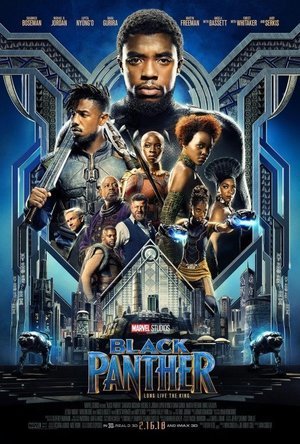
"Bury me in the ocean with my ancestors who jumped from the ships, 'cause they knew death was better than bondage"
Full of life, joy, sorrow, and hilarity; Ryan Coogler's Black Panther just has a vibrancy you rarely find in the superhero scene, let alone blockbusters. Enriched with a deep, abiding love for African culture and Afrofuturism; the movie just feels purposeful. Important. Meaningful. Context matters here, as Black Panther will become one of very few films populated by African Americans not dealing with slavery or black history to thrive financially. And that cast is phenomenal. Boseman's soft-spoken panther-of-few-words is the rare MCUer to opt for a moment of silence rather than a snarky comment. Michael B Jordan brings an unmistakable swagger to the perpetually weak slate of Marvel villains, conveying a crushingly sad and challenging story that could just as easily be regarded as the true hero of the film. Letitia Wright as the genius tech maestro was a blast, a character who could give Tony Stark a run for his money both technologically and charismatically. And these are just three of Coogler's creations; drawn from a slate of inspired, unique and wonderfully represented roles for black actors...many of whom will deservingly use this as a career springboard of sorts.
I remember years ago I read a book about the cultural significance of various comic book locales, and the Wakanda entry struck me as uniquely sad and inspiring. Wakanda, a place busting with innovation, tradition, and pride...hidden from the world. Sort of an alternate-timeline Africa which wasn't poisoned irreparably by colonialism and all its horrors. There's a sad duality obvious in this Wakanda, that being for it to exist, it must be hidden. Must be quietly nurtured, developed and treasured. It's an apt metaphor in relation to black pride, culture, and history; something constantly being reworked, reshaped and reimagined to put a sordid past (and present) in the rear-view mirror by those who perpetrate it, knowingly or not. This idea, that for something to thrive it must be isolated, is at the heart of Black Panther. You can understand why T'Challa, and generations before him, sacrificed anything to preserve the myth of Wakanda. But you can also understand Killmonger's feeling of betrayal. The profound moral objections inherent in a small community turning it's back on a larger suffering population in the name of self-preservation. There's no heroes and villains when Black Panther is at it's best, just two sides to a terrifying moral question *loaded* with historical weight.
Because Killmonger isn't really a villain. The best illustration of this is the contrasting "dream" sequences, in which T'Challa shares a promise with his father within a transcendentally beautiful African landscape, and Killmonger is confronted by all his pain, suffering and moral rigidity in the vast concrete jungle of Oakland, in the tiny apartment where his father was murdered for trying to make a difference. They both wake up with tears in their eyes, some from pain and some from catharsis. Coogler marks the chasm between T'Challa's and Killmonger's pasts so perfectly, and illustrates exactly why they feel the way they do with such wisdom. Black Panther so clearly empathizes with Killmonger and understands where his pain was born, and the horrors that nurtured it.
And so there's no hero and no villain to this movie. Just two men in nearly identical black panther suits, clashing over how Wakanda ought to venture into a new era. Nobility and passion, conservation and sacrifice, incremental change against a vengeful redistribution of power and oppression. Both men are correct in their aspirations, being "right" here doesn't matter. it's tough for a good man to be king. Killmonger made T'Challa the hero he is, by instilling in him a mission, a perceived duty to turn around, face an oppressed people and finally lend a hand. But more than that, there's something miraculous here. An apology from a good man. A recognition of a sin even when it's perpetrator was, until now, helpless to prevent it. A declaration that not contributing to hate and prejudice doesn't equate to actively working to prevent it. A plea for a humble brand of superheroism, for countless ghosts of the past to be heard and change to erupt in their name. Divides to be bridged, chasms to be crossed and wrongs to be righted.
Black Panther has a complex, meaningful and profoundly challenging thematic framework; offering a fresh dissection of what it means to grapple with the sins of those who came before. Sure, there are some technical issues along the way, the machinations of Marvel storytelling are evident and errors could be found; but if you understand that superhero stories were meant to ask these sorts of questions and push boundaries since their inception; Black Panther is a dream.
I remember years ago I read a book about the cultural significance of various comic book locales, and the Wakanda entry struck me as uniquely sad and inspiring. Wakanda, a place busting with innovation, tradition, and pride...hidden from the world. Sort of an alternate-timeline Africa which wasn't poisoned irreparably by colonialism and all its horrors. There's a sad duality obvious in this Wakanda, that being for it to exist, it must be hidden. Must be quietly nurtured, developed and treasured. It's an apt metaphor in relation to black pride, culture, and history; something constantly being reworked, reshaped and reimagined to put a sordid past (and present) in the rear-view mirror by those who perpetrate it, knowingly or not. This idea, that for something to thrive it must be isolated, is at the heart of Black Panther. You can understand why T'Challa, and generations before him, sacrificed anything to preserve the myth of Wakanda. But you can also understand Killmonger's feeling of betrayal. The profound moral objections inherent in a small community turning it's back on a larger suffering population in the name of self-preservation. There's no heroes and villains when Black Panther is at it's best, just two sides to a terrifying moral question *loaded* with historical weight.
Because Killmonger isn't really a villain. The best illustration of this is the contrasting "dream" sequences, in which T'Challa shares a promise with his father within a transcendentally beautiful African landscape, and Killmonger is confronted by all his pain, suffering and moral rigidity in the vast concrete jungle of Oakland, in the tiny apartment where his father was murdered for trying to make a difference. They both wake up with tears in their eyes, some from pain and some from catharsis. Coogler marks the chasm between T'Challa's and Killmonger's pasts so perfectly, and illustrates exactly why they feel the way they do with such wisdom. Black Panther so clearly empathizes with Killmonger and understands where his pain was born, and the horrors that nurtured it.
And so there's no hero and no villain to this movie. Just two men in nearly identical black panther suits, clashing over how Wakanda ought to venture into a new era. Nobility and passion, conservation and sacrifice, incremental change against a vengeful redistribution of power and oppression. Both men are correct in their aspirations, being "right" here doesn't matter. it's tough for a good man to be king. Killmonger made T'Challa the hero he is, by instilling in him a mission, a perceived duty to turn around, face an oppressed people and finally lend a hand. But more than that, there's something miraculous here. An apology from a good man. A recognition of a sin even when it's perpetrator was, until now, helpless to prevent it. A declaration that not contributing to hate and prejudice doesn't equate to actively working to prevent it. A plea for a humble brand of superheroism, for countless ghosts of the past to be heard and change to erupt in their name. Divides to be bridged, chasms to be crossed and wrongs to be righted.
Black Panther has a complex, meaningful and profoundly challenging thematic framework; offering a fresh dissection of what it means to grapple with the sins of those who came before. Sure, there are some technical issues along the way, the machinations of Marvel storytelling are evident and errors could be found; but if you understand that superhero stories were meant to ask these sorts of questions and push boundaries since their inception; Black Panther is a dream.
Andy Meakin (5 KP) rated Thor: Ragnarok (2017) in Movies
Jul 11, 2018
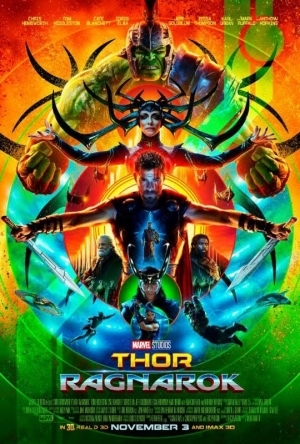
Thor-oughly entertaining.
Thor has always come across as the weaker of the Marvel film series’. The first film was well made, but never really demanded a repeat watch. The second, whilst not as bad as some people will attest, still felt more like a stop gap filler. You can’t blame the casting for the feeling of nonchalance that the films, so far, have delivered. Hemsworth is great in the role, and the support cast have always given their all, from Hiddleston as Loki, to Anthony Hopkins as Odin. But the stories have just felt superfluous, generic, and lacking in anything fantastical or mystical. In addition they have made the same error that DC made when they adapted Green Lantern – they spent too much time on Earth! You see, there are enough super-hero films that focus on a threat to Earth, so even though you could argue that it is faithful to the comics to have Thor defending Midgard against some mythical enemy, it has the unfortunate effect of making it seem just a little too…familiar. Wisely the decision was made for this third film to break away from Midgard, and go ‘cosmic’ with the story – and the end result is a damn sight better as a result.
The film spends the first act tying up some loose ends from the previous film, and returning Thor to Asgard. There he finds things are not as he left, and pretty soon Hela (Cate Blanchett) arrives to take control of Asgard, and threaten all the kingdoms with her army. Thor himself finds himself stranded on a remote junk-planet called Sakaar, where he finds himself thrown into gladiatorial combat against…well…an old friend. Can Thor unite an army to return to Asgard and save his people?
To say the film is immense fun would be an understatement! Director Taika Waititi, known for comedy dramas such as Hunt for the Wilderpeople and What We Do In The Shadows, definitely had an aim to explore the somewhat sillier side of the character, and the film is funny from the outset. Thor, who has always been a little naïve and shown some more awkward moments, is really given a lot of great lines, jibes, and clumsy aspects to round him out as more than just a ‘dumb, cocky Asgardian’. Throughout the film, characters quip and riff on ideas, creating genuine laughs and quotable moments, with even the newer characters getting their moments to impress on the audience. Amongst those newer additions, Karl Urban as Skurge, Jeff Goldblum as Grandmaster, and Tessa Thompson as Valkyrie steal any moments they appear on screen (Goldblum in particular just needs to have a wry grin and a raised eyebrow and all focus is on him). But Waititi himself gets to play with the best new addition to the cast, and one we will apparently see more of in the future, as Korg, a Kronan warrior.
So far, so entertaining, but is it all comedy and no substance? Far from it! The comedy serves well to balance against the dark drama of the story. This is titled Ragnarok, and Hela’s assault on Asgard is chilling indeed. In addition, the weaving in of elements from the Planet Hulk storyline, to give the mid-point journey part of the film some meat, ensures that there is never any dip in the tale, and there is plenty going on. The delicate balance of drama, emotion, and comedy is very reminiscent of the Guardians of the Galaxy films, and the franchise is so much better for it. After all, Asgardians are an alien race, so why not explore the cosmos a little with them? Even the soundtrack feels a little ‘Guardians-esque’ in style, with Led Zeppelin’s fabulous Immigrant Song being utilised perfectly for battle moments, but a somewhat electro-pop-synth score resonating throughout the film.
This is a film that flies by in run time (130 minutes, but never dragging), and finally gives Thor an identity in the Marvel Cinematic Universe. As the end credits finish rolling, the immediate desire is to watch it all again – which is not a feeling that the other two films left in me at all. Jostling for position in the top three Marvel films to date (Avengers and Guardians for those who are curious – yes, I know Winter Soldier and Civil War are damned good too, but these films are just fun). Thor: Ragnarok looks amazing, and entertains thoroughly. Ragnarok may mean the end of Asgard according to myth and legend, but it signals the true start of Thor as a character in his own right. All of that positive without even mentioning Ruffalo as Hulk (which you just knew was going to be great anyway)! Just watch the film for yourself, and enjoy.
The film spends the first act tying up some loose ends from the previous film, and returning Thor to Asgard. There he finds things are not as he left, and pretty soon Hela (Cate Blanchett) arrives to take control of Asgard, and threaten all the kingdoms with her army. Thor himself finds himself stranded on a remote junk-planet called Sakaar, where he finds himself thrown into gladiatorial combat against…well…an old friend. Can Thor unite an army to return to Asgard and save his people?
To say the film is immense fun would be an understatement! Director Taika Waititi, known for comedy dramas such as Hunt for the Wilderpeople and What We Do In The Shadows, definitely had an aim to explore the somewhat sillier side of the character, and the film is funny from the outset. Thor, who has always been a little naïve and shown some more awkward moments, is really given a lot of great lines, jibes, and clumsy aspects to round him out as more than just a ‘dumb, cocky Asgardian’. Throughout the film, characters quip and riff on ideas, creating genuine laughs and quotable moments, with even the newer characters getting their moments to impress on the audience. Amongst those newer additions, Karl Urban as Skurge, Jeff Goldblum as Grandmaster, and Tessa Thompson as Valkyrie steal any moments they appear on screen (Goldblum in particular just needs to have a wry grin and a raised eyebrow and all focus is on him). But Waititi himself gets to play with the best new addition to the cast, and one we will apparently see more of in the future, as Korg, a Kronan warrior.
So far, so entertaining, but is it all comedy and no substance? Far from it! The comedy serves well to balance against the dark drama of the story. This is titled Ragnarok, and Hela’s assault on Asgard is chilling indeed. In addition, the weaving in of elements from the Planet Hulk storyline, to give the mid-point journey part of the film some meat, ensures that there is never any dip in the tale, and there is plenty going on. The delicate balance of drama, emotion, and comedy is very reminiscent of the Guardians of the Galaxy films, and the franchise is so much better for it. After all, Asgardians are an alien race, so why not explore the cosmos a little with them? Even the soundtrack feels a little ‘Guardians-esque’ in style, with Led Zeppelin’s fabulous Immigrant Song being utilised perfectly for battle moments, but a somewhat electro-pop-synth score resonating throughout the film.
This is a film that flies by in run time (130 minutes, but never dragging), and finally gives Thor an identity in the Marvel Cinematic Universe. As the end credits finish rolling, the immediate desire is to watch it all again – which is not a feeling that the other two films left in me at all. Jostling for position in the top three Marvel films to date (Avengers and Guardians for those who are curious – yes, I know Winter Soldier and Civil War are damned good too, but these films are just fun). Thor: Ragnarok looks amazing, and entertains thoroughly. Ragnarok may mean the end of Asgard according to myth and legend, but it signals the true start of Thor as a character in his own right. All of that positive without even mentioning Ruffalo as Hulk (which you just knew was going to be great anyway)! Just watch the film for yourself, and enjoy.