
Search
Sass Perilla (36 KP) rated The Master and Margarita in Books
Aug 9, 2019

Worth a read? Yes. Worth a reread? Maybe not.
Contains spoilers, click to show
The Master and Magarita: Mikhail Bulgakov
Firstly, I didn’t intend to write an essay on this novel. However, once started I found I had a lot to say, and the more I thought about the plot and characters, the more ideas and parallels were sparked, so I am hopeful that the verbosity of this review can be forgiven.
At the risk of sounding both ignorant and uncultured, I found this novel (at least at first) bloody hard slog; not least because the Russian characters have three names, plus a nickname, plus a pun on their name (none of which work particularly well in translation and all of which sound rather similar to the English untrained ear). As an example- Ivan Nikolaevich Ponyrev (who seems to be referred to by any and all of these names) is also known as “Homeless” and “the poet” is a key character in the opening section of the novel. To further demonstrate: there are 17 different names that start with A that are used to refer to 15 different characters with Andreyevich used as the middle name of a bereaved uncle, who makes a journey from Kiev after his nephew is beheaded in a freak tram accident- and Andrey the buffet manager at a Moscow theatre. Clear as mud right? And that is before starting on similarly named characters with the initials M, P, L and S! At my last count there were 45 distinct characters, and I am fairly sure there will be some that I have missed. Hence, I did a lot of re-reading to work out exactly who was doing what to whom.
Additionally, I would suggest you need to be wary of the different translations. The distinct changes in meaning are subtle but important. To triangulate I had three versions at my disposal: Hugh Aplin’s translation (available for free on Kindle), the audiobook version translated by Richard Pevear and Larissa Volokhonsky (which I listened to simultaneously when reading the book to come to my own interpretation, and the subtitles for the Russian TV miniseries from 2005 when I gave up trying to work out who was who from name alone!
So those were my “technical” issues (if you like) with engaging with this novel, and this lack of clarity and understanding (and my own lack of contextual knowledge of Stalinist Russia) meant I missed many of the (what I am sure are hysterically funny to those in the know) satirical jokes in the opening section. That said, the random action and quick changes of focus, undercurrent of chaos in Moscow despite entrenched hierarchal structures and clear threat that (any) one could go missing at any time, for an unclear reason gave a clear insight into the mind and fears of a 1930s Russian citizen. No wonder it was available only in censored form for so long.
Despite these hardships, there were some genuinely laugh out loud moments in the first Moscow based part of the novel. The citizens have not lost their individuality, as they scrabble and fight for bank notes in the theatre, which are later revealed to be worthless. Nor have they lost their sense of pride and vanity, which we see in the female theatre goers, so desperate to attain the fashionable French couture (which later literally disappears from their bodies leaving semi-naked citizenesses desperately trying to cover themselves in a scene reminiscent of “Allo Allo” meets “Benny Hill”). When Professor Woland says his show will “expose” what the locals have failed to realise is that it is their (moral) shortcomings that are about to be revealed. The message is clearly, that no government can successfully legislate against human nature.
Oooh- and another fun fact, apparently Woland (later revealed- or perhaps is implied- to be Satan) was the inspiration to the Rolling Stones 1968 hit “Sympathy for the Devil”, well at least that is what my Google-Fu tells me.
Obviously, there were substantial hurdles to leap, however, I found by the second half of the novel, when we finally meet the eponymous characters, I had got in to the swing of things and begun to embrace the farcical surrealism of the novel.
The second “book” marks a change in tone, although it continues to cut away to scenes of Jesus’ sentencing by Pilate and execution (here known in the Aramaic form Yeshua). Ironically it is these scenes that are the most “real” and substantially human, as Pilate’s decision weighs head achingly heavily on him throughout. The Master and Margarita seem to be the only two characters fully invested in the authenticity of literature, and serve as a counterpoint to the heavily censored “monstrous” writing of Ivan and the rest of the writers’ union Massolit, more interested in fine dining and what their positions can do for them then the production of quality writing.
And it is Margarita’s journey of discovery and liberation from the stodgy, miserable societal expectations of that leads her back to her Master. Bulgakov mixes classical myth, Russian folklore and Bible stories to give us an impression of the timelessness of the central romance. As the worlds of communist Moscow and the inner worlds of the Master and Margarita collide, we are informed of the former’s desire to excuse all magic (and mischief) as the product of mass hypnosis, when the latter (and the reader) are fully aware of the spiritual significance and dimension of the events.
Clever, astute and in places laugh out loud funny, this novel none-the-less requires a level of dedication from the non-Russian speaking reader. Worth a read? Yes. Worth a re-read? Maybe not.
Firstly, I didn’t intend to write an essay on this novel. However, once started I found I had a lot to say, and the more I thought about the plot and characters, the more ideas and parallels were sparked, so I am hopeful that the verbosity of this review can be forgiven.
At the risk of sounding both ignorant and uncultured, I found this novel (at least at first) bloody hard slog; not least because the Russian characters have three names, plus a nickname, plus a pun on their name (none of which work particularly well in translation and all of which sound rather similar to the English untrained ear). As an example- Ivan Nikolaevich Ponyrev (who seems to be referred to by any and all of these names) is also known as “Homeless” and “the poet” is a key character in the opening section of the novel. To further demonstrate: there are 17 different names that start with A that are used to refer to 15 different characters with Andreyevich used as the middle name of a bereaved uncle, who makes a journey from Kiev after his nephew is beheaded in a freak tram accident- and Andrey the buffet manager at a Moscow theatre. Clear as mud right? And that is before starting on similarly named characters with the initials M, P, L and S! At my last count there were 45 distinct characters, and I am fairly sure there will be some that I have missed. Hence, I did a lot of re-reading to work out exactly who was doing what to whom.
Additionally, I would suggest you need to be wary of the different translations. The distinct changes in meaning are subtle but important. To triangulate I had three versions at my disposal: Hugh Aplin’s translation (available for free on Kindle), the audiobook version translated by Richard Pevear and Larissa Volokhonsky (which I listened to simultaneously when reading the book to come to my own interpretation, and the subtitles for the Russian TV miniseries from 2005 when I gave up trying to work out who was who from name alone!
So those were my “technical” issues (if you like) with engaging with this novel, and this lack of clarity and understanding (and my own lack of contextual knowledge of Stalinist Russia) meant I missed many of the (what I am sure are hysterically funny to those in the know) satirical jokes in the opening section. That said, the random action and quick changes of focus, undercurrent of chaos in Moscow despite entrenched hierarchal structures and clear threat that (any) one could go missing at any time, for an unclear reason gave a clear insight into the mind and fears of a 1930s Russian citizen. No wonder it was available only in censored form for so long.
Despite these hardships, there were some genuinely laugh out loud moments in the first Moscow based part of the novel. The citizens have not lost their individuality, as they scrabble and fight for bank notes in the theatre, which are later revealed to be worthless. Nor have they lost their sense of pride and vanity, which we see in the female theatre goers, so desperate to attain the fashionable French couture (which later literally disappears from their bodies leaving semi-naked citizenesses desperately trying to cover themselves in a scene reminiscent of “Allo Allo” meets “Benny Hill”). When Professor Woland says his show will “expose” what the locals have failed to realise is that it is their (moral) shortcomings that are about to be revealed. The message is clearly, that no government can successfully legislate against human nature.
Oooh- and another fun fact, apparently Woland (later revealed- or perhaps is implied- to be Satan) was the inspiration to the Rolling Stones 1968 hit “Sympathy for the Devil”, well at least that is what my Google-Fu tells me.
Obviously, there were substantial hurdles to leap, however, I found by the second half of the novel, when we finally meet the eponymous characters, I had got in to the swing of things and begun to embrace the farcical surrealism of the novel.
The second “book” marks a change in tone, although it continues to cut away to scenes of Jesus’ sentencing by Pilate and execution (here known in the Aramaic form Yeshua). Ironically it is these scenes that are the most “real” and substantially human, as Pilate’s decision weighs head achingly heavily on him throughout. The Master and Margarita seem to be the only two characters fully invested in the authenticity of literature, and serve as a counterpoint to the heavily censored “monstrous” writing of Ivan and the rest of the writers’ union Massolit, more interested in fine dining and what their positions can do for them then the production of quality writing.
And it is Margarita’s journey of discovery and liberation from the stodgy, miserable societal expectations of that leads her back to her Master. Bulgakov mixes classical myth, Russian folklore and Bible stories to give us an impression of the timelessness of the central romance. As the worlds of communist Moscow and the inner worlds of the Master and Margarita collide, we are informed of the former’s desire to excuse all magic (and mischief) as the product of mass hypnosis, when the latter (and the reader) are fully aware of the spiritual significance and dimension of the events.
Clever, astute and in places laugh out loud funny, this novel none-the-less requires a level of dedication from the non-Russian speaking reader. Worth a read? Yes. Worth a re-read? Maybe not.

Erika (17789 KP) rated Loki - Season 1 in TV
Jul 16, 2021 (Updated Jul 16, 2021)


I’ll stick with Loki’s original story-arc.
Contains spoilers, click to show
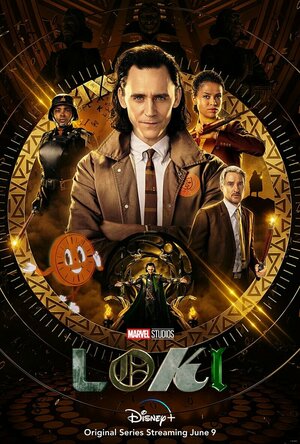
Loki, featuring the return of Tom Hiddleston to the MCU, has escaped with the tesseract, and is subsequently caught by the TVA. He agrees to help Owen Wilson’s Mobius track down a variant that is conveniently a version of himself. What ensues is a painful setup for Ironman with Magic… oh, sorry, Dr. Strange and the Multiverse of Madness.
On one hand, my ma always told me, if you don’t have anything nice to say, don’t say anything at all, but on the other hand, I haven’t been this pissed off at a major franchise since Star Wars: The Last Jedi. My visceral, negative reaction was caused by many things.
First, this series did not need to be made. Loki had a perfect ending to his overall arc, and it really didn’t need to be messed with. I am a huge Tom Hiddleston fan, I went to NYC to see him in a play, waited outside freezing my butt off to meet him, all of that. I was so glad when Loki was killed off, so he’d be free to do other things, and not just be known for Loki. Alas, that did not happen.
This series was made for two subsets of fans: the fans that can’t accept the death of their favorite character, and the fans that are absolutely, irrationally obsessed with having their favorite character paired up romantically. I fall into neither of these categories. ‘More Stories to Tell’ was the tagline… it should have been ‘More Money to be Made’.
After watching the same movie in a different flavor for over ten years, I realized that maybe the MCU wasn’t for me anymore. But, when Loki was announced, I was promised something new and weird! I thought, maybe this will be the show to get me back into the MCU. That was not the case. I cannot believe the rave reviews about this series; did we all watch the same thing?
The first warning sign for me was when it was announced that Michael Waldron, who was a writer for Rick & Morty was going to be helming this series. Rick & Morty is funny… if you’re a dude-bro, drunk, or high. When I read a few of his interviews prior to the release of Loki, another warning sign, this guy kind of sounded like a huge douchebag. I was then calmed and reassured that maybe it wouldn’t be a train-wreck because Hiddleston was heavily involved in the series.
As I’ve mentioned before, we were promised something new, different, and weird. Don’t make promises you can’t keep, creative team behind Loki.
Episode 1 was cheap; did I need to see clips from previous movies used in a very uncreative way? No, I did not. There was also something just off about the casting of Wilson. Now, this may be on me because my teen-years were spent quoting Owen Wilson films. There were a few things I liked about Episode 1, like the Blade Runner robot reference. There was a red flag in this episode though. Pro-tip: never, EVER have a character verbalize/confirm that they’re smart. Because it’s probably not the case.
Episode 2 was the bright spot, it was my favorite, by far. It was fast-paced, amusing, and the most interesting episode out of the whole series. The Mt Vesuvius/unleashing of the goats thing was the sort of thing I was looking for in this series. I actually chuckled a little, which rarely happens. It moved the story along, and we get the big reveal of the Loki variant that’s causing all the havoc.
Episode 3 was, for lack of a better word, boring. The pace slowed, and it was the infamous Disney+ show filler episode. We’re introduced to Mary Sue, sorry, I mean Lady Loki, but not really, Sylvie, the Enchantress, right? No, wait, she’s a completely different, new character. Probably shouldn’t have opted for the name Sylvie in that case. She’s a brand new, *strong* female, that shows her strength by punching people and has no personality (see: Carol Danvers - Captain Marvel, Hope van Dyne - Ant-Man). Y’all, you told me you were going to give me something different, new, weird. A Mary Sue isn’t new, different, or weird. This episode was a get-to-know-each-other, and build a pseudo-sibling relationship, right? Because anything else would be weird in a bad way, not an interesting way. There was a considerable shift in our TVA ‘Smart’ Loki character evolution, he opened-up, announced that he was a member of the LGBTQQIAAP nation, progress! First bi-sexual character in the MCU, way to go Disney, getting with the times! It was still a filler episode though, and while the stakes seemed high, you knew that there were three more episodes to go, of course they would live.
Again, I was reassured after this lackluster episode by Hiddleston, that 4 and 5 were his favorite. That fact is now disturbing.
Episode 4 was the death knell. I think the response from the creative team afterwards was also incredibly tone-deaf, and, quite frankly, insulting. The 4th episode was so bad, I legitimately had to go cleanse my eyes and brain with a GBBO marathon. The fact that the creative team had no idea that the insta-love (see: Jane and Thor - Thor) between two characters that had seemingly formed a pseudo-sibling relationship wouldn’t come off a little incest-y is really strange to me. If a pseudo-sibling relationship was not the intention, then it was poor writing, directing and acting by all parties involved. Sometimes, when a Mary Sue punches our main character, he falls in love with her (see: Hope and Scott - Ant-Man). The whole narcissism thing was hilarious, I’m glad our TVA ‘Smart’ Loki was cured of that by Sylvie and another *strong* personality-lacking woman (see: Sif -Thor/Thor: the Dark World) kicking him between the legs was what he’d needed all along. If a small portion of this episode was actually utilizing the myth of Narcissus, then I’m glad they followed it through to the dying part. This is when everything clicked for me. Our TVA ‘Smart’ Loki’s character evolution made him a big ol’ bowl of mushy, overcooked oatmeal. HOW and WHY would you take one of the best anti-heroes in the MCU, or any superhero franchise, and make him so mushy? More importantly, I didn’t care about what happened to any of the characters, except B-15. Normally, that’s my cue to stop watching a show, but I wanted to see if they tried to convince audiences that this Oatmeal Loki was actually smart and logical.
Episode 5 was when things slightly improved. Again, I couldn’t forgive the events of Episode 4, and I totally fast-forwarded during whatever talk Loki and Mary Sue, sorry, Sylvie, had with a blankie around their shoulders. All of the other Lokis were better in their tiny amount of screen time than Oatmeal Loki and Mary Sue Loki. Alligator Loki had more personality than Sylvie. Richard Grant is the superior Loki in my opinion. This episode also reintroduced hand holding with CGI colors swirling around characters (see: Guardians of the Galaxy).
Episode 6 was our finale. Thank God. We’re introduced to the real head of the TVA, which was who everyone was expecting. This episode was a little slow-paced, with a lot of interesting chit-chat. Oatmeal Loki actually seemed like he had a brain cell or two for a few brief, fleeting moments. He even showed off some of his powers, which, by the way, we were told we’d see more of… but didn’t. Then, our Oatmeal Loki was distracted by his Mary Sue, went for a kiss, and plopped right on his ass, looking like a fool. I almost snorted my coffee as I watched. Then, they confirmed a Season 2.
Honestly, I was hoping Oatmeal Loki and Mary Sue Loki would get killed off. Sadly, it didn’t happen, and they’re getting another series, and an appearance in Ironman with Magic. I’m so glad this series was something new, different, and weird, not just the bog-standard, MCU drivel we normally get. Oh, wait… I probably don’t even need to state that this wasn’t my cup of tea, and, again, solidified the fact that I’m over the MCU. I also know that I should avoid anything Michael Waldron and Kate Herron touch. Eventually, I’ll stop feeling betrayed by Hiddleston, but it may take a while. Is that ridiculous? Probably.
On one hand, my ma always told me, if you don’t have anything nice to say, don’t say anything at all, but on the other hand, I haven’t been this pissed off at a major franchise since Star Wars: The Last Jedi. My visceral, negative reaction was caused by many things.
First, this series did not need to be made. Loki had a perfect ending to his overall arc, and it really didn’t need to be messed with. I am a huge Tom Hiddleston fan, I went to NYC to see him in a play, waited outside freezing my butt off to meet him, all of that. I was so glad when Loki was killed off, so he’d be free to do other things, and not just be known for Loki. Alas, that did not happen.
This series was made for two subsets of fans: the fans that can’t accept the death of their favorite character, and the fans that are absolutely, irrationally obsessed with having their favorite character paired up romantically. I fall into neither of these categories. ‘More Stories to Tell’ was the tagline… it should have been ‘More Money to be Made’.
After watching the same movie in a different flavor for over ten years, I realized that maybe the MCU wasn’t for me anymore. But, when Loki was announced, I was promised something new and weird! I thought, maybe this will be the show to get me back into the MCU. That was not the case. I cannot believe the rave reviews about this series; did we all watch the same thing?
The first warning sign for me was when it was announced that Michael Waldron, who was a writer for Rick & Morty was going to be helming this series. Rick & Morty is funny… if you’re a dude-bro, drunk, or high. When I read a few of his interviews prior to the release of Loki, another warning sign, this guy kind of sounded like a huge douchebag. I was then calmed and reassured that maybe it wouldn’t be a train-wreck because Hiddleston was heavily involved in the series.
As I’ve mentioned before, we were promised something new, different, and weird. Don’t make promises you can’t keep, creative team behind Loki.
Episode 1 was cheap; did I need to see clips from previous movies used in a very uncreative way? No, I did not. There was also something just off about the casting of Wilson. Now, this may be on me because my teen-years were spent quoting Owen Wilson films. There were a few things I liked about Episode 1, like the Blade Runner robot reference. There was a red flag in this episode though. Pro-tip: never, EVER have a character verbalize/confirm that they’re smart. Because it’s probably not the case.
Episode 2 was the bright spot, it was my favorite, by far. It was fast-paced, amusing, and the most interesting episode out of the whole series. The Mt Vesuvius/unleashing of the goats thing was the sort of thing I was looking for in this series. I actually chuckled a little, which rarely happens. It moved the story along, and we get the big reveal of the Loki variant that’s causing all the havoc.
Episode 3 was, for lack of a better word, boring. The pace slowed, and it was the infamous Disney+ show filler episode. We’re introduced to Mary Sue, sorry, I mean Lady Loki, but not really, Sylvie, the Enchantress, right? No, wait, she’s a completely different, new character. Probably shouldn’t have opted for the name Sylvie in that case. She’s a brand new, *strong* female, that shows her strength by punching people and has no personality (see: Carol Danvers - Captain Marvel, Hope van Dyne - Ant-Man). Y’all, you told me you were going to give me something different, new, weird. A Mary Sue isn’t new, different, or weird. This episode was a get-to-know-each-other, and build a pseudo-sibling relationship, right? Because anything else would be weird in a bad way, not an interesting way. There was a considerable shift in our TVA ‘Smart’ Loki character evolution, he opened-up, announced that he was a member of the LGBTQQIAAP nation, progress! First bi-sexual character in the MCU, way to go Disney, getting with the times! It was still a filler episode though, and while the stakes seemed high, you knew that there were three more episodes to go, of course they would live.
Again, I was reassured after this lackluster episode by Hiddleston, that 4 and 5 were his favorite. That fact is now disturbing.
Episode 4 was the death knell. I think the response from the creative team afterwards was also incredibly tone-deaf, and, quite frankly, insulting. The 4th episode was so bad, I legitimately had to go cleanse my eyes and brain with a GBBO marathon. The fact that the creative team had no idea that the insta-love (see: Jane and Thor - Thor) between two characters that had seemingly formed a pseudo-sibling relationship wouldn’t come off a little incest-y is really strange to me. If a pseudo-sibling relationship was not the intention, then it was poor writing, directing and acting by all parties involved. Sometimes, when a Mary Sue punches our main character, he falls in love with her (see: Hope and Scott - Ant-Man). The whole narcissism thing was hilarious, I’m glad our TVA ‘Smart’ Loki was cured of that by Sylvie and another *strong* personality-lacking woman (see: Sif -Thor/Thor: the Dark World) kicking him between the legs was what he’d needed all along. If a small portion of this episode was actually utilizing the myth of Narcissus, then I’m glad they followed it through to the dying part. This is when everything clicked for me. Our TVA ‘Smart’ Loki’s character evolution made him a big ol’ bowl of mushy, overcooked oatmeal. HOW and WHY would you take one of the best anti-heroes in the MCU, or any superhero franchise, and make him so mushy? More importantly, I didn’t care about what happened to any of the characters, except B-15. Normally, that’s my cue to stop watching a show, but I wanted to see if they tried to convince audiences that this Oatmeal Loki was actually smart and logical.
Episode 5 was when things slightly improved. Again, I couldn’t forgive the events of Episode 4, and I totally fast-forwarded during whatever talk Loki and Mary Sue, sorry, Sylvie, had with a blankie around their shoulders. All of the other Lokis were better in their tiny amount of screen time than Oatmeal Loki and Mary Sue Loki. Alligator Loki had more personality than Sylvie. Richard Grant is the superior Loki in my opinion. This episode also reintroduced hand holding with CGI colors swirling around characters (see: Guardians of the Galaxy).
Episode 6 was our finale. Thank God. We’re introduced to the real head of the TVA, which was who everyone was expecting. This episode was a little slow-paced, with a lot of interesting chit-chat. Oatmeal Loki actually seemed like he had a brain cell or two for a few brief, fleeting moments. He even showed off some of his powers, which, by the way, we were told we’d see more of… but didn’t. Then, our Oatmeal Loki was distracted by his Mary Sue, went for a kiss, and plopped right on his ass, looking like a fool. I almost snorted my coffee as I watched. Then, they confirmed a Season 2.
Honestly, I was hoping Oatmeal Loki and Mary Sue Loki would get killed off. Sadly, it didn’t happen, and they’re getting another series, and an appearance in Ironman with Magic. I’m so glad this series was something new, different, and weird, not just the bog-standard, MCU drivel we normally get. Oh, wait… I probably don’t even need to state that this wasn’t my cup of tea, and, again, solidified the fact that I’m over the MCU. I also know that I should avoid anything Michael Waldron and Kate Herron touch. Eventually, I’ll stop feeling betrayed by Hiddleston, but it may take a while. Is that ridiculous? Probably.