
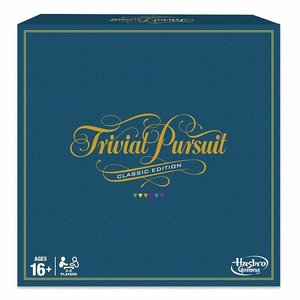
Trivial Pursuit: Classic Edition
8.2 Rate It
Tabletop Game
Gather your friends to play the trivia game that started it all! The classic edition of this Trivial...

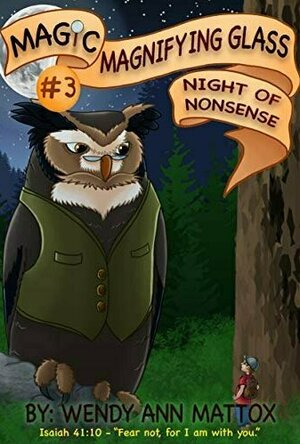
Night of Nonsense (The Magic Magnifying Glass #3)
9.0 Rate It
Book
Join me (Finley James Carter) in this fast-paced and unpredictable adventure where I ask: - Will the...
Adventures Children Christian Middle Grade Nature Animals
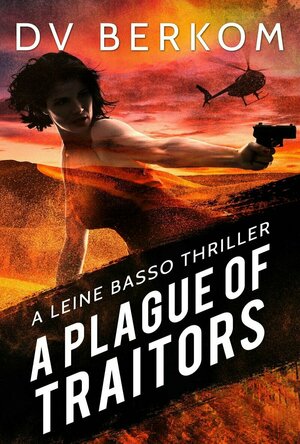
A Plague of Traitors (Leine Basso #11)
8.0
Rate It
Book
A former assassin leads a heroic band of foreign fighters to thwart an enemy like no other. ...

David McK (3918 KP) rated Ferris Bueller's Day Off (1986) in Movies
Oct 24, 2021
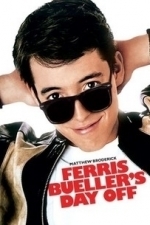


I get that it's one of John Hughes 1980s movies.
I get that it was Matthew Broderick's break-out role, and that the 4th-wall breaking nature of the movie helped lay the groundwork for 'Deadpool' all those years later.
I DON'T get the appeal of the movie: for me, this was forgettable, with the lead character an annoying jerk (who, admittedly, does have one good line about how life is pretty short) only out for himself, and who pulls his girlfriend and his best friend Cameron along for no reason other than to show off to - he doesn't even have the gumption to check how Cameron is at the tail end of the movie.
I've heard about people saying how it is, essentially, a wish-fulfilment movie. My only wish is that I hadn't wasted my time watching it.
David McK (3918 KP) rated The Legend of Tarzan (2016) in Movies
Oct 16, 2022
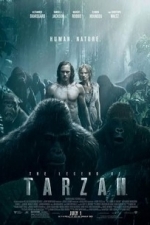

Instead of the 'usual' Tarzan origin tale, or even of his time in the jungle, this actually is set when he has returned to England and taken up the mantle of Lord Greystoke.
That is, before circumstances lead him to travelling back to the Congo, in the company of Jane (With plenty of flashbacks showing how they first met) and of the American George Williams (played by Samuel L. Jackson), who has his own motives for wanting to visit the Congo.
Yes, I'm well aware of the questionably problematic nature of the Tarzan tale.
it was written over a hundred years ago (exactly 120 as of me writing this, to be precise), however.
The movie does - to its credit - at least try to address some of those concerns.

Weyward
10.0 Rate It
Book
KATE, 2019 Kate flees London – abandoning everything – for Cumbria and Weyward Cottage,...
Historical fiction Witches Magical Realism Trigger Warning: domestic violence

Darren (1599 KP) rated Redwood (2017) in Movies
Dec 1, 2019
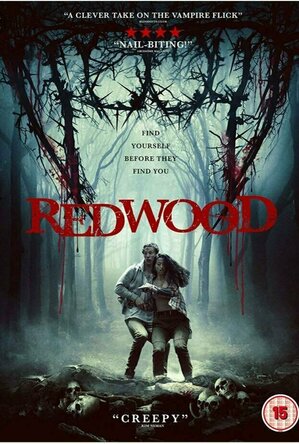
Story: Redwood starts as a couple Josh (Beckingham) and Beth (Nardone) head away for a hiking trip to get back to nature before Josh start his treatment for leukaemia, the pair meet ranger Steve (Khan) who warns them to stay on the path and the two set off on their adventure.
The couple see a chance at a shortcut up the mountain, which sees them go off the trail where they run into bloodthirsty vampires forcing them to battle to survive.
Thoughts on Redwood
Characters – Josh is a workaholic that has just discovered he has leukaemia, which sees him want to do more open to nature, which sees this hiking trip come about, he is dealing with everything well believing everything is under control and he suggests the shortcut off the trail. Beth is the supportive girlfriend that is getting scared about what is happening to Josh, wanting to get the most out of their time in case the treatment doesn’t work. Vincent and Steve are both rangers that are met on the way up the mountain, both have the same warning about staying on the trail.
Performances – Mike Beckingham and Tatjana Nardone both are solid enough through the film, we get the ideas of how their relationship is facing a new problem, with how they are both trying to stay strong. Anybody we meet is simply a cameo like performance.
Story – The story here follows a couple that head off on a hiking trip on a mountain range only to head off the trail and find themselves facing off against vampires. This is a typical type of story which follows a couple making the mistake of going of the trail, there really isn’t much more to the story, we do have the relationship strain between a couple when one could become terminally ill. Once we get to the vampire side of the story, we just don’t get very much going on because by the time we get to the vampire side of the story, it is just running without doing much. We don’t get much out of this story by the end.
Horror – The horror in the film does feel weak because we have a couple of moments which is mostly just running, with the emotional drama seeming to take centre stage.
Settings – The film is set in a mountain range which shows us just how far the couple have gone to get back to nature, it could have mystery about it.
Special Effects – The effects are simple when it comes to the vampire creations, we don’t need too many effects either.
Scene of the Movie – Getting to the top.
That Moment That Annoyed Me – Too much talking.
Final Thoughts – This is a poor vampire movie that tries to do something bigger, but ends up dragging along way too long.
Overall: Forgettable Vampire Movie.

Cody Cook (8 KP) rated The Satanic Bible in Books
Jun 29, 2018


LaVey does not view Satan as a person (nor does he view God that way), but as a representation of what man really is in his primal nature-- a violent and lustful nature which LaVey calls good, though he simultaneously argues that certain parts of it (that which would harm children or rape, for instance) are not good-- a dichotomy that he calls hypocritical in righthand path religions such as Christianity. Beyond this tension, he elsewhere seems to argue for moral relativism, creating a vicious circle of nonsense. Because good and evil are falsehoods and God and Satan are non-persons, the spells and rituals he creates are only symbols meant to harness our primal energies, sending them out to accomplish our goals (much like in the Hicks' Law of Attraction books or in The Secret).
A mix of equal parts tongue-in-cheek symbolism and outright charlatanism.
I suspect that this book's teachings would appeal primarily to two types of people: narcissists who want to seem edgy and angry people who have been harmed by institutional religion. In regard to the former, there are more thoughtful ways to be counter-cultural. In regard to the latter, an assessment of the intellectual weaknesses of this philosophy won't remove the hurt or pain they've been through, but hopefully an understanding that the kind of Christianity spoken of by LaVey is not genuine Christianity can remove some of the hatred they feel toward it due to the immoral actions performed by its claimed representatives.
Totally off-topic, but Lavey looks like a bald version of Evil Spock.

Sophia (Bookwyrming Thoughts) (530 KP) rated Shadow of the Fox (Shadow of the Fox, #1) in Books
Jan 23, 2020
Shadow of the Fox by Julie Kagawa brings Japanese mythology and folklore to life, taking readers on an exciting journey through feudal Japan, Kagawa weaves together three characters from different backgrounds all while introducing readers to a wide variety of demons the characters come across. The novel follows these characters as a new age approaches and the Kami Dragon is summoned, granting a wish to the one who holds the pieces of the Dragon Scroll.
Shadow of the Fox is primarily told in the two perspectives of Yumeko and Tatsumi, with the occasional addition of a third. Yumeko is a half-kitsune, half-human raised at the Silent Winds temple to hide her true kitsune nature, though she is forced to flee after everyone is slaughtered by a demon who wants to retrieve a part of the scroll. Readers interested in seeing kitsune magic coming to life on the page may find themselves disappointed as Yumeko shows little of her magic and hides her true nature from her companions.
One of those companions includes Tatsumi, a samurai from the Shadow Clan ordered to bring the Dragon Scroll regardless of the cost. Raised as a weapon, Tatsumi is taught from a young age to hide all of his emotions and thoughts from those around him as doing so would pose a danger. Not able to accomplish his mission right away, he finds himself in an unlikely alliance with Yumeko and begins to question his upbringing.
The first novel in a stunning new series, Shadow of the Fox is a magical adventure with an ominous feel throughout and will have readers wanting the sequel to the story.
<a href="https://60secondsmag.com/review-shadow-of-the-fox/">This review was originally posted on 60 Seconds Online Magazine</a>.