
Search

Lucy Buglass (45 KP) rated Ekaj (2015) in Movies
Jun 20, 2019
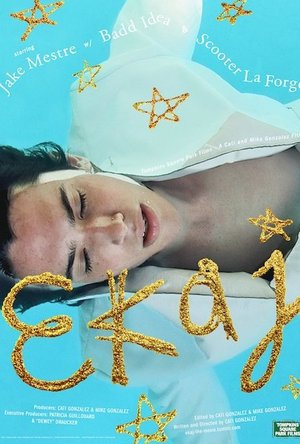

A gritty, raw portrait of a teenage runaway
When I was first introduced to Ekaj, I genuinely thought it was a documentary. The realisation that it was in fact a work of fiction took me by surprise, and this is a testament to the directing style of Cati Gonzalez. She has gone to great lengths to make this film feel as real as possible. None of the actors in the film are well-known or established, making them seem like ordinary people you might pass on the street. This sense of realism draws you closer to the characters we meet throughout, and I really loved this stylistic choice.
This gritty, imperfect camerawork and editing matches well with the harsh realities of life for Ekaj and his friend Mecca, both of which are young, gay Puerto Ricans trying to navigate the intimidating streets of New York City. This film doesn’t sugar coat it, as we are greeted with things such as drug abuse, AIDS, violence and sexual assault. We are forced to live this reality alongside Ekaj and Mecca, in all its harrowing honesty. It’s worlds away from my own, yet I felt close to the subject matter throughout. Ekaj and Mecca are complete opposites, with Mecca’s life experience and protective nature conflicting with Ekaj and his naivety. Following these two characters throughout was thoroughly entertaining, despite the difficult environment they both live in.
As the titular character, Jake Mestre really stood out to me. He does a fantastic job at portraying someone young, clueless and confused about their own identity. He experiments with new looks, new scents, and what he feels most comfortable in. He is a character that many can identify with when it comes to sexuality and gender identity, even if they do not share the same life experiences. In addition, the presence of Ekaj’s homophobic and aggressive father is an upsetting reminder of the rejection many individuals face from their own family members. I’m glad Ekaj never avoided these issues or tried to pretend they didn’t exist, instead, they were placed in clear view for the discomfort of the audience. It’s important we shed light on these societal problems, and cinema as a great way to do this.
The intrusive nature of the camera paired with natural, overlapping dialogue is striking, and at times I felt as though I shouldn’t be watching what I was. I felt like a genuine spectator, desperately trying to get a closer look at the lives of these individuals, even when they were talking about some deep and intense topics. The fly-on-the-wall style of filmmaking is what really stood out to me with Ekaj, and something I seriously enjoyed throughout. To me, this is what sets the film apart from others within the genre.
All in all, Ekaj is a well-rounded indie film that gives us a heartfelt and eye opening look at the dark side of New York City, whilst simultaneously creating a compelling and strong relationship between two young men. The way humour and sentimentalities still existed in such an awful world gave me a glimmer of hope, and some light relief throughout. Fundamentally, this is down to great writing and acting, which I’m full of praise for when it comes to this film.
I would certainly recommend Ekaj to a variety of audiences, whether or not you feel you can identify with any of the characters or subject matters. It sheds light on the darker side to human existence, which is important for us all to witness.
https://lucygoestohollywood.com/2018/11/04/ekaj-a-gritty-raw-portrait-of-a-teenage-runaway/
This gritty, imperfect camerawork and editing matches well with the harsh realities of life for Ekaj and his friend Mecca, both of which are young, gay Puerto Ricans trying to navigate the intimidating streets of New York City. This film doesn’t sugar coat it, as we are greeted with things such as drug abuse, AIDS, violence and sexual assault. We are forced to live this reality alongside Ekaj and Mecca, in all its harrowing honesty. It’s worlds away from my own, yet I felt close to the subject matter throughout. Ekaj and Mecca are complete opposites, with Mecca’s life experience and protective nature conflicting with Ekaj and his naivety. Following these two characters throughout was thoroughly entertaining, despite the difficult environment they both live in.
As the titular character, Jake Mestre really stood out to me. He does a fantastic job at portraying someone young, clueless and confused about their own identity. He experiments with new looks, new scents, and what he feels most comfortable in. He is a character that many can identify with when it comes to sexuality and gender identity, even if they do not share the same life experiences. In addition, the presence of Ekaj’s homophobic and aggressive father is an upsetting reminder of the rejection many individuals face from their own family members. I’m glad Ekaj never avoided these issues or tried to pretend they didn’t exist, instead, they were placed in clear view for the discomfort of the audience. It’s important we shed light on these societal problems, and cinema as a great way to do this.
The intrusive nature of the camera paired with natural, overlapping dialogue is striking, and at times I felt as though I shouldn’t be watching what I was. I felt like a genuine spectator, desperately trying to get a closer look at the lives of these individuals, even when they were talking about some deep and intense topics. The fly-on-the-wall style of filmmaking is what really stood out to me with Ekaj, and something I seriously enjoyed throughout. To me, this is what sets the film apart from others within the genre.
All in all, Ekaj is a well-rounded indie film that gives us a heartfelt and eye opening look at the dark side of New York City, whilst simultaneously creating a compelling and strong relationship between two young men. The way humour and sentimentalities still existed in such an awful world gave me a glimmer of hope, and some light relief throughout. Fundamentally, this is down to great writing and acting, which I’m full of praise for when it comes to this film.
I would certainly recommend Ekaj to a variety of audiences, whether or not you feel you can identify with any of the characters or subject matters. It sheds light on the darker side to human existence, which is important for us all to witness.
https://lucygoestohollywood.com/2018/11/04/ekaj-a-gritty-raw-portrait-of-a-teenage-runaway/
Hazel (1853 KP) rated The Festival Shoes in Books
Dec 17, 2018

<i>This eBook was provided by the publisher via NetGalley in exchange for an honest review
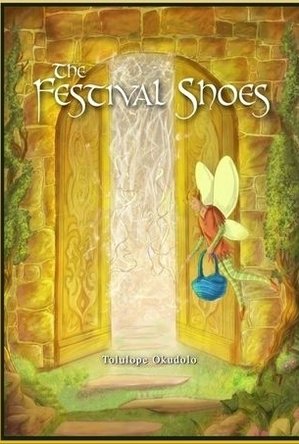
The Festival Shoes</i> by Tolulope Okudolo is a fairy story (literally) for young children. Although referred to as “pixies,” the illustrations provided by Eric Scott Fisher look like typical western imagery associated with the magical, winged creatures. The main character, Drumlo, is an ebullient pixie who is about to embark on his first trip to Earth in order to deliver a very important gift. With so much relying on his success, it would be absolutely awful if something went wrong.
Weaverton, the name of the land of fairies, is an invisible world that lies above the Earth. Whenever a child has a good thought or does something virtuous, a colourful string, unseen by the human eye, snakes its way up to the hidden land. Collected by pixies, these threads are woven into magnificent presents, which are delivered to the children as rewards on the day of the Great Festival. In order to prove himself as capable, Drumlo has been charged with safely transporting a pair of shoes to a truly deserving girl. With an effulgent thread as a guide, Drumlo sets off on his exciting mission.
The author is the founder of the publishing company Magnifying Children’s Horizons, which aspires to inspire children physically, mentally and spiritually about the natural world. Tolulope Okudolo’s author biography implies she is a Christian and likes to bring this aspect of her life into her writing. Although, as far as we know, fairies and pixies only exist in folklore, Tolulope retains the idea of the existence of God by referring to an unseen High King who lives above Weaverton. In this respect, the Great Festival and gift giving become similar to our Christmas tradition.
<i>The Festival Shoes</i>, however, is not intended to be a Christian book. Its purpose is to enhance children’s creativity and character by showing them the impact of their good and bad behaviour by emphasising the idea of receiving rewards. Whilst Drumlo is on his journey to Earth, he passes through the land where all bad thoughts and actions go. Compared with everywhere else, this place looks dull and gloomy, which goes to show what happens when nature is neglected and not cared for.
Another important message <i>The Festival Shoes</i> shows children is to have faith in themselves to do something for the first time. Drumlo had never been given such responsibility before, but he believed he could do it. Even though something goes wrong, his faith sees him through. He does not give up, everything works out in the end.
Reading the book as an adult, <i>The Festival Shoes</i> is not all that interesting. The ending comes about too quickly and, although the author is trying to emphasise that Drumlo’s faith saves the day, he does not physically do anything to fix what goes wrong – slightly misleading, perhaps?
The coloured illustrations that appear on every other page are pretty but do not help to tell the story. It is not a picture book for very young children; it is the next stage up. With discussion questions at the end of the book, <i>The Festival Shoes</i> is for parents and children to read together and think about their own impact on the world and nature.
Unfortunately, the book does not look professionally produced. The choice of typeface is uninspiring and the illustrations do not always slot into place well, leaving awkward layouts. As an eBook, this does not matter too much, but if it were to be printed, sales are unlikely to rocket.
The Festival Shoes</i> by Tolulope Okudolo is a fairy story (literally) for young children. Although referred to as “pixies,” the illustrations provided by Eric Scott Fisher look like typical western imagery associated with the magical, winged creatures. The main character, Drumlo, is an ebullient pixie who is about to embark on his first trip to Earth in order to deliver a very important gift. With so much relying on his success, it would be absolutely awful if something went wrong.
Weaverton, the name of the land of fairies, is an invisible world that lies above the Earth. Whenever a child has a good thought or does something virtuous, a colourful string, unseen by the human eye, snakes its way up to the hidden land. Collected by pixies, these threads are woven into magnificent presents, which are delivered to the children as rewards on the day of the Great Festival. In order to prove himself as capable, Drumlo has been charged with safely transporting a pair of shoes to a truly deserving girl. With an effulgent thread as a guide, Drumlo sets off on his exciting mission.
The author is the founder of the publishing company Magnifying Children’s Horizons, which aspires to inspire children physically, mentally and spiritually about the natural world. Tolulope Okudolo’s author biography implies she is a Christian and likes to bring this aspect of her life into her writing. Although, as far as we know, fairies and pixies only exist in folklore, Tolulope retains the idea of the existence of God by referring to an unseen High King who lives above Weaverton. In this respect, the Great Festival and gift giving become similar to our Christmas tradition.
<i>The Festival Shoes</i>, however, is not intended to be a Christian book. Its purpose is to enhance children’s creativity and character by showing them the impact of their good and bad behaviour by emphasising the idea of receiving rewards. Whilst Drumlo is on his journey to Earth, he passes through the land where all bad thoughts and actions go. Compared with everywhere else, this place looks dull and gloomy, which goes to show what happens when nature is neglected and not cared for.
Another important message <i>The Festival Shoes</i> shows children is to have faith in themselves to do something for the first time. Drumlo had never been given such responsibility before, but he believed he could do it. Even though something goes wrong, his faith sees him through. He does not give up, everything works out in the end.
Reading the book as an adult, <i>The Festival Shoes</i> is not all that interesting. The ending comes about too quickly and, although the author is trying to emphasise that Drumlo’s faith saves the day, he does not physically do anything to fix what goes wrong – slightly misleading, perhaps?
The coloured illustrations that appear on every other page are pretty but do not help to tell the story. It is not a picture book for very young children; it is the next stage up. With discussion questions at the end of the book, <i>The Festival Shoes</i> is for parents and children to read together and think about their own impact on the world and nature.
Unfortunately, the book does not look professionally produced. The choice of typeface is uninspiring and the illustrations do not always slot into place well, leaving awkward layouts. As an eBook, this does not matter too much, but if it were to be printed, sales are unlikely to rocket.
Ivana A. | Diary of Difference (1171 KP) rated Ethereal Custody: Anthologies in Books
Aug 3, 2020

<a href="https://amzn.to/2Wi7amb">Wishlist</a>; | <a
<a href="https://diaryofdifference.com/">Blog</a>; | <a href="https://www.facebook.com/diaryofdifference/">Facebook</a>; | <a href="https://twitter.com/DiaryDifference">Twitter</a>; | <a href="https://www.instagram.com/diaryofdifference/">Instagram</a>; | <a href="https://www.pinterest.co.uk/diaryofdifference/pins/">Pinterest</a>;
<img src="https://diaryofdifference.com/wp-content/uploads/2020/06/Book-Review-Banner-60.png"/>;
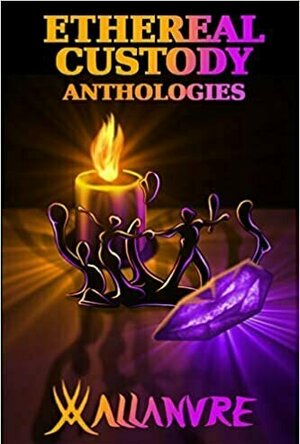
Ethereal Custody: Anthologies is a story about a young man, who was born in an underground slum and decides to risk his life for a chance to reach the surface. During his pursuit, he discovers that he is part of a much larger scheme of a supernatural nature, in an alternate reality. To escape his world, he grasps the opportunity to create utopia. But paradise has a dark side too.
While we follow this main character, we also follow different characters, who are part of the alternative world that this man created in his dreams - with their own stories of supernatural nature, Angels and people with animalistic tendencies involved as well.
<b><i>“We don’t hold grudges against Angels who didn’t save us. Our self-held grudges stem from the idea that we should have been able to save ourselves.”</i></b>
The story follows a few different planets, with a lot of different characters.
The book is written in the form of a journal. For me, it was very difficult to keep track of the planets and characters. I was losing interest very quickly, re-reading the same page a few times, seeking for adventures and plot twists, when all I could see were descriptions of places and objects. Sometimes there were good parts, where the story was really intriguing. Other times, I had to put the book down and read something else.
<b><i>“I don’t know if it’s forgiveness or love or grieving. But life feels like this slow and heartbroken process of learning to live without something we wanted so badly that we cannot have. To go on without those loved people we miss so much and all the precious moments we could have shared and knowing those futures will never be. It’s having to learn how to trek forward in a new life without a part of yourself; that missing fragment of a loving heart we surrendered and gave away as a gift to someone who’s no longer here with us.”</i></b>
There were many descriptions of places being repeated with the exact words. This made me wonder and question myself whether I’ve read this before. I then needed to go back in the book and reassure myself. It was very irritating to go back and find the same paragraph a few chapters earlier, with the same description of a place.
<b><i>“If there’s anything I learned tonight, it is this: I want to die with a smile on my face.”</i></b>
I am sad to say I didn’t enjoy this book.
Honestly, I liked the idea and where it was intended to go. I also liked the way it was written in the form of a journal. However, the writing was bad. Not only from a grammar and editing point of view, but also the skill to keep the reader intrigued. This book put me through a big reading slump. I am not a fan of DNFing books, but I was close with this one. I recommend Ethereal Custody: Anthologies, if you enjoy multiple planets, a lot of characters and a bit of supernatural sprinkles on top, but this book wasn’t for me.
<b><i>“We are afraid to be silent, yet afraid to speak. We fear to be alone with our demons in the dark, yet we are terrified of those demons being seen in the light among friends. Afraid to be powerless; afraid to be influential. I don’t understand it. I just don’t want to be afraid of myself anymore.”</i></b>
<a href="https://diaryofdifference.com/">Blog</a>; | <a href="https://www.facebook.com/diaryofdifference/">Facebook</a>; | <a href="https://twitter.com/DiaryDifference">Twitter</a>; | <a href="https://www.instagram.com/diaryofdifference/">Instagram</a>; | <a href="https://www.pinterest.co.uk/diaryofdifference/pins/">Pinterest</a>;
<img src="https://diaryofdifference.com/wp-content/uploads/2020/06/Book-Review-Banner-60.png"/>;
Ethereal Custody: Anthologies is a story about a young man, who was born in an underground slum and decides to risk his life for a chance to reach the surface. During his pursuit, he discovers that he is part of a much larger scheme of a supernatural nature, in an alternate reality. To escape his world, he grasps the opportunity to create utopia. But paradise has a dark side too.
While we follow this main character, we also follow different characters, who are part of the alternative world that this man created in his dreams - with their own stories of supernatural nature, Angels and people with animalistic tendencies involved as well.
<b><i>“We don’t hold grudges against Angels who didn’t save us. Our self-held grudges stem from the idea that we should have been able to save ourselves.”</i></b>
The story follows a few different planets, with a lot of different characters.
The book is written in the form of a journal. For me, it was very difficult to keep track of the planets and characters. I was losing interest very quickly, re-reading the same page a few times, seeking for adventures and plot twists, when all I could see were descriptions of places and objects. Sometimes there were good parts, where the story was really intriguing. Other times, I had to put the book down and read something else.
<b><i>“I don’t know if it’s forgiveness or love or grieving. But life feels like this slow and heartbroken process of learning to live without something we wanted so badly that we cannot have. To go on without those loved people we miss so much and all the precious moments we could have shared and knowing those futures will never be. It’s having to learn how to trek forward in a new life without a part of yourself; that missing fragment of a loving heart we surrendered and gave away as a gift to someone who’s no longer here with us.”</i></b>
There were many descriptions of places being repeated with the exact words. This made me wonder and question myself whether I’ve read this before. I then needed to go back in the book and reassure myself. It was very irritating to go back and find the same paragraph a few chapters earlier, with the same description of a place.
<b><i>“If there’s anything I learned tonight, it is this: I want to die with a smile on my face.”</i></b>
I am sad to say I didn’t enjoy this book.
Honestly, I liked the idea and where it was intended to go. I also liked the way it was written in the form of a journal. However, the writing was bad. Not only from a grammar and editing point of view, but also the skill to keep the reader intrigued. This book put me through a big reading slump. I am not a fan of DNFing books, but I was close with this one. I recommend Ethereal Custody: Anthologies, if you enjoy multiple planets, a lot of characters and a bit of supernatural sprinkles on top, but this book wasn’t for me.
<b><i>“We are afraid to be silent, yet afraid to speak. We fear to be alone with our demons in the dark, yet we are terrified of those demons being seen in the light among friends. Afraid to be powerless; afraid to be influential. I don’t understand it. I just don’t want to be afraid of myself anymore.”</i></b>

Haley Mathiot (9 KP) rated Shatter Me in Books
Apr 27, 2018
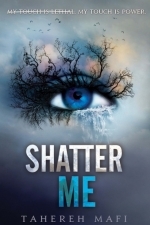


Shatter Me is one of those books that will stick with me forever. I may even re-read it just because I enjoyed it so much! I mean, I never re-read books! But I may very well re-read this one! It's one that I can pick up the next one after not having read it for a year, and I can jump right back in because I remember it all. I can't wait until the next book comes out! Oh my gosh! Why on earth did I wait so long to read it? Oh yeah. College.
The writing was magnificent (man has it been a long time since I've been able to say that). It was interesting, and different, and felt like a free flowing train of thought instead of conscious sentences or pages from a diary. It was beautiful and poetic, and full of metaphors about nature and beauty and pain that were so honest and true that I couldn't figure out why I hadn't thought them up myself first. Sometimes there would be a phrase that Juliette thought to herself that was true but she refused to admit to thinking, and it would be crossed out. (like that ^). I really liked this, because it showed what she was really thinking, but it also showed what kind of person she wanted to be.
The plot was fantastic. It never stopped moving forward. There were brief times of rest in the thriller aspect of the story, but the tension itself never went away, and there were no dead plot fillers thrown in.
I really liked Juliette. She wants to be strong, but after a long life of being emotionally abused, she's a weak broken pitiful creature who just wants to be loved and nurtured back to health. She will do anything to be on good terms with someone she loves. She's dying to be touched, but she knows she can't be because she'll kill whoever touches her. And she doesn't want to hurt anyone. She wants to help people and comfort them, but she knows she'll kill them. What a horrible place to be in!
I won't say too much about her love interest, Adam, but I will say he is so going on my list of favorite literary crushes. He is hott stuff. And because of that, I'm going to put my recommendation as ages 16+. If you can't read Hush Hush or Hourglass, I'd hold off on this one for a while…
Content/recommendation: Some hot kissing scenes, and I'm seeing a potential for more in the later books. Ages 16+
The writing was magnificent (man has it been a long time since I've been able to say that). It was interesting, and different, and felt like a free flowing train of thought instead of conscious sentences or pages from a diary. It was beautiful and poetic, and full of metaphors about nature and beauty and pain that were so honest and true that I couldn't figure out why I hadn't thought them up myself first. Sometimes there would be a phrase that Juliette thought to herself that was true but she refused to admit to thinking, and it would be crossed out. (like that ^). I really liked this, because it showed what she was really thinking, but it also showed what kind of person she wanted to be.
The plot was fantastic. It never stopped moving forward. There were brief times of rest in the thriller aspect of the story, but the tension itself never went away, and there were no dead plot fillers thrown in.
I really liked Juliette. She wants to be strong, but after a long life of being emotionally abused, she's a weak broken pitiful creature who just wants to be loved and nurtured back to health. She will do anything to be on good terms with someone she loves. She's dying to be touched, but she knows she can't be because she'll kill whoever touches her. And she doesn't want to hurt anyone. She wants to help people and comfort them, but she knows she'll kill them. What a horrible place to be in!
I won't say too much about her love interest, Adam, but I will say he is so going on my list of favorite literary crushes. He is hott stuff. And because of that, I'm going to put my recommendation as ages 16+. If you can't read Hush Hush or Hourglass, I'd hold off on this one for a while…
Content/recommendation: Some hot kissing scenes, and I'm seeing a potential for more in the later books. Ages 16+

Acanthea Grimscythe (300 KP) rated Fungoid in Books
May 16, 2018

Actual rating: 4.5 Stars
Post-apocalyptic stories are, by far, among my favorites to read, perhaps because it's a hypothetical possibility that could still occur in our future. From zombies to biological warfare, many stories offer a new perspective on the end of the world and William Meikle's Fungoid is no different.
Fungoid takes place in Canada and encompasses a wide range of characters and their interactions with one another and other individuals after the apocalypse falls upon the world in the form of a fungal outbreak, only in this case, the fungal epidemic appears to have a mind of its own as it voraciously consumes humanity. Those who manage to survive are left to fend for themselves as they search for a way to overcome their fates when all odds are against them.
Sometimes, a wide range of characters works. Other times, it doesn't. In this case, it does, when says a lot for Meikle's talent as a writer: his characters are well-developed and each possess their own distinct personalities. None of these characters are perfect: they have their own flaws and faults, and, in the true nature of horror, they aren't all good. The portrayal of a villainous character's decline from normality to the ultimate evil is often skipped over in favor of shining the spotlight on the heroes of a story. Meikle's unfortunate villain is spared no detail, and as a reader I was glad to find myself not only bewildered and frustrated by this character, but also found myself feeling sadness and sympathy for them.
The story is extremely fast paced, leaving little room for breathing as you flip through the pages. Given that the book is actually fairly short, it serves as a perfect read for a rainy afternoon inside. There's no shortage of action which is a necessity in a world where many people simply do not have the time to divulge to reading a thick, slower paced book. Meikle's writing is filled with twists and turns, where his characters are given a plausible route of escape or survival, only to find themselves forced to overcome obstacles that threaten to end their very lives.
Fungoid is a definite, must-read for fans of the horror genre, especially if you're looking for a new way of approaching the end of the world.
I would like to thank DarkFuse, William Meikle, and NetGalley for providing me with an advanced reader's copy in exchange for an honest and unbiased review.
Post-apocalyptic stories are, by far, among my favorites to read, perhaps because it's a hypothetical possibility that could still occur in our future. From zombies to biological warfare, many stories offer a new perspective on the end of the world and William Meikle's Fungoid is no different.
Fungoid takes place in Canada and encompasses a wide range of characters and their interactions with one another and other individuals after the apocalypse falls upon the world in the form of a fungal outbreak, only in this case, the fungal epidemic appears to have a mind of its own as it voraciously consumes humanity. Those who manage to survive are left to fend for themselves as they search for a way to overcome their fates when all odds are against them.
Sometimes, a wide range of characters works. Other times, it doesn't. In this case, it does, when says a lot for Meikle's talent as a writer: his characters are well-developed and each possess their own distinct personalities. None of these characters are perfect: they have their own flaws and faults, and, in the true nature of horror, they aren't all good. The portrayal of a villainous character's decline from normality to the ultimate evil is often skipped over in favor of shining the spotlight on the heroes of a story. Meikle's unfortunate villain is spared no detail, and as a reader I was glad to find myself not only bewildered and frustrated by this character, but also found myself feeling sadness and sympathy for them.
The story is extremely fast paced, leaving little room for breathing as you flip through the pages. Given that the book is actually fairly short, it serves as a perfect read for a rainy afternoon inside. There's no shortage of action which is a necessity in a world where many people simply do not have the time to divulge to reading a thick, slower paced book. Meikle's writing is filled with twists and turns, where his characters are given a plausible route of escape or survival, only to find themselves forced to overcome obstacles that threaten to end their very lives.
Fungoid is a definite, must-read for fans of the horror genre, especially if you're looking for a new way of approaching the end of the world.
I would like to thank DarkFuse, William Meikle, and NetGalley for providing me with an advanced reader's copy in exchange for an honest and unbiased review.
Taut Lines: Extraordinary True Fishing Stories
Book
Since the earliest writings of civilization, people have been writing about fish and the pursuit of...
The Triumph of Seeds: How Grains, Nuts, Kernels, Pulses, and Pips, Conquered the Plant Kingdom and Shaped Human History
Book
Winner of the 2016 PNBA Book Award A finalist for the 2016 AAAS/Subaru SB&F Prize for Excellence in...
Noonday
Book
In Noonday, Pat Barker - the Man Booker-winning author of the definitive WWI trilogy, Regeneration -...
Rememberances of Things Past
Book
Complete edition, from 1 to 7.The Narrator begins by noting, "For a long time, I went to bed early."...
Kirk Bage (1775 KP) rated Call Me by Your Name (2017) in Movies
Mar 3, 2020
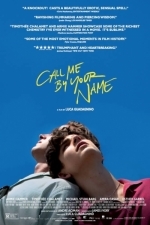
There are a swathe of European film-makers like Luca Guadagnino and Paolo Sorrentino that have the skill to make every image they print to film look like a work of art, giving you the feeling you are on the most idyllic holiday you ever had. Watching a largely silent image of a beautiful lake or a tree in the breeze, or an al fresco dinner where family and friends talk freely whilst the wine and olive oil flow is a treat I am not immune to.
Continuing to catch up on Oscar nominated films of recent years I have missed, I went on holiday in 1982 Italy for 2 hours last night. There was culture, architecture, piano music, food, nature, and a big peachy dollop of sensuality – thinly veiled as dramatic cinema. It washed over me like a daydream! And if I say nothing really happens, I wouldn’t necessarily call it a criticism. It ambles along at such a languid pace at times, with such little conflict or incident, but to call it insignificant would be a disservice to the power of love at its palpable heart.
Essentially, it is a right of passage movie, that defies gloriously every hollywood habit of over egging the souffle. For minutes on end we watch Elio, the formidable natural talent of Timothée Chalamet, read a book, go for a swim, ride a bike, play the piano, or fuck some fruit, as he gradually descends into obsession, and ultimately love, for the older Armie Hammer as the aloof and seemingly worldly Oliver, his father’s research assistant for the Summer.
It feels for a long, long time like you might not care, such a tale of rich privilege as it is; but, by the final moments you do realise you have been drawn into the depth of feeling that is often hidden in plain sight, and that you may after all relate to the heartbreak contained in loving an idea of love and passion that is never attainable in reality. The self discovery of a passion within you as a life force is a melancholy reward in and of itself.
I know already that I must return to this film from time to time in a variety of moods, because it has a depth of subtlety that may catch me differently every time; and that is its main power. The key to which is Chalamet. His eyes and body language are so filled with hidden wonders that his words don’t always convey, that his work seems more like a strange dance than your average screen performance, that often simply takes the script and merely reads it aloud.
The remarkable career of Michael Stuhlbarg, as Elio’s father, is also noteworthy here. Take a look at how many great films he has now been a part of and gasp to think, oh wow, that is the same guy! His paternal speech to Elio at the end of this film was a highlight for me. Such gorgeous writing, that combines character with wisdom and weakness in a tapestry of care and regret. Just wonderful.
You know, I came into writing this review feeling that I had found the experience quite disposable and slight. That clearly isn’t the case. This is obviously a film you must watch again, meeting it where it wants to meet you. Not to mention I have always been a Sufjan Stevens fan, and found his contribution to the musical landscape near perfect. In conclusion, there is a banquet here masquerading as a taste of something sweet brushing the lips. I will be back for a second bite in time.
Continuing to catch up on Oscar nominated films of recent years I have missed, I went on holiday in 1982 Italy for 2 hours last night. There was culture, architecture, piano music, food, nature, and a big peachy dollop of sensuality – thinly veiled as dramatic cinema. It washed over me like a daydream! And if I say nothing really happens, I wouldn’t necessarily call it a criticism. It ambles along at such a languid pace at times, with such little conflict or incident, but to call it insignificant would be a disservice to the power of love at its palpable heart.
Essentially, it is a right of passage movie, that defies gloriously every hollywood habit of over egging the souffle. For minutes on end we watch Elio, the formidable natural talent of Timothée Chalamet, read a book, go for a swim, ride a bike, play the piano, or fuck some fruit, as he gradually descends into obsession, and ultimately love, for the older Armie Hammer as the aloof and seemingly worldly Oliver, his father’s research assistant for the Summer.
It feels for a long, long time like you might not care, such a tale of rich privilege as it is; but, by the final moments you do realise you have been drawn into the depth of feeling that is often hidden in plain sight, and that you may after all relate to the heartbreak contained in loving an idea of love and passion that is never attainable in reality. The self discovery of a passion within you as a life force is a melancholy reward in and of itself.
I know already that I must return to this film from time to time in a variety of moods, because it has a depth of subtlety that may catch me differently every time; and that is its main power. The key to which is Chalamet. His eyes and body language are so filled with hidden wonders that his words don’t always convey, that his work seems more like a strange dance than your average screen performance, that often simply takes the script and merely reads it aloud.
The remarkable career of Michael Stuhlbarg, as Elio’s father, is also noteworthy here. Take a look at how many great films he has now been a part of and gasp to think, oh wow, that is the same guy! His paternal speech to Elio at the end of this film was a highlight for me. Such gorgeous writing, that combines character with wisdom and weakness in a tapestry of care and regret. Just wonderful.
You know, I came into writing this review feeling that I had found the experience quite disposable and slight. That clearly isn’t the case. This is obviously a film you must watch again, meeting it where it wants to meet you. Not to mention I have always been a Sufjan Stevens fan, and found his contribution to the musical landscape near perfect. In conclusion, there is a banquet here masquerading as a taste of something sweet brushing the lips. I will be back for a second bite in time.