
Search

BankofMarquis (1832 KP) rated Back to the Future (1985) in Movies
Mar 30, 2018


Almost a perfect film
I was flipping channels the other day and ran across BACK TO THE FUTURE, it was just about to start and since I hadn't seen it in quite awhile, I figured I'd catch the first part of it before venturing off to other surfing opportunities. As often happens in this sort of situation, I ended up transfixed by this film and watched the whole thing. After it was over, I asked myself why did I enjoy this film so much and my answer was fascinating (at least to me) -
BACK TO THE FUTURE is about as perfect of a film as there is.
Why? Let's start with the structure of this film. It follows the classic 3 Act structure. ACT 1: set up the premise, the gimmick (if any) and the stakes. ACT 2: escalate the stakes and throw in complications and obstacles. ACT 3: Resolve everything.
Seems like a pretty simple formula, right? So why do so many get it wrong? Quite simply, they don't keep it simple and then execute (almost to perfection) the simplicity of the structure. Let's break down the 3 Acts of BACK TO THE FUTURE.
ACT 1 - set up the premise, the gimmick and the stakes. The premise & gimmick is simple, time travel is possible and our hero travels back in time and is stranded there. The stakes are even simpler - our hero must find a way to get Back to the Future.
ACT 2 - escalate the stakes and throw in complicaitons and obstacles. The stakes are escalated by the fact that our hero interrupts the timeline of when his mother met his father, thus there is the very real possibility that he will cease to exist for his parents never met. Our hero must find a way to bring his mother and father together. The complications are that his parents are not the boring old fuddy-duddy's that our hero thought they were, his father is a peeping-Tom nerd and his mother is a randy high-schooler who falls in love (lust?) with our hero, her son. Further complicating things is that the time machine must find enough power to make the time travel device (the flux-capacitor!) work, power that is not readily available in this timeline. Adding one more complication to the mix is the school bully who is constantly after our hero.
ACT 3 - resolve everything. This is where this film excels. EVERY loose end is tied up. Our hero find a way to reunite his mother and father, the bully is put in his place, a source of energy is found and our hero's journey comes to a succesful conclusion.
There is much, much more to this film than those plot points, but I just wanted to show how deceptively simple and efficient this plot is. Kudo's must go out to screenwriter's Robert Zemeckis (more on him later) and Bob Gale for coming up with this idea and executing it so well. Gale (1941, KOLCHAK: THE NIGHT STALKER) said he came up with this idea when he saw his father's high school yearbook and dreamed about going back to meet him. He stated that he doubted that he and his father would have been friends.
An interesting side fact: The University of Southern California Film school's writing classes use the screenplay for Back to the Future as the model of "The Perfect Screenplay". So, I rest my case.
But a "perfect" screenplay would be worthless without near perfect execution of putting the words and actions up on the screen - and this film achieves that as well. Director (and co-screenwriter) Robert Zemeckis (WHO FRAMED ROGER RABBIT, FORREST GUMP) cleary had a vision of how to make this film and did not waiver from it. The action is strong, the fluidness of the film is solid and the performances are all top-notch. The only thing that might knock this film down a peg or two is some of the 32 "special effects" shots that - to look at it these days - seem somewhat archaic (see the flames between Doc Brown's and Marty's feet when the DeLorean first goes forward in time). But for the time, these special effects are state-of-the-art.
Speaking of performances, Michael J. Fox became a movie star with this film, and rightfully so. His Marty McFly is charming, quirky, intelligent, dorky - all at the same time. His uncomfortableness with his teen age mother is palatable. Credit must go with Director Zemeckis, who - after he couldn't get Fox released from his contract on the TV show FAMILY TIES - went (famously) with his 2nd choice, Eric Stoltz. When Stolt's seriousness and "method" acting was not meshing with the type of film he wanted to make, Zemeckis made the bold decision to fire Stoltz and worked out a deal where he can use Fox at night while Fox shot Family ties during the day.
Playing against Fox, brilliantly, is Christopher Lloyd as "Doc" Emmit Brown. A two-time Emmy winner (at the time) for playing crazy Jim Ignatowski on the TV show TAXI, Lloyd played Doc Brown as "part Einstein, part composer Leopold Stokowski", creating what would be the benchmark for "brilliant, scatter-brained scientist". Leah Thompson does the finest performance of her career as Marty's mother and Crispin Glover was beyond quirky as Marty's nerd/loser Dad. Finally Thomas F. Wilson is the embodiment of bully as "Biff" Tannen.
After the success of this film, two other BACK TO THE FUTURE films were made - films that I feel were good, but somewhat diluted the perfection of this film. No matter. Sit down, relax and enjoy one of the most "perfect" films ever made.
Letter Grade: A+
A rare 10 (out of 10) stars and you can take that to the Bank(ofMarquis)
BACK TO THE FUTURE is about as perfect of a film as there is.
Why? Let's start with the structure of this film. It follows the classic 3 Act structure. ACT 1: set up the premise, the gimmick (if any) and the stakes. ACT 2: escalate the stakes and throw in complications and obstacles. ACT 3: Resolve everything.
Seems like a pretty simple formula, right? So why do so many get it wrong? Quite simply, they don't keep it simple and then execute (almost to perfection) the simplicity of the structure. Let's break down the 3 Acts of BACK TO THE FUTURE.
ACT 1 - set up the premise, the gimmick and the stakes. The premise & gimmick is simple, time travel is possible and our hero travels back in time and is stranded there. The stakes are even simpler - our hero must find a way to get Back to the Future.
ACT 2 - escalate the stakes and throw in complicaitons and obstacles. The stakes are escalated by the fact that our hero interrupts the timeline of when his mother met his father, thus there is the very real possibility that he will cease to exist for his parents never met. Our hero must find a way to bring his mother and father together. The complications are that his parents are not the boring old fuddy-duddy's that our hero thought they were, his father is a peeping-Tom nerd and his mother is a randy high-schooler who falls in love (lust?) with our hero, her son. Further complicating things is that the time machine must find enough power to make the time travel device (the flux-capacitor!) work, power that is not readily available in this timeline. Adding one more complication to the mix is the school bully who is constantly after our hero.
ACT 3 - resolve everything. This is where this film excels. EVERY loose end is tied up. Our hero find a way to reunite his mother and father, the bully is put in his place, a source of energy is found and our hero's journey comes to a succesful conclusion.
There is much, much more to this film than those plot points, but I just wanted to show how deceptively simple and efficient this plot is. Kudo's must go out to screenwriter's Robert Zemeckis (more on him later) and Bob Gale for coming up with this idea and executing it so well. Gale (1941, KOLCHAK: THE NIGHT STALKER) said he came up with this idea when he saw his father's high school yearbook and dreamed about going back to meet him. He stated that he doubted that he and his father would have been friends.
An interesting side fact: The University of Southern California Film school's writing classes use the screenplay for Back to the Future as the model of "The Perfect Screenplay". So, I rest my case.
But a "perfect" screenplay would be worthless without near perfect execution of putting the words and actions up on the screen - and this film achieves that as well. Director (and co-screenwriter) Robert Zemeckis (WHO FRAMED ROGER RABBIT, FORREST GUMP) cleary had a vision of how to make this film and did not waiver from it. The action is strong, the fluidness of the film is solid and the performances are all top-notch. The only thing that might knock this film down a peg or two is some of the 32 "special effects" shots that - to look at it these days - seem somewhat archaic (see the flames between Doc Brown's and Marty's feet when the DeLorean first goes forward in time). But for the time, these special effects are state-of-the-art.
Speaking of performances, Michael J. Fox became a movie star with this film, and rightfully so. His Marty McFly is charming, quirky, intelligent, dorky - all at the same time. His uncomfortableness with his teen age mother is palatable. Credit must go with Director Zemeckis, who - after he couldn't get Fox released from his contract on the TV show FAMILY TIES - went (famously) with his 2nd choice, Eric Stoltz. When Stolt's seriousness and "method" acting was not meshing with the type of film he wanted to make, Zemeckis made the bold decision to fire Stoltz and worked out a deal where he can use Fox at night while Fox shot Family ties during the day.
Playing against Fox, brilliantly, is Christopher Lloyd as "Doc" Emmit Brown. A two-time Emmy winner (at the time) for playing crazy Jim Ignatowski on the TV show TAXI, Lloyd played Doc Brown as "part Einstein, part composer Leopold Stokowski", creating what would be the benchmark for "brilliant, scatter-brained scientist". Leah Thompson does the finest performance of her career as Marty's mother and Crispin Glover was beyond quirky as Marty's nerd/loser Dad. Finally Thomas F. Wilson is the embodiment of bully as "Biff" Tannen.
After the success of this film, two other BACK TO THE FUTURE films were made - films that I feel were good, but somewhat diluted the perfection of this film. No matter. Sit down, relax and enjoy one of the most "perfect" films ever made.
Letter Grade: A+
A rare 10 (out of 10) stars and you can take that to the Bank(ofMarquis)

Movie Metropolis (309 KP) rated Logan (2017) in Movies
Jun 10, 2019 (Updated Jun 10, 2019)
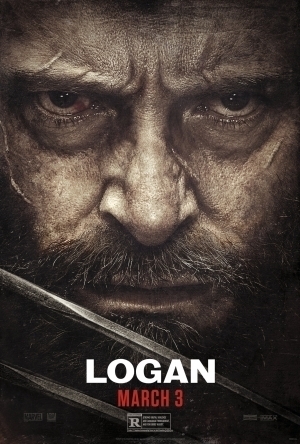

Third time lucky?
The X-Men franchise is as convoluted as Spaghetti Junction. Littered with constantly changing timelines, it has become the epitome of tiring and fans are getting exasperated too. With every great film (X2, X-Men: Days of Future Past), the series has followed it with some truly awful movies (X-Men: Origins Wolverine, X-Men: Apocalypse).
To this end, Hugh Jackman has finally decided to hang up his Adamantium claws after Logan, his ninth and apparently final outing as the grizzly hero. Are we third time lucky for his solo films?
James Mangold, director of The Wolverine, returns to the director’s chair and helms an at times brutal and uncompromising film speckled with the sort of emotional heft you’d find in the saddest rom-com’s.
In the near future, a weary Logan (Hugh Jackman) cares for an ailing Professor Charles Xavier (Patrick Stewart) in a hide out on the Mexican border accompanied by long-time acquaintance Caliban (Stephen Merchant). But Logan’s attempts to hide from the world and his legacy are upended when a young mutant, Laura, (Dafne Keen) arrives, being pursued by unspeakable dark forces.
In parts, Logan feels very much like a Western. The bleak, unforgiving Mexican landscape is a beautiful change from the dreary concrete jungles that blight the majority of superhero films these days and this is where Logan will either succeed or fail. It doesn’t feel like a superhero film, despite its faithfulness to the Old Man Logan comics.
Much like a metaphor for the genre itself, Logan has grown weary of the world and it is a testament to Hugh Jackman’s acting capabilities that he is able to add yet another dimension to a character that has been a cinema staple since the Millennium. Patrick Stewart is also on top form showing a vulnerable side to the world’s smartest mutant. Newcomer, Dafne Keen is also exceptional despite her limited dialogue.
Heartfelt scenes in which the oddball family share dinner with kind strangers are strikingly juxtaposed with sequences of sheer brutality. If you thought Deadpool was bloody, you haven’t seen anything yet. And for all the violence, Logan is the most poignant film in the entire X-Men canon, wearing its 15 certification proudly when it needs to, but not shying away from sections of quiet contemplation.
Negatives? Well, in spite of its gargantuan length, the ending feels a little tacked on and rushed – something a lot of modern blockbusters seem to feel is necessary at the moment and the final 30 minutes are a slight anti-climax in comparison to what preceded it, but on the whole, this final outing for Hugh Jackman proves a fitting one. Third time’s a charm!
https://moviemetropolis.net/2017/03/03/third-time-lucky-logan-review/
To this end, Hugh Jackman has finally decided to hang up his Adamantium claws after Logan, his ninth and apparently final outing as the grizzly hero. Are we third time lucky for his solo films?
James Mangold, director of The Wolverine, returns to the director’s chair and helms an at times brutal and uncompromising film speckled with the sort of emotional heft you’d find in the saddest rom-com’s.
In the near future, a weary Logan (Hugh Jackman) cares for an ailing Professor Charles Xavier (Patrick Stewart) in a hide out on the Mexican border accompanied by long-time acquaintance Caliban (Stephen Merchant). But Logan’s attempts to hide from the world and his legacy are upended when a young mutant, Laura, (Dafne Keen) arrives, being pursued by unspeakable dark forces.
In parts, Logan feels very much like a Western. The bleak, unforgiving Mexican landscape is a beautiful change from the dreary concrete jungles that blight the majority of superhero films these days and this is where Logan will either succeed or fail. It doesn’t feel like a superhero film, despite its faithfulness to the Old Man Logan comics.
Much like a metaphor for the genre itself, Logan has grown weary of the world and it is a testament to Hugh Jackman’s acting capabilities that he is able to add yet another dimension to a character that has been a cinema staple since the Millennium. Patrick Stewart is also on top form showing a vulnerable side to the world’s smartest mutant. Newcomer, Dafne Keen is also exceptional despite her limited dialogue.
Heartfelt scenes in which the oddball family share dinner with kind strangers are strikingly juxtaposed with sequences of sheer brutality. If you thought Deadpool was bloody, you haven’t seen anything yet. And for all the violence, Logan is the most poignant film in the entire X-Men canon, wearing its 15 certification proudly when it needs to, but not shying away from sections of quiet contemplation.
Negatives? Well, in spite of its gargantuan length, the ending feels a little tacked on and rushed – something a lot of modern blockbusters seem to feel is necessary at the moment and the final 30 minutes are a slight anti-climax in comparison to what preceded it, but on the whole, this final outing for Hugh Jackman proves a fitting one. Third time’s a charm!
https://moviemetropolis.net/2017/03/03/third-time-lucky-logan-review/

Gareth von Kallenbach (980 KP) rated Hot Tub Time Machine 2 (2015) in Movies
Jun 19, 2019


When “Hot Tub Time Machine” came out almost five years ago, it took a whacky concept of four friends whisked back in time during a getaway to the 80s giving them a chance to fix aspects of their lives they wished they had done differently.
The outrageous and bawdy humor as well as strong performances from John Cusack and Crispin Glover made the film a cult hit that earned over $64 million worldwide and did well on DVD sales as well.
Naturally a sequel was planned and when I first heard it was looking to be a direct to DVD sequel sans Cusack, I had an idea that the film may be little more than an effort to cash in on the success of the first film without offering much to the continued story of the characters.
I was encouraged by the early trailers for the sequel and as such went into the screener with better expectations than I had originally had when I first heard of the projects.
The film explains that “John Cusack’s character is off on adventure of self-discovery as the friends have all become wealthy and famous after the events of the first film. Lou (Rob Corddry) has milked Motley Crue and his knowledge of pending tech to establish himself as a major player, Nick (Craig Robinson) has cashed in on a recording career by covering famous songs from his day before they were ever released and Jacob (Clark Duke) is stuck playing Butler to his father Lou.
Lou has become an example of an ego run wild and during one of his lavish parties; he is shot and left near death. In a move of desperation, Nick and Jacob whisk Lou into the Hot Tub and attempt to go back in time to stop the shooting.
Things do not go as planned as the trio end up 15 years into the future and must find a way to put things right and get home.
One would think that this premise would be able to produce some funny moments, but sadly the film is painfully slow and plodding and most shocking of all, very, very unfunny. The film tries to get some crude laughs from a gameshow of the future and a homicidal Smart Car but the film just wanders from situation to situation looking for laughs and does not setup or execute them properly.
There is a montage scene at the end of the film which sadly is the best part and shows what could have been a much better sequel with the group going through time taking the place of famous individuals and interacting with them.
As it stands, “Hot Tub Time Machine 2”, is a trip you do not want to make.
http://sknr.net/2015/02/20/hot-tub-time-machine-2/
The outrageous and bawdy humor as well as strong performances from John Cusack and Crispin Glover made the film a cult hit that earned over $64 million worldwide and did well on DVD sales as well.
Naturally a sequel was planned and when I first heard it was looking to be a direct to DVD sequel sans Cusack, I had an idea that the film may be little more than an effort to cash in on the success of the first film without offering much to the continued story of the characters.
I was encouraged by the early trailers for the sequel and as such went into the screener with better expectations than I had originally had when I first heard of the projects.
The film explains that “John Cusack’s character is off on adventure of self-discovery as the friends have all become wealthy and famous after the events of the first film. Lou (Rob Corddry) has milked Motley Crue and his knowledge of pending tech to establish himself as a major player, Nick (Craig Robinson) has cashed in on a recording career by covering famous songs from his day before they were ever released and Jacob (Clark Duke) is stuck playing Butler to his father Lou.
Lou has become an example of an ego run wild and during one of his lavish parties; he is shot and left near death. In a move of desperation, Nick and Jacob whisk Lou into the Hot Tub and attempt to go back in time to stop the shooting.
Things do not go as planned as the trio end up 15 years into the future and must find a way to put things right and get home.
One would think that this premise would be able to produce some funny moments, but sadly the film is painfully slow and plodding and most shocking of all, very, very unfunny. The film tries to get some crude laughs from a gameshow of the future and a homicidal Smart Car but the film just wanders from situation to situation looking for laughs and does not setup or execute them properly.
There is a montage scene at the end of the film which sadly is the best part and shows what could have been a much better sequel with the group going through time taking the place of famous individuals and interacting with them.
As it stands, “Hot Tub Time Machine 2”, is a trip you do not want to make.
http://sknr.net/2015/02/20/hot-tub-time-machine-2/
LeftSideCut (3776 KP) rated The Incredible Hulk (2008) in Movies
Feb 11, 2020 (Updated Apr 7, 2020)

The second entry into the ever expanding MCU has it's flaws, but it's still an entertaining enough monster movie featuring one of Marvel Comics most beloved characters.
Edward Norton is a fantastic actor, and his involvement here as Bruce Banner is an inspired choice. It's a shame that behind the scenes politics resulted in him leaving the franchise so soon, even though I love Mark Ruffalo!
He plays Banner as a fairly broody individual, but with an awkward edge, a man who's constantly in fear if what he can turn into.
Liv Tyler plays Betty Ross, and she's pretty much just Liv Tyler throughout. She's actually pretty charming as the character and it would be nice to see her turn up in future MCU films (hey, if they can get Natalie Portman involved again then surely it's a possibility!)
Tim Roth and William Hurt play the antagonists to Banner, and are both enjoyable in the more villainous roles, even if Roth is more or less relegated to spouting out cheesy one liners. Hurt has of course reprised his role in later films and is a welcome main stay in the franchise.
We also have Tim Blake Nelson and Ty Burrell, set up as future characters (The Leader and Doc Samson respectively), but neither of these have yet to come to fruition, so as it stands, both feel like wasted opportunities.
The narrative is pretty straightforward as Banner is pursued across the planet, but it gets the job done, ending in a big showdown between Hulk and Abomination in the middle of Harlem.
One of my main criticisms stems from this scene actually, with the film climaxing in a big CGI fight, between the hero, and an evil version of the hero, exactly like in Iron Man, and unfortunately, in a fair few MCU films further down the line (Iron Man 2, Black Panther, Ant Man). The CGI, whilst still good enough, doesn't hold up anywhere near as well as Iron Man however (which came out in the same year), and the green/grey colour scheme of both characters, and the night-time setting, gives the whole scene a dull edge, even if Hulk does tear a car in half and use both halves as boxing gloves...
The Incredible Hulk is a mostly decent film, but it shows signs of a franchise still finding its feet, and these signs grow in obviousness the older it gets, which is a big contrast when compared to the confident nature of Iron Man.
It also feels a bit stuck in the "look at this cool shot" superhero formula that became rampant during the 2000s.
It's still a fun film however, and deserves it's place in a Marvel movie marathon.
Edward Norton is a fantastic actor, and his involvement here as Bruce Banner is an inspired choice. It's a shame that behind the scenes politics resulted in him leaving the franchise so soon, even though I love Mark Ruffalo!
He plays Banner as a fairly broody individual, but with an awkward edge, a man who's constantly in fear if what he can turn into.
Liv Tyler plays Betty Ross, and she's pretty much just Liv Tyler throughout. She's actually pretty charming as the character and it would be nice to see her turn up in future MCU films (hey, if they can get Natalie Portman involved again then surely it's a possibility!)
Tim Roth and William Hurt play the antagonists to Banner, and are both enjoyable in the more villainous roles, even if Roth is more or less relegated to spouting out cheesy one liners. Hurt has of course reprised his role in later films and is a welcome main stay in the franchise.
We also have Tim Blake Nelson and Ty Burrell, set up as future characters (The Leader and Doc Samson respectively), but neither of these have yet to come to fruition, so as it stands, both feel like wasted opportunities.
The narrative is pretty straightforward as Banner is pursued across the planet, but it gets the job done, ending in a big showdown between Hulk and Abomination in the middle of Harlem.
One of my main criticisms stems from this scene actually, with the film climaxing in a big CGI fight, between the hero, and an evil version of the hero, exactly like in Iron Man, and unfortunately, in a fair few MCU films further down the line (Iron Man 2, Black Panther, Ant Man). The CGI, whilst still good enough, doesn't hold up anywhere near as well as Iron Man however (which came out in the same year), and the green/grey colour scheme of both characters, and the night-time setting, gives the whole scene a dull edge, even if Hulk does tear a car in half and use both halves as boxing gloves...
The Incredible Hulk is a mostly decent film, but it shows signs of a franchise still finding its feet, and these signs grow in obviousness the older it gets, which is a big contrast when compared to the confident nature of Iron Man.
It also feels a bit stuck in the "look at this cool shot" superhero formula that became rampant during the 2000s.
It's still a fun film however, and deserves it's place in a Marvel movie marathon.

Sheffield School of Aeronautics - FAA ADX Exam Pre
Education and Reference
App
Sheffield School’s ADX Prep app uses an extremely clean, easy-to-navigate interface, and includes...

Ross (3284 KP) rated Doors: Twilight in Books
Mar 24, 2021

Great idea, poorly executed
The idea behind the Doors books is that of three different versions of a story with a shared beginning, but the stories diverge when the characters go through one of three (actually five but two are ignored as far as I'm aware!) doors. A team of people, each hired for their own area of expertise, are tasked with rescuing a rich German man's daughter who has wandered down into the mysterious cellar of their former family home, where a series of doors are believed to lead to strange new places.
The first quarter of these books is identical, with the damsel in distress being introduced and the team coming together and being given their tasks. At this stage, there is next to no organisation around their approach, it really is simply a bunch of people heading into the unknown and being drastically under-prepared. When the team quickly find the missing and take her back to the surface, the reader is left somewhat taken aback at the speed with which it was resolved. This is nothing compared to how the reader feels when the team go back looking for the real missing woman, simply based on their employer's assistant's momentary mistake that the woman's eyes were the wrong colour. This is not challenged by anyone in the team, who head back downstairs. It's a bigger WTF moment than the Batman vs Superman 'Martha' fiasco.
As with some of Heitz's Dwarves books, I think this suffered from fairly poor translation, as a number of phrases and words just are not clear. At no point did i really know where the team were heading, forwards or backwards, which door they went through etc.
And the promise of heading into the future was very much an empty one. Some members of the team briefly find themselves in near-future Frankfurt and there is a short section of the book which adds no value and has no connection to the rest of the book whatsoever. Thereafter, there is just some cliched mysterious dark maze adventures, with some unexplained conspiracy around the use and beginnings of the doors and their purpose. (I am currently around 80% of the way through the 'Colony' book, having mercifully skipped the first, repeated, quarter, and am starting to realise that there is likely to be an overall story arch that only becomes clear once the reader has read all three books).
This book, and the series as a whole, offered so much potential and teased so much, but this one at least completely failed to deliver for me.
Advance copy received from NetGalley and the publishers in exchange for an honest review.
The first quarter of these books is identical, with the damsel in distress being introduced and the team coming together and being given their tasks. At this stage, there is next to no organisation around their approach, it really is simply a bunch of people heading into the unknown and being drastically under-prepared. When the team quickly find the missing and take her back to the surface, the reader is left somewhat taken aback at the speed with which it was resolved. This is nothing compared to how the reader feels when the team go back looking for the real missing woman, simply based on their employer's assistant's momentary mistake that the woman's eyes were the wrong colour. This is not challenged by anyone in the team, who head back downstairs. It's a bigger WTF moment than the Batman vs Superman 'Martha' fiasco.
As with some of Heitz's Dwarves books, I think this suffered from fairly poor translation, as a number of phrases and words just are not clear. At no point did i really know where the team were heading, forwards or backwards, which door they went through etc.
And the promise of heading into the future was very much an empty one. Some members of the team briefly find themselves in near-future Frankfurt and there is a short section of the book which adds no value and has no connection to the rest of the book whatsoever. Thereafter, there is just some cliched mysterious dark maze adventures, with some unexplained conspiracy around the use and beginnings of the doors and their purpose. (I am currently around 80% of the way through the 'Colony' book, having mercifully skipped the first, repeated, quarter, and am starting to realise that there is likely to be an overall story arch that only becomes clear once the reader has read all three books).
This book, and the series as a whole, offered so much potential and teased so much, but this one at least completely failed to deliver for me.
Advance copy received from NetGalley and the publishers in exchange for an honest review.

Erika Kehlet (21 KP) rated The Queen of the Tearling in Books
Feb 19, 2018
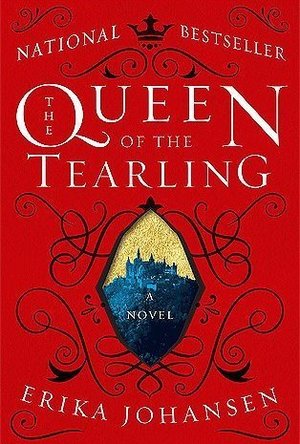

I finished this audiobook a while ago and put off writing the review because I couldn't decide how I felt about it. I went back and forth between 2 and 3 stars for a while. There were several things about the story that really bothered me (making me feel like it only deserved 2 stars), but then there were times when I was interested enough to think that I would need to read book two to see what happens. When all was said and done, I did decide I might read the next book at some point, so three stars it is.
A note about setting
The book sounds like any other fantasy novel. This story actually takes place in a future where for some reason (we are never told exactly what happened), a group of people have fled America and moved to a new land (again, we don't know how there was a new land available for them to colonize...) leaving all technology and modern conveniences behind them.
What bothered me about the book
Is it young adult or not? Occasionally the language, violence, or other crudeness seemed inappropriate for all but the most mature of teens, but then Kelsea would act like a nineteen year old girl, she spent an awful lot of time obsessing over her plain appearance, how handsome each of her guards happened to be, etc..., so I could never really tell.
Where / when is it? We get bits and pieces mentioning "the crossing", but why? What happened? Is there still an America with technology somewhere? Where are the main characters now? If the Capital is New London, are they anywhere near old London? How is there magic? And who is this enemy, this evil Mort/Red Queen who seems to have an abundance of it? I can go on and on here, and the lack of details or explanation about this world they are living in is my biggest complaint.
What I liked about the book
Kelsea, when she could remember not to worry about her plain face or how greasy her hair looked, actually had a decent moral compass and wanted to do what was right for her new-found kingdom, not just what was easy or convenient for her. She was stubborn and idealistic, and I admired those traits in her. I even eventually grew to like some of her guards, the Mace and Pen in particular, as they finally learned to respect her and some of her ideas near the end of the story.
Will you like this book?
I wish I could say yes, but the best I can do is maybe. If you go into it knowing that you are not going to understand exactly where this world is, how it came about, or why, and that doesn't bother you, then you just might. I will give book two a try to see if there are more details forthcoming, but not right away.
A note about setting
The book sounds like any other fantasy novel. This story actually takes place in a future where for some reason (we are never told exactly what happened), a group of people have fled America and moved to a new land (again, we don't know how there was a new land available for them to colonize...) leaving all technology and modern conveniences behind them.
What bothered me about the book
Is it young adult or not? Occasionally the language, violence, or other crudeness seemed inappropriate for all but the most mature of teens, but then Kelsea would act like a nineteen year old girl, she spent an awful lot of time obsessing over her plain appearance, how handsome each of her guards happened to be, etc..., so I could never really tell.
Where / when is it? We get bits and pieces mentioning "the crossing", but why? What happened? Is there still an America with technology somewhere? Where are the main characters now? If the Capital is New London, are they anywhere near old London? How is there magic? And who is this enemy, this evil Mort/Red Queen who seems to have an abundance of it? I can go on and on here, and the lack of details or explanation about this world they are living in is my biggest complaint.
What I liked about the book
Kelsea, when she could remember not to worry about her plain face or how greasy her hair looked, actually had a decent moral compass and wanted to do what was right for her new-found kingdom, not just what was easy or convenient for her. She was stubborn and idealistic, and I admired those traits in her. I even eventually grew to like some of her guards, the Mace and Pen in particular, as they finally learned to respect her and some of her ideas near the end of the story.
Will you like this book?
I wish I could say yes, but the best I can do is maybe. If you go into it knowing that you are not going to understand exactly where this world is, how it came about, or why, and that doesn't bother you, then you just might. I will give book two a try to see if there are more details forthcoming, but not right away.
Ross (3284 KP) rated Dogs of War in Books
Sep 19, 2017

Disclosure: I received a free advance copy of this novel from NetGalley in return for an honest review.
This near-future science fiction story surrounds the use of genetically modified, cyborg animals in security and warfare and the humane concerns around that.
Having read the author's fantasy series, Shadows of the Apt, I was already familiar with Tchaikovsky's style, and his liking for warfare and technology (that series including the development of a number of new technologies which are eventually used as weapons).
What I was not quite prepared for was how he would write if in the PoV of a cyborg dog (how can you prepare yourself for that?!). This took a little getting used to, but not too much (a little like Flowers for Algernon, the language starts off simplistic but develops). Rex's vocabulary is like that of a small child, but one that has learned certain military phrases. Rex just wants his master to acknowledge him with a "good dog" now and then.
The story develops through a government-backed incursion into rebel-held Mexico, then into the courtroom and beyond into the brave new world for suddenly free man-made creatures.
There are a number of topical issues dealt with here, using not-people to do unpleasant jobs, the burden of responsibility in warfare and also the dangers of cyber-linked machines/people.
I really enjoyed the book and how the different PoVs come across and also how the setting and the message keeps changing throughout so there are different concerns to be dealt with or discussed (without being preachy!).
I also enjoyed Tchaikovsky's descriptions of conflict and battle scenes: giving enough of a picture of the whole battle while focussing on key moments and events.
Overall, something of a departure from my usual book, but very much enjoyable. This wouldn't have looked out of place with Richard Bachman's name on it.
This near-future science fiction story surrounds the use of genetically modified, cyborg animals in security and warfare and the humane concerns around that.
Having read the author's fantasy series, Shadows of the Apt, I was already familiar with Tchaikovsky's style, and his liking for warfare and technology (that series including the development of a number of new technologies which are eventually used as weapons).
What I was not quite prepared for was how he would write if in the PoV of a cyborg dog (how can you prepare yourself for that?!). This took a little getting used to, but not too much (a little like Flowers for Algernon, the language starts off simplistic but develops). Rex's vocabulary is like that of a small child, but one that has learned certain military phrases. Rex just wants his master to acknowledge him with a "good dog" now and then.
The story develops through a government-backed incursion into rebel-held Mexico, then into the courtroom and beyond into the brave new world for suddenly free man-made creatures.
There are a number of topical issues dealt with here, using not-people to do unpleasant jobs, the burden of responsibility in warfare and also the dangers of cyber-linked machines/people.
I really enjoyed the book and how the different PoVs come across and also how the setting and the message keeps changing throughout so there are different concerns to be dealt with or discussed (without being preachy!).
I also enjoyed Tchaikovsky's descriptions of conflict and battle scenes: giving enough of a picture of the whole battle while focussing on key moments and events.
Overall, something of a departure from my usual book, but very much enjoyable. This wouldn't have looked out of place with Richard Bachman's name on it.


iStethoscope Free
Medical and Utilities
App
iStethoscope turns your iPhone into a stethoscope, allowing you to listen to your heatbeat and see...