Search
Search results

Merissa (14160 KP) created a post
Jun 1, 2026


alex (68 KP) rated Altered Carbon in TV
Dec 16, 2018


Enthralling concept (1 more)
Great characters
Hooked from the beginning
I thoroughly enjoyed this series. Although set in a future, one can see the headline issues of today wrapped up in a complicated film-noir private detective archetype. Something about hard-boiled crime and mystery supported by futuristic tech and commentary on the social elite really pulls me in.

Mogwai recommended Kiss Me Deadly (1955) in Movies (curated)

David McK (3883 KP) rated The Royalist (William Falkland #1) in Books
Apr 18, 2022


Set during the period of the English Civil Wars, I have to say that I found this to be rather unusual in that it is not about (per se) the wars themselves: rather, it is set in the New Model Army camp over a winter period, between hostilities, with William Falkland (the Royalist of the title) plucked from his prison cell by none other than Oliver Cromwell himself and sent to investigate reports of suicides/disturbances in the camp.
Reading very much like a ECW version of a whodunnit, with the author - in the afterword - not at all shy to point out the influences of the hard-boiled detective hero/film noir of the 40s (think Dashiell Hammett or Raymond Chandler) on this work.
Reading very much like a ECW version of a whodunnit, with the author - in the afterword - not at all shy to point out the influences of the hard-boiled detective hero/film noir of the 40s (think Dashiell Hammett or Raymond Chandler) on this work.

Kirk Bage (1775 KP) rated Alphaville (1965) in Movies
Jan 28, 2021
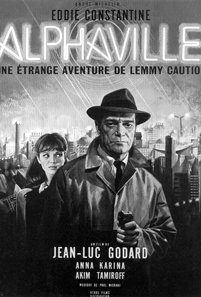

This is one of the best bad films I have ever seen. It looks cheap (at one point the camera-man is clearly entirely visible in a mirror), the story is preposterous, the dialogue is insane, the characters behave like no one in reality ever, and it is sci-fi in name only, as no attempt whatsoever has been made to stretch the budget to anything remotely futuristic – and yet, I loved it! Perhaps it reminded me of Blake’s 7 and Doctor Who, and therefore my happy childhood relationship with cheap sci-fi? Or it could have been that there are so many essential ideas and tropes that exist in my favourite big budget sci-fi films, such as Blade Runner (for which it is an obvious influence), that it felt familiar and friendly from the start. Part hard boiled detective story and part pulp fiction fantasy, as with most Godard, I am discovering, it is all about mood and chic, not remotely about the plot.
Eddie Constantine is awful as an actor, but he looks and feels perfect here. And Anna Karina is entirely lovely, oozing intelligent sexuality and seductive vibes in every scene. Not a heroine that needs the man to save her, but a strong and independent woman as much the hero of the story as the trenchcoated lead. Every noir stereotype is adhered to without fail, punctuated with the bizarre and the incongruous whenever possible. Without this film existing there would be so many good things from The Prisoner to Predestination that wouldn’t have been the same. Groundbreaking and charming without even trying. It grows in my imagination as a cult entity by the week – I can’t wait to watch it again fairly soon.
Eddie Constantine is awful as an actor, but he looks and feels perfect here. And Anna Karina is entirely lovely, oozing intelligent sexuality and seductive vibes in every scene. Not a heroine that needs the man to save her, but a strong and independent woman as much the hero of the story as the trenchcoated lead. Every noir stereotype is adhered to without fail, punctuated with the bizarre and the incongruous whenever possible. Without this film existing there would be so many good things from The Prisoner to Predestination that wouldn’t have been the same. Groundbreaking and charming without even trying. It grows in my imagination as a cult entity by the week – I can’t wait to watch it again fairly soon.