Search
Kayleigh (12 KP) rated Newes from the Dead in Books
Jan 2, 2019
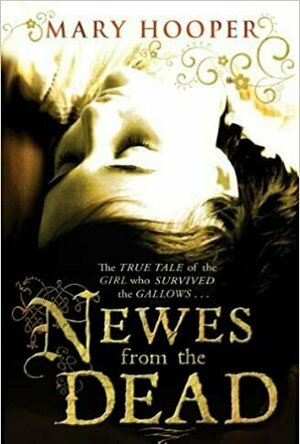
I stumbled across the blurb of this book while looking at the Totally Random Books website. It's really intriguing and, as I read around, I could see that the book is based on a true story. That was it, I had to buy it! It didn't disappoint, and I read it in a day.
While this is a YA book, it's worth pointing out that it deals with some really adult themes, which is something to consider if you're thinking of letting a teenager read it. I'll outline the main points in the next paragraph, so if you don't want any spoilers at all, skip this bit. The chapters flick between the events that led up to Anne's hanging, and what happens while she's laid on the dissecting table, apparently dead. Her downfall comes when the master's grandson promises her the world in exchange for him getting his end away, shall we say. As tends to happen, she becomes pregnant, which she manages to keep a secret until she miscarries. She has the 'audacity' to tell people who the father was, so never receives a fair trial, and is sentenced to death by hanging for the murder of her child. Her sentence is carried out, but she regains consciousness while on the dissecting table. However, she's unable to move a muscle, even to scream.
Anne is a nice girl with a promising, if humble, future, and I liked her. Even while I was willing her not to trust the father of her child, I could understand why she did what she did, and I felt really sorry for her as she lost a lot. The events of both storylines were fascinating, and in the dissection chapters I was constantly willing the doctors to notice what was going on. Although I knew they wouldn't cut into her and it was a little drawn out, some parts got quite tense, which I liked.
Being a sucker for history, I really liked the way everything was portrayed. [a:Mary Hooper|139257|Mary Hooper|http://d202m5krfqbpi5.cloudfront.net/authors/1310022486p2/139257.jpg], the author, made me realise how important it was in how you were perceived in those times - if you think gossip can be bad now, it was a million times worse in 1650, when holding someone's hand, even for an innocent reason, can potentially start a deadly rumour. I thought the book brought across everything that would have happened at the time really accurately and realistically. I know the author had true events to go on, but Anne's life before her hanging was all imagined. There's a note from Hooper at the end that specifies what records say about what happened to Anne Green after her hanging, which is also really interesting. I'll definitely be checking out more of Hooper's books!
If you liked this review please check out my <a href="http://www.a-worldofwords.com">blog!</a>
While this is a YA book, it's worth pointing out that it deals with some really adult themes, which is something to consider if you're thinking of letting a teenager read it. I'll outline the main points in the next paragraph, so if you don't want any spoilers at all, skip this bit. The chapters flick between the events that led up to Anne's hanging, and what happens while she's laid on the dissecting table, apparently dead. Her downfall comes when the master's grandson promises her the world in exchange for him getting his end away, shall we say. As tends to happen, she becomes pregnant, which she manages to keep a secret until she miscarries. She has the 'audacity' to tell people who the father was, so never receives a fair trial, and is sentenced to death by hanging for the murder of her child. Her sentence is carried out, but she regains consciousness while on the dissecting table. However, she's unable to move a muscle, even to scream.
Anne is a nice girl with a promising, if humble, future, and I liked her. Even while I was willing her not to trust the father of her child, I could understand why she did what she did, and I felt really sorry for her as she lost a lot. The events of both storylines were fascinating, and in the dissection chapters I was constantly willing the doctors to notice what was going on. Although I knew they wouldn't cut into her and it was a little drawn out, some parts got quite tense, which I liked.
Being a sucker for history, I really liked the way everything was portrayed. [a:Mary Hooper|139257|Mary Hooper|http://d202m5krfqbpi5.cloudfront.net/authors/1310022486p2/139257.jpg], the author, made me realise how important it was in how you were perceived in those times - if you think gossip can be bad now, it was a million times worse in 1650, when holding someone's hand, even for an innocent reason, can potentially start a deadly rumour. I thought the book brought across everything that would have happened at the time really accurately and realistically. I know the author had true events to go on, but Anne's life before her hanging was all imagined. There's a note from Hooper at the end that specifies what records say about what happened to Anne Green after her hanging, which is also really interesting. I'll definitely be checking out more of Hooper's books!
If you liked this review please check out my <a href="http://www.a-worldofwords.com">blog!</a>
The Moral Case for Fossil Fuels
Book
Could everything we know about fossil fuels be wrong? For decades, environmentalists have told us...
Kristy H (1252 KP) rated The Guest Room in Books
Feb 13, 2018
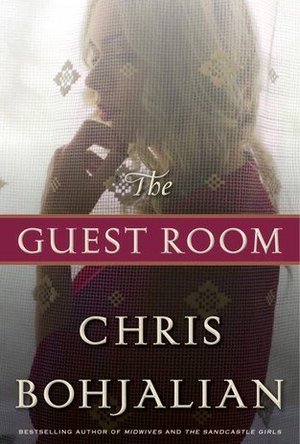
Richard Chapman reluctantly agrees to host his younger brother's bachelor party--at his own home. He suspects his brother, Philip, and Philip's good friend Spencer may be hiring some "entertainment" for the party, but isn't expecting the two women and Russian bodyguards who show up for the evening. Nor is Richard expecting what follows -- an evening of drinking, partying, sex, and suddenly - murder, when the women kill their bodyguards and disappear. Suddenly, Richard finds himself trying to explain what happened to his wife, their young daughter, his employer, and the world at large. Further he finds himself haunted by memories of his interactions with one of the girls, Alexandra.
This was an interesting book with a somewhat fascinating premise. It brings up a lot of questions about morality. What role does our society play when it comes to bachelors parties -- and what is the expectation of those attending? And the spouses and fiancees on the other side? What do we tell ourselves about the origin of the "talent" that appears at such functions? Bohjalian attempts to explore these questions through Richard's story - which unfolds from Richard's perspective, that of his wife, Kristin, and one of the hired girls, Alexandra. It becomes almost a bit of a thriller - as we piece together bits before the party, the aftermath, and also learn what led up to the girls' fateful decision.
A bit of the book lags in the beginning, but it picks up quickly and becomes quite compelling. One would think Richard would be the main character, but for me, the story revolved around Alexandra. Her tale is the most thought-provoking and insightful. At points, the novel is simply heart-breaking. Richard's sections are often irritating and frustrating, as you can only have so much sympathy for the man at points. Kristin is a good go-between - the innocent bystander blindsided by what occurred in her home when she was not there.
Overall, the book weaves the story nicely around its characters. Little details give a nuanced perspective that authors less experienced than Bohjalian may lack (he's also one of the few authors that has me hitting the dictionary from time to time to look up words). There was a time when I really felt my rating for this could range from 2 - 4 stars. It received a bump for the ending, which just felt fitting, and for Alexandra, who was a lovely protagonist and written in such a quiet way that doesn't come along very often. In the end, this felt more than a "life in suburbia gone terribly wrong" story - it was cold and heartless, yet heart-breaking and compassionate. A worthwhile read, for sure.
(Note: I received an ARC from Netgalley in return for an unbiased review.)

This was an interesting book with a somewhat fascinating premise. It brings up a lot of questions about morality. What role does our society play when it comes to bachelors parties -- and what is the expectation of those attending? And the spouses and fiancees on the other side? What do we tell ourselves about the origin of the "talent" that appears at such functions? Bohjalian attempts to explore these questions through Richard's story - which unfolds from Richard's perspective, that of his wife, Kristin, and one of the hired girls, Alexandra. It becomes almost a bit of a thriller - as we piece together bits before the party, the aftermath, and also learn what led up to the girls' fateful decision.
A bit of the book lags in the beginning, but it picks up quickly and becomes quite compelling. One would think Richard would be the main character, but for me, the story revolved around Alexandra. Her tale is the most thought-provoking and insightful. At points, the novel is simply heart-breaking. Richard's sections are often irritating and frustrating, as you can only have so much sympathy for the man at points. Kristin is a good go-between - the innocent bystander blindsided by what occurred in her home when she was not there.
Overall, the book weaves the story nicely around its characters. Little details give a nuanced perspective that authors less experienced than Bohjalian may lack (he's also one of the few authors that has me hitting the dictionary from time to time to look up words). There was a time when I really felt my rating for this could range from 2 - 4 stars. It received a bump for the ending, which just felt fitting, and for Alexandra, who was a lovely protagonist and written in such a quiet way that doesn't come along very often. In the end, this felt more than a "life in suburbia gone terribly wrong" story - it was cold and heartless, yet heart-breaking and compassionate. A worthwhile read, for sure.
(Note: I received an ARC from Netgalley in return for an unbiased review.)
Kaysee Hood (83 KP) rated Attachments in Books
Nov 16, 2017
Unconventional Romance (3 more)
Read Life Issues
Movie/Book References
Friendships
Love at First...E-mail?
I've seen some low scored reviews for this book on GR and I realized it may keep some people from reading it, but here are some points I think some should consider before not giving Attachments a chance:
1. This is Rainbow Rowell's first published novel, so of course for some it doesn't hold the magic like Eleanor & Park. Keep in mind many first books never hold against later published works, but are still good or why would the author be allowed to continue?
2. Even though it was published in 2011, it is based in 1999/2000 for plot reasons as to why Lincoln would have his job. This may offset some readers who might not realize how different 1999 is to 2017 Internet use wise for jobs.
3. The lack of reading into who and why the characters are as they are. In a way, it is the adult version of Fangirl, expect the roles are flipped a tad bit.
Anyway, I loved Attachments because it stayed true to Rowell's style, yet it felt raw compared to how she writes now. There is the unconventional love story of a man falling in love with a woman through the e-mails he reads as part of his job to ensure people are working and not nonsense while on the job. There's characters of all sorts with real world problems and real life flaws. There are topics covered of overbearing mothers and mothers who are too cruel both because of their own life. There is men who never want to be tied down, yet one does due to advice and the right woman. The book covers pieces life without taking from the plot whatsoever.
Lincoln O'Neil is a 28-year-old who could have been a successful man with a normal day shift job if a break up had not left him shattered nine years before. Maybe also if his mother had not coddled him, even though she clearly meant well as it is clear him and his sister, Eve, might have been her whole life. Yet we would not have the awkward, shy man working a the swing shift in the IT office as a "security officer" fixing computers in his spare time when he isn't reading through e-mails that come up flagged in the Webfence program. Apparently the security part was ensuring no one at the newspaper office was using the Internet to look at porn, gamble, or idle chit chat instead of working. Not quite was Lincoln had pictured and he doesn't enjoy reading people's exchanges, but the money is good and will grant him the chance to move out his mom's sooner rather than later.
His mundane routine and nothingness during his shift is filled with some enjoyment as Lincoln reads the e-mails flagged from Beth Fremont and Jennifer Scribner-Snyder. There is nothing harmful. Innocent discussions of water cooler talk, life, relationships, and gossip. As much as he knows it is wrong to continue to read their messages about their lives without flagging them as he would anyone else Lincoln cannot help but to get a kick out of the e-mails.
However it soon becomes apparent Lincoln has fallen for Beth despite the fact he has no idea what she looks like or who is she outside of work. Not to mention she has a boyfriend, Chris, who even though she may rant about to Jennifer, she obviously has not intent on breaking ties with. Not for someone like Lincoln anyway. So he spends his time in turmoil trying to decide if a new job is in order, going back to college, or finding a woman to focus his attention on (which are the very things he tries to do). He even tries to ignore the e-mails, yet can't. He cannot help, but feel for Jennifer's worry over having a baby even though her husband wants one. He cannot help, but captivated by their friendship. He cannot help his feelings for Beth for who she is.
It doesn't help Beth has spotted him labeling him as "A Cute Guy" when he never realized she was around. It is like a game of cat and mouse between them then. Beth still unaware he is reading her e-mails. Lincoln unaware of how often she is close to him even when she is going out of her way to find him.
Thus a budding romance is born. But how much of a romance can it be when Beth has Chris and Lincoln can barely look a woman in the eyes?
1. This is Rainbow Rowell's first published novel, so of course for some it doesn't hold the magic like Eleanor & Park. Keep in mind many first books never hold against later published works, but are still good or why would the author be allowed to continue?
2. Even though it was published in 2011, it is based in 1999/2000 for plot reasons as to why Lincoln would have his job. This may offset some readers who might not realize how different 1999 is to 2017 Internet use wise for jobs.
3. The lack of reading into who and why the characters are as they are. In a way, it is the adult version of Fangirl, expect the roles are flipped a tad bit.
Anyway, I loved Attachments because it stayed true to Rowell's style, yet it felt raw compared to how she writes now. There is the unconventional love story of a man falling in love with a woman through the e-mails he reads as part of his job to ensure people are working and not nonsense while on the job. There's characters of all sorts with real world problems and real life flaws. There are topics covered of overbearing mothers and mothers who are too cruel both because of their own life. There is men who never want to be tied down, yet one does due to advice and the right woman. The book covers pieces life without taking from the plot whatsoever.
Lincoln O'Neil is a 28-year-old who could have been a successful man with a normal day shift job if a break up had not left him shattered nine years before. Maybe also if his mother had not coddled him, even though she clearly meant well as it is clear him and his sister, Eve, might have been her whole life. Yet we would not have the awkward, shy man working a the swing shift in the IT office as a "security officer" fixing computers in his spare time when he isn't reading through e-mails that come up flagged in the Webfence program. Apparently the security part was ensuring no one at the newspaper office was using the Internet to look at porn, gamble, or idle chit chat instead of working. Not quite was Lincoln had pictured and he doesn't enjoy reading people's exchanges, but the money is good and will grant him the chance to move out his mom's sooner rather than later.
His mundane routine and nothingness during his shift is filled with some enjoyment as Lincoln reads the e-mails flagged from Beth Fremont and Jennifer Scribner-Snyder. There is nothing harmful. Innocent discussions of water cooler talk, life, relationships, and gossip. As much as he knows it is wrong to continue to read their messages about their lives without flagging them as he would anyone else Lincoln cannot help but to get a kick out of the e-mails.
However it soon becomes apparent Lincoln has fallen for Beth despite the fact he has no idea what she looks like or who is she outside of work. Not to mention she has a boyfriend, Chris, who even though she may rant about to Jennifer, she obviously has not intent on breaking ties with. Not for someone like Lincoln anyway. So he spends his time in turmoil trying to decide if a new job is in order, going back to college, or finding a woman to focus his attention on (which are the very things he tries to do). He even tries to ignore the e-mails, yet can't. He cannot help, but feel for Jennifer's worry over having a baby even though her husband wants one. He cannot help, but captivated by their friendship. He cannot help his feelings for Beth for who she is.
It doesn't help Beth has spotted him labeling him as "A Cute Guy" when he never realized she was around. It is like a game of cat and mouse between them then. Beth still unaware he is reading her e-mails. Lincoln unaware of how often she is close to him even when she is going out of her way to find him.
Thus a budding romance is born. But how much of a romance can it be when Beth has Chris and Lincoln can barely look a woman in the eyes?
Hazel (1853 KP) rated Purple Hearts in Books
Oct 24, 2017
Reimagined History
This ARC was provided by the publisher via NetGalley in exchange for an honest review
An epic tale of a reimagined World War II comes to an explosive end in this third and final book Purple Hearts. Michael Grant created an alternative history in which women were allowed to enter the army and fight alongside the men on the front lines in Europe. Having earned accolades, promotions and the right to go home to America at the conclusion of the previous book, Rio, Frangie and Rainy decide to stay for the remains of the war. It is 6th June 1944, and the battle on the sands of Omaha Beach is about to begin – D-Day.
The story rushes into the horrors of the D-Day landings where Rio, now a Sergeant, is leading her platoon through the treacherous battleground, whilst Frangie, the medic, tries to patch up fallen comrades. The author teases the reader with the introduction of new characters who promptly get killed during this fateful day and battles further along the line. There is no sugar coating the horrific experience of soldiers and civilians, regardless of whether the scenes are fictionalized or not.
The difficulty with writing a work of fiction about the final years of World War II is that the majority of readers will already know the facts. Therefore, it was impossible for Grant to compose a drastic alternative history. Despite the inclusion of women soldiers, the main events occur exactly as they did in reality, beginning with D-Day before moving on to Liberated France, the Hürtgen Forest, the Battle of the Bulge, and, eventually, VE Day.
The three main characters have undergone complete transformations since the beginning of book one. No longer are they the innocent girls mocked for the belief they could be as strong as male soldiers. As horror after horror unfolds, readers are left with only the hope that these three survive.
Throughout book one and two, the narrative was interspersed with a commentary from an anonymous female soldier in a bed at the 107th evacuee hospital in Würzburg, Germany. As promised at the beginning of the series, readers finally find out which character this nameless voice belongs to, although it is dragged out until the final pages of the book.
The title, Purple Hearts, refers to the medal earned by soldiers injured in battle. Rio, Frangie and Rainy have each received one, along with a few other characters. Unfortunately, many are killed in the battles, some who have been in the story from the start, making this an extremely shocking book. It goes to show how dangerous war is and the brutality WWII soldiers experienced. It is a surprise that as many survived as they did.
Although at this point the main focus of the story is the war, there is still the underlying theme of equality, both for women and for black people. Frangie provides the insight into the segregation of blacks, being assigned to black-only patrols and having white patients refuse to be treated by her. However, as the war gets more violent, these lines get blurred until it is (mostly) no longer important the colour of a soldier or medic’s skin.
Purple Hearts is a brilliant end to a challenging series. Readers become invested in the characters and are drawn into a story that is so true to form that it is easy to forget that women did not actually take part in the fighting. Evidently well researched, Michael Grant has penned a series that educates whilst it entertains, opening readers’ eyes to the truth about war. This is nothing like a textbook full of facts and figures, it is a moving, personal (forget the fictional bit) account of what WWII was really like. Written with young adults in mind, this is a great series for both teens and older readers.
An epic tale of a reimagined World War II comes to an explosive end in this third and final book Purple Hearts. Michael Grant created an alternative history in which women were allowed to enter the army and fight alongside the men on the front lines in Europe. Having earned accolades, promotions and the right to go home to America at the conclusion of the previous book, Rio, Frangie and Rainy decide to stay for the remains of the war. It is 6th June 1944, and the battle on the sands of Omaha Beach is about to begin – D-Day.
The story rushes into the horrors of the D-Day landings where Rio, now a Sergeant, is leading her platoon through the treacherous battleground, whilst Frangie, the medic, tries to patch up fallen comrades. The author teases the reader with the introduction of new characters who promptly get killed during this fateful day and battles further along the line. There is no sugar coating the horrific experience of soldiers and civilians, regardless of whether the scenes are fictionalized or not.
The difficulty with writing a work of fiction about the final years of World War II is that the majority of readers will already know the facts. Therefore, it was impossible for Grant to compose a drastic alternative history. Despite the inclusion of women soldiers, the main events occur exactly as they did in reality, beginning with D-Day before moving on to Liberated France, the Hürtgen Forest, the Battle of the Bulge, and, eventually, VE Day.
The three main characters have undergone complete transformations since the beginning of book one. No longer are they the innocent girls mocked for the belief they could be as strong as male soldiers. As horror after horror unfolds, readers are left with only the hope that these three survive.
Throughout book one and two, the narrative was interspersed with a commentary from an anonymous female soldier in a bed at the 107th evacuee hospital in Würzburg, Germany. As promised at the beginning of the series, readers finally find out which character this nameless voice belongs to, although it is dragged out until the final pages of the book.
The title, Purple Hearts, refers to the medal earned by soldiers injured in battle. Rio, Frangie and Rainy have each received one, along with a few other characters. Unfortunately, many are killed in the battles, some who have been in the story from the start, making this an extremely shocking book. It goes to show how dangerous war is and the brutality WWII soldiers experienced. It is a surprise that as many survived as they did.
Although at this point the main focus of the story is the war, there is still the underlying theme of equality, both for women and for black people. Frangie provides the insight into the segregation of blacks, being assigned to black-only patrols and having white patients refuse to be treated by her. However, as the war gets more violent, these lines get blurred until it is (mostly) no longer important the colour of a soldier or medic’s skin.
Purple Hearts is a brilliant end to a challenging series. Readers become invested in the characters and are drawn into a story that is so true to form that it is easy to forget that women did not actually take part in the fighting. Evidently well researched, Michael Grant has penned a series that educates whilst it entertains, opening readers’ eyes to the truth about war. This is nothing like a textbook full of facts and figures, it is a moving, personal (forget the fictional bit) account of what WWII was really like. Written with young adults in mind, this is a great series for both teens and older readers.
Hazel (1853 KP) rated Purple Hearts in Books
Dec 7, 2018
<i>This ARC was provided by the publisher via NetGalley in exchange for an honest review </i>
An epic tale of a reimagined World War II comes to an explosive end in this third and final book <i>Purple Hearts</i>. Michael Grant created an alternative history in which women were allowed to enter the army and fight alongside the men on the front lines in Europe. Having earned accolades, promotions and the right to go home to America at the conclusion of the previous book, Rio, Frangie and Rainy decide to stay for the remains of the war. It is 6th June 1944, and the battle on the sands of Omaha Beach is about to begin – D-Day.
The story rushes into the horrors of the D-Day landings where Rio, now a Sergeant, is leading her platoon through the treacherous battleground, whilst Frangie, the medic, tries to patch up fallen comrades. The author teases the reader with the introduction of new characters who promptly get killed during this fateful day and battles further along the line. There is no sugar coating the horrific experience of soldiers and civilians, regardless of whether the scenes are fictionalized or not.
The difficulty with writing a work of fiction about the final years of World War II is that the majority of readers will already know the facts. Therefore, it was impossible for Grant to compose a drastic alternative history. Despite the inclusion of women soldiers, the main events occur exactly as they did in reality, beginning with D-Day before moving on to Liberated France, the Hürtgen Forest, the Battle of the Bulge, and, eventually, VE Day.
The three main characters have undergone complete transformations since the beginning of book one. No longer are they the innocent girls mocked for the belief they could be as strong as male soldiers. As horror after horror unfolds, readers are left with only the hope that these three survive.
Throughout book one and two, the narrative was interspersed with a commentary from an anonymous female soldier in a bed at the 107th evacuee hospital in Würzburg, Germany. As promised at the beginning of the series, readers finally find out which character this nameless voice belongs to, although it is dragged out until the final pages of the book.
The title, <i>Purple Hearts</i>, refers to the medal earned by soldiers injured in battle. Rio, Frangie and Rainy have each received one, along with a few other characters. Unfortunately, many are killed in the battles, some who have been in the story from the start, making this an extremely shocking book. It goes to show how dangerous war is and the brutality WWII soldiers experienced. It is a surprise that as many survived as they did.
Although at this point the main focus of the story is the war, there is still the underlying theme of equality, both for women and for black people. Frangie provides the insight into the segregation of blacks, being assigned to black-only patrols and having white patients refuse to be treated by her. However, as the war gets more violent, these lines get blurred until it is (mostly) no longer important the colour of a soldier or medic’s skin.
<i>Purple Hearts</i> is a brilliant end to a challenging series. Readers become invested in the characters and are drawn into a story that is so true to form that it is easy to forget that women did not actually take part in the fighting. Evidently well researched, Michael Grant has penned a series that educates whilst it entertains, opening readers’ eyes to the truth about war. This is nothing like a textbook full of facts and figures, it is a moving, personal (forget the fictional bit) account of what WWII was really like. Written with young adults in mind, this is a great series for both teens and older readers.
An epic tale of a reimagined World War II comes to an explosive end in this third and final book <i>Purple Hearts</i>. Michael Grant created an alternative history in which women were allowed to enter the army and fight alongside the men on the front lines in Europe. Having earned accolades, promotions and the right to go home to America at the conclusion of the previous book, Rio, Frangie and Rainy decide to stay for the remains of the war. It is 6th June 1944, and the battle on the sands of Omaha Beach is about to begin – D-Day.
The story rushes into the horrors of the D-Day landings where Rio, now a Sergeant, is leading her platoon through the treacherous battleground, whilst Frangie, the medic, tries to patch up fallen comrades. The author teases the reader with the introduction of new characters who promptly get killed during this fateful day and battles further along the line. There is no sugar coating the horrific experience of soldiers and civilians, regardless of whether the scenes are fictionalized or not.
The difficulty with writing a work of fiction about the final years of World War II is that the majority of readers will already know the facts. Therefore, it was impossible for Grant to compose a drastic alternative history. Despite the inclusion of women soldiers, the main events occur exactly as they did in reality, beginning with D-Day before moving on to Liberated France, the Hürtgen Forest, the Battle of the Bulge, and, eventually, VE Day.
The three main characters have undergone complete transformations since the beginning of book one. No longer are they the innocent girls mocked for the belief they could be as strong as male soldiers. As horror after horror unfolds, readers are left with only the hope that these three survive.
Throughout book one and two, the narrative was interspersed with a commentary from an anonymous female soldier in a bed at the 107th evacuee hospital in Würzburg, Germany. As promised at the beginning of the series, readers finally find out which character this nameless voice belongs to, although it is dragged out until the final pages of the book.
The title, <i>Purple Hearts</i>, refers to the medal earned by soldiers injured in battle. Rio, Frangie and Rainy have each received one, along with a few other characters. Unfortunately, many are killed in the battles, some who have been in the story from the start, making this an extremely shocking book. It goes to show how dangerous war is and the brutality WWII soldiers experienced. It is a surprise that as many survived as they did.
Although at this point the main focus of the story is the war, there is still the underlying theme of equality, both for women and for black people. Frangie provides the insight into the segregation of blacks, being assigned to black-only patrols and having white patients refuse to be treated by her. However, as the war gets more violent, these lines get blurred until it is (mostly) no longer important the colour of a soldier or medic’s skin.
<i>Purple Hearts</i> is a brilliant end to a challenging series. Readers become invested in the characters and are drawn into a story that is so true to form that it is easy to forget that women did not actually take part in the fighting. Evidently well researched, Michael Grant has penned a series that educates whilst it entertains, opening readers’ eyes to the truth about war. This is nothing like a textbook full of facts and figures, it is a moving, personal (forget the fictional bit) account of what WWII was really like. Written with young adults in mind, this is a great series for both teens and older readers.
BookInspector (124 KP) rated He Said/She Said in Books
Sep 24, 2020
I have seen a lot of buzz once this book came out, and after reading it, I can freely say, this book is a bestseller, and it absolutely deserved it.
The main characters of this book were Laura, Kit and Beth. The way they met was very unusual; Laura and Kit witnessed Beth being raped (well, aftermath of it). The events after that, brings Laura and Beth really close, but suddenly some things start to happen, which put Laura and Kit into hiding. All the characters of this book are incredibly interesting, and have their very diverse and unique personality, that is why I absolutely adored that. My absolute favourite was Kit. He is this Oxford smart, but at the same time innocent, cute geek. The whole story was told from Laura’s and Kit’s perspectives, and they told this story beautifully, fulfilling each other. Even though, it is enough for Kit and Laura to tell it, I still wanted to hear the story from Beth’s perspective, I think it would’ve made this book absolutely perfect.
The plot of this book was absolutely fantastic. To tell the whole story, characters had to travel between present and the events, which took place fifteen years ago. This book has everything you need for a great thriller: there were unexpected twists and turns happening all the time, the suspense was very well kept throughout whole book, and it was really fast paced, which made it an intense page turner and was very hard to put down. Before reading this book, I was not very much into eclipses, but this book radiated the passion for eclipses so intensely, that I might even try and watch one this year.
I really loved the important topics Erin Kelly was discussing in this book: how hard to convince a rapist in the court of justice; how rape affects victims and rapists as well, especially if rapists are well known; how anxiety can affect people and their lives after certain events. This book is filled with interesting topics, situations and feelings.
As I mentioned before, this book grips you form first pages with very clever writing style, and keeps the suspense going on by drop feeding new information and new findings, plus add short chapters and you are hooked. Language itself is easy to read and understandable, quite relatable to any Londoner. The author kept the interest till the last sentence by throwing in more turns and twists, that’s why it is an absolute must read and I strongly recommend it to everyone.
Was given this book by publisher and NetGalley for honest review.
The main characters of this book were Laura, Kit and Beth. The way they met was very unusual; Laura and Kit witnessed Beth being raped (well, aftermath of it). The events after that, brings Laura and Beth really close, but suddenly some things start to happen, which put Laura and Kit into hiding. All the characters of this book are incredibly interesting, and have their very diverse and unique personality, that is why I absolutely adored that. My absolute favourite was Kit. He is this Oxford smart, but at the same time innocent, cute geek. The whole story was told from Laura’s and Kit’s perspectives, and they told this story beautifully, fulfilling each other. Even though, it is enough for Kit and Laura to tell it, I still wanted to hear the story from Beth’s perspective, I think it would’ve made this book absolutely perfect.
The plot of this book was absolutely fantastic. To tell the whole story, characters had to travel between present and the events, which took place fifteen years ago. This book has everything you need for a great thriller: there were unexpected twists and turns happening all the time, the suspense was very well kept throughout whole book, and it was really fast paced, which made it an intense page turner and was very hard to put down. Before reading this book, I was not very much into eclipses, but this book radiated the passion for eclipses so intensely, that I might even try and watch one this year.
I really loved the important topics Erin Kelly was discussing in this book: how hard to convince a rapist in the court of justice; how rape affects victims and rapists as well, especially if rapists are well known; how anxiety can affect people and their lives after certain events. This book is filled with interesting topics, situations and feelings.
As I mentioned before, this book grips you form first pages with very clever writing style, and keeps the suspense going on by drop feeding new information and new findings, plus add short chapters and you are hooked. Language itself is easy to read and understandable, quite relatable to any Londoner. The author kept the interest till the last sentence by throwing in more turns and twists, that’s why it is an absolute must read and I strongly recommend it to everyone.
Was given this book by publisher and NetGalley for honest review.
Kristy H (1252 KP) rated The Turn of The Key in Books
Aug 16, 2019
Rowan Caine feels like her life is at a bit of a dead end when she finds the advertisement: it's for a live-in nanny, and the pay is amazing. Rowan has a background in nannying and working with children, so she submits her CV and crosses her fingers. Still, she can't believe her luck when she interviews at the gorgeous Heatherbrae House in Scotland. It's isolated, but beautiful. And then she gets the job caring for four seemingly lovely children: Rhiannon, 14; Maddie, 8; Ellie, 5; and Petra, eighteen months. But the position isn't all it cracked up to be. The children are nothing like the sweet kids they appeared when she interviewed. The entire house is a smart home, controlled by a home management app, and it seems to go haywire constantly. The parents leave nearly the moment she arrives. And it really seems like the rumors of ghosts and a haunted house that drove away the past four nannies are true. We know Rowan is writing about all of this from prison--jailed for the death of one of the children. She claims she's innocent. What really happened at Heatherbrae House?
This was a very intriguing, eerie thriller, made all the more creepy by reading it alone in a cabin in the woods with no one beside me but my dog. Perhaps choosing this read for my short getaway was a mistake? Ha, I actually liked getting a little spooked by this Gothic mystery. It was an enjoyable slow-burning read that kept me hooked.
As mentioned, the entire book is told in letter form--albeit mostly one long letter--as Rowan sits in Scottish prison, trying to convince a Mr. Wrexham to take up her case. She's innocent, she says, and here is her story. And quite a story it is. From the moment Rowan arrives at the Elincourt's beautiful home, Heatherbrae House, it seems like things go wrong--she hasn't memorized the 300-page "manual" required to watch the girls, the "smart" house is out of control, and the children are absolute terrors.
"I guess it comes down to this in the end. I am the nanny in the Elincourt case, Mr. Wrexham. And I didn't kill that child."
But the more we hear from Rowan, we learn she may not be completely guilt-free in all of this, as perhaps there is more to her story than meets the eye. It all unfurls easily in Ware's deft hands. It may take a while to get to some of the major twists and turns, but there's plenty of little bits of creepiness along the way. Rowan is sure she's being haunted, and it's quite fun to try to figure out what exactly is happening. Ghosts? The smart house gone awry? While Rowan isn't always the easiest character to root for, I still sympathized with her (I wouldn't want to be left with four combative children) and yet I found myself getting attached to the kids anyway (clearly they didn't choose to be left behind by their rich and distracted parents).
"I need you to understand why I did what I did."
Overall, this one is a fun, eerie read. I enjoyed the combination of creepy Gothic plus smart home craziness. I also couldn't always foresee what was coming up next, which I appreciated. It's engaging and surprising, despite our limited cast of characters. 4 stars.
This was a very intriguing, eerie thriller, made all the more creepy by reading it alone in a cabin in the woods with no one beside me but my dog. Perhaps choosing this read for my short getaway was a mistake? Ha, I actually liked getting a little spooked by this Gothic mystery. It was an enjoyable slow-burning read that kept me hooked.
As mentioned, the entire book is told in letter form--albeit mostly one long letter--as Rowan sits in Scottish prison, trying to convince a Mr. Wrexham to take up her case. She's innocent, she says, and here is her story. And quite a story it is. From the moment Rowan arrives at the Elincourt's beautiful home, Heatherbrae House, it seems like things go wrong--she hasn't memorized the 300-page "manual" required to watch the girls, the "smart" house is out of control, and the children are absolute terrors.
"I guess it comes down to this in the end. I am the nanny in the Elincourt case, Mr. Wrexham. And I didn't kill that child."
But the more we hear from Rowan, we learn she may not be completely guilt-free in all of this, as perhaps there is more to her story than meets the eye. It all unfurls easily in Ware's deft hands. It may take a while to get to some of the major twists and turns, but there's plenty of little bits of creepiness along the way. Rowan is sure she's being haunted, and it's quite fun to try to figure out what exactly is happening. Ghosts? The smart house gone awry? While Rowan isn't always the easiest character to root for, I still sympathized with her (I wouldn't want to be left with four combative children) and yet I found myself getting attached to the kids anyway (clearly they didn't choose to be left behind by their rich and distracted parents).
"I need you to understand why I did what I did."
Overall, this one is a fun, eerie read. I enjoyed the combination of creepy Gothic plus smart home craziness. I also couldn't always foresee what was coming up next, which I appreciated. It's engaging and surprising, despite our limited cast of characters. 4 stars.
graveyardgremlin (7194 KP) rated Sweet Valley Confidential: Ten Years Later in Books
Feb 15, 2019
<b><i>"What a stupid book."</i></b>
That was my initial thought after turning the final page of <b>Sweet Valley Confidential: Ten Years Later</b>.
As a pre-teen, I was addicted to the <u>Sweet Valley High</u> series, and then later, the <u>Sweet Valley University</u> series as well. Before that even, I had read some of the Twins and Kids series, so when I heard this was coming out last year, I just knew I had to read it. I was excited beyond compare and went into full geek-out mode. Where are the perfect size-six Wakefield twins, and their friends and enemies, now? What are their occupations? Who are they dating or who'd they marry? And my questions kept going on and on. What has inspired this obsession? It's not like these books were high literature, but somehow they became ingrained into my life to this very day and I cannot help but remember SVH fondly.
It is nearly impossible to review the story within the covers without spoilers, but I am going to try my darnedest. Some cursing may or may not be involved.
<b>Short synopsis</b> (snarky comments in parentheses ;P):
Jessica has betrayed Elizabeth. <i>(Doesn't take a rocket scientist to figure out what she did. Anyone who's read the books could make an accurate guess.)</i> The Ultimate Betrayal. <i>(Oooooh!)</i> Elizabeth flees to New York. Elizabeth is a slightly sympathetic bitter victim/martyr who craves revenge throughout the book. Jessica is supposed to be a sympathetic betrayer/victim who's heartsick at destroying her sister. <i>(I don't buy it.)</i> Tons of reminiscing flashbacks ensue throughout the book, sometimes the same ones told by different characters, and take up about half of it, so there's barely any plot. Book ends with a thirteen-page <i>Where Are They Now?</i>-type epilogue that tells old fans what has happened to many major supporting characters from the original high school series. <i>(Apparently no one is allowed to be happy. And anyone you may have originally liked from SVH has turned into a big dick. WTF?)</i>
I expected to enjoy this as the usual over-the-top, soap opera stories I remember, but revamped a bit. Sadly, I was left feeling underwhelmed, disappointed, annoyed, and rather pissed off. For one thing, I could not buy the main betrayal -- <spoiler>Jessica and Todd?! In love!!?? Really? In what surreal dimension does that make any kind of sense? This broke the book for me. How can I believe anything else if this doesn't ring true. A passionate affair, sure. A one-night stand, why not? But actual 'til death do us part nonsense? Bull. Not when it's almost always been the Elizabeth and Todd, "made-for-each-other" type of thing. I actually wouldn't have minded if E & T hadn't ended up together, but for Todd to be with Jessica, that's just madness, plain and simple.</spoiler> -- it was just so unbelievable. And I mean that in a Sweet Valley way, which we all know is not steeped in any form of actual reality, so my standards are quite low and I expect the extraordinary and overwrought. So from this point on, which is within the first two chapters, I struggled, but somehow managed to read on. I admit, I gagged more than few times throughout the book. Who wouldn't when faced with passages such as this one,
<blockquote>"And what faces they were.
Gorgeous. Absolutely amazing. The kind you couldn't stop looking at. Their eyes were shades of aqua that danced in the light like shards of precious stones, oval and fringed with thick, light brown lashes long enough to cast a shadow on their cheeks. Their silky blond hair, the cascading kind, fell just below their shoulders. And to complete the perfection, their rosy lips looked as if they were penciled on. There wasn't a thing wrong with their figures, either. It was if billions of possibilities all fell together perfectly.
Twice."
-page 9/10</blockquote>
I hope you managed to hold onto your last meal. I barely did. I also had to endure "his beloved," "his love," and other similar nauseating descriptions.
This is not the PG-rated books from the past, the word "orgasm" is actually used. So is the F-bomb and other expletives. *gasp* Seriously, it does push the boundaries more than the innocent SVH series, but it's not very shocking by today's standards. Except that it does involve the Wakefield Twins, which was strange at first. Of course, current trends had to pop up, like Twitter and Facebook, Justin Timberlake and Beyonce, which always makes a book better and doesn't date it in the least. (That was heavy sarcasm in case you weren't sure.) The book does refer to some incidents and people from the SVU series, but only certain elements, otherwise it's mainly a continuation of high school and no one from the university days actually appears in the book.
Neither Elizabeth nor Jessica felt true to form, especially Jessica, and in fact, none of the characters, whether seen or just talked about, were right. Sure, some people change and some don't, but not a one was recognizable. Where did these strangers with the same names come from? Why couldn't there have been some semblance of the original shining through? Again, I have a hard time with the basis of the book, so that has severely colored my view of the entire thing, but as it stands, it was a complete waste of a good idea. I'd be willing to bet that any fan of SVH could come up with something a million times better than this dreck. Wasn't there an original ghostwriter available? You know, someone who might actually know the world and characters, and have the skill to develop them both in a believable manner?
The writing is rather clunky and purple-ly, often managing both at the same time. Redundancy abounds, editing mistakes, including wrong names and inconsistencies to previous events in SVH-iverse, and lots of use of the words "like" and "so", more-so in Jessica's narrative than anywhere else, which was really, really, so, like, irritating. Like, really. Ms. Pascal must have had a thesaurus at the ready, because there were big words awkwardly thrown into the narrative. While I appreciate authors utilizing lesser known or used words, some just don't blend well with the rest of the text and they pop-out unflatteringly. The structure needed fine-tuning and tenses were oddly used to differentiate the flashbacks from present day.
To put it succinctly, the writing isn't great and neither is the storyline, what there is of it. This was a bizarre read even by Sweet Valley standards and an insult to fans. Seriously, does Francine Pascal hate this universe and its readers? I think I'll stick to the <a href="http://www.goodreads.com/series/58723-sweet-valley-high">Sweet Valley High</a> series and make up my own stories about what happened afterward.
Slightly spoiler-ish lesson learned from this book:
<spoiler>Betrayal is okay as long as it's "Twu Luv."</spoiler>
Second lesson learned:
Everything always turns up fucking sunshine and roses and unicorns and lollipops for the worst person (or people) in the end.
I'd like to leave you with another winning description,
<blockquote>"There were no tears, but her mouth was twisted in a silent sob."
-page 17</blockquote>
<u>A thought a few hours after having finished this book:</u>
Maybe another "sequel" will eventually come out and it'll begin with Elizabeth waking up from the nightmare that is this book and we'll get the real ten years later story. Ahh, sweet dreams.
<u>Update: April 26, 2011:</u>
Oh yes, always good to blame the fans/readers for not liking their terrible book. By pointing out minor, petty reasons, I might add. <b>Warning:</b> book spoilers in article.
http://www.nytimes.com/2011/04/17/business/media/17sweet.html?_r=1
That was my initial thought after turning the final page of <b>Sweet Valley Confidential: Ten Years Later</b>.
As a pre-teen, I was addicted to the <u>Sweet Valley High</u> series, and then later, the <u>Sweet Valley University</u> series as well. Before that even, I had read some of the Twins and Kids series, so when I heard this was coming out last year, I just knew I had to read it. I was excited beyond compare and went into full geek-out mode. Where are the perfect size-six Wakefield twins, and their friends and enemies, now? What are their occupations? Who are they dating or who'd they marry? And my questions kept going on and on. What has inspired this obsession? It's not like these books were high literature, but somehow they became ingrained into my life to this very day and I cannot help but remember SVH fondly.
It is nearly impossible to review the story within the covers without spoilers, but I am going to try my darnedest. Some cursing may or may not be involved.
<b>Short synopsis</b> (snarky comments in parentheses ;P):
Jessica has betrayed Elizabeth. <i>(Doesn't take a rocket scientist to figure out what she did. Anyone who's read the books could make an accurate guess.)</i> The Ultimate Betrayal. <i>(Oooooh!)</i> Elizabeth flees to New York. Elizabeth is a slightly sympathetic bitter victim/martyr who craves revenge throughout the book. Jessica is supposed to be a sympathetic betrayer/victim who's heartsick at destroying her sister. <i>(I don't buy it.)</i> Tons of reminiscing flashbacks ensue throughout the book, sometimes the same ones told by different characters, and take up about half of it, so there's barely any plot. Book ends with a thirteen-page <i>Where Are They Now?</i>-type epilogue that tells old fans what has happened to many major supporting characters from the original high school series. <i>(Apparently no one is allowed to be happy. And anyone you may have originally liked from SVH has turned into a big dick. WTF?)</i>
I expected to enjoy this as the usual over-the-top, soap opera stories I remember, but revamped a bit. Sadly, I was left feeling underwhelmed, disappointed, annoyed, and rather pissed off. For one thing, I could not buy the main betrayal -- <spoiler>Jessica and Todd?! In love!!?? Really? In what surreal dimension does that make any kind of sense? This broke the book for me. How can I believe anything else if this doesn't ring true. A passionate affair, sure. A one-night stand, why not? But actual 'til death do us part nonsense? Bull. Not when it's almost always been the Elizabeth and Todd, "made-for-each-other" type of thing. I actually wouldn't have minded if E & T hadn't ended up together, but for Todd to be with Jessica, that's just madness, plain and simple.</spoiler> -- it was just so unbelievable. And I mean that in a Sweet Valley way, which we all know is not steeped in any form of actual reality, so my standards are quite low and I expect the extraordinary and overwrought. So from this point on, which is within the first two chapters, I struggled, but somehow managed to read on. I admit, I gagged more than few times throughout the book. Who wouldn't when faced with passages such as this one,
<blockquote>"And what faces they were.
Gorgeous. Absolutely amazing. The kind you couldn't stop looking at. Their eyes were shades of aqua that danced in the light like shards of precious stones, oval and fringed with thick, light brown lashes long enough to cast a shadow on their cheeks. Their silky blond hair, the cascading kind, fell just below their shoulders. And to complete the perfection, their rosy lips looked as if they were penciled on. There wasn't a thing wrong with their figures, either. It was if billions of possibilities all fell together perfectly.
Twice."
-page 9/10</blockquote>
I hope you managed to hold onto your last meal. I barely did. I also had to endure "his beloved," "his love," and other similar nauseating descriptions.
This is not the PG-rated books from the past, the word "orgasm" is actually used. So is the F-bomb and other expletives. *gasp* Seriously, it does push the boundaries more than the innocent SVH series, but it's not very shocking by today's standards. Except that it does involve the Wakefield Twins, which was strange at first. Of course, current trends had to pop up, like Twitter and Facebook, Justin Timberlake and Beyonce, which always makes a book better and doesn't date it in the least. (That was heavy sarcasm in case you weren't sure.) The book does refer to some incidents and people from the SVU series, but only certain elements, otherwise it's mainly a continuation of high school and no one from the university days actually appears in the book.
Neither Elizabeth nor Jessica felt true to form, especially Jessica, and in fact, none of the characters, whether seen or just talked about, were right. Sure, some people change and some don't, but not a one was recognizable. Where did these strangers with the same names come from? Why couldn't there have been some semblance of the original shining through? Again, I have a hard time with the basis of the book, so that has severely colored my view of the entire thing, but as it stands, it was a complete waste of a good idea. I'd be willing to bet that any fan of SVH could come up with something a million times better than this dreck. Wasn't there an original ghostwriter available? You know, someone who might actually know the world and characters, and have the skill to develop them both in a believable manner?
The writing is rather clunky and purple-ly, often managing both at the same time. Redundancy abounds, editing mistakes, including wrong names and inconsistencies to previous events in SVH-iverse, and lots of use of the words "like" and "so", more-so in Jessica's narrative than anywhere else, which was really, really, so, like, irritating. Like, really. Ms. Pascal must have had a thesaurus at the ready, because there were big words awkwardly thrown into the narrative. While I appreciate authors utilizing lesser known or used words, some just don't blend well with the rest of the text and they pop-out unflatteringly. The structure needed fine-tuning and tenses were oddly used to differentiate the flashbacks from present day.
To put it succinctly, the writing isn't great and neither is the storyline, what there is of it. This was a bizarre read even by Sweet Valley standards and an insult to fans. Seriously, does Francine Pascal hate this universe and its readers? I think I'll stick to the <a href="http://www.goodreads.com/series/58723-sweet-valley-high">Sweet Valley High</a> series and make up my own stories about what happened afterward.
Slightly spoiler-ish lesson learned from this book:
<spoiler>Betrayal is okay as long as it's "Twu Luv."</spoiler>
Second lesson learned:
Everything always turns up fucking sunshine and roses and unicorns and lollipops for the worst person (or people) in the end.
I'd like to leave you with another winning description,
<blockquote>"There were no tears, but her mouth was twisted in a silent sob."
-page 17</blockquote>
<u>A thought a few hours after having finished this book:</u>
Maybe another "sequel" will eventually come out and it'll begin with Elizabeth waking up from the nightmare that is this book and we'll get the real ten years later story. Ahh, sweet dreams.
<u>Update: April 26, 2011:</u>
Oh yes, always good to blame the fans/readers for not liking their terrible book. By pointing out minor, petty reasons, I might add. <b>Warning:</b> book spoilers in article.
http://www.nytimes.com/2011/04/17/business/media/17sweet.html?_r=1
Chris Sawin (602 KP) rated Harsh Times (2005) in Movies
Jun 18, 2019
Writer and director (and sometimes producer) David Ayer debuted in the film industry writing films such as Training Day, The Fast and the Furious, and S.W.A.T. but he came into his own once he started directing and producing (as well as continuing to write) his own projects with End of Watch and Fury being two of his best. In the past couple years, Ayer has produced and directed two big budget films (Suicide Squad and Bright) in the past few years that received a negative critical reputation that audiences still seem to love (sequels for both are in development). The first film David Ayer produced, wrote, and directed that’s more in the vein of Training Day and End of Watch and is largely based on the individuals Ayer knew while living in South Central, Los Angeles is a little crime film called Harsh Times.
Jim Luther Davis (Christian Bale) seems like a normal guy that anyone could know. Now that he’s done his time as a soldier, it’s now his dream to become a cop in Los Angeles. Unfortunately though, Jim likes to spend most days drinking, smoking pot, and looking for ways to either get laid or kick the snot out of someone and his time as a soldier gets to him more than he lets on. He has nightmares every night and wakes up screaming with cold chills and is on the verge of downright insanity.
His best friend, Mike Alonzo (Freddy Rodriguez), has the intention of getting a job to make his wife happy but his drinking problem stands in the way of that. While Mike has his wife, Sylvia (Eva Longoria), Jim has his girlfriend, Marta (Tammy Trull), back in Mexico that he hopes to get across the border once he gets that dream job. One day, Jim gets a call from Homeland Security and Mike has an interview go surprisingly well at one of the best businesses in town; the two best friends think their lives are beginning to look up. However, Jim gets pushed too far and innocent people are suddenly caught in the crossfire.
Harsh Times plays out like a song that becomes a sleeper hit or one that eventually evolves into one of your favorites; events unfold rather slowly but they’re also building towards a big finale. Once the ball gets rolling, it’s inevitable to try and resist the mayhem that’s sure to ensue. Harsh Times may not be that appealing on the surface, but David Ayer has mastered the dynamic of two cops (one is usually Caucasian and the other is usually Hispanic or African American) set within a broken neighborhood. Watching Jim and Mike give into their vices and basically flush their dreams down the toilet by relishing the deteriorated reputation they’re known for is a riveting train wreck. Aside from Christian Bale’s outstanding performance, the real gem of the film lies within the last 20 minutes.
Ayer typically aims to shock or catch you off guard with the finales of his crime films, but there’s also a scene involving Jim that is unexpected. It’s an intriguing scene that is spontaneous in nature, but it puts what Jim went through as a soldier into perspective. Jim is completely unfazed by what he puts himself through, but Mike seems to be physically traumatized by the whole ordeal. It seems rather unimportant as it’s occurring, but it’s also the most memorable sequence once the credits roll. Before Don’t Breathe came along in 2016, this was the worst way any Hollywood film ever utilized a turkey baster.
For several years, Christian Bale was known for dramatically changing his appearance and using a different accent in every project he was a part of. Watching Harsh Times after seeing Batman Begins (both films were released in 2005) for the first time allows you to appreciate Bale’s performance even more. Imagine Batman or even Bruce Wayne trying to say with a straight face, “Yeah, homie. That’s how we roll in these streets, dawg.” It seems implausible and almost otherworldly; it’s a transition you never expected Bale to make. The transformation of the Jim Luther Davis character is incredible. The film’s editing when Jim is going through one of his episodes is an admirable nod to how unstable he is. Once the screen has that yellow tint to it, you know something detrimental is about to go down.
Harsh Times has a reputation for being slow and boring, but it’s worth a watch especially if you’re a fan of David Ayer films. The crime film may not appeal to everyone, but it probably has a lot more to offer than anyone gives it credit for. Christian Bale has a particularly strong performance in the film that deserves to behold and the intense finale should make up for any slow or dragging sequences. If you’re watching the film for the first time, try giving it a chance when you know you have a more patient mentality. You may be pleasantly surprised with Harsh Times.
Harsh Times is available to stream on YouTube, Google Play, and Vudu for $2.99 and iTunes for $3.99. It’s available on Amazon Prime for free if you have Showtime with Prime Video channels. The film is available on Amazon on DVD for $7.96 and Multi-Format Blu-ray for $13.49. The pre-owned DVD is currently $4.09 with free shipping while a brand new Multi-Format Blu-ray is $15.98 with free shipping on eBay.
Jim Luther Davis (Christian Bale) seems like a normal guy that anyone could know. Now that he’s done his time as a soldier, it’s now his dream to become a cop in Los Angeles. Unfortunately though, Jim likes to spend most days drinking, smoking pot, and looking for ways to either get laid or kick the snot out of someone and his time as a soldier gets to him more than he lets on. He has nightmares every night and wakes up screaming with cold chills and is on the verge of downright insanity.
His best friend, Mike Alonzo (Freddy Rodriguez), has the intention of getting a job to make his wife happy but his drinking problem stands in the way of that. While Mike has his wife, Sylvia (Eva Longoria), Jim has his girlfriend, Marta (Tammy Trull), back in Mexico that he hopes to get across the border once he gets that dream job. One day, Jim gets a call from Homeland Security and Mike has an interview go surprisingly well at one of the best businesses in town; the two best friends think their lives are beginning to look up. However, Jim gets pushed too far and innocent people are suddenly caught in the crossfire.
Harsh Times plays out like a song that becomes a sleeper hit or one that eventually evolves into one of your favorites; events unfold rather slowly but they’re also building towards a big finale. Once the ball gets rolling, it’s inevitable to try and resist the mayhem that’s sure to ensue. Harsh Times may not be that appealing on the surface, but David Ayer has mastered the dynamic of two cops (one is usually Caucasian and the other is usually Hispanic or African American) set within a broken neighborhood. Watching Jim and Mike give into their vices and basically flush their dreams down the toilet by relishing the deteriorated reputation they’re known for is a riveting train wreck. Aside from Christian Bale’s outstanding performance, the real gem of the film lies within the last 20 minutes.
Ayer typically aims to shock or catch you off guard with the finales of his crime films, but there’s also a scene involving Jim that is unexpected. It’s an intriguing scene that is spontaneous in nature, but it puts what Jim went through as a soldier into perspective. Jim is completely unfazed by what he puts himself through, but Mike seems to be physically traumatized by the whole ordeal. It seems rather unimportant as it’s occurring, but it’s also the most memorable sequence once the credits roll. Before Don’t Breathe came along in 2016, this was the worst way any Hollywood film ever utilized a turkey baster.
For several years, Christian Bale was known for dramatically changing his appearance and using a different accent in every project he was a part of. Watching Harsh Times after seeing Batman Begins (both films were released in 2005) for the first time allows you to appreciate Bale’s performance even more. Imagine Batman or even Bruce Wayne trying to say with a straight face, “Yeah, homie. That’s how we roll in these streets, dawg.” It seems implausible and almost otherworldly; it’s a transition you never expected Bale to make. The transformation of the Jim Luther Davis character is incredible. The film’s editing when Jim is going through one of his episodes is an admirable nod to how unstable he is. Once the screen has that yellow tint to it, you know something detrimental is about to go down.
Harsh Times has a reputation for being slow and boring, but it’s worth a watch especially if you’re a fan of David Ayer films. The crime film may not appeal to everyone, but it probably has a lot more to offer than anyone gives it credit for. Christian Bale has a particularly strong performance in the film that deserves to behold and the intense finale should make up for any slow or dragging sequences. If you’re watching the film for the first time, try giving it a chance when you know you have a more patient mentality. You may be pleasantly surprised with Harsh Times.
Harsh Times is available to stream on YouTube, Google Play, and Vudu for $2.99 and iTunes for $3.99. It’s available on Amazon Prime for free if you have Showtime with Prime Video channels. The film is available on Amazon on DVD for $7.96 and Multi-Format Blu-ray for $13.49. The pre-owned DVD is currently $4.09 with free shipping while a brand new Multi-Format Blu-ray is $15.98 with free shipping on eBay.