
Search

Gareth von Kallenbach (980 KP) rated Cinderella (2015) in Movies
Aug 6, 2019
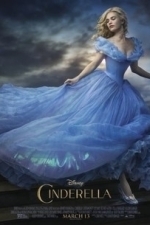


Throw together two beautiful faces from a couple of popular TV shows, award-winning veterans of the big screen, a director who loves to immerse viewers in story in the most spectacular of ways and what do you get? Sweet, magical enchantment.
Cinderella is Disney’s latest live-action translation of a classic animated film and under Kenneth Branagh’s deft direction it is simply wonderful. Retelling a beloved fairytale and making it feel fresh, delightful and satisfying is no small feat but Branagh does it with engaging actors, charming sets, captivating scenery and gorgeous costumes.
Lily James, recently of Downton Abbey, plays the heroine with sweet, innocent strength. Showered with love by her parents, played by Ben Chaplin and Hayley Atwell, Ella knows nothing about discontent or malice. Even after she loses her mother, and even after her father brings home an uncaring stepmother and disdainful stepsisters, Ella remains faithful to her mother’s dying wish for her daughter to “Have courage. Be Kind.”
Everyone knows how Ella became Cinderella and we all know just how badly she’s treated by her stepmother and stepsisters. Cate Blanchett is wickedly magnificent as the stepmother and Sophie McShera and Holliday Grainger bring new meaning to gaudy and garish.
I have to admit I’m a sucker for any fairytale that involves grand, sweeping ballroom scenes like Beauty and the Beast, Enchanted and now Cinderella. Of course, the scene could not have been possible without the help of a Fairy Godmother. Helena Bonham Carter is simply delightful in her role as Cinderella’s Fairy Godmother. The special effects used to give Cinderella a stunning gown as well as a horse-drawn carriage and driver and footmen were flawless
We also know how the story ends, but that didn’t stop the audience from sighing, holding its collective breath, and cheering when the prince, played handsomely by Richard Madden, finds the maiden whose foot fits perfectly in the glass slipper.
Days after our screener, my husband and I were still discussing the movie, that’s how much we enjoyed it. And when you can get your husband to easily agree to watch it again when it’s released, you know it’s a great movie.
Cinderella is Disney’s latest live-action translation of a classic animated film and under Kenneth Branagh’s deft direction it is simply wonderful. Retelling a beloved fairytale and making it feel fresh, delightful and satisfying is no small feat but Branagh does it with engaging actors, charming sets, captivating scenery and gorgeous costumes.
Lily James, recently of Downton Abbey, plays the heroine with sweet, innocent strength. Showered with love by her parents, played by Ben Chaplin and Hayley Atwell, Ella knows nothing about discontent or malice. Even after she loses her mother, and even after her father brings home an uncaring stepmother and disdainful stepsisters, Ella remains faithful to her mother’s dying wish for her daughter to “Have courage. Be Kind.”
Everyone knows how Ella became Cinderella and we all know just how badly she’s treated by her stepmother and stepsisters. Cate Blanchett is wickedly magnificent as the stepmother and Sophie McShera and Holliday Grainger bring new meaning to gaudy and garish.
I have to admit I’m a sucker for any fairytale that involves grand, sweeping ballroom scenes like Beauty and the Beast, Enchanted and now Cinderella. Of course, the scene could not have been possible without the help of a Fairy Godmother. Helena Bonham Carter is simply delightful in her role as Cinderella’s Fairy Godmother. The special effects used to give Cinderella a stunning gown as well as a horse-drawn carriage and driver and footmen were flawless
We also know how the story ends, but that didn’t stop the audience from sighing, holding its collective breath, and cheering when the prince, played handsomely by Richard Madden, finds the maiden whose foot fits perfectly in the glass slipper.
Days after our screener, my husband and I were still discussing the movie, that’s how much we enjoyed it. And when you can get your husband to easily agree to watch it again when it’s released, you know it’s a great movie.

Philosophy Now
Education and Magazines & Newspapers
App
Philosophy Now is a magazine for everyone interested in ideas. It aims to corrupt innocent citizens...

RəX Regent (349 KP) rated Pandora's Box (1929) in Movies
Feb 18, 2019

Pandora’s Box was one of the last films of the silent era, a period of transition to sound which I believe set the art of cinematography back a decade.
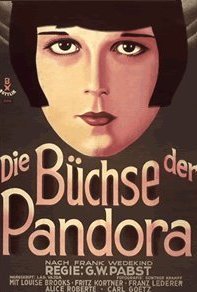
In short. Pandora’s Box looks stunning! Using the frame to its fullest, with a combination of wide framing and exploiting the art of the close up as Lulu herself, would the men around her, as well as driven by brilliant performances by most of the cast. But kudos needs to go to the star, Louise Brooks, as she portrays Lulu, the alluring flapper girl who can work her innocent, secutive magic on anyone, men and women alike.
But this is not limited to the narrative’s characters as her performance is subtle and underplayed, oozing out the silver screen and seducing the audience with same allure. If looks could kill, then this movie has them all.
With a sparse use of inter-titles, the film relies on both the physicality of the cast and imaginative cinematography to convey the seductive and danger of the events as they unfold over the two and bit hour runtime. Fritz Korner in particular rivals Brooks with the intensity of his performance as the ill fated husband of the girl about town.
And then there’s Alice Roberts, the Countess, who is widely thought to have the first lesbian to be seen on screen. Only Belgian actress’s second film in her short career, is played very Germanic, yet sympathetic as she too, has been drawn under Lulu’s spell.
This was made during the period in which German cinema was ruling, driving the art form from the nickelodeon to the theatre, but this was about to change in the 1930’s with advent of the sound and the golden age of American cinema. But as this film proves, you do not need sound to tell or show a good story.
Granted, the central story is pretty mediocre; a simple tale of a damaged woman who instinctively uses her allure to get her own way yet not as a diva, just an instinctive manipulator, casting her spell far and wide until that spell leads her into the hands London serial killer, Jack The Ripper (Gustav Diessl). But she is never portrayed as evil or scheming, just as herself as those around her are drawn to her aide.
There is little of the pantamine action or motives that you can expect from this genre even now, 90 years on.
But German director G.W. Pabst manages to create a multi-layered tale, deepened by psychological and social subtext, achieved as much because of the relationship he garnered with the star, Brookes, as he played on her natural talents to bring one of cinemas most defining roles to the screen. This would be the first of two collaborations between the director and the wayward starlet that year.
Pandora’s Box is yet another example of how German Cinema was leading the world back in the 1920’s; and even though the second world war may have brought this golden era to an abrupt end, it’s legacy lives on today with the styles, both in front and behind the camera, still being honoured by entire film industry now and hopefully for decades to come.
In short. Pandora’s Box looks stunning! Using the frame to its fullest, with a combination of wide framing and exploiting the art of the close up as Lulu herself, would the men around her, as well as driven by brilliant performances by most of the cast. But kudos needs to go to the star, Louise Brooks, as she portrays Lulu, the alluring flapper girl who can work her innocent, secutive magic on anyone, men and women alike.
But this is not limited to the narrative’s characters as her performance is subtle and underplayed, oozing out the silver screen and seducing the audience with same allure. If looks could kill, then this movie has them all.
With a sparse use of inter-titles, the film relies on both the physicality of the cast and imaginative cinematography to convey the seductive and danger of the events as they unfold over the two and bit hour runtime. Fritz Korner in particular rivals Brooks with the intensity of his performance as the ill fated husband of the girl about town.
And then there’s Alice Roberts, the Countess, who is widely thought to have the first lesbian to be seen on screen. Only Belgian actress’s second film in her short career, is played very Germanic, yet sympathetic as she too, has been drawn under Lulu’s spell.
This was made during the period in which German cinema was ruling, driving the art form from the nickelodeon to the theatre, but this was about to change in the 1930’s with advent of the sound and the golden age of American cinema. But as this film proves, you do not need sound to tell or show a good story.
Granted, the central story is pretty mediocre; a simple tale of a damaged woman who instinctively uses her allure to get her own way yet not as a diva, just an instinctive manipulator, casting her spell far and wide until that spell leads her into the hands London serial killer, Jack The Ripper (Gustav Diessl). But she is never portrayed as evil or scheming, just as herself as those around her are drawn to her aide.
There is little of the pantamine action or motives that you can expect from this genre even now, 90 years on.
But German director G.W. Pabst manages to create a multi-layered tale, deepened by psychological and social subtext, achieved as much because of the relationship he garnered with the star, Brookes, as he played on her natural talents to bring one of cinemas most defining roles to the screen. This would be the first of two collaborations between the director and the wayward starlet that year.
Pandora’s Box is yet another example of how German Cinema was leading the world back in the 1920’s; and even though the second world war may have brought this golden era to an abrupt end, it’s legacy lives on today with the styles, both in front and behind the camera, still being honoured by entire film industry now and hopefully for decades to come.

Jordan Binkerd (567 KP) rated Star Wars, Vol. 2: Showdown on the Smuggler's Moon in Books
Aug 9, 2019

Note: this review is transposted from my personal review blog, and so was originally written several years ago. I figured if I reposted it here, someone might actually read it….
I very much enjoyed the first volume of Marvel’s ongoing Star Wars series, but many other reviewers took issue with it for playing things safe and giving us a story like many we’d seen before. These criticisms are not completely unfounded, I’ll admit, but neither are they completely fair. Either way, this is not a problem the series has going forward…. This second volume also includes the one-off flashback story THE LAST OF HIS BREED, featuring Obi-Wan Kenobi adjusting to his exile on Tatooine, which is discussed separately below.
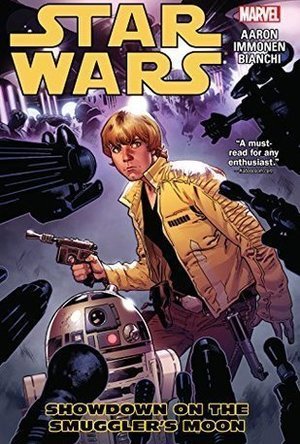
Luke Skywalker has successfully escaped the clutches of the bounty hunter Boba Fett, but all he got for his troubles was the journal of Obi-Wan Kenobi–no small prize, but probably not all that helpful in furthering his Jedi training. So what’s the next logical step in learning about the Jedi? Try and sneak onto Coruscant to infiltrate the old Jedi Temple, of course! But when his attempt to find a discreet ship and pilot in a seedy bar on Nar Shaddaa goes horribly awry, Luke finds himself the prisoner of Grakkus the Hutt. In addition to the traditional crime and vice, Grakkus has made a name for himself as one of the foremost collectors of Jedi artifacts. Now Luke faces the battle of his life in Grakkus’ arena, billed as “the last Jedi” and pitted against a fearsome creature for the amusement of Grakkus’ fellow crime lords….Meanwhile, Han and Leia are out scouting potential locations for a new Rebel base when they run across a figure from Han’s past. Her name is Sana, and she claims to be his wife….
As with the previous volume, this was some stellar work. Jason Aaron nails the banter between Han & Leia, to the point where you can almost hear Carrie Fisher and Harrison Ford delivering the lines, and Luke’s mix of cockiness and self-doubt is spot-on for his character and situation. Also of note is Stuart Immonen’s spectacular artwork. From the character closeups to the panoramic vistas, this was pure Star Wars. Also amusing was watching our entire cast wade into battle wielding lightsabers. Did Luke manage to salvage anything of value from Grakkus’ stash on his way out? I guess we’ll have to wait and see….
Then there’s the Obi-Wan backup story. It’s been seven years since the rise of the Empire, seven years since the death of the Jedi and the Republic. Formerly one of the greatest Jedi of his generation, now Obi-Wan Kenobi lives a life of obscurity on the desert planet of Tatooine. Where once he protected the innocent of the galaxy, now “Old Ben” forces himself to look the other way lest he draw the Empire’s notice as Jabba’s thugs extort water from the locals. All that matters is protecting the boy, Luke Skywalker, on whose unknowing shoulders rest the fate of the galaxy. But there are limits to the patience of even the greatest of Jedi….
This was a good one. The story was solid, and it’s always interesting to see Obi-Wan’s state of mind during his exile. Was this done better in John Jackson Miller’s KENOBI? Yes. That goes without saying, if only because he had more than twenty-four pages to tell his story. At any rate, KENOBI isn’t canon anymore, so we’ll not dwell on it. Simone Bianchi’s art here was stellar, I must say, and his Kenobi managed to blend Ewan McGregor and Alec Guinness superbly. I would very much like to see more of these one-off excerpts from Obi-Wan’s journal appear in future issues of the comic.
CONTENT: Moderate violence, not too gruesome most of the time. Mild profanity. Mild sexual innuendo and flirting.
Original posts: Main story (https://jordanbinkerd.wordpress.com/2015/11/23/review-star-wars-showdown-on-the-smugglers-moon-by-jason-aaron-stuart-immonen/) & Obi-Wan Flashback (https://jordanbinkerd.wordpress.com/2015/11/23/review-star-wars-the-last-of-his-breed-by-jason-aaron-simone-bianchi/)
I very much enjoyed the first volume of Marvel’s ongoing Star Wars series, but many other reviewers took issue with it for playing things safe and giving us a story like many we’d seen before. These criticisms are not completely unfounded, I’ll admit, but neither are they completely fair. Either way, this is not a problem the series has going forward…. This second volume also includes the one-off flashback story THE LAST OF HIS BREED, featuring Obi-Wan Kenobi adjusting to his exile on Tatooine, which is discussed separately below.
Luke Skywalker has successfully escaped the clutches of the bounty hunter Boba Fett, but all he got for his troubles was the journal of Obi-Wan Kenobi–no small prize, but probably not all that helpful in furthering his Jedi training. So what’s the next logical step in learning about the Jedi? Try and sneak onto Coruscant to infiltrate the old Jedi Temple, of course! But when his attempt to find a discreet ship and pilot in a seedy bar on Nar Shaddaa goes horribly awry, Luke finds himself the prisoner of Grakkus the Hutt. In addition to the traditional crime and vice, Grakkus has made a name for himself as one of the foremost collectors of Jedi artifacts. Now Luke faces the battle of his life in Grakkus’ arena, billed as “the last Jedi” and pitted against a fearsome creature for the amusement of Grakkus’ fellow crime lords….Meanwhile, Han and Leia are out scouting potential locations for a new Rebel base when they run across a figure from Han’s past. Her name is Sana, and she claims to be his wife….
As with the previous volume, this was some stellar work. Jason Aaron nails the banter between Han & Leia, to the point where you can almost hear Carrie Fisher and Harrison Ford delivering the lines, and Luke’s mix of cockiness and self-doubt is spot-on for his character and situation. Also of note is Stuart Immonen’s spectacular artwork. From the character closeups to the panoramic vistas, this was pure Star Wars. Also amusing was watching our entire cast wade into battle wielding lightsabers. Did Luke manage to salvage anything of value from Grakkus’ stash on his way out? I guess we’ll have to wait and see….
Then there’s the Obi-Wan backup story. It’s been seven years since the rise of the Empire, seven years since the death of the Jedi and the Republic. Formerly one of the greatest Jedi of his generation, now Obi-Wan Kenobi lives a life of obscurity on the desert planet of Tatooine. Where once he protected the innocent of the galaxy, now “Old Ben” forces himself to look the other way lest he draw the Empire’s notice as Jabba’s thugs extort water from the locals. All that matters is protecting the boy, Luke Skywalker, on whose unknowing shoulders rest the fate of the galaxy. But there are limits to the patience of even the greatest of Jedi….
This was a good one. The story was solid, and it’s always interesting to see Obi-Wan’s state of mind during his exile. Was this done better in John Jackson Miller’s KENOBI? Yes. That goes without saying, if only because he had more than twenty-four pages to tell his story. At any rate, KENOBI isn’t canon anymore, so we’ll not dwell on it. Simone Bianchi’s art here was stellar, I must say, and his Kenobi managed to blend Ewan McGregor and Alec Guinness superbly. I would very much like to see more of these one-off excerpts from Obi-Wan’s journal appear in future issues of the comic.
CONTENT: Moderate violence, not too gruesome most of the time. Mild profanity. Mild sexual innuendo and flirting.
Original posts: Main story (https://jordanbinkerd.wordpress.com/2015/11/23/review-star-wars-showdown-on-the-smugglers-moon-by-jason-aaron-stuart-immonen/) & Obi-Wan Flashback (https://jordanbinkerd.wordpress.com/2015/11/23/review-star-wars-the-last-of-his-breed-by-jason-aaron-simone-bianchi/)

Heather Cranmer (2721 KP) rated The Night Olivia Fell in Books
Mar 15, 2019
Wow!
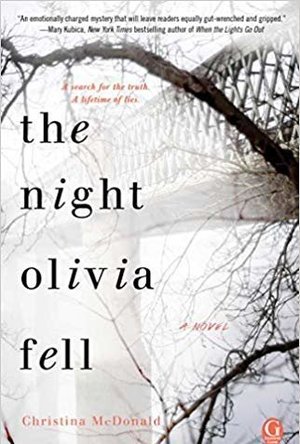
I had been wanting to read The Night Olivia Fell by Christina McDonald for awhile. I was beyond thrilled when I was able to borrow the eBook from my library. Luckily, the book lived up to the hype I had built in my mind.
I found the plot of The Night Olivia Fell to be very intriguing and well written. There were so many feelings with this novel. I enjoyed reading things from Abi's perspective and then going back in time to read flashbacks in Olivia's perspective. I found myself trying to decide if Olivia really was murdered or if she killed herself. There were so many times I thought I had figured out who pushed Olivia just to be wrong. I did find myself hoping that by some miracle, Olivia would go back to being the same before she fell off the bridge. (Hope springs eternal with me.) This was more than just the mystery of Olivia's fall. Olivia was also trying to figure out who her father was, and there was also Olivia's blossoming romance with Derrick. There were a few plot twists which were enjoyable. My only complaint is that I wish there would have been information on the court case. I just felt that I needed closure and to make sure justice was served. Other than that, I felt like the story was written perfectly.
I felt that the characters in The Night Olivia Fell were very fleshed out and realistic. My heart went out to both Olivia and Abi. I could understand how Abi just wanted to make sure Olivia was safe and doing well, but I could also sympathize with out Olivia felt like Abi was smothering her a lot of the time. Olivia was very much like a typical teenager to begin with, but once she found out she was pregnant, I felt like she really blossomed. Olivia would have been an excellent mother, and it was sweet to see how she was willing to protect her unborn baby. Abi just wanted what was best for Olivia being as she was a single mother. She worked her behind off to make sure Olivia was okay. It was obvious how much Abi loved Olivia. Kendall was a bit of a wild card. I liked her, but I was always wondering if she had an endgame. Gavin was another wild card. I wanted to believe he wouldn't stoop so low as to hurt a young innocent girl, but then the more I read about him, the more I wasn't sure of his character. I started out feeling sorry for Tyler with how much he had going on with him, but I was glad that Olivia chose Derek. Derek seemed to be really sweet, and it was sad that people judged him based on a some stretched truths.
The pacing was done brilliantly for The Night Olivia Fell. Not once did I ever feel like the story dragged on or was becoming too predictable. I felt as if each page was an adventure which made this book an easy read.
Trigger warnings for The Night Olivia Fell include violence, threats, blackmail, profanity, and a semi-graphic sex scene between a 17 year old girl and her boyfriend.
All in all, The Night Olivia Fell was a great read! It had such an interesting plot as well as fantastically written characters. This book grabs you by the hand and never lets you go. I would definitely recommend The Night Olivia Fell by Christina McDonald to those aged 17+. It's one of those books that leaves you thinking about it long after you've finished it.
I found the plot of The Night Olivia Fell to be very intriguing and well written. There were so many feelings with this novel. I enjoyed reading things from Abi's perspective and then going back in time to read flashbacks in Olivia's perspective. I found myself trying to decide if Olivia really was murdered or if she killed herself. There were so many times I thought I had figured out who pushed Olivia just to be wrong. I did find myself hoping that by some miracle, Olivia would go back to being the same before she fell off the bridge. (Hope springs eternal with me.) This was more than just the mystery of Olivia's fall. Olivia was also trying to figure out who her father was, and there was also Olivia's blossoming romance with Derrick. There were a few plot twists which were enjoyable. My only complaint is that I wish there would have been information on the court case. I just felt that I needed closure and to make sure justice was served. Other than that, I felt like the story was written perfectly.
I felt that the characters in The Night Olivia Fell were very fleshed out and realistic. My heart went out to both Olivia and Abi. I could understand how Abi just wanted to make sure Olivia was safe and doing well, but I could also sympathize with out Olivia felt like Abi was smothering her a lot of the time. Olivia was very much like a typical teenager to begin with, but once she found out she was pregnant, I felt like she really blossomed. Olivia would have been an excellent mother, and it was sweet to see how she was willing to protect her unborn baby. Abi just wanted what was best for Olivia being as she was a single mother. She worked her behind off to make sure Olivia was okay. It was obvious how much Abi loved Olivia. Kendall was a bit of a wild card. I liked her, but I was always wondering if she had an endgame. Gavin was another wild card. I wanted to believe he wouldn't stoop so low as to hurt a young innocent girl, but then the more I read about him, the more I wasn't sure of his character. I started out feeling sorry for Tyler with how much he had going on with him, but I was glad that Olivia chose Derek. Derek seemed to be really sweet, and it was sad that people judged him based on a some stretched truths.
The pacing was done brilliantly for The Night Olivia Fell. Not once did I ever feel like the story dragged on or was becoming too predictable. I felt as if each page was an adventure which made this book an easy read.
Trigger warnings for The Night Olivia Fell include violence, threats, blackmail, profanity, and a semi-graphic sex scene between a 17 year old girl and her boyfriend.
All in all, The Night Olivia Fell was a great read! It had such an interesting plot as well as fantastically written characters. This book grabs you by the hand and never lets you go. I would definitely recommend The Night Olivia Fell by Christina McDonald to those aged 17+. It's one of those books that leaves you thinking about it long after you've finished it.
RəX Regent (349 KP) rated Four Lions (2010) in Movies
Mar 7, 2019
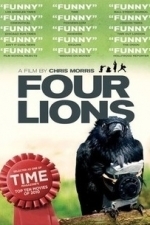
The fine between comedy and tragedy...
Contains spoilers, click to show
I can remember first hearing about this early in 2010, and was unsure as what to expect. On one hand this could have been a nasty hate film, mocking the wave of Muslim extremism which is taking a firm hold in this country, merely for the entertainment value, or this could be one of the important satires on the subject to date.
It was by far, without a shadow of doubt, the latter. Four Lions follows five amateur, lackluster Muslims from Sheffield who all believe that they are a primed terror cell on the frontline of the war against the infidels. Unfortunately for them, they are bunglers, whilst achieving the ability to create explosives, they have failed to control how and when it explodes! The plot culminates with an attempt to attack the London Marathon but it is a long road, taking our protagonists to the terror camps of Pakistan, and the town halls of Sheffield. This film is written and directed so expertly, it is literally frightening.
Morris and his pitch perfect cast deliver a film which so perfectly walks the razor wire tightrope between comedy and tragedy that every laugh is tinged with sadness or pity and every dark moment, seemingly comedic.
Is this a comedy? Decidedly not, but is this funny, and intentionally so? Yes. It's almost as if the laughs are out of sheer relief, as moments which should shock are delivered or followed up by some of the most profoundly realistic and yet ridiculous conversions.
The Lion King explanation for the war against the west; The almost horrifically callous 'Honey Monster' exchange as a police sniper may well have just shot an innocent civilian will stick in your mind. Let alone more simple humour, such as the eating of the sim cards to prevent tracking, which resembled the Catholic method of taking of the bread at mass.
But this was also about grooming: Grooming the audience to sympathise with a terror cell plotting in our midst was genius, whist having to watch the various methods employed within the group itself, leading to some of the films most poignant and tragic moments.
The disenfranchised Muslim population of this country have been captured so well, though portrayed on one hand as been dimwitted 'wanna-be terrorists', but on the other as real people, miss led with some of the most ridiculous concepts designed to reduce their lives to that of mediocrity in order to convince them to take so many others. This is a sympathetic peace movie in a time of great confusion and conflict.
Until now, United 93 was the film which had most summed up the dark times in which we live, following 9/11, but this is at least on par with it and is a great addition to a long and significant catalogue of topical anti-establishment films, such as M.A.S.H. and Dr. Strangelove.
Not just highly recommended, but a MUST SEE!
It was by far, without a shadow of doubt, the latter. Four Lions follows five amateur, lackluster Muslims from Sheffield who all believe that they are a primed terror cell on the frontline of the war against the infidels. Unfortunately for them, they are bunglers, whilst achieving the ability to create explosives, they have failed to control how and when it explodes! The plot culminates with an attempt to attack the London Marathon but it is a long road, taking our protagonists to the terror camps of Pakistan, and the town halls of Sheffield. This film is written and directed so expertly, it is literally frightening.
Morris and his pitch perfect cast deliver a film which so perfectly walks the razor wire tightrope between comedy and tragedy that every laugh is tinged with sadness or pity and every dark moment, seemingly comedic.
Is this a comedy? Decidedly not, but is this funny, and intentionally so? Yes. It's almost as if the laughs are out of sheer relief, as moments which should shock are delivered or followed up by some of the most profoundly realistic and yet ridiculous conversions.
The Lion King explanation for the war against the west; The almost horrifically callous 'Honey Monster' exchange as a police sniper may well have just shot an innocent civilian will stick in your mind. Let alone more simple humour, such as the eating of the sim cards to prevent tracking, which resembled the Catholic method of taking of the bread at mass.
But this was also about grooming: Grooming the audience to sympathise with a terror cell plotting in our midst was genius, whist having to watch the various methods employed within the group itself, leading to some of the films most poignant and tragic moments.
The disenfranchised Muslim population of this country have been captured so well, though portrayed on one hand as been dimwitted 'wanna-be terrorists', but on the other as real people, miss led with some of the most ridiculous concepts designed to reduce their lives to that of mediocrity in order to convince them to take so many others. This is a sympathetic peace movie in a time of great confusion and conflict.
Until now, United 93 was the film which had most summed up the dark times in which we live, following 9/11, but this is at least on par with it and is a great addition to a long and significant catalogue of topical anti-establishment films, such as M.A.S.H. and Dr. Strangelove.
Not just highly recommended, but a MUST SEE!

Lee (2222 KP) rated The First Purge (2018) in Movies
Jul 9, 2018
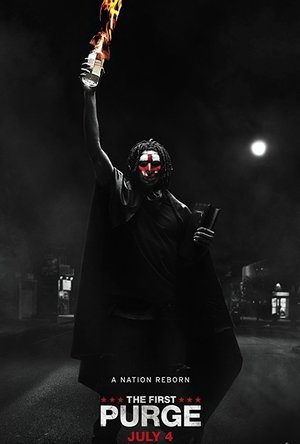


Not sure why they bothered
The fourth movie in 'The Purge' series takes us right back to the beginning, introducing us to the days leading up to and including the very first purge. It's the weakest of the series, and while not exactly a bad movie, you're kind of left wondering why they even bothered.
The site of the new 'experiment' is Staten Island, NY, and in the run up to it's commencement we're introduced to quite a few of the locals, most of which aren't that memorable once the end credits have rolled. Some of them are angry, and looking to embrace this new way of being able to legally release their anger. Some are out to protect their illegal business interests, and some just want to keep their heads down and ride out the night with as little trouble as possible. In an effort to keep people on the island during the experiment, the NFFA offers $5,000 to anyone who does stick around for the night. And, if they actually participate in the purge, they'll get a nice bonus! Glowing contact lenses containing tiny cameras are on offer to those that do wish to partake, allowing their movements and actions to be tracked and seen by all, and providing a suitably creepy effect when worn out in the dark.
Unfortunately though, purge night doesn't get off to a great start. While most streets are clear, a number of block parties start up, and the only murder that takes place has been by the local crazy guy on drugs. So, they decide to stir things up a bit by sending in trained teams, disguised as locals, in an attempt to incite violence. When this happens, and innocent lives are lost, local drug boss Dmitri and his team of dealers decide to take things into their own hands. With their arsenal of automatic weapons, they seem surprisingly well trained in the art of taking out the mercenaries, and this is where the movie is at it's most enjoyable. As Dmitri strips down to his white vest and heads into the tower block where a number of bad guys are sweeping each floor, taking out innocents as they go, we get some fantastic action sequences. It's all very reminiscent of The Raid, with a dash of Die Hard thrown in. Close quarters stairwell fighting, gun fights, explosions, all beautifully choreographed and ramping up the tension as the bad guys near the 14th floor, where many of the characters introduced earlier in the movie are all holed up.
Sadly, this intense and thrilling action only features in the last 20 minutes or so and isn't enough to pull this back from being just a so-so movie, only adding to the overall imbalance of it all.
The site of the new 'experiment' is Staten Island, NY, and in the run up to it's commencement we're introduced to quite a few of the locals, most of which aren't that memorable once the end credits have rolled. Some of them are angry, and looking to embrace this new way of being able to legally release their anger. Some are out to protect their illegal business interests, and some just want to keep their heads down and ride out the night with as little trouble as possible. In an effort to keep people on the island during the experiment, the NFFA offers $5,000 to anyone who does stick around for the night. And, if they actually participate in the purge, they'll get a nice bonus! Glowing contact lenses containing tiny cameras are on offer to those that do wish to partake, allowing their movements and actions to be tracked and seen by all, and providing a suitably creepy effect when worn out in the dark.
Unfortunately though, purge night doesn't get off to a great start. While most streets are clear, a number of block parties start up, and the only murder that takes place has been by the local crazy guy on drugs. So, they decide to stir things up a bit by sending in trained teams, disguised as locals, in an attempt to incite violence. When this happens, and innocent lives are lost, local drug boss Dmitri and his team of dealers decide to take things into their own hands. With their arsenal of automatic weapons, they seem surprisingly well trained in the art of taking out the mercenaries, and this is where the movie is at it's most enjoyable. As Dmitri strips down to his white vest and heads into the tower block where a number of bad guys are sweeping each floor, taking out innocents as they go, we get some fantastic action sequences. It's all very reminiscent of The Raid, with a dash of Die Hard thrown in. Close quarters stairwell fighting, gun fights, explosions, all beautifully choreographed and ramping up the tension as the bad guys near the 14th floor, where many of the characters introduced earlier in the movie are all holed up.
Sadly, this intense and thrilling action only features in the last 20 minutes or so and isn't enough to pull this back from being just a so-so movie, only adding to the overall imbalance of it all.

Ivana A. | Diary of Difference (1171 KP) rated Wonder in Books
Aug 3, 2020
<a href="https://amzn.to/2Wi7amb">Wishlist</a>; | <a
<a href="https://diaryofdifference.com/">Blog</a>; | <a href="https://www.facebook.com/diaryofdifference/">Facebook</a>; | <a href="https://twitter.com/DiaryDifference">Twitter</a>; | <a href="https://www.instagram.com/diaryofdifference/">Instagram</a>; | <a href="https://www.pinterest.co.uk/diaryofdifference/pins/">Pinterest</a>;
<img src="https://diaryofdifference.com/wp-content/uploads/2020/05/Book-Review-Banner-46.png"/>;
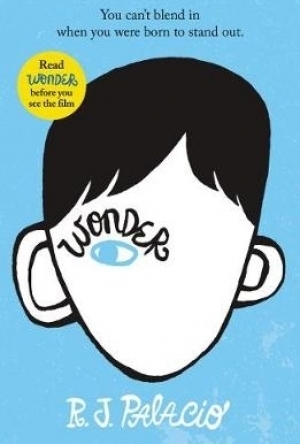
Wonder is the first book since The Notebook to make me cry to sleep. So sad, emotional and powerful, this is a book everyone needs to be aware of.
August is a young boy that has a health condition, which is why his face looks different than other people's faces. But he is just as normal and ordinary as any other kid.
When his parents decide it is time for him to go to school instead of being home-schooled, he is afraid. Because children are honest, and sometimes unintentionally mean,
<b><i>"When given the choice between being right or being kind, choose kind."</i></b>
During this book, we see August's point of view, his daily life and making friends with Jack and Summer. We also get to meet some not as nice kids, being mean to August. However, we see the story from other people's point of view, which I found quite interesting. Via'a point of view, for example, was quite insightful.
<b><i>Being August's sister is not easy.</i></b>
Especially when dealing with other high-school drama too. Via is in a situation where her relationship with her parents is suffering because of the attention they pay at August. And even though we can clearly see her endless love for him and her mindfulness of priority, we can also notice her need for attention and love as well.
We also see the point of views of his friends Jack and Summer, as well as Via's ex best-friend. These are all people that August has an impact on, and we can clearly see how they care about him, and how they are battling the society together with him as well. Through August's friendships, we learn so much about the type of person August is, what he is going through on a daily basis, and also, what kind of people his friends are, and what they are prepared to do for him.
<b><i>The inspiring thing about this book is August.</i></b>
For how he helps the people around him to be better versions of themselves. His resilience and positivity, despite the hard life he is currently having and knows he'll have for the rest of his life. August is so precious and innocent, and the moment the other children start to realise this as well is so emotional and magical.
Wonder by R.J. Palacio is just a book that is here to remind us to be kind and to be humble. A book I highly recommend to everyone. I also recommend the movie as well, but only after you have read the book.
<a href="https://diaryofdifference.com/">Blog</a>; | <a href="https://www.facebook.com/diaryofdifference/">Facebook</a>; | <a href="https://twitter.com/DiaryDifference">Twitter</a>; | <a href="https://www.instagram.com/diaryofdifference/">Instagram</a>; | <a href="https://www.pinterest.co.uk/diaryofdifference/pins/">Pinterest</a>;
<img src="https://diaryofdifference.com/wp-content/uploads/2020/05/Book-Review-Banner-46.png"/>;
Wonder is the first book since The Notebook to make me cry to sleep. So sad, emotional and powerful, this is a book everyone needs to be aware of.
August is a young boy that has a health condition, which is why his face looks different than other people's faces. But he is just as normal and ordinary as any other kid.
When his parents decide it is time for him to go to school instead of being home-schooled, he is afraid. Because children are honest, and sometimes unintentionally mean,
<b><i>"When given the choice between being right or being kind, choose kind."</i></b>
During this book, we see August's point of view, his daily life and making friends with Jack and Summer. We also get to meet some not as nice kids, being mean to August. However, we see the story from other people's point of view, which I found quite interesting. Via'a point of view, for example, was quite insightful.
<b><i>Being August's sister is not easy.</i></b>
Especially when dealing with other high-school drama too. Via is in a situation where her relationship with her parents is suffering because of the attention they pay at August. And even though we can clearly see her endless love for him and her mindfulness of priority, we can also notice her need for attention and love as well.
We also see the point of views of his friends Jack and Summer, as well as Via's ex best-friend. These are all people that August has an impact on, and we can clearly see how they care about him, and how they are battling the society together with him as well. Through August's friendships, we learn so much about the type of person August is, what he is going through on a daily basis, and also, what kind of people his friends are, and what they are prepared to do for him.
<b><i>The inspiring thing about this book is August.</i></b>
For how he helps the people around him to be better versions of themselves. His resilience and positivity, despite the hard life he is currently having and knows he'll have for the rest of his life. August is so precious and innocent, and the moment the other children start to realise this as well is so emotional and magical.
Wonder by R.J. Palacio is just a book that is here to remind us to be kind and to be humble. A book I highly recommend to everyone. I also recommend the movie as well, but only after you have read the book.
Kirk Bage (1775 KP) rated The Lighthouse (2019) in Movies
Jan 22, 2021
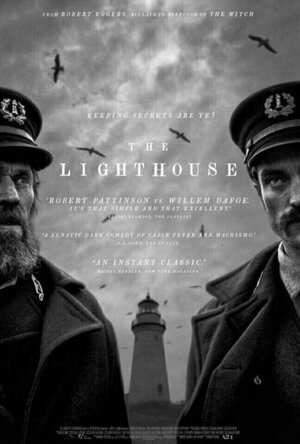
Robert Eggers made a striking introduction for himself in 2015 with the moody and disconcerting The Witch, bringing a future star to the world’s attention in Anya Taylor-Joy in the process. You could argue after seeing his sophomore effort, The Lighthouse, that in terms of creating deliberately nauseating landscapes his work is the third cog in the arthouse revival of intellectual “horror”, after Ari Aster (Hereditary / Midsommar) and Jordan Peele (Get Out / Us). The group actually sits quite well together, as there is an obvious social commentary by metaphor crossover going on here, as well as just a little bit of “crazy”.
The point of difference up front with Eggars seems to be an earthiness. He likes dirt, and straw and rain and holes in the ground, and a sense of temperature in a scene (usually very cold). He also loves to frame an image and hold it there simply for the bizarre beauty of it, much as David Lynch has done unapologetically and without explanation his whole career.
As perfect as Tayor-Joy was in The Witch for her innocent otherworldly qualities, so Willem Dafoe is also as a craggy, sweaty-toothed old man of the sea in this. Whatever else you take, or don’t take from The Lighthouse, it is hard to deny the absolute cinematic purity of Dafoe’s face! It alone will guarantee this film’s cult status (and his) forever. And I do mean forever; the very best images of this film are worthy to be frozen, framed and wondered at alongside the most enduring black and white iconography in the entire history of the art form. And most often the best images involve Dafoe.
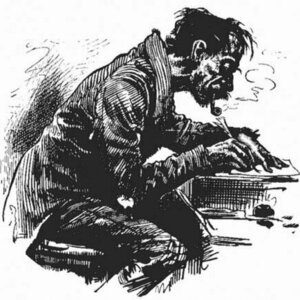
He is just so damn interesting to look at, all the time, no matter what. His range as an actor over the years just gets more and more impressive the more you think about it. He is capable of being heartbreakingly vulnerable and tender, but can also be terrifying on demand. His streak of dark humour can not be underestimated either – consider the genius of his introduction here, where the simple touch of his pipe being upside down tells you everything you need to know about this man and where this film is going.
Except, we don’t know where it is going. Ever. It is a very odd experience in terms of a satisfying narrative. It never seems to settle or fit into a genre comfortably, which is fine if all elements sublimate magically, but I don’t think they quite do. Is it a horror, a comedy, a psychological thriller, a study of loneliness and isolation, a metaphor for… something? The closest I can get is to say it is as if Lynch remade Young Frankenstein with just Igor and Dr Frankenstein, at a lighthouse, but forgot to make it funny or cohere into a real story. Of course, the things that I am reaching for as shortcomings may be exactly what others see as strengths. There is something to be said for being taken on a journey you can’t define or easily explain.
Quite often on this journey we are teased and fed details that seem to go nowhere, and avenues that may have proved interesting to explore are closed with a bang, in favour of another drinking scene and another fight – which are great the first few times, but become repetitive to a baffling degree later on. Mythology and dreams of the sea are played with, but also not fully approached; we are only given brief flashes of Mermaids and Krakens, nightmares and visions only, before returning to the mundanity and drudgery of the job of a lighthouse keeper. You are often left wondering who is going more mad, the men in the film or you watching it. I definitely recommend the best way to watch this is a little or a lot drunk, very late at night… it demands it, somehow.
It is difficult for all these reasons to say with any true certainty then, after just one viewing, if I think it is any good… I don’t know yet, I will have to watch it again some time to find out, is my best answer. For sure the photography is 100% first rate and instantly unforgettable – Jarin Blaschke was deservedly Oscar nominated for the extremely fine work – and the design and feel of the whole thing is quite masterful. I really want to like it more than I do, and perhaps if I was still in my wide-eyed twenties I would be enthusing about it endlessly, but now… I can see a touch of the Emperor’s new clothes about it, so am cautious of praising it too much.
One other element that is impressive, however, that I have yet to touch on, is the continued rise of Mr Robert Pattinson as an actor of serious note. As I have already touched on recently in other reviews, I did not see this coming, that it would be him that I was naming as one of the most promising talents of his age group working in film today! But you just can’t deny his versatility and understanding of genre and character. He puts in another very solid effort here, full of interesting choices and nuance; he is certainly an exciting prospect for the decade ahead.
In summary. See it. Unless you absolutely hate things that don’t tie the strings up nice and neatly, and decide for yourself. Some people will hate it, and I get that. It is a film-lovers film, for sure. Mesmerising and Meticulous, as one critic put it. Admire it for the craft involved, and experience it with an open mind. Just don’t go in expecting traditional horror, or traditional drama, or traditional comedy, or even traditional surrealism… The Lighthouse, for all it’s debatable flaws is unique! I suggest you let it be that way by not over-reaching to define it.
The point of difference up front with Eggars seems to be an earthiness. He likes dirt, and straw and rain and holes in the ground, and a sense of temperature in a scene (usually very cold). He also loves to frame an image and hold it there simply for the bizarre beauty of it, much as David Lynch has done unapologetically and without explanation his whole career.
As perfect as Tayor-Joy was in The Witch for her innocent otherworldly qualities, so Willem Dafoe is also as a craggy, sweaty-toothed old man of the sea in this. Whatever else you take, or don’t take from The Lighthouse, it is hard to deny the absolute cinematic purity of Dafoe’s face! It alone will guarantee this film’s cult status (and his) forever. And I do mean forever; the very best images of this film are worthy to be frozen, framed and wondered at alongside the most enduring black and white iconography in the entire history of the art form. And most often the best images involve Dafoe.
He is just so damn interesting to look at, all the time, no matter what. His range as an actor over the years just gets more and more impressive the more you think about it. He is capable of being heartbreakingly vulnerable and tender, but can also be terrifying on demand. His streak of dark humour can not be underestimated either – consider the genius of his introduction here, where the simple touch of his pipe being upside down tells you everything you need to know about this man and where this film is going.
Except, we don’t know where it is going. Ever. It is a very odd experience in terms of a satisfying narrative. It never seems to settle or fit into a genre comfortably, which is fine if all elements sublimate magically, but I don’t think they quite do. Is it a horror, a comedy, a psychological thriller, a study of loneliness and isolation, a metaphor for… something? The closest I can get is to say it is as if Lynch remade Young Frankenstein with just Igor and Dr Frankenstein, at a lighthouse, but forgot to make it funny or cohere into a real story. Of course, the things that I am reaching for as shortcomings may be exactly what others see as strengths. There is something to be said for being taken on a journey you can’t define or easily explain.
Quite often on this journey we are teased and fed details that seem to go nowhere, and avenues that may have proved interesting to explore are closed with a bang, in favour of another drinking scene and another fight – which are great the first few times, but become repetitive to a baffling degree later on. Mythology and dreams of the sea are played with, but also not fully approached; we are only given brief flashes of Mermaids and Krakens, nightmares and visions only, before returning to the mundanity and drudgery of the job of a lighthouse keeper. You are often left wondering who is going more mad, the men in the film or you watching it. I definitely recommend the best way to watch this is a little or a lot drunk, very late at night… it demands it, somehow.
It is difficult for all these reasons to say with any true certainty then, after just one viewing, if I think it is any good… I don’t know yet, I will have to watch it again some time to find out, is my best answer. For sure the photography is 100% first rate and instantly unforgettable – Jarin Blaschke was deservedly Oscar nominated for the extremely fine work – and the design and feel of the whole thing is quite masterful. I really want to like it more than I do, and perhaps if I was still in my wide-eyed twenties I would be enthusing about it endlessly, but now… I can see a touch of the Emperor’s new clothes about it, so am cautious of praising it too much.
One other element that is impressive, however, that I have yet to touch on, is the continued rise of Mr Robert Pattinson as an actor of serious note. As I have already touched on recently in other reviews, I did not see this coming, that it would be him that I was naming as one of the most promising talents of his age group working in film today! But you just can’t deny his versatility and understanding of genre and character. He puts in another very solid effort here, full of interesting choices and nuance; he is certainly an exciting prospect for the decade ahead.
In summary. See it. Unless you absolutely hate things that don’t tie the strings up nice and neatly, and decide for yourself. Some people will hate it, and I get that. It is a film-lovers film, for sure. Mesmerising and Meticulous, as one critic put it. Admire it for the craft involved, and experience it with an open mind. Just don’t go in expecting traditional horror, or traditional drama, or traditional comedy, or even traditional surrealism… The Lighthouse, for all it’s debatable flaws is unique! I suggest you let it be that way by not over-reaching to define it.
Gareth von Kallenbach (980 KP) rated Parker (2013) in Movies
Aug 7, 2019
So I, being the girl that I am, wasn’t exactly keyed up to go and see a “shoot-em up” style action flick — you know, the kind that Jason Statham excels at? My boyfriend, however, is like most red-blooded men and found this movie right up his alley. Perhaps it was due to the fact I “owed” him from cashing in my chick-flick points and making him watch “the Painted Veil” with me the other day; perhaps it was because my choice of Redbox rentals had been rather lackluster in comparison. Either way, he was looking forward the the prospect of this movie review far more than I.
“Parker” starts off in Ohio where Jason Statham’s character (Parker) is working a job with four other men. The job seems to go off without a hitch until the end when Parker discovers an innocent man died in the process, thus starting “beef” between he and one of his partners. The apparent boss of the crooks then asks Parker to join them in another job, requiring him to give up his share of the loot to contribute to the upcoming job. Parker politely declines and, of course, this doesn’t sit too well with the crooks. As predicted, they then turn on him and Parker is left for dead on the side of the road.
As we know, Jason Statham’s characters are indestructible. I mean, this was covered in both “Crank” movies so the audience should be well-versed in how this goes down, right? Of course, Parker survives and thus starts on a path of revenge. Mob bosses are involved, hits are put out, etc. Regardless, his journey takes him to Palm Springs where the four crooks who betrayed him are preparing for their next big job.
Now, you’re probably wondering where Jennifer Lopez is in all of this (yes, JLo has a part in this movie – I know, I feel your pain too). Given that her last decent flick was “the Cell” and “Selena,” I wasn’t expecting too much from her character. As Parker is making his way down to Palm Springs, the movie then focuses on JLo’s character, a depressed and rather broken divorcee living with her mother and desperate for a commission from her job as a real-estate agent. Cue in Parker, dressed as a wealthy Texan, and looking to buy a home in Palm Springs. Of course we see JLo checking him out and basically throwing herself at him because, well, that’s what all us desperate women do, right? We throw ourselves at rich men when times are hard without taking much else into consideration (like, say the cop – who comes across as a decent guy – who wants nothing else but to date her. But hey, he’s not Jason Statham, right? Pfft!). Regardless, JLo finds a way to weasel herself into helping Parker’s character and thwarting the four thieves who betrayed Parker. Luckily for all of us, JLo advances are shut down and we don’t have to fall witness to another “Gigli”.
Is the movie some amazing cinematic masterpiece? Absolutely not. Are Parker’s flashbacks cheesy and annoying? Of course. But we are talking about an action flick and one that doesn’t disappoint in lots of blood, gun fights, knifing action, and Jason Statham being an overall badass.
Will your girlfriend love this movie? Probably not. Will you, you red-blooded hunk of testosterone, love this movie? Probably. It is, after all, geared towards your sex. And, just in case the blood and fights don’t do it for you, there are more than enough exposed breasts throughout the film keep your interest piqued.
So if you’re looking for a good revenge-style action flick, this one is decent enough. It won’t win any awards, but it won’t leave your poor girlfriend screaming for the hills either. JLo’s performance, however, that’s just inexcusible….
“Parker” starts off in Ohio where Jason Statham’s character (Parker) is working a job with four other men. The job seems to go off without a hitch until the end when Parker discovers an innocent man died in the process, thus starting “beef” between he and one of his partners. The apparent boss of the crooks then asks Parker to join them in another job, requiring him to give up his share of the loot to contribute to the upcoming job. Parker politely declines and, of course, this doesn’t sit too well with the crooks. As predicted, they then turn on him and Parker is left for dead on the side of the road.
As we know, Jason Statham’s characters are indestructible. I mean, this was covered in both “Crank” movies so the audience should be well-versed in how this goes down, right? Of course, Parker survives and thus starts on a path of revenge. Mob bosses are involved, hits are put out, etc. Regardless, his journey takes him to Palm Springs where the four crooks who betrayed him are preparing for their next big job.
Now, you’re probably wondering where Jennifer Lopez is in all of this (yes, JLo has a part in this movie – I know, I feel your pain too). Given that her last decent flick was “the Cell” and “Selena,” I wasn’t expecting too much from her character. As Parker is making his way down to Palm Springs, the movie then focuses on JLo’s character, a depressed and rather broken divorcee living with her mother and desperate for a commission from her job as a real-estate agent. Cue in Parker, dressed as a wealthy Texan, and looking to buy a home in Palm Springs. Of course we see JLo checking him out and basically throwing herself at him because, well, that’s what all us desperate women do, right? We throw ourselves at rich men when times are hard without taking much else into consideration (like, say the cop – who comes across as a decent guy – who wants nothing else but to date her. But hey, he’s not Jason Statham, right? Pfft!). Regardless, JLo finds a way to weasel herself into helping Parker’s character and thwarting the four thieves who betrayed Parker. Luckily for all of us, JLo advances are shut down and we don’t have to fall witness to another “Gigli”.
Is the movie some amazing cinematic masterpiece? Absolutely not. Are Parker’s flashbacks cheesy and annoying? Of course. But we are talking about an action flick and one that doesn’t disappoint in lots of blood, gun fights, knifing action, and Jason Statham being an overall badass.
Will your girlfriend love this movie? Probably not. Will you, you red-blooded hunk of testosterone, love this movie? Probably. It is, after all, geared towards your sex. And, just in case the blood and fights don’t do it for you, there are more than enough exposed breasts throughout the film keep your interest piqued.
So if you’re looking for a good revenge-style action flick, this one is decent enough. It won’t win any awards, but it won’t leave your poor girlfriend screaming for the hills either. JLo’s performance, however, that’s just inexcusible….