
Search
Search results
April Rose Mossow (93 KP) rated Garden of Shadows (Dollanganger, #5) in Books
May 20, 2019

I just love how V.C. Andrews delves into her characters deepest buried demons, and explains what brought them to become who they are. I don't fault Olivia as much as I did when reading FitA. I still think she should have opened up to he children though. Also, They focus too much on the old testament in these books. Peoples love for god was out of fear not love. Had they kept faith in mind and left gods wrath aside it would have turned out differently, I think. But then again, the read would not have been as good. You really pity Olivia after reading this book. On a side note, I gave this book 3 stars because it dragged in some places and I would have liked to read more about Corrine's youth, not just the basic stuff.
Hadley (567 KP) rated A Luminous Republic in Books
Aug 13, 2020

Well-written (1 more)
Unpredictable
Andres Barba's A Luminous Republic has feral children, senseless murders, and a plot that keeps the story moving enough that the reader won't want to put the book down. This story creatively combines politics, murder, fear and family - - - but the best part is, the book is unpredictable.
We first meet our main character, whose name is never given throughout the entire story, when he and his family are moving to San Cristobal because of a job opportunity. He works for the Department of Social Affairs, and has just received a promotion because he has come up with a very successful plan: " I had developed a social integration program for indigenous communities. The idea was simple and the program proved to be an effective model; it consisted of granting the indigenous exclusive rights to farm certain specific product." Our main character believes that this plan will bring the farmers more money. And he is more than happy to go back to the city where he fell in-love with his now wife, Maia - - - a violin teacher who had a daughter before meeting him, who he calls 'girl' throughout the story because she is also named Maia.
While on his way to work one day, our main character comes across one of the unknown children of the jungle, which shakes him up a bit. The unknown jungle children were known to beg at street lights for money and food, but one of the grimy, frizzy-haired boys stared the man down, only to end up giving him a very wide smile. "The boy's smile unsettled me because it confirmed that there had been a connection between us, that something had begun in me ended in him." Pretty soon after, he begins to notice these unknown jungle children running around a lot more, and that sometimes their intentions are not always innocent - - - he and the 'girl' witness an elderly woman get robbed of her groceries by a group of these children in the middle of the street in a subtle but violent way.
The unknown jungle children soon begin to rob several people,and when a police officer is killed while being attacked by them, the Mayor and the police want the children off the streets as soon as possible. Working with our main character, the former and the latter try to figure out the strange language these children use, whom may be the leader among them, and where they disappear to at night. Since the story is being told from our main character's past, the book is written like a True Crime story, with names of professionals and such being cited throughout. Our main character brings up a woman, who was a young girl at the time of the jungle children's invasion on San Cristobal: Teresa Otano, who happened to 'publish' her diary from that time, which gives readers insights into the jungle children: "Often, some of the thirty-two [jungle children], on their nightly journey back to the jungle, congregated next to Teresa's house, on one corner of Antartida Avenue. At first, Teresa, enthralled, simply makes notes, logging the days on which they appeared, whether there were three, four or five of them, what they were wearing, and so forth. She establishes patterns and identifies a few of the kids..." our main character explains to the reader.
But soon, the children cross a line that they can never come back from; being told by our main character from the view of surveillance video tapes, he describes to us that the jungle children entered a supermarket after an incident with a guard that works there, they block the entrance doors and begin to destroy items throughout the store, but the chaos quickly escalates, and two adults are murdered by the children - - - fear now holds the town in its grip, causing search parties to sweep through the dense jungle after the children fled.
But murder wasn't something new to San Cristobal, our main character explains to us that the suburbs of this area usually had a murder a week all year long, and that on the outskirts of the jungle, there were known spots for drug trafficking and assaults. What made the 'Dakota Supermarket' murders scare the town was that the residents' own children began to behave differently afterwards - - - they start to play a 'game' where they put their ears to the ground, believing that they can hear the jungle children talking to them. Our main character even walks in on the 'girl' playing this exact game. "For a second it was as if I were witnessing a ritual invented by a twelve-year-old girl, and I thought of how afraid my daughter must have felt when I found her in the bathroom that day. People often remark on the self-assured quality of the invocation, its instruction-manual tone, but I'd say that its intensity actually stems from what it dispenses: adult logic, a world that no longer serves. How could our children possibly have explained to us what they were doing? We weren't prepared for their world or their logic. Somewhere out there, underground, that dissonant sound was being sent, in code: down below, chaos. "
This phenomenon attracts the attention of money/fame seekers, which includes the Zapata children. Four siblings, ranging from the ages of five to nine, claimed that the jungle children were speaking to them through their dreams. They would make drawings from what they were told by the jungle children, but state that even they didn't know what the drawings meant. The media quickly jumped on them and put them in front of a camera, causing the family's home to be surrounded by civilians at all hours of the day and night. One night, the crowd outside becomes anxious, and breaks into the house, stealing not only the drawings from the Zapata children, but also the life savings of the family. At this point, the Zapatas had had enough, and retreat from the story altogether for reasons I won't disclose here. I can't give away much more of the book without ruining the story.
Barba's attempt at making a different kind of Lord of the Flies was done well, but the lack of emotion is felt throughout the entire story which makes the characters flat, especially our main character, who I didn't find likable in any such way. He calls a grieving woman a 'whore,' and he seems rude towards his family, especially his step-daughter.
A Luminous Republic is redeemed by is unpredictability, which is something that doesn't come along in fiction that often anymore. I enjoyed that the story was written like a True Crime novel, with fictitious documentaries, news reports and books. So, I would recommend this book to people who like True Crime and Mysteries.
We first meet our main character, whose name is never given throughout the entire story, when he and his family are moving to San Cristobal because of a job opportunity. He works for the Department of Social Affairs, and has just received a promotion because he has come up with a very successful plan: " I had developed a social integration program for indigenous communities. The idea was simple and the program proved to be an effective model; it consisted of granting the indigenous exclusive rights to farm certain specific product." Our main character believes that this plan will bring the farmers more money. And he is more than happy to go back to the city where he fell in-love with his now wife, Maia - - - a violin teacher who had a daughter before meeting him, who he calls 'girl' throughout the story because she is also named Maia.
While on his way to work one day, our main character comes across one of the unknown children of the jungle, which shakes him up a bit. The unknown jungle children were known to beg at street lights for money and food, but one of the grimy, frizzy-haired boys stared the man down, only to end up giving him a very wide smile. "The boy's smile unsettled me because it confirmed that there had been a connection between us, that something had begun in me ended in him." Pretty soon after, he begins to notice these unknown jungle children running around a lot more, and that sometimes their intentions are not always innocent - - - he and the 'girl' witness an elderly woman get robbed of her groceries by a group of these children in the middle of the street in a subtle but violent way.
The unknown jungle children soon begin to rob several people,and when a police officer is killed while being attacked by them, the Mayor and the police want the children off the streets as soon as possible. Working with our main character, the former and the latter try to figure out the strange language these children use, whom may be the leader among them, and where they disappear to at night. Since the story is being told from our main character's past, the book is written like a True Crime story, with names of professionals and such being cited throughout. Our main character brings up a woman, who was a young girl at the time of the jungle children's invasion on San Cristobal: Teresa Otano, who happened to 'publish' her diary from that time, which gives readers insights into the jungle children: "Often, some of the thirty-two [jungle children], on their nightly journey back to the jungle, congregated next to Teresa's house, on one corner of Antartida Avenue. At first, Teresa, enthralled, simply makes notes, logging the days on which they appeared, whether there were three, four or five of them, what they were wearing, and so forth. She establishes patterns and identifies a few of the kids..." our main character explains to the reader.
But soon, the children cross a line that they can never come back from; being told by our main character from the view of surveillance video tapes, he describes to us that the jungle children entered a supermarket after an incident with a guard that works there, they block the entrance doors and begin to destroy items throughout the store, but the chaos quickly escalates, and two adults are murdered by the children - - - fear now holds the town in its grip, causing search parties to sweep through the dense jungle after the children fled.
But murder wasn't something new to San Cristobal, our main character explains to us that the suburbs of this area usually had a murder a week all year long, and that on the outskirts of the jungle, there were known spots for drug trafficking and assaults. What made the 'Dakota Supermarket' murders scare the town was that the residents' own children began to behave differently afterwards - - - they start to play a 'game' where they put their ears to the ground, believing that they can hear the jungle children talking to them. Our main character even walks in on the 'girl' playing this exact game. "For a second it was as if I were witnessing a ritual invented by a twelve-year-old girl, and I thought of how afraid my daughter must have felt when I found her in the bathroom that day. People often remark on the self-assured quality of the invocation, its instruction-manual tone, but I'd say that its intensity actually stems from what it dispenses: adult logic, a world that no longer serves. How could our children possibly have explained to us what they were doing? We weren't prepared for their world or their logic. Somewhere out there, underground, that dissonant sound was being sent, in code: down below, chaos. "
This phenomenon attracts the attention of money/fame seekers, which includes the Zapata children. Four siblings, ranging from the ages of five to nine, claimed that the jungle children were speaking to them through their dreams. They would make drawings from what they were told by the jungle children, but state that even they didn't know what the drawings meant. The media quickly jumped on them and put them in front of a camera, causing the family's home to be surrounded by civilians at all hours of the day and night. One night, the crowd outside becomes anxious, and breaks into the house, stealing not only the drawings from the Zapata children, but also the life savings of the family. At this point, the Zapatas had had enough, and retreat from the story altogether for reasons I won't disclose here. I can't give away much more of the book without ruining the story.
Barba's attempt at making a different kind of Lord of the Flies was done well, but the lack of emotion is felt throughout the entire story which makes the characters flat, especially our main character, who I didn't find likable in any such way. He calls a grieving woman a 'whore,' and he seems rude towards his family, especially his step-daughter.
A Luminous Republic is redeemed by is unpredictability, which is something that doesn't come along in fiction that often anymore. I enjoyed that the story was written like a True Crime novel, with fictitious documentaries, news reports and books. So, I would recommend this book to people who like True Crime and Mysteries.
The Twelve Tribes of Hattie
Book
Fifteen years old and blazing with the hope of a better life, Hattie Shepherd fled the horror of the...

ClareR (6118 KP) rated How Much Of These Hills is Gold in Books
Jun 12, 2020
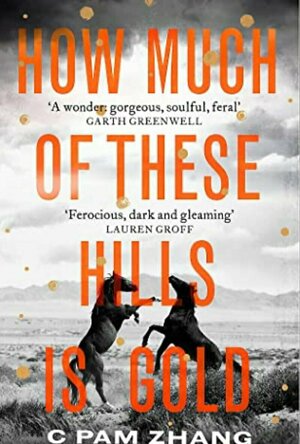
This is not your typical Western, although it set in the old Wild West. Lucy and Sam, two Chinese-American children, set off on their own to bury their father and to find the life that their mother wanted for them. Their father had gold fever and gambled their money away, their mother wanted an education and choices for her children - as well as somewhere safe to live. The fact that this story is based on two children alone is enough of an indicator that their parents wishes weren’t successful.
There are flashbacks to the life that they had prior to the death of their parents, and these really showed what a hard life gold prospecting and coal mining was - particularly if you weren’t seen as true Americans.
I loved this book - the descriptions of the landscape were stunning, the story of the difficult, uncertain lives the main characters experienced was at times heart-rending. I liked that we weren’t involved in the thought processes of their persecutors - we see everything from Lucy, Sam and their parents perspectives. We get a glimpse into the world of an immigrant family and of how little it seems to have changed with regards to attitudes.
I’d really recommend this book - it was a rewarding, if sad, read.

There are flashbacks to the life that they had prior to the death of their parents, and these really showed what a hard life gold prospecting and coal mining was - particularly if you weren’t seen as true Americans.
I loved this book - the descriptions of the landscape were stunning, the story of the difficult, uncertain lives the main characters experienced was at times heart-rending. I liked that we weren’t involved in the thought processes of their persecutors - we see everything from Lucy, Sam and their parents perspectives. We get a glimpse into the world of an immigrant family and of how little it seems to have changed with regards to attitudes.
I’d really recommend this book - it was a rewarding, if sad, read.
AJaneClark (3975 KP) rated Grinder (Seattle Sharks #1) in Books
May 6, 2020

Ice Hockey & Romance
Kindle recommended Whiskey’s work after I had devoured my way through Helena Hunting’s books on the same theme... Ice Hockey and Romance, and I was not disappointed.
Bailey and Gage have been friends since they were children, and after a previous accident, Bailey stepped in to support Gage by becoming a live-in nanny for his adorable daughter Scarlett.
Great in theory, but the undeniable attraction between Bailey and Gage could not go ignored. But will it be enough for a happy ending?
I really enjoyed reading the first in the Seattle Sharks series, getting to know the sharks and learning the heart warming story of the blossoming passion and love between Bailey and Gage.
The story was wonderfully well written, and the energy and emotions were palpable. I look forward to reading the others in the series.

Bailey and Gage have been friends since they were children, and after a previous accident, Bailey stepped in to support Gage by becoming a live-in nanny for his adorable daughter Scarlett.
Great in theory, but the undeniable attraction between Bailey and Gage could not go ignored. But will it be enough for a happy ending?
I really enjoyed reading the first in the Seattle Sharks series, getting to know the sharks and learning the heart warming story of the blossoming passion and love between Bailey and Gage.
The story was wonderfully well written, and the energy and emotions were palpable. I look forward to reading the others in the series.
Chris Hooker (419 KP) rated Reparation in Books
Jan 12, 2018
[Ruth Rodgers] addresses the changing racial views in the south through her novel [reparation]. Katie and Delia were best friends as young children but as they got older society drove them apart. In their teens Katie witnesses a horrible incident. She carries the guilt of not standing up for her friend and what she knew was right.
Now it is 2006 and Katie has returned home to help take care of her mom. By chance she is reunited with Delia. Katie is determined to make amends and get justice for her friend.
[Rodgers] does an amazing job of portraying the emotions of the characters. The story flows well and the flashbacks fill in the history giving the reader the perspective of the narrator(Katie). I also found the mention of Juneteenth interesting because not many people are aware that this is the Independence Day for the African American community. The historic perspective fit well in with the modern day mystery.
Now it is 2006 and Katie has returned home to help take care of her mom. By chance she is reunited with Delia. Katie is determined to make amends and get justice for her friend.
[Rodgers] does an amazing job of portraying the emotions of the characters. The story flows well and the flashbacks fill in the history giving the reader the perspective of the narrator(Katie). I also found the mention of Juneteenth interesting because not many people are aware that this is the Independence Day for the African American community. The historic perspective fit well in with the modern day mystery.
The Sea Watch
Book
A new race of Kinden emerge in The Sea Watch by the Arthur C. Clarke award-winning author of...
Becoming Fluent: How Cognitive Science Can Help Adults Learn a Foreign Language
Richard M. Roberts and Roger J. Kreuz
Book
Adults who want to learn a foreign language are often discouraged because they believe they cannot...

Rachel King (13 KP) rated The Hunger Games in Books
Feb 11, 2019
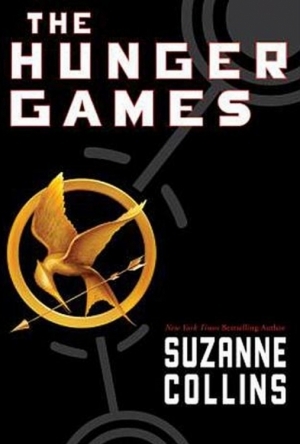
Right away this book captures my attention with a quick introduction to Katniss's survival skills followed by the District 12 Hunger Games lottery, a grim holiday that nobody wants to celebrate, but is still mandatory. It does not take long for the reader to feel sympathetic towards Katniss and the hardship she struggles with everyday just to survive.
Every detail leading up to the actual event of the Hunger Games has a surreal feel, as Katniss is primped and paraded like a beauty pageant contestant, as if everyone is ignoring the fact that these are children, with all but one facing imminent death. This is reality television meets the ancient gladiator games of Rome, combined with the sick irony of using a nation's most precious commodity -- its children. As a mother of three, I can not even fathom living in a country that tolerated this year after year. These Hunger Games are the country's way of preventing rebellion in its citizens through fear, brainwashing, and desensitization, as it is mandatory for every citizen to watch. In some districts, this is so successful that children are routinely trained specifically for the Hunger Games, volunteering to face murder and death for a chance at fame and fortune.
The love triangle is obvious early on, though the conflict can't come into play until the second book in the series. Peeta is the one in the spotlight, the one that humanizes Katniss for the viewers and makes her likable due to his own romantic feelings for her. Unfortunately, Katniss is too busy staying alive to be certain of her true feelings, even though she can pretend well enough to convince even Peeta. Peeta is self-sacrificing, while Katniss is observant and resourceful. Katniss is able to avoid becoming a cold-hearted murderer only because of Peeta's presence.
Regarding the actual Game, those that run it operate to keep the entertainment value up, adding to the danger of the contestants still alive, handing out gifts to give one an edge over another, forcing contestants into battle to increase bloodshed and drama, and generally treating the twenty-four as actors and actresses in any other fictional television drama. What Katniss keeps returning to is how "normal" these people of the Capitol see of the deaths of these children. It occurred to me while reading this that it would be better to be one of those that died in the Games, rather than live with being the monster responsible for the deaths of twenty-three other children purely for the entertainment of the shallow and self-absorbed.
This book is both shocking and heart-rending, and I look forward to the next installment, Catching Fire.
Every detail leading up to the actual event of the Hunger Games has a surreal feel, as Katniss is primped and paraded like a beauty pageant contestant, as if everyone is ignoring the fact that these are children, with all but one facing imminent death. This is reality television meets the ancient gladiator games of Rome, combined with the sick irony of using a nation's most precious commodity -- its children. As a mother of three, I can not even fathom living in a country that tolerated this year after year. These Hunger Games are the country's way of preventing rebellion in its citizens through fear, brainwashing, and desensitization, as it is mandatory for every citizen to watch. In some districts, this is so successful that children are routinely trained specifically for the Hunger Games, volunteering to face murder and death for a chance at fame and fortune.
The love triangle is obvious early on, though the conflict can't come into play until the second book in the series. Peeta is the one in the spotlight, the one that humanizes Katniss for the viewers and makes her likable due to his own romantic feelings for her. Unfortunately, Katniss is too busy staying alive to be certain of her true feelings, even though she can pretend well enough to convince even Peeta. Peeta is self-sacrificing, while Katniss is observant and resourceful. Katniss is able to avoid becoming a cold-hearted murderer only because of Peeta's presence.
Regarding the actual Game, those that run it operate to keep the entertainment value up, adding to the danger of the contestants still alive, handing out gifts to give one an edge over another, forcing contestants into battle to increase bloodshed and drama, and generally treating the twenty-four as actors and actresses in any other fictional television drama. What Katniss keeps returning to is how "normal" these people of the Capitol see of the deaths of these children. It occurred to me while reading this that it would be better to be one of those that died in the Games, rather than live with being the monster responsible for the deaths of twenty-three other children purely for the entertainment of the shallow and self-absorbed.
This book is both shocking and heart-rending, and I look forward to the next installment, Catching Fire.
A very uncomfortable read.
We know straight from the very first page what has happened and who committed the murder of 2 small children: it’s the nanny. This book is far more to do with the ‘why’ of it. Why exactly did she do it? Were there any mitigating circumstances?
This short novel shows a middle-aged woman who is very lonely, poor and under-educated. She does the work she loves though, looking after children in their own homes. She becomes very attached to all of her charges, and it seems that they all adore her.
This isn’t a story with a nice explanation or reason for a murder. It’s a lot like real life in that way: sometimes people become overwhelmed and can’t cope. It seemed obvious to me from early in that the nanny, Louise, had mental health problems. She seemed to be given full responsibility of two small children for a large part of the day, whilst their parents worked really long hours. I think the changing opinions of the parents don’t help her: one minute she can do no wrong and is an integral part of the family, the next, she’s ‘just’ the hired help. The ending isn’t wrapped up all nicely with a resolution. There’s no happy ending for any of them. Just like real life. I wasn’t surprised to learn that this could actually be based on the true story of a nanny murdering her employers children in much the same way, which made it all the more chilling.
If you’re not ok with reading about child murders, I’d steer well clear of this book, otherwise, it’s a very compelling read.
This short novel shows a middle-aged woman who is very lonely, poor and under-educated. She does the work she loves though, looking after children in their own homes. She becomes very attached to all of her charges, and it seems that they all adore her.
This isn’t a story with a nice explanation or reason for a murder. It’s a lot like real life in that way: sometimes people become overwhelmed and can’t cope. It seemed obvious to me from early in that the nanny, Louise, had mental health problems. She seemed to be given full responsibility of two small children for a large part of the day, whilst their parents worked really long hours. I think the changing opinions of the parents don’t help her: one minute she can do no wrong and is an integral part of the family, the next, she’s ‘just’ the hired help. The ending isn’t wrapped up all nicely with a resolution. There’s no happy ending for any of them. Just like real life. I wasn’t surprised to learn that this could actually be based on the true story of a nanny murdering her employers children in much the same way, which made it all the more chilling.
If you’re not ok with reading about child murders, I’d steer well clear of this book, otherwise, it’s a very compelling read.