
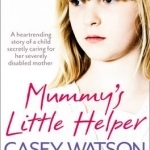
Mummy's Little Helper: The Heartrending True Story of a Young Girl Secretly Caring for Her Severely Disabled Mother
Book
The fifth book from bestselling author and specialist foster carer Casey Watson. A recent census...
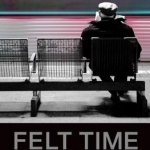
Felt Time: The Science of How We Experience Time
Book
We have widely varying perceptions of time. Children have trouble waiting for anything. ("Are we...
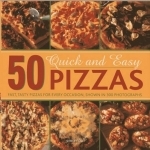
50 Quick and Easy Pizzas: Fast, Tasty Pizzas for Every Occasion, Shown in 300 Photographs
Book
This title offers fast, tasty pizzas for every occasion, shown in 300 photographs. Features: 50...

Cake Shop - Making & Cooking Cakes Game for Kids
Games
App
SAFE FOR KIDS • No Ads • Parental Controls ABOUT PAZU Pazu is a mobile games company that...
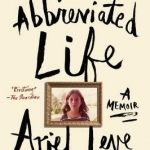
An Abbreviated Life: A Memoir
Book
A beautiful, startling, and candid memoir about growing up without boundaries, in which Ariel Leve...
Leela Kids: For 3-15 Year Olds
Education and Utilities
App
Techcrunch - "Leela Kids opens up the world of podcasts to children." Lifehacker (Australia) -...

ClareR (6256 KP) rated Nasty Little Cuts in Books
Feb 24, 2022


This book is phenomenal. It’s read-it-thorough-your-fingers-with-your-eyes-shut kind of phenomenal.
Reading it on The Pigeonhole, one stave a day for 10 days was a feat of endurance - the wait between staves was tortuous. This is NOT an easy read, and should probably come with some sort of trigger warning. It’s dark, emotional, visceral. It’s violent and frankly traumatic.
Debs and Marc should probably have never got together, never mind got married and had children. They’re both emotionally scarred from terrible childhoods and have never confronted, or been treated for, these psychological and physical injuries. And now they just seem to vent their feelings on one another with physical violence.
There’s loads of backstory that explains why they are in their current predicament, and honestly, I did feel some sympathy for them. But then, and Tina Baker does this so well, she gives with one hand, and snatches away with the other. Every past revelation of abuse or trauma, is bookended by domestic violence.
Honestly, it sounds horrendous, doesn’t it? But I couldn’t stop reading. As I said on The Pigeonhole: What a reading experience this has been. I’ll leave a review, but what can I say that will do this book justice?
Well, I can say this: Read It.
Time Timer
Productivity and Education
2.0 Rate It
App
Enjoy stress-free time management with the new & improved Time TIMER for iPhone (iOS 8 upgrade) –...
Hazel (1853 KP) rated Lies We Tell Ourselves in Books
Dec 17, 2018
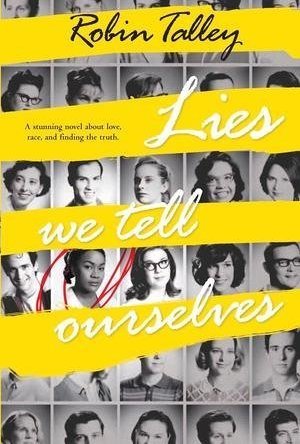


<i>Lies We Tell Ourselves</i> by Robin Talley is a realistic tale about the beginning of the integration of coloured people into white schools in late 1950s America. In Virginia it is 1959 and ten Negros are beginning their first day at Jefferson Highschool. The experience is narrated from one of the ten, Sarah’s, perspective. In other parts of the novel the voice changes to that of Linda, a particularly nasty white girl, who is one of countless students opposed to integration.
Although many young people will have been taught about the black civil right movement it is still shocking to read about the horrible things they had to endure. By writing in the first person, Talley encourages the reader to try to understand how they would feel in a similar situation. Sarah and her friends instantly become the victims of verbal and physical abuse that members of authority turn a blind eye to.
To Sarah, Linda is a nasty spoilt bully who, although does not join in with the taunting and abuse, is as bad as the rest of them. Through reading Linda’s account it becomes clear that her behaviour has a lot to do with her home life, in particularly with her father’s attitude towards her. After being forced to partner Sarah for a French project Linda begins to question why there is so much emphasis on skin colour, however not wanting to be shunned by her own friends she keeps these thoughts to herself.
Sarah is also struggling to come to terms with her sexual preference for girls. It has been drilled into her that these thoughts are a sin. She hides her true feelings from everyone and constantly berates herself mentally for being “unnatural”. But it turns out she may not be the only one with these thoughts.
The lies referred to in the title are not the blatant or harmful lies but rather the lies the characters believe or even want to believe. Each chapter begins with a lie that reflects what is occurring in the novel at that time; for example “There’s no need to be afraid” and “I don’t care what they think of me.” This is an interesting way of telling the story as it emphasizes Sarah’s determination to keep going despite what she is subjected to. It also reveals the mental struggles she faces. On the other hand the lies disclose Linda’s conflicting feelings towards the South’s current situation and segregation laws.
Although not a religious novel, each part begins with the title of a Christian hymn. It was the norm for everyone to go to church and, despite the separate churches, was something black and white people did. Sarah and Linda have faith in God yet they both use the bible’s teachings for opposing arguments. The religious aspect also highlights Sarah’s self-hatred and belief that she has fallen into sin.
Unfortunately in today’s world there are still issues with racism and homophobia however after reading <i>Lies We Tell Ourselves</i> it is evident that these situations have vastly improved, at least in the Western world, since the 1950s. Without children such as Sarah going through these horrible experiences nothing would have changed. There would still be separate schools, slavery and inaccurate opinions about race inequality. America has a lot to thank these brave students who were the first to create mixed race schools.
Overall this is a brilliant book. Well written and realistic, it really draws the reader in to the characters’ stories. Although <i>Lies We Tell Ourselves</i> is a work of fiction, it is historically accurate and can teach a lot about America’s history to young adults today.