
Search
Search results

Bookapotamus (289 KP) rated Educated in Books
May 29, 2018
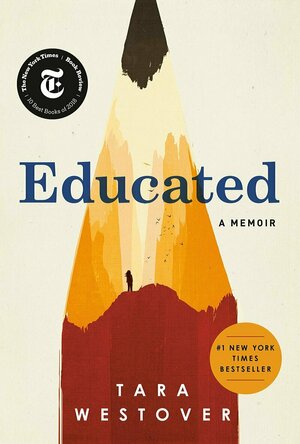


All the stars in the Idaho Sky! Tara Westover is so very brave. And her book is hands-down, 5+ stars amazing. This is by far the most riveting memoir I've ever read. I am so fascinated by cult-like religions, as well as homesteaders/survivalists and end-of-the-world preppers - and this quenched every thirst I've ever had for all those things and infinitely beyond. This was the extreme of both of those worlds. I cannot believe this is real life. The epitome of "you can't make this sh*t up," I imagine those words running through Tara's head often.
This is a story of growing up in middle-of-nowhere Idaho with Mormon anti-government parents, who "home-schooled" Tara and her brothers and sisters, while preaching these crazy ideals on these poor kids who just didn't know any better. They believed everything their parents said (who wouldn't believe their own parents?!), and the abuse and neglect she had to essentially endure because of it, was heartbreaking. These kids grew up with no birth certificates, never stepping foot inside a classroom or a doctor's office, zero modern medicine (including for severe burns and brain injury!), living in filth and squalor, and the constant pressure to be of extreme faith and a tireless servant of a God, that required way to much of these poor children. And all under the watchful eyes of a father who takes no less than their utter devotion to that God, no matter what the consequences.
It pains me to see them choose sides throughout - you really do get the sense that these parents love Tara in all the way they know how, and they honestly feel that what they are doing is right and just, but it's just so blatantly wrong. I applaud Tara for trying so very hard - throughout every victory in her life without them, and coming out on the other side, not bitter at all, still feeling love for her family.
I was enthralled by this memoir. There wasn't any second of this book that dragged, or lulled - I literally could not put it down. The writing is so well thought out, every person rich with description and character, and you root for this strong-willed little girl to get out, and make something of her life and triumph over the family who may love her, but believe her to be evil because she just wants to be free. And we know, because of this amazing book, she finally is.
Love. Love. Love!
Thank you to NetGalley for the opportunity to review and to Tara Westover for sharing her story.
This is a story of growing up in middle-of-nowhere Idaho with Mormon anti-government parents, who "home-schooled" Tara and her brothers and sisters, while preaching these crazy ideals on these poor kids who just didn't know any better. They believed everything their parents said (who wouldn't believe their own parents?!), and the abuse and neglect she had to essentially endure because of it, was heartbreaking. These kids grew up with no birth certificates, never stepping foot inside a classroom or a doctor's office, zero modern medicine (including for severe burns and brain injury!), living in filth and squalor, and the constant pressure to be of extreme faith and a tireless servant of a God, that required way to much of these poor children. And all under the watchful eyes of a father who takes no less than their utter devotion to that God, no matter what the consequences.
It pains me to see them choose sides throughout - you really do get the sense that these parents love Tara in all the way they know how, and they honestly feel that what they are doing is right and just, but it's just so blatantly wrong. I applaud Tara for trying so very hard - throughout every victory in her life without them, and coming out on the other side, not bitter at all, still feeling love for her family.
I was enthralled by this memoir. There wasn't any second of this book that dragged, or lulled - I literally could not put it down. The writing is so well thought out, every person rich with description and character, and you root for this strong-willed little girl to get out, and make something of her life and triumph over the family who may love her, but believe her to be evil because she just wants to be free. And we know, because of this amazing book, she finally is.
Love. Love. Love!
Thank you to NetGalley for the opportunity to review and to Tara Westover for sharing her story.
Hazel (1853 KP) rated Storm Watcher in Books
Dec 17, 2018


<i>This eBook was provided by the publisher via NetGalley in exchange for an honest review </i>
Is it possible for a book to be both too fast and too slow? This is what the story feels like in Maria V. Snyder’s contemporary children’s book <i>Storm Watcher</i>. It is the summer holidays and twelve year old Luke is working at the <i>Storm Watcher Kennel</i>, helping to take care of and train the many dogs living there. For his thirteenth birthday his father has promised him a bloodhound puppy, but what Luke really wants is a fluffy white Papillon – a dog that his father and brothers believe is useless and girly.
An important aspect of the story is Luke’s debilitating fear of storms. Although he has always been frightened of thunder and lightening, his mother’s recent death during a storm has greatly heightened his fears. Despite this phobia, Luke has enough knowledge and interest to act as an amateur meteorologist.
It takes a long time to get into the storyline. To begin with there is so much going on – dog breeding and training, starting to work with Willajean and her daughter Megan, feelings of guilt about mother’s death, fear of storms – making it difficult to determine which parts are essential to the plot, and more importantly, figure out the plot in the first place. Three months rapidly fly by, which in a short novel does not leave much room for an exciting climax, yet nothing major occurs.
Perhaps only the adult reader will detect the dullness <i>Storm Watcher</i> exudes, whereas when seen through a child’s eyes the story may be more exciting. Snyder has included a few interesting concepts such as over coming fear, dealing with grief and standing up for yourself. All these ideas are important for young people to understand and utilize in their own lives. The topic of meteorology, on the other hand, is not something children<i> need</i> to know, however it may interest them and provide the opportunity to learn something new. The author used to be a meteorologist before she turned to the world of literature, therefore has been able to provide a vast amount of knowledge about storms and weather, including a lengthy list of facts at the back of the book.
Maria V. Snyder’s young adult novels are well known throughout online communities, therefore <i>Storm Watcher</i>, although written for a younger target audience, had a standard to live up to. Unfortunately the result was disappointing, slow and a struggle to read. The book contains interesting ideas; however these could be expanded on to create a more engaging, full-length novel.
Is it possible for a book to be both too fast and too slow? This is what the story feels like in Maria V. Snyder’s contemporary children’s book <i>Storm Watcher</i>. It is the summer holidays and twelve year old Luke is working at the <i>Storm Watcher Kennel</i>, helping to take care of and train the many dogs living there. For his thirteenth birthday his father has promised him a bloodhound puppy, but what Luke really wants is a fluffy white Papillon – a dog that his father and brothers believe is useless and girly.
An important aspect of the story is Luke’s debilitating fear of storms. Although he has always been frightened of thunder and lightening, his mother’s recent death during a storm has greatly heightened his fears. Despite this phobia, Luke has enough knowledge and interest to act as an amateur meteorologist.
It takes a long time to get into the storyline. To begin with there is so much going on – dog breeding and training, starting to work with Willajean and her daughter Megan, feelings of guilt about mother’s death, fear of storms – making it difficult to determine which parts are essential to the plot, and more importantly, figure out the plot in the first place. Three months rapidly fly by, which in a short novel does not leave much room for an exciting climax, yet nothing major occurs.
Perhaps only the adult reader will detect the dullness <i>Storm Watcher</i> exudes, whereas when seen through a child’s eyes the story may be more exciting. Snyder has included a few interesting concepts such as over coming fear, dealing with grief and standing up for yourself. All these ideas are important for young people to understand and utilize in their own lives. The topic of meteorology, on the other hand, is not something children<i> need</i> to know, however it may interest them and provide the opportunity to learn something new. The author used to be a meteorologist before she turned to the world of literature, therefore has been able to provide a vast amount of knowledge about storms and weather, including a lengthy list of facts at the back of the book.
Maria V. Snyder’s young adult novels are well known throughout online communities, therefore <i>Storm Watcher</i>, although written for a younger target audience, had a standard to live up to. Unfortunately the result was disappointing, slow and a struggle to read. The book contains interesting ideas; however these could be expanded on to create a more engaging, full-length novel.

Blaze and the Monster Machines - Racing Game
Education and Games
App
Get ready to race along with Nick Jr.’s Blaze and the Monster Machines in this fun truck racing...

Blaze and the Monster Machines - Racing Game HD
Education and Games
App
Get ready to race along with Nick Jr.’s Blaze and the Monster Machines in this fun truck racing...
Dexteria Jr. - Fine Motor Skill Development
Education and Medical
App
(Ed. note: Be sure to also check out the new award-winning app Dexteria VMI.) "I am going to start...

Hazel (1853 KP) rated Teagan of Tomorrow (Legend of Rhyme, #3) in Books
Dec 17, 2018

<i>This eBook was provided by the publisher via NetGalley in exchange for an honest review </i>
They may have defeated the evil sorcerer, but the twins have found themselves in even more trouble. <i>Teagan of Tomorrow</i> is the third book in Jaime Lee Mann’s<i> Legend of Rhyme</i> fantasy series for children. Previously Asher and Ariana have helped to banish a powerful, wicked man, however in the process have been transported to the year 2015 – more than a couple of centuries into the future. Back in Coraira the rulers and fairies are desperate to locate the twins, but before they get a chance a curse befalls them, putting them into a deep sleep and removing all magic from the realm.
This third installment introduces a new character that is key to the plot. Teagan is a twelve-year-old girl living in a foster family in 2015. Readers learn that her parents died when she was young, however it is not revealed how or whether this is relevant to future books in the series. Although she never meets them, after Asher and Ariana find themselves nearby, Teagan starts experiencing odd things that could only be explained as magic… if magic existed.
The story is quite amusing to begin with as Asher and Ariana not only find themselves in a world they no longer understand, they have crashed straight into a reenactment of their own lives. Since magic ceased to exist, Coraira and the twins have become a legend that most people regard as a children’s fairytale, which they like to act out as a way of attracting tourists. The way the twins react to their surroundings produces a humorous comparison between the past and the twenty-first century.
As the story progresses it becomes clear that Teagan is a descendant of the twin’s family, and is their key to returning home. If only it could be as easy as it sounds. Before Asher and Ariana get to meet their youngest family member, Teagan accidently gets herself transported into Coraira.
Being only one hundred pages, <i>Teagan of Tomorrow</i> does not have room to resolve this disastrous situation. Readers will have to wait for the next book to be published to find out if the twins ever make it back home, and discover what happens to Teagan.
As with the previous two books, <i>Teagan of Tomorrow</i> is written in a language suitable for older children to understand. The author has kept the story short and to the point, making it easy to follow. The downside to this is it lacks description with dozens of pages containing only dialogue. This makes it harder to appreciate the setting and unique magical concept that Mann has invented.
The risk with a series of books is in going too far with the storyline. Sometimes there is a point when the story should end, yet the author perseveres on. I worried that this would be the case with this series. Except for the twins going missing, things could easily have finished at the end of the second book. The introduction of Teagan in<i> Teagan of Tomorrow</i> however gives a whole new concept to the original fantasy narrative. Instead of the same characters using the same magic, to defeat the same types of evil, surrounded by the same types of mythical creatures, Teagan provides a contemporary observation on the already familiar setting. The way the author leaves events at the end of the book will make the reader yearn for the next story, thus making it a success.
They may have defeated the evil sorcerer, but the twins have found themselves in even more trouble. <i>Teagan of Tomorrow</i> is the third book in Jaime Lee Mann’s<i> Legend of Rhyme</i> fantasy series for children. Previously Asher and Ariana have helped to banish a powerful, wicked man, however in the process have been transported to the year 2015 – more than a couple of centuries into the future. Back in Coraira the rulers and fairies are desperate to locate the twins, but before they get a chance a curse befalls them, putting them into a deep sleep and removing all magic from the realm.
This third installment introduces a new character that is key to the plot. Teagan is a twelve-year-old girl living in a foster family in 2015. Readers learn that her parents died when she was young, however it is not revealed how or whether this is relevant to future books in the series. Although she never meets them, after Asher and Ariana find themselves nearby, Teagan starts experiencing odd things that could only be explained as magic… if magic existed.
The story is quite amusing to begin with as Asher and Ariana not only find themselves in a world they no longer understand, they have crashed straight into a reenactment of their own lives. Since magic ceased to exist, Coraira and the twins have become a legend that most people regard as a children’s fairytale, which they like to act out as a way of attracting tourists. The way the twins react to their surroundings produces a humorous comparison between the past and the twenty-first century.
As the story progresses it becomes clear that Teagan is a descendant of the twin’s family, and is their key to returning home. If only it could be as easy as it sounds. Before Asher and Ariana get to meet their youngest family member, Teagan accidently gets herself transported into Coraira.
Being only one hundred pages, <i>Teagan of Tomorrow</i> does not have room to resolve this disastrous situation. Readers will have to wait for the next book to be published to find out if the twins ever make it back home, and discover what happens to Teagan.
As with the previous two books, <i>Teagan of Tomorrow</i> is written in a language suitable for older children to understand. The author has kept the story short and to the point, making it easy to follow. The downside to this is it lacks description with dozens of pages containing only dialogue. This makes it harder to appreciate the setting and unique magical concept that Mann has invented.
The risk with a series of books is in going too far with the storyline. Sometimes there is a point when the story should end, yet the author perseveres on. I worried that this would be the case with this series. Except for the twins going missing, things could easily have finished at the end of the second book. The introduction of Teagan in<i> Teagan of Tomorrow</i> however gives a whole new concept to the original fantasy narrative. Instead of the same characters using the same magic, to defeat the same types of evil, surrounded by the same types of mythical creatures, Teagan provides a contemporary observation on the already familiar setting. The way the author leaves events at the end of the book will make the reader yearn for the next story, thus making it a success.
A Bibliophagist (113 KP) rated Wuthering Heights in Books
Feb 12, 2020

Stands up (2 more)
Enthralling
Unique
Dislikable characters (1 more)
Difficult accents without translations
I will do my best to review this, however, I didn't heed the intro, this tour de force really does leave you as quickly as it comes, and reading another book before reviewing this one was a mistake.
In reading reviews prior to reading this book, I learned three major things; 1, people either love or hate this book, 2. I had no idea what I was actually in for, and 3. this may have not been the romantic pick for February I was expecting it to be.
So yes, PSA for anyone out there considering going into this thinking it's a romance. It is NOT. There are love stories in this, absolutely, powerful love stories that made me read quotes to my boyfriend with snarky statements like "if you don't say this at my funeral, did you ever really love me?". But it is NOT a romance. If anything this has more in common with "The Count of Monte Cristo" than it does "Pride and Prejudice". Honestly, the only thing it has in common with other, romantic books of this time, is the time period. But beware, no balls and high society and Mr. Darcy's await you in this novel. I feel a number of the reviews decrying the book, calling the characters "monstrous" both were the orchestrators of their own disappointment by assuming it to be like an Austin, and really need to look in the mirror and reflect on if they are really as perfect as they think they are. Especially if they were in the circumstances that surround this tale.
I find that Heathcliff himself addresses this mistake many readers had going into this book.
"picturing in me a hero of romance, and expecting unlimited indulgences from my chivalrous devotion. I can hardly regard her in the light of a rational creature, so obstinately has she persisted in forming a fabulous notion of my character and actin gon false impressions she cherished."
SO many readers went into this expecting Heathcliff to be some misunderstood brute or one harsh but salvaged by the purity of his love of Catherine. But this isn't the case.
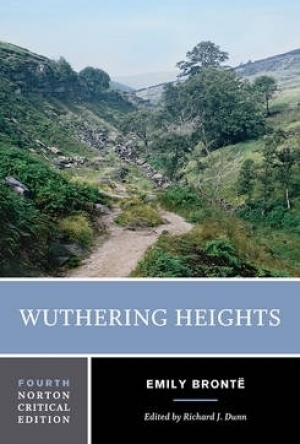
Wuthering Heights tells the story of (I guess technically 3) but really 2 generations of families. Living in the Yorkshire Moors, isolated from high society. We have the Liptons, primmer and properer and more in touch with society, and the Earnshaws which become a little rough around the edges in their isolation and loss. Papa Earnshaw has two children, Catherine and Hindley, and adopts a small boy of unknown heritage but is implied to be Romani or of mixed race (sorry Tom Hardy and nearly every portrayal of Heathcliff), that he names, simply, Heathcliff. He loves Heathcliff, and dotes on him greatly, much to the chagrin of Hindly who grows to resent Heathcliff, treating him terribly until Hindly leaves for school. Catherine and Heathcliff become great playmates, their care is given primarily to a maid scarcely older than them, as Papa Earnshaw is a single daddy. They are wild things, as children I would assume would be, in such isolation as the Yorkshire Moors in a time before the creature comforts and entertainment we have. They grow very close, obsessively close. Upon Papa Earnshaw's death, Hindley returns (at around the age of 23) to run the household, and take over the care of these two youngsters, one of which, he hates. So, Cinderella-style, Heathcliff gets treated worse and worse and treated like a servant rather than the adoptive child that Papa Earnshaw loved so dearly. Suddenly Heathcliff is nothing, treated terribly, and has the most important thing in his life banned from him, Catherine. Meanwhile, the Liptons also have two children, not wild, but spoilt in their own ways, Edgar and Isabella, close in age to Heathcliff and Catherine. When H and C run off on a camping adventure and find themselves at the Lipton's house, Catherine is injured and stays with the Liptons, in their higher society for 5 weeks. Leaving Heathcliff to the abuse of her brother and further isolation. She returns much more a lady and with her connection to Heathcliff slightly burned. In an attempt to protect Heathcliff, and because Heathcliff is now no more than a servant and not an option to marry, Catherine intends to marry Edgar. Causing our resident bad boy to run off for a number of years. Only to return a proper, but still broody gentleman, and confuse Catherine's affection much to the displeasure of Edgar.
Now, this is where a number of shows and movies end things. With a focus on Catherine and Heathcliff's whirlwind romance, obsession. It has some of the most to the point and beautiful lines regarding love, not all flowery, not "I love you most ardently" but rather cries of "I am Heathcliff" by Catherine. Absolutely heart-rending, even though I didn't like Catherine. But this is not where the book ends. The book goes on to follow Heathcliff's obsession with revenge, with his treatment as a child, his rage against Hindley, and against losing Catherine to Edgar. He spends years slowly ruining everyone's lives. Not that you could really ruin Hindley's life, he was a mean drunk. But he even goes as far as to meddle with the next generation, Hindley's son Hareton is raised terribly and is a bit of a wild thing (those his redemption and love story is quite beautiful), Catherine's daughter Cathy and Heathcliff's son Lipton are whisked up into a big scheme by Heathcliff to take everything. Heathcliff even marry's out of pure spite.
Love does not redeem this man, he's barely an antihero without his youth story. He is angry and passionate and obsessed. Which for the first half of the book I didn't fault him for, but he does do some damnable things in the second half that you cannot argue away. No matter how romantic and beautiful and heartrending his lamentations can be. I was quite the character arc, quite the tale of revenge and loss. He was unredeemable because of his big sprawling schemes and harsh intentions. Catherine for me was unredeemable because she was an obnoxious, selfish thing, that honestly if Heathcliff had stopped thinking about two minutes would have found a better woman in every town. She whined and treated Edgar (who was honestly super sweet) so terribly, she had an anger problem and would work herself up until she was sick. But it is in this imperfection that I fell in love more with the book. Here is something unique and real, this is no Elizabeth Bennett. The isolation and hermetic lifestyle created very different characters than what we see in Jane Austin or even in Emily's sister's novel.
It's no wonder this book was harshly critiqued upon release, here is a woman, writing a revenge story, with love stories in it. That based on the biographical intro had some parallels to her own life. She lived an isolated existence, surrounded by the death of the majority of her family young. She was in her late 20s when she wrote this and died a year after publication. She made humans of monsters and monsters of humans and wrote something unexpected and truly unique.
It's hard for me to explain, amongst the harshness and bleakness of this novel, why I loved it so much. But I did, I loved every bit. The anger, the passion, the love, the scheming, I loved it all.
I also feel it's important to note that this whole story is told by a maid to a new tenant. So the narrator is unreliable. Were these people truly this way? Or is it clouded by this maid's opinions of them? How much is omitted due to the maid not being privy to an event?
Truly a fantastic read, that punched me in my chest and gut, grabbed and twisted my insides and refuses to let go. I would argue it's a cult classic rather than a classic. So please, shed all preconceived notions of what this book is, shake that Austin out of your mind and read this tale of obsession and revenge. It's well worth it.
In reading reviews prior to reading this book, I learned three major things; 1, people either love or hate this book, 2. I had no idea what I was actually in for, and 3. this may have not been the romantic pick for February I was expecting it to be.
So yes, PSA for anyone out there considering going into this thinking it's a romance. It is NOT. There are love stories in this, absolutely, powerful love stories that made me read quotes to my boyfriend with snarky statements like "if you don't say this at my funeral, did you ever really love me?". But it is NOT a romance. If anything this has more in common with "The Count of Monte Cristo" than it does "Pride and Prejudice". Honestly, the only thing it has in common with other, romantic books of this time, is the time period. But beware, no balls and high society and Mr. Darcy's await you in this novel. I feel a number of the reviews decrying the book, calling the characters "monstrous" both were the orchestrators of their own disappointment by assuming it to be like an Austin, and really need to look in the mirror and reflect on if they are really as perfect as they think they are. Especially if they were in the circumstances that surround this tale.
I find that Heathcliff himself addresses this mistake many readers had going into this book.
"picturing in me a hero of romance, and expecting unlimited indulgences from my chivalrous devotion. I can hardly regard her in the light of a rational creature, so obstinately has she persisted in forming a fabulous notion of my character and actin gon false impressions she cherished."
SO many readers went into this expecting Heathcliff to be some misunderstood brute or one harsh but salvaged by the purity of his love of Catherine. But this isn't the case.
Wuthering Heights tells the story of (I guess technically 3) but really 2 generations of families. Living in the Yorkshire Moors, isolated from high society. We have the Liptons, primmer and properer and more in touch with society, and the Earnshaws which become a little rough around the edges in their isolation and loss. Papa Earnshaw has two children, Catherine and Hindley, and adopts a small boy of unknown heritage but is implied to be Romani or of mixed race (sorry Tom Hardy and nearly every portrayal of Heathcliff), that he names, simply, Heathcliff. He loves Heathcliff, and dotes on him greatly, much to the chagrin of Hindly who grows to resent Heathcliff, treating him terribly until Hindly leaves for school. Catherine and Heathcliff become great playmates, their care is given primarily to a maid scarcely older than them, as Papa Earnshaw is a single daddy. They are wild things, as children I would assume would be, in such isolation as the Yorkshire Moors in a time before the creature comforts and entertainment we have. They grow very close, obsessively close. Upon Papa Earnshaw's death, Hindley returns (at around the age of 23) to run the household, and take over the care of these two youngsters, one of which, he hates. So, Cinderella-style, Heathcliff gets treated worse and worse and treated like a servant rather than the adoptive child that Papa Earnshaw loved so dearly. Suddenly Heathcliff is nothing, treated terribly, and has the most important thing in his life banned from him, Catherine. Meanwhile, the Liptons also have two children, not wild, but spoilt in their own ways, Edgar and Isabella, close in age to Heathcliff and Catherine. When H and C run off on a camping adventure and find themselves at the Lipton's house, Catherine is injured and stays with the Liptons, in their higher society for 5 weeks. Leaving Heathcliff to the abuse of her brother and further isolation. She returns much more a lady and with her connection to Heathcliff slightly burned. In an attempt to protect Heathcliff, and because Heathcliff is now no more than a servant and not an option to marry, Catherine intends to marry Edgar. Causing our resident bad boy to run off for a number of years. Only to return a proper, but still broody gentleman, and confuse Catherine's affection much to the displeasure of Edgar.
Now, this is where a number of shows and movies end things. With a focus on Catherine and Heathcliff's whirlwind romance, obsession. It has some of the most to the point and beautiful lines regarding love, not all flowery, not "I love you most ardently" but rather cries of "I am Heathcliff" by Catherine. Absolutely heart-rending, even though I didn't like Catherine. But this is not where the book ends. The book goes on to follow Heathcliff's obsession with revenge, with his treatment as a child, his rage against Hindley, and against losing Catherine to Edgar. He spends years slowly ruining everyone's lives. Not that you could really ruin Hindley's life, he was a mean drunk. But he even goes as far as to meddle with the next generation, Hindley's son Hareton is raised terribly and is a bit of a wild thing (those his redemption and love story is quite beautiful), Catherine's daughter Cathy and Heathcliff's son Lipton are whisked up into a big scheme by Heathcliff to take everything. Heathcliff even marry's out of pure spite.
Love does not redeem this man, he's barely an antihero without his youth story. He is angry and passionate and obsessed. Which for the first half of the book I didn't fault him for, but he does do some damnable things in the second half that you cannot argue away. No matter how romantic and beautiful and heartrending his lamentations can be. I was quite the character arc, quite the tale of revenge and loss. He was unredeemable because of his big sprawling schemes and harsh intentions. Catherine for me was unredeemable because she was an obnoxious, selfish thing, that honestly if Heathcliff had stopped thinking about two minutes would have found a better woman in every town. She whined and treated Edgar (who was honestly super sweet) so terribly, she had an anger problem and would work herself up until she was sick. But it is in this imperfection that I fell in love more with the book. Here is something unique and real, this is no Elizabeth Bennett. The isolation and hermetic lifestyle created very different characters than what we see in Jane Austin or even in Emily's sister's novel.
It's no wonder this book was harshly critiqued upon release, here is a woman, writing a revenge story, with love stories in it. That based on the biographical intro had some parallels to her own life. She lived an isolated existence, surrounded by the death of the majority of her family young. She was in her late 20s when she wrote this and died a year after publication. She made humans of monsters and monsters of humans and wrote something unexpected and truly unique.
It's hard for me to explain, amongst the harshness and bleakness of this novel, why I loved it so much. But I did, I loved every bit. The anger, the passion, the love, the scheming, I loved it all.
I also feel it's important to note that this whole story is told by a maid to a new tenant. So the narrator is unreliable. Were these people truly this way? Or is it clouded by this maid's opinions of them? How much is omitted due to the maid not being privy to an event?
Truly a fantastic read, that punched me in my chest and gut, grabbed and twisted my insides and refuses to let go. I would argue it's a cult classic rather than a classic. So please, shed all preconceived notions of what this book is, shake that Austin out of your mind and read this tale of obsession and revenge. It's well worth it.
Film tie-in
I received this book for free through Goodreads First Reads.
Nominated for an Oscar, BAFTA and Golden Globe,Trumbo is a recent film based on the original biography Dalton Trumbo written by Bruce Cook in 1977. Its adaptation to film provided the perfect opportunity to republish this extremely well researched book. With a forward written by John McNamara, the screenwriter of the motion picture, the story of Dalton Trumbo’s life is just as intriguing as it was almost forty years ago. But who is Trumbo?
If, like me, you have never heard of Trumbo or even the infamous “Hollywood Ten,” it may take a while for it to become clear as to why it was worth Cook’s time to produce a book about the man. Dalton Trumbo was a well-known screenwriter of films such as Papillon, Lonely Are The Brave and Roman Holiday as well as author of the novel Johnny Got His Gun. However these are not all he is famous for. During his life, Trumbo became a member of the Communist Party, which Hollywood branded as an Un-American Activity and thus blacklisted him, as well as other screenwriters, directors and actors. Ten of these men, Trumbo included, were imprisoned for their political beliefs – yet nothing prevented Trumbo from continuing his fairly successful career.
Interestingly, Cook begins the book with the final stages of Trumbo’s life. At time of writing Trumbo was still alive, although rather poorly. After contracting lung cancer, having a lung removed, and suffering a heart attack, Trumbo was a very sick man; nonetheless he was still enthusiastic about being interviewed and telling his personal story.
From his childhood, to his evening shifts at a bakery, Cook details Trumbo’s early life, emphasizing the hard upbringing he had before he found himself in the world of Hollywood. Although roughly 75% of the book focuses on Trumbo’s career, Cook highlights Trumbo as a family man, with both a wife and three children who he absolutely adores.
Cook constantly refers to the Hollywood Ten as a concept that the reader should already be familiar with. Granted, someone who picks up this book is more likely to do so having a prior interest in the central figure, and thus already know about his background; however those ignorant on the topic eventually gather a better understanding on the topic once reaching the relevant chapters. It also becomes clearer why Trumbo is worth reading/writing about – he may have been blacklisted, but he managed to break through all the barriers and reinstate his name and many others.
Reading this half a century after the event, it seems strange that Trumbo was imprisoned. He had not done anything intrinsically wrong, it was purely prejudice against his political beliefs that got him into the mess he found himself. But when you consider the events of the time: World War Two, the Cold War, the Korean War, and Vietnam; it is understandable why many feared those who claimed to be Communists.
Cook’s narrative does not flow as a story, and much of it is broken up with quotes from various people he interviewed. The timeline jumps about between past and present (1970s), which occasionally gets a bit confusing. A large part of the book is spent analyzing many of Trumbo’s works – both for screen and written formats – which, unless you have a particular interest, can be a little tedious.
It has got to be said that Bruce Cook was an exemplary writer with a great eye for detail. He did not jump to conclusions or only talk about things from his point of view. Instead he interviewed, what seems like, everyone who ever met Trumbo, and based his writing on fact backed up with numerous quotes and citations.
This edition of Trumbo contains a selection of photographs taken on the set of the movie. Disappointingly it does not contain any of Trumbo himself – you would think that some photos could have been tracked down!
Trumbo is not a book that will interest everyone. Most people today – particularly in England – will probably be unaware of who Dalton Trumbo was, and thus would only seek out this publication due to a fascination with film production. I have not seen the film, but after reading this and discovering how books go from novels, to screenplays to moving image, it would be interesting to find out which parts of Trumbo’s life made it onto the big screen.
Nominated for an Oscar, BAFTA and Golden Globe,Trumbo is a recent film based on the original biography Dalton Trumbo written by Bruce Cook in 1977. Its adaptation to film provided the perfect opportunity to republish this extremely well researched book. With a forward written by John McNamara, the screenwriter of the motion picture, the story of Dalton Trumbo’s life is just as intriguing as it was almost forty years ago. But who is Trumbo?
If, like me, you have never heard of Trumbo or even the infamous “Hollywood Ten,” it may take a while for it to become clear as to why it was worth Cook’s time to produce a book about the man. Dalton Trumbo was a well-known screenwriter of films such as Papillon, Lonely Are The Brave and Roman Holiday as well as author of the novel Johnny Got His Gun. However these are not all he is famous for. During his life, Trumbo became a member of the Communist Party, which Hollywood branded as an Un-American Activity and thus blacklisted him, as well as other screenwriters, directors and actors. Ten of these men, Trumbo included, were imprisoned for their political beliefs – yet nothing prevented Trumbo from continuing his fairly successful career.
Interestingly, Cook begins the book with the final stages of Trumbo’s life. At time of writing Trumbo was still alive, although rather poorly. After contracting lung cancer, having a lung removed, and suffering a heart attack, Trumbo was a very sick man; nonetheless he was still enthusiastic about being interviewed and telling his personal story.
From his childhood, to his evening shifts at a bakery, Cook details Trumbo’s early life, emphasizing the hard upbringing he had before he found himself in the world of Hollywood. Although roughly 75% of the book focuses on Trumbo’s career, Cook highlights Trumbo as a family man, with both a wife and three children who he absolutely adores.
Cook constantly refers to the Hollywood Ten as a concept that the reader should already be familiar with. Granted, someone who picks up this book is more likely to do so having a prior interest in the central figure, and thus already know about his background; however those ignorant on the topic eventually gather a better understanding on the topic once reaching the relevant chapters. It also becomes clearer why Trumbo is worth reading/writing about – he may have been blacklisted, but he managed to break through all the barriers and reinstate his name and many others.
Reading this half a century after the event, it seems strange that Trumbo was imprisoned. He had not done anything intrinsically wrong, it was purely prejudice against his political beliefs that got him into the mess he found himself. But when you consider the events of the time: World War Two, the Cold War, the Korean War, and Vietnam; it is understandable why many feared those who claimed to be Communists.
Cook’s narrative does not flow as a story, and much of it is broken up with quotes from various people he interviewed. The timeline jumps about between past and present (1970s), which occasionally gets a bit confusing. A large part of the book is spent analyzing many of Trumbo’s works – both for screen and written formats – which, unless you have a particular interest, can be a little tedious.
It has got to be said that Bruce Cook was an exemplary writer with a great eye for detail. He did not jump to conclusions or only talk about things from his point of view. Instead he interviewed, what seems like, everyone who ever met Trumbo, and based his writing on fact backed up with numerous quotes and citations.
This edition of Trumbo contains a selection of photographs taken on the set of the movie. Disappointingly it does not contain any of Trumbo himself – you would think that some photos could have been tracked down!
Trumbo is not a book that will interest everyone. Most people today – particularly in England – will probably be unaware of who Dalton Trumbo was, and thus would only seek out this publication due to a fascination with film production. I have not seen the film, but after reading this and discovering how books go from novels, to screenplays to moving image, it would be interesting to find out which parts of Trumbo’s life made it onto the big screen.

My rating: 3.5
<i>I received this book for free through Goodreads First Reads.</i>
Nominated for an Oscar, BAFTA and Golden Globe, <i>Trumbo</i> is a recent film based on the original biography <i>Dalton Trumbo</i> written by Bruce Cook in 1977. Its adaptation to film provided the perfect opportunity to republish this extremely well researched book. With a forward written by John McNamara, the screenwriter of the motion picture, the story of Dalton Trumbo’s life is just as intriguing as it was almost forty years ago. But who is Trumbo?
If, like me, you have never heard of Trumbo or even the infamous “Hollywood Ten,” it may take a while for it to become clear as to why it was worth Cook’s time to produce a book about the man. Dalton Trumbo was a well-known screenwriter of films such as <i>Papillon, Lonely Are The Brave</i> and <i>Roman Holiday</i> as well as author of the novel <i>Johnny Got His Gun</i>. However these are not all he is famous for. During his life, Trumbo became a member of the Communist Party, which Hollywood branded as an Un-American Activity and thus blacklisted him, as well as other screenwriters, directors and actors. Ten of these men, Trumbo included, were imprisoned for their political beliefs – yet nothing prevented Trumbo from continuing his fairly successful career.
Interestingly, Cook begins the book with the final stages of Trumbo’s life. At time of writing Trumbo was still alive, although rather poorly. After contracting lung cancer, having a lung removed, and suffering a heart attack, Trumbo was a very sick man; nonetheless he was still enthusiastic about being interviewed and telling his personal story.
From his childhood, to his evening shifts at a bakery, Cook details Trumbo’s early life, emphasizing the hard upbringing he had before he found himself in the world of Hollywood. Although roughly 75% of the book focuses on Trumbo’s career, Cook highlights Trumbo as a family man, with both a wife and three children who he absolutely adores.
Cook constantly refers to the Hollywood Ten as a concept that the reader should already be familiar with. Granted, someone who picks up this book is more likely to do so having a prior interest in the central figure, and thus already know about his background; however those ignorant on the topic eventually gather a better understanding on the topic once reaching the relevant chapters. It also becomes clearer why Trumbo is worth reading/writing about – he may have been blacklisted, but he managed to break through all the barriers and reinstate his name and many others.
Reading this half a century after the event, it seems strange that Trumbo was imprisoned. He had not done anything intrinsically wrong, it was purely prejudice against his political beliefs that got him into the mess he found himself. But when you consider the events of the time: World War Two, the Cold War, the Korean War, and Vietnam; it is understandable why many feared those who claimed to be Communists.
Cook’s narrative does not flow as a story, and much of it is broken up with quotes from various people he interviewed. The timeline jumps about between past and present (1970s), which occasionally gets a bit confusing. A large part of the book is spent analyzing many of Trumbo’s works – both for screen and written formats – which, unless you have a particular interest, can be a little tedious.
It has got to be said that Bruce Cook was an exemplary writer with a great eye for detail. He did not jump to conclusions or only talk about things from his point of view. Instead he interviewed, what seems like, everyone who ever met Trumbo, and based his writing on fact backed up with numerous quotes and citations.
This edition of <i>Trumbo</i> contains a selection of photographs taken on the set of the movie. Disappointingly it does not contain any of Trumbo himself – you would think that some photos could have been tracked down!
<i>Trumbo</i> is not a book that will interest everyone. Most people today – particularly in England – will probably be unaware of who Dalton Trumbo was, and thus would only seek out this publication due to a fascination with film production. I have not seen the film, but after reading this and discovering how books go from novels, to screenplays to moving image, it would be interesting to find out which parts of Trumbo’s life made it onto the big screen.
<i>I received this book for free through Goodreads First Reads.</i>
Nominated for an Oscar, BAFTA and Golden Globe, <i>Trumbo</i> is a recent film based on the original biography <i>Dalton Trumbo</i> written by Bruce Cook in 1977. Its adaptation to film provided the perfect opportunity to republish this extremely well researched book. With a forward written by John McNamara, the screenwriter of the motion picture, the story of Dalton Trumbo’s life is just as intriguing as it was almost forty years ago. But who is Trumbo?
If, like me, you have never heard of Trumbo or even the infamous “Hollywood Ten,” it may take a while for it to become clear as to why it was worth Cook’s time to produce a book about the man. Dalton Trumbo was a well-known screenwriter of films such as <i>Papillon, Lonely Are The Brave</i> and <i>Roman Holiday</i> as well as author of the novel <i>Johnny Got His Gun</i>. However these are not all he is famous for. During his life, Trumbo became a member of the Communist Party, which Hollywood branded as an Un-American Activity and thus blacklisted him, as well as other screenwriters, directors and actors. Ten of these men, Trumbo included, were imprisoned for their political beliefs – yet nothing prevented Trumbo from continuing his fairly successful career.
Interestingly, Cook begins the book with the final stages of Trumbo’s life. At time of writing Trumbo was still alive, although rather poorly. After contracting lung cancer, having a lung removed, and suffering a heart attack, Trumbo was a very sick man; nonetheless he was still enthusiastic about being interviewed and telling his personal story.
From his childhood, to his evening shifts at a bakery, Cook details Trumbo’s early life, emphasizing the hard upbringing he had before he found himself in the world of Hollywood. Although roughly 75% of the book focuses on Trumbo’s career, Cook highlights Trumbo as a family man, with both a wife and three children who he absolutely adores.
Cook constantly refers to the Hollywood Ten as a concept that the reader should already be familiar with. Granted, someone who picks up this book is more likely to do so having a prior interest in the central figure, and thus already know about his background; however those ignorant on the topic eventually gather a better understanding on the topic once reaching the relevant chapters. It also becomes clearer why Trumbo is worth reading/writing about – he may have been blacklisted, but he managed to break through all the barriers and reinstate his name and many others.
Reading this half a century after the event, it seems strange that Trumbo was imprisoned. He had not done anything intrinsically wrong, it was purely prejudice against his political beliefs that got him into the mess he found himself. But when you consider the events of the time: World War Two, the Cold War, the Korean War, and Vietnam; it is understandable why many feared those who claimed to be Communists.
Cook’s narrative does not flow as a story, and much of it is broken up with quotes from various people he interviewed. The timeline jumps about between past and present (1970s), which occasionally gets a bit confusing. A large part of the book is spent analyzing many of Trumbo’s works – both for screen and written formats – which, unless you have a particular interest, can be a little tedious.
It has got to be said that Bruce Cook was an exemplary writer with a great eye for detail. He did not jump to conclusions or only talk about things from his point of view. Instead he interviewed, what seems like, everyone who ever met Trumbo, and based his writing on fact backed up with numerous quotes and citations.
This edition of <i>Trumbo</i> contains a selection of photographs taken on the set of the movie. Disappointingly it does not contain any of Trumbo himself – you would think that some photos could have been tracked down!
<i>Trumbo</i> is not a book that will interest everyone. Most people today – particularly in England – will probably be unaware of who Dalton Trumbo was, and thus would only seek out this publication due to a fascination with film production. I have not seen the film, but after reading this and discovering how books go from novels, to screenplays to moving image, it would be interesting to find out which parts of Trumbo’s life made it onto the big screen.