Search
Search results

Gareth von Kallenbach (980 KP) rated 3 Days To Kill (2014) in Movies
Jun 19, 2019
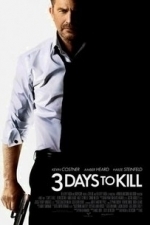


Ethan, (Kevin Costner) is a man with some serious issues but oddly enough, his life as a spy and heavy hitter is not one of them. Ethan has a reputation for getting the job done and he is brutally efficient in his craft.
When a mission to stop a government purchasing a Dirty Bomb from a mysterious figure known as “The Wolf” goes awry, Ethan finds his life turned upside down when he learns he is on borrowed time due to a previously undiagnosed illness.
Ethan returns to Paris in an attempt to reconnect with his daughter, Zoe (Haillee Steinfeld), and her mother, Ethan comes home to learn that a group of squatters have taken up residence in his apartment, and under French law, nothing can be done to remove them until the spring arrives.
Since Ethan has been gone for five years, his family is less than thrilled to see him as it has been easier to live their lives without him. Undaunted, Ethan continues to try to make up for lost time.
Complications arise when a top level agent named Vivi (Amber Heard), arrives in Paris and attempts to recruit Ethan to identify and eliminate The Wolf when it is learned that there is a window to remove him over the next 72 hours.
Wanting no part of his past life, Ethan is dragged back into the fold by the offer of cash for his daughter and an experimental drug that will extend his life.
Ethan now must walk a deadly path between dangerous people, his former employers, and the largest danger of all, his teenage daughter and her mother.
Based on a story by Luc Besson who also had a hand in writing the script, “3 Days to Kill” is a fresh and fun film despite its flaws. Director Mc G does a good job of keeping the emphasis on Ethan and his family as that is the core of the story. There is action aplenty and some of it does play out in typical Hollywood fashion, but there is a charm to the story that one does normally associate with this type of film.
Costner does a good job of playing Ethan as a world weary man who is simply trying to do the right thing with what time he has left. Scenes where he has to deviate from his deadly profession to deal with teen trauma and domestic issues are funny as they come across as very natural. Ethan is so frustrated by the duality of his life; he even seeks parenting advice from suspects he is interrogating.
While parts of the film may drag out and some of the plot points stretch credibility, the winning cast makes the film worth seeing and I for one was pleasantly surprised by the film as you may be if you are willing to look past some of the flaws.
http://sknr.net/2014/02/20/3-days-to-kill/
When a mission to stop a government purchasing a Dirty Bomb from a mysterious figure known as “The Wolf” goes awry, Ethan finds his life turned upside down when he learns he is on borrowed time due to a previously undiagnosed illness.
Ethan returns to Paris in an attempt to reconnect with his daughter, Zoe (Haillee Steinfeld), and her mother, Ethan comes home to learn that a group of squatters have taken up residence in his apartment, and under French law, nothing can be done to remove them until the spring arrives.
Since Ethan has been gone for five years, his family is less than thrilled to see him as it has been easier to live their lives without him. Undaunted, Ethan continues to try to make up for lost time.
Complications arise when a top level agent named Vivi (Amber Heard), arrives in Paris and attempts to recruit Ethan to identify and eliminate The Wolf when it is learned that there is a window to remove him over the next 72 hours.
Wanting no part of his past life, Ethan is dragged back into the fold by the offer of cash for his daughter and an experimental drug that will extend his life.
Ethan now must walk a deadly path between dangerous people, his former employers, and the largest danger of all, his teenage daughter and her mother.
Based on a story by Luc Besson who also had a hand in writing the script, “3 Days to Kill” is a fresh and fun film despite its flaws. Director Mc G does a good job of keeping the emphasis on Ethan and his family as that is the core of the story. There is action aplenty and some of it does play out in typical Hollywood fashion, but there is a charm to the story that one does normally associate with this type of film.
Costner does a good job of playing Ethan as a world weary man who is simply trying to do the right thing with what time he has left. Scenes where he has to deviate from his deadly profession to deal with teen trauma and domestic issues are funny as they come across as very natural. Ethan is so frustrated by the duality of his life; he even seeks parenting advice from suspects he is interrogating.
While parts of the film may drag out and some of the plot points stretch credibility, the winning cast makes the film worth seeing and I for one was pleasantly surprised by the film as you may be if you are willing to look past some of the flaws.
http://sknr.net/2014/02/20/3-days-to-kill/

BookwormLea (3034 KP) rated Down a Dark Hall (2018) in Movies
Jul 26, 2020
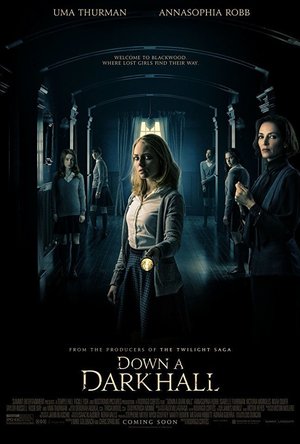

Movie? Not great. Concept? Fabulous!
Contains spoilers, click to show
So I wouldn't call this a good horror. Maybe a passable thriller or drama??? Just the usual possession and strange happenings in a secluded school. (If you're looking for a better version of a similar thing, i recommend The Silenced.)
The general plot is that after her father dies when she's young, Katherine slowly becomes the stereotypical angry teen who lets the world know she hates it by letting it burn. She gets made to go to therapy after claiming she sees her father (which she does, because we watched his spirit say goodbye). She is invited to Blackwood. A mysteriously remote mansion home to 6 even more mysterious teachers, including Madame Duret, the headmistress. Kat is joined by 4 other girls of a seemingly lost cause. Duret calls them 'gifted' and 'misunderstood'. They are taught the usual lessons, Maths and English, music and art. And with the exception of Veronica (the literal definition of teenage nightmare) they all seem to excel at one thing in particular. Our lead girl Kat, music, specifically piano. She is taught by Durets son, Jules. Everything seems to be going well, one girl paints like a prodigy, another writes poems that could rock Shakespeares world, Kat does her piano thing rivalling Mozart and the last (who could basically still be in the role of Esther in Orphan) is solving maths problems that could save the world. That is until they start seeing shadows of people who aren't there, voices in their heads and they physically can't stop doing what they are gifted at, to the point where they don't eat or leave their rooms. After finding old files of other girls in similar situations who died, Kat and Veronica try to do something about it. Veronica is taken away and Kat is suddenly a Piano prodigy, almost possessed by the greats themselves. Yeah 'almost'. Because that's exactly what happened. They have been used as vessels for history's greatest men and women, who died too soon. How fantastic is that? If this movie was made better, that is a brilliant plot! But of course everything goes bad, just like their ghosts, the girls start dropping like flies, Poem girl kills herself, Painter literally starves herself, and crazy math girl is on the verge of escaping when she becomes enthralled in the beauty of the flames. Flames caused by Kat when she saves Veronica from being possessed by some weird demon thing who really doesn't get explained. They almost get out. Duret gets possseded and burned by the spirits she conjured. All the teachers die and Jules is crushed when he saves Kat. Of course there has to be surviors so Kat and Veronica get out, where on the brink of death, Kat sees her father again who makes her come back to life after she tries to go with him.
Overall, not a terrible movie, but if it had been made better, would probably be one of my favourite plots ever!
The general plot is that after her father dies when she's young, Katherine slowly becomes the stereotypical angry teen who lets the world know she hates it by letting it burn. She gets made to go to therapy after claiming she sees her father (which she does, because we watched his spirit say goodbye). She is invited to Blackwood. A mysteriously remote mansion home to 6 even more mysterious teachers, including Madame Duret, the headmistress. Kat is joined by 4 other girls of a seemingly lost cause. Duret calls them 'gifted' and 'misunderstood'. They are taught the usual lessons, Maths and English, music and art. And with the exception of Veronica (the literal definition of teenage nightmare) they all seem to excel at one thing in particular. Our lead girl Kat, music, specifically piano. She is taught by Durets son, Jules. Everything seems to be going well, one girl paints like a prodigy, another writes poems that could rock Shakespeares world, Kat does her piano thing rivalling Mozart and the last (who could basically still be in the role of Esther in Orphan) is solving maths problems that could save the world. That is until they start seeing shadows of people who aren't there, voices in their heads and they physically can't stop doing what they are gifted at, to the point where they don't eat or leave their rooms. After finding old files of other girls in similar situations who died, Kat and Veronica try to do something about it. Veronica is taken away and Kat is suddenly a Piano prodigy, almost possessed by the greats themselves. Yeah 'almost'. Because that's exactly what happened. They have been used as vessels for history's greatest men and women, who died too soon. How fantastic is that? If this movie was made better, that is a brilliant plot! But of course everything goes bad, just like their ghosts, the girls start dropping like flies, Poem girl kills herself, Painter literally starves herself, and crazy math girl is on the verge of escaping when she becomes enthralled in the beauty of the flames. Flames caused by Kat when she saves Veronica from being possessed by some weird demon thing who really doesn't get explained. They almost get out. Duret gets possseded and burned by the spirits she conjured. All the teachers die and Jules is crushed when he saves Kat. Of course there has to be surviors so Kat and Veronica get out, where on the brink of death, Kat sees her father again who makes her come back to life after she tries to go with him.
Overall, not a terrible movie, but if it had been made better, would probably be one of my favourite plots ever!
Gareth von Kallenbach (980 KP) rated It: Chapter Two (2019) in Movies
Sep 13, 2019
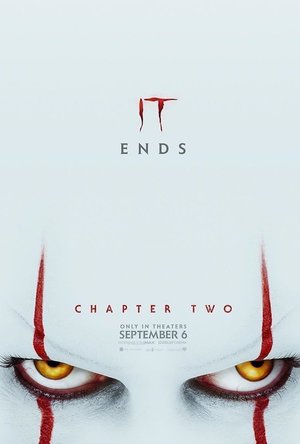
I’ve always been a fan of Stephen King movies, even some of those that were not particularly good or well received. For someone who is a fan you think that would inspire me to pick up at least one of his books to get a feel for what the author truly intended over the stripped down,
“Hollywood-ised” versions. I can’t put my finger on why I haven’t, it’s not because the size of many of his novels are daunting, it’s more that as a reader I’m just not a horror book fan. So when it comes to sitting in on a Stephen king movie I have to rely on the story by it’s modified merits then to compare and contrast what IT does well (or not).
Like many before me, my first movie experience of IT was the classic mini-series featuring an incredibly creepy (and non-CGI’d version) of Pennywise portrayed by the extremely talented Tim Curry.
I even went out and purchased the mini-series before I went to see the first chapter of the remake of IT, just to see how those two compared. IT: Chapter One introduced us in great depth to the teens of the original losers club. A group of misfits, who went on their own personal crusade to attack and kill the nefarious clown while saving one of their own. A strong pact was formed and an oath sworn that if IT ever returned to Derry that the group would once again join together to put a stop to IT for good.
IT: Chapter Two picks up 27 years later, the group has moved on with their lives, all except Mike (Isaiah Mustafa as an adult and Chosen Jacobs as a younger version) who has felt a sense of responsibility to watch over the town and research how to kill IT if IT were to ever return. A horrific killing of an adult at the fair and subsequent disappearances of children alert Mike that the plague that has befallen Derry for generations has returned to feed. Mike reaches out to each of the losers reminding them that something they have all feared has come to pass.
Each when notified experience a fear that is indescribable yet for some reason the groups memories of the past have become clouded.
The now adult losers (with several flashbacks featuring the original cast) come together to remind themselves of the past, and the pact they made to protect the future. Featuring a star studded cast, Mike, Bill (James McAvoy/Jaeden Martell), Beverly (Jessica Chastain/Sophia Lillis), Ben (Jay Ryan/Jeremy Ray Taylor), Richie (Bill Hader/Finn Wolfhard), Eddie (James Ransone/Jack Dylan Grazer) and Stanley (Andy Bean/Wyatt Oleff), must battle their lost memories, their fears and the very real danger if they are to save Derry and themselves.
IT: Chapter 2 continues the incredible character building that Chapter 1 began. Where each of the young actors were perfectly cast as their book counterparts, their adult versions could easily be mistaken for the grown-up versions. This is the area where IT shines the most, the story of the losers who have grown and moved away, yet still share the unescapable bond of friendship. While an older Bill struggles (much like Stephen King himself) to come up with good endings to his stories it’s what he writes at the end of IT: Chapter 2 that really sums up the movie as a whole. To summarize, there are no good friends or bad friends, there are only friends, and chapter 2 is an example of how you take a band of misfits and turn them into heroes.
Sadly, for all the things IT does from a character side, it tends to drag on and over CGI its monster side. Pennywise the clown (portrayed brilliantly by Bill Skarsgård) brings with him all the creepiness and fear that the movie needs, even posters of his maniacal self is promoting lawsuits in other countries due to his ability to scare small children. So, it seems a bit disheartening that the studio felt it was necessary to go overboard with their CGI budgets. Many scenes go from being creepy and scary to simply being silly when our favorite clown is turned into a giant naked hag like figure. This is where I felt the mini-series did a far better job, due to its limited budget and shorter time requirements it allowed for the viewers to imagine the evil and not see it thrown out for the world to see.
IT: Chapter 2 also drags out far longer than it needed to. Make sure you get your bathroom breaks in, because the film, not counting previews, is just about 10 minutes shy of being three hours. I’m normally not one to complain about the length of a movie, as I’d rather they tell the story they want instead of trying to compress it into a shorter run time. However, in this case, it seemed entirely wasted on an overabundance of clown mutations and an extremely drawn out final battle. It’s unfortunate, because one of the most unused (and potentially interesting characters) Henry Bowers (Teach Grant/Nicholas Hamilton) is given only a few minutes of screen time and ultimately adds nothing to the movie as a whole. As I stated earlier, I haven’t read the novel, but I have to assume that he played a far bigger role in the book.
As it stands in the movie, his character is both unnecessary and completely ineffective at whatever he was attempting to do. I think some of the time taken away from the battle scenes to flesh out his (or other supporting characters) would have be time better spent.
IT: Chapter 2 is a good movie, that with some reduced special effects and better time management is just shy of being a great movie. The story of the kids, now grown up, is one of forgiveness, bravery and love. It shows how true friendship can overcome distance and time and that those things never truly vanish, even if the particulars of what separated you in the first place is a bit fuzzy. Horror movies with outrageous budgets tend to lose the spirit of what makes a true horror movie scary…it’s rarely about the effects, and more about the imagination.
That’s what makes the books typically so much better than the movies, after all, each one of us imagines our own version of what truly scares us (although clowns tend to be scary regardless of how they are portrayed). IT: Chapter 2 provides a satisfying ending to a story that began a few years ago, it suffers a bit from its budget and its use of CGI effects, but it’s still a story of what all of us losers can accomplish if we band together.
“Hollywood-ised” versions. I can’t put my finger on why I haven’t, it’s not because the size of many of his novels are daunting, it’s more that as a reader I’m just not a horror book fan. So when it comes to sitting in on a Stephen king movie I have to rely on the story by it’s modified merits then to compare and contrast what IT does well (or not).
Like many before me, my first movie experience of IT was the classic mini-series featuring an incredibly creepy (and non-CGI’d version) of Pennywise portrayed by the extremely talented Tim Curry.
I even went out and purchased the mini-series before I went to see the first chapter of the remake of IT, just to see how those two compared. IT: Chapter One introduced us in great depth to the teens of the original losers club. A group of misfits, who went on their own personal crusade to attack and kill the nefarious clown while saving one of their own. A strong pact was formed and an oath sworn that if IT ever returned to Derry that the group would once again join together to put a stop to IT for good.
IT: Chapter Two picks up 27 years later, the group has moved on with their lives, all except Mike (Isaiah Mustafa as an adult and Chosen Jacobs as a younger version) who has felt a sense of responsibility to watch over the town and research how to kill IT if IT were to ever return. A horrific killing of an adult at the fair and subsequent disappearances of children alert Mike that the plague that has befallen Derry for generations has returned to feed. Mike reaches out to each of the losers reminding them that something they have all feared has come to pass.
Each when notified experience a fear that is indescribable yet for some reason the groups memories of the past have become clouded.
The now adult losers (with several flashbacks featuring the original cast) come together to remind themselves of the past, and the pact they made to protect the future. Featuring a star studded cast, Mike, Bill (James McAvoy/Jaeden Martell), Beverly (Jessica Chastain/Sophia Lillis), Ben (Jay Ryan/Jeremy Ray Taylor), Richie (Bill Hader/Finn Wolfhard), Eddie (James Ransone/Jack Dylan Grazer) and Stanley (Andy Bean/Wyatt Oleff), must battle their lost memories, their fears and the very real danger if they are to save Derry and themselves.
IT: Chapter 2 continues the incredible character building that Chapter 1 began. Where each of the young actors were perfectly cast as their book counterparts, their adult versions could easily be mistaken for the grown-up versions. This is the area where IT shines the most, the story of the losers who have grown and moved away, yet still share the unescapable bond of friendship. While an older Bill struggles (much like Stephen King himself) to come up with good endings to his stories it’s what he writes at the end of IT: Chapter 2 that really sums up the movie as a whole. To summarize, there are no good friends or bad friends, there are only friends, and chapter 2 is an example of how you take a band of misfits and turn them into heroes.
Sadly, for all the things IT does from a character side, it tends to drag on and over CGI its monster side. Pennywise the clown (portrayed brilliantly by Bill Skarsgård) brings with him all the creepiness and fear that the movie needs, even posters of his maniacal self is promoting lawsuits in other countries due to his ability to scare small children. So, it seems a bit disheartening that the studio felt it was necessary to go overboard with their CGI budgets. Many scenes go from being creepy and scary to simply being silly when our favorite clown is turned into a giant naked hag like figure. This is where I felt the mini-series did a far better job, due to its limited budget and shorter time requirements it allowed for the viewers to imagine the evil and not see it thrown out for the world to see.
IT: Chapter 2 also drags out far longer than it needed to. Make sure you get your bathroom breaks in, because the film, not counting previews, is just about 10 minutes shy of being three hours. I’m normally not one to complain about the length of a movie, as I’d rather they tell the story they want instead of trying to compress it into a shorter run time. However, in this case, it seemed entirely wasted on an overabundance of clown mutations and an extremely drawn out final battle. It’s unfortunate, because one of the most unused (and potentially interesting characters) Henry Bowers (Teach Grant/Nicholas Hamilton) is given only a few minutes of screen time and ultimately adds nothing to the movie as a whole. As I stated earlier, I haven’t read the novel, but I have to assume that he played a far bigger role in the book.
As it stands in the movie, his character is both unnecessary and completely ineffective at whatever he was attempting to do. I think some of the time taken away from the battle scenes to flesh out his (or other supporting characters) would have be time better spent.
IT: Chapter 2 is a good movie, that with some reduced special effects and better time management is just shy of being a great movie. The story of the kids, now grown up, is one of forgiveness, bravery and love. It shows how true friendship can overcome distance and time and that those things never truly vanish, even if the particulars of what separated you in the first place is a bit fuzzy. Horror movies with outrageous budgets tend to lose the spirit of what makes a true horror movie scary…it’s rarely about the effects, and more about the imagination.
That’s what makes the books typically so much better than the movies, after all, each one of us imagines our own version of what truly scares us (although clowns tend to be scary regardless of how they are portrayed). IT: Chapter 2 provides a satisfying ending to a story that began a few years ago, it suffers a bit from its budget and its use of CGI effects, but it’s still a story of what all of us losers can accomplish if we band together.

Jordan Binkerd (567 KP) rated American Vampire, Vol. 6 in Books
Jul 21, 2019 (Updated Jul 21, 2019)

Not all the art works (for me) (1 more)
Adult content.... but if you made it this far in the series, that's not a surprise
Filler Anthology, but still fun...
Note: this review is transposted from my personal review blog, and so was originally written several years ago.
So, it has come to this. The sixth and latest collection of American Vampire comics. Now it’s not just my library’s slow acquisition policies holding me back, but the fact that there haven’t been any more published yet! Apparently the creators put the book on hiatus for a while, but they’ve at least started publishing again. I just have to wait for it to hit the collections….This particular collection is a couple of one-shots they put out in the meantime to keep our appetites whetted–one from the main American Vampire team, one with them letting a whole bunch of other comics creators play in their sandbox. Obviously, this review could spoil events from the previous collections.
First off, we have THE LONG ROAD TO HELL. Snyder and Albuquerque set out the story for this one together, with Albuquerque taking over to script and draw the story. Billy Bob and Jo are the Bonnie and Clyde of petty thieves, picking pockets by night to add to their stash. They’re hoping to have enough soon to cover the cost of renting a chapel, but one fateful encounter with a vampire coven recruitment team and everything changes…not for the better, I’m afraid. Jasper Miller is a young orphan, favorite target of a group of bullies. It seems that young Jasper is a very insightful young man, and some of what he knows makes these bullies very nervous, and he decides that the open road would be safer for him than the old orphanage. Vampire hunter Travis Kidd we’ve already met back in Vol. IV, and it’s good to see that he survived the ambush he willingly dove into at the end of that book. Seems to have picked up a katana somewhere in the interim too, which is always cool. Fate has these four on a collision course, and blood will be spilled by the time they reach the end of the road….
Moving on to the American Vampire Anthology, we open with the frame story by Snyder and Albuquerque. THE MAN COMES AROUND is set in 1967 as Skinner Sweet hides out in the middle of nowhere, hoping to avoid the major events he can sense just over the horizon. Seems there’s always someone trying to kill him, though…. Jason Aaron and Declan Shalvey then enlighten us as to what really happened on Roanoke Island in THE LOST COLONY. Here’s a hint, vampires were involved. We then move on to BLEEDING KANSAS, where Albuquerque puts down his pencil and takes a shot at writing the story, leaving the art to Ivo Milazzo. Set against that tumultuous time and place, Albuquerque and Milazzo set down for us a tale of what I can only assume are Henry Jones’ grandparents. Next up, Jeff Lemire and Ray Fawkes serve up a tale of terror in the frozen north with CANADIAN VAMPIRE as ex-Mountie-turned-bounty-hunter Jack Warhammer is hired to find out what happened to a German fur trading expedition missing in the wild. Becky Cloonan handles both the writing and art for GREED, starring Skinner Sweet and featuring his first encounter with those crazy folks who hail from a place called “Hollywood….” Francesco Francavilla then pulls the same trick for THE PRODUCERS, detailing the birth of a star as he makes a shady deal in exchange for fame and fortune. Gail Simone and Tula Lotay treat us to Hattie Hargrove’s origin story in ESSENCE OF LIFE, showing us just what happened to her that made her willing to screw over her best friend in the world. Gabriel Ba and Fabio Moon share both the writing and artist credits for LAST NIGHT, as a lounge singer describes to a reporter the events leading up to the previous evening’s massacre at the club. Finally, Greg Rucka and JP Leon tell the tale of a dying drunk and the lowlifes who try and shanghai him in PORTLAND, 1940.
On the whole, I really enjoyed this as per the usual for this series. The writing was stellar, and the anthology format really served well for the world being depicted. As with any comics anthology, there’s a wide variety of artistic styles represented, and some of those styles I’m not really a fan of, but that’s largely a matter of taste. I could sit here and tell you that I really wasn’t a fan of Ivo Milazzo’s art on BLEEDING KANSAS (which is true), but the next guy might have loved it. I could laud Tula Lotay’s work on ESSENCE OF LIFE (also true), but the next guy may not have been a fan. That’s kind of how it works–peoples’ tastes are pretty subjective. I did enjoy getting into Hattie’s head a bit more than we were able to back when she was introduced, and Skinner Sweet’s adventures are always fun–I’ve mentioned before my weakness for antiheroes. As a historian, Roanoke’s lost colony is always a fascinating topic, and a number of the plot twists contained here were very satisfying if not always surprising. I really can’t wait for the next volume to come out so I can see the payoff to some of the plot threads being set up both here and in the teaser from the end of volume V….
CONTENT: R-rated language. Brutal, bloody vampire violence–these aren’t sparkly, angst-ridden pretty boys, these are monsters through and through. Some explicit and implicit sexual content, including what more or less constitutes a rape. No real occult content, as there isn’t a spiritual element to this version of vampirism.
Original review link: https://jordanbinkerd.wordpress.com/2014/08/15/review-american-vampire-volume-vi-by-scott-snyder-rafael-albuquerque/
So, it has come to this. The sixth and latest collection of American Vampire comics. Now it’s not just my library’s slow acquisition policies holding me back, but the fact that there haven’t been any more published yet! Apparently the creators put the book on hiatus for a while, but they’ve at least started publishing again. I just have to wait for it to hit the collections….This particular collection is a couple of one-shots they put out in the meantime to keep our appetites whetted–one from the main American Vampire team, one with them letting a whole bunch of other comics creators play in their sandbox. Obviously, this review could spoil events from the previous collections.
First off, we have THE LONG ROAD TO HELL. Snyder and Albuquerque set out the story for this one together, with Albuquerque taking over to script and draw the story. Billy Bob and Jo are the Bonnie and Clyde of petty thieves, picking pockets by night to add to their stash. They’re hoping to have enough soon to cover the cost of renting a chapel, but one fateful encounter with a vampire coven recruitment team and everything changes…not for the better, I’m afraid. Jasper Miller is a young orphan, favorite target of a group of bullies. It seems that young Jasper is a very insightful young man, and some of what he knows makes these bullies very nervous, and he decides that the open road would be safer for him than the old orphanage. Vampire hunter Travis Kidd we’ve already met back in Vol. IV, and it’s good to see that he survived the ambush he willingly dove into at the end of that book. Seems to have picked up a katana somewhere in the interim too, which is always cool. Fate has these four on a collision course, and blood will be spilled by the time they reach the end of the road….
Moving on to the American Vampire Anthology, we open with the frame story by Snyder and Albuquerque. THE MAN COMES AROUND is set in 1967 as Skinner Sweet hides out in the middle of nowhere, hoping to avoid the major events he can sense just over the horizon. Seems there’s always someone trying to kill him, though…. Jason Aaron and Declan Shalvey then enlighten us as to what really happened on Roanoke Island in THE LOST COLONY. Here’s a hint, vampires were involved. We then move on to BLEEDING KANSAS, where Albuquerque puts down his pencil and takes a shot at writing the story, leaving the art to Ivo Milazzo. Set against that tumultuous time and place, Albuquerque and Milazzo set down for us a tale of what I can only assume are Henry Jones’ grandparents. Next up, Jeff Lemire and Ray Fawkes serve up a tale of terror in the frozen north with CANADIAN VAMPIRE as ex-Mountie-turned-bounty-hunter Jack Warhammer is hired to find out what happened to a German fur trading expedition missing in the wild. Becky Cloonan handles both the writing and art for GREED, starring Skinner Sweet and featuring his first encounter with those crazy folks who hail from a place called “Hollywood….” Francesco Francavilla then pulls the same trick for THE PRODUCERS, detailing the birth of a star as he makes a shady deal in exchange for fame and fortune. Gail Simone and Tula Lotay treat us to Hattie Hargrove’s origin story in ESSENCE OF LIFE, showing us just what happened to her that made her willing to screw over her best friend in the world. Gabriel Ba and Fabio Moon share both the writing and artist credits for LAST NIGHT, as a lounge singer describes to a reporter the events leading up to the previous evening’s massacre at the club. Finally, Greg Rucka and JP Leon tell the tale of a dying drunk and the lowlifes who try and shanghai him in PORTLAND, 1940.
On the whole, I really enjoyed this as per the usual for this series. The writing was stellar, and the anthology format really served well for the world being depicted. As with any comics anthology, there’s a wide variety of artistic styles represented, and some of those styles I’m not really a fan of, but that’s largely a matter of taste. I could sit here and tell you that I really wasn’t a fan of Ivo Milazzo’s art on BLEEDING KANSAS (which is true), but the next guy might have loved it. I could laud Tula Lotay’s work on ESSENCE OF LIFE (also true), but the next guy may not have been a fan. That’s kind of how it works–peoples’ tastes are pretty subjective. I did enjoy getting into Hattie’s head a bit more than we were able to back when she was introduced, and Skinner Sweet’s adventures are always fun–I’ve mentioned before my weakness for antiheroes. As a historian, Roanoke’s lost colony is always a fascinating topic, and a number of the plot twists contained here were very satisfying if not always surprising. I really can’t wait for the next volume to come out so I can see the payoff to some of the plot threads being set up both here and in the teaser from the end of volume V….
CONTENT: R-rated language. Brutal, bloody vampire violence–these aren’t sparkly, angst-ridden pretty boys, these are monsters through and through. Some explicit and implicit sexual content, including what more or less constitutes a rape. No real occult content, as there isn’t a spiritual element to this version of vampirism.
Original review link: https://jordanbinkerd.wordpress.com/2014/08/15/review-american-vampire-volume-vi-by-scott-snyder-rafael-albuquerque/
Purple Phoenix Games (2266 KP) rated Pocket Paragons in Tabletop Games
Sep 25, 2020

It’s a duel then? Fine. Choose your paragon and let’s see who can outwit whom. The ol’ “Battle of Wits” from “Princess Bride” now comes in card format with many planned IPs to skin over it. No, this isn’t a “Princess Bride” game, nor does it have any affiliation to the story, but once you play Pocket Paragons, you will immediately see why I made the connection.
Pocket Paragons is a two player dueling card game where the winner is the player to knock out their opponent’s character(s). This game employs a lot of card play with minimal amounts of cards and tremendous amounts of double-think and flat out guessing as to what your opponent might be thinking.
DISCLAIMER: We were provided a copy of this game for the purposes of this review. These are prototype media set components, and all complete copies will have extra components including these shown. Also, it is not my intention to detail every rule in the game, but to give our readers an idea of how the game plays. You are invited to back it on Kickstarter, order from your FLGS, or purchase through any retailers stocking it after it is released. -T
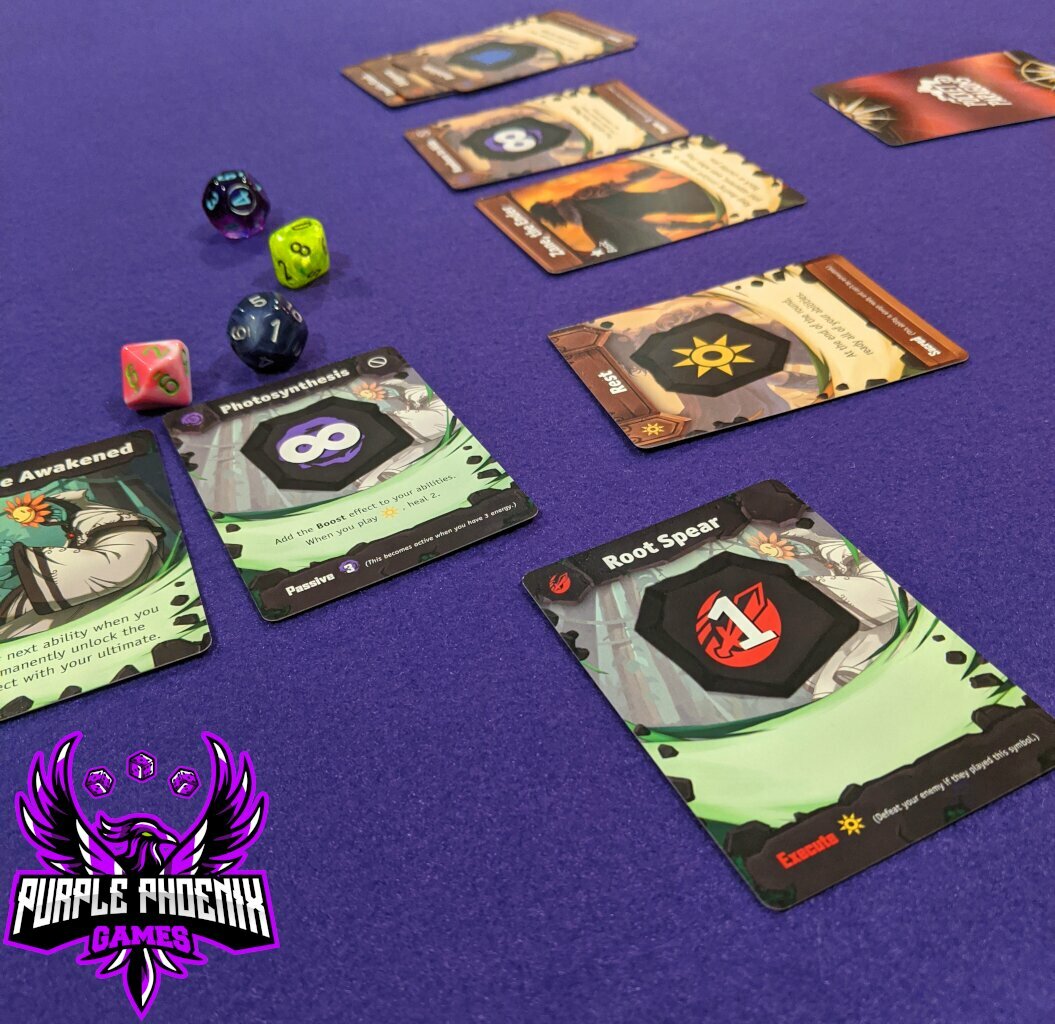
To setup a game of Pocket Paragons, players will choose one character (or three in a Tournament Mode), all associated cards, and an HP/Energy dial (I am using dice for my game). Players will display in front of them their character’s main Character card as well as the Ultimate card. All other cards related to their character will begin the game in hand and will be ready to be played immediately.
A game of Pocket Paragons could range from one card played to several rounds and upwards of 10 minutes. Tournament play can be longer still. For this preview I will be describing game play for single games.
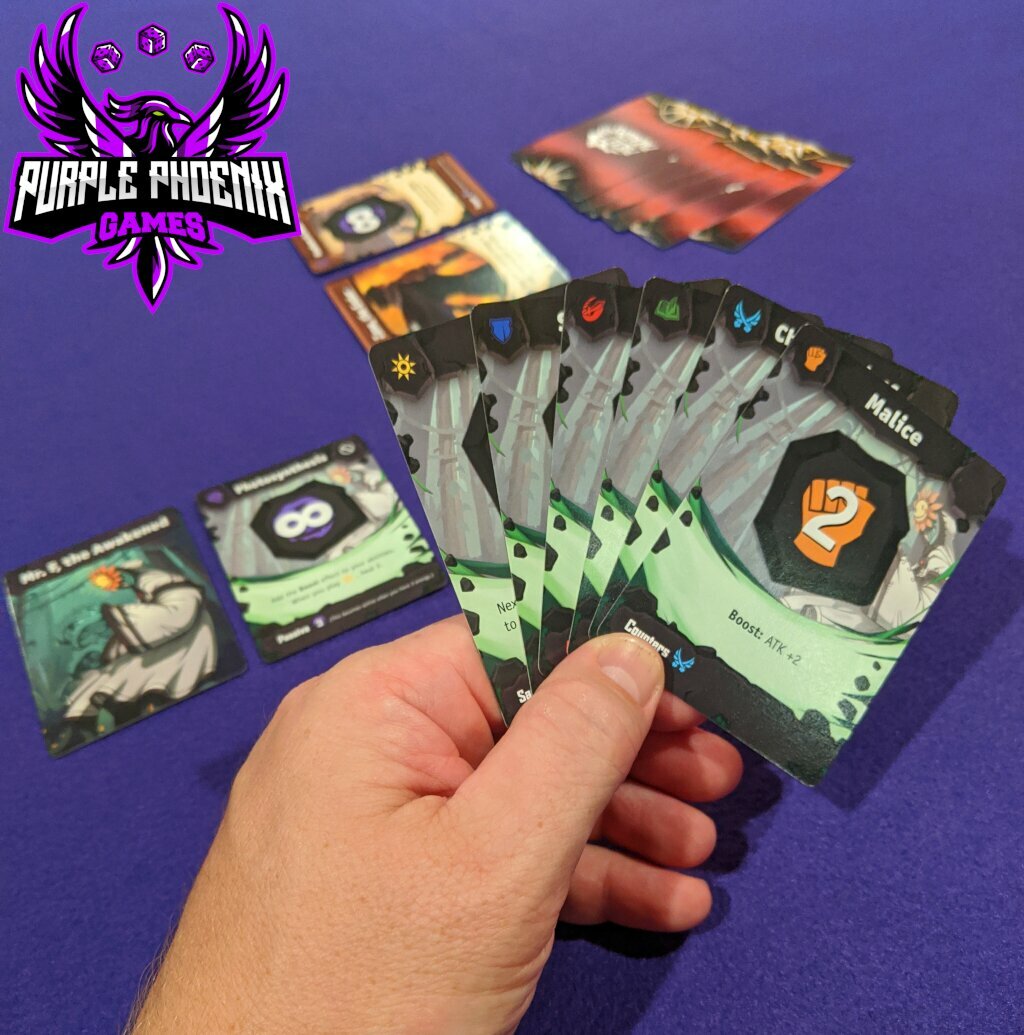
On a turn each player will choose one of the cards in hand to be played, lay it face-down on the table, and flip it once both players are ready. When the cards are flipped, the players will compare and check for Counters. Each card may counter other card types and will have text stating so (Example: the Malice card from above shows that it counters Agility cards). If a player can play a card to counter their opponent’s card then the countering player sends the opponent’s card back to their hand and will gain one Energy. If the card played had damage printed on it, the countered player will reduce their HP by the printed damage amount. However, if no cards were countered, then both cards will activate and assign any damage. The next round may now begin with players choosing cards to be played one by one until a player is knocked out of the game.
After a card is played and used the player will be discarding into a discard pile. The only way to regain these cards into hand is by playing a rest card (yellow sun). Using the rest cards at just the right time will certainly reflect the strategy of the player. Players may use a rest card at any time, but some red Weapon cards can immediately Execute an opponent if played while they are resting (think coup de grace in RPGs). Therefore, while waiting until all cards in hand are used before playing a rest card makes logical sense, smart players may be saving their Execute cards for that exact instance.
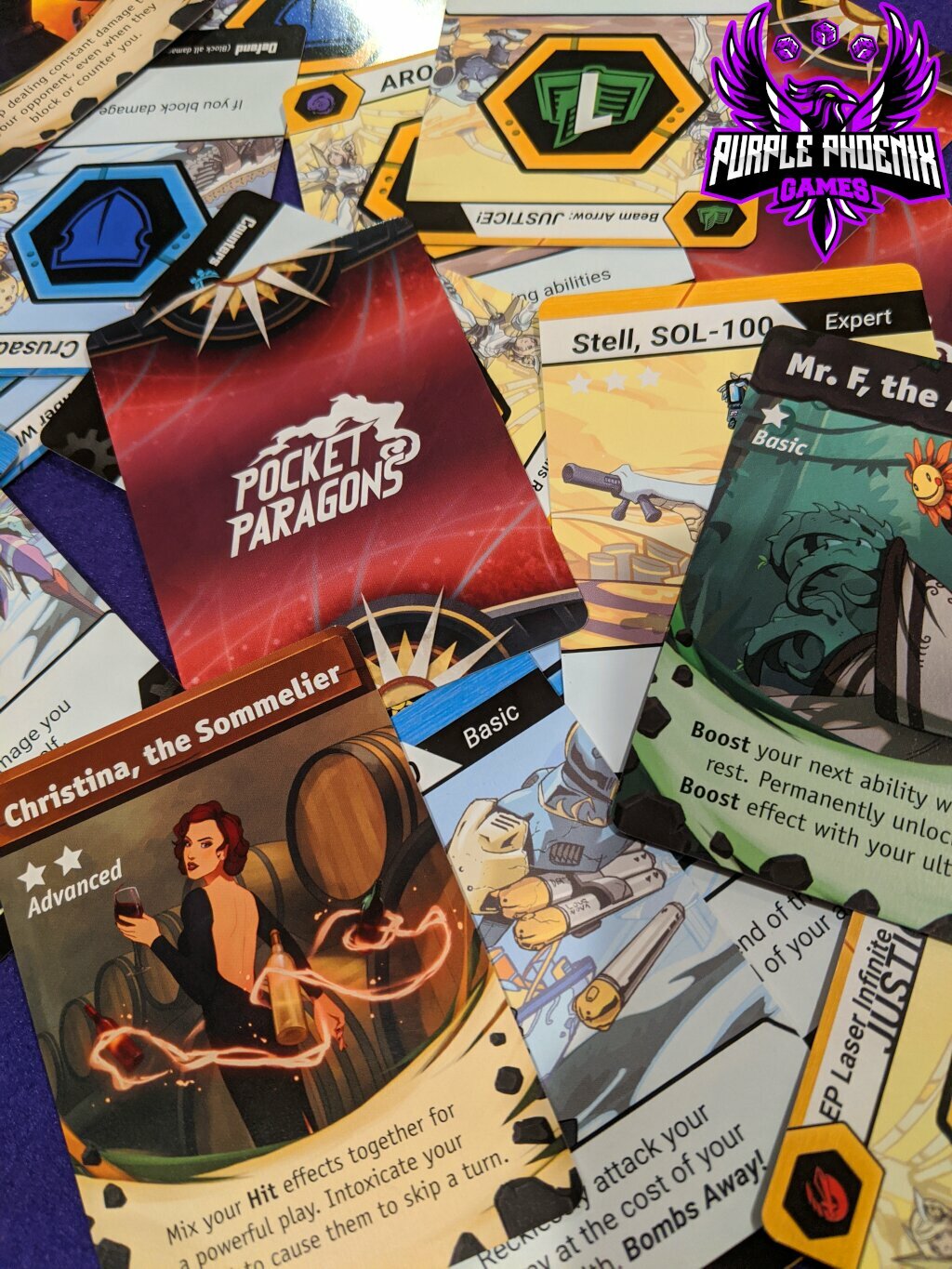
Components. Again, this is a prototype copy that cobbles six characters from multiple sets to create the Media Set we were sent. We have been informed that retail (or Kickstarter) boxes will contain six related characters and dials to track HP and Energy. The cards we were sent are of okay quality, and I do not believe this is the stock that will be used on the final game. The art and art style on the game is quite nice. Icons and placement are logical, and cards are easy to read and understand. The artwork is very colorful and one thing I VERY MUCH appreciate on this (because I almost was lost after taking the messy components shot below) is that each card belonging to specific characters show the same artwork in fade in the background. I had a hot flash (weird for a guy right?) when I was sorting the deck back together after playing it and not knowing exactly which cards belonged with which characters. So, thanks for that Solis Game Studio!
I truly enjoyed my plays of Pocket Paragons. The games are super quick, but certainly test your ability to out-think your opponent and try to guess when they might be using their rest card so you can bust out the Execute. And each character plays so differently from others that it’s truly a joy to try out each and every character you can to see which one resonates with your style of play. The art is fabulous with bright colors (a definite plus for me), and the learning curve is nice and smooth – anyone can play this in about three to five minutes of learning. If your collection is screaming for a super quick card game that can be played in under 10 minutes and you can get some brain cells moving around, then Pocket Paragons is for you. It’s certainly for me and my collection. I love everything about it and can see myself diving down the rabbit hole once more and more IPs are released. Oh boy, this is gonna hurt the wallet…
Back it on Kickstarter launching October 6, 2020!
Pocket Paragons is a two player dueling card game where the winner is the player to knock out their opponent’s character(s). This game employs a lot of card play with minimal amounts of cards and tremendous amounts of double-think and flat out guessing as to what your opponent might be thinking.
DISCLAIMER: We were provided a copy of this game for the purposes of this review. These are prototype media set components, and all complete copies will have extra components including these shown. Also, it is not my intention to detail every rule in the game, but to give our readers an idea of how the game plays. You are invited to back it on Kickstarter, order from your FLGS, or purchase through any retailers stocking it after it is released. -T
To setup a game of Pocket Paragons, players will choose one character (or three in a Tournament Mode), all associated cards, and an HP/Energy dial (I am using dice for my game). Players will display in front of them their character’s main Character card as well as the Ultimate card. All other cards related to their character will begin the game in hand and will be ready to be played immediately.
A game of Pocket Paragons could range from one card played to several rounds and upwards of 10 minutes. Tournament play can be longer still. For this preview I will be describing game play for single games.
On a turn each player will choose one of the cards in hand to be played, lay it face-down on the table, and flip it once both players are ready. When the cards are flipped, the players will compare and check for Counters. Each card may counter other card types and will have text stating so (Example: the Malice card from above shows that it counters Agility cards). If a player can play a card to counter their opponent’s card then the countering player sends the opponent’s card back to their hand and will gain one Energy. If the card played had damage printed on it, the countered player will reduce their HP by the printed damage amount. However, if no cards were countered, then both cards will activate and assign any damage. The next round may now begin with players choosing cards to be played one by one until a player is knocked out of the game.
After a card is played and used the player will be discarding into a discard pile. The only way to regain these cards into hand is by playing a rest card (yellow sun). Using the rest cards at just the right time will certainly reflect the strategy of the player. Players may use a rest card at any time, but some red Weapon cards can immediately Execute an opponent if played while they are resting (think coup de grace in RPGs). Therefore, while waiting until all cards in hand are used before playing a rest card makes logical sense, smart players may be saving their Execute cards for that exact instance.
Components. Again, this is a prototype copy that cobbles six characters from multiple sets to create the Media Set we were sent. We have been informed that retail (or Kickstarter) boxes will contain six related characters and dials to track HP and Energy. The cards we were sent are of okay quality, and I do not believe this is the stock that will be used on the final game. The art and art style on the game is quite nice. Icons and placement are logical, and cards are easy to read and understand. The artwork is very colorful and one thing I VERY MUCH appreciate on this (because I almost was lost after taking the messy components shot below) is that each card belonging to specific characters show the same artwork in fade in the background. I had a hot flash (weird for a guy right?) when I was sorting the deck back together after playing it and not knowing exactly which cards belonged with which characters. So, thanks for that Solis Game Studio!
I truly enjoyed my plays of Pocket Paragons. The games are super quick, but certainly test your ability to out-think your opponent and try to guess when they might be using their rest card so you can bust out the Execute. And each character plays so differently from others that it’s truly a joy to try out each and every character you can to see which one resonates with your style of play. The art is fabulous with bright colors (a definite plus for me), and the learning curve is nice and smooth – anyone can play this in about three to five minutes of learning. If your collection is screaming for a super quick card game that can be played in under 10 minutes and you can get some brain cells moving around, then Pocket Paragons is for you. It’s certainly for me and my collection. I love everything about it and can see myself diving down the rabbit hole once more and more IPs are released. Oh boy, this is gonna hurt the wallet…
Back it on Kickstarter launching October 6, 2020!


Rachel King (13 KP) rated Chocolat (Chocolat #1) in Books
Feb 11, 2019

I have lost count of the number of times I have watched the movie that is based off of this book, so I figured it was time for me to read the book. Like most movies based on books, the movie is only about half true to the book. In this case though, that did not really bother me.
Joanne Harris has a way of writing that has me savoring every word like one of Vianne Rocher's fine chunks of dark chocolate. What I would have given for a few recipes of the dishes she served in La Celeste Praline, especially the pots of chocolate that were served as frequently as coffee. The descriptions of the various confectioneries and even the non-chocolate dishes were detailed with a light touch, so that I never felt too overwhelmed -- but I still wanted to dive into the pages all the same.
All of the characters, large parts and small, were unique and original, even down to the quirky preferences and hidden burdens. I could easily relate to Armande's attraction to the color red and her unrefined mannerisms, as well as Guillaume's indulgence of his pet dog. So many of the characters could pass for people that I encounter every day -- from Roux's skepticism to Josephine's renewed independence to Caro's need to control. These characters will stay with me for a long time.
Probably the most interesting character, aside from Vianne Rocher, is the town's priest, Pere Reynaud. Like most of the rest of the town, he masks inner demons and makes up for them with his profession of choice. Though those inner torments are slowly revealed through the course of the book, I don't feel that his story was completely resolved, or that he even experienced any true character growth.
Vianne Rocher is certainly the most creative character in the book, both easily likeable and eternally mysterious. Haunted by memories of a nomadic lifestyle with her mother, she intermittently addresses her conflicting desires to both travel and put down roots even as her simple, self-taught cooking and hospitality brings about subtle and lasting change in the village of Lansquenet. A thread of fantasy runs through the plot as Vianne hints at the ability to read people's thoughts, choosing not to influence them, and consults her mother's tarot cards in her darker hours of contemplation. She even adds a touch of magic and mystery to her Chocolaterie to draw the wary villagers into the shop. Oh, what I would give to pay a visit to that amazing place myself.
Joanne Harris has a way of writing that has me savoring every word like one of Vianne Rocher's fine chunks of dark chocolate. What I would have given for a few recipes of the dishes she served in La Celeste Praline, especially the pots of chocolate that were served as frequently as coffee. The descriptions of the various confectioneries and even the non-chocolate dishes were detailed with a light touch, so that I never felt too overwhelmed -- but I still wanted to dive into the pages all the same.
All of the characters, large parts and small, were unique and original, even down to the quirky preferences and hidden burdens. I could easily relate to Armande's attraction to the color red and her unrefined mannerisms, as well as Guillaume's indulgence of his pet dog. So many of the characters could pass for people that I encounter every day -- from Roux's skepticism to Josephine's renewed independence to Caro's need to control. These characters will stay with me for a long time.
Probably the most interesting character, aside from Vianne Rocher, is the town's priest, Pere Reynaud. Like most of the rest of the town, he masks inner demons and makes up for them with his profession of choice. Though those inner torments are slowly revealed through the course of the book, I don't feel that his story was completely resolved, or that he even experienced any true character growth.
Vianne Rocher is certainly the most creative character in the book, both easily likeable and eternally mysterious. Haunted by memories of a nomadic lifestyle with her mother, she intermittently addresses her conflicting desires to both travel and put down roots even as her simple, self-taught cooking and hospitality brings about subtle and lasting change in the village of Lansquenet. A thread of fantasy runs through the plot as Vianne hints at the ability to read people's thoughts, choosing not to influence them, and consults her mother's tarot cards in her darker hours of contemplation. She even adds a touch of magic and mystery to her Chocolaterie to draw the wary villagers into the shop. Oh, what I would give to pay a visit to that amazing place myself.

Sassy Brit (97 KP) rated The Light We Lost in Books
Jun 6, 2019
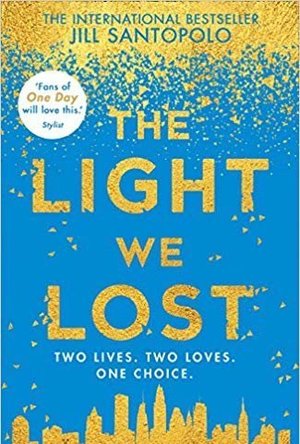
^ This is totally not what I was expecting. Maybe I thought it would a love story based around how a couple met at the time 9/11 happened. Yes. It is. But staying together and having a happy ever after? Hmm. Nope. You don’t get that, and this becomes very clear from the onset. In fact, the very way this has been written in a past tense, makes that awfully clear the protagonist is telling us something that has already happened. This in itself made for a tantalising read. The story could have gone anywhere. Not knowing what would happen between them, when at times their lives were so different and far apart, is probably why I enjoyed this more than I thought I would.
^^ This story revolves around two lost souls, Lucy and Gabriel (Gabe) Samson who first meet during the Twin Towers terror attacks, and watch the horror unfold right in front of their eyes. Did fate bring these two together for a reason?
^^ Throughout the book we follow their relationship and learn how that first meeting on that fateful day effected them for the rest of their lives. Imagine being witness to something so horrifying. Surely it would affect you. Perhaps you’d want to live your life as if every day is your last, or you’ll go the other way and blame yourself for not being able to do anything to help. Even when you couldn’t have at the time. Survivors guilt, I think they call it.
^ These are the sort of issues, this couple face. You know they should be together, but they both need different things, so their lives are never as simple as you think they’re going to be.
^ I enjoyed how the author allowed this couple to search for what they wanted out of life, but they never truly forgot, or even stopped loving each other. Whenever they did meet, well, it was never the right time. Yet something in the universe, a powerful source, kept drawing them back into each other’s paths. Even when they’d both long gone their separate ways. Is it destiny? Or chance?
Overall: Well, who’d of thought the first book of the year would reduce me to tears? I kind of saw the ending coming, but when I reached those last few pages I found it much more emotional than expected. Jill Santopolo poses an elegant narrative around two people looking in very different places for that one elusive answer: What if?
^^ This story revolves around two lost souls, Lucy and Gabriel (Gabe) Samson who first meet during the Twin Towers terror attacks, and watch the horror unfold right in front of their eyes. Did fate bring these two together for a reason?
^^ Throughout the book we follow their relationship and learn how that first meeting on that fateful day effected them for the rest of their lives. Imagine being witness to something so horrifying. Surely it would affect you. Perhaps you’d want to live your life as if every day is your last, or you’ll go the other way and blame yourself for not being able to do anything to help. Even when you couldn’t have at the time. Survivors guilt, I think they call it.
^ These are the sort of issues, this couple face. You know they should be together, but they both need different things, so their lives are never as simple as you think they’re going to be.
^ I enjoyed how the author allowed this couple to search for what they wanted out of life, but they never truly forgot, or even stopped loving each other. Whenever they did meet, well, it was never the right time. Yet something in the universe, a powerful source, kept drawing them back into each other’s paths. Even when they’d both long gone their separate ways. Is it destiny? Or chance?
Overall: Well, who’d of thought the first book of the year would reduce me to tears? I kind of saw the ending coming, but when I reached those last few pages I found it much more emotional than expected. Jill Santopolo poses an elegant narrative around two people looking in very different places for that one elusive answer: What if?

Movie Metropolis (309 KP) rated Taken 3 (2015) in Movies
Jun 11, 2019


Impossible to recommend
The first Taken propelled Liam Neeson to action man stardom and became one of the most surprising hits of 2009. Its successor to some extent managed to capture the same thrilling suspense despite its ridiculous 12A certification.
Despite Neeson’s efforts to shut the series down, he decided to return as Bryan Mills for his final outing, Taken 3, but can it hold a candle to its predecessors?
No is the short answer. Everything from Neeson’s phoned-in performance to the horrific camerawork and poor special effects ensure it becomes the first turkey of 2015, and by the end, you’ll wish it was you being taken – out of the cinema.
Taken 3 follows Mills as he tries to evade the LAPD after he is wrongly accused of killing his wife Lenny – played by Famke Janssen who wasliamneeson clearly more interested in the paycheque than anything else.
This is the first problem with the film. Showing the killing of Janssen’s character in the trailer makes the audience all too aware of where the film is going – destroying any suspense that you would expect from the murder of a series’ main character.
Maggie Grace returns as Kim, now looking like the world’s oldest teenager and is the only actor to leave the film with their reputation intact. Her performance is decent but the hammy, almost comedic dialogue she is given to work with spoils her credibility.
Taken-3-Movie-PosterA new addition is Forest Whitaker who plays the detective tasked with bringing Mills in, Franck Dotzler, though he again gives a career-worst performance.
As with its predecessor, Taken 3 suffers from a ridiculous 12A certification which means that Neeson is only able to look vaguely menacing. The action which was such an integral part of the first film is completely lost and becomes repetitive after seeing the 15th punch in a row.
Unfortunately, Oliver Megaton’s uninspiring direction only worsens things. Taking lessons from the Michael Bay school of cinematography, everything is ridiculously shaky, devoid of any suspense or tension at all.
The final act of Taken 3’s 109 minute running time alleviates the offerings somewhat but there’s a twist you can see coming from a mile away.
Overall, Neeson’s performances have always bettered some of the more average films of his career, but by the time the end credits role here it feels like Liam himself is fed up. From an incomprehensible script to bland performances, Taken 3 is a dire film which simply is impossible to give a recommendation.
https://moviemetropolis.net/2015/01/09/impossible-to-recommend-taken-3-review/
Despite Neeson’s efforts to shut the series down, he decided to return as Bryan Mills for his final outing, Taken 3, but can it hold a candle to its predecessors?
No is the short answer. Everything from Neeson’s phoned-in performance to the horrific camerawork and poor special effects ensure it becomes the first turkey of 2015, and by the end, you’ll wish it was you being taken – out of the cinema.
Taken 3 follows Mills as he tries to evade the LAPD after he is wrongly accused of killing his wife Lenny – played by Famke Janssen who wasliamneeson clearly more interested in the paycheque than anything else.
This is the first problem with the film. Showing the killing of Janssen’s character in the trailer makes the audience all too aware of where the film is going – destroying any suspense that you would expect from the murder of a series’ main character.
Maggie Grace returns as Kim, now looking like the world’s oldest teenager and is the only actor to leave the film with their reputation intact. Her performance is decent but the hammy, almost comedic dialogue she is given to work with spoils her credibility.
Taken-3-Movie-PosterA new addition is Forest Whitaker who plays the detective tasked with bringing Mills in, Franck Dotzler, though he again gives a career-worst performance.
As with its predecessor, Taken 3 suffers from a ridiculous 12A certification which means that Neeson is only able to look vaguely menacing. The action which was such an integral part of the first film is completely lost and becomes repetitive after seeing the 15th punch in a row.
Unfortunately, Oliver Megaton’s uninspiring direction only worsens things. Taking lessons from the Michael Bay school of cinematography, everything is ridiculously shaky, devoid of any suspense or tension at all.
The final act of Taken 3’s 109 minute running time alleviates the offerings somewhat but there’s a twist you can see coming from a mile away.
Overall, Neeson’s performances have always bettered some of the more average films of his career, but by the time the end credits role here it feels like Liam himself is fed up. From an incomprehensible script to bland performances, Taken 3 is a dire film which simply is impossible to give a recommendation.
https://moviemetropolis.net/2015/01/09/impossible-to-recommend-taken-3-review/

Kristy H (1252 KP) rated The Distant Dead in Books
Mar 4, 2021
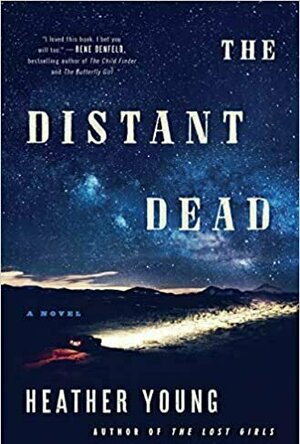
A dark and well-written tale of sadness and forgiveness
Adam Merkel left his job as a professor in Reno to come to Lovelock, a small town, to teach math at their middle school. He was mostly mocked by his students, except for one, Sal Prentiss. After the death of his mother, Sal lives outside of town with his two uncles. Mostly friendless, he bonds with Mr. Merkel over math, chess, and more. So when Sal finds Mr. Merkel's body on his way to schoool--burned so that it's nearly unrecognizable--it turns his small world upside down. It upsets Nora Wheaton as well. A colleague of Adam's at the school, she thought she recognized a kindred spirit in him. Both seemed trapped in Lovelock: Nora had to return to care for her father. After Adam's death, Nora starts looking into his past to see what led to his horrible undoing. But so much of what she finds keeps leading back to the boy who befriended him--and found his body. As she tries to befriend the wary Sal, it opens up old wounds of her own.
I really loved Heather Young's book The Lost Girls, and The Distant Dead didn't disappoint either. She excels at creating excellent atmospheric novels with well-drawn characters. The Distant Dead perfectly captures small town life: how nearly everyone knows almost everything about everyone, but rarely interferes. How a small town can feel so stifling and claustrophobic. How the secrets and lies pile up until a man finds himself burned to death.
Young also covers the timely topics of drugs and addiction, which run as a thread across the book. Opiates don't seem like a tired trope here, though, but something that is eating up the town and ruining people's lives. It's no secret that I'm a sucker for a book with a good kid character, and I pretty much fell for Sal immediately. He's a great kid: real, vulnerable yet tough, and smart. He was an excellent narrator, with his portions telling what led up to Adam's death and Nora and Jake (a local EMT/firefighter) telling us what happened after. The book is surprisingly tense, with Young's beautifully written words jumping off every page. She's such a lyrical writer, weaving an amazing tale of sadness and redemption.
This isn't a fast read or a page-turning thriller. But it's a well-written book, with characters you won't soon forget. There's a lovely, albeit sad and dark, story here. Definitely worth a read. 4+ stars.
I really loved Heather Young's book The Lost Girls, and The Distant Dead didn't disappoint either. She excels at creating excellent atmospheric novels with well-drawn characters. The Distant Dead perfectly captures small town life: how nearly everyone knows almost everything about everyone, but rarely interferes. How a small town can feel so stifling and claustrophobic. How the secrets and lies pile up until a man finds himself burned to death.
Young also covers the timely topics of drugs and addiction, which run as a thread across the book. Opiates don't seem like a tired trope here, though, but something that is eating up the town and ruining people's lives. It's no secret that I'm a sucker for a book with a good kid character, and I pretty much fell for Sal immediately. He's a great kid: real, vulnerable yet tough, and smart. He was an excellent narrator, with his portions telling what led up to Adam's death and Nora and Jake (a local EMT/firefighter) telling us what happened after. The book is surprisingly tense, with Young's beautifully written words jumping off every page. She's such a lyrical writer, weaving an amazing tale of sadness and redemption.
This isn't a fast read or a page-turning thriller. But it's a well-written book, with characters you won't soon forget. There's a lovely, albeit sad and dark, story here. Definitely worth a read. 4+ stars.