

Gareth von Kallenbach (980 KP) rated Black Sea (2015) in Movies
Aug 6, 2019
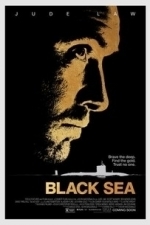

A few too many easy coincidences drive this plot along, but if you’re willing to suspend just a bit of disbelief, there’s a great tale of paranoia, claustrophobia, betrayal and greed beneath the surface. Even through Jude Law’s dodgy Scottish accent, every performance (particularly newcomer Bobby Schofield as the inexperienced Tobin) is top-notch as both he and the supporting cast provide true believability to the disregard and distrust the two groups of men come to have for each other. Between Black Sea and his unexpectedly good turn in Dom Hemingway last year, Jude Law is firmly back on my radar, as he seems to be following in Matthew McConaughey’s footsteps by taking darker, more complex and challenging roles at this point in his career. From playing a father-figure for a boy frightened of what the future holds, to a man possessed of the determination, no matter what the cost, to return home rich, Law hits every note right and is more than capable of leading a cast this talented.
My only substantial complaint is the ending. On leaving the theater, it seemed one of the better solutions to the potential corner the filmmakers were painting themselves into, though the longer its sits, the more I think a film of this unrelenting intensity deserves an ending with some poignancy. Admittedly, I would have found something bleaker to be more satisfying. The easy route out taken in the last five minutes by director Kevin Macdonald and writer Dennis Kelly are a bit of a let-down when compared with the pulse pounding hour and forty-five minutes that precedes it, and for me it will only detract from Black Sea’s memorability.
With the mention of a submarine drama, it is almost inevitable that comparisons to Das Boot will be drawn. For the purposes of reviewing Black Sea however, I have been unable to do so as my only viewing of it was about a decade ago, when I very foolishly had the ambition to see not only the uncut 6-hour mini-series version that was put together for German television, but to do so in a single sitting. I was successful, but only in terms of completing the task. I know it was great and that it is above equal in the genre of submarine films, but at this point I’d be hard pressed to recall even a few minutes of it. It would seem, in this case, that Black Sea got a fair shake to be judged on its own merits (and that I now have a German epic to revisit, albeit in the slightly more truncated director’s cut form this time).
A few nitpicky complaints aside, and in direct contradiction with my take on the abysmally poor Blackhat from the other week, this is a fine example of a well-made, wall-to-wall suspense-filled thriller, and the film I wish I had started the year off with. Released in early December in the UK, where it has received generally positive reviews, it’s unfortunate that it has landed stateside in the January/February season of no-hopes.

Fashion Nails 3D Girls Game: Create Awesome Manicure Designs in Your Beauty Salon
Lifestyle and Games
App
*** Become an expert in creating fashion manicure designs in our fun girl games! *** ** Fashion...

Erika (17789 KP) rated Sophie: A Murder In West Cork in TV
Jul 31, 2021
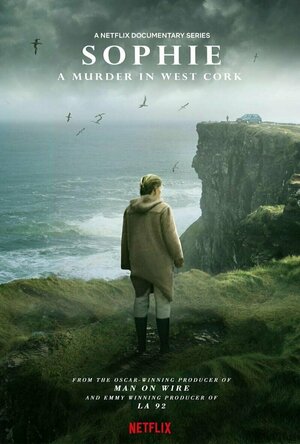
The documentary series had a wide variety of talking heads, from Du Planier’s family, friends, locals, various members of the Garda, and surprisingly, the main suspect. Du Planier’s private life seemed complicated, and it was definitely going to be utilized against her throughout the entire thing.
The case was interesting, Du Planier was found in a bramble bush a few days before Christmas. With seemingly no leads, and a haphazard investigation, I didn’t know how they would end up with a suspect. The first episode set everything up, establishing what the town was like by interviewing the locals. There was even a little spookiness brought in. A few days before her death, Du Planier had visited some ruins, and saw a white lady, which was an omen of death. Pretty interesting, and you wouldn’t think it was pertinent, however, Du Planier took it seriously.
If you watch enough true crime documentaries, you know normally what a killer would do, revisit the scene, be overly helpful, etc. It was clear as soon as they introduced the journalist that he was indeed the suspect. However, when the second episode started, the series was taken over by the main suspect, journalist and ‘poet’, Ian Bailey. As one of Du Planier’s family members quipped, he loves to be interviewed.
Somehow, Bailey had all of this insider knowledge, and wrote somewhat salacious articles about Du Planier, painting her as this woman that entertained all sorts of men. He was also very adamant that the murder was French, and probably her partner or another intimate partner. Bailey was somewhat charismatic, but a complete weirdo. It is common for law enforcement to go after the ‘others’ in society, so was he targeted because he was eccentric? Who knows?
It was clear that the Garda in this area had no idea as to what to do. They may have also had a little tunnel vision because the village creep was poking around the crime scene.
I’m all for presenting all sides to a case, but having the suspect take over in a very charismatic way is not the best approach. The Garda in the area, inexperienced in investigating murders, was obviously not equipped to deal with the investigation. It was clear from the beginning that it was the primary reason the case hasn’t been officially prosecuted in Ireland.
Whenever your documentary begins to get overtaken by the number one suspect, rather than the victim, I begin to have issues. It was also interesting that at the end of the series, there was actually a statement that Du Planier had been forgotten throughout the entire event, and while she was present, she wasn’t the center of the story.
Bailey seems to be the most likely culprit, though, the Garda couldn’t have convinced me beyond a reasonable doubt. It was interesting that somehow in France, the evidence was considered solid enough for a conviction.
I did generally enjoy the documentary series, but again, I have an issue with the main suspect overshadowing the victim. Also, I didn’t feel like enough evidence was presented, and the majority of it was slightly repetitive. I’m interested to see if the case is ever resolved. Based upon the series, probably not.

Fashion Nail Art Designs Game: Pink Nails Manicure Salon and Beauty Studio for Girls
Lifestyle and Games
App
*** Get the most exciting 3D nail manicure game for fashion girls and spend hours of fun creating...

Fashion Nail Art Designs Game
Lifestyle and Games
8.0 Rate It
App
*** Bring out your creativity in one of the best nail art and manicure games ever! *** ** Girls,...


Photo Lab PROHD picture editor
Photo & Video and Entertainment
App
Photo Lab PRO – a full-featured Photo Fun Generator for your iPhone and iPad! Photo Lab PRO...

Stop Motion Studio Pro
Photo & Video and Education
App
Get Stop Motion Studio Pro, the world’s easiest app to get you into stop motion moviemaking today!...

Photo Lab: pics art filters
Photo & Video and Entertainment
4.0 Rate It
App
Photo Lab - Photo Fun Generator in your pocket with over 80 million downloads! Photo Lab contains...

Stop Motion Studio
Photo & Video and Utilities
App
Get Stop Motion Studio, the world’s easiest app to get you into stop motion moviemaking today! ...