
Mysteries of Paris
Book
The first new translation in over a century of the the brilliant epic novel that inspired Les...
Wars of the Roses: Trinity
8.0 Rate It
Book
The brilliant retelling of the Wars of the Roses continues with Trinity, the second gripping...
The Story of Sex: From Apes to Robots
Philippe Brenot, Laetitia Coryn and Will McMorran
Book
*The French Best-seller* 'The book France won't stop talking about...undoubtedly a lovely Christmas...

A World on Fire: An Epic History of Two Nations Divided
Book
'No two nations have ever existed on the face of the earth which could do each other so much good or...

ClareR (6256 KP) rated The Searcher in Books
Nov 15, 2020


As in most small villages, word of a new, exotic inhabitant spreads fast, and this is why Trey turns up on Cal’s doorstep. He wants Cal to help him find his older brother, Brendan, who has disappeared. The local police seem to be completely disinterested - mainly due to the family’s reputation. It seems to be no surprise to people that Trey’s 19 year old brother would want to leave the small village. With the family’s reputation being that of ‘wasters’ who live on the poverty line (or probably below it), it strikes people as unremarkable that he would leave to try and make his life better elsewhere. But Trey doesn’t believe this. He believes that he has been kidnapped, and he wants Cal to find him. The problem is that Cal just doesn’t want to get involved. He has left the Chicago police force because of the frustration he feels at not making a difference. And this decency is what ends up drawing him in to helping Trey.
It did surprise me that Cal becomes involved with Trey, and he clearly realises that such a relationship could be seen as problematic. He makes the effort to keep Trey’s presence a secret from his nosy neighbour, Mart. The fact that everyone seemed to know everyone else’s business did create a claustrophobic atmosphere, almost a touch of horror especially as the book progresses.
This also touches on some of the current issues in the USA surrounding policing and BLM protests, so it does make this a very current novel. I have to say though, that the end of the book came as a complete surprise to me, and left me feeling ultimately disappointed in the characters. It didn’t make me like the book any less though!
Many thanks to Penguin UK and NetGalley for my copy of this book to read and review.

Hazel (2934 KP) rated Out For Blood (DI Eve Hunter #2) in Books
Dec 13, 2020


This is a gritty police procedural set in Aberdeen, Scotland which delves into the seedy and repulsive world of human trafficking but what does the death of a privileged young man and the apparent suicide of a young woman have in common? On first impressions, absolutely nothing however, DI Hunter and her team set about investigating and what they find is worse than they expected.
Mainly written from Eve's perspective interspersed with other characters and those of an unknown young woman, this gave insight from all the important protagonists in this book and provided a well-rounded view of the situation from all angles. The characters are well developed and believable with the relationships between Eve and her wider team excellently portrayed.
The story is a difficult one to read in parts but, I felt, was dealt with respectfully but with no holds-barred which made it feel authentic making me feel both sad and angry in equal measure that these things are likely to be happening to someone right now! The pace is good, it does start off a little slow but increases as the story develops and this follows the pace of the investigation, again making it feel believable and, once again, the author manages to keep the identity of the killer well hidden which kept me guessing and second guessing throughout.
Overall, I have no hesitation in recommending this to others who enjoy a cleverly written and gripping police procedural and I look forward to reading the next instalment in what is a great series with DI Hunter fast becoming a favourite character of mine.
I was fortunate enough to have been invited to read an advance copy by Transworld Publishers, part of Penguin Random House UK, via NetGalley in return for an unbiased and unedited review and for which, I am thankful.

The World is Flat: A Brief History of the Twenty-First Century
Book
The beginning of the twenty-first century will be remembered, Friedman argues, not for military...

The Heartbeat of Wounded Knee: Native America from 1890 to the Present
Book
An informed, moving and kaleidoscopic portrait... Treuer's powerful book suggests the need for...

Sin in the Second City: Madams, Ministers, Playboys, and the Battle for America's Soul
Book
Step into the perfumed parlors of the Everleigh Club, the most famous brothel in American...
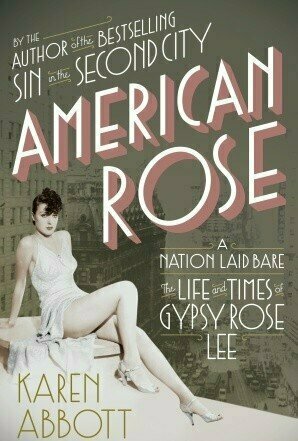
American Rose: A Nation Laid Bare: The Life and Times of Gypsy Rose Lee
Book
With the critically acclaimed Sin in the Second City, bestselling author Karen Abbott “pioneered...