

Matthew Krueger (10051 KP) rated Payback (1999) in Movies
Jul 15, 2020
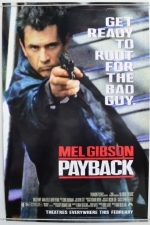


The plot: Porter (Mel Gibson) is a thief betrayed by both his wife, Lynn (Deborah Kara Unger), and his partner, Val (Gregg Henry), when he is shot in the back after a heist. Slowly, Porter recovers from his wounds and begins a search for Val, intent on recovering his share of the money they stole together. With the aid of prostitute Rosie (Maria Bello), Porter captures Val but still cannot find his cash. For this, Porter will have to challenge an imposing crime syndicate called the Outfit.
Although credited as director, Brian Helgeland's cut of the film was not the theatrical version released to audiences. After the end of principal photography, Helgeland's version was deemed too dark for the mainstream public. Following a script rewrite by Terry Hayes, director Helgeland was replaced by the production designer John Myhre, who reshot 30% of the film. The intent was to make the Porter character accessible. The film's tagline became: "Get Ready to Root for the Bad Guy." A potentially controversial scene between Porter and Lynn which arguably involves spousal abuse was excised and more plot elements were added to the third act. After 10 days of reshoots, a new opening scene and voiceover track also were added, and Kris Kristofferson walked on as a new villain.
The Director's Cut version features a female Bronson, that is never seen only heard over the phone voiced by Sally Kellerman, does not include the voice-over by Porter and several Bronson-related scenes. During their scuffle (which is longer than in the theatrical version and was the main source of controversy), Porter earlier tells Lynn that his picture with Rosie was taken before they met, thereby rendering her jealousy unjustified. This version has an entirely different, ambiguous ending where Porter is seriously wounded in a train station shootout and driven off by Rosie.
A June 4, 2012, look at "movies improved by directors' cuts" by The A.V. Club described Payback: Straight Up as "a marked improvement on the unrulier original.
Mel Gibson stated in a short interview released as a DVD extra that it "would've been ideal to shoot in black and white." He noted that "people want a color image" and that the actual film used a bleach bypass process to tint the film. In addition to this, the production design used muted shades of red, brown, and grey for costumes, sets, and cars for further effect.
Like i said its a good revenge action thriller but to me its both boring and confusing. Maybe i have to watch the directors cut.

World's Best Street Food
Book
Travel the world from the comfort of your kitchen! From taco carts and noodle stalls to hawker...
Atlas of the Great Irish Famine
John Crowley, William J. Smyth and Mike Murphy
Book
The Great Famine is possibly the most pivotal event/experience in modern Irish history. Its global...

Becs (244 KP) rated Hollow City: The Second Novel of Miss Peregrine's Children in Books
Oct 2, 2019
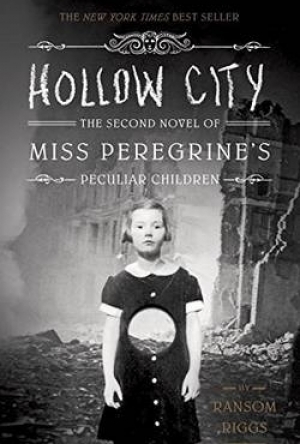

Synopsis: September 3, 1940. Ten peculiar children flee an army of deadly monsters. And only one person can help them—but she’s trapped in the body of a bird. The extraordinary journey that began in Miss Peregrine’s Home for Peculiar Children continues as Jacob Portman and his newfound friends journey to London, the peculiar capital of the world. There, they hope to find a cure for their beloved headmistress, Miss Peregrine. But in this war-torn city, hideous surprises lurk around every corner. And before Jacob can deliver the peculiar children to safety, he must make an important decision about his love for Emma Bloom.
Genre: Fantasy, Young Adult, Paranormal, Fiction
Audience/Reading Level: Middle School+
Interests: Fantasy, Young Adult, Paranormal
Style: Light Read
Point of View: Third Person
Difficulty Reading: It was a very easy read and know even younger individuals will be able to understand what the underlying meaning of the story is.
Promise: Like its predecessor, this second novel in the Peculiar Children series blends thrilling fantasy with newly discovered (and thoroughly mesmerizing) vintage photography to create a one-of-a-kind reading experience that will delight readers of all ages.
Quality: Like your favorite cake with extra whip cream and ice cream. 😉
Insights: When I first read this series, I read Tales of the Peculiar by Ransom Riggs first to get a better understanding of the characters since I had a feeling that there was going to be a lot of references to it. I was right. I honestly fell in love with this series and love the way that Ransom Riggs writes. It just captures my attention and transports me into a world of fantasy that is a great escape from reality!
Favorite Quotes: “Laughing doesn’t make bad things worse any more than crying makes them better.”
“There was romance in the unknown, but once a place had been discovered and cataloged and mapped, it was diminished, just another dusty fact in a book, sapped of mystery. So maybe it was better to leave a few spots on the map blank. To let the world keep a little of its magic, rather than forcing it to divulge every last secret. Maybe it was better, now and then, to wonder.”
What will you gain: A love of a new fantasy world that will make you wish, you too were a part of the Peculiar children’s world.
Aesthetics: I absolutely love the vintage style this series has. The photographs help give an idea of who and what the characters look like. The way that Ransom Riggs writes, just draws anybody of any age into the plot and storyline, like an enchantment that takes you from the real world, into a world filled with magic, hope, love, and adventure.
“Some truths are expressed best in the form of myth.”

PlayMemories Mobile
Photo & Video
App
PlayMemories Mobile is a free application that makes your Wi-Fi compatible Sony camera use more...

NightCap Camera
Photo & Video and Utilities
App
NightCap Camera is a powerful app that takes amazing low light and night photos, videos and 4K time...

The New York Times
News and Magazines & Newspapers
5.0 Rate It
App
Stay up to date wherever you go. Enjoy award-winning journalism with the NYTimes app for iPhone,...

Enlight Quickshot
Photo & Video and Utilities
App
Enlight Quickshot will make you fall in love with mobile photography. Here to convince you that the...

Magic Eraser - Remove Photo Background & Create Transparent PNG
Business and Utilities
App
It has never been easier to create transparent background images! Featuring automated background...
Kirk Bage (1775 KP) rated Roma (2018) in Movies
Mar 2, 2020 (Updated Mar 3, 2020)
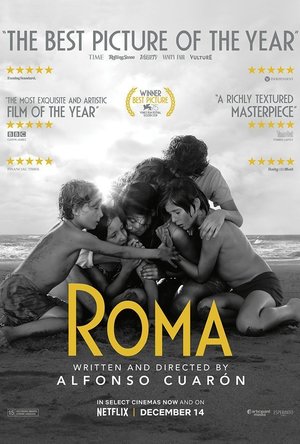

Not that it didn’t get attention at the time of its release, it did, receiving 10 Oscar nominations and winning 3, for best foreign language film, director and cinematography, but it certainly wasn’t seen by as many people as it should have been, despite its presence on Netflix from the start. Having digested it now, and spending some time reading about how and why it was made, I feel a slight mission to recommend it to as many people as I can.
Based on Alfonso Cuarón’s own childhood in Mexico City, and his memories of his family and especially their housemaid, Liboria (Libo) Rodriguez, to whom the film is dedicated, it is a masterpiece labour of love that few directors ever achieve or even attempt to make. After a strong career of exceptional films, including Y Tu Mamá También, Children of Men and Gravity, it was the box office and critical success of the latter that gave Cuarón carte blanche to go and make whatever project he chose. Where many might have been tempted by the big money of superhero or fantasy movies (for which he had some experience with Harry Potter and the Prisoner of Azkaban) he went back to his roots and shot a very personal non-English film, in black and white, where no music exists except that which occurs naturally, and on the surface not much happens.
At least it feels like not much is happening, such is the naturalistic, almost improvised (although it wasn’t) style and pace; shot with a lens capturing detail and nuance with some of the most beautiful photography I have ever had the privilege to see. Truly, an awful lot is happening, but you have to feel and experience it, not simply be told it by the narrative. It takes a while for our Hollywood conditioned brains to accept this at first, and many might come to it and give up half an hour in because of that challenge. I can promise, however, there is not a single thing boring about this film, unless humanity is boring.
Oscar nominated lead Yalitza Aparicio as the shy, loving maid, Cleo, was not an actor before this film. She auditioned and was hand picked by Cuarón from hundreds of young women, without knowing who he was or what the film was about. Apparently, the film was shot in sequence so as not to confuse her emotionally on her extraordinary journey. She is so unassuming and natural that part of you falls in love with her immediately. In time, we almost come to forget we are watching an act at all, and almost become her, such is the empathy she evokes.
Which isn’t an easy ride, as we watch her be gently and then cruelly ignored, mistreated and used; climaxing in one of the most astonishingly painful and jaw-dropping scenes imaginable, and then a scene of such powerful redemption and humanity it instantly breaks the heart and lifts the soul. All the while she never asks for attention or love, but is just herself: a young woman living a difficult but beautiful life in a country and time full of turmoil, prejudice and social change.
The recreation of Mexico in 1970 is so breathtaking, it is hard to imagine at times we are not watching a documentary from that era. But, it is the detail the lens chooses to capture that reminds you this is a visual poem and a love-letter to a time, a place and a family far away in history and the memory of one man (represented by ten year old Carlos Peralta as Paco). At times it evokes the work of the very greatest film artists of all time: Bergman, Fellini, Hitchcock etc. Not one image is wasted or insignificant, from the reflection of the sky in water, to the dog-shit constantly lining the driveway. Everything is chosen and meaningful in the full context of the work.
There is no awkward exposition, no dramatic moments milked for all they are worth, no sequences of heightened excitement that manipulate us; simply truthful moments that hang in the air for what they are, leaving us to decide how we relate to them without ever preaching or teaching us how. In that way, it is a work of such maturity that I doubt many living directors could emulate it at all. The closest comparison I can think of is the personal passion Spielberg put into Shindler’s List, but really it is a moot comparison, and in fact owes much more to films like Haneke’s The White Ribbon.
Can it be faulted? Well, yes, certainly. But, honestly, I don’t see the point in trying. It is as close to perfection a small story of this kind can be. Importantly, I think it is an open film, that allows us to take from it whatever we like, relating to our own experiences and cares. For me, it said that any pain and hardship can be overcome, as long as there is love and beauty walking by its side. A message of no small importance. If you haven’t seen it, I urge you to do so. If you have, then please keep spreading the word. I believe it to be a genuine classic that will endure the criticism of many decades to come. Without a doubt in my mind something very special indeed.
