

Laura Doe (1350 KP) rated S.T.A.G.S (S.T.A.G.S, #1) in Books
Mar 12, 2021

It starts off with us finding out that the narrator, Greer, is just starting at a new and extremely prestigious school called St Aidan the Great School or S.T.A.G.S. for short. We find out that Greer was lucky enough to win a scholarship for the school and took it so that her dad (a wildlife cameraman) could go to Chile to film in bat caves instead of turning the job down as he had been doing previously. Things aren’t plain sailing for Greer though, as she finds that the other students (including her roommate) aren’t the most welcoming or friendly, and as a result of this spends the first term quite lonely and keeping herself to herself. That is until she gets an invitation pushed under her door, and it’s an invitation that will change her life forever. The invitation comes from the most popular group in the school, who also happen to be the prefects or the “Medievals”. Pleased to finally have a chance at friendship, and with her roommates persuasion that it means she will become a Medieval next year, Greer takes up the invitation to spend three days at the country house of one of the most popular boys at school.
When Greer arrives, she is surprised to find two other people have also been invited and is surprised since she thought the Medievals disliked them as much as she’d thought they disliked her. What then follows is three days of hunting, shooting and fishing. And also three days of “accidents” and the three “unpopular” students teaming up against the six Medievals.
This book was thrilling from start to finish, and one of those books that you really don’t want to end because you are enjoying it so much. I enjoyed that Greer referenced movies so much, as the two main passions in my own life are books and films. With each film she referenced, it solidified the picture in my mind of the scene that was going on around her.
A definite 5 stars from me! And I cannot wait to read the sequels!

MelanieTheresa (997 KP) rated Under Currents in Books
Sep 20, 2019 (Updated Sep 23, 2019)
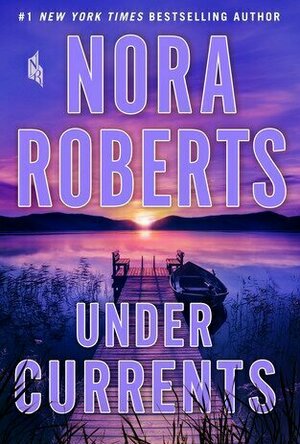

1: a current below the upper currents or surface
2: a hidden opinion, feeling, or tendency often contrary to the one publicly shown<
While Under Currents may not have put me on the edge of my seat as often as some previous Nora Roberts titles (see: Shelter in Place, Come Sundown), it more than made up for that in sheer emotion.
The first part of this book is both brutal and beautiful. The descriptions of the horrific abuse Zane and his sister suffer at the hands of their father can be hard to get through; I found myself tearing up quite a few times, entwining the sorrow with anger that anyone should have to experience any of it, least of all a child. However, there is beauty in how they come out of it.
Thankfully, the horror does lift, and we're treated to a wonderful story, at times simultaneously uplifting and heartbreaking. The character development here is terrific. Each character, down to the most random of townspeople, has a purpose and a backstory, and interacts perfectly with the other characters, building a supportive community with a definite small-town vibe.
The descriptions of landscaping and gardening are so well done I could picture the finished products quite clearly in my head - and man do I want a "water feature" now! (the fact that I do not have a yard in which to do this is completely irrelevant 😁).
Each plot line, whether primary, secondary or tertiary, was well developed and led toward a satisfying resolution - and each contained under currents of its own.
A couple of final thoughts:
*Zane & Darby are #couplegoals.
*I feel like there's always a dog, and I always love the dog. 🐶 Although, hey, Nora: cats are pretty awesome too. 🐱
*Nora Roberts is a master of attention to detail.
*Sad tears? Happy tears? This book will bring them all.
*Can we take a minute to appreciate this gorgeous cover??
Thank you to St. Martin's Press for the ARE!
Sid the Science Kid Read & Play for iPhone
Catalogs and Book
9.0 Rate It
App
Sid the Science Kid Read & Play is packed with stories and fun activities aimed at developing early...

Suswatibasu (1703 KP) rated Killers of the Flower Moon: The Osage Murder and the Birth of the FBI in Books
Nov 24, 2017 (Updated Nov 24, 2017)
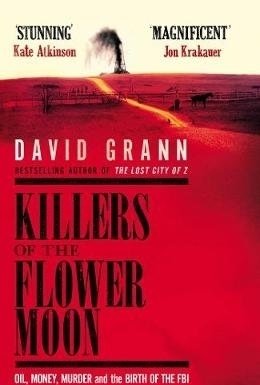

This fantastic book relates to a story covered in blood, racism and greed. Oil, black gold, made the Plains Osage tribe incredibly wealthy. By the 1890's, the remnants of this great people were in the scrub lands of Northern Oklahoma.
Their life was continually harsh, the soil poor. In the late 1890's, by chance, oil was struck in Osage County, flowing in abundance and in great demand. From 1918 to 1928, $202 million was paid to the tribe which by then numbered around 3000, transforming their lives. 680 barrels were obtained in a day in 1920 from a strike at Burbank, angering the whites and thus began the "Reign of Terror" in which hundreds of the Osage tribe members were subsequently killed in the most horrendous display of corruption.
The book itself begins in 1921 with an Osage woman who had a share of the mineral riches to be found under the Osage land. Mollie like others was subject to a law that treated her tribe as juveniles whose estates had to be administered by white guardians, that is local lawyers and businessmen, appointed by local courts.
Guardianship was unpoliced and few records were kept. Fraud was therefore prevalent and many of the local white community participated in corruption - murder was widespread as a result. Mollie's sister, Anna, was the first noticeable murder in which she was shot and killed, launching a major probe into similar killings in the area. Many other murders were committed over the following years, with poisoning as the most common method of killing. Essentially it was a covert form of genocide.
The locals refused to act, partly due to fear or involvement in this heinous plot, so J. Edgar Hoover, who was the first president of the FBI, became involved in the investigation. He sent a tall Texas Ranger called Tom White to scrutinise an epic series of murders in which even investigators were targets.
What follows is not only history but a riveting detective story and the book demonstrates yet again the enormous cost of American nationhood. It provides some fascinating insight into the early workings of the FBI (not least Hoover's nascent megalomania) for whom this was a celebrated case and a valuable reminder for folk who thought the persecution of American Indians ended in the late 19th century. Author and journalist David Grann does a superb job in collating all of the information with dozens of pages solely highlighting attributions and references - it is thorough and well-researched. Therefore it is hardly surprising that Hollywood has snapped up this book to turn it into a major motion picture - let's hope they don't whitewash history once again.

Hazel (1853 KP) rated Glass Sword in Books
May 25, 2017

It is finally here; the second book in the riveting Red Queen series by Victoria Aveyard – perfect for fans of The Hunger Games, The Selection series and Divergent. Continuing from the exact point the previous book closed on, Glass Sword is packed with action, suspense and emotional entertainment.
To recap, the world is divided by blood colour: Red (inferior) and Silver (superior); but it is the reason why Silvers consider themselves better that is important. Silver-blooded people are born with a superpower; Reds are not. Until Mare Barrow, that is. By pure accident, Mare discovers she can wield electricity with her bare hands, is forced to pretend she is a Silver living with the royal family, and is finally betrayed by someone she thought was on her side.
Now, in Glass Sword, teenage Mare is in hiding with the Scarlet Guard – Red-blooded rebels – with the knowledge that there are other people out there just like her: “Newbloods,” Red blood with Silver abilities. Mare and her companions are determined to find all of these people and train them to use their powers, however the Silver king is doing the same, with the intention of destroying them all. What makes it worse is Mare no longer knows whom she can trust; anyone could betray her.
Unlike the previous book, Glass Sword is one battle after another. There are no more pretty dresses, royal parties or grand castles. From beginning to end there is not a moment when Mare is not in danger; it is easy to lose count the number of times she narrowly escapes death. But as with any form of violence, someone always ends up injured or killed, resulting in some very upsetting outcomes.
Fans of the first book will already be aware of the love triangle that developed – one that made the conclusion so shocking. Whilst Glass Sword continues with the romantic theme, it is barely perceptible underneath all the bloodshed, arguments and warfare. So, do not expect a romance novel within these pages.
The constant action prevents the story from becoming slow or boring. There is a surprise around every corner; every page, to keep the reader engaged. This however has a downside. With conflict running into conflict it is easy to get confused and struggle to follow the course of the action. This is particularly the case in one of the final, most significant, attacks against the Silvers. The quick pace of the narrative results in the violent scene only taking up the space of a few pages, thus not giving the reader time to develop a clear picture in their head or fully understand what they are reading.
Naturally Mare’s story ends on yet another cliffhanger, so now we await the third installment. It must be difficult to provide a sequel as equally entertaining as the first, but Aveyard has gone above and beyond to create something far better than could be imagined. We can only hope this brilliance continues into the following books.

Kristy H (1252 KP) rated Read Me Like a Book in Books
Feb 13, 2018

This is a lovely gem of a book. It's the perfect blend of heartbreaking and funny. Kessler, who, as I mentioned, has previously written a series of books for young teens, expertly captures the older teen voice in this novel (which was actually her first book, finally published and updated for the more modern, digital era). She creates a picture as she writes, allowing you to vividly imagine her multi-faceted and complicated characters. Ash is no one-dimensional teen: she's intricate and her own person. As she deals with the agony of her parents' own issues, plus her own inner angst about her love life, your heart goes out to the girl.
Kessler easily paints the angst one feels when in love with a teacher, especially if LGBT - coupled with the delusion that comes with youth, no matter your sexual orientation. Ash's feelings are so real, so strong, and she seems so alone. It's an excellent portrayal of what young teens go through as they wrestle with their sexuality (believe me, I know; it took me back to some tough times in high school).
If anything, some of the resolution is a little too easy, a bit quick and forced at times, but it really doesn't diminish from the force of the book. Watching Ash grow up before our eyes is rather magical. There are some excellent comedic portions from the novel to balance out the heaviness, coupled with a great supporting cast of characters, including Ash's best friend, Cat, and some other youth she meets via school, family, and friends. The novel is perfect for teens struggling with their own sexuality, or needing to see someone "like them" in print, and those looking to support a LGBT best friend, but should also be given to parents of those teens -- as Ash's parents play a role in the story as well.
Overall, I found myself completely wrapped in Ash's coming of age (and coming out) tale. Books with a true to life, multi-dimensional lesbian heroine are still sadly hard to come by, it seems, but Kessler's novel certainly tries to change that.
I received a copy of this book from the publisher and Netgalley in return for an unbiased review - thank you!
<a href="http://justacatandabookatherside.blogspot.com/">My Blog</a> ~ <a href="https://www.facebook.com/justacatandabook/">Facebook</a>; ~ <a href="https://twitter.com/justacatandbook">Twitter</a>;
Hazel (1853 KP) rated Glass Sword in Books
Dec 7, 2018
It is finally here; the second book in the riveting<i> Red Queen</i> series by Victoria Aveyard – perfect for fans of <i>The Hunger Games, The Selection</i> series and <i>Divergent</i>. Continuing from the exact point the previous book closed on, <i>Glass Sword</i> is packed with action, suspense and emotional entertainment.
To recap, the world is divided by blood colour: Red (inferior) and Silver (superior); but it is the reason why Silvers consider themselves better that is important. Silver-blooded people are born with a superpower; Reds are not. Until Mare Barrow, that is. By pure accident, Mare discovers she can wield electricity with her bare hands, is forced to pretend she is a Silver living with the royal family, and is finally betrayed by someone she thought was on her side.
Now, in <i>Glass Sword</i>, teenage Mare is in hiding with the Scarlet Guard – Red-blooded rebels – with the knowledge that there are other people out there just like her: “Newbloods,” Red blood with Silver abilities. Mare and her companions are determined to find all of these people and train them to use their powers, however the Silver king is doing the same, with the intention of destroying them all. What makes it worse is Mare no longer knows whom she can trust; anyone could betray her.
Unlike the previous book, <i>Glass Sword</i> is one battle after another. There are no more pretty dresses, royal parties or grand castles. From beginning to end there is not a moment when Mare is not in danger; it is easy to lose count the number of times she narrowly escapes death. But as with any form of violence, someone always ends up injured or killed, resulting in some very upsetting outcomes.
Fans of the first book will already be aware of the love triangle that developed – one that made the conclusion so shocking. Whilst <i>Glass Sword</i> continues with the romantic theme, it is barely perceptible underneath all the bloodshed, arguments and warfare. So, do not expect a romance novel within these pages.
The constant action prevents the story from becoming slow or boring. There is a surprise around every corner; every page, to keep the reader engaged. This however has a downside. With conflict running into conflict it is easy to get confused and struggle to follow the course of the action. This is particularly the case in one of the final, most significant, attacks against the Silvers. The quick pace of the narrative results in the violent scene only taking up the space of a few pages, thus not giving the reader time to develop a clear picture in their head or fully understand what they are reading.
Naturally Mare’s story ends on yet another cliffhanger, so now we await the third installment. It must be difficult to provide a sequel as equally entertaining as the first, but Aveyard has gone above and beyond to create something far better than could be imagined. We can only hope this brilliance continues into the following books.

EmersonRose (320 KP) rated In The Dark Corner I Stood Alone in Books
Nov 20, 2019
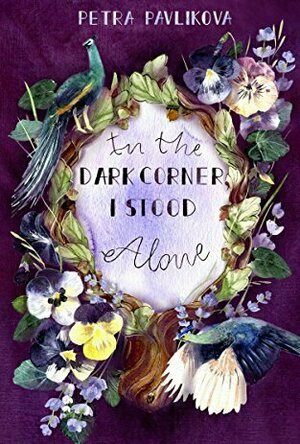
In the Dark Corner, I stood Alone is a collection of short stories by author Petra Pavlikova, published on June 12th, 2018. These short stories pull together themes of women and fairytales. Telling stories about strong women in stressful situations, difficult because they are real, and how these women pull through, with a healthy dose of the fantastical. The collection itself is a short and easy read as the stories range in length from 5-20 pages each. I loved the beautiful imagery created in these stories as they each take you on fantastic journeys.
The characters in these stories are such strong and relatable women that I fell in love with each one as I read their story. From beginning to end this book captured this beautiful whimsey that kept me captivated in each story. As you read, each has a distinctive story to tell, but they are all in the same unique voice that has a charming but straightforward tone that captures the fairytale quality splendidly. I think that my favorite story may be The Smell of Sweet Lavender, as it tackles a heart-wrenching tale of trying to be true to yourself and the cost it sometimes has on those that you love most. But each was so unique that they held different messages and meanings to them, that I could see myself having a different favorite depending on what mood I was in at the time. This is definitely one of those books that I could see myself re-reading whenever I just wanted to curl up with a sweet set of stories that allow my imagination wander in the realm of fairies and distant kingdoms. The magic in them creates a tone but the themes within them last without extra flare, making them that much more poignant.
The other thing that makes this book really stand out is the remarkable work of the illustrator Anastasia Telegina. From the small flowers and bright colored pages to the exquisite images of the women in the book, the watercolor work is astounding and fits in perfectly with the wanderlust tone of the writing. Each time I saw that stories full image, I was blown away by the beauty and talent. They play with your imagination rather than entirely putting images in your head, keeping the fluidity of the imagination intact while still creating magnificent images. Creating perhaps what is more what a child might imagine from what is described that a realistic picture. This pair clearly makes an excellent team.
These are stories for almost any age in the themes it tackles and the beautiful way in which they are told. While some of the ideas may be intense for a younger audience, the way in which the stories are told make them accessible to any reader. They are important topics dealt with in a way that is natural and very real world, while held within a slightly more fantastical space. I very much enjoyed reading this book and would definitely recommend it. I will be keeping an eye out to read more from this author. Five Stars.

MarginNote Pro
Productivity and Education
App
*** Reading & Studying will NEVER be the same! *** Welcome to MarginNote. This is a highly powerful...
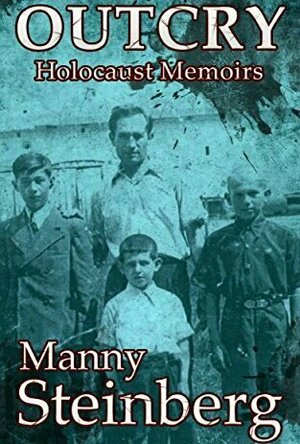
Outcry: Holocaust Memoirs
10.0 Rate It
Book
Manny Steinberg (1925-2015) spent his teens in Nazi concentration camps in Germany, miraculously...