

Summer Games 3D
Games and Sports
App
The Summer Games in 20 events ! -Athletics, -Cycling, -Rowing, -Swimming. Features: -100m...

Kendama Guide
Catalogs
App
f you're looking for the best Kendama app to build on your skills, you'll love this app. Whether you...

Fire TV Cube
7.9 Rate It
Tech
Fire TV Cube is the first hands-free streaming media player with Alexa, delivering an all-in-one...

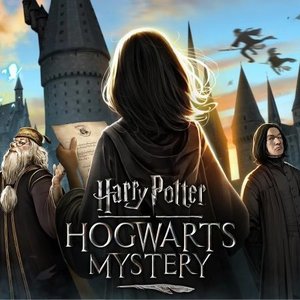
Harry Potter: Hogwarts Mystery
Entertainment and Games
7.2
Rate It
App Watch
Harry Potter: Hogwarts Mystery is the first game in which players can create their own character and...
Harry Potter




Purple Phoenix Games (2266 KP) rated Seasons in Tabletop Games
Jul 6, 2019 (Updated Nov 4, 2021)
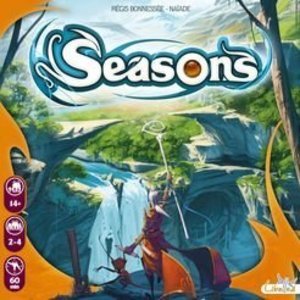
Seasons is a fantastical dice rolling, card drafting, hand management game for two to four players. In it, players are sorcerers competing in a legendary magical tournament that spans three years in an attempt to be crowned the next Archmage of the kingdom. As the seasons change, sorcerers may draw power from changing mana sources, and utilizing these sources most efficiently and effectively will earn victory over all. So tighten up your belt and get to casting, young mage!
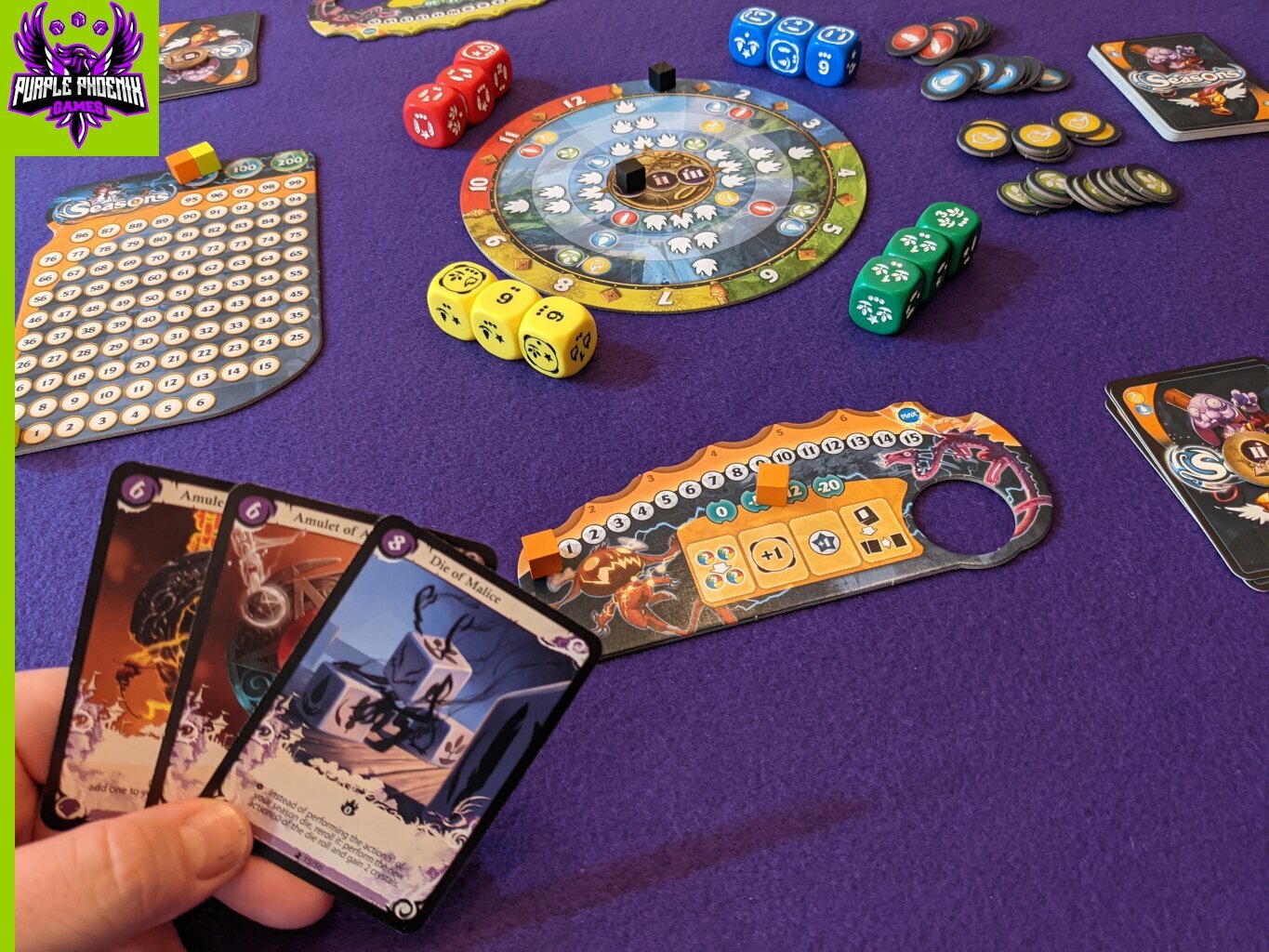
To setup, follow the rules in the rulebook (there are many steps, and I have feeble and weak fingers) until the table looks somewhat similar to the photo below – except for the obvious oversight in placing the orange cube on the zero space of bonus actions. The main areas of interest are the main game board where the years and seasons are tracked, the Crystal score track, and player board/tableau area. Players will be dealt a hand of nine cards to start, and then draft one card at a time, passing to their neighbor each time, and deciding which three cards they would like to start the game with, and assigning three more cards each into the Library for rounds two and three. The game begins in Winter, and the black cube is placed on the number 1 of the seasons board. The game is now setup and ready to begin with the first player!
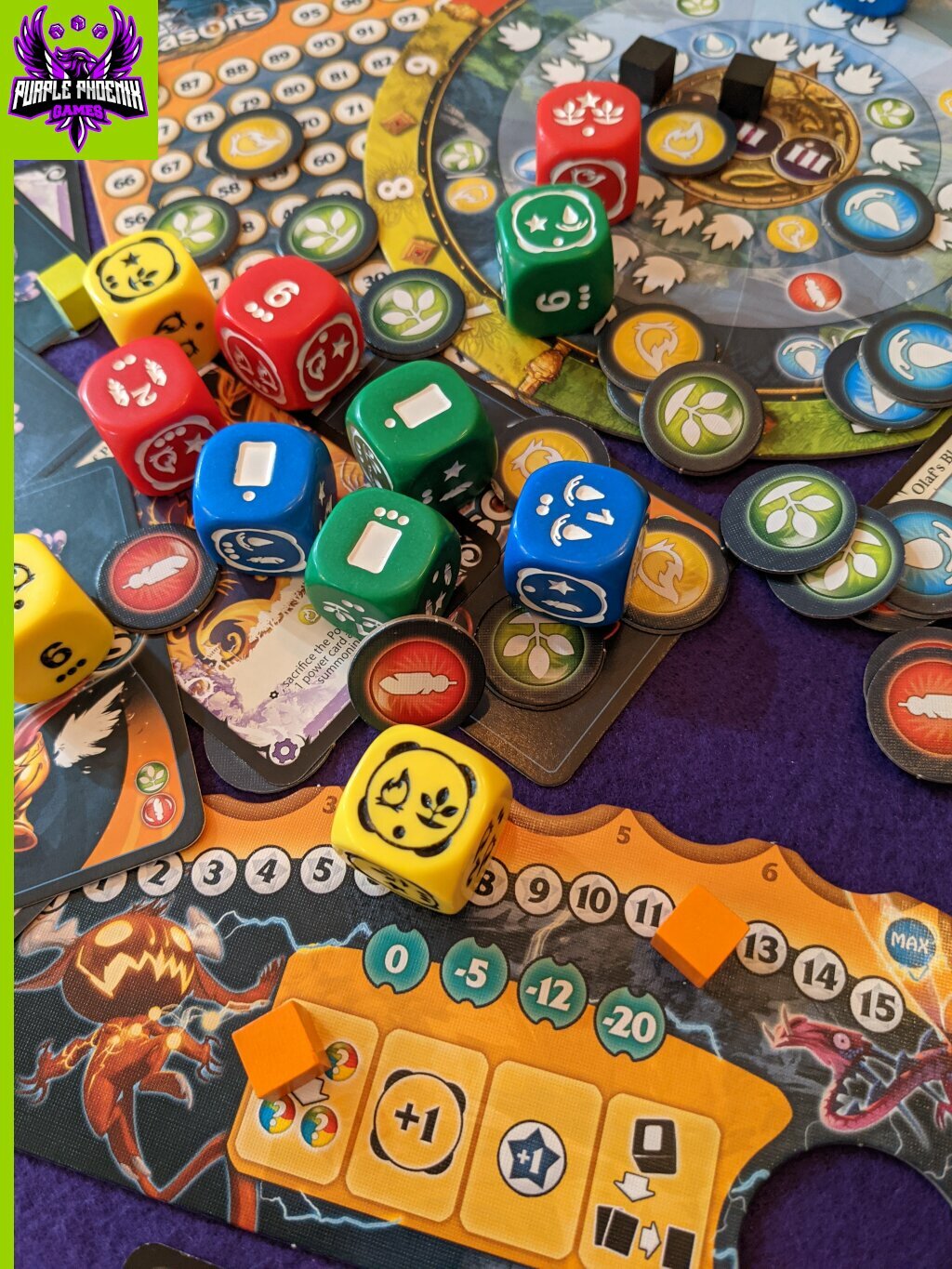
Each turn the active player will roll all dice in the current season (this game is setup for two players, so three total dice are used each turn). They will choose one die to use for the turn, and other players will choose theirs. The players then gather the resources present on the die face. These could be element tokens, crystals (VP), summon gauge stars, cards drawn from the deck, or even transmutation powers. Once resources are gained, the active player may then choose to play a card from their hand to their personal tableau, given they have adequate summoning power (the number of cards that can be played) available on their board. The cost to play the card is found under the illustration, and is usually paid in crystals, element tokens, or a combination of both. These Power Cards may allow the player immediate benefits, ongoing benefits, or benefits that may be activated at certain times during the game.
Another option players have from their chosen die is the ability to transmutate. When a player chooses a die with this option, they are able to consult the current season on the main board and exchange element tokens for crystals, depending on the provided exchange system. For example, a player wishing to exchange earth tokens (the green plant) during Winter will be provided with three crystals each, while attempting the same transmutation during Spring will only provide one crystal each.
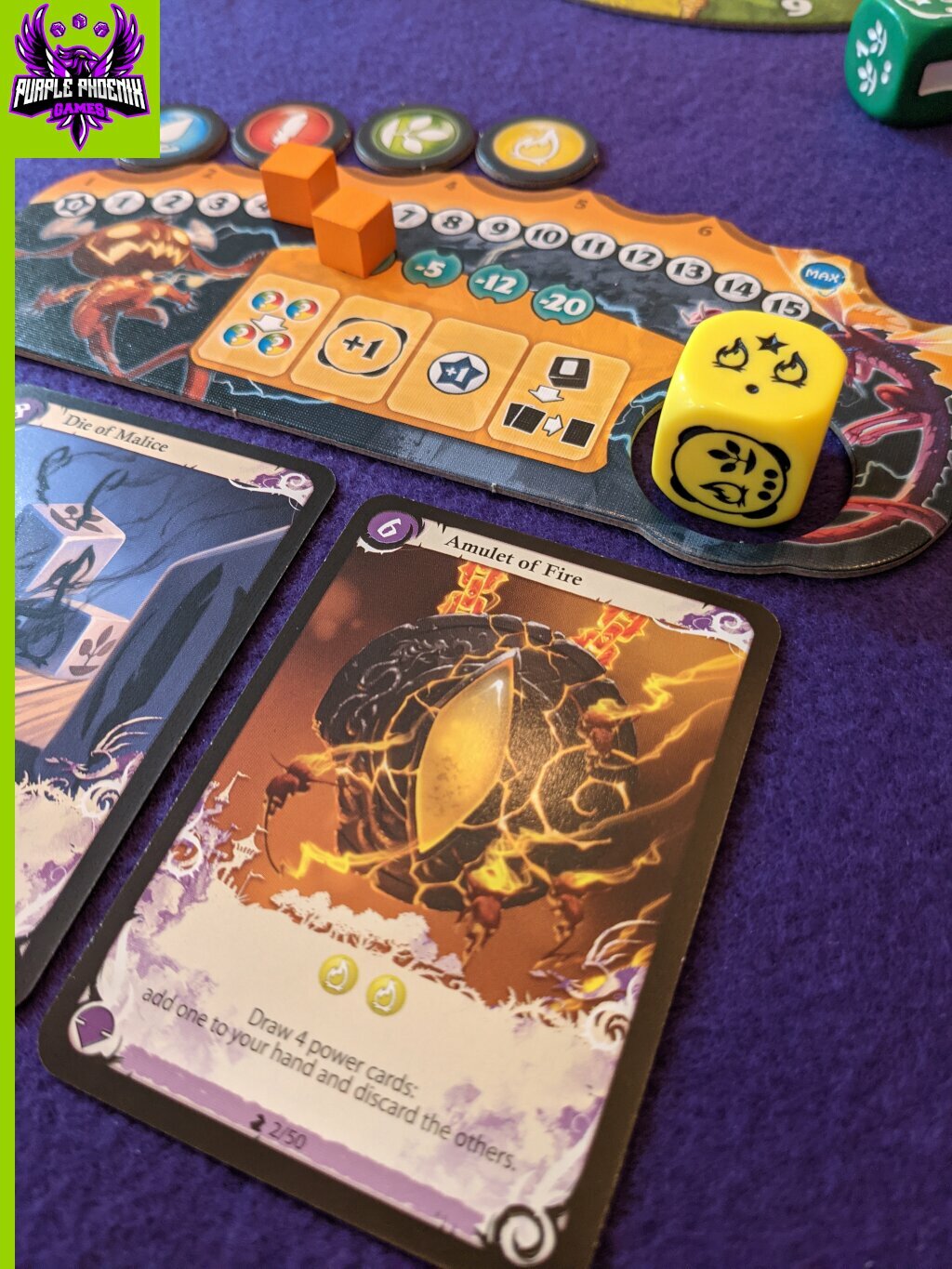
Once each player has taken their turn to collect their resources, complete their turn actions, and pass onto the next player, the unchosen die is resolved. Each die face also shows a number of dotted pips at the bottom. The number of pips shown on the unchosen die refers to the number of spaces the cube on the main board season tracker is to be moved forward around the board. One pip, one space forward. This could result in the current season continuing or progressing into the next season. When the cube progresses from Fall to Winter, players will collect their cards set aside for year two or three, respectively. These cards are added to their hand and available to be used immediately on their turn. If, however, on their turn a player has little they can do, or simply wish to boost their turn, they may use one of four bonus actions, as printed on their player board. These actions allow the player to trade two element tokens from their reserves for any other two element tokens from the main supply, allow transmutation if the symbol is not present on their chosen die face, increase their summoning gauge by one, or draw two power cards from the deck and choose one to add to their hand instead of drawing one, per their die face. Each player can use three total bonus actions for each game at a cost of crystals for each usage. Certainly a trade-off.
Play continues in this fashion of choosing and resolving dice, playing cards, and transmuting tokens for crystals until the cube has completed its three year journey around the main board. At that time crystals are scored from cards and added to the tracker, with five points deducted for each card remaining in hand and points deducted for the usage of bonus actions. The player with the most crystals at the end of the game is the winner!
Components. I have a lot to say here, but will attempt to be as succinct as I can. The components in Seasons are simply phenomenal. Yes, the boards, cards, and cubes are all fine quality and unimpressive. However, the art style throughout the game and those big chunky dice are the real standouts to me. I mean, who DOESN’T like to roll big, chunky dice? And the player colors? Oh man, I love them! Players can choose orange, purple, gray, or lime green. Those are some great color options, and such a simple upgrade from primary colors used on many other games. The dice are primary colors, but I still enjoy them and I will let it slide. No real complaints on components from me. I have heard complaints about people not vibing on the color choices associate with the elements/energy, but I applaud the mold-breaking here. Why can’t Fall be red and associated with a feather? Why can’t Summer be yellow and associated with a flame? Fire doesn’t always have to be red. Go on, Seasons! Be you!
Our thoughts on each game should never be a surprise. I will say this for Seasons – I believe that when I auctioned it off the first time, part of the reasoning was because I did not fully understand the rules. I was a newer gamer at the time and was lured in by colors and art style (which are still stunning). More than likely I thought I was smarter than I truly am and included all the cards in my first plays instead of heeding the suggestions given by the rulebook for easier first games. Now, being a more seasoned (I couldn’t resist) gamer, I can better appreciate what is in this box. The unique card play, the dice drafting for resources and actions, the progression of time as a result of the rejected die, all come together to make a very solid and different game. I am trying to think my way through my collection to find a parallel that uses all these mechanics together as well as Seasons does and I am finding it difficult. It is so easy to just throw mechanics into a blender and see the goo that results, but everything with Seasons feels right and I am just in love.
Why did I ever get rid of Seasons? I will claim young and dumb, though I wasn’t very young. Do not emulate my decision to shed this one out of your collection. You don’t have a copy? I would recommend visiting your FLGS to see if they might have a copy in stock. It’s a great one, and one that I will treasure from here on out. Purple Phoenix Games officially gives this one an amazingly colorful 5 / 6. I know the others will enjoy it too, but until they play it, I will be giddy with excitement each time I am able to play my copy. Why are you still here? Go get Seasons!
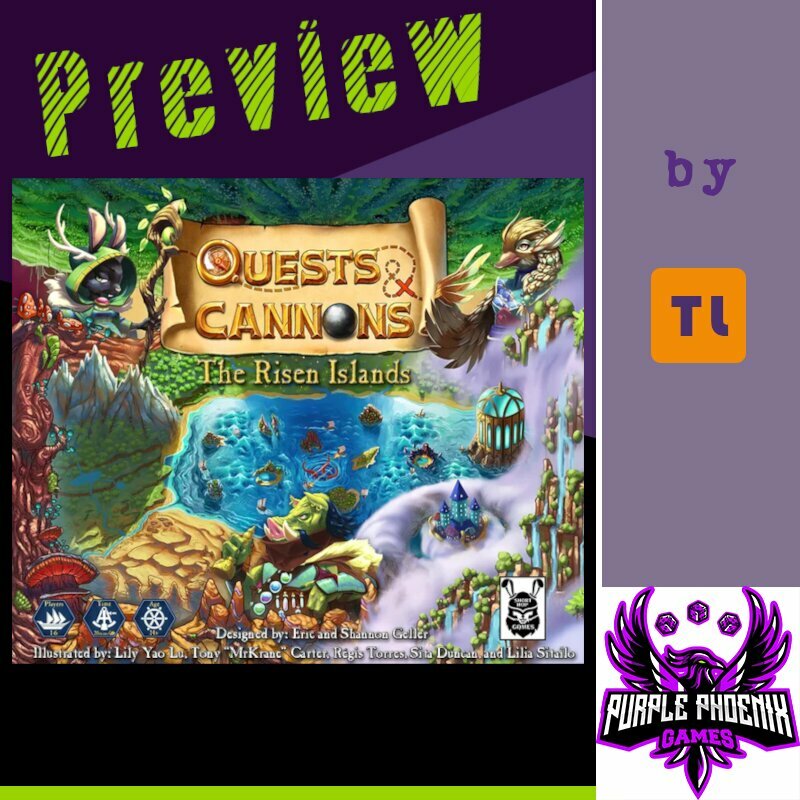
Purple Phoenix Games (2266 KP) rated Quests & Cannons in Tabletop Games
May 17, 2021
Quests & Cannons is a giant melting pot of mechanics rolled up into a cute little package with an interesting modular board with multiple setup options. In it, players take control of one of the aforementioned animal races and board their ships to claim islands and exploit their resources. The first player to amass 15 or 20 prosperity (VP) by the end of the game will reign victorious!
DISCLAIMER: We were provided a prototype copy of this game for the purposes of this review. These are preview copy components, and I do not know for sure if the final components will be any different from these shown. Also, it is not my intention to detail every rule in the game, as there are just too many. You are invited to download the rulebook, back the game through the Kickstarter campaign, or through any retailers stocking it after fulfillment. -T
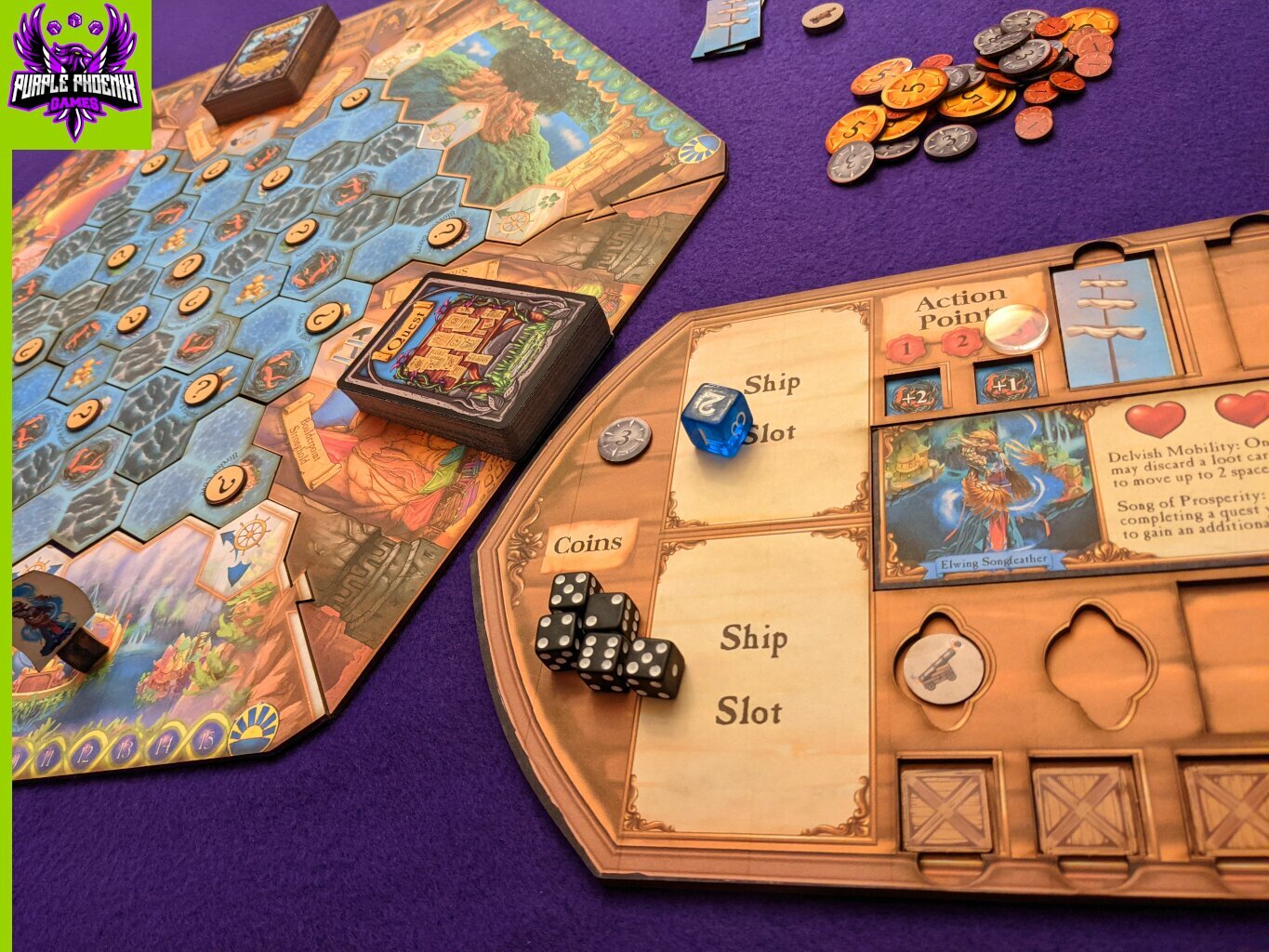
There are so many steps to setup, and about a thousand bits and pieces, so I will save both your eyes and my fingers explaining. However, once setup, it should look somewhat similar to the photo below. Each player receives their own upgradeable ship board to track resources, action points, and other game-necessary components, along with a specific character and matching boat token.
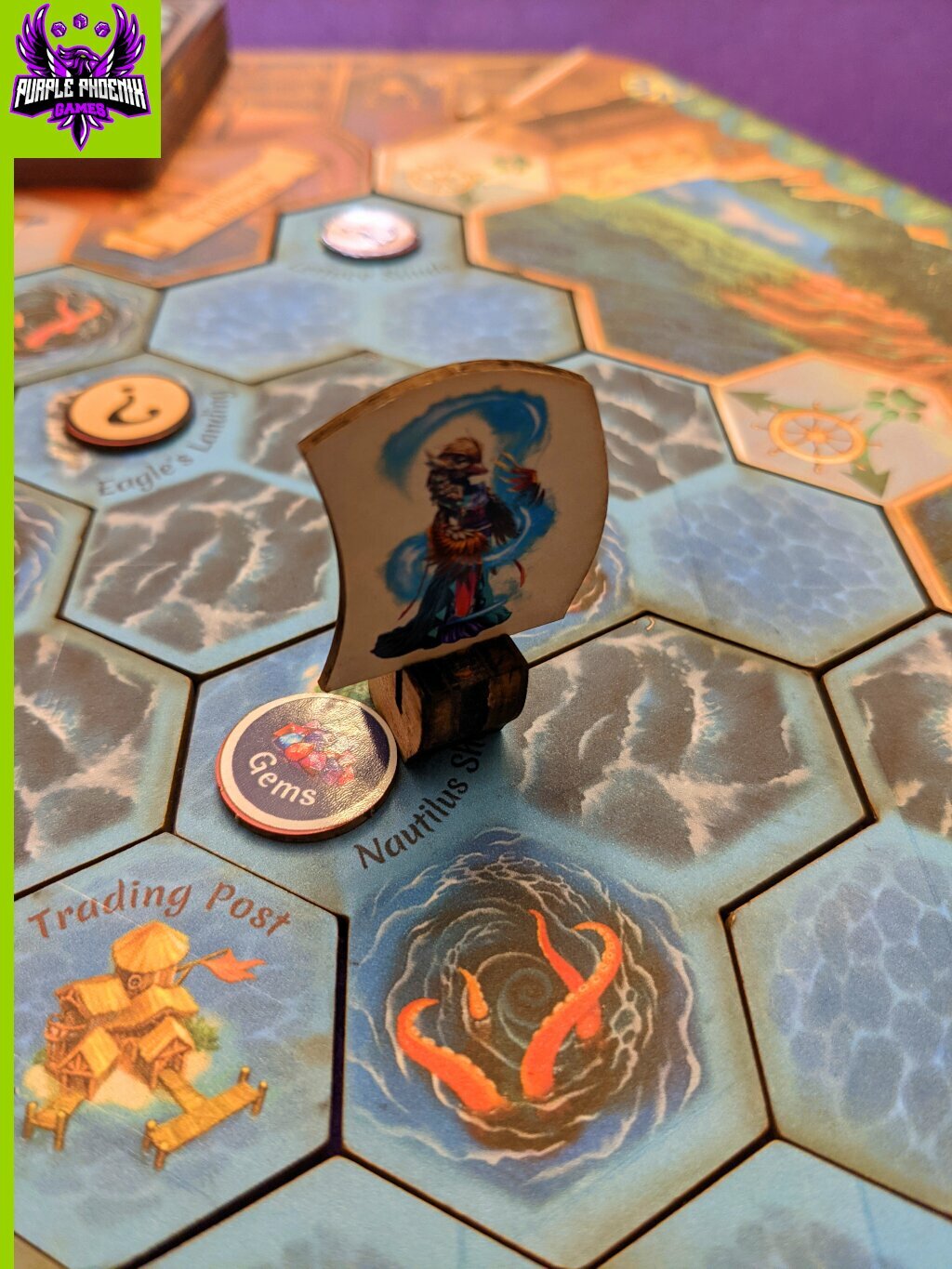
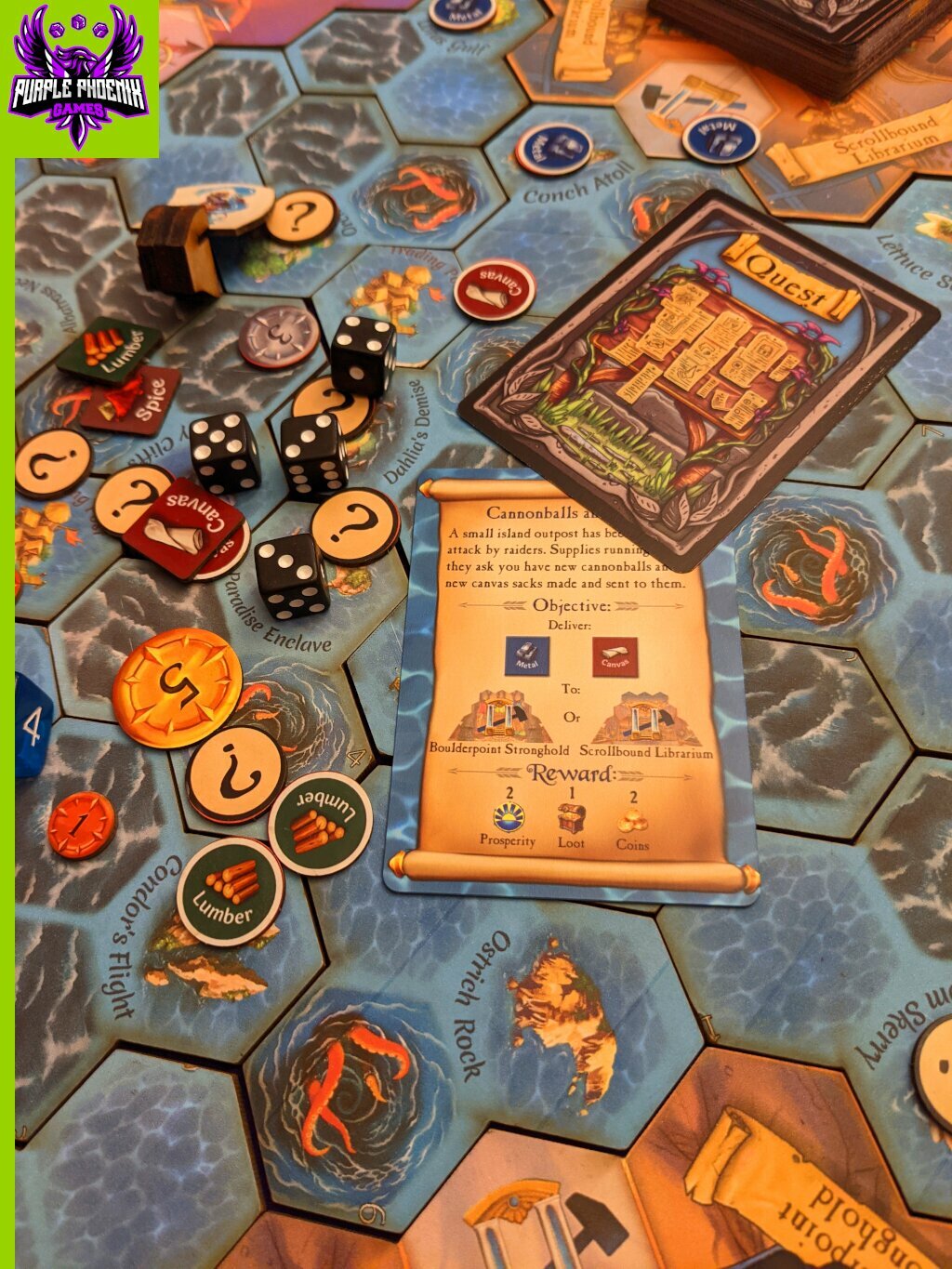
On a turn, players will have three action points they may spend in any order on the following actions: Movement, Gather, Attack. Movement is one nautical hex in any direction per action point used, unless a player uses one of their sails. Sails add one hex to a movement and is spent for the rest of the round. The thing to keep in mind with movement is that different tiles affect movement in different ways, so luckily reference cards are included in the game. Once a ship discovers a new island, the player receives one coin and a Quest card in addition to flipping over the question mark Island Feature Tokens. These tokens show specific resources, which Quest cards require to be completed, at specific locations on the board.
Players can spend an action point to Gather resources from an island. Players are able to fill up their ships’ holds with as much of the resource as they wish, and it can be replaced with other resources on future turns.
Map Clues are cards that can be worked on during play, similar to Quest cards, and usually require an action point to be spent. These are special circumstances, and the action points are not available to be spent on every turn. Similar special circumstances include visits to Outposts, Trading Posts, and Starting Spaces. These spaces allow players to buy and sell items, and upgrade and repair ships.
The last option for action point spending is by attacking. A player may Attack another player when they share the same space on the board. The attacking player spends an action point to fire their cannons equipped on their ship. The ammo is tracked and represented by ammo dice. Once rolled, the attacker scores hull damage for every four pips rolled. If the ship takes as many or more hull damage than they have HP hearts, their ship sinks. Fortunately, this does not eliminate the player, but they lose many resources and coins, and will need to respawn at their starting location.
The player who earns 15 or 20 prosperity (depending on game mode) from attacking players, completing Quest and Map Clue cards, and possibly some other secret methods, will win Quests & Cannons and leads their race to eternal glory!
Components. Again, this is a prototype copy of the game, but I’ll tell you what, if the finished project comes with even slightly better components, it will be a monumental accomplishment. This is one of the highest-quality home-made prototypes I have ever received. I know most art and many items are final, but everything is on the table for upgrades, with a successful Kickstarter campaign. The colors are great, the art is fantastical and amazing, and it looks phenomenal on the table. I really enjoy the different characters with their unique special powers, and the double-layer ship player mats. Everything has its place and is organized beautifully. I am very excited to see the final product that Short Hop Games achieves!
This kind of game is really right up my alley: head-to-head combat (without player elimination), exploration, and pick-up-and-deliver. The only thing this is missing to be the perfect Travis game is a deck building element, but that certainly wouldn’t fit here. Quests & Cannons is chocked full of mechanics that, I believe, work really well together to provide a great game experience without adding a ton of complexity. The hexploration is strong, and the pick-up-and-deliver mechanic is tasty. All the mechanics, components, and artwork synergize so well that I am surprised this is a title from first-time designers and publisher.
What I like most is that though the rules are plentiful, once you get them down you have a wonderfully fun versatile game that can be played with many different group permutations and modes. The variety in setup options are endless, and the rulebook offers nine or ten different setups. The game also comes with lots of extra map bits, so any player could dream up several unique setup options at any time. The Quests are great, and the Loot cards (though I didn’t mention them in the overview) offer lots of ways to improve players’ strategies. With the abundance of upgrades available and unique special powers, this one is a big winner for me.
If you are in the market for something a little different, with a great theme and interesting combination of mechanics, then Quests & Cannons is certainly worth a look. I am very excited to follow the progress and the campaign for this one. I think backers will be receiving an incredible game with excellent components and tons of replayability. Now to challenge my wife so she can mop the poop deck with me.
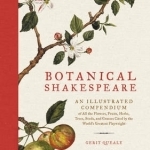
Botanical Shakespeare: An Illustrated Compendium of All the Flowers, Fruits, Herbs, Trees, Seeds, and Grasses Cited by the World's Greatest Playwright
Gerit Quealy, Sumie Hasegawa Collins and Helen Mirren
Book
A captivating, beautifully illustrated, one-of-a-kind color compendium of the flowers, fruits,...