
Search
Hazel (1853 KP) rated The Cure for Dreaming in Books
Dec 7, 2018


<i>I received this book for free through Goodreads First Reads.</i>
On her seventeenth birthday 1900, Olivia Meade gets invited onto a stage to be hypnotized by the young Monsieur Henri Reverie in this historical, paranormal novel. In Oregon at this period of time women were not allowed to vote in presidential elections and Olivia’s father is determined that she does not get influenced by the campaigning suffragists. On hearing about the hypnotist, Dr. Meade hires him with the job of removing the “selfish” and “unladylike dreams” from his daughter’s head. However this causes Olivia more problems than expected. She begins to see horrible images but are these as a result of Henri telling her “you will see the world the way it truly is”, or is she hallucinating as a result of reading Dracula more times than necessary?
<i>The Cure For Dreaming</i> contains a mix of historical references and paranormal ideas as both Henri and Olivia struggle to find a successful way of reversing the effects of the hypnosis as well as involving themselves in the women’s suffrage movement.
Cat Winters, despite the added fantasy elements, has kept the book historically accurate. A typical novel about women’s equality would result in life changing successes, however as Oregon did not did not gain full suffrage until 1912 this of course was not impossible to include in <i>The Cure For Dreaming</i>. Ultimately it is a novel about growing up to be who you want to be and knowing your own mind rather than succumbing to the “natural” views of society.
The writing is contemporary and easy to understand which makes it suitable for ages twelve and older. The downside to this is that it detracts from the historical setting, making Olivia appear a lot more modern than she actually is. Apart from mimicking a classic novel type style, which would make it less suitable for its target audience, there is not a lot that can be done about that.
Between chapters of the book are relevant photographs or images from the appropriate time period, which help to illustrate the events in the plot. There are also quotes from authors such as Kate Chopin and Mark Twain as well as more political lines from various speeches. These also help to provide an understanding of the historical setting.
Overall <i>The Cure For Dreaming</i> is a great book for teenagers. There may be paranormal themes but it is not a horror novel, in fact there is just as much romance as anything else.
On her seventeenth birthday 1900, Olivia Meade gets invited onto a stage to be hypnotized by the young Monsieur Henri Reverie in this historical, paranormal novel. In Oregon at this period of time women were not allowed to vote in presidential elections and Olivia’s father is determined that she does not get influenced by the campaigning suffragists. On hearing about the hypnotist, Dr. Meade hires him with the job of removing the “selfish” and “unladylike dreams” from his daughter’s head. However this causes Olivia more problems than expected. She begins to see horrible images but are these as a result of Henri telling her “you will see the world the way it truly is”, or is she hallucinating as a result of reading Dracula more times than necessary?
<i>The Cure For Dreaming</i> contains a mix of historical references and paranormal ideas as both Henri and Olivia struggle to find a successful way of reversing the effects of the hypnosis as well as involving themselves in the women’s suffrage movement.
Cat Winters, despite the added fantasy elements, has kept the book historically accurate. A typical novel about women’s equality would result in life changing successes, however as Oregon did not did not gain full suffrage until 1912 this of course was not impossible to include in <i>The Cure For Dreaming</i>. Ultimately it is a novel about growing up to be who you want to be and knowing your own mind rather than succumbing to the “natural” views of society.
The writing is contemporary and easy to understand which makes it suitable for ages twelve and older. The downside to this is that it detracts from the historical setting, making Olivia appear a lot more modern than she actually is. Apart from mimicking a classic novel type style, which would make it less suitable for its target audience, there is not a lot that can be done about that.
Between chapters of the book are relevant photographs or images from the appropriate time period, which help to illustrate the events in the plot. There are also quotes from authors such as Kate Chopin and Mark Twain as well as more political lines from various speeches. These also help to provide an understanding of the historical setting.
Overall <i>The Cure For Dreaming</i> is a great book for teenagers. There may be paranormal themes but it is not a horror novel, in fact there is just as much romance as anything else.



Writing (3 more)
Characters
Inconsistencies
Not a horror book, as marketed
What if a powerful virus was released in the air? What if you had to be tested for it every time you tried to walk into a building? Does this sound a little familiar? What if I told you this scenario was written about back in 2010?
In her novel Feed, writer Mira Grant gives readers this very scenario of an airborne, blood transferred virus; something that seems very familiar in today's environment and day-to-day living- - - just minus the zombies.
Grant started out as an urban fantasy writer known as Seanan McGuire, with her first full-length novel being Rosemary and Rue. She received the 2010 John W. Campbell Award for Best New Writer, as well as many other awards for her work in fiction. There are four books in the Newsflash series (Feed being the first of these).
We meet our main characters, Georgia and Shaun, while they're out in the 'field' filming some zombies for their blog. Shaun is the more careless one, as we witness him poking at zombies with his hockey stick. The two suddenly have to leave when the zombies become a pack. This is where it gets a little strange- - -Georgia explains to the readers that when zombies are in a pack, they become stronger and somehow smarter, but throughout the rest of the book, it's never really explained how this happens.
In this world, blogging and your view count determines your quality of life. Georgia and Shaun have spent years making their blog- - - After the End Times- - - into a popular blog. Every blogger's dream is to be picked to follow the campaign trail of any upcoming politician, and that is exactly what happens to our main characters. Unfortunately, this is when the book turns into a political thriller- - - this happens within the first fifty pages. Zombies end up taking a backseat from here-on-out.
We still get to learn about the virus (Kellis-Amberlee) throughout the book. We're told that any animal that weighs more than 40 pounds is capable of having the virus, and that some people are even born with a dormant-type of the virus inside of them, but this is also never explained in the entire story, at least in book one. Georgia makes it quite clear throughout the novel that she is completely against anyone owning pets that weigh over 40 pounds, but this is due-to her family having lost their younger son to a pet that went viral. This becomes extremely repetitive. Every time that an animal is brought up or seen, Georgia has to retell her stance on owning pets, when once or twice was enough to let the readers know where she stands on the subject.
There are moments of zombie attacks- - - such as after a political rally in a small town where Georgia and her crew are following Senator Ryman on his race to become President, when bodyguards are attacked by a small group of the undead, and Georgia and Shaun become cornered by a few of them- - - these scenes read as if to just keep the zombie trope going, not to actually make the story better. Grant continually repeats herself throughout the book, and because of this, the story didn't have to be as long as it is. Such as with these few zombie attacks, the reader never feels much danger for the characters. And I found that the characters turn out to just not be that likable.
One such character that had potential is Buffy; the backbone of the After the End Times blog. Scenes that were meant to make the reader care for her fell short. Unlike scenes with Georgia and Shaun, including the bond between them, is not felt with Buffy's scenes; she merely seems like a filler character to make certain parts of the story make sense by constantly disappearing and reappearing wherever need be.
Georgia does have an interesting quirk in the book. She harbors the dormant Kellis-Amberlee virus, which has effected her eyes. She can't be in bright lights because they give her blinding headaches, so she wears sunglasses nearly everywhere: " I collapsed onto our bed at the local four-star hotel a little after dawn, my aching eyes already squeezed shut. Shaun was a bit steadier on his feet and he stayed upright long enough to make sure the room's blackout curtains were drawn. "
The technical side of the story - - - the computer world and the electronic usage- - - in Feed is done pretty well. It's like the movie Nightcrawler meets 28 Days Later, but with a lot less zombies. We get to see the seedy underbelly of journalism- - - where bloggers are willing to do anything to get their view count high. Readers also get to witness how life is like living in a world held hostage by a virus - - -something that is very relatable today.
Georgia constantly reminds readers that she doesn't care about other people, and that Shaun is the only person she cares for- - - and, of course, the view count. She continually blames her lack of empathy on their adoptive parents, stating that they only took them in for the their own blog view counts. Oddly after such information, Shaun doesn't seem to be the immature one in the duo.
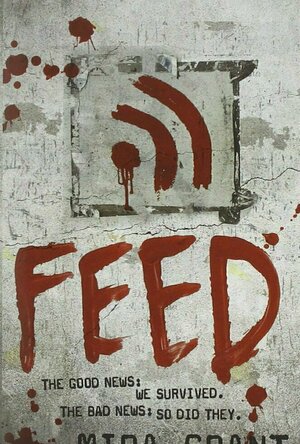
I haven't read the other three books, one which is a republishing of Feed, but from a different point-of-view. This story was disguised as a horror novel, but just ended up being a political thriller with some zombies thrown in for a much wider reading audience. The book skims over what life would be like after a devastating virus takes over, but focuses on what politics would be like. I can't recommend Feed as a horror novel; the tagline is also misleading: " 'The good news: we survived. The bad news: so did they. " Unless Grant was talking about politicians....
I didn't give the story a low rating because it wasn't exactly a horror book, but instead for these reasons: throughout the story, Grant repeats a lot of information that was explained earlier in the book (and only needed to be explained once); she also had inconsistencies throughout, sometimes even in the very next sentence. Adding things that needed to be explained which weren't, and the afterthoughts that broke up the flow of the story, I just couldn't enjoy it. But, if you like political thrillers, then you might like this one. I won't be continuing this series.
In her novel Feed, writer Mira Grant gives readers this very scenario of an airborne, blood transferred virus; something that seems very familiar in today's environment and day-to-day living- - - just minus the zombies.
Grant started out as an urban fantasy writer known as Seanan McGuire, with her first full-length novel being Rosemary and Rue. She received the 2010 John W. Campbell Award for Best New Writer, as well as many other awards for her work in fiction. There are four books in the Newsflash series (Feed being the first of these).
We meet our main characters, Georgia and Shaun, while they're out in the 'field' filming some zombies for their blog. Shaun is the more careless one, as we witness him poking at zombies with his hockey stick. The two suddenly have to leave when the zombies become a pack. This is where it gets a little strange- - -Georgia explains to the readers that when zombies are in a pack, they become stronger and somehow smarter, but throughout the rest of the book, it's never really explained how this happens.
In this world, blogging and your view count determines your quality of life. Georgia and Shaun have spent years making their blog- - - After the End Times- - - into a popular blog. Every blogger's dream is to be picked to follow the campaign trail of any upcoming politician, and that is exactly what happens to our main characters. Unfortunately, this is when the book turns into a political thriller- - - this happens within the first fifty pages. Zombies end up taking a backseat from here-on-out.
We still get to learn about the virus (Kellis-Amberlee) throughout the book. We're told that any animal that weighs more than 40 pounds is capable of having the virus, and that some people are even born with a dormant-type of the virus inside of them, but this is also never explained in the entire story, at least in book one. Georgia makes it quite clear throughout the novel that she is completely against anyone owning pets that weigh over 40 pounds, but this is due-to her family having lost their younger son to a pet that went viral. This becomes extremely repetitive. Every time that an animal is brought up or seen, Georgia has to retell her stance on owning pets, when once or twice was enough to let the readers know where she stands on the subject.
There are moments of zombie attacks- - - such as after a political rally in a small town where Georgia and her crew are following Senator Ryman on his race to become President, when bodyguards are attacked by a small group of the undead, and Georgia and Shaun become cornered by a few of them- - - these scenes read as if to just keep the zombie trope going, not to actually make the story better. Grant continually repeats herself throughout the book, and because of this, the story didn't have to be as long as it is. Such as with these few zombie attacks, the reader never feels much danger for the characters. And I found that the characters turn out to just not be that likable.
One such character that had potential is Buffy; the backbone of the After the End Times blog. Scenes that were meant to make the reader care for her fell short. Unlike scenes with Georgia and Shaun, including the bond between them, is not felt with Buffy's scenes; she merely seems like a filler character to make certain parts of the story make sense by constantly disappearing and reappearing wherever need be.
Georgia does have an interesting quirk in the book. She harbors the dormant Kellis-Amberlee virus, which has effected her eyes. She can't be in bright lights because they give her blinding headaches, so she wears sunglasses nearly everywhere: " I collapsed onto our bed at the local four-star hotel a little after dawn, my aching eyes already squeezed shut. Shaun was a bit steadier on his feet and he stayed upright long enough to make sure the room's blackout curtains were drawn. "
The technical side of the story - - - the computer world and the electronic usage- - - in Feed is done pretty well. It's like the movie Nightcrawler meets 28 Days Later, but with a lot less zombies. We get to see the seedy underbelly of journalism- - - where bloggers are willing to do anything to get their view count high. Readers also get to witness how life is like living in a world held hostage by a virus - - -something that is very relatable today.
Georgia constantly reminds readers that she doesn't care about other people, and that Shaun is the only person she cares for- - - and, of course, the view count. She continually blames her lack of empathy on their adoptive parents, stating that they only took them in for the their own blog view counts. Oddly after such information, Shaun doesn't seem to be the immature one in the duo.
I haven't read the other three books, one which is a republishing of Feed, but from a different point-of-view. This story was disguised as a horror novel, but just ended up being a political thriller with some zombies thrown in for a much wider reading audience. The book skims over what life would be like after a devastating virus takes over, but focuses on what politics would be like. I can't recommend Feed as a horror novel; the tagline is also misleading: " 'The good news: we survived. The bad news: so did they. " Unless Grant was talking about politicians....
I didn't give the story a low rating because it wasn't exactly a horror book, but instead for these reasons: throughout the story, Grant repeats a lot of information that was explained earlier in the book (and only needed to be explained once); she also had inconsistencies throughout, sometimes even in the very next sentence. Adding things that needed to be explained which weren't, and the afterthoughts that broke up the flow of the story, I just couldn't enjoy it. But, if you like political thrillers, then you might like this one. I won't be continuing this series.

Ross (3284 KP) rated House of Sacrifice in Books
Aug 14, 2019

Style over substance in a long grind of a conclusion
* I received an advance copy of this book from the publishers and NetGalley in exchange for an honest review *
Anna Smith Spark broke onto the scene with The Court of Broken Knives (which always annoyed me because the place in the book is named the Court of the Broken Knife), a truly dark and gritty fantasy tale mixing magic, ambition, political intrigue and good old fashion hacking limbs off with blunted swords. Her narrative tone made her debut stand out, being much more lyrical and poetic than the rest of the genre. While this took time to get used to, it added to the immersion of the story and made the reader feel like they were experiencing the conflict themselves. The lyrical prose added to the underlying story. This continued into the second book, where Marith's journey to taking over/destroying the world continued, as did the turmoil in the heart of the empire.
Here, however, the story seems to have been put on the back-burner in favour of more literary prose. A whole lot of not a lot happens. While a large chunk of this is in favour of some character development, it is laboured and a real slog. I hated the first quarter of the book, and while I could see that what little was happening would be important in telling Marith's story, it really did take forever and was so utterly rammed home that I found it frustrating. So much so that I had to put the book aside so that my mood didn't ruin my family holiday.
The book serves as something of a conclusion to the trilogy with a lot of wrongs righted and paths ended. However, so much of it is simply gratuitous war for the sake of war (which I get as part of Marith's character but I grasped that after the first couple of unnecessary towns were razed).
However, with less of import happening, the reader starts to focus on the world-building, and I certainly started to realise how little of the "magic" in the world was explained or even described. So many instances of "shadowbeasts" just appearing and I cannot remember them being introduced in any detail at all. I really couldn't remember what was so special about Marith after all.
And the ending was so much of a damp squib I just had to laugh. After everything Marith had been through, for that to be the ending was ludicrous. While I appreciated the circularity of it, I didn't like it.
A disappointing case of style over substance in this dragged out ending to a series that could easily have squeezed into two book.
Anna Smith Spark broke onto the scene with The Court of Broken Knives (which always annoyed me because the place in the book is named the Court of the Broken Knife), a truly dark and gritty fantasy tale mixing magic, ambition, political intrigue and good old fashion hacking limbs off with blunted swords. Her narrative tone made her debut stand out, being much more lyrical and poetic than the rest of the genre. While this took time to get used to, it added to the immersion of the story and made the reader feel like they were experiencing the conflict themselves. The lyrical prose added to the underlying story. This continued into the second book, where Marith's journey to taking over/destroying the world continued, as did the turmoil in the heart of the empire.
Here, however, the story seems to have been put on the back-burner in favour of more literary prose. A whole lot of not a lot happens. While a large chunk of this is in favour of some character development, it is laboured and a real slog. I hated the first quarter of the book, and while I could see that what little was happening would be important in telling Marith's story, it really did take forever and was so utterly rammed home that I found it frustrating. So much so that I had to put the book aside so that my mood didn't ruin my family holiday.
The book serves as something of a conclusion to the trilogy with a lot of wrongs righted and paths ended. However, so much of it is simply gratuitous war for the sake of war (which I get as part of Marith's character but I grasped that after the first couple of unnecessary towns were razed).
However, with less of import happening, the reader starts to focus on the world-building, and I certainly started to realise how little of the "magic" in the world was explained or even described. So many instances of "shadowbeasts" just appearing and I cannot remember them being introduced in any detail at all. I really couldn't remember what was so special about Marith after all.
And the ending was so much of a damp squib I just had to laugh. After everything Marith had been through, for that to be the ending was ludicrous. While I appreciated the circularity of it, I didn't like it.
A disappointing case of style over substance in this dragged out ending to a series that could easily have squeezed into two book.
BookInspector (124 KP) rated The Waking Land (The Waking Land, #1) in Books
Sep 24, 2020
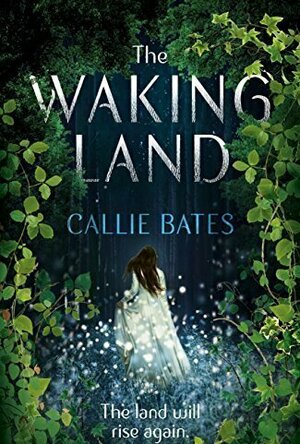
The blurb of this novel tells pretty much all the necessary information. Elanna was kept away from her parents for fourteen years, in a different country, with a different culture and different way of living. She always wanted to be a botanist, because she loved plants. She was accused of King’s murder, so the only chance she had was to run. While on the run, she finds out, that she has a great gift and she supposed to be the one, who leads her country to independence.
This book has a great variety of characters to choose from. I loved their bravery and strong personalities. My favourite ones were El and Jahan. I loved their kindness and all the adventures which they had together in this novel. El is a very confused young woman, who is trying to make the right choice, even though it breaks her heart. She is emotionally torn between two countries who are at war because she has ties with both of them, it is hard for her to make the decisions, and this whole process was very interesting to watch for me.
I liked the plot of this book, but I found some of the parts quite repetitive. There is quite a bit of action going on in this novel, so that was what kept me going. I liked the adventure parts of it, filled with some really lovely and subtle romance. I think that author used her love for music and nature really well in this novel, I loved the overall setting of this book. It has some sex and violence in this novel, but it is not overwhelming, and I am really great full to the author, for keeping this novel quite elegant, when it used to come to violence.
The writing style is pleasant to read, but I don’t understand, why fantasy books have such complicated names in them. For me, it makes these books more difficult to read and it doesn’t add any charm at all. The chapters were quite long, but they were divided into smaller chunks, so it was quite easy to read it. I really liked the ending of this book, I think it rounded up the story really nicely, and there will be a second part published this year, so I am quite curious to see what it has to offer. So, to conclude, I think this book has all the right attributes necessary for this type of novel, it has magic, brave heroine who is kind and sweet, political disputes and the right amount of romance. Please do give this book a try and I hope you will enjoy it 🙂
This book has a great variety of characters to choose from. I loved their bravery and strong personalities. My favourite ones were El and Jahan. I loved their kindness and all the adventures which they had together in this novel. El is a very confused young woman, who is trying to make the right choice, even though it breaks her heart. She is emotionally torn between two countries who are at war because she has ties with both of them, it is hard for her to make the decisions, and this whole process was very interesting to watch for me.
I liked the plot of this book, but I found some of the parts quite repetitive. There is quite a bit of action going on in this novel, so that was what kept me going. I liked the adventure parts of it, filled with some really lovely and subtle romance. I think that author used her love for music and nature really well in this novel, I loved the overall setting of this book. It has some sex and violence in this novel, but it is not overwhelming, and I am really great full to the author, for keeping this novel quite elegant, when it used to come to violence.
The writing style is pleasant to read, but I don’t understand, why fantasy books have such complicated names in them. For me, it makes these books more difficult to read and it doesn’t add any charm at all. The chapters were quite long, but they were divided into smaller chunks, so it was quite easy to read it. I really liked the ending of this book, I think it rounded up the story really nicely, and there will be a second part published this year, so I am quite curious to see what it has to offer. So, to conclude, I think this book has all the right attributes necessary for this type of novel, it has magic, brave heroine who is kind and sweet, political disputes and the right amount of romance. Please do give this book a try and I hope you will enjoy it 🙂
Kara Skinner (332 KP) rated Protector in Books
Jun 12, 2019
Girl Doesn’t Take Her Mate’s Crap in this YA Fantasy Romance Novel
Contains spoilers, click to show
Genre: Fantasy, YA
Word Count: 86,170
Average Goodreads Rating: 3.75 out of 5 stars
My rating: 3 out of 5 stars
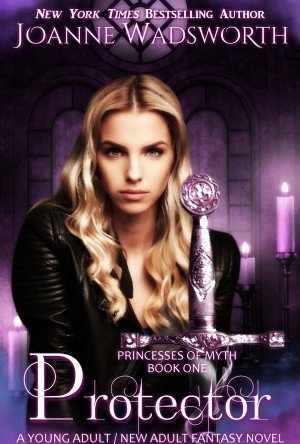
Faith thought she was a normal human girl. Then she turned 18 and started developing abilities. Around the same time, a mysterious girl named Belle showed up and explained to Faith that she was really a Halfling, who belonged to an alien planet. Not only that, but she had the powerful ability of Forewarning, a skill that was highly coveted, especially by the Loverias and the Wincrests, two rival royal families on the brink of going to war with each other. Things get even more complicated when Faith forms a mated bond with Prince Davio Loveria– right before finding out her long-absent father is Prince Alexo Wincrest, Davio’s sworn enemy.
Caught in an impending war on a foreign planet, Faith must think and learn fast to keep herself from becoming a political pawn while also keeping her family safe.
Faith is a fucking badass and I love her. She acts like a teenaged girl, with all the angst and drama that comes with it, but at the same times she’s smart, and she won’t take shit, especially not from Davio. I love how resourceful she is and how quickly she’s able to adapt to a foreign planet with different cultures and abilities. But at the same time, she’s not a Mary Sue. She does have issues with learning the culture and controlling her abilities. She also doesn’t deal well with having her world turned upside down but her reactions aren’t unrealistic and they make me love her that much more.
Davio, however, is a piece of shit. I knocked off a star just because he exists. He’s a pompous brat with less maturity and poise than a two-year-old. When he finally accepts that he’s mated to Faith, he shows his “love” by controlling her and ordering her around. He doesn’t let her be alone because she needs to be protected. He demands that she either be with him or one of his bodyguards at all time, effectively keeping her a prisoner. This is supposedly because she has Forewarning, which makes her likely to get kidnapped or killed. I would have an easier time believing that if she had ever gotten attacked in the book. But the only people who attack her are Davio’s own bodyguards. No one else gives a shit.
He also loves ordering her around. He’ll order her to get showered and dressed in two minutes. He also orders her to betray her father. Davio is actually shocked when Faith won’t give him intimate secrets about how to take down her father. He accuses her of being a traitor when she refuses to be part of any plan that will get her father killed or kidnapped.
Davio hates Faith’s father for being from the wrong country, he always thinks he’s right, and he’s controlling to boot. He’s basically teenaged Trump.
Davio is the biggest problem in the book. Almost everything else I enjoyed. I loved the world building and how the mated bond was portrayed. Even though Faith and Davio were connected through the bond and couldn’t be apart very long without feeling anxious and depressed, they weren’t brainwashed by it. They still didn’t trust or even love each other for most of the book and they could identify what feelings were real and what was from the bond. It’s rare when a book can have soulmates without having insta-love, but Protector pulled it off.
I’m still confused by Faith’s parents, however. Faith’s mother raised her by herself on Earth after getting abandoned by Alexo. But when he shows up eighteen years later and has a brief conversation with her, she’s completely willing to travel to a foreign planet, be banned from going back to Earth. She also needs to pretend to be his wife despite hating him for abandoning her. I honestly have no idea why but that might get explained in later books.
Word Count: 86,170
Average Goodreads Rating: 3.75 out of 5 stars
My rating: 3 out of 5 stars
Faith thought she was a normal human girl. Then she turned 18 and started developing abilities. Around the same time, a mysterious girl named Belle showed up and explained to Faith that she was really a Halfling, who belonged to an alien planet. Not only that, but she had the powerful ability of Forewarning, a skill that was highly coveted, especially by the Loverias and the Wincrests, two rival royal families on the brink of going to war with each other. Things get even more complicated when Faith forms a mated bond with Prince Davio Loveria– right before finding out her long-absent father is Prince Alexo Wincrest, Davio’s sworn enemy.
Caught in an impending war on a foreign planet, Faith must think and learn fast to keep herself from becoming a political pawn while also keeping her family safe.
Faith is a fucking badass and I love her. She acts like a teenaged girl, with all the angst and drama that comes with it, but at the same times she’s smart, and she won’t take shit, especially not from Davio. I love how resourceful she is and how quickly she’s able to adapt to a foreign planet with different cultures and abilities. But at the same time, she’s not a Mary Sue. She does have issues with learning the culture and controlling her abilities. She also doesn’t deal well with having her world turned upside down but her reactions aren’t unrealistic and they make me love her that much more.
Davio, however, is a piece of shit. I knocked off a star just because he exists. He’s a pompous brat with less maturity and poise than a two-year-old. When he finally accepts that he’s mated to Faith, he shows his “love” by controlling her and ordering her around. He doesn’t let her be alone because she needs to be protected. He demands that she either be with him or one of his bodyguards at all time, effectively keeping her a prisoner. This is supposedly because she has Forewarning, which makes her likely to get kidnapped or killed. I would have an easier time believing that if she had ever gotten attacked in the book. But the only people who attack her are Davio’s own bodyguards. No one else gives a shit.
He also loves ordering her around. He’ll order her to get showered and dressed in two minutes. He also orders her to betray her father. Davio is actually shocked when Faith won’t give him intimate secrets about how to take down her father. He accuses her of being a traitor when she refuses to be part of any plan that will get her father killed or kidnapped.
Davio hates Faith’s father for being from the wrong country, he always thinks he’s right, and he’s controlling to boot. He’s basically teenaged Trump.
Davio is the biggest problem in the book. Almost everything else I enjoyed. I loved the world building and how the mated bond was portrayed. Even though Faith and Davio were connected through the bond and couldn’t be apart very long without feeling anxious and depressed, they weren’t brainwashed by it. They still didn’t trust or even love each other for most of the book and they could identify what feelings were real and what was from the bond. It’s rare when a book can have soulmates without having insta-love, but Protector pulled it off.
I’m still confused by Faith’s parents, however. Faith’s mother raised her by herself on Earth after getting abandoned by Alexo. But when he shows up eighteen years later and has a brief conversation with her, she’s completely willing to travel to a foreign planet, be banned from going back to Earth. She also needs to pretend to be his wife despite hating him for abandoning her. I honestly have no idea why but that might get explained in later books.
Cynthia Armistead (17 KP) rated Blood Oath (Nathaniel Cade #1) in Books
Mar 1, 2018
Blood Oath is an interesting and fairly refreshing variation on the vampire riff. Most of the current tales give us a suave, sexy predator who mesmerizes his or her prey, leaving humans pining for their presence. They might even fall in love with a human. Nathaniel Cade, however, refers to humans as food, saying, "Would you have sex with a cow?" That makes much more sense to me. It's a good thing he isn't interested, either, as the typical reaction people have to encountering him is utter panic, often involving the loss of bladder control.
Cade is definitely a predator, though - an extremely effective one. Farnsworth attempts to explain his abilities scientifically, rather than mystically (I'd classify this book as science fiction if I had to choose a genre, whereas most books featuring vampires and similar creatures are fantasy or horror). The same is true of the enenies he faces.
While I'm not generally interested in socio-political thrillers (which is what this book was, other than a story about a vampire who works for the president), I did enjoy the fresh take on an old trope. While I normally groan when I see the first book from a new author billed as the beginning of a series (do publishers even buy single books any more?), I'm somewhat pleased this time. I do wish they'd been a little more careful with the name of the series (The President's Vampire), as there's another book with the same name: [b:The President's Vampire: Strange-but-True Tales of the United States of America|690096|The President's Vampire Strange-but-True Tales of the United States of America|Robert Damon Schneck|http://photo.goodreads.com/books/1177264074s/690096.jpg|676444] by [a:Robert Damon Schneck|368998|Robert Damon Schneck|http://www.goodreads.com/images/nophoto/nophoto-U-50x66.jpg]. Then again, if Farnsworth's book or series takes off, I suppose there's a chance that sales of Schneck's will as well. I'm sure he wouldn't complain about that at all. I've put it on my to-read list, after all.
I hope to talk my partner, Sam, into reading <i>Blood Oath</i>. If I do, it'll be fairly miraculous, as I don't recall him anything with dragons or werewolves in it other than ([a:Jim Butcher|10746|Jim Butcher|http://photo.goodreads.com/authors/1205261964p2/10746.jpg]'s Dresden Files) for most of the time that I've known him (12 years as of this writing). After his years at White Wolf, I think many books seem more than slightly derivative. He also did so much research before working on books he wrote for them (like [b:The Book of Nod|416122|The Book of Nod|Sam Chupp|http://photo.goodreads.com/books/1223664741s/416122.jpg|405290]) that he got a little burned out on certain subjects. Farnsworth's approach really is different enough that I think he might give it a chance. Will you?
Cade is definitely a predator, though - an extremely effective one. Farnsworth attempts to explain his abilities scientifically, rather than mystically (I'd classify this book as science fiction if I had to choose a genre, whereas most books featuring vampires and similar creatures are fantasy or horror). The same is true of the enenies he faces.
While I'm not generally interested in socio-political thrillers (which is what this book was, other than a story about a vampire who works for the president), I did enjoy the fresh take on an old trope. While I normally groan when I see the first book from a new author billed as the beginning of a series (do publishers even buy single books any more?), I'm somewhat pleased this time. I do wish they'd been a little more careful with the name of the series (The President's Vampire), as there's another book with the same name: [b:The President's Vampire: Strange-but-True Tales of the United States of America|690096|The President's Vampire Strange-but-True Tales of the United States of America|Robert Damon Schneck|http://photo.goodreads.com/books/1177264074s/690096.jpg|676444] by [a:Robert Damon Schneck|368998|Robert Damon Schneck|http://www.goodreads.com/images/nophoto/nophoto-U-50x66.jpg]. Then again, if Farnsworth's book or series takes off, I suppose there's a chance that sales of Schneck's will as well. I'm sure he wouldn't complain about that at all. I've put it on my to-read list, after all.
I hope to talk my partner, Sam, into reading <i>Blood Oath</i>. If I do, it'll be fairly miraculous, as I don't recall him anything with dragons or werewolves in it other than ([a:Jim Butcher|10746|Jim Butcher|http://photo.goodreads.com/authors/1205261964p2/10746.jpg]'s Dresden Files) for most of the time that I've known him (12 years as of this writing). After his years at White Wolf, I think many books seem more than slightly derivative. He also did so much research before working on books he wrote for them (like [b:The Book of Nod|416122|The Book of Nod|Sam Chupp|http://photo.goodreads.com/books/1223664741s/416122.jpg|405290]) that he got a little burned out on certain subjects. Farnsworth's approach really is different enough that I think he might give it a chance. Will you?
RAVENMARK: Scourge of Estellion
Games
App
50% OFF FOR WWDC! Experience the award-winning wargame, Ravenmark: Scourge of Estellion, where epic...
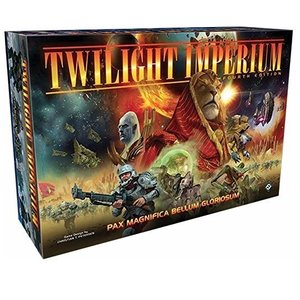
Twilight Imperium Fourth Edition
8.1 Rate It
Tabletop Game Watch
Twilight Imperium (Fourth Edition) is a game of galactic conquest in which three to six players take...
Sophia (Bookwyrming Thoughts) (530 KP) rated Siege and Storm in Books
Jan 23, 2020
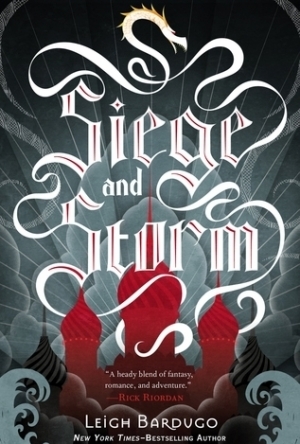
I have completely mixed feelings about Leigh Bardugo's <i>Shadow and Bone trilogy.</i> So mixed, I was scared of reading <i>Siege and Storm</i>, despite the fact the librarian pretty much promised the entire series gets better by the book.
The second book in the <i>Grisha Trilogy</i> is certainly better than <i><a href="https://bookwyrmingthoughts.com/review-shadow-and-bone-by-leigh-bardugo/"; target="_blank" rel="noopener">Shadow and Bone</a></i> – whereas Alina Starkov (aka Sun Summoner) was overly mopey for a good part of the first book (to the point where I started calling her Mopey), Alina is less mopey this time around. A fantastic turnaround, because I don't think I can handle Starkov being mopey for two books. Instead, our fabulous Sun Summoner "Saint" is a little more... overconfident. Spunky (but that's what I've always like about Alina). And definitely in control of the situation, even if it's not in her favor and there are unpleasant rumors about her floating among the Grisha and everyone else.
But even though Alina is in control of the situation for the most part, there's somehow not a love triangle, but a love <i>square</i> surrounding Saint Sun Summoner.
Boy #1 (Mal): My least favorite corner, Mal wasn't a terrible character back in <i>Shadow and Bone</i> – I actually liked Mal a little. I particularly liked his interactions and dialogue with Alina. In the sequel though... he turns into Adrian Ivashkov 1.0 (HOPEFULLY 1.0).
Boy #2 (Darkling): I shipped Alina and the Darkling back in book one... until the end. The Darkling doesn't grace us readers in <i>Siege and Storm</i> as much as he does in <i>Shadow and Bone,</i> but he's really just that one desperate dude with the way he constantly tells Alina that there's no else like them and that they "belong together."
Boy #3 (Nikolai): My third least favorite corner (aka my favorite corner), despite the fact Nikolai is probably going to end up as one of my favorite characters in the entire trilogy after I read <i>Ruin and Rising</i>. Nikolai's two things: arrogant and adorable. Arrogant because seeing as he's royalty, he'll obviously have a big head of sorts (but not too big). Adorable because of his conversations and dialogue with Alina – I pretty much ship them... even if Nikolai probably likes her for political purposes.
The world building, as it was in the first, is spectacular – Imperial Russia spectacularized into fantasy. The concept is phenomenal and a fantastic pitch – even though I have mixed feelings about the entire series altogether, the <i>Grisha Trilogy</i> definitely deserves the hype and praise.
The trilogy so far is essentially Alina running, getting caught, and running again (with attacks and whatnot in between) – if that's the case for the first and second book, I'm definitely scared of reading the last book now. It could go extremely ugly – down the rabbit hole – or extremely well – mind = blown.
<a href="https://bookwyrmingthoughts.com/review-siege-and-storm-by-leigh-bardugo/"; target="_blank">This review was originally posted on Bookwyrming Thoughts</a>
The second book in the <i>Grisha Trilogy</i> is certainly better than <i><a href="https://bookwyrmingthoughts.com/review-shadow-and-bone-by-leigh-bardugo/"; target="_blank" rel="noopener">Shadow and Bone</a></i> – whereas Alina Starkov (aka Sun Summoner) was overly mopey for a good part of the first book (to the point where I started calling her Mopey), Alina is less mopey this time around. A fantastic turnaround, because I don't think I can handle Starkov being mopey for two books. Instead, our fabulous Sun Summoner "Saint" is a little more... overconfident. Spunky (but that's what I've always like about Alina). And definitely in control of the situation, even if it's not in her favor and there are unpleasant rumors about her floating among the Grisha and everyone else.
But even though Alina is in control of the situation for the most part, there's somehow not a love triangle, but a love <i>square</i> surrounding Saint Sun Summoner.
Boy #1 (Mal): My least favorite corner, Mal wasn't a terrible character back in <i>Shadow and Bone</i> – I actually liked Mal a little. I particularly liked his interactions and dialogue with Alina. In the sequel though... he turns into Adrian Ivashkov 1.0 (HOPEFULLY 1.0).
Boy #2 (Darkling): I shipped Alina and the Darkling back in book one... until the end. The Darkling doesn't grace us readers in <i>Siege and Storm</i> as much as he does in <i>Shadow and Bone,</i> but he's really just that one desperate dude with the way he constantly tells Alina that there's no else like them and that they "belong together."
Boy #3 (Nikolai): My third least favorite corner (aka my favorite corner), despite the fact Nikolai is probably going to end up as one of my favorite characters in the entire trilogy after I read <i>Ruin and Rising</i>. Nikolai's two things: arrogant and adorable. Arrogant because seeing as he's royalty, he'll obviously have a big head of sorts (but not too big). Adorable because of his conversations and dialogue with Alina – I pretty much ship them... even if Nikolai probably likes her for political purposes.
The world building, as it was in the first, is spectacular – Imperial Russia spectacularized into fantasy. The concept is phenomenal and a fantastic pitch – even though I have mixed feelings about the entire series altogether, the <i>Grisha Trilogy</i> definitely deserves the hype and praise.
The trilogy so far is essentially Alina running, getting caught, and running again (with attacks and whatnot in between) – if that's the case for the first and second book, I'm definitely scared of reading the last book now. It could go extremely ugly – down the rabbit hole – or extremely well – mind = blown.
<a href="https://bookwyrmingthoughts.com/review-siege-and-storm-by-leigh-bardugo/"; target="_blank">This review was originally posted on Bookwyrming Thoughts</a>
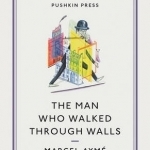
The Man Who Walked Through Walls
Marcel Ayme, Sophie Lewis and Yann Kebbi
Book
A collection of funny and fantastical short stories, Marcel Ayme's The Man Who Walked through Walls...