
Kalila and Dimna: (From the Panchatantra, Jatakas, Bidpai, Kalilah and Dimnah and Lights of Canopus): v. 2: Fables of Conflict and Intrigue
Michael Wood, Ramsay Wood and Gillian Whitworth
Book
Kalila and Dimna or The Panchatantra (also known in Europe since 1483 as The Fables of Bidpai) is a...
A Winter's Promise
Book
Lose yourself in the fantastic world of the arks and in the company of unforgettable characters in...

Innocent Traitor
7.0 Rate It
Book
I am now a condemned traitor . . . I am to die when I have hardly begun to live. Historical...
Merissa (14152 KP) rated The Pig Wars in Books
Jan 18, 2022
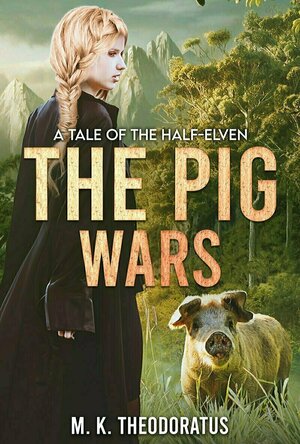

As the title suggests, the whole book is about the two of them fighting over pigs. Renna is supposed to be the smart, strong, and silent type, but she is not quiet in her mind. There is always a monologue going on, usually about how upset she is because someone is riding roughshod over her, even though she makes no attempt to stand up for herself (apart from in her mind.) Gorsfeld has his fair share of monologues too, so I guess that's fair. Renna's character didn't do much for me. In fact, most of them didn't. There is a lot going on and her friends leave a lot to be desired. Because of some of the rants and situations, it makes me question if I have missed another story in this world. I felt as though I had dropped into a world already established where intrigue and political gains had already been explained.
There were some grammatical errors in the story, not enough to disrupt the flow, but enough so you notice. There is a hint of romance at the end, leading you to believe there might be another book in the making. This was a different book that I did enjoy, but I'm not sure I will be continuing if another story does come out.
** same worded review will appear elsewhere **
* A copy of this book was provided to me with no requirements for a review. I voluntarily read this book, and the comments here are my honest opinion. *
Merissa
Archaeolibrarian - I Dig Good Books!

Gareth von Kallenbach (980 KP) rated Lincoln (2012) in Movies
Aug 7, 2019
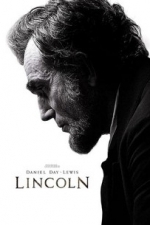

Daniel Day Lewis, a man revered for his choice of films and roles, as well as his ability to portray characters with so much emotion and conviction, has done it once again. As the title character for this film, Lewis portrays one of the U.S.A’s greatest leaders and pioneers in a way that few other men could. Surrounded by some of the best actors in Hollywood (including Tommy Lee Jones), this star-studded film has a laundry list of very recognizable faces from all corners of Hollywood. The red carpet was clearly rolled out for this film.
The story starts amid the death and destruction of the American Civil War, an event that is both a fixed point of the story and a constant backdrop. Seeing the fighting and killing made me wonder how gritty this movie would get, but as it turns out, they kept the level of gore pretty low.
The film goes on to set the stage for the final footsteps into the southern theater that was the Civil War. In tandem, it follows the highly controversial 13th amendment, which was barely passed at the time due to racism and the belief that one color of human should be slave to another color. The absurdity of this notion is highlighted, but it’s also familiar in the way it parallels issues we face today: legalizing pot, gay marriage, prostitution, the right to bear arms, etc. Perhaps our grandchildren will watch a film in the future about these struggles, and regard it as we do a film about the Civil War. As I sat and watched this movie, I was nearly in tears at the thought of how African-Americans were once regarded as lesser beings. Will our grandchildren cry at the ridiculousness of our beliefs?
The cinematography was amazingly crisp. Many of the characters are introduced in such a way that they have a grand entrance through the mystique created by camera angles. I have to truly applaud Spielberg for what might be his best film yet. The camera work was immensely effective, relying heavily on the contrast between shadow and light. Coupled with richly detailed sets, it made everything staggeringly realistic, and absolutely convincing.
I will say this for Lincoln: I haven’t been so moved and taken aback by a period film in my life. This is a must see for everyone.
The dialog is highly political, and sometimes goes along at quite a clip; be prepared to miss a few things the first time around. However, watching it a second time surely won’t be a sin. The humor alone merits a second viewing. There are many good laughs to be had.
Lincoln is a work of art.
Gareth von Kallenbach (980 KP) rated Syriana (2005) in Movies
Aug 14, 2019
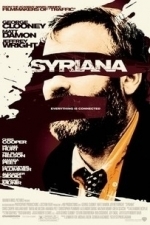

It is a tenuous situation where buyer and seller are wary of one another and at times regard the other as a necessary evil. The money paid for the oil has made suppliers and handlers rich and powerful, but many on the outside of this privileged circle believe that greed has caused both sides to lose focus on what is most important for the people of their nations.
In the film Syriana viewers follow the paths of different people from various walks of life who for the most part do not know one another, yet are all linked by the same cause, oil.
There is the C.I.A. agent Bob Barnes (George Clooney), who spends time in locales such as Iran and Beirut eliminating threats to national security.
A lawyer, (Jeffrey Wright), who is caught in the middle as he attempts to find, and if need be eliminate damaging material that can prevent a pending merger between two oil companies.
There is the grieving energy analyst Bryan Woodman (Matt Damon), who deals with his loss by siding up with a powerful Prince, (Alexander Siddig), even at the alienation of his family.
There is also a displaced Pakistani worker who after losing his job when a Chinese company acquires the refinery where he worked, falls in with a group of radicals with a militant agenda.
The above is just a small sampling of the characters as there are numerous business, political, and Middle Eastern citizens who all play very prominent parts in the story.
The main focus of the film is not only to illustrate the connectivity between the characters but to show how politics and big business influence policy in oil rich nations and how through secret deals, political intrigue, and treachery policy in and towards the same oil producing nations are set into place and maintained.
While this is not much of a shock to people who follow the news, it is the way that director Stephen Gaghan uses ordinary and in some ways unremarkable people to tell the story and how it affects those who deal with oil.
Even those who are supposed the big players are often simply being played by forces outside their control in a world where reality and perceptions are often miles apart. The complex nature of the story is actually a model of simplicity as cause and effect, as well as the ability of big business to influence lawmakers is what drives the film.
The cast is strong especially Clooney and Siddig who make their characters sympathetic while at the same time captivating. The contrast of the men who are a Prince and an agent, yet whose destinies often cause them to walk along the same paths is amazing.
Syriana is an amazing film that is so complex in its simplicity. The basic message is very clear, yet the layers that must be uncovered like a tangled web of lies in telling the story is a far reaching journey that will shock and anger most viewers.
Some may find fault with a so called liberal agenda to the film, but politics aside, Syriana is a very captivating and entertaining film that makes you think.
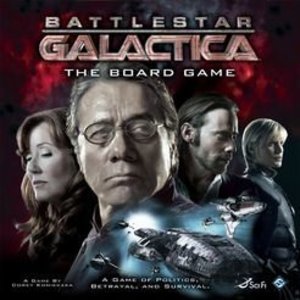
Battlestar Galactica: The Board Game
8.0 Rate It
Tabletop Game
Battlestar Galactica: The Board Game is an exciting game of mistrust, intrigue, and the struggle for...

Ross (3284 KP) rated The Siege of Abythos in Books
Nov 7, 2017
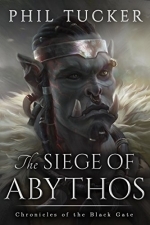
Tharok's attempts to unite the orc-like kragh tribes and invade the human world continue, meanwhile Lady Iskra seeks to rescue her son and take revenge on the Ascendant's empire.
This book covers a lot more political debate and intrigue than the previous two, with prolonged discussion of who should be invaded, and what should be done thereafter. While this is very much a necessity in such an epic tale I felt it was somewhat laboured at times.
I very nearly gave up on this book at one point - where the portly magister Audsley (who has three demons lurking in his soul) was seeking to inveigle his way into the upper echelons of the empire, most of this storytelling centred around the colour of robes to wear, the type and colour of paper to use in sending letters and reciting poetry. Again this was very much laboured but bearable, until it looked like we were heading for what can only be described as a poetry battle, where Audsley (coached by one of his demons) was set to take on a senior government official's poetry representative in a battle of wits to see how would curry favour in the empire.
That's right: a poetry battle.
Think Philip Larkin in 8 Mile.
Will the real Slim Shakespeare please stand up.
Kanye Wordsworth.
NWA (Novelists with Assonance)
At this point I very nearly gave up. Thankfully, so did Audsley and the contest ended abruptly as he refused to let his demon take control of him. Phew. Disaster avoided. If this had been allowed to continue it would have made Tom Bombadil look like a critical plot point.
Other than Audsley's chapters (which in the previous book had been a highlight) the book does roll along at a reasonable pace and there is just about enough action to keep the interest, particularly in the last 100 or so pages.
All in all, a good read and a turning point for the series as a whole, but a lot of nonsense could have been removed, (Edgar Allan) Poe Shizzle.

Acanthea Grimscythe (300 KP) rated The Cutaway in Books
May 16, 2018
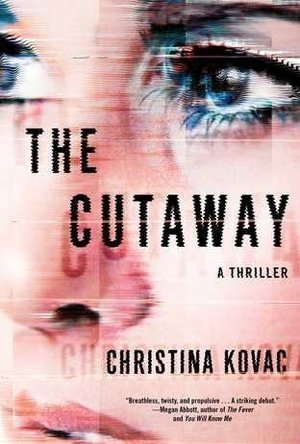


The Cutaway is supposed to focus on Virginia Knightly's efforts of getting the scoop on a missing person. En route to tracking down the perpetrator, readers encounter the typical sort of motives: affairs, money, political intrigue. It's a pretty standard plot when it comes to suspense novels. The twists are predictable and the story remains dreadfully slow until the final twenty to thirty percent.
For the most part, the characters of The Cutaway are painfully flat. Most of the male characters, with the exception of the News Director, are handsome with exceptionally whiny personalities. The News Director, Mellay, is a stereotypical angry boss sort who only cares about his own pockets. Even worse, the female characters are all Mary Sues. Sure, they have their own troubling pasts, but for as much suffering as they went through in their childhoods, the effect it has had on their adulthood is fairly minor. All of the women are drop dead gorgeous, not counting one of the witnesses. Ugh - that's all I can really say about that.
It's also clear from reading the novel that Kovac's most familiar with the reporting side of an investigation, which is to be expected from someone who has spent much of their time in the same career as the main character. Unfortunately, it also lends a bit of blandness to the story telling.
Overall, The Cutaway was an extremely painful read. Many times I considered dropping it: I could not get into the characters and I feel that the novel is more suited to the romance genre. There are several questions left unanswered and parts of it feel either rushed or as if Kovac is simply grasping at straws.
I would like to thank Atria Publishing, the author, and NetGalley for providing me with a copy for review.

Rachel King (13 KP) rated The Bronze and the Brimstone in Books
Feb 11, 2019
Early in the book, Hansum is separated from his friends, but not before he manages to marry Guillietta in secret. What bugs me about this is how Guillietta's father still treats him like a child, even though he is certainly entitled to be treated as an adult by this time. Hansum exhibits a certain level of maturity that few seem to recognize or respect. Once Hansum is moved to a private estate, his story exchanges with the rest of his friends in alternating sections.
The drama that occurs between Shamira and the artist is quite transparent to me. I am not sure if the author intended for the reader to discern the artist's true intentions so easily, but the artist's lack of talent combined with obvious lies and an obsessive interest in the lookers made it apparent what he was really about. I can only feel sorry for Shamira in her first foray into the realm of romance.
Hansum does well at creatively avoiding an engagement to Lady Beatrice, but I had to wonder how long he would be successful at this. With Hansum's almost constant protectiveness over the genie, Pan, I also wondered how long he would really be able to keep up the ruse.
With a greater focus on the technological advancements that Hansum is introducing, and less of a focus on the relationship-building of the first book in the series, this book was better written and a more enjoyable read for me. The author's evident strengths lie in his knowledge of the technology used in the series and the history of 14th-century Verona, so when those are brought to the forefront, the writing is quite intriguing. I still feel that the author is trying to do too much with this novel and trying to appeal to a too-large audience with everything from romance, history, suspense, political intrigue, and technology, to numerous science fiction themes, but it is better written than the first book in the series.