
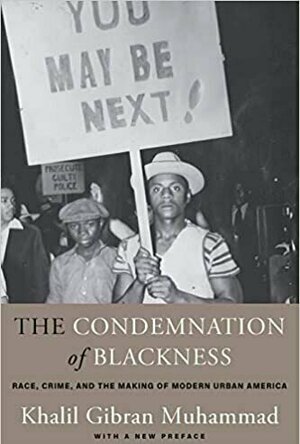
The Condemnation of Blackness: Race, Crime, and the Making of Modern Urban America
Book
Winner of the John Hope Franklin Prize A Moyers & Company Best Book of the Year “A brilliant work...
The Jesus Man
8.0 Rate It
Book
It is 2037. Radicals in the Middle East have done the unthinkable. Low-yield nuclear weapons have...

ClareR (6256 KP) rated Hard By A Great Forest in Books
Mar 10, 2024
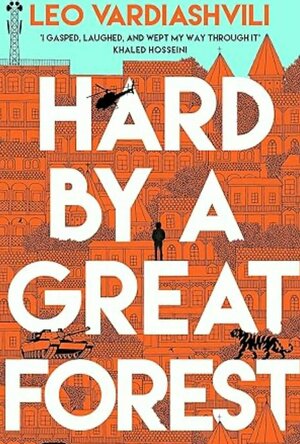

Saba, his brother and father escaped the conflict in post-Communist Georgia when he was a child, leaving behind their mother because they couldn’t afford the bribes. Saba’s father never recovers from having to leave her behind, and when things in Georgia start to settle down more, he returns there. However he goes missing, Saba’s brother goes to look for him and he goes missing too. So Saba goes to look for them both.
Saba’s head is full of the voices of his past, people who are no longer living and stories that his mother used to tell him. His brother leaves Saba a paper trail of clues, including the play that their father wrote, and parts of fairy stories and Shakespeare quotations from their childhood.
This is an emotional novel. There’s the constant feeling of being watched, danger is around every corner. The police are corrupt, and you don’t know if friends are really friends or working for the police.
Saba’s journey is both cathartic and dangerous. It takes him and his friend into the danger zone through a military blockade. It was so tense. Throughout, Saba has to deal with the trauma of his childhood and it’s impact on his adult life. He may have survived the war, but will he survive the trauma and the quest to find his father?
I loved this. I was rooting for Saba throughout, and I feel that I learnt a lot about what has happened in Georgia (considering I knew nothing beforehand). It’s wonderful book.


Hazel (1853 KP) rated The Storyteller in Books
Dec 7, 2018


Jodi Picoult is the bestselling author of numerous novels, with <i>My Sister’s Keeper</i> being the most well known, perhaps. All of her stories are well written although it is still possible to notice improvements in the writing over the years right up until now with her latest, <i>The Storyteller</i>, which quite possibly could be her best yet.
Arguably, <i>The Storyteller</i> does not quite read as a Jodi Picoult novel is known to. This is, in part, because of the nature of the story. Most of her previous books deal with medical ethics and/or court cases, whereas this story contains neither. <i>The Storyteller</i> contains a combination of past and present - the main focus being on the Holocaust.
Four people narrate the novel: two in the present day and two giving an account of their experience during the Second World War. It begins with Sage Singer, a 25 year old, hermit-like woman with a disfiguring facial scar – the result of a terrible accident, one that also led to the death of her mother. For the past three years Sage has been participating in a grief group – a place where people who have lost loved ones can come together and talk about their feelings. After three years surely Sage would no longer need the help of the group? However she still attends, not because she finds it helpful, but for the opposite reason. She even says herself: “If it were helpful I wouldn’t still be coming.” It unfolds that she still blames herself for her mother’s death despite the reassurances that it was an accident and not her fault.
It is through the grief group that Sage meets an elderly man, Josef Weber. After becoming friendly and discovering that Sage comes from a Jewish family, Josef confesses to something terrible – he was a Nazi during the war. He killed people. He wants Sage to represent all the Jews he killed and forgive him. Then he wants her to help him die.
Whilst, Josef recounts his experience of being part of the Nazi party, another account is also given. Minka, Sage’s grandmother, describes the terrors she faced as an imprisoned Jew suffering fates such as the deaths of all her family and friends and her time in Auschwitz. Another element to the novel is the vampire story Minka wrote as a teenager. This is interspersed between the other chapters of the book. Unwittingly, Minka’s fictional tale reflects the alienation and destruction of the Jews. The final character is Leo who, like Sage, is narrating the present day, and trying to locate ex-Nazi members in order for them to be punished by the government.
One thing to praise Picoult for, not just in <i>The Storyteller</i>, but also in all her novels is the amount of in-depth research she undertakes to make her stories as accurate as possible even though they are fictional. Minka’s account was written is such a way that it was almost believable that Picoult had been there and experienced it herself. She even learnt to bake bread so that she could write from the point of view of a baker. This is pure dedication!
<i>The Storyteller</i> is an amazing, beautiful book, which is not purely an enjoyable read. It informs, shocks and stays with you for a long time. You will question your own morals and ability to forgive. Is anyone entirely evil? Is anyone entirely good? Perhaps we are both, so why should anyone have the right to treat others as inferior from themselves?
Disposable Futures: The Seduction of Violence in the Age of Spectacle
Brad Evans and Henry A. Giroux
Book
"This is a must-read book for anyone ready to transcend fear and imagine a new reality."--Tikkun...

Harold Curwen and Oliver Simon: Curwen Press - Design
Peyton Skipwith and Brian Webb
Book
The finest books produced during the quarter century prior to the outbreak of the Great War were...
Into the Black: The Electrifying True Story of How the First Flight of the Space Shuttle Nearly Ended in Disaster
Book
On 12th April 1981 a revolutionary new spacecraft blasted off from Florida on her maiden flight....
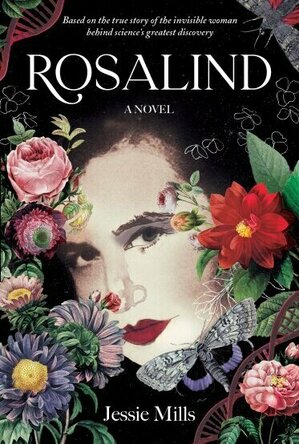
Rosalind: DNA's Invisible Woman
Book
Rosalind: DNA’s Invisible Woman tells the true story of the woman who discovered the structure of...
Historical Fiction Narrative Non Fiction

Ryan Hill (152 KP) rated The Last Samurai (2003) in Movies
Jun 23, 2019
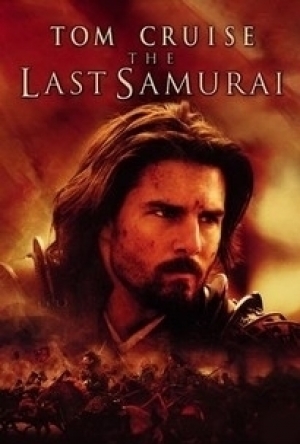

In the role of Algren, Cruise begins a dejected man living out of a bottle, bereft of purpose & suffering post-Civil War nightmares of a man touted as a hero despite feeling the guilt of slaughtering Indians crushed under the might of a military machine; in that sense, The Last Samurai is very anti-war in its message, John Logan's story painting the Americans and specifically the Imperialist Japanese not in the greatest light. Cruise takes Algren on a traditional voyage of discovery, first pitted against the samurai code & eventually becoming consumed by it, consumed by the similarity of the way of the warrior between both cultures - and Ken Watanabe's dignified samurai 'rebel' Katsumoto learns from him, as well as the other way around, with Cruise remaining stoic & only getting flashes of a chance to display the usual Cruise charm, but that's OK - Algren isn't the kind of character to benefit from that, Cruise's natural magnetism is enough here. Wit is provided thankfully through, albeit briefly, Billy Connolly as a tough old Irish veteran & chiefly Timothy Spall as our portly 'narrator' of sorts, who serves to help mythologise Algren & the legend itself. Zwick is most concerned with that, you see, the idea of legends and how men become them, exploring that concept alongside digging into the cultural rituals and practises of a changing Japan.
Algren's story is placed at a time when the old ways of Japan were shifting, under the pressures of global politics & business; the Emperor here is a naive young man, sitting on an empty throne, looking to Watanabe for validation as his advisor's push to quash a rebellion fighting to preserve the old ways, preserve Japanese interests as America knocks on the door. That's why Cruise's role here is so interesting, his character learning of the samurai code & helping those around him remember their history, and Zwick explores well the concept of national identity alongside personal ideas of myth, legend & destiny. It all boils together in a careful script, never overblown, which neatly develops the relationships involved & helps you fully believe Algren's transformation into the eponymous 'last samurai'. Along the way, Zwick doesn't forget theatrics - staging plenty of well staged & intense fight scenes which utilise the strong Japanese production design, before building to a quite epic war climax with army pitted against army, with personal stakes cutting through it, backed up indeed by another superlative score by Hans Zimmer. It becomes more than just a historical swords & armour film, reaching deeper on several levels.
What could have been a slow paced, potentially ponderous movie is avoided well by Edward Zwick, who with The Last Samurai delivers one of the stronger historical adventure epics of recent years. Beautifully shot in many places, with some excellent cinematography & production standards, not to mention an impressive script well acted in particular by Tom Cruise & Ken Watanabe, Zwick creates a recognisably Hollywood picture but for once a movie that doesn't dumb down, doesn't pander and ultimately serves as an often involving, often damn well made story. Especially one to check out if you love the way of the samurai.