
Search
LeftSideCut (3776 KP) rated X-Men: Dark Phoenix (2019) in Movies
Dec 2, 2019 (Updated Jan 13, 2020)
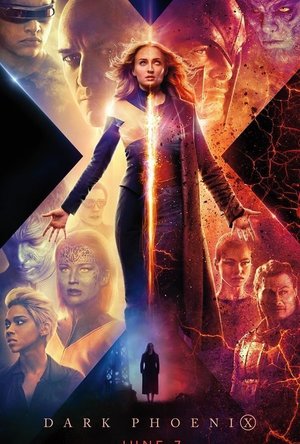


With the (eventually true) whispers about the Disney-Fox merger doing the rounds around Dark Phoenix's release, it arrived to little fanfare. Most people had already written off as a pointless film, and it was a prime target for negativity. So much so, that it was actually the first and only X-Men film I ended up missing in the cinema.
I recently watched it on home release, really not expecting much. After the swing-and-a-miss of Apocalypse, I wasn't feeling too invested in the characters.
So imagine my surprise when I remained glued to the screen for most of the runtime.
Dark Phoenix isn't perfect by any means, and far from the lofty heights of the top tier X-Men movies, buts it no where near as awful as I had heard.
I thought the story was actually ok. I was glad that it partially took place in space, like the original comic, and unlike The Last Stand.
Michael Fassbender and James McAvoy are fantastic as they usually are, as is Nicholas Hoult. I also thing Jennifer Lawrence I makes a good Mystique, even though I'm still not a massive fan of this franchises portrayal of her character.
Ty Sheridan and Sophie Turner are given more to do this time around, and are both fine. It's a shame that Evan Peters' Quicksilver is sidelined for this particular adventure.
There are some genuinely powerful emotional beats throughout the film, and it's clear as day that all the actors involved care about their characters, and are having fun.
My main criticism is predictably the villains. The D'bari are a fairly uninspired choice for such a big storyline, and they look like generic CGI aliens. I found Jessica Chastain quite wooden and uninteresting, and they made for a very underwhelming force if evil.
The main focus of Dark Phoenix is of course in Jean Grey's turn to the dark side, so vanilla bad guys shouldn't really be that important anyway.
Dark Phoenix does a slightly better job than The Last Stand of adapting this beloved storyline, but so can't help but feel that it would benefit from multiple movies, instead of cramming into one feature, a I really hope that's something that happens going into the MCU with these characters.
We still have New Mutants to go (if it ever actually comes out) but as a last main entry into the FOX X-Men franchise, you could do a lot worse. It's not the best, it's not the worst. Dark Phoenix sits somewhere quite comfortably in the middle.
Dare I say, I think it might actually be better than the first film...
I recently watched it on home release, really not expecting much. After the swing-and-a-miss of Apocalypse, I wasn't feeling too invested in the characters.
So imagine my surprise when I remained glued to the screen for most of the runtime.
Dark Phoenix isn't perfect by any means, and far from the lofty heights of the top tier X-Men movies, buts it no where near as awful as I had heard.
I thought the story was actually ok. I was glad that it partially took place in space, like the original comic, and unlike The Last Stand.
Michael Fassbender and James McAvoy are fantastic as they usually are, as is Nicholas Hoult. I also thing Jennifer Lawrence I makes a good Mystique, even though I'm still not a massive fan of this franchises portrayal of her character.
Ty Sheridan and Sophie Turner are given more to do this time around, and are both fine. It's a shame that Evan Peters' Quicksilver is sidelined for this particular adventure.
There are some genuinely powerful emotional beats throughout the film, and it's clear as day that all the actors involved care about their characters, and are having fun.
My main criticism is predictably the villains. The D'bari are a fairly uninspired choice for such a big storyline, and they look like generic CGI aliens. I found Jessica Chastain quite wooden and uninteresting, and they made for a very underwhelming force if evil.
The main focus of Dark Phoenix is of course in Jean Grey's turn to the dark side, so vanilla bad guys shouldn't really be that important anyway.
Dark Phoenix does a slightly better job than The Last Stand of adapting this beloved storyline, but so can't help but feel that it would benefit from multiple movies, instead of cramming into one feature, a I really hope that's something that happens going into the MCU with these characters.
We still have New Mutants to go (if it ever actually comes out) but as a last main entry into the FOX X-Men franchise, you could do a lot worse. It's not the best, it's not the worst. Dark Phoenix sits somewhere quite comfortably in the middle.
Dare I say, I think it might actually be better than the first film...

Phillip McSween (751 KP) rated Guardians of the Galaxy (2014) in Movies
Jan 9, 2020


Epic Indeed
In Guardians of the Galaxy, a group of unlikely heroes for a team to keep a powerful weapon out of the hands of a madman.
Acting: 10
Beginning: 10
Characters: 10
The team is perfect and there’s no disputing it. They’re led by Peter Quill (Chris Pratt) who goes by the name of Starlord. He’s a self-loving womanizer who’s got comebacks for days. He falls in love with Gamora (Zoe Saldana), a green alien badass who is the daughter of a tyrant. Out of the five of them, my personal favorite is Groot (Vin Diesel), a tree being who only says, “I am Groot” yet his good friend Rocket Raccoon (weapons expert and maniac) seems to be the only one that understands the true context of his words. And I could do two more paragraphs on Drax (Dave Bautista) alone. You can’t help but love this team.
Beyond these characters, the movie really excels by bringing in a number of memorable characters that have smaller roles. Ronin (Lee Pace) the villain is a fun bad guy you definitely respect. Meanwhile, the mohawked Yondu is on the hunt for Starlord. Yondu (Michael Rooker) carries around a cool weapon that responds to his whistling. These characters are not only endearing, but experience growth throughout the movie.
Cinematography/Visuals: 10
Conflict: 10
The first ten minutes takes you on sheer adventure and it never lets up from there. The stakes are high (they’re guarding the galaxy for God’s sake!) and the villain is a legit threat. There are space chases, prison breakouts, and more that will keep you entertained for the duration of the movie.
Entertainment Value: 10
Memorability: 10
It’s rare that I clap, laugh, and tear up all in the same movie. I lost count of the number of scenes that could be considered all-time greats in the Marvel Cinematic Universe. I love that the movie dives into finding family int the most unlikely of places.
Pace: 10
Hard to believe the movie was over two hours when I checked the run time. It runs so smoothly and quickly. When it’s over, you feel like you’ve been on a massive adventure in a short amount of time.
Plot: 10
There were a number of places throughout the movie where an average story could have lost its way. Guardians of the Galaxy never misses a beat. It connects all of its dots while reaching out to the extended universe at the same time.
Resolution: 10
Groot…I love you. That’s all I will say.
Overall: 100
Endless adventure. Funny for days. Touching moments. A budding romance. Guardians of the Galaxy is why I love movies.
Acting: 10
Beginning: 10
Characters: 10
The team is perfect and there’s no disputing it. They’re led by Peter Quill (Chris Pratt) who goes by the name of Starlord. He’s a self-loving womanizer who’s got comebacks for days. He falls in love with Gamora (Zoe Saldana), a green alien badass who is the daughter of a tyrant. Out of the five of them, my personal favorite is Groot (Vin Diesel), a tree being who only says, “I am Groot” yet his good friend Rocket Raccoon (weapons expert and maniac) seems to be the only one that understands the true context of his words. And I could do two more paragraphs on Drax (Dave Bautista) alone. You can’t help but love this team.
Beyond these characters, the movie really excels by bringing in a number of memorable characters that have smaller roles. Ronin (Lee Pace) the villain is a fun bad guy you definitely respect. Meanwhile, the mohawked Yondu is on the hunt for Starlord. Yondu (Michael Rooker) carries around a cool weapon that responds to his whistling. These characters are not only endearing, but experience growth throughout the movie.
Cinematography/Visuals: 10
Conflict: 10
The first ten minutes takes you on sheer adventure and it never lets up from there. The stakes are high (they’re guarding the galaxy for God’s sake!) and the villain is a legit threat. There are space chases, prison breakouts, and more that will keep you entertained for the duration of the movie.
Entertainment Value: 10
Memorability: 10
It’s rare that I clap, laugh, and tear up all in the same movie. I lost count of the number of scenes that could be considered all-time greats in the Marvel Cinematic Universe. I love that the movie dives into finding family int the most unlikely of places.
Pace: 10
Hard to believe the movie was over two hours when I checked the run time. It runs so smoothly and quickly. When it’s over, you feel like you’ve been on a massive adventure in a short amount of time.
Plot: 10
There were a number of places throughout the movie where an average story could have lost its way. Guardians of the Galaxy never misses a beat. It connects all of its dots while reaching out to the extended universe at the same time.
Resolution: 10
Groot…I love you. That’s all I will say.
Overall: 100
Endless adventure. Funny for days. Touching moments. A budding romance. Guardians of the Galaxy is why I love movies.

BookInspector (124 KP) rated We Were the Salt of the Sea in Books
Sep 24, 2020
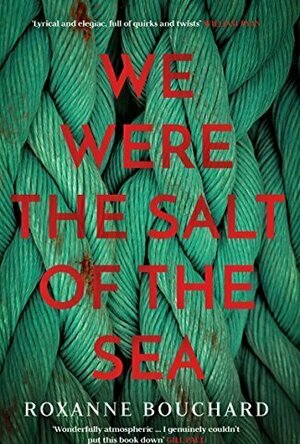
Ode to the sea, that would describe this book the best, I think. This novel could make even the coldest heart to fall in love with this powerful God’s creation. 🙂
Catherine was looking for her biological mother, and one day she found her, but she was dead. There were so many unanswered questions left, and Catherine was trying to find out, who her mother really was. The characters chosen for this novel were incredibly complex. Their thoughts and feelings filled this book with different states of mind and different perspectives. All the characters had their own unique personality, and sometimes, they were really mysterious to me. I needed quite a bit of time to analyze them. I didn’t have a particularly favourite character in this book, I think they all had their pros and cons, making them all very believable and realistic.
The narrative of this novel was very smartly written, drop feeding the reader with the investigation’s findings, and opening the characters bit by bit. It was quite a slow burner for me, and I really missed some good twists and turns, but I think this novel concentrates more on the character’s feelings and their search of true selves, rather than trying to solve the crime. I really liked the setting and atmosphere of this novel, and the whole plot was soaked with sea love. The author has a passion for sailing, and you can truly feel her love for the sea when she explains the bond, which sea brings out in sailors. Authors expertise shines not only through the sea love but also through knowledge of boats and fishermen’s routines.
The writing style of this novel was very beautiful and incredibly poetic. The chapters had pretty decent length and didn’t leave me bored. The language of this book has quite a lot of sailing terms and is filled with French charm, so I had to look up some of the terms, which sounded alien to me. 🙂 I did like the ending of this book, I think it rounded the story quite well, however, this book makes your brain work, and even though there is a clue of who Catherine’s father is, I still couldn’t figure it out. (I am too lazy 😀 ) So, if you read this book, please let me know in the comment section down below 😉
So, to conclude, if you like sea, boats and a little bit of crime, filled with charming prose and unique characters, then this book is definitely for you. Summer season is just around the corner, so don’t forget a copy of this book, while enjoying that drink on the beach 😉
Catherine was looking for her biological mother, and one day she found her, but she was dead. There were so many unanswered questions left, and Catherine was trying to find out, who her mother really was. The characters chosen for this novel were incredibly complex. Their thoughts and feelings filled this book with different states of mind and different perspectives. All the characters had their own unique personality, and sometimes, they were really mysterious to me. I needed quite a bit of time to analyze them. I didn’t have a particularly favourite character in this book, I think they all had their pros and cons, making them all very believable and realistic.
The narrative of this novel was very smartly written, drop feeding the reader with the investigation’s findings, and opening the characters bit by bit. It was quite a slow burner for me, and I really missed some good twists and turns, but I think this novel concentrates more on the character’s feelings and their search of true selves, rather than trying to solve the crime. I really liked the setting and atmosphere of this novel, and the whole plot was soaked with sea love. The author has a passion for sailing, and you can truly feel her love for the sea when she explains the bond, which sea brings out in sailors. Authors expertise shines not only through the sea love but also through knowledge of boats and fishermen’s routines.
The writing style of this novel was very beautiful and incredibly poetic. The chapters had pretty decent length and didn’t leave me bored. The language of this book has quite a lot of sailing terms and is filled with French charm, so I had to look up some of the terms, which sounded alien to me. 🙂 I did like the ending of this book, I think it rounded the story quite well, however, this book makes your brain work, and even though there is a clue of who Catherine’s father is, I still couldn’t figure it out. (I am too lazy 😀 ) So, if you read this book, please let me know in the comment section down below 😉
So, to conclude, if you like sea, boats and a little bit of crime, filled with charming prose and unique characters, then this book is definitely for you. Summer season is just around the corner, so don’t forget a copy of this book, while enjoying that drink on the beach 😉

Pinnacle Studio - video editing
Photo & Video and Entertainment
App
* Best mobile app, Videomaker Best Products of the Year - 2014 * One of Time's 50 Must-Have iPad...

Lucy Buglass (45 KP) rated The Girl in the Spider's Web (2018) in Movies
Jun 20, 2019

Disappointingly Average
I love The Girl With The Dragon Tattoo series. The Swedish films are excellent and David Fincher’s US adaptation was a decent watch too. Lisbeth Salander is such an iconic and well-written character, so her return to the big screen was met with much anticipation. With a new cast and new story I was looking forward to seeing it, catching a Limitless preview screening a few days before its general UK release. Unfortunately, it didn’t live up to my relatively high expectations.
The biggest insult to this film is its trailer. It gives away EVERYTHING so if you’ve seen the trailer, you’ve basically seen the entire film condensed down into a few minutes. All the best scenes and key moments have been awkwardly crammed into its promotion, to the point where I was able to predict exactly what was going to happen. I felt very let down by this and it seriously ruined my ability to enjoy the film properly. It deserved a much more ambiguous trailer, letting the mystery be revealed throughout the full narrative instead.
The film is redeemed somewhat by the performances. Claire Foy is a fantastic Lisbeth Salander, putting her all into this performance and fully embodying the badass, bisexual cyber-hacker that we all know and love. She is slick, smart and sexually charged, and is a worthy successor to both Noomi Rapace and Rooney Mara. If anything, Foy deserved a better film because this story really didn’t do her much justice and that’s not her fault.
It was also interesting to see British comedian Stephen Merchant in a much more serious role, proving that he is able to step out of his comfort zone. His character, Frans Balder, is a complex one despite his lack of screen time, and I was convinced by his take on the character. Despite his relatively small role, I found him more interesting than some of the main characters.
Security expert Edwin Needham is utterly forgettable, and his character wasn’t strong enough to get much interest from me. In a similar vein, Millenium journalist Mikael Blomkvist barely even made an appearance and considering he’s been a key character in the novels and in Lisbeth’s life, this was disappointing for me. I haven’t read the novel yet so I’m unsure if this is true to the original story, but it was a shame he didn’t feature more.
Because this film focuses primarily on Salander and twin sister, Camilla, I was relieved that I at least enjoyed scenes featuring the two of them. Sylvia Hoeks is a terrifying and powerful on-screen presence, from her mannerisms to her costume design. The fractured relationship between the two sisters is fascinating and runs deep, but seems to be glossed over at times. Foy and Hoeks did their best with the script they had, but I still found the narrative jumbled and rushed in places, favouring drawn-out action over scenes with any real substance.
Sure, the action sequences are well-shot and full of adrenaline but when they replace actual narrative coherence, we have a problem. There’s too much going on, there’s plot holes, and filler scenes that really didn’t need to be there. I know two hours isn’t really a lot of screen time to play with, but it could’ve been so much better than this.
The Girl In The Spider’s Web is nothing like the complex thriller I was expecting it to be, cramming far too much into its runtime and leaving me feeling dissatisfied. It’s entertaining in its own way and if you’re mainly looking looking for chase sequences, fast cars and action, then you’ll probably have a good time. There are some great scenes and lines of dialogue, but not enough to fully redeem itself. I don’t necessarily regret watching it, but I won’t be watching again. It’s a forgettable action film.
If you want to see Lisbeth Salander and co. at their best, catch the Swedish films instead.
https://lucygoestohollywood.com/2018/11/28/disappointingly-average-a-review-of-the-girl-in-the-spiders-web/
The biggest insult to this film is its trailer. It gives away EVERYTHING so if you’ve seen the trailer, you’ve basically seen the entire film condensed down into a few minutes. All the best scenes and key moments have been awkwardly crammed into its promotion, to the point where I was able to predict exactly what was going to happen. I felt very let down by this and it seriously ruined my ability to enjoy the film properly. It deserved a much more ambiguous trailer, letting the mystery be revealed throughout the full narrative instead.
The film is redeemed somewhat by the performances. Claire Foy is a fantastic Lisbeth Salander, putting her all into this performance and fully embodying the badass, bisexual cyber-hacker that we all know and love. She is slick, smart and sexually charged, and is a worthy successor to both Noomi Rapace and Rooney Mara. If anything, Foy deserved a better film because this story really didn’t do her much justice and that’s not her fault.
It was also interesting to see British comedian Stephen Merchant in a much more serious role, proving that he is able to step out of his comfort zone. His character, Frans Balder, is a complex one despite his lack of screen time, and I was convinced by his take on the character. Despite his relatively small role, I found him more interesting than some of the main characters.
Security expert Edwin Needham is utterly forgettable, and his character wasn’t strong enough to get much interest from me. In a similar vein, Millenium journalist Mikael Blomkvist barely even made an appearance and considering he’s been a key character in the novels and in Lisbeth’s life, this was disappointing for me. I haven’t read the novel yet so I’m unsure if this is true to the original story, but it was a shame he didn’t feature more.
Because this film focuses primarily on Salander and twin sister, Camilla, I was relieved that I at least enjoyed scenes featuring the two of them. Sylvia Hoeks is a terrifying and powerful on-screen presence, from her mannerisms to her costume design. The fractured relationship between the two sisters is fascinating and runs deep, but seems to be glossed over at times. Foy and Hoeks did their best with the script they had, but I still found the narrative jumbled and rushed in places, favouring drawn-out action over scenes with any real substance.
Sure, the action sequences are well-shot and full of adrenaline but when they replace actual narrative coherence, we have a problem. There’s too much going on, there’s plot holes, and filler scenes that really didn’t need to be there. I know two hours isn’t really a lot of screen time to play with, but it could’ve been so much better than this.
The Girl In The Spider’s Web is nothing like the complex thriller I was expecting it to be, cramming far too much into its runtime and leaving me feeling dissatisfied. It’s entertaining in its own way and if you’re mainly looking looking for chase sequences, fast cars and action, then you’ll probably have a good time. There are some great scenes and lines of dialogue, but not enough to fully redeem itself. I don’t necessarily regret watching it, but I won’t be watching again. It’s a forgettable action film.
If you want to see Lisbeth Salander and co. at their best, catch the Swedish films instead.
https://lucygoestohollywood.com/2018/11/28/disappointingly-average-a-review-of-the-girl-in-the-spiders-web/

Hazel (1853 KP) rated A Library of Lemons in Books
Dec 17, 2018
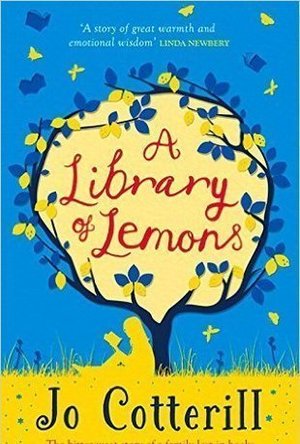
<i>This ebook was provided by the publisher via NetGalley in exchange for an honest review
A Library of Lemons</i> is the most recent novel by children’s author Jo Cotterill. It is a moving story about a child’s perception of a life heavily affected by loss and grief, and the impact a positive friendship can bring. Calypso is only ten years old but has the reading age of someone much older. In fact she loves books so much that she prefers them to interacting with other people. Since her mother’s death five years previously, Calypso’s father has distanced himself from the world, focusing on writing and reading in his study, and has encouraged his only daughter to do the same: “be your own best friend.” However, a new girl at school causes Calypso to question and change the way she views the world.
Despite never having had a friend at school, Calypso quickly develops a strong friendship with Mae who also has a passion for reading. The difference is Mae lets herself feel emotion and is happy to let other people into her life, a concept that is initially alien to Calypso. As time goes on Calypso realizes she is the happiest she has ever been and that Mae has filled a gap she did not know was there. Regrettably, her newfound contentment is shattered on discovering that something is wrong with her father, and that he has developed an unhealthy obsession with lemons…
From the very beginning the reader is shown how difficult Calypso’s life is. She often comes home to a cold, dark house where she has to fix herself her own dinner from a very limited supply of food. Yet until Calypso meets Mae, she does not realize that there is anything wrong with this. Once Calypso learns that her father is suffering with depression – something that older readers will already have guessed – she sees how unfair life is for her and notices that she is very different from other children her age. This is a heartbreaking situation for readers to imagine, but Calypso’s strength as a young carer is admirable – similarly to characters in some of her favourite books, such as<i> Anne of Green Gables</i>.
There are so many well-known novels referenced in <i>A Library of Lemons</i>, which emphasizes Calypso’s love of literature. Although Cotterill has included children’s classics amongst these titles, it is doubtful that young readers will be familiar with them all. This poses the problem that certain allusions to characters or storylines will be lost, however if the youngsters are just as passionate about reading as Calypso is, they may be inspired to seek out these famous works.
I was initially drawn to <i>A Library of Lemons</i> because I had loved Cotterill’s previous novel, <i>Looking at the Stars</i>. I was not aware at first that this novel tackled mental illness – which was not a problem as I often read books of that genre – but I was expecting something powerful and moving. And that is what I got. I much preferred <i>Looking at the Stars</i>, which I thought was a lot more emotional and shocking – a refugee camp in a third world country – however <i>A Library of Lemons</i> is still a beautiful story with deep and quotable prose.
Before I finish this review I would like to praise Cotterill for the way she dealt with the taboo subject of mental illness. Often illnesses of this nature are either glamourized or stigmatized, neither of which occurred in this novel. Cotterill’s portrayal of depression and its affects on both sufferer and child are extremely realistic. The way that the book ends is also true-to-life. There is no happy ever after, no amazing cure – but there is hope, a glimpse of recovery and a better future.
Although Calypso is ten, her advanced reading age and the difficult subject matter result in a book that is more suitable for young teenagers. Young and old adults will also enjoy it too, especially those who can relate to certain situations Calypso has to deal with. <i>A Library of Lemons</i> is definitely a story to read if you are a lover of books - a bookworm. You will not be disappointed.
A Library of Lemons</i> is the most recent novel by children’s author Jo Cotterill. It is a moving story about a child’s perception of a life heavily affected by loss and grief, and the impact a positive friendship can bring. Calypso is only ten years old but has the reading age of someone much older. In fact she loves books so much that she prefers them to interacting with other people. Since her mother’s death five years previously, Calypso’s father has distanced himself from the world, focusing on writing and reading in his study, and has encouraged his only daughter to do the same: “be your own best friend.” However, a new girl at school causes Calypso to question and change the way she views the world.
Despite never having had a friend at school, Calypso quickly develops a strong friendship with Mae who also has a passion for reading. The difference is Mae lets herself feel emotion and is happy to let other people into her life, a concept that is initially alien to Calypso. As time goes on Calypso realizes she is the happiest she has ever been and that Mae has filled a gap she did not know was there. Regrettably, her newfound contentment is shattered on discovering that something is wrong with her father, and that he has developed an unhealthy obsession with lemons…
From the very beginning the reader is shown how difficult Calypso’s life is. She often comes home to a cold, dark house where she has to fix herself her own dinner from a very limited supply of food. Yet until Calypso meets Mae, she does not realize that there is anything wrong with this. Once Calypso learns that her father is suffering with depression – something that older readers will already have guessed – she sees how unfair life is for her and notices that she is very different from other children her age. This is a heartbreaking situation for readers to imagine, but Calypso’s strength as a young carer is admirable – similarly to characters in some of her favourite books, such as<i> Anne of Green Gables</i>.
There are so many well-known novels referenced in <i>A Library of Lemons</i>, which emphasizes Calypso’s love of literature. Although Cotterill has included children’s classics amongst these titles, it is doubtful that young readers will be familiar with them all. This poses the problem that certain allusions to characters or storylines will be lost, however if the youngsters are just as passionate about reading as Calypso is, they may be inspired to seek out these famous works.
I was initially drawn to <i>A Library of Lemons</i> because I had loved Cotterill’s previous novel, <i>Looking at the Stars</i>. I was not aware at first that this novel tackled mental illness – which was not a problem as I often read books of that genre – but I was expecting something powerful and moving. And that is what I got. I much preferred <i>Looking at the Stars</i>, which I thought was a lot more emotional and shocking – a refugee camp in a third world country – however <i>A Library of Lemons</i> is still a beautiful story with deep and quotable prose.
Before I finish this review I would like to praise Cotterill for the way she dealt with the taboo subject of mental illness. Often illnesses of this nature are either glamourized or stigmatized, neither of which occurred in this novel. Cotterill’s portrayal of depression and its affects on both sufferer and child are extremely realistic. The way that the book ends is also true-to-life. There is no happy ever after, no amazing cure – but there is hope, a glimpse of recovery and a better future.
Although Calypso is ten, her advanced reading age and the difficult subject matter result in a book that is more suitable for young teenagers. Young and old adults will also enjoy it too, especially those who can relate to certain situations Calypso has to deal with. <i>A Library of Lemons</i> is definitely a story to read if you are a lover of books - a bookworm. You will not be disappointed.

Lee (2222 KP) rated The Mule (2018) in Movies
Jan 29, 2019 (Updated Jan 29, 2019)

A simple, enjoyable story
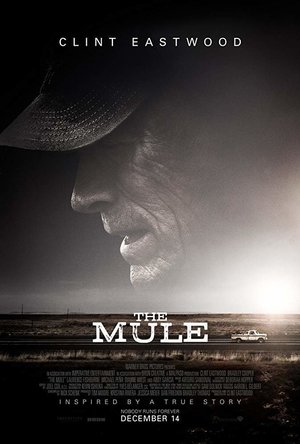
It appears there's just no stopping Clint Eastwood. Not only does he star in The Mule, a movie 'inspired by a true story', but he's also on producing and directing duties too. Just when you think you've seen him in his last ever role, he's back, 88 years old and still going strong!
Eastwood is Earl Stone, a highly successful horticulturist and Korean war veteran who we first meet in 2005. He arrives at a horticulture convention where he charms the ladies, engages in friendly competitive banter with other exhibitors and sneers at the guy promoting a new way of ordering flowers over the internet, before going on to win first prize for best bloom. But over the years all of this success has been at the expense of his family and while he's buying everyone in the bar a drink to celebrate his win, his daughter is getting married, wondering where her father is while her mother consoles her. A life on the road devoted to work has lost Earl the most important thing in life.
Shifting forward 12 years to 2017 and Earl has been forced to close up the flower business, blaming the damn internet for it all. He pays off his farm workers as best he can before heading off to his granddaughters house where she is holding a garden party. His presence only causes tension though - his daughter can't bear to be anywhere near him, while his ex wife takes the opportunity to once again give him a piece of her mind, disappointed that despite a lifelong devotion to work, he now can't even afford to help pay for his granddaughters upcoming wedding.
So when an offer comes his way, working as a mule for the cartel in return for good money, Earl accepts. An old man traveling, with no previous speeding tickets, is less likely to be stopped than the traditional Latinos they usually use, and Earl benefits by continuing his love of traveling the country in his trusty old truck. He tries the charming old man routine with the cartel members he comes into contact with on both sides of his deliveries, with varying degrees of success, but in-between he manages to just enjoy life - driving on the open road, singing along to the radio for hours on end. And the money certainly is good - Earl is able to buy a brand new truck, help pay for his granddaughters wedding and even help prevent a bar he's been going to for the last 50 or so years from closing. He gradually becomes more trusted within the cartel, becoming responsible for transporting increasingly larger quantities of drugs and drawing the attention of the more powerful cartel members. Attending big parties at their lavish houses, dancing with bikini clad girls and engaging in threesomes, this ninety something certainly is making the most of his twilight years! As power shifts within the cartel and Earl gets drawn deeper in, he finds himself having to decide between the cartel and his family. A decision with very different but serious consequences depending on which path he chooses.
All the while Earl is having his fun, the net is closing in on him in the form of a couple of DEA agents played by Bradley Cooper and Michael Peña. Under pressure to secure a bust from boss Lawrence Fishburne, they're getting closer and closer to capturing the cartels top mule. All three of these actors are seriously underused though in what are essentially pretty standard cop roles.
The Mule is a fairly simple movie with no big sense of drama, and certainly no Breaking Bad levels of cartel tension. However, I was never bored at any point and just found myself completely engrossed in it all, swept along by the genial nature of Earl and what was an enjoyable, sentimental story.
Eastwood is Earl Stone, a highly successful horticulturist and Korean war veteran who we first meet in 2005. He arrives at a horticulture convention where he charms the ladies, engages in friendly competitive banter with other exhibitors and sneers at the guy promoting a new way of ordering flowers over the internet, before going on to win first prize for best bloom. But over the years all of this success has been at the expense of his family and while he's buying everyone in the bar a drink to celebrate his win, his daughter is getting married, wondering where her father is while her mother consoles her. A life on the road devoted to work has lost Earl the most important thing in life.
Shifting forward 12 years to 2017 and Earl has been forced to close up the flower business, blaming the damn internet for it all. He pays off his farm workers as best he can before heading off to his granddaughters house where she is holding a garden party. His presence only causes tension though - his daughter can't bear to be anywhere near him, while his ex wife takes the opportunity to once again give him a piece of her mind, disappointed that despite a lifelong devotion to work, he now can't even afford to help pay for his granddaughters upcoming wedding.
So when an offer comes his way, working as a mule for the cartel in return for good money, Earl accepts. An old man traveling, with no previous speeding tickets, is less likely to be stopped than the traditional Latinos they usually use, and Earl benefits by continuing his love of traveling the country in his trusty old truck. He tries the charming old man routine with the cartel members he comes into contact with on both sides of his deliveries, with varying degrees of success, but in-between he manages to just enjoy life - driving on the open road, singing along to the radio for hours on end. And the money certainly is good - Earl is able to buy a brand new truck, help pay for his granddaughters wedding and even help prevent a bar he's been going to for the last 50 or so years from closing. He gradually becomes more trusted within the cartel, becoming responsible for transporting increasingly larger quantities of drugs and drawing the attention of the more powerful cartel members. Attending big parties at their lavish houses, dancing with bikini clad girls and engaging in threesomes, this ninety something certainly is making the most of his twilight years! As power shifts within the cartel and Earl gets drawn deeper in, he finds himself having to decide between the cartel and his family. A decision with very different but serious consequences depending on which path he chooses.
All the while Earl is having his fun, the net is closing in on him in the form of a couple of DEA agents played by Bradley Cooper and Michael Peña. Under pressure to secure a bust from boss Lawrence Fishburne, they're getting closer and closer to capturing the cartels top mule. All three of these actors are seriously underused though in what are essentially pretty standard cop roles.
The Mule is a fairly simple movie with no big sense of drama, and certainly no Breaking Bad levels of cartel tension. However, I was never bored at any point and just found myself completely engrossed in it all, swept along by the genial nature of Earl and what was an enjoyable, sentimental story.


Bob Mann (459 KP) rated I, Tonya (2017) in Movies
Sep 29, 2021

Some Darwin award winners.
Man, I personally found this one to be an exceedingly uncomfortable watch.
“I, Tonya” is cleverly filmed as a pseudo-documentary, featuring re-enactments of the real-life interviews of most of the participants in this true-life drama. I recently bitterly criticised some film critics for spoiling the story of Donald Crowhurst, the subject of the recent “The Mercy”. But I was about to do exactly the same here, *assuming* that you all know the lurid tale of the rivalry between Tonya Harding and Nancy Kerrigan that led up to an ‘event’ in 1994 that shocked the world. And of course, many of you younger folk don’t know: case in point my 26 year old son who I went to see this with, and who went into the story blissfully blind of the drama about to unfold. So I will try to keep this review spoiler-free.
Playing Tonya from a (not very credible!) 15 years old to her mid-20’s is Margot Robbie (“The Wolf of Wall Street”, “Suicide Squad”) in what is a BAFTA and Oscar nominated performance. And for good reason: the performance is raw, visceral and disturbing in reflecting a victim who still thinks everything at heart is her own fault.
Also BAFTA and Oscar nominated is Allison Janney (“The Girl on the Train”) as Tonya’s obnoxious chain-smoking mother LaVona. Janney is truly terrifying as the mother who abuses her daughter both physically and mentally in a driven attempt to make her the best ice-skater in the world.
Victims seem to attract abusers, and Tonya is surrounded by people who are just plain bad for her: notably her husband Jeff (Sebastian Stan, “The Martian”, “Captain America: Winter Soldier”) and his slimy and pitifully self-deluded friend Shawn (Paul Walter Hauser). The end credits video footage of the real-life players show just how well these parts were cast.
Why so uncomfortable to watch? There is a significant degree of domestic abuse featured in the film, both in terms of LaVona on her child and Jeff on his wife. This is something I abhor in general, having been brought up to believe it is never EVER acceptable to lay a hand on a woman. To have these cowardly individuals sensationalised in the movie I found to be really upsetting. I strongly feel, for this reason alone, that the film should have had an 18 certificate. Violence in film should be related to the context as well as the severity. (Note that this is in stark contrast to my comments of recent BBFC decisions to make “Phantom Thread” and “Lady Bird” 15-certificates when I believe they should have been 12A).
The film is executed extremely well, with 4:3 framing for the staged interviews, and ice skating scenes that seamlessly cut between the professional clearly doing the stunts and Robbie (who must also be a half decent skater too). The soundtrack is nicely littered – “Guardians of the Galaxy” style – with classic hits of the early 90’s.
To think that this story actually unfolded in this way is nothing short of astounding… but it did! There is an astonishing video clip here (#spoilers) of the run up to, and the immediate aftermath of, the Kerrigan incident. I came out of the film with a deep feeling of sadness for Harding (at least, as portrayed) and utter disgust that the villains of this piece could be a) so cruel and out of control and b) so utterly stupid. These are individuals who really should have been sterilised to stop them polluting the gene pool any further.
Written by Steven Rogers (“Stepmom”) and directed by Australian Craig Gillespie, there is no doubting that this is a powerful film: played to an absolutely silent and gripped Saturday night cinema audience. And it has truly dynamite performances from Allison Janney and Margot Robbie. But be warned that you’ll need a strong stomach to go and see it without being affected by it afterwards. It’s a mental keeper.
“I, Tonya” is cleverly filmed as a pseudo-documentary, featuring re-enactments of the real-life interviews of most of the participants in this true-life drama. I recently bitterly criticised some film critics for spoiling the story of Donald Crowhurst, the subject of the recent “The Mercy”. But I was about to do exactly the same here, *assuming* that you all know the lurid tale of the rivalry between Tonya Harding and Nancy Kerrigan that led up to an ‘event’ in 1994 that shocked the world. And of course, many of you younger folk don’t know: case in point my 26 year old son who I went to see this with, and who went into the story blissfully blind of the drama about to unfold. So I will try to keep this review spoiler-free.
Playing Tonya from a (not very credible!) 15 years old to her mid-20’s is Margot Robbie (“The Wolf of Wall Street”, “Suicide Squad”) in what is a BAFTA and Oscar nominated performance. And for good reason: the performance is raw, visceral and disturbing in reflecting a victim who still thinks everything at heart is her own fault.
Also BAFTA and Oscar nominated is Allison Janney (“The Girl on the Train”) as Tonya’s obnoxious chain-smoking mother LaVona. Janney is truly terrifying as the mother who abuses her daughter both physically and mentally in a driven attempt to make her the best ice-skater in the world.
Victims seem to attract abusers, and Tonya is surrounded by people who are just plain bad for her: notably her husband Jeff (Sebastian Stan, “The Martian”, “Captain America: Winter Soldier”) and his slimy and pitifully self-deluded friend Shawn (Paul Walter Hauser). The end credits video footage of the real-life players show just how well these parts were cast.
Why so uncomfortable to watch? There is a significant degree of domestic abuse featured in the film, both in terms of LaVona on her child and Jeff on his wife. This is something I abhor in general, having been brought up to believe it is never EVER acceptable to lay a hand on a woman. To have these cowardly individuals sensationalised in the movie I found to be really upsetting. I strongly feel, for this reason alone, that the film should have had an 18 certificate. Violence in film should be related to the context as well as the severity. (Note that this is in stark contrast to my comments of recent BBFC decisions to make “Phantom Thread” and “Lady Bird” 15-certificates when I believe they should have been 12A).
The film is executed extremely well, with 4:3 framing for the staged interviews, and ice skating scenes that seamlessly cut between the professional clearly doing the stunts and Robbie (who must also be a half decent skater too). The soundtrack is nicely littered – “Guardians of the Galaxy” style – with classic hits of the early 90’s.
To think that this story actually unfolded in this way is nothing short of astounding… but it did! There is an astonishing video clip here (#spoilers) of the run up to, and the immediate aftermath of, the Kerrigan incident. I came out of the film with a deep feeling of sadness for Harding (at least, as portrayed) and utter disgust that the villains of this piece could be a) so cruel and out of control and b) so utterly stupid. These are individuals who really should have been sterilised to stop them polluting the gene pool any further.
Written by Steven Rogers (“Stepmom”) and directed by Australian Craig Gillespie, there is no doubting that this is a powerful film: played to an absolutely silent and gripped Saturday night cinema audience. And it has truly dynamite performances from Allison Janney and Margot Robbie. But be warned that you’ll need a strong stomach to go and see it without being affected by it afterwards. It’s a mental keeper.

Ross (3284 KP) rated The Darkslayer: Wrath of the Royals in Books
Feb 5, 2019
Strong debut novel, deeper than expected
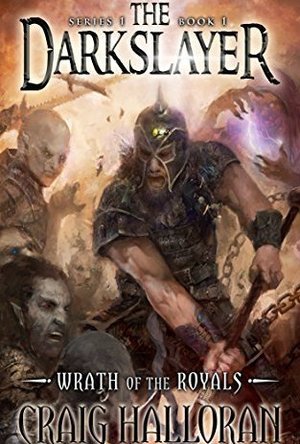
Wrath of the Royals, the first in the 16 book Darkslayer series following Venir, the Darkslayer (an axe-wielding barbarian) and his companion Melagal (the cowardly "rogue") as they run from the titular wrath of one of the royal families. Venir tends to get himself into bets, as alpha male types just seem attracted to him, and one such bet ends him in the bad books with one of the most powerful, and twisted, royal families.
This leads to the pair going on the run to escape the inevitable wrath. However, little do they know that the Underlings (those twisted, evil humanoids Venir is driven to hunt) are after Venir from different angles - one due to his relentless genocide of their race, and another due to being hired to hunt him down by the royals.
On the surface, I expected this to be a basic sword and sorcery tale; the barbarian wandering the wilds hacking down the Underlings. I was pleasantly surprised to find a fairly well told tale with different layers and a more intricate plot than I had expected.
Halloran's prose is decent, with a good knack for getting the balance between over-narration and concise descriptions. There is enough description of the world without it being laboured. There are some odd choices for phrases or wording here or there (eg "Impending pain was on its way"), and the book could do with a decent thorough edit, but for a first book it is a good effort.
The world of Bish turns out to be something of an experiment on the part of a God, seeing if she can design a world that will remain in permanent conflict for eternity, good and evil constantly vying but neither side ever truly winning. While this could be seen as literally setting up for "deus ex machina" whenever the author chooses, this didn't really come to the fore in this book.
Venir is a reasonably well-crafted character, albeit a stupid brute and something like Logen Ninefingers from Joe Abercrombie's First Law (when he puts on his magical helmet (yes I know!) he becomes more driven to destruction, somewhat akin to the emergence of The Bloody Nine). Numerous times he just gets up in the night and wanders off searching for the conflict he has sensed, the helmet guiding him onwards. But his actions play well off those of his travelling companions, which has now become something like the fellowship of the ring, but without a ring.
The book ends with an extended epilogue giving an idea of Venir's life before he found his magical axe, shield and mind-controlling helmet.
A good self-contained book, which concludes well and could be read on its own, without continuing the series, though I plan to (ideally before my Kindle Unlimited period runs out!).
This leads to the pair going on the run to escape the inevitable wrath. However, little do they know that the Underlings (those twisted, evil humanoids Venir is driven to hunt) are after Venir from different angles - one due to his relentless genocide of their race, and another due to being hired to hunt him down by the royals.
On the surface, I expected this to be a basic sword and sorcery tale; the barbarian wandering the wilds hacking down the Underlings. I was pleasantly surprised to find a fairly well told tale with different layers and a more intricate plot than I had expected.
Halloran's prose is decent, with a good knack for getting the balance between over-narration and concise descriptions. There is enough description of the world without it being laboured. There are some odd choices for phrases or wording here or there (eg "Impending pain was on its way"), and the book could do with a decent thorough edit, but for a first book it is a good effort.
The world of Bish turns out to be something of an experiment on the part of a God, seeing if she can design a world that will remain in permanent conflict for eternity, good and evil constantly vying but neither side ever truly winning. While this could be seen as literally setting up for "deus ex machina" whenever the author chooses, this didn't really come to the fore in this book.
Venir is a reasonably well-crafted character, albeit a stupid brute and something like Logen Ninefingers from Joe Abercrombie's First Law (when he puts on his magical helmet (yes I know!) he becomes more driven to destruction, somewhat akin to the emergence of The Bloody Nine). Numerous times he just gets up in the night and wanders off searching for the conflict he has sensed, the helmet guiding him onwards. But his actions play well off those of his travelling companions, which has now become something like the fellowship of the ring, but without a ring.
The book ends with an extended epilogue giving an idea of Venir's life before he found his magical axe, shield and mind-controlling helmet.
A good self-contained book, which concludes well and could be read on its own, without continuing the series, though I plan to (ideally before my Kindle Unlimited period runs out!).
Hazel (1853 KP) rated Stargirl (Stargirl, #1) in Books
Dec 7, 2018
<i>This eBook was provided by the publisher via NetGalley in exchange for an honest review
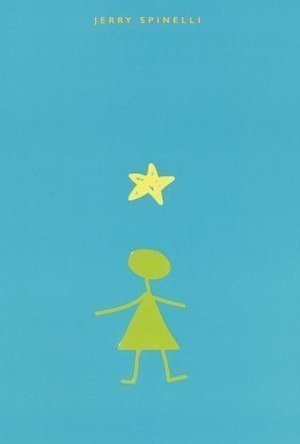
Stargirl</i> is a popular young adult novel by Jerry Spinelli, originally published in 2000. But what is it that has kept it a favourite sixteen years later? The story is told by Leo Borlock, a student in the 11th grade at Mica Area High School. This year there is a new girl who calls herself Stargirl and, like her name, is completely different from everyone else. She has an outlandish dress sense, plays the ukele at lunchtimes, knows and celebrates everyone’s birthdays. The only word the school can think of to describe her is “HUH?”
Despite the weirdness surrounding her, Stargirl quickly becomes popular. People are entertained by her, want to be with her, want to be her. Leo is equally fascinated by her and is shocked when she begins to pay him attention. However, after a while the novelty of Stargirl wears off. Students begin to despise her and shun her. Stargirl does not care, but Leo does. He tries to change Stargirl, tries to make her act normal like everyone else.
<i>Stargirl</i>, like the titular character, is a breath of fresh air. It is quick and easy to read with the benefit of added humour. It also contains a powerful message. Although Stargirl is not affected by the behaviour of her fellow students, it is shocking the extent that the entire student body goes to in shunning her. This is a form of bullying, something that a child in the real world faces everyday. And that child will be bothered by it, will be hurt, and will be upset. It will probably affect their future.
Leo’s behaviour is something that everyone will be able to recognize in themself. Conforming to the norm. Leo wanted Stargirl to change, to go by her real name, Susan. To stop wearing eccentric clothing. To stop drawing attention to herself. Ultimately, what Leo was asking was for Stargirl to stop being herself. And that is really sad. I have lost count of the times people have said to me “Just be yourself,” but do they mean that? Perhaps they are really saying, “behave like everyone else, and you’ll fit in”?
Spinelli’s most important message in <i>Stargirl</i> is that we should not be afraid to be ourselves. It is unlikely that anyone is as bizarre as Stargirl, yet if everyone stopped being so scared to reveal their true feelings, likes and dislikes etc, perhaps schools would become less intimidating places?
<i>Stargirl</i> is suitable for teenage and adult readers who want something quick to devour. It will entertain, and, although it has a rather ambiguous ending, nothing disastrous happens in the book. It will hopefully leave you feeling as care free as its main character.
Stargirl</i> is a popular young adult novel by Jerry Spinelli, originally published in 2000. But what is it that has kept it a favourite sixteen years later? The story is told by Leo Borlock, a student in the 11th grade at Mica Area High School. This year there is a new girl who calls herself Stargirl and, like her name, is completely different from everyone else. She has an outlandish dress sense, plays the ukele at lunchtimes, knows and celebrates everyone’s birthdays. The only word the school can think of to describe her is “HUH?”
Despite the weirdness surrounding her, Stargirl quickly becomes popular. People are entertained by her, want to be with her, want to be her. Leo is equally fascinated by her and is shocked when she begins to pay him attention. However, after a while the novelty of Stargirl wears off. Students begin to despise her and shun her. Stargirl does not care, but Leo does. He tries to change Stargirl, tries to make her act normal like everyone else.
<i>Stargirl</i>, like the titular character, is a breath of fresh air. It is quick and easy to read with the benefit of added humour. It also contains a powerful message. Although Stargirl is not affected by the behaviour of her fellow students, it is shocking the extent that the entire student body goes to in shunning her. This is a form of bullying, something that a child in the real world faces everyday. And that child will be bothered by it, will be hurt, and will be upset. It will probably affect their future.
Leo’s behaviour is something that everyone will be able to recognize in themself. Conforming to the norm. Leo wanted Stargirl to change, to go by her real name, Susan. To stop wearing eccentric clothing. To stop drawing attention to herself. Ultimately, what Leo was asking was for Stargirl to stop being herself. And that is really sad. I have lost count of the times people have said to me “Just be yourself,” but do they mean that? Perhaps they are really saying, “behave like everyone else, and you’ll fit in”?
Spinelli’s most important message in <i>Stargirl</i> is that we should not be afraid to be ourselves. It is unlikely that anyone is as bizarre as Stargirl, yet if everyone stopped being so scared to reveal their true feelings, likes and dislikes etc, perhaps schools would become less intimidating places?
<i>Stargirl</i> is suitable for teenage and adult readers who want something quick to devour. It will entertain, and, although it has a rather ambiguous ending, nothing disastrous happens in the book. It will hopefully leave you feeling as care free as its main character.